
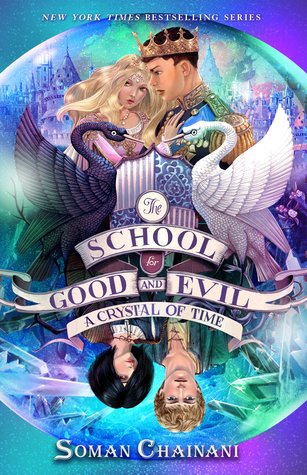

Estimated read time: 7 min read
One Sentence Summary
"A Crystal of Time" by Soman Chainani is a fantasy novel that follows a young girl who discovers her destiny as the protector of time and must confront dark forces threatening her world.
Table of Contents
Introduction
Imagine a tale where time itself is a fragile crystal, shimmering with secrets, danger, and the power to shape worlds. A Crystal of Time by Soman Chainani, the captivating conclusion to The School for Good and Evil series, invites readers into a world where fairy tales blur with reality, heroes confront their destinies, and the fate of entire kingdoms hangs in the balance. This book is not just a fantasy adventure; it is a profound exploration of identity, choice, and the enduring battle between good and evil. For college students and lecturers alike, A Crystal of Time offers a rich tapestry of themes and narrative techniques worthy of academic exploration while delivering a gripping, emotionally charged story.
Historical Context
Set within the expansive universe of The School for Good and Evil, this novel concludes a saga that has captivated young and adult readers alike. The series began in a literary climate hungry for reimagined fairy tales, where traditional narratives are questioned and flipped on their heads. Chainani’s work emerges from this trend, blending elements of fantasy, adventure, and moral philosophy.
The story resonates with historical themes of power struggles, identity crises, and the moral ambiguity that characterized many real-world historical periods, from medieval kingdoms to modern political landscapes. Chainani draws inspiration from classic fairy tales and mythologies, weaving them into a contemporary narrative that reflects modern readers' complexities.
Brief Synopsis
Plot Overview
In A Crystal of Time, the final battle looms. The protagonists, Sophie and Agatha, must navigate a fractured world where the lines between good and evil blur. Time is literally a crystal—a powerful, dangerous artifact—that holds the key to the future. As alliances shift and secrets unravel, the characters face impossible choices that will define their destinies and the fate of the kingdoms they inhabit.
Setting
The novel unfolds in the enchanted realms of Camelot and the School for Good and Evil, a mystical institution where children are trained to become heroes or villains. The atmosphere oscillates between magical wonder and dark peril, reflecting the tension between hope and despair. The setting is richly imagined, evoking the allure of classic fantasy worlds while incorporating modern sensibilities.
Main Characters
| Name | Role | Key Traits | Importance to the Plot |
|---|---|---|---|
| Sophie | Protagonist | Determined, complex, conflicted | Central figure whose choices drive the story |
| Agatha | Protagonist’s Friend | Loyal, introspective, brave | Sophie's anchor; represents moral ambiguity |
| Tedros | King and Ally | Noble, courageous, flawed | Represents leadership and the burden of power |
| Rafal | Rebel Leader | Charismatic, fierce, principled | Challenges established order; complicates alliances |
| Lady Lesso | Mentor and Guide | Wise, enigmatic, powerful | Provides critical knowledge about time and magic |
Plot Summary
Part 1: Fractures in Time
The story opens with a world destabilized, where the crystal that governs time has been shattered. This fragmentation causes chaos, with past, present, and future colliding unpredictably. Sophie and Agatha, once enemies turned friends, must reconcile their differences to restore order.
- Sophie struggles with her identity and the consequences of her past actions.
- Agatha grapples with her loyalty to Sophie and her own sense of justice.
- Tedros faces political intrigue, trying to hold his kingdom together amid growing unrest.
Part 2: The Quest for Restoration
The protagonists embark on a perilous journey to collect the scattered shards of the crystal. Each shard is guarded by formidable challenges that test their resolve and force them to confront inner demons.
- The journey reveals hidden truths about the characters’ pasts.
- Themes of redemption and sacrifice become prominent.
- Relationships among characters deepen, revealing the complexities of friendship and love.
Part 3: The Final Confrontation
As the shards are gathered, a darker force seeks to exploit the crystal's power for destruction. The final confrontation pits the protagonists against this looming threat.
- Alliances shift unpredictably, with betrayals and reconciliations.
- The battle tests the characters’ beliefs about good and evil.
- The resolution brings a transformative understanding of time, power, and destiny.
Themes and Motifs
Duality of Good and Evil
Chainani masterfully explores the blurred lines between good and evil, challenging the simplistic binaries often found in fairy tales. Sophie and Agatha embody this duality, showing that morality is complex and choices are rarely black and white.
Time as a Fragile Construct
The crystal symbolizes time’s fragility and the consequences of tampering with it. The narrative invites readers to reflect on how past actions shape the present and future, emphasizing responsibility and the inevitability of change.
Identity and Self-Discovery
Characters undergo profound journeys of self-discovery. The novel asserts that identity is fluid and shaped by choices, experiences, and relationships rather than predetermined roles.
Friendship and Loyalty
The evolving friendship between Sophie and Agatha highlights the power of loyalty and understanding in overcoming adversity. Their bond challenges traditional fairy tale tropes of rivalry.
Literary Techniques and Style
Chainani employs a rich, descriptive prose style that balances vivid imagery with accessible language. His use of alternating perspectives deepens character development and allows readers to engage with the narrative’s moral complexities.
- Symbolism: The crystal serves as a powerful symbol of time, power, and fate.
- Foreshadowing: Subtle hints throughout the narrative build suspense and prepare readers for the climax.
- Allegory: The story reflects broader social and philosophical questions about morality, leadership, and identity.
- Humor and Wit: Despite the high stakes, Chainani injects moments of humor that provide relief and deepen character relatability.
Author’s Background
Soman Chainani is an acclaimed author and filmmaker known for his imaginative storytelling and subversion of traditional fairy tale narratives. With a background in film and literature, Chainani blends cinematic storytelling techniques with literary depth. His works often explore themes of identity, power, and choice, resonating with diverse audiences.
Chainani’s impact lies in his ability to engage young adult readers with sophisticated themes, encouraging critical thinking about morality and selfhood. The School for Good and Evil series has become a staple in contemporary fantasy literature, celebrated for its originality and emotional resonance.
Key Takeaways
- Morality is nuanced: The book challenges readers to reconsider simplistic notions of good and evil.
- Time shapes destiny: Past, present, and future are interconnected, and our actions have lasting consequences.
- Identity is dynamic: Self-discovery is an ongoing process influenced by choices and experiences.
- Power requires responsibility: Leadership and power demand ethical considerations and sacrifice.
- Friendship transcends differences: Loyalty and understanding can bridge divides and foster growth.
Reader’s Takeaway
For the general reader, A Crystal of Time offers an intellectually stimulating and emotionally rich experience. It encourages reflection on personal identity, moral choices, and the nature of time. The novel’s blend of fantasy and philosophical inquiry invites readers to engage deeply with the narrative while enjoying an adventurous, suspenseful story.
The emotional arcs of Sophie and Agatha resonate universally, reminding readers that friendship and courage can illuminate even the darkest moments. For students and lecturers, the book provides fertile ground for discussions on narrative structure, thematic complexity, and the reinterpretation of classic motifs.
Conclusion
Soman Chainani’s A Crystal of Time is more than just the conclusion to a beloved fantasy series; it is a profound meditation on time, morality, and identity. Through compelling characters, imaginative world-building, and intricate themes, Chainani invites readers to question the nature of good and evil and the power of choice. Whether you are a student exploring literary themes or a casual reader seeking a captivating story, this book promises a rewarding journey through the shimmering facets of time itself. Dive in, and discover a crystal that refracts not just light, but the very essence of human experience.
A Crystal of Time FAQ
What is the main theme of 'A Crystal of Time'?
'A Crystal of Time' explores themes of courage, friendship, and the power of storytelling in shaping reality.
Who is the author of 'A Crystal of Time'?
The book is written by Soman Chainani, known for his imaginative storytelling and rich fantasy worlds.
Is 'A Crystal of Time' suitable for young readers?
Yes, it is a middle-grade fantasy novel appropriate for readers aged 8 to 12, though readers of all ages may enjoy it.
What is the setting of the story in 'A Crystal of Time'?
The story is set in a magical world where time is controlled by mystical crystals and heroes must protect the balance.
Are there any sequels or related books to 'A Crystal of Time'?
As of now, 'A Crystal of Time' is a standalone novel, but Soman Chainani has written other fantasy books that fans might enjoy.
What age group is 'A Crystal of Time' targeted at?
The book is primarily targeted at middle-grade readers, roughly ages 8 to 12.
Does 'A Crystal of Time' contain illustrations?
Yes, the book includes illustrations that enhance the storytelling and bring the magical world to life.
What makes 'A Crystal of Time' different from other fantasy novels?
'A Crystal of Time' combines a unique magical concept involving time crystals with strong character development and themes about the importance of stories.
Can 'A Crystal of Time' be used in classroom settings?
Absolutely, the book's themes and engaging story make it a great choice for discussions about creativity, courage, and the role of stories.


