

Synopsis
Covers the whole plot, including the ending.
- Difficulty
- Medium
- Pacing
- Variable
- Mood
- Dreamlike, Philosophical, Melancholy, Surreal
- Read it if
- You enjoy experimental, surrealist theatre and philosophical explorations of human suffering.
- Skip it if
- You prefer linear narratives, realistic characters, and clear resolutions.
A Dream Play Plot Summary
Covers the whole plot, including the ending.
The Daughter Descends
Indra's Daughter comes down from the heavens, observing Earth and lamenting the misery she sees. Her father, the God Indra, warns her about human sorrows. The Daughter wants to experience life firsthand to understand human complaints. She lands near a castle, which grows larger and larger, suggesting the passage of time and the weight of human efforts. She meets the Officer, who has waited seven years for his beloved Victoria, always hopeful but always disappointed by the locked door stopping their reunion. This first meeting introduces her to themes of waiting, longing, and the futility of human ambition.
The Officer's Lament and the Lawyer's Burden
The Daughter watches the Officer's endless wait outside the growing castle, a symbol of unfulfilled desires. She meets the Lawyer, who is physically changed and burdened by human complaints, which he literally takes into his body. He describes his suffering from defending people and hearing their grievances, showing how human interaction corrupts and how hard it is to find truth. The Lawyer's office is full of his clients' misery, and he wishes for a life of beauty and peace, a sharp contrast to his current reality. The Daughter begins to understand how widespread human sorrow is.
The Theatre and the Poet
The Daughter, now named Agnes, enters a theater where she meets the Poet. The theater is a place of illusion and change, where reality and art blur. The Poet, an idealist, believes in the power of beauty and art to overcome human suffering, yet he faces the same frustrations and limits as others. Agnes watches the actors and audience, noticing the superficiality and fleeting nature of their emotions. She starts to question the truth of human expression and whether art can truly lessen pain, finding it often reflects or even increases human struggles instead of offering real escape.
Marriage and Disillusionment
Agnes marries the Lawyer, wanting to understand human love and commitment. Their home quickly becomes a place of domestic arguments and small annoyances. The Lawyer, once eloquent and burdened by larger sorrows, now focuses on everyday concerns like mending clothes and money problems. Their love, initially hopeful, soon turns into bickering and mutual resentment, stifled by daily life and their responsibilities. Agnes directly experiences the disappointment that often follows the first idealism of relationships, realizing that even love can become a source of suffering and restriction.
The School and the Fading Ideal
Agnes visits a school where she meets the Schoolmaster, who is tired from his job and the endless cycle of teaching children who seem headed for the same struggles as their elders. The children themselves are shown as both innocent and already marked by the world's imperfections. Agnes sees the slow loss of youthful idealism and the crushing weight of societal expectations. The school, meant to enlighten, instead seems to produce more individuals who will experience the same disappointments and limits, further reinforcing the repeating pattern of human suffering.
The Quarantine Station and the Unseen Filth
Agnes and the Lawyer visit a quarantine station, a place of isolation and cleansing, yet it also exposes hidden filth and moral corruption. They meet various characters, including the Dean, who represents spiritual authority but is also shown to be flawed and hypocritical. The quarantine station symbolizes society's attempts to control and clean up human imperfections, yet it ultimately reveals how widespread these flaws are. Agnes observes that even when trying to purify, humanity often just rearranges its problems or creates new forms of suffering, showing that human imperfection is inescapable.
The Fair Haven and the Poet's Despair
Agnes and the Lawyer travel to Fair Haven, a supposedly perfect seaside resort, hoping to find peace and beauty. However, even here, they meet the same human flaws and disappointments. The Poet, who had previously expressed idealistic views, is now in despair, frustrated by the world's indifference to beauty and truth. He struggles with his art and his inability to make a real impact. 'Fair Haven' thus becomes another illusion, showing that escaping suffering is impossible even in seemingly perfect settings, as human nature itself carries the seeds of its own discontent.
The Growing Castle and the Final Door
The Officer's long wait at the growing castle finally ends. The castle, a recurring symbol of delayed gratification and unattainable desires, is finally opened. However, instead of his beloved Victoria, he finds only an old, withered woman. This reveals that his seven years of waiting were for an illusion, or that time cruelly changed the object of his desire. This devastating discovery emphasizes the futility of his devotion and how fleeting hope is. The locked door, once a barrier, now opens to a truth more painful than endless longing.
The Theatre of Life and Death
Agnes returns to the theater, which now appears as a stage for the entire human drama, including birth, life, and death. She observes various characters from her journey, their experiences now seeming like different acts in a grand, tragic play. The repeating nature of human suffering becomes clear, as individuals are born, strive, suffer, and eventually fade, only for the cycle to repeat. Agnes gains a deeper understanding of the universal patterns of existence, realizing that joy and sorrow are linked, and that life itself is a performance where everyone plays their part in a predetermined drama.
The Daughter's Ascent and the Burning Flower
Having experienced the full range of human joy and sorrow, Agnes gets ready to return to the heavens. She has completed her mission of understanding human complaints. Before she leaves, she asks to see the flower that has been locked away in the castle—a symbol of beauty and mystery. When the door is finally opened, the flower is burning, symbolizing the purification of suffering and the temporary nature of earthly beauty. As she ascends, she takes with her the wisdom gathered from human experience, leaving the earthly realm with a deeper, though sorrowful, understanding.
The Poet's Farewell and the Universal Complaint
As Agnes ascends, the Poet remains on Earth, thinking about her journey and his own. He recognizes her divine nature and the deep understanding she has gained. He expresses humanity's universal complaint—the struggle against injustice, the desire for beauty, and the inescapable cycle of suffering. He says goodbye to her, acknowledging that her departure marks the end of a unique intervention but not the end of human struggle. His words summarize the play's main themes, stressing the lasting nature of human pain and the comfort found only in a transcendent understanding.
Principal Figures
Indra's Daughter / Agnes
Protagonist
A divine being who descends to Earth to understand human suffering.
Indra's Daughter is a celestial being, curious about the complaints of humanity. She descends to Earth, taking on the name Agnes, to experience human life firsthand. She is initially naive and empathetic, observing the world with a divine perspective that gradually becomes clouded by earthly experiences. She embodies compassion and a quest for understanding, often serving as an observer and catalyst for the other characters' revelations. Her journey is driven by a profound desire to comprehend the source of human misery and the meaning of existence.
Relationships: Indra (Father, divine guide); The Officer (Observer of his perpetual longing); The Lawyer (Husband, partner in domestic disillusionment); The Poet (Confidante, fellow seeker of truth and beauty)
The Officer
Supporting
A man trapped in an endless wait for his beloved Victoria.
The Officer is a symbol of unfulfilled longing and perpetual hope. He spends seven years waiting outside a growing castle for Victoria, his unseen beloved. His character embodies the human tendency to cling to illusions and to endure suffering for an idealized future that may never materialize. He is a romantic idealist, yet his idealism leads to a tragic and futile existence, highlighting the destructive power of unattainable desires and the passage of time.
Relationships: Indra's Daughter (Object of her observation and empathy); Victoria (Unseen beloved, object of his obsession)
The Lawyer
Supporting
A man physically burdened by the weight of human complaints and injustice.
The Lawyer is a figure of profound suffering, his body literally disfigured by the complaints and grievances of his clients. He represents the corrupting influence of human society and the difficulty of finding truth and justice in a world riddled with deceit. Despite his outward cynicism and physical pain, he harbors a longing for beauty and peace, which he briefly attempts to find through his marriage to Agnes. He embodies the intellectual and emotional toll of engaging with human imperfection.
Relationships: Indra's Daughter / Agnes (Husband, partner in domestic disillusionment); His Clients (Source of his suffering and burden)
The Poet
Supporting
An idealist who seeks truth and beauty through art, but is frustrated by reality.
The Poet is an artistic soul, striving to find meaning and beauty amidst human suffering. He represents the artistic temperament – sensitive, insightful, and often disillusioned by the world's harsh realities. He believes in the power of words and imagination to transcend pain, yet he is constantly confronted with the limitations of art and the indifference of society. He is a commentator on the human condition, often articulating the play's deeper philosophical questions, and serves as a foil to the more pragmatic or suffering characters.
Relationships: Indra's Daughter / Agnes (Confidante, fellow seeker of truth and beauty); Humanity (Subject of his art and frustration)
Indra
Mentioned
The father of the Daughter, a divine observer of humanity.
Indra is a celestial deity, the father of the Daughter. He appears briefly at the beginning, cautioning his daughter about the sorrows of Earth but allowing her to embark on her journey. He represents a higher, detached perspective on human existence, aware of its inherent suffering but also acknowledging the need for direct experience to truly understand it. His presence emphasizes the divine context of the Daughter's mission.
Relationships: Indra's Daughter (Father, divine guide)
Victoria
Mentioned
The unseen beloved of the Officer, a symbol of unattainable desire.
Victoria is never seen directly but is the object of the Officer's seven-year wait. She represents the idealized, unattainable desire that drives human longing and suffering. Her eventual revelation as an old, withered woman underscores the cruel reality of time and the illusion of perfect love. She is less a character and more a powerful symbol of hope, disillusionment, and the fleeting nature of beauty.
Relationships: The Officer (Object of his obsession and longing)
The Dean
Supporting
A religious authority figure encountered at the quarantine station.
The Dean represents institutional religion and its attempts to provide spiritual guidance, often revealing its own hypocrisies and limitations. He is encountered at the quarantine station, a place of moral cleansing, yet he himself is not immune to human flaws. His character contributes to the critique of societal structures and their inability to truly alleviate human suffering or provide ultimate answers.
Relationships: Indra's Daughter / Agnes (Subject of her observation)
The Schoolmaster
Supporting
A weary educator disillusioned by his profession.
The Schoolmaster is a figure of weariness and resignation, burdened by the repetitive and seemingly futile task of education. He embodies the disillusionment that can come from a life dedicated to a noble cause, when faced with the persistent imperfections of humanity. His character highlights the cyclical nature of human struggle, suggesting that even knowledge and learning cannot fundamentally alter the human condition.
Relationships: Indra's Daughter / Agnes (Subject of her observation)
Themes & Insights
The Nature of Human Suffering
The play explores the widespread and inescapable nature of human suffering. From the Officer's endless wait to the Lawyer's physical burden, and the small miseries of Agnes's marriage, suffering is shown as a basic part of being human. It includes not just grand tragedies but also small annoyances and unfulfilled desires. The Daughter's journey aims to understand this suffering, only to find it in every part of human life, proving it to be a universal constant. The play suggests that even trying to escape or lessen suffering often leads to new forms of pain.
“What a life! What a life! What a life!”
The Illusion of Reality and Dreamlike Logic
True to its title, the play follows a dreamlike logic where time and space are fluid, characters merge, and events happen out of order. This structure shows that reality is often subjective and illusory. The growing castle, the locked door, and the character changes all contribute to this sense of unreality. The play suggests that human perceptions and desires often create their own reality, which can be as unstable and deceptive as a dream. Finding truth is complicated by the constant shifting of appearances and meanings, making it hard to tell what is real from what is imagined.
“Everything can happen, everything is possible and probable. Time and place do not exist.”
The Futility of Human Endeavor and Idealism
Many characters in the play spend their lives on pursuits that ultimately fail. The Officer's seven-year wait for Victoria, the Lawyer's struggle with injustice, the Schoolmaster's attempts to teach, and even the Poet's search for beauty all lead to disappointment. The play critiques human idealism, showing how good intentions often clash with life's harsh realities, causing frustration and despair. Even love and marriage, as seen with Agnes and the Lawyer, become sources of small arguments and unmet expectations, highlighting the idea that many human efforts fall short of their high goals.
“Oh, what a life to be human!”
The Quest for Meaning and Transcendence
Despite the widespread suffering and futility, the play also explores humanity's search for meaning and transcendence. Indra's Daughter comes to Earth precisely to find meaning in human complaints. The Poet tries to express deep truths through art, and even the Lawyer, burdened by earthly problems, longs for beauty. This theme suggests that while life is full of suffering, there is also a lasting human spirit that seeks to understand, create, and rise above its limits. The Daughter's final ascent, having gained understanding, implies that true meaning might lie beyond Earth, or in the act of compassionate observation itself.
“Humanity is to be pitied!”
Plot Devices & Literary Techniques
Dream Logic and Non-Linearity
The play's structure mimics the fluid, illogical nature of a dream.
The entire play is structured to resemble a dream, as explicitly stated by Strindberg. This allows for rapid shifts in setting, time, and character identity without conventional logical transitions. Characters merge into one another (e.g., the Officer becomes a husband, then a schoolmaster), objects change (the castle grows), and events are not bound by chronological order. This device serves to emphasize the subjective and often chaotic nature of human experience, blurring the lines between reality and illusion, and highlighting the subconscious forces at play in human suffering and desire.
Symbolism of the Locked Door
A recurring image representing unfulfilled desire, mystery, and the unattainable.
The locked door is a pervasive and powerful symbol throughout the play. Initially, it represents the Officer's inability to reach Victoria and fulfill his longing. It later reappears in various contexts, symbolizing hidden truths, societal barriers, and the elusive nature of happiness or understanding. The door becomes an obsessive image, representing both the hope of what lies beyond and the pain of exclusion. Its ultimate opening, often revealing something unexpected or disappointing, underscores the theme of disillusionment and the futility of certain human quests.
Character Mergers and Transformations
Characters change identities or roles, reflecting the fluidity of the self and universal human types.
Throughout the play, characters frequently merge into one another or transform their roles and identities. For instance, the Officer's experience of endless waiting is echoed in other characters' frustrations, and he himself seems to embody different archetypes of suffering humanity. This device suggests that individual identities are fluid and that human experiences are universal. It allows the play to explore various facets of human suffering and aspiration through a limited cast, emphasizing that individual stories are often variations on common themes. It also contributes to the dreamlike atmosphere, where identities are not fixed.
The Growing Castle
A visual metaphor for the passage of time, enduring ambition, and the weight of human history.
The castle that continually grows and expands throughout the play is a potent visual symbol. It represents the accumulation of human endeavors, the passage of time, and the enduring nature of societal structures and institutions. Its growth signifies the weight of history and tradition, but also the increasing burden of unfulfilled hopes and endless waiting. The castle, initially a place of mystery and expectation for the Officer, ultimately becomes a symbol of the futility of his longing and the crushing reality of time's effects, encapsulating the themes of aspiration, disillusionment, and the relentless march of existence.
A Dream Play Quotes
“Humanity is to be pitied.”
“It is a pity for human beings.”
“The human being is so difficult to satisfy.”
“Why do they complain so much?”
“But they are so unhappy, these human beings!”
“One wants to be free, but one is not.”
“Life is hard, but it is not without its beautiful moments.”
“Everything is repeated, always repeated.”
“It is a dream, and yet it is real.”
“One must suffer to become pure.”
“The door is bolted, it can't be opened.”
“The human being is so pitiable.”
“I will take all the suffering on myself.”
“Everything is in vain, and yet one hopes.”
Quiz
10 questions on the plot and the characters. Each answer comes with a short explanation.
Question 1
Which celestial being descends to Earth in 'A Dream Play' to observe human suffering?
- The Moon Goddess
- Indra's Daughter
- A fallen angel
- The Spirit of the Earth
Show answer
B. Indra's Daughter The central character, Indra's Daughter, descends from the heavens to experience and understand human life and its inherent suffering.
Question 2
What common object becomes an 'obsessively recurrent image' throughout the play, symbolizing barriers and unfulfilled desires?
- A broken mirror
- A wilting flower
- A locked door
- An empty cradle
Show answer
C. A locked door As mentioned in the provided text, 'a locked door becomes an obsessively recurrent image' symbolizing the inability to reach certain truths or fulfill desires.
Question 3
According to Strindberg's Preface, what did he aim to imitate in the play's structure?
- The strictures of classical tragedy
- The disjointed yet seemingly logical shape of a dream
- The linear progression of a historical chronicle
- The rapid-fire dialogue of a farce
Show answer
B. The disjointed yet seemingly logical shape of a dream Strindberg explicitly stated in his Preface that he wanted 'to imitate the disjointed yet seemingly logical shape of a dream.'
Question 4
The Daughter marries the Lawyer. What is their shared experience, reflecting a common human struggle in the play?
- They achieve great wealth and social status.
- They experience the disillusionment and petty quarrels of domestic life.
- They dedicate their lives to scientific discovery.
- They travel the world seeking enlightenment.
Show answer
B. They experience the disillusionment and petty quarrels of domestic life. The Daughter's marriage to the Lawyer quickly devolves into arguments over mundane things like clothes and bills, highlighting the mundane sufferings of human domesticity.
Question 5
What happens to the Poet at the end of the play, symbolizing the ultimate fate of human striving and understanding?
- He achieves fame and recognition for his work.
- He is transformed into a divine being.
- He is consumed by the burning castle, a metaphor for the release of human suffering and the unveiling of truth.
- He finds lasting happiness with the Daughter.
Show answer
C. He is consumed by the burning castle, a metaphor for the release of human suffering and the unveiling of truth. At the play's conclusion, the castle burns, and the Poet, who has sought truth throughout, is consumed by the flames, symbolizing the painful but necessary destruction of worldly illusions to reveal deeper truths.
Question 6
The Officer character frequently laments waiting for someone. Who is he perpetually waiting for?
- His commanding officer
- His beloved Victoria
- A message from the King
- His long-lost parents
Show answer
B. His beloved Victoria The Officer is constantly waiting for Victoria, a figure representing an elusive ideal or past happiness, contributing to the play's theme of unfulfilled desire and longing.
Question 7
What is the primary thematic purpose of the characters merging into each other and locations changing instantly?
- To confuse the audience and demonstrate theatrical innovation.
- To reflect the fluid, illogical nature of dreams and the interconnectedness of human experience.
- To satirize the rigid social structures of the time.
- To showcase the actors' versatility in playing multiple roles.
Show answer
B. To reflect the fluid, illogical nature of dreams and the interconnectedness of human experience. As Strindberg stated, the play aims to 'imitate the disjointed yet seemingly logical shape of a dream,' where 'Time and place do not exist.' This fluidity underscores the play's exploration of human consciousness and universal suffering.
Question 8
The 'Growing Pains' scene features a schoolmaster punishing children for their 'sins'. What does this scene primarily criticize about human institutions?
- The inadequacy of public funding for education.
- The arbitrary nature of justice and the suffering inflicted by societal norms and rules.
- The lack of discipline in modern pedagogy.
- The importance of strict moral upbringing.
Show answer
B. The arbitrary nature of justice and the suffering inflicted by societal norms and rules. This scene, where children are punished for inexplicable 'sins' and the schoolmaster is equally tormented, highlights the arbitrary and often cruel nature of human systems of judgment and the universal experience of suffering under them.
Question 9
What is the significance of the 'Chrysalis' that the Daughter and the Poet observe, which never fully opens?
- It symbolizes the beauty of nature's cycles.
- It represents the perpetually unfulfilled human longing for beauty and truth, always on the verge of revelation but never quite achieved.
- It foreshadows a future transformation for humanity.
- It is a metaphor for the cyclical nature of suffering.
Show answer
B. It represents the perpetually unfulfilled human longing for beauty and truth, always on the verge of revelation but never quite achieved. The Chrysalis, which promises beauty and transformation but remains closed, encapsulates the play's theme of human beings constantly striving for understanding and happiness, only to be met with disappointment or partial revelation.
Question 10
At the play's conclusion, as the Daughter ascends back to the heavens, what is the ultimate revelation or understanding she has gained about humanity?
- That humanity is inherently evil and beyond redemption.
- That human suffering is universal, unavoidable, and often rooted in the inherent contradictions and petty concerns of life.
- That true happiness can only be found through spiritual asceticism.
- That love conquers all obstacles and brings ultimate joy.
Show answer
B. That human suffering is universal, unavoidable, and often rooted in the inherent contradictions and petty concerns of life. Indra's Daughter's journey on Earth reveals the pervasive nature of human suffering, the petty grievances, the unfulfilled desires, and the constant striving for meaning that often leads to pain, forming her ultimate understanding before her return.
A Dream Play FAQ
What is the core premise of 'A Dream Play' by August Strindberg?
The play follows the Daughter of the god Indra as she descends to Earth to observe human suffering and understand its complexities. Her journey is a series of fragmented encounters and shifting realities, mirroring the illogical yet emotionally resonant structure of a dream, as Strindberg intended.
Who is the central character, and what is her primary motivation?
The central character is Agnes, the Daughter of Indra. Her primary motivation is to comprehend the nature of human dissatisfaction and pain, which she has observed from her divine realm. She seeks to experience life directly to find an answer to why humans constantly complain.
How does the play challenge traditional notions of time and space?
Time and place are fluid and non-linear, with characters aging rapidly or locations transforming instantaneously, such as the Lawyer's office becoming a castle. This reflects Strindberg's aim to imitate a dream's logic where conventional boundaries do not apply, creating a sense of constant flux.
What is the significance of the 'locked door' motif in the play?
The locked door, often at the back of the Lawyer's office, symbolizes unfulfilled desires, hidden truths, and the human tendency to postpone or avoid confronting difficult realities. Characters frequently discuss its contents but never open it until the very end, representing the elusive nature of ultimate answers.
What happens when Agnes finally opens the locked door?
When Agnes finally opens the locked door, it reveals nothing but a void or, in some interpretations, a blinding light and the burning of the castle. This anticlimactic reveal suggests that the 'answer' or 'truth' behind human suffering is either unknowable, a return to nothingness, or beyond human comprehension, reinforcing the dream-like ambiguity.
How do characters like the Lawyer and the Poet represent different aspects of humanity?
The Lawyer embodies the burden of human suffering, compromise, and the legalistic tangle of earthly life, constantly taking on others' complaints. The Poet represents the struggle for beauty and meaning amidst life's ugliness, often feeling isolated in his pursuit of truth and understanding, yet also experiencing suffering.
What is the psychological impact of the merging characters, such as the Officer becoming the Lawyer or the Poet?
The merging of characters suggests the shared human experience and the idea that different roles or identities are merely facets of a universal suffering. It blurs individual identity, implying that all humans are interconnected in their struggles and that personal grievances are often collective burdens.
How does Agnes's experience on Earth affect her divine perspective?
Agnes's direct experience of human suffering, including marriage, poverty, and disillusionment, leads her to a profound understanding and empathy for humanity. She realizes that life is a complex interplay of joy and sorrow, and ultimately concludes that human existence is pitiable, full of conflicting desires and inescapable pain.
What is the role of the 'Chorus of Voices' or the 'Complainers' in the play?
The Chorus of Voices, or the Complainers, represents the ubiquitous and often petty grievances of humanity. They are a constant backdrop of dissatisfaction, highlighting the pervasive nature of human complaint and the impossibility of fully satisfying everyone, reinforcing Agnes's observations of earthly misery.
How does Strindberg use symbolism to convey the play's themes?
Strindberg uses rich symbolism, such as the growing flower in the crack of the wall representing beauty amidst decay, the locked door for hidden truths, and the ever-present 'gulf' for the chasm between human desire and reality. These symbols contribute to the play's allegorical depth and dream-like quality.
What is the significance of the Officer's repeated longing for Victoria?
The Officer's endless wait for Victoria symbolizes unfulfilled romantic desire, the passage of time, and the human tendency to cling to a past ideal or an unattainable future. His perpetual longing highlights the theme of human frustration and the elusive nature of happiness.
Is there a definitive 'message' about human suffering in 'A Dream Play'?
There is no single, definitive message, reflecting the play's dream-like ambiguity. However, a strong theme is that human life is inherently full of suffering, compromise, and unfulfilled longing. Agnes concludes that humans are to be pitied, but also that there is a strange beauty in their struggles.
How does the ending, with Agnes's return to the divine, offer a resolution?
Agnes's return to the divine realm, ascending in a burning castle of flowers, offers a spiritual rather than a practical resolution. She carries a newfound understanding of human pain back to her father, suggesting that while suffering is inescapable on Earth, there is a possibility of transcendent understanding or compassion from a higher perspective.
How does Caryl Churchill's adaptation contribute to the play's contemporary relevance?
Caryl Churchill's 'spare and resonant' new version likely strips away some of the more ornate language of the original, making the core themes of human suffering, disillusionment, and the search for meaning more accessible and impactful for modern audiences. Her adaptation emphasizes the timelessness of Strindberg's psychological insights.
What is the significance of the Lawyer's 'sickness' that he passes on to Agnes?
The Lawyer's 'sickness' is not a physical ailment but rather the burden of human complaints and the emotional toll of dealing with others' endless dissatisfactions. When Agnes takes on his 'sickness,' it symbolizes her full immersion into the human condition and her direct experience of its weight, making her empathy complete.
How does the character of the Blind Man contribute to the theme of perception?
The Blind Man, who 'sees' more clearly than those with sight, offers a critique of superficial perception. He understands the essence of human suffering and the illusions people cling to, suggesting that true insight often comes from within, beyond mere visual observation, aligning with the play's exploration of hidden truths.
What role do the various professions (Lawyer, Poet, Officer, Doctor) play in illustrating human societal structures?
These professions represent different facets of societal organization and human struggle: the Lawyer for justice and bureaucracy, the Poet for art and idealism, the Officer for duty and unfulfilled desire, and the Doctor for science and the alleviation of physical suffering. Each is shown to be ultimately inadequate in solving the deeper problems of human existence.
How does the play's structure reflect Strindberg's personal worldview or experiences?
The fragmented, dream-like structure and pervasive themes of suffering, disillusionment, and the search for meaning are deeply reflective of Strindberg's own turbulent life, his spiritual crises, and his often pessimistic view of human relationships and societal institutions. The play is often seen as a highly personal exploration of his inner world.
About the author
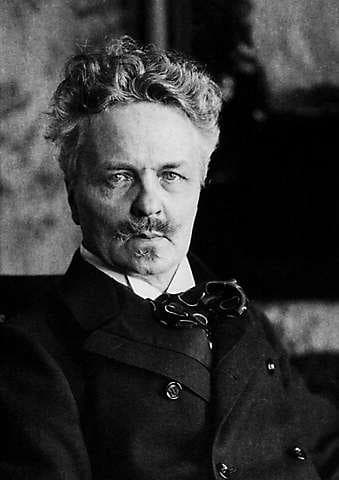
Johan August Strindberg was a Swedish playwright, novelist, poet, essayist and painter. A prolific writer who often drew directly on his personal experience, Strindberg wrote more than sixty plays and more than thirty works of fiction, autobiography, history, cultural analysis, and politics during his career, which spanned four decades. A bold experimenter and iconoclast throughout, he explored a wide range of dramatic methods and purposes, from naturalistic tragedy, monodrama, and history plays, to his anticipations of expressionist and surrealist dramatic techniques. From his earliest work, Strindberg developed innovative forms of dramatic action, language, and visual composition. He is considered the "father" of modern Swedish literature and his The Red Room (1879) has frequently been described as the first modern Swedish novel. In Sweden, Strindberg is known as an essayist, painter, poet, and especially as a novelist and playwright, but in other countries he is known mostly as a playwright.
Similar books
- Waiting for Godot
Samuel Beckett
3.8 (160k) average on GoodreadsPhilosophyExplores existential themes and uses an absurdist, non-linear structure.
- Six Characters in Search of an Author
Luigi Pirandello
3.9 (14k) average on GoodreadsFictionBreaks theatrical conventions and blurs the lines between reality and illusion.
- The Cherry Orchard
Anton Chekhov
3.7 (29k) average on GoodreadsFictionWhile both A Dream Play and Chekhov's The Cherry Orchard (1904) explore themes of societal change and human melancholy, their dramatic approaches differ significantly. Chekhov's play employs a subtle, naturalistic style, focusing on the internal lives of characters through detailed dialogue and subtext, with a clear, albeit slow-burning, narrative arc. Strindberg, by contrast, abandons naturalism for an overt, symbolic, and fragmented dreamscape, directly representing subjective consciousness rather than subtly implying it. Chekhov's sadness is rooted in a specific socio-economic reality; Strindberg's is existential and universal.
- Nineteen Eighty-Four
George Orwell
4.2 (5.5M) average on GoodreadsFictionWinston Smith dreams of truth and rebellion in a world where Big Brother watches all, but he confronts the terrifying power of a regime that controls not just actions, but thoughts.
- The Frozen River
Ariel Lawhon
4.4 (600k) average on GoodreadsFictionIn 1789 Maine, a heroic midwife's diary helps her expose a murder and get justice in a town that wants to silence her.
- A Man Called Ove
Fredrik Backman
4.4 (569k) average on GoodreadsFictionA stubborn widower, who lives by strict rules, finds his quiet world changed by a lively new family next door, making him face his past and find happiness in human connection.






Enjoyed the summary?
A summary gives you the shape of the book. The book itself has the detail, the examples and the voice.
Find A Dream Play on AmazonAs an Amazon Associate, BookBrief earns from qualifying purchases. How we're funded