
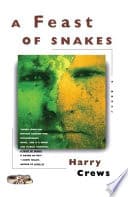
Synopsis
Covers the whole plot, including the ending.
- Difficulty
- Medium
- Pacing
- Moderate
- Mood
- Dark, Grotesque, Visceral, Disturbing, Southern Gothic
- Read it if
- You enjoy raw, visceral Southern Gothic literature with a focus on human depravity, grotesque humor, and a deep dive into a bizarre subculture.
- Skip it if
- You prefer gentle narratives, are sensitive to animal cruelty, or dislike graphic depictions of violence and degradation.
A Feast of Snakes Plot Summary
Covers the whole plot, including the ending.
The Return to Mystic
Joe Lon Boney, a former high school football star now a bootlegger, returns to Mystic, Georgia, for the annual Rattlesnake Roundup. He feels like a failure and resents the town that once admired his athletic skills. His past glory overshadows him, and he struggles with the expectations of his family and community. He still longs for the simple, violent satisfaction of football, which he equates with purpose. His return is not happy; it is a reluctant trip to a place that both defines and stifles him, setting the stage for his increasingly erratic and violent behavior as the Roundup approaches.
Lottie Mae and the Snake Pit
Lottie Mae Parker, a young woman known for her skill with rattlesnakes, is important in Mystic. She lives with her grandfather, Dudley, and is deeply connected to the land and its animals. Her relationship with the snakes is complex; she respects them but also uses them for the Roundup, an event that gives her a unique kind of power and recognition. She is very independent and resists the traditional roles expected of women in Mystic. Her interest in snakes is a way to rebel against the restrictive social norms and the predatory male attention she constantly receives, especially from men like Joe Lon and Buddy Matlow.
Buddy Matlow's Obsession
Buddy Matlow, a cruel and unstable man, has a disturbing obsession with Lottie Mae Parker. He sees her independence as a challenge to his masculinity and believes he has a right to control her. Buddy often follows Lottie Mae, trying to scare and assault her. His actions come from deep insecurity and a desire to show his dominance in the community. He represents Mystic's darker, more violent side, where power is often shown through aggression and fear. His constant pursuit of Lottie Mae suggests increasing violence and is a constant threat to her freedom and safety.
The Matlow Family Dynamics
The Matlow family, led by the strong and unforgiving Mama Matlow, is a force in Mystic. Mama Matlow is a matriarch who controls her sons, including Buddy, with a firm hand, teaching them a brutal sense of survival and a disregard for weakness. She symbolizes the town's harsh, unforgiving nature, where emotion is seen as a weakness. The family's interactions are often violent and without affection, reflecting a cycle of abuse and aggression in their lives. Their presence in the story highlights the raw, uncivilized aspects of the community and the power struggles within it.
The Arrival of the Crowd
As the annual Rattlesnake Roundup nears, Mystic changes from a quiet rural town into a chaotic center of activity. Outsiders, drawn by the spectacle and the promise of celebration, flood the town. This influx of people, with their varied intentions, creates an unstable atmosphere. The increased crowd heightens existing tensions, especially those involving Lottie Mae and Joe Lon. The town's unique customs and the outsiders' reactions to them create a clash of cultures, further showing Mystic's strangeness and underlying savagery. The crowd's energy fuels the growing sense of impending chaos and violence that will define the Roundup.
Joe Lon's Descent
Joe Lon Boney's inability to reconcile his past successes with his current failures pushes him further into despair and self-destructive behavior. He drinks too much, engages in casual violence, and struggles to connect meaningfully with anyone, including his girlfriend, Berenice. His inner turmoil shows as outward aggression and a desperate need to regain a sense of power and purpose. He often lashes out at those around him, projecting his frustrations onto others. His decline is a tragic result of a man unable to escape his former self, and his actions become increasingly unpredictable and dangerous as the Roundup continues.
The Ritual of the Roundup
The Rattlesnake Roundup begins, a spectacle that is both a local tradition and a crude display. Men, including Joe Lon, actively catch, milk, and kill the snakes. The event is a raw demonstration of human control over nature, filled with a primal energy. For the participants, it is a chance to prove their masculinity and courage, while for spectators, it is a grim form of entertainment. The atmosphere is a mix of excitement, fear, and a strange sense of community. The Roundup is a small example of the power struggles and violent impulses that define Mystic, bringing its inhabitants' darkest desires to the surface.
Lottie Mae's Performance
Amidst the brutal festivities of the Roundup, Lottie Mae Parker performs her unique snake dance. Her movements are graceful, a sharp contrast to the men's rough handling of the snakes. She captures the crowd's attention, captivating them with her fearless interaction with the dangerous reptiles. This performance shows her unique connection to the snakes and her defiance of traditional female roles. However, her powerful display also draws the intense, predatory gaze of men like Buddy Matlow and Joe Lon, highlighting the vulnerability that comes with her strength and independence in such a male-dominated setting.
Escalating Violence
As the Roundup progresses, the festive atmosphere gives way to increasing violence. Drunken fights break out, and underlying tensions among the townspeople and with outsiders boil over. Buddy Matlow's aggression towards Lottie Mae grows, leading to several terrifying encounters. Joe Lon, fueled by alcohol and his own inner struggles, becomes more erratic and dangerous, committing impulsive acts of aggression. The lines between celebration and savagery blur, as Mystic's raw, untamed nature fully appears. The violence is not random; it is a manifestation of the characters' repressed desires and the town's inherent brutality, leading to tragic outcomes.
The Climax of Rage
Pushed to the edge by his failures, jealousy, and the chaotic environment of the Roundup, Joe Lon Boney's suppressed rage finally explodes. In a drunken fury, he commits a brutal act of violence, attacking Buddy Matlow and others in his way. This moment is the peak of his psychological torment and his inability to cope with his past and present. The act is senseless and horrifying, a final, desperate attempt to assert control and significance in a world where he feels powerless. It shatters any remaining order and plunges the story into deep darkness, leaving destruction.
Aftermath and Despair
The Rattlesnake Roundup ends in violence and despair. The aftermath shows the full extent of the tragedy, with lives forever changed and the town scarred by the events. Joe Lon Boney faces the grim results of his actions, his life falling into an inescapable abyss. Lottie Mae Parker, though physically strong, is deeply affected by the violence she witnessed and endured. Mystic, having indulged in its annual ritual, is left to recover, but the underlying tensions and brutality remain. The ending offers no redemption, only a bleak look at human destructiveness and its environment.
Principal Figures
Joe Lon Boney
Protagonist/Anti-hero
A former high school football star haunted by past glory and present failure.
Joe Lon Boney is a deeply troubled man, once a local hero for his football prowess, now a bootlegger struggling with a profound sense of failure and displacement. He is consumed by nostalgia for his past and a desperate need to reclaim a sense of purpose. Joe Lon is prone to fits of rage, self-pity, and violence, often fueled by alcohol. He resents the town that idolized him and now seems to mock his current state. His internal conflict between his idealized past and his disappointing present drives much of his erratic and destructive behavior, particularly his jealousy and possessiveness towards women like Berenice and Lottie Mae.
Relationships: Berenice (girlfriend, subject of his possessiveness and frustration); Lottie Mae Parker (object of his twisted desire and jealousy); Buddy Matlow (rival, target of his escalating violence); Mama Matlow (intimidating figure representing the town's harshness)
Lottie Mae Parker
Supporting/Symbolic
A fiercely independent snake handler who embodies resilience and defiance.
Lottie Mae Parker is a young woman of uncommon strength and independence, living with her grandfather, Dudley. She possesses a unique, almost mystical connection to rattlesnakes, which she handles with a blend of respect and control. Lottie Mae is a symbol of untamed nature and feminine defiance in a patriarchal and often brutal environment. She resists traditional expectations and the predatory advances of men like Buddy Matlow and Joe Lon. Her resilience and self-possession make her a target, but also a figure of quiet power, navigating the dangers of Mystic with a primal grace.
Relationships: Dudley (grandfather, her primary protector and family); Buddy Matlow (stalker, source of constant threat and violence); Joe Lon Boney (admirer and tormentor, subject of his misguided desire)
Buddy Matlow
Antagonist
A sadistic bully obsessed with Lottie Mae and asserting his dominance.
Buddy Matlow is a violent and cruel man, a product of the harsh Matlow family upbringing. He is driven by a deep-seated insecurity that manifests as a need to dominate and control others, particularly women. His obsession with Lottie Mae Parker is predatory and relentless, fueled by a desire to break her spirit and assert his masculinity. Buddy is a constant source of threat and embodies the raw, unbridled savagery present in Mystic. He is a primary catalyst for much of the novel's violence, acting on his impulses with little regard for consequences, and serving as a foil to Joe Lon's more internal struggles.
Relationships: Lottie Mae Parker (object of his violent obsession and stalking); Mama Matlow (mother, dominant figure in his life); Joe Lon Boney (rival, ultimately his killer)
Mama Matlow
Supporting/Antagonist
The formidable, unyielding matriarch of the brutal Matlow family.
Mama Matlow is the matriarch of the Matlow family, a harsh and unforgiving woman who embodies the brutal survival instincts of rural Georgia. She rules her sons with an iron fist, instilling in them a disregard for weakness and a propensity for violence. Mama Matlow is a powerful, intimidating figure, respected and feared within the community. She represents a rigid, unforgiving moral code where strength and self-reliance are paramount, and sentimentality is a flaw. Her influence on Buddy and the other Matlow sons underscores the cycle of violence and aggression present in their lives.
Relationships: Buddy Matlow (son, whom she both controls and enables); Joe Lon Boney (perceives him as a threat to her family)
Berenice
Supporting
Joe Lon's long-suffering girlfriend, yearning for a stable life.
Berenice is Joe Lon Boney's girlfriend, a woman who loves him despite his self-destructive tendencies and volatile nature. She yearns for a stable, normal life and hopes that Joe Lon will settle down and escape his past. Berenice is often the recipient of Joe Lon's frustrations and jealousy, caught in the crossfire of his internal turmoil. She represents a yearning for normalcy and tenderness amidst the chaos and brutality of Mystic, but ultimately proves powerless to change Joe Lon's fate or her own circumstances.
Relationships: Joe Lon Boney (girlfriend, deeply in love but constantly hurt by him)
Dudley
Supporting
Lottie Mae's grandfather, a quiet and protective presence.
Dudley is Lottie Mae Parker's grandfather, a quiet, stoic man who cares deeply for his granddaughter. He is a grounded figure in Lottie Mae's life, offering her a degree of protection and stability. Dudley understands Lottie Mae's unique connection to the snakes and supports her independence, even as he worries for her safety in the volatile environment of Mystic. He represents a fading generation of rural inhabitants who possess a deep, almost instinctual connection to the land and its traditions, but who are increasingly powerless against the encroaching violence and chaos.
Relationships: Lottie Mae Parker (grandfather, her guardian and emotional support)
Willard
Supporting
A fellow bootlegger and friend of Joe Lon, often a voice of caution.
Willard is a friend and fellow bootlegger of Joe Lon Boney. He often serves as a more grounded, albeit still flawed, counterpoint to Joe Lon's impulsiveness. Willard is aware of Joe Lon's destructive tendencies and occasionally tries to offer advice or caution, though his warnings often go unheeded. He participates in the bootlegging and the Roundup activities, but lacks Joe Lon's intense internal demons, making him a more typical, if still rough, inhabitant of Mystic. He represents the ordinary, law-bending citizens who exist within the town's unique moral landscape.
Relationships: Joe Lon Boney (friend and fellow bootlegger)
The Snakes
Symbolic
The rattlesnakes, central to the Roundup, symbolize primal nature and repressed desires.
The rattlesnakes are not characters in the traditional sense, but they are central to the narrative, acting as powerful symbols. They represent the untamed, primal forces of nature, as well as the repressed, dangerous instincts within the human characters. Their venom embodies both literal and metaphorical poison, reflecting the toxicity that permeates Mystic. The act of hunting, milking, and killing them during the Roundup is a ritualistic attempt by the townspeople to assert control over these forces, mirroring their own struggles with their inner demons and the violent impulses that drive them. They are both feared and revered, embodying the duality of life and death.
Relationships: Lottie Mae Parker (mutual respect and understanding); Mystic Townspeople (hunted, feared, and exploited)
Themes & Insights
The Brutality of the Rural South
The novel shows the harsh nature of the rural South, specifically Mystic, Georgia. It is a place where violence is common, traditions are brutal, and social rules are often twisted. The Rattlesnake Roundup itself is the best example of this theme, a ritual display of dominance over nature that reflects the power struggles among the townspeople. Characters like Buddy Matlow and Mama Matlow embody the unyielding cruelty and survivalist mindset that fills the community. The landscape is not romanticized; it is a setting for human savagery, where poverty and lack of opportunity contribute to a cycle of aggression and despair, as seen in Joe Lon's aimless violence.
“Mystic was a place where people learned to hit hard and expect to be hit harder.”
The Destructive Nature of Nostalgia and Failed Glory
Joe Lon Boney is an example of a character harmed by longing for his past athletic glory. His inability to move past his high school football successes fuels his current despair, anger, and self-destructive behavior. He constantly compares his present failures to his past heroism, leading to deep resentment and a desperate need to regain a sense of power. This theme shows how clinging to an idealized past can prevent growth and lead to a tragic inability to adapt to the present. The town's collective memory of Joe Lon as a football star also traps him in a role he can no longer fulfill.
“He lived in the memory of other men's cheers, and it was killing him.”
Primal Instincts and Civilization's Thin Veneer
*A Feast of Snakes* explores the thin line between human civilization and primal savagery. The Rattlesnake Roundup is a direct example of this, a ritual that brings out the most animalistic behaviors in the townspeople. Characters like Joe Lon and Buddy Matlow often act on raw impulse, lust, and aggression, with little regard for societal rules. Lottie Mae's connection to the snakes, while unique, also uses a primal understanding of nature. The novel suggests that beneath a thin layer of civility, humans are driven by powerful, often destructive, instincts, which are magnified in Mystic's isolated and brutal environment.
“Underneath the shirts and trousers, the human heart beat with the rhythm of the jungle drum.”
The Objectification and Resilience of Women
Women in Mystic, especially Lottie Mae Parker and Berenice, are often treated as objects, subjected to violence, and attempts at control by male characters. Lottie Mae is constantly stalked and threatened by Buddy Matlow, and even Joe Lon sees her as something to be won or owned. Berenice endures Joe Lon's unstable moods and possessiveness. However, the novel also shows these women's resilience. Lottie Mae, in particular, maintains her independence and strength despite constant threats, embodying a quiet power that defies the male aggression around her. Her snake dancing is a powerful statement of her unique identity.
“She moved among the men, a creature of grace and danger, refusing to be tamed.”
The Cycle of Violence and Despair
The story shows a relentless cycle of violence and despair that seems inescapable for Mystic's inhabitants. Joe Lon's violence comes from his own inner despair and outside pressures; Buddy Matlow's aggression is a product of his upbringing and insecurities. The Matlow family, in general, continues a brutal existence. The Roundup itself is a violent ritual that reinforces this cycle, offering a temporary release that only intensifies the underlying tensions. The novel offers little hope for redemption or escape, suggesting that the characters are trapped in a predetermined pattern of aggression and suffering, passed down through generations and reinforced by their environment.
“The town had a way of chewing up its own, of spitting out the bones of those who couldn't keep up.”
Plot Devices & Literary Techniques
The Rattlesnake Roundup
A central annual event symbolizing the town's primal nature and the characters' struggles.
The Rattlesnake Roundup is the pivotal plot device in the novel. It serves as both the setting and the driving force for much of the conflict. More than just a local festival, it's a ritualistic act that brings out the raw, untamed aspects of Mystic and its inhabitants. The Roundup symbolizes man's attempt to dominate nature, but also mirrors the characters' internal struggles with their own primal instincts, violence, and fears. It acts as a pressure cooker, intensifying existing tensions between characters like Joe Lon, Buddy, and Lottie Mae, ultimately leading to the novel's tragic climax.
Joe Lon's Football Past
A pervasive flashback and symbol of Joe Lon's lost glory and current despair.
Joe Lon's past as a celebrated high school football star is a constant, haunting presence throughout the narrative. It functions as a recurring motif and a source of deep psychological torment for him. This past glory serves as a stark contrast to his present failures, fueling his resentment, self-pity, and violent outbursts. It is a symbol of what he once was and what he can no longer be, trapping him in a cycle of nostalgia and unfulfilled potential. This device effectively explains Joe Lon's motivations and his inability to adapt to a life beyond his athletic prime.
Lottie Mae's Snake Handling
A unique skill that highlights her independence and connection to nature, while making her a target.
Lottie Mae Parker's exceptional ability to handle rattlesnakes is a crucial plot device. It defines her character, setting her apart from others and establishing her fierce independence and almost mystical connection to the natural world. This skill is a source of her power and respect, particularly during the Roundup, but it also makes her a target for the predatory male characters who seek to dominate and control her. Her interaction with the snakes symbolizes her own untamed spirit and resilience, even as it places her in constant danger, driving much of the conflict surrounding her.
Alcohol
A pervasive element that fuels aggression, lowers inhibitions, and deepens despair.
Alcohol is a constant presence in the novel, functioning as a catalyst for much of the violent and self-destructive behavior. Joe Lon Boney's heavy drinking exacerbates his rage, jealousy, and despair, leading him to make increasingly irrational and dangerous decisions. It lowers the inhibitions of many characters, leading to brawls, sexual aggression, and general chaos, particularly during the Roundup. Alcohol acts as a self-medication for the characters' underlying anxieties and failures, but ultimately serves to deepen their problems and drive them towards their tragic fates, highlighting the pervasive nature of escapism and self-destruction in Mystic.
A Feast of Snakes Quotes
“It was dangerous to be a human being, dangerous to be a snake, dangerous to be a dog, dangerous to be a pig. There was no way to be safe.”
“The world was not a place for subtlety. It was a place for blunt instruments and blunt intentions.”
“He had always known that the only way to get anything done was to do it yourself, and if you couldn't do it yourself, you were just another piece of shit waiting to be swept away.”
“There was a certain beauty in the way a man could destroy himself, a kind of terrible grace in the complete surrender to his own worst instincts.”
“He had never understood why people wanted to be happy. It seemed like a lot of work for something that didn't last.”
“The town had a smell about it, a composite of sweat and cheap whiskey and fear and something else, something ancient and reptilian.”
“He hated the way people looked at him, as if he were a freak, as if he were something that had crawled out from under a rock.”
“Every man had a breaking point, and some men were just looking for an excuse to find theirs.”
“The only thing worse than being poor was being poor and knowing you were meant for something better.”
“Snake handling was not about faith; it was about control, about proving you could dominate something that could kill you.”
“He understood that some things, once broken, could never be put back together, no matter how hard you tried.”
“The silence in the woods was never truly silent; it was filled with the rustle of unseen things, the promise of sudden violence.”
“He wanted to hit something, break something, anything to get rid of the feeling that he was about to explode.”
“There was no honor in being a victim, only in surviving, no matter what it took.”
Quiz
10 questions on the plot and the characters. Each answer comes with a short explanation.
Question 1
What is the name of the town where the Rattlesnake Roundup takes place in 'A Feast of Snakes'?
- Gainesville
- Mystic
- Black Creek
- Swampland
Show answer
B. Mystic The Rattlesnake Roundup, the central event of the novel, is held in the fictional town of Mystic, Georgia.
Question 2
What is Joe Lon Mackey's primary occupation at the beginning of the novel?
- He works at a gas station.
- He is a football coach.
- He manages a liquor store.
- He is a professional snake handler.
Show answer
C. He manages a liquor store. Joe Lon Mackey, the protagonist, works as the manager of a liquor store in Mystic.
Question 3
What is the name of Joe Lon's former high school girlfriend, who he is still obsessed with?
- Bertha Mae
- Lottie Mae
- Ruby Mae
- Susie Mae
Show answer
B. Lottie Mae Joe Lon is deeply fixated on Lottie Mae, his high school sweetheart, despite being married to Bertha Mae.
Question 4
What significant event from Joe Lon's past, related to football, continues to haunt him?
- He missed the game-winning field goal in the state championship.
- He severely injured an opponent during a game, ending their career.
- He was benched for the entire season due to poor grades.
- He refused to play in a crucial game, letting his team down.
Show answer
B. He severely injured an opponent during a game, ending their career. Joe Lon is tormented by the memory of a brutal tackle he made in high school that left an opposing player paralyzed, symbolizing his inability to escape his past actions.
Question 5
Which character is known for her extreme weight gain and her consumption of vast amounts of food, particularly at the Roundup?
- Bertha Mae Mackey
- Dumpy
- Lottie Mae Parker
- Brownie
Show answer
B. Dumpy Dumpy, a minor but memorable character, is defined by her insatiable appetite and immense size, representing grotesque excess.
Question 6
What is the symbolic significance of the rattlesnakes in the novel?
- They represent the natural beauty and untamed wilderness of the South.
- They symbolize the hidden dangers, primal urges, and destructive forces within the characters and the community.
- They are a metaphor for the economic struggles faced by the rural population.
- They represent the exotic tourist attraction that brings prosperity to Mystic.
Show answer
B. They symbolize the hidden dangers, primal urges, and destructive forces within the characters and the community. The rattlesnakes are a potent symbol of the raw, dangerous, and often destructive primal instincts and repressed desires that surface in the characters and the community during the Roundup.
Question 7
What does Joe Lon attempt to do with the live snake in the liquor store, which leads to a chaotic scene?
- He tries to use it to scare off a group of unruly teenagers.
- He attempts to force a customer to drink snake blood.
- He tries to milk its venom into a glass for a customer.
- He attempts to cook it for a special 'snake meat' meal.
Show answer
C. He tries to milk its venom into a glass for a customer. In a desperate and disturbing act, Joe Lon tries to milk the venom from a live snake, an act that goes horribly wrong and further illustrates his unraveling.
Question 8
How does Harry Crews typically portray the rural South in 'A Feast of Snakes'?
- As a romanticized, idyllic setting full of charm and tradition.
- As a place of grotesque realism, violence, poverty, and characters struggling with their primal urges.
- As a burgeoning economic hub, rapidly modernizing and losing its identity.
- As a backdrop for a lighthearted comedy of manners.
Show answer
B. As a place of grotesque realism, violence, poverty, and characters struggling with their primal urges. Crews is known for his 'Gothic South' style, depicting the rural South with unsparing realism, highlighting its harshness, poverty, violence, and the raw, often disturbing psychological states of its inhabitants.
Question 9
What is the ultimate fate of Joe Lon Mackey by the end of the novel?
- He leaves Mystic to start a new life in a big city.
- He is arrested and imprisoned for his violent actions.
- He descends into a complete, violent breakdown, ultimately killing multiple people and becoming a feral figure.
- He reconciles with his wife and finds peace after the Roundup.
Show answer
C. He descends into a complete, violent breakdown, ultimately killing multiple people and becoming a feral figure. Joe Lon's suppressed rage and frustrations erupt into a violent frenzy during the Roundup, leading him to murder several characters and devolve into a primitive, animalistic state.
Question 10
The novel explores the theme of the 'return to the primitive' or the 'thin veneer of civilization.' Which specific element best illustrates this theme?
- The town's reliance on traditional agricultural practices.
- The characters' obsession with high school football glory.
- The Rattlesnake Roundup itself, where people engage in ritualistic violence and embrace raw, untamed aspects of nature and their own psyches.
- The discussions among characters about philosophical texts and complex ideas.
Show answer
C. The Rattlesnake Roundup itself, where people engage in ritualistic violence and embrace raw, untamed aspects of nature and their own psyches. The Rattlesnake Roundup is the ultimate manifestation of this theme, as the event strips away societal norms, allowing primal instincts, violence, and a connection to the raw, dangerous natural world to emerge.
A Feast of Snakes FAQ
What is the central event around which the novel 'A Feast of Snakes' revolves?
The novel primarily centers on the annual Rattlesnake Roundup in Mystic, Georgia. This bizarre and violent festival is where the townspeople gather to hunt, display, and eventually kill rattlesnakes, culminating in a chaotic and often drunken celebration that brings out the darkest aspects of the community.
Who is Joe Lon Mackey and what is his primary struggle in the book?
Joe Lon Mackey is the protagonist, a former high school football star now working at a gas station, trapped in a loveless marriage with Berenice and feeling increasingly stifled by the small-town life of Mystic. His primary struggle is a deep-seated frustration and rage stemming from his unfulfilled potential and the suffocating expectations placed upon him by the community.
What role does Lottie Mae Parker play in Joe Lon's life?
Lottie Mae Parker is Joe Lon's younger sister, a beautiful and somewhat defiant character who also feels trapped by Mystic. She is one of the few people Joe Lon genuinely cares for, and her burgeoning relationship with the outsider, Duffy Deeter, adds another layer of tension and jealousy to Joe Lon's already volatile emotional state.
Who is Duffy Deeter and why is he significant?
Duffy Deeter is an outsider, a 'hippie' type who comes to Mystic with a camera, ostensibly to document the Rattlesnake Roundup. He represents a different world and perspective, challenging the insular community and drawing the attention of Lottie Mae, which further fuels Joe Lon's resentment and sense of territoriality.
Describe the general atmosphere of Mystic, Georgia, during the Rattlesnake Roundup.
During the Roundup, Mystic transforms into a feverish, almost primal landscape, characterized by excessive drinking, violence, sexual tension, and a pervasive sense of cruelty towards both the snakes and each other. The town's underlying anxieties and repressed desires erupt into a chaotic and often grotesque spectacle.
What is the significance of the snakes themselves beyond being the focus of the roundup?
The snakes symbolize the primal, untamed, and dangerous aspects of nature and human instinct that the town of Mystic simultaneously fears and celebrates. They represent the raw, uncontrollable elements that Joe Lon and other characters struggle to either dominate or succumb to, mirroring the destructive impulses within the community.
How does Joe Lon's past as a football star influence his present actions and frustrations?
Joe Lon's past football glory is his defining achievement, but it also represents a peak he can no longer reach, leaving him with a profound sense of loss and stagnation. This unfulfilled promise fuels his rage and sense of being trapped, contributing to his violent outbursts and his inability to connect meaningfully with others.
Are there any subtle connections between the violence towards the snakes and the violence among the human characters?
Yes, the book subtly suggests a parallel between the brutal and often gratuitous violence inflicted upon the snakes and the escalating interpersonal violence among the townspeople. The Roundup seems to legitimize and unleash latent aggression, blurring the lines between animal and human cruelty and exposing the town's inherent savagery.
What might the recurring motif of dirt and grime symbolize in the novel?
The pervasive dirt, sweat, and grime throughout the novel often symbolize the moral decay and spiritual corruption of Mystic and its inhabitants. It reflects the characters' entanglement in their base desires and the general squalor of their lives, highlighting a lack of purity or redemption.
Analyze Joe Lon Mackey's psychological state throughout the novel.
Joe Lon is characterized by a deep-seated, simmering rage, fueled by a sense of emasculation and unfulfilled potential. He exhibits classic signs of a man on the brink, struggling with impulse control, a lack of empathy, and an escalating cycle of violence, ultimately leading to a complete breakdown of his psychological stability.
How does Berenice, Joe Lon's wife, cope with her circumstances, and what is her psychological impact on Joe Lon?
Berenice is largely resigned and emotionally numb, using food as a coping mechanism for her loveless marriage and the oppressive environment. Her passivity and physical deterioration, while perhaps a form of quiet protest, only further infuriate Joe Lon, deepening his sense of entrapment and fueling his contempt.
Explore the psychological dynamics of the crowd during the Rattlesnake Roundup.
The crowd at the Roundup exhibits a mob mentality, driven by collective excitement, alcohol, and a shared release of inhibitions. Individuals merge into a single entity, capable of extreme cruelty and revelry, suggesting a regression to primal instincts where societal norms are discarded for the duration of the festival.
What psychological effect does the constant heat and humidity have on the characters?
The oppressive heat and humidity contribute significantly to the characters' irritability, lethargy, and general discomfort, mirroring their internal turmoil and the stifling atmosphere of Mystic. It exacerbates their already heightened emotional states, pushing them closer to their breaking points and making violence seem inevitable.
Is 'A Feast of Snakes' a critique of traditional Southern masculinity?
Yes, the novel can be interpreted as a scathing critique of a certain type of traditional Southern masculinity, characterized by aggression, a need for dominance, and an inability to express emotion beyond rage or physical assertion. Joe Lon embodies the destructive consequences of such a narrow and toxic definition of manhood.
How does the ending of the novel contribute to its overall message about human nature?
The violent and chaotic ending reinforces the novel's bleak view of human nature, suggesting that under specific circumstances, people can regress to their most primitive and destructive instincts. It implies that society's veneer is thin, and given the right catalysts, savagery can erupt unchecked, leaving little room for redemption or hope.
What might Harry Crews be suggesting about the nature of community in 'A Feast of Snakes'?
Crews seems to suggest that community, particularly in insular settings like Mystic, can be a breeding ground for collective madness and cruelty, rather than support. The town's shared rituals, like the Roundup, serve to reinforce rather than challenge its darker impulses, creating a self-perpetuating cycle of violence and stagnation.
Could the novel be seen as a commentary on the decline of rural America?
Yes, 'A Feast of Snakes' can be viewed as a commentary on the decay of rural America, particularly the South, where traditional values and economic stagnation leave individuals feeling trapped and hopeless. The novel portrays a community struggling with identity, purpose, and a sense of being left behind by the modern world, leading to internal rot.
Is there any glimmer of hope or redemption for any character in the novel?
The novel offers very little, if any, genuine hope or redemption. Characters are largely trapped by their circumstances and their own destructive natures, with the narrative culminating in an explosive and tragic climax. Harry Crews's vision is unflinchingly bleak, focusing on the dark underbelly of human existence without offering easy resolutions.
How does the author's writing style contribute to the novel's unsettling atmosphere?
Harry Crews's sparse, visceral, and unsparing prose, often focusing on grotesque details and raw physicality, directly contributes to the novel's unsettling atmosphere. His blunt descriptions and lack of sentimentality immerse the reader in the harsh reality of Mystic, amplifying the sense of dread and the characters' desperate struggles.
What is the ultimate fate of Joe Lon Mackey at the novel's conclusion?
At the novel's conclusion, Joe Lon Mackey embarks on a murderous rampage, killing several people, including his wife Berenice, and eventually succumbing to the chaotic violence of the Rattlesnake Roundup. His descent into madness and his final violent acts mark a complete and tragic breakdown.
Similar books
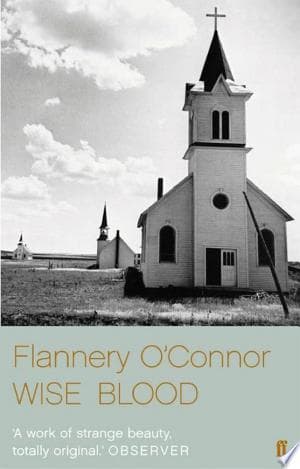
- Wise Blood
Flannery O'Connor
3.9 (26k) average on GoodreadsLiterary FictionExplores religious fanaticism and grotesque characters in the American South.
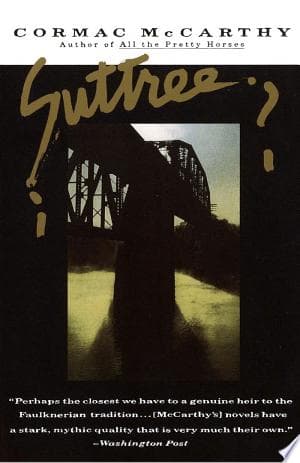
- Suttree
Cormac McCarthy
4.2 (18k) average on GoodreadsLiterary FictionFeatures an outcast protagonist and a bleak, poetic depiction of rural Southern life.
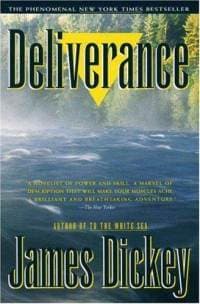
- Deliverance
James Dickey
3.9 (30k) average on GoodreadsLiterary FictionFocuses on primal violence and the dark side of humanity in a rural Southern setting.
- Nineteen Eighty-Four
George Orwell
4.2 (5.5M) average on GoodreadsFictionWinston Smith dreams of truth and rebellion in a world where Big Brother watches all, but he confronts the terrifying power of a regime that controls not just actions, but thoughts.
- The Frozen River
Ariel Lawhon
4.4 (600k) average on GoodreadsFictionIn 1789 Maine, a heroic midwife's diary helps her expose a murder and get justice in a town that wants to silence her.
- A Man Called Ove
Fredrik Backman
4.4 (569k) average on GoodreadsFictionA stubborn widower, who lives by strict rules, finds his quiet world changed by a lively new family next door, making him face his past and find happiness in human connection.



Enjoyed the summary?
A summary gives you the shape of the book. The book itself has the detail, the examples and the voice.
Find A Feast of Snakes on AmazonAs an Amazon Associate, BookBrief earns from qualifying purchases. How we're funded