

Synopsis
Covers the whole plot, including the ending.
- Difficulty
- Medium
- Pacing
- Moderate
- Mood
- Introspective, Thought-provoking, Melancholy, Hopeful
- Read it if
- You enjoy introspective family sagas, explore complex themes of faith, forgiveness, and the lasting impact of generational trauma, and appreciate a blend of psychological depth with a hopeful message.
- Skip it if
- You prefer fast-paced plots, lighthearted stories, or explicit fantasy elements, or if you are sensitive to themes of incest and family dysfunction.
A Live Coal in the Sea Plot Summary
Covers the whole plot, including the ending.
A Granddaughter's Disquieting Question
The novel opens with Dr. Camilla Dickinson, an elderly woman and respected psychiatrist, living a seemingly tranquil life. Her teenage granddaughter, Sarah, asks her an unsettling question: 'Are you really my grandmother?' This question shatters Camilla's composure, forcing her to confront the carefully constructed facade of her family history. The question acts as a catalyst, pulling Camilla back into the memories of her past, particularly those involving her own mother, Rose, and her son, Artaxias. Sarah's directness and the anxiety in her question hint at a deeper, unspoken family secret that has been simmering for generations, now threatening to demand answers.
Rose: A Mother's Unconventional Life
Camilla's thoughts immediately turn to her mother, Rose, a woman of beauty and charm, but also one whose life was marked by extramarital affairs. Rose's infidelity created an unstable and emotionally difficult environment for young Camilla. Her father, a kind but passive man, was unable to shield Camilla from the pain and confusion caused by Rose's actions. Camilla remembers the constant tension, the hushed arguments, and the longing for a stable, loving family unit that was perpetually out of reach. Rose's magnetic personality attracted many, yet her inability to commit to a conventional life left a lasting scar on Camilla's psyche, influencing her own choices and her understanding of love and commitment.
Meeting Nikos and the Birth of Artaxias
As Camilla navigates her early adulthood and establishes herself as a psychiatrist, she meets Nikos Xanthakos, a brilliant and passionate Greek man. Their connection is immediate, offering Camilla the stability and deep love she had always wanted, a stark contrast to the chaotic emotional setting of her childhood. They marry, and their union is soon blessed with a son, Artaxias. Camilla pours all her hopes and dreams into this new family, determined to create a loving and secure home, free from the shadows of her own past. However, even in these early days, there are subtle hints of challenges to come, particularly in Artaxias's intense and sometimes demanding nature.
Artaxias's Troubled Childhood and Rise to Fame
From a young age, Artaxias is a challenging child. He is intelligent and charismatic, but also prone to deep moods, manipulative tendencies, and an insatiable need for attention. Camilla, despite her professional expertise, struggles to understand and connect with her son on a fundamental level. As Artaxias grows older, his charm and talent lead him to become a successful television idol, adored by millions. However, the public persona hides a troubled individual, wrestling with inner demons, a volatile temper, and a tendency towards self-destructive behavior. His fame only amplifies his complexities, making it harder for Camilla to reach him.
The Unraveling of Artaxias and His Marriages
Artaxias's personal life mirrors his internal turmoil. He enters into a series of tumultuous relationships and marriages, each one ending in heartbreak and chaos. He marries a woman named Leah, and they have a daughter, Sarah (the granddaughter who questioned Camilla). However, Artaxias's erratic behavior, infidelity, and emotional abuse eventually drive Leah away, leaving Sarah in Camilla and Nikos's care for extended periods. Artaxias's actions bring pain and disappointment to Camilla and Nikos, who watch helplessly as their son spirals further into self-destruction, seemingly unable to find peace or stability, despite their unwavering love and attempts to intervene.
Leah's Secret and Sarah's Connection to Rose
As Sarah grows up, Camilla observes a resemblance between her granddaughter and her own mother, Rose – not just in physical appearance, but in a certain spirited, independent quality. This observation is coupled with a shocking revelation: Camilla learns that Leah, Artaxias's wife and Sarah's mother, has a hidden past. It is revealed that Leah is, in fact, the biological daughter of Rose and one of her many lovers. This discovery means that Artaxias and Leah are half-siblings, unknowingly marrying each other, and that Sarah is the product of this incestuous union. This revelation provides an answer to Sarah's initial question and explains the inherited complexities within the family.
The Weight of Incest and the Family Legacy
The full, devastating truth comes to light: Leah is Rose's daughter, making her Artaxias's half-sister. Sarah's parentage is therefore rooted in an unknowing incestuous relationship. This revelation is a shock to Camilla, Nikos, and eventually, to Sarah herself. It casts a dark shadow over their family history, connecting Artaxias's troubled nature and Rose's promiscuity in a disturbing way. The family grapples with the ethical, emotional, and psychological implications of this legacy. Camilla, as a psychiatrist, understands the potential for inherited trauma and mental health challenges, and she feels the weight of this secret, recognizing how it has shaped and perhaps even cursed her family line.
Nikos's Unwavering Love and Faith
Throughout the escalating family crises, Nikos Xanthakos remains Camilla's rock. His love for her is unwavering, and his deep faith provides a constant source of strength and hope. He is the moral compass of the family, often offering insights and compassion where Camilla, burdened by her professional understanding and personal pain, struggles. Nikos's Greek Orthodox background informs his perspective on forgiveness, mercy, and the enduring power of grace, even in the face of human failings. He believes in the possibility of redemption and that love can transcend even the darkest of circumstances, providing a vital counterpoint to the despair that threatens to engulf Camilla.
Camilla's Struggle with Forgiveness and Mercy
Camilla, despite her professional understanding of human psychology, finds it difficult to extend true forgiveness and mercy to Rose and Artaxias. The pain and trauma inflicted by her mother's actions and her son's destructive path run deep. She intellectualizes their behaviors but struggles to reconcile her emotional wounds. The concept of 'a live coal in the sea' – a symbol of divine mercy that can burn even in the most unlikely places – is a central metaphor for her internal struggle. She yearns to release her bitterness and resentment, to embrace the radical forgiveness that Nikos embodies, but finds the path challenging, especially when confronted with the ongoing repercussions of their choices.
Sarah's Search for Truth and Healing
Sarah, the victim of these intertwined family legacies, embarks on her own quest for truth and healing. Her initial question to Camilla was not born of malice, but a deep intuition that something was amiss. As she gradually learns the horrifying details of her parentage, she must reconcile this truth with her identity. Supported by Camilla and Nikos, Sarah begins to process the shock and pain, seeking to understand her place in the world and how to move beyond the shadow of her family's past. Her journey represents the possibility of breaking cycles of trauma and finding a future defined by hope rather than inherited pain, showing a generational shift towards healing.
Artaxias's Redemption and Death
Despite his long history of self-destruction, Artaxias experiences a moment of spiritual awakening and repentance towards the end of his life. This is not a sudden, miraculous cure for all his demons, but a genuine turning point where he acknowledges the pain he has caused and expresses a desire for forgiveness and connection. This moment of grace, however, is cut short. Artaxias dies prematurely, leaving his family to grapple with his complex legacy and the bittersweet nature of his late-found peace. His death, while painful, allows for a measure of closure and shows the novel's exploration of redemption, even in the final moments of a troubled life.
The Enduring Power of Love and Mercy
The novel concludes with Camilla, Nikos, and Sarah finding a path forward, scarred but not broken by the revelations and tragedies of their past. Camilla, through Nikos's unwavering example and her own deep reflection, begins to embrace the concepts of forgiveness and mercy, not as a denial of pain, but as a release from its bondage. Sarah, with the love and support of her grandparents, starts to forge her own identity, understanding her history but choosing not to be defined by its darkest aspects. The family learns that even amidst human failings and inherited trauma, love, faith, and the act of mercy can act as a 'live coal in the sea,' burning brightly and offering hope for healing and renewal across generations.
Principal Figures
Dr. Camilla Dickinson
Protagonist
Elderly psychiatrist grappling with her family's complex and painful history.
Camilla is a brilliant and respected psychiatrist, now in her later years. She is a woman of intellect and deep empathy, but also one who carries the weight of a difficult past, particularly concerning her charismatic but unfaithful mother, Rose, and her deeply troubled son, Artaxias. Her professional understanding of human behavior often clashes with her personal struggles to forgive and find peace. She is driven by a desire to protect her granddaughter, Sarah, and to understand the generational patterns of pain in her family. Her journey is one of confronting long-buried secrets and learning to embrace mercy.
Relationships: Rose (Daughter of Rose, deeply impacted by her mother's infidelity); Nikos Xanthakos (Wife of Nikos, who provides unwavering love and faith); Artaxias Xanthakos (Mother of Artaxias, struggles with his troubled nature); Sarah (Grandmother of Sarah, seeks to protect and guide her)
Nikos Xanthakos
Supporting
Camilla's loving and deeply faithful Greek husband, a pillar of strength.
Nikos is Camilla's devoted husband, a man whose Greek Orthodox faith provides him with a profound sense of peace, compassion, and unwavering love. He serves as Camilla's emotional anchor and moral compass, consistently demonstrating patience, forgiveness, and a radical belief in mercy, even in the face of immense family pain. He is less prone to intellectualizing problems than Camilla, instead relying on his deep spiritual understanding to navigate life's challenges. His presence is a constant reminder of hope and the possibility of redemption, embodying the titular 'live coal in the sea'.
Relationships: Camilla Dickinson (Husband of Camilla, her rock and spiritual guide); Artaxias Xanthakos (Father of Artaxias, loves him despite his flaws); Sarah (Grandfather of Sarah, offers her unconditional love and support)
Rose
Supporting
Camilla's beautiful and charismatic mother, whose infidelity deeply affected her family.
Rose is Camilla's mother, a woman of striking beauty and captivating charm, but also one whose life was marked by a series of extramarital affairs. Her inability to commit and her self-serving actions created a chaotic and emotionally damaging environment for young Camilla. Rose is a complex character – she possesses a magnetic quality that draws people to her, yet she is emotionally immature and incapable of providing the stable love Camilla craved. Her actions set in motion a chain of events that profoundly impact generations of the Xanthakos family, particularly through her hidden biological connection to Leah.
Relationships: Camilla Dickinson (Mother of Camilla, a source of both admiration and profound pain); Leah (Biological mother of Leah, a secret that unravels the family tree)
Artaxias Xanthakos
Supporting
Camilla and Nikos's troubled son, a charismatic TV idol plagued by inner demons.
Artaxias is Camilla and Nikos's son, a man of immense talent and charisma who becomes a successful television idol. Beneath his public persona, however, lies a deeply troubled individual. He struggles with a volatile temper, manipulative tendencies, and self-destructive patterns. His relationships are tumultuous, and he inflicts significant pain on those closest to him, particularly his wife, Leah, and his parents. Artaxias embodies the inherited complexities and potential for 'evil' within the family line, stemming from the hidden truth of his marriage to his half-sister. Despite his flaws, he experiences a moment of late-life repentance.
Relationships: Camilla Dickinson (Son of Camilla, a source of immense worry and disappointment); Nikos Xanthakos (Son of Nikos, loved unconditionally despite his failings); Leah (Husband of Leah (unknowingly his half-sister)); Sarah (Father of Sarah)
Leah
Supporting
Artaxias's wife and Sarah's mother, whose true parentage is a devastating family secret.
Leah is Artaxias's wife and Sarah's mother. She is depicted as a complex figure who is both drawn to Artaxias's charisma and deeply wounded by his destructive behavior. Her true significance to the plot is revealed when it is discovered that she is the biological daughter of Rose and one of her lovers, making her Artaxias's half-sister. This revelation exposes the incestuous nature of her marriage and Sarah's parentage, acting as a major catalyst for the family's confrontation with its past. She struggles with the weight of her hidden identity and the pain of her relationship with Artaxias.
Relationships: Artaxias Xanthakos (Wife of Artaxias (unknowingly his half-sister)); Sarah (Mother of Sarah); Rose (Biological daughter of Rose)
Sarah
Supporting
Camilla's granddaughter, whose innocent question unravels generations of family secrets.
Sarah is Camilla's teenage granddaughter, the child of Artaxias and Leah. Her innocent yet disquieting question, 'Are you really my grandmother?', serves as the initial spark that forces Camilla to confront her family's buried past. Sarah is intelligent, intuitive, and sensitive, and she senses a hidden truth within her family. As the devastating facts of her parentage come to light, she must grapple with a profoundly challenging identity. Her journey represents the possibility of healing and breaking generational cycles of trauma, moving forward with understanding and hope rather than being consumed by the past.
Relationships: Camilla Dickinson (Granddaughter of Camilla, seeks truth from her); Nikos Xanthakos (Granddaughter of Nikos, receives his unconditional love); Artaxias Xanthakos (Daughter of Artaxias); Leah (Daughter of Leah)
Camilla's Father
Mentioned
Camilla's kind but passive father, unable to protect her from Rose's infidelity.
Camilla's father is largely a background figure, remembered through Camilla's reflections. He is depicted as a kind and gentle man, but ultimately passive and unable to confront Rose's infidelity or protect Camilla from the emotional fallout of her mother's actions. His inability to assert himself contributed to the instability of Camilla's childhood. He represents a certain type of quiet resignation in the face of overwhelming personality, contrasting sharply with Nikos's active and faith-driven strength.
Relationships: Camilla Dickinson (Father of Camilla); Rose (Husband of Rose, endured her infidelity)
Themes & Insights
Identity and Self-Discovery
The novel explores how identity is shaped by family history, secrets, and the choices of previous generations. Sarah's initial question, 'Are you really my grandmother?', forces Camilla to re-evaluate her own identity in the context of her mother's past and her son's tragic life. For Sarah, discovering her true parentage challenges her sense of self, requiring her to reconcile a painful truth with her own aspirations. The characters must decide if they will be defined by their inherited traumas or forge their own path, embracing self-discovery amidst complexity.
“Are you really my grandmother?”
Forgiveness and Mercy
A central theme is the struggle to offer and receive forgiveness, particularly for deep hurts. Camilla, despite her professional understanding, finds it difficult to forgive Rose for her infidelities and Artaxias for his destructive behavior. Nikos, with his unwavering faith, embodies radical mercy, suggesting that grace can extend even to the most undeserving. The 'live coal in the sea' metaphor symbolizes this concept – that mercy can burn and bring light in the most unlikely and seemingly impossible circumstances, ultimately leading to healing for those who embrace it.
“A live coal in the sea—that's mercy. It burns even in the deepest, coldest places.”
The Legacy of Trauma and Sin
The book examines how the choices of one generation can ripple through and impact subsequent ones. Rose's infidelity leads to Leah's hidden parentage, which in turn results in Artaxias and Leah's unknowingly incestuous marriage and Sarah's complicated birth. This creates a generational cycle of pain, secrecy, and psychological struggle. The novel probes the question of whether individuals are condemned to repeat family patterns or if it's possible to break free from such a legacy through conscious effort, love, and a willingness to confront the truth.
“The past is never dead. It's not even past.”
The Nature of Love and Family
L'Engle explores the nature of love within a family context – the unconditional love of a parent, the complexities of marital love, and the enduring bond between grandparents and grandchildren. Despite the betrayals and pain, love remains a powerful, if sometimes strained, force within the Xanthakos family. Nikos's steadfast love for Camilla and Artaxias, and Camilla's protective love for Sarah, demonstrate its resilience. The novel suggests that true family love involves not just joy, but also the capacity to endure hardship, offer forgiveness, and continuously choose connection despite flaws.
“Love does not make you weak, it makes you vulnerable, and that is where your strength lies.”
Plot Devices & Literary Techniques
Dual Timeline/Flashbacks
The narrative shifts between the present and Camilla's past to reveal generational secrets.
The novel masterfully employs a dual timeline, constantly shifting between the present-day interactions of Camilla and Sarah and Camilla's vivid flashbacks to her childhood with Rose and her early life with Nikos and Artaxias. This device is crucial for gradually unfolding the complex family history and the long-held secrets. The past informs the present, with each flashback adding layers of understanding to the characters' motivations and the origins of the family's deep-seated traumas, culminating in the shocking revelation of Leah's true parentage and Sarah's origins.
The 'Disquieting Question' as Catalyst
Sarah's innocent question serves as the inciting incident for the entire narrative.
Sarah's simple question, 'Are you really my grandmother?', acts as the primary catalyst for the entire plot. It is not just a query but a profound challenge that shatters Camilla's carefully maintained composure and forces her to confront the buried truths of her family. Without this direct and unsettling question, Camilla might have continued to suppress the past. This device immediately establishes the central mystery and the emotional stakes, propelling the narrative forward as Camilla delves into her memories to find an answer, both for Sarah and for herself.
The 'Live Coal in the Sea' Metaphor
A recurring symbolic phrase representing divine mercy and enduring hope.
The phrase 'a live coal in the sea' functions as a powerful, central metaphor throughout the novel. It is primarily associated with Nikos's deep faith and his understanding of radical mercy – the idea that divine love and forgiveness can exist and even thrive in the most unlikely, darkest, or seemingly impossible circumstances, much like a burning coal in the depths of the ocean. This symbol provides a counterpoint to the pervasive themes of sin and trauma, offering hope for redemption and healing. It serves as a guiding principle for Camilla's eventual journey towards forgiveness.
Inherited Resemblance/Patterns
Physical and behavioral similarities across generations hint at underlying truths.
The novel uses inherited resemblances, both physical and behavioral, as a subtle but significant plot device. Camilla notes Sarah's striking similarity to Rose, not just in looks but in a certain spirit, long before the biological connection is revealed. Artaxias's charismatic yet destructive tendencies can also be seen as an echo of Rose's self-centered charm and its consequences. These patterns serve as premonitions and clues, suggesting a deeper, often uncomfortable, genetic and psychological inheritance that foreshadows the eventual revelation of the incestuous family tree and the complex legacy of trauma.
A Live Coal in the Sea Quotes
“You can't go back and change the beginning, but you can start where you are and change the ending.”
“The only way to deal with an unfree world is to become so absolutely free that your very existence is an act of rebellion.”
“We are all strangers in a strange land, longing for home, but not knowing where it is.”
“Love is not a feeling, it is an act of will.”
“The past is never dead. It's not even past.”
“To be human is to be flawed, and to be flawed is to be beautiful.”
“Sometimes the most important thing in a whole day is the rest we take between two deep breaths.”
“The truth will set you free, but first it will make you miserable.”
“We do not see things as they are, we see them as we are.”
“The only real failure is the failure to try.”
“In the midst of winter, I found there was, within me, an invincible summer.”
“The wound is the place where the light enters you.”
“To live is the rarest thing in the world. Most people exist, that is all.”
“The unexamined life is not worth living.”
Quiz
10 questions on the plot and the characters. Each answer comes with a short explanation.
Question 1
What event prompts Camilla Dickinson's granddaughter to question whether Camilla is her true grandmother?
- The discovery of old family letters in the attic
- A confrontation during a family dinner
- The granddaughter's direct question about her parentage
- A DNA test result that Camilla accidentally reveals
Show answer
C. The granddaughter's direct question about her parentage The novel begins with Camilla's teenage granddaughter directly confronting her with the question of whether Camilla is actually her grandmother, which forces long-buried family secrets to surface.
Question 2
Who is described as 'the deeply troubled TV idol' in the Xanthakos family?
- Camilla's husband
- Camilla's son, Artaxias
- Camilla's brother
- Camilla's father
Show answer
B. Camilla's son, Artaxias Artaxias is Camilla's son who becomes a television celebrity but struggles with personal demons, and his story is central to the family's multigenerational mystery.
Question 3
What literary technique does L'Engle primarily use to reveal the family's history?
- First-person narration from multiple perspectives
- Shuttling between past and present timelines
- Epistolary format using letters and diaries
- Allegorical fantasy sequences
Show answer
B. Shuttling between past and present timelines The novel skillfully moves between past events and the troubled present, gradually uncovering clues about the family's secrets across generations.
Question 4
How is Camilla's mother, Rose, characterized in the family history?
- As a stern, religious matriarch
- As an intellectual and scientist
- As an irresistibly beautiful woman who commits adultery
- As a victim of mental illness
Show answer
C. As an irresistibly beautiful woman who commits adultery Rose is remembered for her striking beauty and her adulterous relationships, which contribute to the family's legacy of secrets and emotional turmoil.
Question 5
What major theme does the book explore through the Xanthakos family's struggles?
- The conflict between science and religion
- The power of faith and mercy in confronting evil
- The importance of political activism
- The pursuit of artistic expression
Show answer
B. The power of faith and mercy in confronting evil As described in the book's summary, L'Engle examines how faith and mercy help the family confront a legacy of evil, blending her interests in faith and human experience.
Question 6
What is Camilla Dickinson's profession?
- Novelist
- Doctor
- Teacher
- Psychologist
Show answer
B. Doctor Camilla is referred to as 'Dr. Camilla Dickinson,' indicating she has a professional career, likely adding to her authority and complexity as a character.
Question 7
Why is the novel described as 'a haunting domestic drama'?
- Because it features supernatural elements in a household setting
- Because it focuses on psychological conflicts within a family across generations
- Because it is set during a haunted house renovation
- Because it includes ghostly apparitions of family members
Show answer
B. Because it focuses on psychological conflicts within a family across generations The story centers on the Xanthakos family's internal secrets, betrayals, and emotional wounds, creating intense personal drama rather than literal haunting.
Question 8
What aspect of Madeleine L'Engle's writing style is highlighted as blending in this novel?
- Her use of poetry and prose
- Her exploration of faith with her talent for storytelling
- Her combination of historical fiction and science fiction
- Her integration of musical references into the narrative
Show answer
B. Her exploration of faith with her talent for storytelling L'Engle is noted for both her faith-based explorations and her compelling narratives; this book merges these aspects to delve into family mysteries with spiritual depth.
Question 9
How does the title 'A Live Coal in the Sea' metaphorically relate to the story?
- It represents the family's fiery arguments that are submerged in secrecy
- It symbolizes hidden, burning truths that emerge from emotional depths
- It refers to a literal coal mine near the family's seaside home
- It describes the cooling of passions over time
Show answer
B. It symbolizes hidden, burning truths that emerge from emotional depths The title suggests secrets (like live coals) that are buried deep (in the sea) but still have the power to burn and surface, mirroring the family's hidden truths that eventually come to light.
Question 10
What distinguishes this novel from L'Engle's more famous work, 'A Wrinkle in Time'?
- It is written for an adult audience and focuses on realistic family drama
- It is a sequel to 'A Wrinkle in Time'
- It includes more fantasy elements than 'A Wrinkle in Time'
- It is shorter and less complex in plot
Show answer
A. It is written for an adult audience and focuses on realistic family drama While 'A Wrinkle in Time' is a children's fantasy classic, 'A Live Coal in the Sea' is an adult novel that deals with psychological and domestic issues, though both explore faith and human experience.
A Live Coal in the Sea FAQ
What is 'A Live Coal in the Sea' about?
The novel follows Dr. Camilla Dickinson as her teenage granddaughter questions whether Camilla is truly her grandmother, forcing long-buried family secrets to surface. The story shifts between past and present, exploring the Xanthakos family's multigenerational mystery involving Camilla's troubled son Artaxias and her beautiful, adulterous mother Rose.
Why should I read 'A Live Coal in the Sea'?
This is L'Engle's first adult novel in four years, blending her signature exploration of faith with a haunting domestic drama. It offers psychological complexity while examining how families confront legacies of evil through faith, love, and mercy.
What is the background/setting of 'A Live Coal in the Sea'?
The story shuttles between past and present within the Xanthakos family, primarily in domestic settings that reveal the family's hidden history. The contemporary timeline centers on Camilla's confrontation with her granddaughter, while flashbacks explore her relationships with her mother Rose and son Artaxias.
What writing style does Madeleine L'Engle use in this novel?
L'Engle employs a skillful narrative that moves between past and present, creating a multigenerational mystery through careful pacing and psychological depth. Her style maintains the warmth and compassion characteristic of her faith-based explorations while delivering gripping domestic drama.
What minor details add significant meaning to the story?
The title 'A Live Coal in the Sea' itself serves as a metaphor for hidden, smoldering truths within the family that eventually surface. Small references to Artaxias's troubled celebrity status and Rose's irresistible beauty carry weight as clues to the family's deeper dysfunctions.
What are some subtle foreshadowing moments?
Early mentions of Camilla's reluctance to discuss family history foreshadow the devastating secrets about her son Artaxias and mother Rose. The granddaughter's innocent question about her grandmother's identity plants seeds that gradually reveal the complex web of relationships.
What unexpected character connections exist?
The central mystery revolves around whether Camilla is actually her granddaughter's grandmother, suggesting unexpected biological connections between Camilla, her son Artaxias, and possibly her mother Rose. These connections challenge traditional family roles and loyalties.
What are Camilla's unspoken motivations throughout the story?
Camilla's protective silence about family history stems from her desire to shield loved ones from painful truths about her mother's adultery and her son's psychological troubles. Her medical career as Dr. Camilla Dickinson reflects her need to heal others while avoiding her own family's wounds.
What psychological complexities does Artaxias exhibit?
Artaxias, the deeply troubled TV idol, embodies the family's legacy of dysfunction through his celebrity status and psychological struggles. His character explores how fame intersects with inherited family trauma, creating a complex portrait of someone simultaneously admired and broken.
What are the major emotional turning points?
The granddaughter's confrontation about her grandmother's identity triggers the primary emotional shift, forcing secrets to surface. Subsequent revelations about Rose's adultery and Artaxias's troubles create cascading emotional crises that test the family's faith and loyalty.
How do relationship dynamics evolve between Camilla and her granddaughter?
Their relationship transforms from presumed certainty to painful questioning, then potentially to deeper understanding as truths emerge. The granddaughter's courage in asking difficult questions forces Camilla to confront what she has long avoided, changing their dynamic fundamentally.
Which parts of the story remain ambiguous or open-ended?
The exact nature of the biological relationships within the Xanthakos family maintains some ambiguity, particularly regarding who is truly related to whom. The resolution of Artaxias's psychological troubles and the full impact of Rose's adultery leave room for interpretation.
What are controversial scenes or decisions in the novel?
Rose's adulterous behavior and its multigenerational consequences present moral complexities. Camilla's decision to keep family secrets for years, while protective, raises questions about honesty versus protection in family relationships.
'A Live Coal in the Sea' ending explained: how it ends & what it means
The novel concludes with the Xanthakos family confronting their painful legacy through faith and mercy. While specific resolution details aren't provided, the emphasis is on how truth-telling and compassion allow the family to move forward despite their history of evil and deception.
How does L'Engle explore faith in this domestic drama?
Faith operates as both challenge and salvation as the Xanthakos family confronts their legacy of evil. Through Camilla's journey and the family's crisis, L'Engle examines how faith sustains people through revelations that test love and loyalty to their limits.
About the author
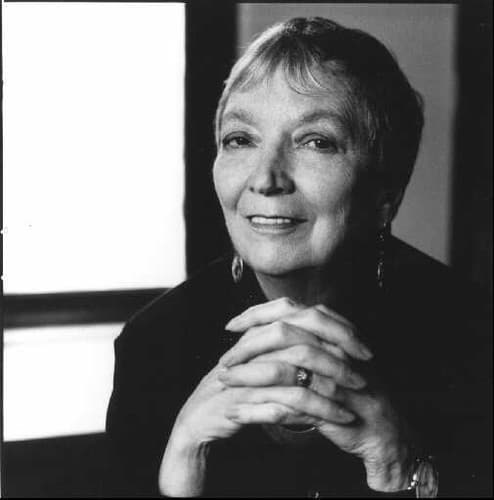
Madeleine L'Engle was an American writer of fiction, non-fiction, poetry, and young adult fiction, including A Wrinkle in Time and its sequels: A Wind in the Door, A Swiftly Tilting Planet, Many Waters, and An Acceptable Time. Her works reflect both her Christian faith and her strong interest in modern science.
Similar books
- East of Eden
John Steinbeck
4.4 (429k) average on GoodreadsLiterary FictionExplores generational struggles, good vs. evil, and complex family dynamics with deep psychological insight.
- The House of the Spirits
Isabel Allende
4.2 (190k) average on GoodreadsFantasyA multi-generational saga with magical realism, focusing on family secrets, love, and political upheaval.
- Gilead (Oprah's Book Club)
Marilynne Robinson
3.9 (126k) average on GoodreadsFictionAn introspective novel by a revered author, exploring themes of faith, family, and the search for meaning.
- Possession
A.S. Byatt
4.3 (13k) average on GoodreadsRomanceBoth novels utilize historical documents (letters, journals) and a dual timeline to uncover past lives and secrets. Byatt's Possession is a masterclass in intertextuality, literary mystery, and academic exploration, with a highly intricate plot. L'Engle's A Live Coal in the Sea focuses more squarely on the emotional and spiritual inheritance within a family, making it less academic but perhaps more universally accessible in its emotional core and exploration of familial bonds rather than purely intellectual discovery.
- The Old Man and the Sea
Ernest Hemingway
3.8 (831k) average on GoodreadsLiterary FictionA Cuban fisherman's long struggle with a giant marlin becomes a story of endurance and dignity, now retold for young adults with illustrations, phonetic guides, and writing prompts in Traditional Chinese.
- One Hundred Years of Solitude
Gabriel García Márquez
4.1 (753k) average on GoodreadsLiterary FictionThrough the multi-generational story of the Buendía family, a mythical town deals with the repeating patterns of time, love, and solitude, as the extraordinary mixes with the ordinary.






Enjoyed the summary?
A summary gives you the shape of the book. The book itself has the detail, the examples and the voice.
Find A Live Coal in the Sea on AmazonAs an Amazon Associate, BookBrief earns from qualifying purchases. How we're funded