

Synopsis
Covers the whole plot, including the ending.
- Difficulty
- Easy
- Pacing
- Moderate
- Mood
- Whimsical, Reflective, Hopeful, Mysterious
- Read it if
- You enjoy whimsical, heartfelt stories about self-discovery, magical realism, and a touch of mystery, with a focus on finding belonging.
- Skip it if
- You prefer hard fantasy with complex world-building, or if you dislike stories that blend the mundane with the fantastical in a philosophical way.
A Place Called Here Plot Summary
Covers the whole plot, including the ending.
A Childhood Obsession with the Lost
Sandy Shortt's life changes at age ten when her classmate, Jenny-May Butler, disappears. This event affects Sandy deeply, giving her an intense need to find anything lost, from socks and keys to more important items. As an adult, Sandy turns this into a job, opening a 'missing persons' agency. Despite her family's doubts, especially her practical sister, Sandy dedicates her life to helping those whose loved ones have vanished. She carefully lists lost items and people, believing that nothing truly disappears forever, only becomes misplaced.
The Case of Donal Ruttle and Sandy's Disappearance
Sandy takes on a new case: to find Donal Ruttle, the younger brother of Jack Ruttle. Donal vanished years ago, and Jack wants answers. Sandy looks into the details of Donal's disappearance, following every clue. One evening, while searching for a clue in a dense forest, Sandy gets lost herself. She wanders deeper, finding an unexplained entrance. As if pulled, Sandy goes through it, leaving her world behind and becoming one of the lost she sought.
Arrival in Here
Sandy wakes up in a surreal place called 'Here.' It is a large, messy, yet organized realm where everything and everyone lost from the human world ends up. She finds many lost items – single socks, car keys, forgotten memories, and even cities – and, more importantly, lost people. These people, like Sandy, have vanished from their former lives. She quickly learns the rules of 'Here,' overseen by a mysterious figure named Silas. Sandy is confused but also interested, realizing this is where all she has searched for is kept.
Adjusting to Life Among the Lost
Initially overwhelmed, Sandy starts to get used to her new life in 'Here.' She meets a community of lost people, each with their own story of how they arrived. Among them, she is surprised to find Jenny-May Butler, her childhood classmate whose disappearance started Sandy's lifelong search. Jenny-May, now an adult, helps Sandy understand how 'Here' works, including that lost things and people are always moving and changing. Sandy also meets a man named Greg, who becomes a close friend. She learns that 'Here' is a place of waiting and also a place for thinking, where the lost often face the reasons for their disappearance.
The Search for Donal and the Rules of Return
Driven by her professional instincts, Sandy starts looking for Donal Ruttle within 'Here.' To her surprise, she finds him, living a detached life. Donal explains that he 'got lost' because he wanted to escape his former life. Sandy also learns about the difficult rules for returning to the human world, or 'There.' A person can only return if someone in 'There' genuinely and actively searches for them, and if the lost person truly wants to be found, not just to escape 'Here.' The connection between the two worlds is fragile.
Jack's Persistence in 'There'
Meanwhile, back in the human world, Jack Ruttle is upset by Sandy's disappearance. He feels responsible and has growing feelings for her. Jack, who hired Sandy to find his brother, is now searching for her. He dedicates himself to finding Sandy, like her own search for the lost. He puts up flyers, contacts authorities, and follows every lead, not giving up hope. His constant search is important, as it is the only force strong enough to bring Sandy back to 'There' and give her a way home, if she chooses it.
Confronting the Past and Future
As Sandy spends more time in 'Here,' she thinks about her life before she got lost. She realizes that her intense search for others often helped her avoid her own feelings of loneliness and not belonging. She starts to understand that getting lost was not just an accident, but perhaps an unconscious wish for a pause, a place to process her unresolved feelings. The calm and timelessness of 'Here' make her face her past relationships, her family's doubts, and the real reasons behind her life's work. She also thinks about a future with Jack.
The Choice to Be Found
Sandy faces a choice. She has found Jenny-May, Donal, and a kind of peace in 'Here.' She understands that to return, someone in 'There' must actively look for her (which Jack is doing), and she must truly want to be found and return. She can choose to stay in the timeless state of 'Here,' or she can work to reconnect with her old life and the chance of a future with Jack. This decision makes her weigh the comfort of what she knows against the uncertainty of the future and the possibility of love.
A Glimmer of Hope and a Shared Journey
As Sandy's wish to return grows, she finds that the connection between 'Here' and 'There' can show up in subtle ways. Through shared dreams and brief feelings, she makes a weak link with Jack. These moments, though short, strengthen Jack's belief that Sandy is still out there and make him search harder. For Sandy, they remind her of the life she left behind and her growing love for Jack. This shared, almost psychic journey across dimensions strengthens their bond, making her choice to return even more important.
The Return and a New Beginning
With Jack's continued efforts in 'There' and Sandy's conscious decision and strong will to return from 'Here,' a path eventually opens. Sandy finds herself back in her original world, confused but clearly present. Her return shows how powerful it is to be truly sought and to truly want to be found. She reunites with Jack, and their connection, formed across dimensions, is stronger. Sandy, no longer driven by an intense need to find the lost, finds a new balance in her life. She continues her work but with a deeper understanding of human connection and the importance of presence, starting a future with Jack, based on love and understanding.
A Place Called Here Characters
Sandy Shortt
Protagonist
A woman obsessed with finding lost things who eventually becomes lost herself.
Sandy Shortt is a compassionate yet obsessive woman whose life is defined by her quest to find lost items and people. The disappearance of her childhood classmate, Jenny-May Butler, ignites this lifelong mission. She establishes a missing persons agency, driven by a deep-seated belief that nothing truly vanishes. Sandy is meticulous, determined, and empathetic, often feeling a profound connection to the lost. Her journey into 'Here' forces her to confront her own reasons for being so focused on absence, revealing a subconscious desire for belonging and a need to be found herself. Her arc involves moving from an external search to an internal one, ultimately finding a more balanced purpose.
Relationships: Jack Ruttle (Love interest, client who becomes her rescuer); Jenny-May Butler (Childhood classmate, found in 'Here'); Donal Ruttle (Jack's lost brother, Sandy's client, found in 'Here'); Greg (Friend and confidant in 'Here')
Jack Ruttle
Supporting/Love Interest
A charming man who hires Sandy to find his lost brother and later searches for her.
Jack Ruttle is introduced as Sandy's client, seeking help to find his younger brother, Donal. He is initially portrayed as charming and persistent, but his character deepens significantly after Sandy's disappearance. Jack becomes the unwavering force in 'There' (the human world) who actively searches for Sandy, mirroring her own life's work. His determination, hope, and growing love for Sandy are crucial to her potential return from 'Here.' He represents the power of human connection and the active pursuit of what is lost, embodying the very essence of what Sandy had always believed in. He is Sandy's anchor to the human world.
Relationships: Sandy Shortt (Love interest, client who becomes the one he searches for); Donal Ruttle (Lost younger brother)
Jenny-May Butler
Supporting
Sandy's childhood classmate whose disappearance sparked Sandy's lifelong obsession, found in 'Here.'
Jenny-May Butler is the catalyst for Sandy's entire life's work. Her disappearance as a child deeply traumatizes Sandy and instills in her the compulsive need to find lost things. When Sandy arrives in 'Here,' she is astonished to find Jenny-May, now an adult, living among the lost. Jenny-May serves as a guide and a familiar face, helping Sandy understand the rules and nature of 'Here.' Her presence provides closure for Sandy's longest-standing case and highlights the book's central premise that nothing is truly gone, only misplaced. Jenny-May represents the enduring impact of loss and the possibility of reunion.
Relationships: Sandy Shortt (Childhood classmate, friend and guide in 'Here')
Donal Ruttle
Supporting
Jack's younger brother, who deliberately became 'lost' and is found by Sandy in 'Here.'
Donal Ruttle is the initial missing person Sandy is hired to find for Jack. He is found by Sandy in 'Here,' revealing that his disappearance was not accidental but a deliberate act of getting lost, a desire to escape his former life and responsibilities. Donal embodies the idea that some people choose to be lost, or at least subconsciously desire it. He provides a contrast to Sandy's relentless search, showing a different perspective on being 'misplaced.' His presence in 'Here' allows Sandy to understand the complexities of why people vanish and the differing desires for being found.
Relationships: Jack Ruttle (Older brother); Sandy Shortt (Client's missing brother, found in 'Here')
Silas
Supporting
The enigmatic figure who governs the realm of 'Here.'
Silas is the mysterious, almost bureaucratic figure who oversees the operations and rules of 'Here.' He is not exactly a person but more a manifestation of the realm's order and logic. Silas provides Sandy with explanations about the nature of being lost, the shifting landscape of 'Here,' and the almost impossible conditions for returning to 'There.' He is a figure of wisdom and authority within 'Here,' representing the inherent structure within the chaos of lost things. Silas is crucial for Sandy's understanding of her new reality and the challenges she faces.
Relationships: Sandy Shortt (Guide/informant in 'Here')
Greg
Supporting
A kind and understanding friend Sandy makes in 'Here.'
Greg is one of the lost people Sandy befriends shortly after her arrival in 'Here.' He is a compassionate and insightful individual who helps Sandy navigate the strange new world. Greg offers emotional support and a sense of camaraderie, allowing Sandy to feel less alone in her disorientation. He represents the community and shared experience among the lost, providing a sounding board for Sandy's thoughts and fears. His presence highlights the human need for connection, even in a place designed for absence.
Relationships: Sandy Shortt (Friend and confidant in 'Here')
Susan Shortt
Supporting
Sandy's practical and often exasperated sister.
Susan is Sandy's older sister, who represents the more grounded and skeptical perspective in the human world. She often expresses concern and exasperation over Sandy's unconventional career and obsessive nature, wishing Sandy would lead a more 'normal' life. Despite her practicality, Susan deeply cares for Sandy. Her initial skepticism highlights the contrast between Sandy's unique view of the world and conventional understanding. After Sandy's disappearance, Susan's concern becomes genuine worry, showcasing her underlying love and fear for her sister's well-being.
Relationships: Sandy Shortt (Sister)
Mrs. Shortt
Mentioned
Sandy's mother, who worries about her daughter's unusual profession.
Sandy's mother is often mentioned as being concerned about Sandy's life choices and her dedication to finding lost items. She represents the parental worry and desire for her child to have a stable, conventional life. Her concerns add to the external pressures Sandy faces in 'There' regarding her unique career path.
Relationships: Sandy Shortt (Mother)
Mr. Shortt
Mentioned
Sandy's father, who is somewhat more understanding of her passion.
Sandy's father is presented as being slightly more tolerant and perhaps even quietly proud of Sandy's unusual passion, compared to her mother and sister. He offers a small counterpoint to the family's general skepticism, providing a touch of quiet support for Sandy's endeavors, even if he doesn't fully understand them.
Relationships: Sandy Shortt (Father)
A Place Called Here Themes
Loss and Being Lost
The main theme is about the literal and figurative parts of loss. Sandy's life is about finding what is lost, a search started by Jenny-May's disappearance. When Sandy herself gets lost, she experiences the feeling from the other side, understanding what it means to be misplaced versus truly gone. The book explores why people and things get lost, sometimes by accident, sometimes by choice (like Donal), and how this affects those left behind. It suggests that loss is not always an end, but sometimes a temporary state or a necessary pause.
“Nothing is ever truly lost. It's just misplaced.”
Identity and Self-Discovery
Sandy's journey into 'Here' is about self-discovery. Her intense focus on finding others hid her own feelings of being lost or not belonging in her own life. In 'Here,' without her familiar surroundings and purpose, she has to face her true reasons, fears, and desires. She realizes that her constant search was partly a way to avoid looking inward. Her time in 'Here' lets her understand who she is beyond her job, leading her to a more authentic sense of self and a clearer understanding of what she wants from life.
“Perhaps you were lost because you needed to find yourself.”
The Power of Connection and Being Found
The book highlights the role of human connection in dealing with loss. Sandy's ability to return from 'Here' depends on Jack's steady search for her and her own desire to be found. This shows that being 'found' takes effort from both sides. The connections Sandy makes in 'Here' (with Jenny-May, Greg) also show the human need for belonging, even among the lost. The love story between Sandy and Jack shows that true connection can go beyond physical limits.
“You can only be found if someone searches for you, and if you truly want to be found.”
Purpose and Obsession
Sandy's life is defined by her purpose to find the lost, which is almost an obsession. The book looks at the line between dedication and an all-consuming fixation. While her obsession makes her good at her job and helps her journey into 'Here,' it also isolates her and stops her from fully living her own life. Her experiences in 'Here' make her rethink her purpose, changing it from a compulsive need to a more balanced and conscious choice, combining her unique abilities with a more satisfying personal life.
“For years, finding things had been my only purpose. Now, I wondered if it had also been my escape.”
Plot Devices & Literary Techniques
The Realm of 'Here'
A fantastical, limbo-like dimension where all lost things and people end up.
The realm of 'Here' is the central fantastical plot device. It serves as a literal manifestation of the concept of 'being lost' and 'misplaced.' This unique setting allows the author to explore the themes of loss, identity, and connection in a tangible way. It's a place of timelessness and constant flux, where everything from socks to memories, and entire people, are gathered. 'Here' is not just a location but a state of being, offering a unique perspective on what it means to be absent from one's original place. It enables Sandy's journey of self-discovery by removing her from her familiar world.
The 'Missing Persons' Agency
Sandy's unconventional business, serving as a practical manifestation of her obsession.
Sandy's 'Missing Persons' agency is a key plot device that grounds her fantastical obsession in a real-world context. It provides a credible reason for her meticulous research, her unique skills, and ultimately, her involvement with cases like Donal Ruttle's that lead to her own disappearance. The agency highlights the contrast between the mundane reality of lost items and the profound emotional impact of lost people. It also serves as a vehicle to introduce various characters and their stories of loss, broadening the scope of the theme before Sandy's personal journey into 'Here.'
The Rules of Return
The strict, almost mystical conditions governing a person's ability to leave 'Here' and return to 'There.'
The 'Rules of Return' are a crucial plot device that drive the narrative tension and Sandy's internal conflict. These rules, primarily that a person must be actively sought in 'There' and genuinely desire to be found, establish the near-impossible challenge of leaving 'Here.' They emphasize the dual nature of connection – both external (Jack's search) and internal (Sandy's will). This device elevates the stakes of Sandy's predicament and transforms her journey from a simple escape to a profound choice, intertwining her fate with Jack's efforts and her own self-realization.
Shared Dreams/Subtle Connections
Fleeting, almost psychic links between Sandy in 'Here' and Jack in 'There.'
This device highlights the enduring power of connection across dimensions. The occasional shared dreams, feelings, or subtle signs that pass between Sandy and Jack serve to reinforce their bond and give both of them hope. For Jack, these are crucial affirmations that Sandy is still 'out there' and worth searching for, preventing him from giving up. For Sandy, they are anchors to her old life and the growing love she feels, strengthening her desire to return. This device makes their separation feel less absolute and adds a romantic, mystical layer to their relationship.
A Place Called Here Quotes
“Sometimes the things we lose find their way back to us, even if it's not in the way we expect.”
“Here is where the lost things go, but it's also where the lost people find themselves.”
“You can't truly be found until you admit you're lost.”
“In a place where everything is misplaced, you start to see what truly matters.”
“Love isn't about finding the perfect person, but about seeing an imperfect person perfectly.”
“The past isn't something to run from; it's a map to who you are.”
“Sometimes the most ordinary objects hold the most extraordinary stories.”
“Fear of being lost can keep you from ever being found.”
“Here, time doesn't heal wounds; understanding does.”
“We're all just trying to find our way back to something, even if we don't know what it is.”
“The heart has a compass that logic can never understand.”
“In losing everything, you might just find what you've been missing all along.”
“Magic isn't in the place; it's in what the place helps you see.”
“Every lost thing has a story, and every story has a home.”
Quiz
10 questions on the plot and the characters. Each answer comes with a short explanation.
Question 1
What traumatic childhood event sparked Sandy Shortt's lifelong obsession with finding missing things?
- Her own disappearance for a day when she was eight
- The disappearance of a girl from her class when she was ten
- Losing her favorite toy as a young child
- Her father abandoning the family when she was twelve
Show answer
B. The disappearance of a girl from her class when she was ten When Sandy was ten years old, a girl from her class disappeared, which traumatized her and ignited her lifelong passion for finding missing things and people.
Question 2
What type of business does Sandy run before she disappears?
- A detective agency specializing in corporate espionage
- A search agency for missing people and items
- A counseling service for families of crime victims
- A wilderness survival training company
Show answer
B. A search agency for missing people and items Sandy runs a search agency dedicated to finding missing people and objects, giving hope to families and never giving up on cases.
Question 3
Who hires Sandy to find a missing person just before she disappears herself?
- A woman searching for her lost daughter
- Jack Ruttle, looking for his missing brother
- The police department for a cold case
- Her childhood friend seeking closure
Show answer
B. Jack Ruttle, looking for his missing brother Jack Ruttle hires Sandy to find his missing brother, which leads her to investigate in a forest where she gets lost and disappears to 'Here'.
Question 4
Where does Sandy find herself after disappearing in the forest?
- In a parallel universe called 'Nowhere'
- In a mysterious place called 'Here'
- In a hidden village in the mountains
- In a dream-like state in her own mind
Show answer
B. In a mysterious place called 'Here' After getting lost in the forest, Sandy disappears to a mysterious, magical place known as 'Here', where all missing things and people end up.
Question 5
What is the primary theme explored through Sandy's journey in 'Here'?
- The dangers of obsession and compulsion
- The search for meaning, love, and self-discovery
- The importance of technological advances in search efforts
- The inevitability of fate and destiny
Show answer
B. The search for meaning, love, and self-discovery The novel explores themes of searching for life's meaning, love, and self-identity, as Sandy's physical journey mirrors her internal quest for understanding.
Question 6
How does Sandy's character evolve after arriving in 'Here'?
- She becomes more detached and cynical about finding missing people
- She learns to let go of her obsession and find personal fulfillment
- She becomes the leader of the community in 'Here'
- She focuses solely on escaping back to her old life
Show answer
B. She learns to let go of her obsession and find personal fulfillment In 'Here', Sandy confronts her own issues and learns to balance her search for others with finding happiness and love for herself, leading to personal growth.
Question 7
What genre blend best describes 'A Place Called Here'?
- Historical fiction and thriller
- Fantasy, mystery, and romance
- Science fiction and horror
- Realistic drama and comedy
Show answer
B. Fantasy, mystery, and romance The book combines elements of fantasy (the magical place 'Here'), mystery (the disappearances and searches), and romance (Sandy's relationships).
Question 8
What symbolic role does 'Here' play in the novel?
- It represents a bureaucratic system for lost items
- It serves as a metaphor for unresolved grief and the search for closure
- It is a literal government facility for missing persons
- It symbolizes technological failure in tracking systems
Show answer
B. It serves as a metaphor for unresolved grief and the search for closure 'Here' symbolizes the emotional and psychological space where missing things and people reside, reflecting themes of loss, memory, and the human need for resolution.
Question 9
How does the novel resolve Sandy's connection to her search agency and Jack Ruttle?
- She abandons her agency and cuts all ties with Jack
- She returns to her old life unchanged and continues searching alone
- She integrates her experiences in 'Here' to find a balance between helping others and her own happiness, potentially with Jack
- She stays in 'Here' permanently and forgets about her past life
Show answer
C. She integrates her experiences in 'Here' to find a balance between helping others and her own happiness, potentially with Jack The resolution involves Sandy using her insights from 'Here' to transform her approach to searching, finding a healthier balance that may include a romantic connection with Jack.
Question 10
What deeper philosophical question does Sandy's journey in 'Here' prompt readers to consider?
- The economic impact of missing persons on society
- The nature of reality versus illusion in modern life
- What it means to be 'lost' and 'found' in emotional and existential terms
- The legal definitions of disappearance in different countries
Show answer
C. What it means to be 'lost' and 'found' in emotional and existential terms The novel encourages reflection on existential themes: how people can be physically present but emotionally lost, and what it truly means to find oneself or others beyond the literal sense.
A Place Called Here FAQ
What is 'A Place Called Here' about?
The novel follows Sandy Shortt, a woman obsessed with finding missing things and people since a childhood classmate disappeared. Her search for Jack Ruttle's missing brother leads her to vanish into a mysterious realm called 'Here,' where all lost items and people end up, forcing her to confront her own past and purpose.
Why should I read 'A Place Called Here'?
It's a unique blend of fantasy, mystery, and romance that explores profound themes of loss, purpose, and self-discovery through an imaginative premise. The emotional depth, suspenseful plot, and Sandy's transformative journey make it both thought-provoking and deeply moving.
What is the background/setting of 'A Place Called Here'?
The story begins in contemporary Ireland, where Sandy runs a missing persons agency. Most of the plot unfolds in the fantastical realm of 'Here,' a surreal place where everything lost in the world accumulates, from socks to people, creating a community of the misplaced.
What are the most memorable quotes?
Key quotes include Sandy's mantra, 'I never give up,' reflecting her obsession, and lines like 'Here is where the lost are found,' highlighting the novel's central theme. The poignant, 'Sometimes you have to get lost to find yourself,' encapsulates her journey.
What writing style does Cecelia Ahern use?
Ahern employs a lyrical, emotive prose style that blends magical realism with psychological depth. The narrative alternates between Sandy's introspective first-person perspective and third-person sections, creating an immersive, dreamlike atmosphere that enhances the mystery.
What minor details add significant meaning?
Small details like Sandy's childhood classmate's disappearance haunting her adult life, or the mundane lost items in 'Here' (e.g., socks, keys) symbolizing everyday losses, underscore the theme that nothing is truly insignificant when it goes missing.
What are some subtle foreshadowing moments?
Early scenes of Sandy's relentless searches hint at her eventual disappearance into 'Here.' Her fixation on finding others foreshadows that she, too, is lost in a metaphorical sense, needing to be found emotionally and spiritually.
What unexpected character connections exist?
In 'Here,' Sandy encounters people from her past, including her missing classmate, revealing how their lives intertwined. Her connection with Jack Ruttle deepens as they both seek missing loved ones, blurring lines between professional duty and personal redemption.
What are unspoken character motivations?
Sandy's obsession with finding the lost stems from unresolved guilt over her classmate's disappearance, driving her to avoid her own emotional voids. Jack's search for his brother masks a deeper need for closure and connection after loss.
What psychological complexities do characters exhibit?
Sandy shows compulsive behavior and avoidance, using others' losses to ignore her own inner turmoil. Characters in 'Here' often grapple with denial or acceptance of their 'lost' status, reflecting real-world struggles with identity and purpose.
What are the major emotional turning points?
Key moments include Sandy's disappearance into 'Here,' her realization that she must find herself, not just others, and her decision to help others in 'Here' find peace. Her growing bond with Jack also marks a shift from isolation to connection.
How do relationship dynamics evolve?
Sandy's relationship with Jack transitions from professional detachment to mutual support and romance, as they share their grief. In 'Here,' she moves from seeing lost people as cases to forming genuine friendships, learning to value presence over pursuit.
Which parts remain ambiguous or open-ended?
The exact nature of 'Here' is left mystical—whether it's a physical place, psychological state, or afterlife is unclear. Some characters' fates, like whether all find their way back, are open to interpretation, emphasizing the novel's themes of uncertainty.
What are controversial scenes or decisions?
Sandy's choice to stay in 'Here' temporarily, risking never returning, sparks debate about self-sacrifice versus responsibility. Her initial obsession with searching, which neglects her own life, raises questions about healthy coping mechanisms for trauma.
'A Place Called Here' ending explained: how it ends & what it means
Sandy returns to the real world with a renewed sense of self, having helped others in 'Here' find closure. The ending suggests that being 'found' isn't about physical location but emotional acceptance, with Sandy and Jack embracing a future together, symbolizing hope and healing.
About the author

Cecelia Ahern is an Irish author known for her heartwarming and often magical realist fiction. Her debut novel, P.S. I Love You, became an international bestseller and was adapted into a popular film. Ahern's other notable works include "Where Rainbows End" (also adapted for film as "Love, Rosie"), "The Gift," and "The Book of Tomorrow." Her writing frequently explores themes of love, loss, and the power of human connection.
Similar books
- The Midnight Library
Matt Haig
Explores a magical in-between place where characters confront life choices and find meaning.
- P.S. I Love You
Cecelia Ahern
4.0 (337k) average on GoodreadsRomanceShares the author's signature blend of romance, emotional depth, and a touch of magical realism in dealing with loss and moving forward.
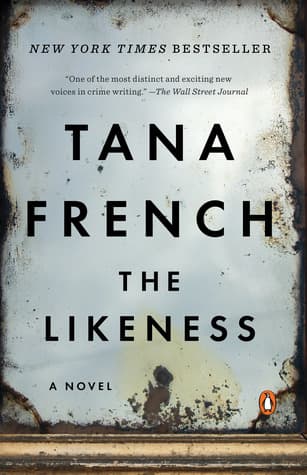
- The Likeness
Tana French
4.0 (126k) average on GoodreadsThrillerAs a mystery novel, "The Likeness" excels in its intricate plot, deep psychological character studies, and the masterful intertwining of setting with character psyche. "A Place Called Here"'s mystery element, while present, feels less complex and the character motivations, while clear, are less nuanced and psychologically rich than those presented by French.
- Harry Potter and the Sorcerer's Stone
J.K. Rowling
4.5 (7M) average on GoodreadsFantasyRescued from a miserable life under the stairs, an orphaned boy discovers he's a wizard destined for a magical school, where he uncovers a dangerous secret tied to the dark wizard who murdered his parents.
- The Hunger Games
Suzanne Collins
4.3 (6.4M) average on GoodreadsFantasyIn a future where children fight to the death on live television, Katniss Everdeen volunteers for the arena, turning a death sentence into a fight for survival and a spark of rebellion.
- 1984
George Orwell
4.2 (3.1M) average on GoodreadsPoliticsIn a future where surveillance and thought control are absolute, a man's search for truth clashes with the Party, showing that hope can be a form of rebellion.





Enjoyed the summary?
A summary gives you the shape of the book. The book itself has the detail, the examples and the voice.
Find A Place Called Here on AmazonAs an Amazon Associate, BookBrief earns from qualifying purchases. How we're funded