
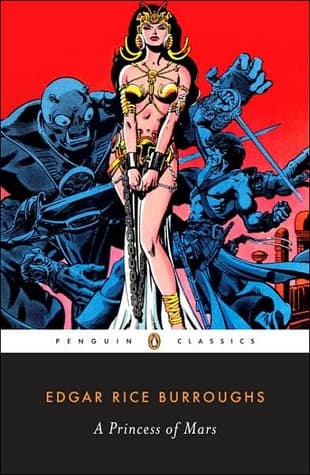
Synopsis
Covers the whole plot, including the ending.
- Difficulty
- Easy
- Pacing
- Fast
- Mood
- Adventurous, Romantic, Exotic, Action-packed
- Read it if
- You enjoy classic pulp sci-fi adventures with a clear hero, damsel in distress, and exotic alien worlds.
- Skip it if
- You prefer modern science fiction with complex themes, nuanced characters, and less straightforward narratives, or if you are sensitive to dated cultural depictions.
A Princess of Mars Plot Summary
Covers the whole plot, including the ending.
A Mysterious Journey to Mars
John Carter, a Virginian gentleman and former Confederate captain, recounts his mysterious journey to Mars. After prospecting for gold in Arizona and escaping Apache pursuit, he seeks refuge in a cave. Overcome by a strange paralysis, he finds himself staring at the red planet. When he recovers, he discovers his physical body is still in the cave, but his consciousness has been transported to Mars. He immediately notices the planet's lower gravity, which gives him superhuman strength and leaping ability, though he initially struggles with coordination. He observes the desolate landscape and the two moons of Barsoom.
Encounter with the Tharks
Soon after arriving, John Carter encounters a horde of green-skinned, four-armed, six-limbed Martian giants known as Tharks. Despite their initial hostility, his unusual appearance and incredible strength, a result of Earth's higher gravity conditioning, impress them. He is captured and taken to their fortress. Among the Tharks, he meets Sola, a relatively compassionate female Thark who is assigned to care for him. Through observation and Sola's subtle guidance, Carter begins to learn the Thark language and their brutal, warlike customs, which prioritize strength and indifference to emotion.
A Princess in Captivity
During a raid, the Tharks capture a group of red Martians, including the beautiful Princess Dejah Thoris of Helium. John Carter is immediately captivated by her beauty and grace, a stark contrast to the harsh Thark environment. He feels a powerful urge to protect her. Dejah Thoris is defiant and proud, refusing to submit to her captors. Carter, using his superior strength, intervenes to save her from a cruel Thark warrior, showing his chivalry and earning respect from both Dejah Thoris and the Tharks, especially Sola and the chieftain Tars Tarkas.
Rising Among the Tharks
John Carter's fighting skills and strategic thinking quickly raise his status among the Tharks. He engages in a duel with Ma Haud, a formidable Thark warrior, and defeats him, further solidifying his reputation. He forms an unlikely friendship with Tars Tarkas, a powerful Thark chieftain, who is intrigued by Carter's honor and courage, qualities rare among his own people. Carter also learns of Tars Tarkas's secret sorrow: the loss of his mate, Go-lia, and their daughter, Sola, showing the suppressed emotions within Thark society.
Escape from Warhoon
The Tharks, along with their captives including John Carter and Dejah Thoris, travel to the city of Warhoon to meet with a rival green Martian tribe. During a skirmish, Carter and Dejah Thoris seize an opportunity to escape. They flee into the Martian wilderness, pursued by both Tharks and Warhoons. Their journey is dangerous, forcing them to rely on each other for survival against the harsh Martian environment, dangerous creatures, and constant threat of recapture. This shared ordeal deepens their bond and mutual respect.
The Pit of Tharks and Jeds
While escaping, John Carter and Dejah Thoris fall into a hidden pit, a trapping device for Martian creatures. They are separated, with Carter falling deeper into the complex underground system. Dejah Thoris is recaptured by the Warhoons, while Carter encounters a terrifying, ape-like creature which he defeats. He eventually finds his way out, only to learn of Dejah Thoris's renewed captivity. His determination to rescue her intensifies, driving him to confront new dangers and seek out her whereabouts.
Alliance with Tars Tarkas
John Carter, after much searching, reunites with Tars Tarkas. He learns that Sarkoja, a cruel Thark, has usurped Tars Tarkas's position and is responsible for many injustices. Carter aids Tars Tarkas in a dramatic challenge, helping him defeat Sarkoja and reclaim his rightful place as Jeddak (chieftain) of the Tharks. During this time, Tars Tarkas reveals to Carter the truth about his mate, Go-lia, and their daughter, Sola, confirming his suppressed emotional capacity and solidifying their bond of friendship and loyalty.
Rescue of Dejah Thoris and Helium
With Tars Tarkas's support, John Carter leads a group of Tharks to the city of Zodanga, where Dejah Thoris is being held captive and forced into a marriage with Sab Than, the Jeddak of Zodanga. Carter's strategic brilliance and the Tharks' ferocity lead to a decisive victory against Zodanga. He frees Dejah Thoris and helps to unite the Heliumite forces with the Tharks, forming a powerful alliance against their common enemies. This act cements his heroic status among both red and green Martians.
Jeddak of Helium
Following the defeat of Zodanga and the established alliance, John Carter marries Dejah Thoris in a grand ceremony, solidifying his place within Martian society. He is granted the title of Prince of Helium and becomes a beloved and respected leader. For ten years, Carter and Dejah Thoris live happily, during which time they have a son, Carthoris. Carter dedicates himself to the prosperity and defense of Helium, proving himself a capable statesman and warrior, deeply devoted to his new family and planet.
The Atmosphere Plant Crisis
After ten years, a catastrophic crisis befalls Barsoom: the planet's atmosphere, artificially sustained by a vast atmosphere-generating plant, begins to fail. The plant's operators, the Thern, have mysteriously disappeared, and the machinery is grinding to a halt, threatening all life on Mars with suffocation. The air becomes thin and cold, causing widespread panic and despair among the Martian populace. John Carter recognizes the urgency of the situation and knows that only immediate action can prevent total annihilation.
A Perilous Mission
John Carter, understanding the dire consequences of the failing atmosphere, volunteers for the dangerous mission to reach the atmosphere plant, located in a remote and heavily guarded region. He knows the journey is fraught with peril, not only from the hostile environment but also from the mysterious Thern, who are believed to guard the plant. His mission is to bypass the security, understand the plant's workings, and restart it before Barsoom becomes uninhabitable, a race against time for the survival of the entire planet.
The Plant's Secrets and Return to Earth
John Carter successfully infiltrates the atmosphere plant, encountering numerous traps and challenges. He discovers the mechanisms and, using his ingenuity, manages to restart the plant, saving Barsoom from certain death. However, as he attempts to leave the plant, a strange force or mechanism within the plant itself, perhaps designed to protect its secrets, inexplicably transports him back to Earth, leaving him once again in the Arizona cave where his journey began, his heart aching for Dejah Thoris and his adopted planet.
Principal Figures
John Carter
Protagonist
A Virginian gentleman and Civil War veteran transported to Mars.
John Carter is a man of honor, courage, and unwavering integrity. A veteran of the American Civil War, he carries the weight of his past with dignity but is open to new experiences. On Mars, his Earth-conditioned strength makes him a formidable warrior, yet his true power lies in his chivalry, compassion, and strategic mind. He is driven by a strong sense of justice and a deep capacity for love, which he finds in Dejah Thoris. He adapts quickly to alien cultures, earning respect through deeds rather than words.
Relationships: Dejah Thoris (Love interest and wife, the object of his devotion and protection.); Tars Tarkas (Unlikely friend and ally, a green Martian chieftain.); Sola (Loyal friend and confidante, a compassionate Thark.)
Dejah Thoris
Love Interest / Supporting
The beautiful and proud Princess of Helium.
Dejah Thoris is a princess of the red Martian city of Helium, renowned for her beauty, intelligence, and fiercely independent spirit. Despite her royal lineage, she is not delicate; she possesses incredible courage and dignity, even in captivity. She is deeply loyal to her people and proud of her heritage. Her initial skepticism towards John Carter gives way to admiration and eventually profound love, as she recognizes his honor and selflessness. She represents the refined, cultured aspect of Martian civilization.
Relationships: John Carter (Love interest and husband, her protector and partner.); Tardos Mors (Grandfather, Jeddak of Helium.); Mors Kajak (Father, Jed of Helium.)
Tars Tarkas
Supporting
A powerful and honorable Thark chieftain.
Tars Tarkas is a Jeddak (chieftain) of the Tharks, a green Martian tribe. He is a formidable warrior, initially subscribing to the brutal, emotionless customs of his people. However, he possesses a hidden depth of character, marked by a suppressed capacity for loyalty and even love, stemming from the tragic loss of his mate, Go-lia. John Carter's honorable actions and understanding help Tars Tarkas reveal his true nature, leading to a profound friendship and alliance. He is a natural leader, respected and feared by his tribe.
Relationships: John Carter (Close friend and ally, who helps him reclaim his leadership.); Sola (Daughter, though he initially keeps this secret due to Thark customs.); Go-lia (Deceased mate, whose memory he secretly cherishes.)
Sola
Supporting
A compassionate Thark who aids John Carter.
Sola is a female Thark, assigned to John Carter upon his capture. Unlike most Tharks, she possesses a rare capacity for compassion and empathy, which she struggles to hide due to her society's strictures against emotion. She is intelligent and resourceful, helping Carter learn the Martian language and customs. Her kindness makes her an outcast among her own people, particularly Sarkoja, who torments her. She secretly harbors a deep love for her father, Tars Tarkas, a secret that eventually comes to light.
Relationships: John Carter (Friend and protector, to whom she offers invaluable aid.); Tars Tarkas (Father, whose love she secretly craves and eventually receives.); Sarkoja (Rival and tormentor, her mother's murderer.)
Tardos Mors
Supporting
Jeddak of Helium and Dejah Thoris's grandfather.
Tardos Mors is the venerable Jeddak (Emperor) of Helium, one of the most powerful and advanced red Martian city-states. He is a wise and experienced leader, deeply devoted to his people and his family, especially his granddaughter, Dejah Thoris. He represents the highest authority and strategic mind of the red Martians. He quickly recognizes John Carter's extraordinary abilities and honorable character, accepting him as a valuable ally and eventually as a member of his family.
Relationships: Dejah Thoris (Granddaughter, for whom he cares deeply.); John Carter (Son-in-law and respected warrior.); Mors Kajak (Son and Jed of Helium.)
Mors Kajak
Supporting
Jed of Helium and Dejah Thoris's father.
Mors Kajak is the Jed (Prince) of Helium and Dejah Thoris's father. He is a brave warrior and capable leader, serving under his father, Tardos Mors. Like his father, he is highly intelligent and skilled in warfare and diplomacy. He shares his family's pride and dedication to Helium. He quickly assesses John Carter's value and accepts him into the Heliumite ranks, trusting him with important missions and eventually welcoming him into his family.
Relationships: Dejah Thoris (Daughter, whom he loves and protects.); John Carter (Son-in-law and trusted ally.); Tardos Mors (Father and Jeddak of Helium.)
Sab Than
Antagonist
The Jeddak of Zodanga, rival city-state to Helium.
Sab Than is the Jeddak (chieftain) of Zodanga, a rival red Martian city-state perpetually at war with Helium. He is ambitious, ruthless, and driven by a desire for power and conquest. He seeks to marry Dejah Thoris, not out of love, but to solidify his claim to Helium's resources and prestige. He represents the destructive forces of conflict and tyranny on Barsoom, and his defeat is crucial for the establishment of peace and the triumph of justice.
Relationships: Dejah Thoris (Desired bride, whom he attempts to force into marriage.); John Carter (Rival and enemy, who thwarts his plans.)
Sarkoja
Antagonist / Mentioned
A cruel and resentful Thark.
Sarkoja is a female Thark known for her cruelty and adherence to the harshest Thark customs. She holds a deep-seated resentment towards Sola, whom she secretly envies for her hidden compassion. She is revealed to be the mother of Go-lia, Tars Tarkas's deceased mate, making Sola her granddaughter. Her bitterness and vengeful nature drive her to torment Sola and oppose any deviation from traditional Thark brutality. She embodies the harsh, unforgiving side of Thark society.
Relationships: Sola (Granddaughter and object of her cruelty.); Go-lia (Daughter, whose death she blames on Tars Tarkas.); Tars Tarkas (Enemy, whom she resents for Go-lia's death and his suppressed emotions.)
Themes & Insights
The Noble Savage and Civilized Man
The novel explores the contrast of primitive, warlike societies (Tharks) with more advanced, cultured ones (red Martians). John Carter, a 'civilized' man from Earth, finds common ground and even nobility within the 'savage' Tharks, especially Tars Tarkas and Sola, who have hidden depths of emotion and honor. Conversely, the 'civilized' red Martians are shown to be capable of war and intrigue, challenging simple ideas of civilization. This theme is clear when Carter, despite his initial revulsion, forms a deep bond with Tars Tarkas, recognizing his good qualities.
“And in the eyes of my Thark friend I read a message which, though unintelligible, was yet as strong as though it had been spoken.”
Love and Loyalty Across Cultures
A central theme is the powerful bond of love and loyalty that crosses species and cultural divides. John Carter's devotion to Dejah Thoris drives much of the plot, inspiring him to brave countless dangers. Similarly, his friendship with Tars Tarkas, forged through mutual respect and shared experience, shows how loyalty can bridge the gap between different societies. Sola's loyalty to Carter, despite the Thark rule against emotion, further highlights this theme. These relationships show the universal nature of these feelings.
“I knew that in all the universe there was no other for me than Dejah Thoris, and I would have sacrificed a thousand lives for her.”
Adaptation and Survival
John Carter's journey is a display of human adaptability. Transported to an alien world with different gravity, atmosphere, and customs, he quickly learns to navigate its challenges. His Earth-born strength becomes an advantage, but his true survival depends on his intelligence, quick thinking, and willingness to learn the language and social structures of Barsoom. This theme is constantly present as Carter learns to jump, fight, and even lead in a world entirely foreign to him, showing the resilience of the human spirit in extreme circumstances.
“I was an absolute stranger in a strange land, but I was a fighter; I was a Virginian.”
The Power of Chivalry and Honor
John Carter embodies the ideals of chivalry and honor, which are often lacking in the brutal Martian societies. His actions, such as protecting Dejah Thoris from harm, fighting fair, and keeping his word, consistently set him apart. These qualities earn him respect and admiration from both the red Martians and even some Tharks, ultimately enabling him to form alliances and achieve his goals. His honor guides him through the moral complexities of Barsoom.
“I was not of their race, but I was a man, and a man's honor is his life.”
Plot Devices & Literary Techniques
Astral Projection / Interspecies Transportation
John Carter's mysterious transfer of consciousness to Mars.
This device immediately establishes the fantastical premise of the story. John Carter's physical body remains on Earth, while his consciousness (or 'astral form') is transported to Mars. This allows him to experience Mars directly without the logistical challenges of space travel in the early 20th century. It also sets up his eventual, equally mysterious return, leaving an open-ended question about the nature of his journey and creating a sense of wonder and cosmic mystery.
The Unnatural Strength of John Carter
Earth's gravity grants Carter superhuman abilities on Mars.
This is a key plot device that provides John Carter with an immediate advantage on Barsoom. Due to Earth's higher gravitational pull, his muscles are overdeveloped compared to Martians, granting him superhuman strength and the ability to leap great distances. This allows him to survive initial encounters, impress the Tharks, and perform heroic feats that would otherwise be impossible, instantly establishing him as a formidable force in the Martian landscape and a unique individual.
The Atmosphere Plant
A critical, vulnerable technology sustaining all life on Barsoom.
The atmosphere plant serves as a crucial MacGuffin and a ticking clock device in the later stages of the novel. It highlights the technological advancement and fragility of Martian civilization, as all life depends on this single, vulnerable mechanism. Its failure creates a planet-wide existential threat, providing a powerful motivation for John Carter's final heroic mission and raising the stakes to their absolute highest, impacting every inhabitant of Barsoom.
Language Barrier and Acquisition
Carter's initial inability to communicate and subsequent mastery of Martian languages.
The language barrier is initially a source of conflict and misunderstanding, emphasizing Carter's alien status. His gradual acquisition of the Thark and then the red Martian languages, primarily through observation and the help of Sola, is a vital plot device. It allows him to integrate into Martian society, understand their customs, forge alliances, and participate in complex political and military strategies, moving him from an outsider to an integral part of Barsoom.
A Princess of Mars Quotes
“I am a very old man; how old I do not know. It is quite possible I am a hundred years old, or a thousand, for all I know.”
“I have always been a fighter. I have never known when to quit.”
“I saw at a glance that my fifty years on Earth had been but a preparation for the life that awaited me on Mars.”
“I was a stranger in a strange land, but I was not afraid.”
“My first impression of the Tharks was that they were a race of giants.”
“I learned to love Dejah Thoris with a love that passeth all understanding.”
“A people that has been taught to believe that the only honorable death is to fall in battle, and that the only true life is the life of the warrior.”
“I was a slave, but I was a slave with a purpose.”
“I have no doubt that if I had not fallen in love with Dejah Thoris, I would have been content to remain with the Tharks forever.”
“The only difference between a hero and a coward is that the hero is afraid, but he goes on anyway.”
“For nine long years I have been separated from you, and now I am here again, never to leave you more.”
“It is a strange world, my masters, a world of wonders and of horrors.”
“I was a fighting man, and I knew that my only chance for life lay in fighting.”
“Love, it is said, is blind, but it is also a great teacher.”
“The greatest danger lies not in the unknown, but in the refusal to face it.”
Quiz
10 questions on the plot and the characters. Each answer comes with a short explanation.
Question 1
How does John Carter initially find himself on Mars?
- He is transported by a Martian spaceship that lands on Earth.
- He falls asleep in a cave and wakes up on Mars through unknown means.
- He is abducted by the Tharks while exploring the American Southwest.
- He builds a device that allows him to travel between planets.
Show answer
B. He falls asleep in a cave and wakes up on Mars through unknown means. John Carter mysteriously finds himself on Mars after falling asleep in a cave while hiding from Apaches.
Question 2
What is the primary reason John Carter gains an advantage in strength on Mars?
- He consumes a special Martian plant that enhances his muscles.
- His muscles, accustomed to Earth's greater gravity, are far more powerful in Mars's lighter gravity.
- He undergoes intense training with the Tharks that increases his physical prowess.
- He possesses an inherent superhuman ability that manifests on Mars.
Show answer
B. His muscles, accustomed to Earth's greater gravity, are far more powerful in Mars's lighter gravity. The excerpt and book explain that John Carter's strength on Mars is due to his Earth-conditioned muscles reacting to the red planet's lighter gravity.
Question 3
What physical characteristic distinguishes the Tharks from humans like John Carter and Dejah Thoris?
- They have four arms and two legs.
- They are green-skinned and have six limbs.
- They have blue skin and no hair.
- They are significantly smaller than humans.
Show answer
B. They are green-skinned and have six limbs. The Tharks are described as 'six-limbed, green-skinned savage giants' in the provided summary.
Question 4
Who is the 'depraved Thark leader' mentioned in the summary, whom John Carter must prevent Dejah Thoris from becoming a slave to?
- Tars Tarkas
- Lorquas Ptomel
- Tal Hajus
- Sarkoja
Show answer
C. Tal Hajus The summary explicitly states that John Carter must rescue Dejah Thoris 'before Dejah becomes the slave of the depraved Thark leader, Tal Hajus!'
Question 5
What is the name of Dejah Thoris's city, which she is princess of?
- Zodanga
- Thark
- Helium
- Ptarth
Show answer
C. Helium The summary states that Dejah Thoris is 'the lovely human-looking princess of the city of Helium.'
Question 6
What is John Carter's background before his arrival on Mars?
- He was a scientist and inventor from New York.
- He was a gentleman from Virginia and a Civil War veteran.
- He was a prospector from the American West.
- He was a British explorer and adventurer.
Show answer
B. He was a gentleman from Virginia and a Civil War veteran. The summary introduces John Carter as 'a gentleman from Virginia and a Civil War veteran.'
Question 7
What initial status is accorded to John Carter by his Thark captors after they discover his unusual strength?
- He is immediately made a slave.
- He is treated as an equal warrior.
- He is accorded all the honor of a chieftain.
- He is kept under strict guard as a dangerous anomaly.
Show answer
C. He is accorded all the honor of a chieftain. The summary states: 'Carter soon is accorded all the honor of a chieftain after it's discovered that his muscles...now give him a decided advantage in strength.'
Question 8
Beyond her physical description, what does the excerpt imply about Dejah Thoris's situation?
- She is an ambassador attempting to negotiate peace.
- She is a willing guest of the Tharks.
- She is a prisoner of the green giants, similar to John Carter.
- She is leading a rebellion against the Tharks.
Show answer
C. She is a prisoner of the green giants, similar to John Carter. The excerpt states she was 'prisoner of the fierce green giants who held me captive, as well!' directly linking her captivity to John Carter's.
Question 9
What is the overarching theme or central conflict that drives the narrative, as established in the summary?
- The discovery of ancient Martian technology.
- John Carter's struggle to adapt to Martian culture and customs.
- John Carter's quest to rescue Dejah Thoris amidst inter-tribal Martian combat.
- The exploration of Mars's unique geological features.
Show answer
C. John Carter's quest to rescue Dejah Thoris amidst inter-tribal Martian combat. The summary clearly outlines John Carter's 'incredible odyssey' focused on 'rescu[ing] her [Dejah Thoris]-before Dejah becomes the slave of the depraved Thark leader, Tal Hajus!' within the context of 'continuing combat among rival tribes.'
Question 10
Based on the description of Dejah Thoris, how does her appearance relate to women of Earth?
- She is completely alien in appearance, with no Earthly similarities.
- She is similar in face and figure to women of Earth, despite being Martian.
- She is beautiful but has distinctly non-human features like antennae.
- Her beauty is described as enchanting but with green skin.
Show answer
B. She is similar in face and figure to women of Earth, despite being Martian. The excerpt explicitly states: 'Similar in face and figure to women of Earth, she was nevertheless a true Martian'.
A Princess of Mars FAQ
What is the primary premise of 'A Princess of Mars'?
The book follows John Carter, a Virginian and former Confederate captain, who is mysteriously transported to Mars (Barsoom). There, due to the planet's lower gravity, he gains superhuman strength and agility, becoming embroiled in the conflicts between various Martian races and ultimately fighting to protect the princess Dejah Thoris.
Who is John Carter and what unique abilities does he possess on Mars?
John Carter is the Earth protagonist, a former soldier. On Mars, his Earth-conditioned muscles grant him immense strength and the ability to leap great distances, making him a formidable warrior against the native Martians, particularly the Tharks.
Who is Dejah Thoris and what is her role in the story?
Dejah Thoris is the titular princess of Helium, a human-like red Martian civilization. She becomes a captive of the Tharks alongside John Carter, and her rescue and protection become Carter's primary motivation and the central romantic arc of the novel.
Who are the Tharks and what is their social structure like?
The Tharks are a nomadic, green-skinned, four-armed Martian race, known for their warlike nature and communal upbringing of their young, without individual parents. They are led by chieftains like Tal Hajus and Tars Tarkas, with a strict code of honor.
How does John Carter initially gain respect among the Tharks?
Carter gains respect by demonstrating his superior strength and fighting prowess, which allows him to defeat formidable Thark warriors. His refusal to back down and his strategic thinking also impress their leader, Tars Tarkas, leading to him being accorded chieftain status.
What is the significance of the calot, Woola, to John Carter?
Woola is a loyal Martian beast, a ten-legged creature resembling a bulldog, that bonds with John Carter early in the story. Woola serves as Carter's constant companion, protector, and a symbol of his ability to connect with Barsoomian life.
How does Burroughs subtly introduce the concept of Martian air and atmosphere?
Burroughs subtly introduces the concept through Carter's initial struggle to breathe and adapt to the thin Martian air, and later through descriptions of the atmosphere plant. This plant is crucial for maintaining Barsoom's breathable air, highlighting the planet's decaying environment.
What is the underlying political tension between Helium and Zodanga?
Helium and Zodanga are two major red Martian city-states that are constantly at war, fueled by ancient feuds and competition for resources. This conflict forms a significant backdrop to the story, influencing Dejah Thoris's capture and Carter's strategic alliances.
What is the deeper meaning behind the Tharks' communal upbringing of their young?
The Tharks' communal upbringing, where eggs are placed in incubators and children are raised by the community rather than biological parents, reflects their harsh, survival-focused culture. It also removes emotional attachment, which is seen as a weakness in their society.
How does John Carter's Earth background influence his moral compass on Mars?
Carter's Southern gentleman's code of honor, chivalry, and respect for women, instilled by his Earth upbringing, often clashes with and ultimately challenges the brutal Martian customs. He consistently acts to protect the vulnerable and uphold justice, even when it's not the Barsoomian norm.
Discuss the psychological impact of being a 'stranger in a strange land' on John Carter.
John Carter experiences profound culture shock and isolation, but his adaptability and strong moral core allow him to not only survive but thrive. He grapples with alien customs and languages, yet his inherent leadership qualities and empathy enable him to forge meaningful connections.
How does the relationship between Tars Tarkas and his daughter Sola challenge Thark societal norms?
Tars Tarkas's hidden affection for his daughter Sola, despite Thark society's suppression of parental love, reveals a deeper emotional capacity within him. This private bond shows a crack in the Thark's hardened exterior and contributes to his later alliance with Carter.
Is John Carter a colonialist figure, or a liberator, in his interactions with Martian cultures?
This is debatable. While Carter brings Earth values and strength, he doesn't seek to conquer or exploit. He primarily acts as a liberator, defending Dejah Thoris and forming alliances based on mutual respect, often fighting against existing Martian tyrannies rather than imposing his own rule.
How does Burroughs use the concept of 'dying planet' in 'A Princess of Mars'?
Burroughs portrays Mars as a world slowly losing its atmosphere and oceans, forcing its inhabitants into a desperate struggle for survival. This 'dying planet' motif adds a layer of melancholy and urgency to the conflicts, as resources dwindle and civilizations face existential threats.
What philosophical statement does the ending of the novel make about love and sacrifice?
The ending, with Carter's sudden return to Earth after securing Barsoom's future, emphasizes themes of sacrifice and the enduring nature of love across vast distances. It suggests that true love transcends physical presence and that selfless acts for a beloved can have profound, lasting consequences.
How does the depiction of Martian women, particularly Dejah Thoris, reflect early 20th-century gender roles while still giving them agency?
Dejah Thoris is often portrayed as a damsel in distress, reflecting early 20th-century romantic tropes. However, she also demonstrates intelligence, courage, and a strong will, actively participating in political discussions and making her own choices, showcasing a degree of agency beyond simple passivity.
What is the significance of the 'ninth ray' in Martian technology and society?
The 'ninth ray' is a crucial scientific discovery that provides unlimited power for Martian airships and weapons, yet it is also a closely guarded secret. Its existence highlights the advanced but often weaponized technology of Barsoom, and its control is a major factor in political power.
About the author
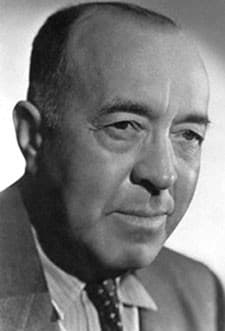
Edgar Rice Burroughs was an American writer, best known for his prolific output in the adventure, science fiction, and fantasy genres. Best-known for creating the characters Tarzan and John Carter, he also wrote the Pellucidar series, the Amtor series, and the Caspak trilogy.
Similar books
- Dune
Frank Herbert
4.2 (766k) average on GoodreadsFantasyHero adapting to a harsh alien environment, political intrigue, and unique cultures.
- The War of the Worlds
H.G. Wells
3.8 (245k) average on GoodreadsFantasyWhile both 'A Princess of Mars' and 'The War of the Worlds' (1898) are foundational science fiction texts involving Mars, they diverge significantly. Wells' novel is a cautionary tale of alien invasion, focusing on humanity's vulnerability and the brutal indifference of nature, often employing scientific speculation to ground its horrors. Burroughs' work, conversely, is an escapist fantasy, celebrating heroic individualism and romantic adventure on a vibrant, if scientifically dubious, alien world. Wells' Martians are terrifying invaders; Burroughs' Martians are complex societies with whom the protagonist can interact and even lead. Rieder's analysis of early science fiction often contrasts these differing approaches to colonialism and alterity, with Wells presenting a direct threat and Burroughs an opportunity for intervention.
- Harry Potter and the Sorcerer's Stone
J.K. Rowling
4.5 (7M) average on GoodreadsFantasyRescued from a miserable life under the stairs, an orphaned boy discovers he's a wizard destined for a magical school, where he uncovers a dangerous secret tied to the dark wizard who murdered his parents.
- The Hunger Games
Suzanne Collins
4.3 (6.4M) average on GoodreadsFantasyIn a future where children fight to the death on live television, Katniss Everdeen volunteers for the arena, turning a death sentence into a fight for survival and a spark of rebellion.
- 1984
George Orwell
4.2 (3.1M) average on GoodreadsPoliticsIn a future where surveillance and thought control are absolute, a man's search for truth clashes with the Party, showing that hope can be a form of rebellion.
- Divergent
Veronica Roth
4.2 (2.9M) average on GoodreadsFantasyIn a society divided by virtues, a sixteen-year-old's difference from the norm starts a rebellion that threatens her world.






Enjoyed the summary?
A summary gives you the shape of the book. The book itself has the detail, the examples and the voice.
Find A Princess of Mars on AmazonAs an Amazon Associate, BookBrief earns from qualifying purchases. How we're funded