

Synopsis
Covers the whole plot, including the ending.
- Difficulty
- Medium
- Pacing
- Moderate
- Mood
- Atmospheric, Intriguing, Reflective, Suspenseful
- Read it if
- You enjoy classic 'locked room' mysteries with a focus on psychological depth and intricate family dynamics, set against a charming, atmospheric backdrop.
- Skip it if
- You prefer fast-paced thrillers or mysteries with graphic violence; this book is more about intellectual deduction and character study.
A Rule Against Murder Plot Summary
Covers the whole plot, including the ending.
An Anniversary at Bellechasse
Chief Inspector Armand Gamache and his wife, Reine-Marie, are celebrating their wedding anniversary at Manoir Bellechasse, a secluded, luxurious inn in Quebec's Eastern Townships. The inn is owned by Madame Dubois, who has a strict 'rule against murder.' They soon meet the wealthy Finney family, also gathered at the Manoir for a reunion. The family includes Charles Finney; his children Nick, Irene, and Thomas; their spouses and children; and a family friend, Bert Finney. The atmosphere is tense, with underlying resentments and long-held secrets, especially concerning the family's patriarch and a deceased sibling, Florence. Gamache observes the strained relationships, sensing deeper trouble as a severe summer storm approaches.
The Storm and the Fallen Statue
As the summer heat gives way to a thunderstorm, the Manoir Bellechasse loses power. During the storm, a large, heavy statue of a reclining woman, known as 'The Woman,' falls from a high balcony onto the patio below. It crushes and kills Nick Finney, Charles's eldest son. The initial assessment suggests an accident, but the circumstances are suspicious. Inspector Jean-Guy Beauvoir, Gamache's second-in-command, comes to the scene. Madame Dubois is upset, saying her 'rule against murder' has been broken. Gamache, however, immediately suspects foul play, seeing the family relationships and the unlikely nature of such a heavy statue falling by chance.
Investigation Begins: Family Secrets Surface
Gamache and Beauvoir examine the scene and interview the Finney family members. They quickly find that Nick Finney was not well-liked; he was controlling, manipulative, and held deep resentments, especially towards his father, Charles. The family history includes tragedy, like the death of another Finney child, Florence, years before, and a complex web of financial dependence and emotional blackmail by Charles. Each family member has a motive, from Irene's resentment over her art career being stopped to Thomas's quiet obedience. The investigators learn about Nick's recent attempts to take control of the family business from Charles, adding a financial motive to the personal animosities. The statue becomes important, with questions about its stability and who might have touched it.
The Finney Family's Dysfunctional History
As the investigation continues, the full extent of Charles Finney's manipulative behavior and the family's troubled history comes out. Charles is shown to be a powerful, narcissistic patriarch who turned his children against each other and controlled their lives through his wealth and emotional abuse. Florence, the deceased Finney child, is a constant presence, with her death years ago remaining an open wound. It is hinted that Charles played a role in her unhappiness, leading to her suicide. Nick, the victim, had recently tried to challenge Charles's authority, especially regarding the family's money and the trust funds set up for his siblings. The Finney children, Irene, Thomas, and even Bert, all express a deep feeling of being trapped and resentment towards their father, making them all possible suspects.
The Role of Bert Finney and the Will
Bert Finney, a seemingly quiet family friend, proves to be important. He is not a blood relative but was adopted by Charles and his wife, Clara, after his parents died. Bert is a lawyer and handled many of the Finney family's legal and financial matters, including Charles's will. Gamache learns that Bert had recently rewritten Charles's will, which contained surprising rules that further alienated Nick and strengthened Charles's control. Bert also knows the family's darkest secrets, having watched for decades. His silence and loyalty to Charles initially make him seem involved, but Gamache senses a deeper conflict within him. Bert's testimony becomes important as the investigators try to put together the financial motives behind Nick's murder.
The Statue's Secret and the 'Accident'
Gamache and Beauvoir focus on how the murder happened. They discover that the heavy statue, 'The Woman,' was not simply unstable but had been tampered with. A thin, almost invisible fishing line was tied to the statue and then to a tree, creating a tripwire. When triggered by the strong winds of the storm, it pulled the statue off its pedestal and onto the patio where Nick Finney was standing. This shows the killer's careful planning, using the storm as cover for a planned act. The precision of the setup suggests someone who knew the Manoir's layout well and could guess Nick's movements during the storm. The discovery changes the investigation from an opportunistic act to a calculated murder.
Clara Finney's Past and the Connection to Three Pines
The investigation takes Gamache to the nearby village of Three Pines, where Clara Finney, Charles's wife and the mother of his children, once lived and made art. Clara, now deceased, was a talented sculptor, and her past work, including 'The Woman' statue, is significant. Gamache learns that Clara suffered much under Charles's control and emotional abuse, which crushed her spirit and artistic drive. He also discovers that Clara had close ties to several residents of Three Pines, including the artist Clara Morrow and her husband Peter, and Myrna Landers, the bookstore owner. These connections provide insights into Clara's character and the Finney family's history, showing the long-term impact of Charles's tyranny and the deep pain he caused.
Florence's True Story and Charles's Cruelty
Through careful investigation and interviews, especially with Bert Finney and the residents of Three Pines who knew Clara, the truth about Florence's death is found. Florence did not kill herself; Charles Finney murdered her. Charles had discovered that Florence was pregnant by a man he disapproved of and, in a rage and to protect his family's 'honor,' he pushed her off a cliff. He then made it look like a suicide, covering his tracks and psychologically tormenting his family for years with the lie. This reveals Charles as a cold-blooded murderer and a master manipulator, capable of extreme cruelty. It also explains the deep fear and resentment his surviving children had, knowing, perhaps subconsciously, their father's true nature.
The Confession and the Real Motive
After the truth about Charles's murder of Florence comes out, Bert Finney confesses to killing Nick. Bert had known about Charles's murder of Florence for years and had carried this secret. He had also seen Charles's continuous abuse and manipulation of his children. Nick, like his father's worst traits, planned to expose Charles's secrets and ruin the family, not for justice, but for his own financial gain and power. Bert, seeing history repeat itself and wanting to protect Clara's memory and prevent further harm to the remaining Finney children, felt he had to act. He made Nick's 'accidental' death happen using the statue and the storm, believing it was the only way to break the cycle of abuse and protect the family from Charles and his eldest son.
Justice and Aftermath
Bert Finney is arrested for Nick's murder. While Gamache understands Bert's desperate reasons, he reminds him that justice must be served. The revelation of Charles Finney's murder of Florence shatters the remaining illusions of the Finney family. Though Charles cannot be prosecuted for Florence's murder due to the statute of limitations and lack of direct evidence, his reputation is destroyed, and his control over his family is broken. The surviving Finney children, Irene and Thomas, must deal with the truth about their father and the years of lies. Gamache thinks about the impact of secrets and abuse within families, and how far individuals will go to protect or avenge those they love, even if it means committing murder. The Manoir Bellechasse, once a place of celebration, is forever marked by the Finney family's tragedies.
Principal Figures
Chief Inspector Armand Gamache
Protagonist
Head of the Sûreté du Québec's homicide division, known for his wisdom and empathy.
Chief Inspector Gamache is a deeply perceptive and empathetic man, leading the Sûreté du Québec's homicide division. He is on an anniversary trip with his wife, Reine-Marie, when he stumbles upon the Finney family murder. Gamache possesses an innate ability to read people and situations, often seeing beyond the obvious to the underlying motivations and truths. He is patient, methodical, and believes in uncovering not just 'who' committed the crime, but 'why,' delving into the psychological complexities of human nature. His quiet strength and moral compass guide his investigation, even as he confronts the darkest aspects of humanity. He carries a deep sense of responsibility for his team and for justice.
Relationships: Reine-Marie Gamache (Wife, loving and supportive); Inspector Jean-Guy Beauvoir (Second-in-command, protégé, and trusted colleague)
Reine-Marie Gamache
Supporting
Chief Inspector Gamache's supportive and insightful wife.
Reine-Marie is Gamache's wife, celebrating their anniversary at Manoir Bellechasse. She is intelligent, observant, and often offers subtle insights that aid Gamache in his work, though she is not directly involved in the investigation. She provides a grounding presence for Armand, offering emotional support and a moral anchor. Reine-Marie is attuned to the emotional undercurrents of situations and people, often sensing distress or hidden truths before others. Her presence highlights Gamache's personal life and provides a contrast to the grim realities of his profession, emphasizing his humanity and the importance of love and connection.
Relationships: Armand Gamache (Husband, deeply loving and respectful)
Inspector Jean-Guy Beauvoir
Supporting
Gamache's loyal and sometimes hot-headed second-in-command.
Beauvoir is Gamache's second-in-command, a capable and dedicated investigator, though sometimes more impulsive than his mentor. He is deeply loyal to Gamache and strives to emulate his Chief Inspector's wisdom and patience. Beauvoir is practical and focused on the facts, sometimes struggling with the more nuanced psychological aspects of Gamache's investigations. He is dedicated to his work, often driven by a strong sense of justice. In 'A Rule Against Murder,' he is initially skeptical of Gamache's immediate suspicion of murder, but quickly falls in line with the Chief Inspector's superior judgment, learning from his observational skills and empathy.
Relationships: Armand Gamache (Mentor and superior officer); Isabelle Lacoste (Colleague)
Charles Finney
Antagonist
The narcissistic and manipulative patriarch of the Finney family.
Charles Finney is the wealthy and powerful patriarch of the Finney family. He is a deeply narcissistic and controlling man who revels in manipulating his children and maintaining absolute power over their lives, both financially and emotionally. He is revealed to be a cold-blooded murderer, having killed his daughter Florence years ago and covered it up, emotionally abusing his family with the lie. Charles embodies the destructive power of unchecked ego and wealth, leaving a trail of broken spirits and resentment in his wake. His presence at the reunion is a source of immense tension and fear for his surviving children.
Relationships: Clara Finney (Deceased wife, whom he abused); Nick Finney (Deceased eldest son, whom he manipulated and alienated); Irene Finney (Daughter, whom he controlled); Thomas Finney (Son, whom he controlled); Florence Finney (Deceased daughter, whom he murdered); Bert Finney (Adopted son/family friend, who knew his secrets)
Nick Finney
Victim
The eldest Finney son, manipulative and resentful, the victim of the murder.
Nick Finney is the victim of the murder at Manoir Bellechasse. He is Charles's eldest son and, much like his father, is manipulative, controlling, and deeply resentful, particularly towards Charles and his siblings. Nick was attempting to wrest control of the family business and finances from his father, threatening to expose family secrets for his own gain. He was not well-liked by his family, and his death, though tragic, brings a complex mix of grief and relief to those around him. His character represents the perpetuation of the Finney family's cycle of abuse and control.
Relationships: Charles Finney (Father, whom he resented and tried to usurp); Irene Finney (Sister, whom he often antagonized); Thomas Finney (Brother, whom he dominated)
Bert Finney
Culprit/Supporting
The quiet, adopted Finney family friend and lawyer, who holds the family's darkest secrets.
Bert Finney is not a blood relative but was adopted by Charles and Clara Finney after his parents died. He serves as the family's lawyer and confidant, privy to all their secrets, including Charles's murder of Florence. Bert is quiet, observant, and deeply loyal, especially to the memory of Clara and the well-being of the younger Finney children. He carries the heavy burden of the family's past. His motive for killing Nick stems from a desire to break the cycle of abuse and protect the family from further destruction by Charles and Nick, whom he saw as mirroring his father's worst traits. His crime is an act of desperate, misguided protection.
Relationships: Charles Finney (Adoptive father, whose dark secrets he knew); Clara Finney (Adoptive mother, whose memory he cherished); Nick Finney (Adoptive brother, whom he murdered); Florence Finney (Adoptive sister, whose murder he knew about)
Irene Finney
Supporting
Charles's daughter, an artist whose spirit was crushed by her father.
Irene Finney is one of Charles's children, a talented artist whose creative spirit was largely stifled by her domineering father. She harbors deep resentment towards Charles for controlling her life and for the family's toxic dynamics. Irene is sensitive and often appears fragile, but beneath her vulnerability lies a simmering anger. She represents the artistic and emotional casualties of Charles's manipulative reign. Her interactions with Gamache reveal the profound psychological damage inflicted by her family, making her a sympathetic figure despite her potential motive for murder.
Relationships: Charles Finney (Father, whom she resents); Nick Finney (Brother, whom she disliked); Thomas Finney (Brother, with whom she shares a bond of shared suffering)
Thomas Finney
Supporting
Charles's quiet and submissive son, deeply affected by the family's history.
Thomas Finney is Charles's quietest and most submissive son. He is deeply affected by the family's long history of dysfunction and his father's control. Thomas often appears withdrawn and anxious, struggling to assert himself. He represents the quiet suffering endured by those trapped in a toxic family environment. Despite his submissive nature, he harbors deep-seated anger and frustration, making him another potential suspect, though his actions are more often driven by fear than malice. His silence and evasiveness during the investigation are symptoms of his long-term emotional suppression.
Relationships: Charles Finney (Father, whom he fears and obeys); Nick Finney (Brother, whom he tolerated); Irene Finney (Sister, with whom he shares a bond of shared suffering)
Madame Dubois
Supporting
The owner of Manoir Bellechasse, who has a 'rule against murder.'
Madame Dubois is the owner of Manoir Bellechasse, a luxurious and secluded inn. She is a woman who values peace, safety, and order, to the extent that she claims to have a 'rule against murder' on her property. Her initial reaction to Nick Finney's death is one of profound distress and a sense of personal violation. She is meticulous and deeply cares for her establishment and its guests. Her character provides a contrast to the chaos and malice of the Finney family, highlighting the disruption their presence brings to her carefully maintained sanctuary. Her 'rule' becomes a poignant symbol of humanity's desire for safety and peace.
Themes & Insights
The Corrosive Power of Family Secrets and Abuse
The novel shows how long-held family secrets and emotional abuse can poison generations. Charles Finney's murder of Florence, covered up for decades, and his constant manipulation of his children, create a toxic environment. This is clear in Irene's stopped art, Thomas's quiet obedience, and Nick's copying of his father's manipulative traits. The truth about Florence's death, when revealed, acts as a devastating force, showing how secrets, instead of protecting, destroy the family from within, leading to murder and psychological damage.
“Secrets are like walls. They separate people, even those who love each other. And sometimes, they crush the people behind them.”
Justice vs. Vengeance/Protection
This theme explores the lines between seeking justice, getting revenge, and protecting others. Bert Finney's murder of Nick, while a crime, is driven by a mix of protecting the remaining Finney children from Nick's destructive nature and avenging Charles's long-unpunished cruelty, especially towards Florence and Clara. Gamache, while understanding Bert's reasons, upholds the need for legal justice, showing the moral problem of taking the law into one's own hands, even for good intentions. The novel questions if some acts, born of deep emotional pain and a desire for protection, can ever truly be 'justified.'
“There's no such thing as a good murder,' Gamache said softly. 'There are only reasons, and sometimes they're understandable. But it's never good.”
The Nature of Evil and Manipulation
Charles Finney shows the theme of evil and manipulation. His narcissism allows him to control his family through financial dependence, emotional blackmail, and the destruction of their self-worth. His ability to murder his own daughter and then live with the lie for decades, while appearing respectable, shows the chilling nature of his evil. The novel shows how such manipulation can create a web of fear and resentment that traps its victims, leading to psychological damage and, eventually, more violence. Gamache's role is to uncover these layers of deception to expose the true nature of the evil.
“He wasn't a monster who roared. He was a monster who whispered, and his whispers were far more deadly.”
Art as a Reflection of Life and Suffering
Art, especially sculpture, is a strong motif throughout the novel, reflecting the Finney family's history and suffering. Clara Finney's sculptures, especially 'The Woman' statue that becomes the murder weapon, hold her pain and suppressed creativity, crushed by Charles's abuse. Irene's struggles as an artist mirror her mother's fate. The art pieces are not just decorations but embody the unspoken emotions, dashed hopes, and hidden truths of the family. They witness the tragedy, carrying the weight of the past and providing clues to the characters' inner lives and motivations.
“The Woman wasn't just a statue. She was Clara's cry, her last breath, frozen in stone.”
The Illusion of Safety and Order
Madame Dubois's 'rule against murder' at Manoir Bellechasse highlights the human desire for safety and the idea that one can control or prevent evil. The Manoir itself, a luxurious and secluded inn, represents a sanctuary, but this idea is shattered by the Finney family's arrival and the murder. The storm that accompanies the crime emphasizes the disruption of order and the uncontrollable forces, both natural and human, that can break through any perceived barrier of safety. Gamache's investigation constantly challenges the superficial appearance of respectability and peace, revealing the chaos and malevolence underneath.
“You have a rule against murder? I do. When my husband and I bought the Bellechasse we made a pact....Everything that stepped foot on this land would be safe.”
Plot Devices & Literary Techniques
The Manoir Bellechasse
The secluded and luxurious inn serves as a contained setting for the family drama and murder.
The Manoir Bellechasse functions as a classic locked-room mystery setting, albeit with an 'outdoor room' element. Its isolation and luxurious facade create a stark contrast with the ugly human emotions and violence unfolding within. The storm that cuts off power further emphasizes its containment, forcing the characters to confront each other and their shared history. The Manoir's history and the owner's 'rule against murder' heighten the dramatic tension and underscore the theme of shattered illusions of safety and order. It becomes a crucible where the Finney family's long-simmering resentments finally boil over.
The Statue ('The Woman')
A central symbol and the literal murder weapon, embodying Clara Finney's suffering.
The large, heavy statue of 'The Woman' serves multiple critical roles. Literally, it is the murder weapon, ingeniously rigged to fall during the storm. Symbolically, it represents Clara Finney, Charles's deceased wife and an artist whose spirit was crushed by his abuse. The statue embodies her suppressed creativity, her pain, and her final, desperate cry for freedom. Its use as a murder weapon by Bert, who seeks to protect Clara's memory and avenge her and Florence, links the past and present tragedies, making it a powerful and poignant symbol of the family's destructive history and the ultimate act of vengeance/protection.
The Storm
A pathetic fallacy, mirroring the internal turmoil and providing cover for the murder.
The violent summer thunderstorm is a significant plot device, operating as a classic pathetic fallacy. It mirrors the intense emotional turbulence, anger, and chaos within the Finney family. More critically, the storm provides the perfect cover for the murder, allowing the killer to rig the statue and for its fall to appear accidental amidst the natural destruction. The power outage it causes isolates the Manoir further, trapping the characters with their secrets and fears. The storm's climax coincides with the murder, physically manifesting the eruption of long-suppressed family violence and secrets.
The Finney Family History/Backstory
A deeply dysfunctional family history that provides the motives and context for the present murder.
The extensive and tragic backstory of the Finney family is a crucial plot device. It is gradually revealed through interviews, flashbacks, and character interactions, providing the deep-seated motives, resentments, and psychological damage that lead to Nick's murder. The past events, particularly Charles's murder of Florence and his systematic abuse of Clara and his children, are not just exposition but active forces shaping the present. This device emphasizes that the murder is not an isolated event but the culmination of decades of trauma and manipulation, making the 'why' of the crime as important as the 'who.'
A Rule Against Murder Quotes
“It was a rule against murder. Not a rule against being an idiot.”
“Sometimes the kindest thing you can do for a person is to let them think you believe their lie.”
“The past is never dead. It's not even past.”
“Evil isn't born. It's made. It's a choice.”
“It’s not the bad things that break you, it’s the good things gone bad.”
“Courage is not the absence of fear, but rather the judgment that something else is more important than fear.”
“Silence is not empty. It's full of answers.”
“We often make the mistake of thinking that because people are good at one thing, they are good at everything.”
“Grief is love with no place to go.”
“The greatest trick the devil ever pulled was convincing the world he didn't exist. The greatest trick a murderer ever pulled was convincing the world he was a victim.”
“Every secret has a cost.”
“It's not about finding the killer, it's about understanding the murder.”
“Sometimes the truth is too terrible to be told, but it's never too terrible to be known.”
“Hope is not a strategy, but it’s a good companion.”
Quiz
10 questions on the plot and the characters. Each answer comes with a short explanation.
Question 1
Where are Armand and Reine-Marie Gamache celebrating their wedding anniversary at the beginning of the book?
- In the village of Three Pines
- At the Manoir Bellechasse
- At a family reunion in Montreal
- On a secluded island retreat
Show answer
B. At the Manoir Bellechasse The book explicitly states that Armand and Reine-Marie Gamache are celebrating their wedding anniversary at the Manoir Bellechasse, an isolated, luxurious inn.
Question 2
What unique 'rule' does Madame Dubois, the owner of the Bellechasse, claim to have?
- A rule against loud noises after 10 PM
- A rule against bringing outside food or drink
- A rule against murder, ensuring safety on her land
- A rule against discussing politics at dinner
Show answer
C. A rule against murder, ensuring safety on her land Madame Dubois tells Inspector Beauvoir, 'You have a rule against murder?' and explains that she and her husband made a pact that 'Everything that stepped foot on this land would be safe.'
Question 3
Which family, besides the Gamaches, is also staying at the Manoir Bellechasse for a celebration?
- The Lacroix family
- The Rousseau family
- The Finney family
- The Dubois family
Show answer
C. The Finney family The summary states, 'The Finney family—rich, cultured, and respectable—has also arrived for a celebration of their own.'
Question 4
What natural event precedes the discovery of the dead body at Manoir Bellechasse?
- A sudden earthquake
- A terrible summer storm
- A prolonged drought
- A dense fog rolling in
Show answer
B. A terrible summer storm The text mentions, 'a terrible summer storm leaves behind a dead body,' directly linking the storm to the discovery.
Question 5
What is Chief Inspector Gamache's primary task at the Manoir Bellechasse?
- To mediate a family dispute
- To secure the inn from a potential robbery
- To investigate the murder and uncover buried secrets and hidden hatreds
- To enjoy his anniversary vacation undisturbed
Show answer
C. To investigate the murder and uncover buried secrets and hidden hatreds The summary clearly states, 'It is up to Chief Inspector Gamache to unearth secrets long buried and hatreds hidden behind polite smiles,' indicating his role as the lead investigator.
Question 6
The setting of the Manoir Bellechasse is described as being surrounded by nature, but with 'something unnatural looming.' What does this foreshadow?
- An impending natural disaster unrelated to human actions
- The presence of a supernatural entity haunting the inn
- A hidden human evil or crime that disrupts the natural peace
- A modern architectural design that clashes with the natural environment
Show answer
C. A hidden human evil or crime that disrupts the natural peace The phrase 'something unnatural looming' in a mystery novel context, especially with the subsequent discovery of a dead body, strongly foreshadows human-caused evil or a crime, which is 'unnatural' in a peaceful setting.
Question 7
Inspector Beauvoir's reaction to Madame Dubois's 'rule against murder' suggests what about his character?
- He is easily distracted by food.
- He is surprised and intrigued by unusual statements.
- He is skeptical and dismissive of local customs.
- He is a seasoned detective who has heard everything.
Show answer
B. He is surprised and intrigued by unusual statements. Beauvoir's 'ravenous' eating being 'stopped' by her 'extraordinary thing to say' indicates his surprise and the unusual nature of her statement, suggesting he is intrigued by such an unexpected declaration.
Question 8
The description of the Finney family as 'rich, cultured, and respectable' is likely used to achieve what narrative effect?
- To highlight their innocence and remove them from suspicion.
- To emphasize the contrast with the rougher villagers of Three Pines.
- To set up a facade that Gamache will need to see through to find hidden truths.
- To establish them as potential victims due to their wealth.
Show answer
C. To set up a facade that Gamache will need to see through to find hidden truths. In mystery novels, descriptions of characters as 'respectable' often serve as a red herring or a facade. The text mentions 'hatreds hidden behind polite smiles,' implying that outward appearances can be deceiving, making the 'respectable' Finneys prime candidates for concealing secrets.
Question 9
How does the investigation at Manoir Bellechasse connect to Chief Inspector Gamache's personal life and other settings?
- The case forces him to confront an old mentor from his past.
- The chase takes him to Three Pines and into the dark corners of his own life.
- His wife, Reine-Marie, is revealed to have a hidden connection to the Finney family.
- He discovers that the Manoir Bellechasse was once owned by his estranged family.
Show answer
B. The chase takes him to Three Pines and into the dark corners of his own life. The summary explicitly states, 'The chase takes him to Three Pines, into the dark corners of his own life, and finally to a harrowing climax,' indicating a deep personal connection to the unfolding mystery.
Question 10
The setting of the Manoir Bellechasse is described as 'isolated' and 'luxurious.' What thematic role does this combination often play in mystery novels?
- It suggests that the crime is financially motivated, targeting the wealthy inhabitants.
- It creates a 'locked-room' type of scenario, limiting suspects and intensifying the psychological drama.
- It serves to highlight the protagonist's discomfort with opulence.
- It implies that the crime is a random act of violence from an outside perpetrator.
Show answer
B. It creates a 'locked-room' type of scenario, limiting suspects and intensifying the psychological drama. An 'isolated, luxurious inn' is a classic setting for a 'locked-room' mystery or a closed-circle of suspects, where the limited number of people present and their inability to easily leave creates intense internal conflict and psychological tension, making the crime almost certainly an inside job.
A Rule Against Murder FAQ
What is 'A Rule Against Murder' about?
'A Rule Against Murder' finds Chief Inspector Armand Gamache and his wife, Reine-Marie, celebrating their anniversary at the remote Manoir Bellechasse. Their quiet celebration is interrupted by the arrival of the wealthy and dysfunctional Finney family reunion. When a terrible summer storm leads to a murder on the seemingly 'safe' grounds of the manor, Gamache must unravel the intricate web of long-held family secrets, resentments, and hidden identities to find the killer.
Why should I read 'A Rule Against Murder'?
You should read 'A Rule Against Murder' for its compelling mystery set against the atmospheric backdrop of Manoir Bellechasse, offering a deep dive into complex family dynamics and the psychological impact of past traumas. Louise Penny masterfully crafts a story that is not just about solving a crime but also about exploring the human condition, with Chief Inspector Gamache's insightful deductions and empathetic approach to justice.
What is the background/setting of 'A Rule Against Murder'?
The primary setting is the luxurious, isolated Manoir Bellechasse, an inn deep in the woods not far from the charming village of Three Pines. The manor has a unique 'rule against murder' established by its owners, Madame Dubois and her husband, adding a layer of ironic tension. The story unfolds during a sweltering summer, with a dramatic storm playing a significant role in the plot's progression.
What are the most memorable quotes?
One memorable quote is Madame Dubois's 'What happened here last night isn't allowed,' which sets the central conflict. Another is Gamache's reflection on the nature of evil and the choices people make, often highlighting the subtle ways hatred can fester within families and seemingly respectable individuals, driving the philosophical undercurrent of the mystery.
What writing style does the author use?
Louise Penny employs an elegant, descriptive, and character-driven writing style. She uses rich imagery to bring the settings to life and delves deeply into the inner lives and motivations of her characters. Her prose often blends suspense with philosophical musings, and she uses subtle humor and profound observations to create a compelling and immersive reading experience.
What minor details add significant meaning?
The seemingly innocuous 'rule against murder' at Manoir Bellechasse, initially a quaint oddity, becomes deeply ironic and significant as the investigation unfolds. Also, the specific details of the Finney family's history, particularly their patriarch's will and the varying relationships each child had with him, provide crucial context for their present-day resentments and motivations.
What are some subtle foreshadowing moments?
Subtle foreshadowing includes the intense, almost palpable tension and unspoken animosity among the Finney family members even before the murder occurs, signaling that deep-seated issues are at play. Additionally, the recurring motif of the oppressive summer heat and impending storm mirrors the building pressure and eventual violent release within the family.
What unexpected character connections exist?
An unexpected connection is revealed between the Finney family and the true identity of the victim, which is not immediately apparent. Furthermore, the investigation uncovers a surprising link between one of the Finney family members and a figure from Chief Inspector Gamache's own past, bringing a personal dimension to the case.
What are unspoken character motivations?
Many characters in the Finney family are driven by unspoken motivations stemming from a lifetime of perceived slights, favoritism, and the desire for control or recognition, particularly regarding their deceased father's legacy and wealth. These deep-seated resentments, often masked by polite facades, fuel their actions and interactions throughout the story, leading to the murder.
What psychological complexities do characters exhibit?
The Finney siblings exhibit a range of psychological complexities, including deep-seated sibling rivalry, unresolved grief, and profound feelings of inadequacy or entitlement. Some characters display passive-aggression, while others harbor explosive anger, all stemming from their dysfunctional upbringing and the manipulative dynamics instilled by their powerful patriarch.
What are the major emotional turning points?
A major emotional turning point is the discovery of the body, which shatters the veneer of civility within the Finney family and forces their hidden animosities into the open. Another is Chief Inspector Gamache's realization of the depth of the Finney family's dysfunction and the heartbreaking truth behind the murder, which profoundly affects him.
How do relationship dynamics evolve?
The relationship dynamics within the Finney family, initially presented as strained but functional, devolve significantly after the murder, revealing layers of betrayal and hatred. In contrast, the relationship between Armand and Reine-Marie Gamache strengthens as they navigate the complexities of the case and support each other through the emotional toll of the investigation.
Which parts remain ambiguous or open-ended?
While the central murder is solved, the long-term emotional recovery and reconciliation of the surviving Finney family members remain somewhat ambiguous. The story leaves readers to ponder whether they can truly escape the cycle of their past traumas and resentments, or if the damage is too profound to ever fully heal.
What are controversial scenes or decisions?
One controversial element could be the Finney patriarch's will and his deliberate manipulation of his children, which is revealed to be a significant catalyst for the family's dysfunction and ultimately the murder. His actions raise questions about the ethics of posthumous control and the lasting damage it can inflict.
'A Rule Against Murder' ending explained: how it ends & what it means
The book ends with Chief Inspector Gamache successfully identifying the murderer within the Finney family, revealing the complex motives rooted in generational trauma, sibling rivalry, and the pursuit of justice for a past wrong. The ending signifies that even in seemingly idyllic settings, deep-seated human flaws and hidden histories can lead to tragedy, and that Gamache's pursuit of truth is often as much about understanding the human heart as it is about solving a crime.
About the author

Louise Penny is a Canadian author known for her mystery novels set in the fictional village of Three Pines. Her notable works include A Fatal Grace, The Cruelest Month, and Bury Your Dead, among others. Penny's writing has received significant recognition, including multiple awards for her contributions to the genre.
Similar books
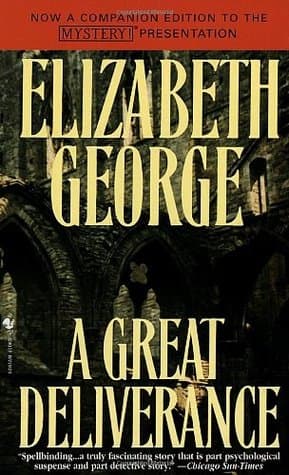
- A Great Deliverance
Elizabeth George
4.0 (40k) average on GoodreadsThrillerFeatures a complex murder within a dysfunctional aristocratic family in a rural setting, with a focus on character psychology.
- Murder On The Orient Express
Agatha Christie
4.2 (381k) average on GoodreadsThrillerA classic mystery where a group of confined individuals harbor secrets and a shared motive for murder.
- The Likeness
Tana French
4.0 (126k) average on GoodreadsThrillerBoth novels explore psychological complexity and intricate interpersonal relationships within a confined setting. However, Penny's tone is generally more optimistic and humane, even amidst darkness, while French's work often presents a bleaker, more existential view of crime and human nature.
- And Then There Were None
Agatha Christie
4.3 (822k) average on GoodreadsThrillerBoth are classic 'isolated manor' mysteries. Christie's novel excels in intricate plotting and the mechanics of the puzzle, focusing on the gradual unraveling of guilt. Penny, while also delivering a strong plot, places greater emphasis on the deep psychological probing of individual characters and their internal lives, which often drive the narrative as much as the external events.
- Angels & Demons
Dan Brown
3.9 (2.7M) average on GoodreadsThrillerA Harvard symbologist races through Rome's ancient sites, deciphering cryptic clues to unmask the Illuminati and stop a vengeful plot to destroy the Vatican with a stolen antimatter weapon.
- Gone Girl
Gillian Flynn
4.1 (2.3M) average on GoodreadsThrillerA wife's sudden disappearance on her fifth anniversary reveals a web of lies and psychological warfare, exposing the secrets within a seemingly perfect marriage.




Enjoyed the summary?
A summary gives you the shape of the book. The book itself has the detail, the examples and the voice.
Find A Rule Against Murder on AmazonAs an Amazon Associate, BookBrief earns from qualifying purchases. How we're funded