

Synopsis
Covers the whole plot, including the ending.
- Difficulty
- Medium
- Pacing
- Moderate
- Mood
- Dark, Intense, Tragic, Melancholic
- Read it if
- You want a classic American drama exploring themes of illusion vs. reality, the decline of the Old South, and raw human desire and cruelty.
- Skip it if
- You prefer lighthearted stories or are sensitive to themes of domestic abuse and mental health crises.
A Streetcar Named Desire Plot Summary
Covers the whole plot, including the ending.
Arrival in Elysian Fields
Blanche DuBois, a former high school English teacher from Laurel, Mississippi, arrives by streetcar at her sister Stella Kowalski's small, two-room apartment in Elysian Fields, New Orleans. She dislikes the poverty and the working-class neighborhood. Blanche, still holding onto a faded gentility, says she is on leave from teaching due to her nerves and that she lost Belle Reve, their family plantation, because of her 'nerves.' Stella is happy to see her but is cautious of Blanche's critical attitude and clear fragility. Stanley Kowalski, Stella's husband, comes in and immediately senses Blanche's condescension and her attempts to hide the truth about her past. This creates immediate tension between them.
The Poker Night and Stanley's Violence
During a poker night at the Kowalski apartment, Blanche's presence and her use of the bathroom disrupt the men's game. She flirts with Mitch, one of Stanley's poker friends, and plays music, further annoying Stanley. Drunk and frustrated, Stanley becomes enraged, smashing the radio and hitting Stella, who is pregnant. Blanche is shocked and tries to comfort Stella. Stella runs upstairs to her neighbor Eunice's apartment. After Stanley's friends hold him back, he cries out for Stella from the courtyard. Stella, despite the violence, returns to him, showing the strong, primal bond they share, which bewilders and disgusts Blanche.
Blanche's Attempts to 'Save' Stella
The morning after the poker night, Blanche, still upset by Stanley's violence, tries to convince Stella to leave him. She describes Stanley as ape-like and crude, appealing to Stella's former upper-class sensibilities and urging her to escape this degrading life. Blanche argues that Stella is wasting her life with such a man and that they could start over together. However, Stella, who loves Stanley deeply and is content with her life, ignores Blanche's pleas, explaining that she finds Stanley's raw passion irresistible. Blanche cannot understand Stella's attachment, which shows their basic differences in values and desires.
Blanche and Mitch's Budding Romance
Blanche starts a relationship with Mitch, Stanley's friend, who is more sensitive and polite than the other men. She sees him as a possible escape from her difficult situation and a chance for a respectable future. Blanche carefully acts demure and innocent, avoiding bright light and refusing to reveal her true age or past. She tells Mitch she wants 'magic' instead of reality. Mitch, lonely and dedicated to his sick mother, is drawn to Blanche's perceived delicacy and vulnerability. Their courtship offers Blanche some hope, but her made-up stories about her past create an unstable foundation for their relationship.
Stanley's Investigation into Blanche's Past
Stanley, increasingly suspicious of Blanche's claims and her superior attitude, begins to investigate her past in Laurel. He learns from a traveling salesman that Blanche was fired from her teaching job for an affair with a seventeen-year-old student. He also discovers she stayed at a disreputable hotel called the Flamingo, known for prostitution, and that she was essentially driven out of town. Stanley enjoys uncovering these secrets, seeing them as ways to strip Blanche of her pretense and establish his dominance. He plans to tell everything to Mitch and Stella, destroying Blanche's last hopes.
The Birthday Dinner and Mitch's Confrontation
During Blanche's birthday dinner, Stanley gives her a bus ticket back to Laurel as a 'present,' openly mocking her. He then tells Mitch all the details of her past, including her firing from the school and her activities at the Flamingo Hotel. Mitch, devastated and feeling tricked, confronts Blanche. He asks her if she ever loved him, and she admits she found him 'common.' He then tries to force himself on her, but she screams, and he leaves, shattering Blanche's hopes for marriage and a stable future. The cruel exposure of her past leaves Blanche utterly broken and alone.
Stella's Labor and Blanche's Desperation
Stella goes into labor and is taken to the hospital. Blanche remains alone in the apartment, her mental state quickly worsening. She drinks heavily, dresses in her old fine clothes, and engages in growing fantasies, imagining a wealthy suitor from Dallas coming to rescue her. She tries to call Mitch, but he refuses to speak to her. Blanche's hold on reality loosens further as she projects her desires onto the world around her, creating an illusion of grandeur and escape. The empty apartment becomes a stage for her breaking mind, as she desperately tries to maintain her delusions in the face of overwhelming despair.
The Climax: Stanley's Assault
Stanley returns from the hospital after Stella gives birth to their son. He finds Blanche dressed in a torn evening gown, talking to herself and creating fantasies about an imaginary admirer. Stanley, feeling triumphant and wanting to completely dominate Blanche, confronts her. He dismisses her fantasies and asserts his raw, physical power. Despite Blanche's frantic pleas and attempts to defend herself with a broken bottle, Stanley overpowers her and rapes her. This brutal act is the ultimate violation, destroying Blanche's already fragile mind and her ability to tell the difference between reality and illusion.
Blanche's Final Breakdown
Days later, Blanche is completely disconnected from reality, believing she is going on a cruise with a rich oil magnate. Stella, though bothered by Blanche's claims of Stanley's assault, ultimately chooses to believe Stanley's denial, unable to accept the truth alongside her love for him and her family's stability. A doctor and a matron arrive to take Blanche to a mental institution. Blanche resists, terrified, but is eventually led away. She says her famous line, 'I have always depended on the kindness of strangers,' as she is escorted out, defeated and lost in her delusions. Stella weeps, but ultimately returns to Stanley's embrace, cementing Blanche's tragic fate.
A Streetcar Named Desire Characters
Blanche DuBois
Protagonist
A faded Southern belle clinging to illusions and gentility.
Blanche is a former English teacher from Laurel, Mississippi, who arrives in New Orleans seeking refuge with her sister, Stella. She embodies the decaying Southern aristocracy, attempting to maintain an air of refinement and purity despite a past filled with scandal and trauma, particularly the suicide of her young husband, Allan. Blanche is highly sensitive, artistic, and deeply insecure, using elaborate fantasies and lies to cope with a harsh reality she cannot face. She yearns for love, security, and a return to a more genteel way of life, but her past and her inability to adapt to the modern world constantly undermine her. Her alcoholism and promiscuity are symptoms of her deep-seated pain and fragility.
Relationships: Stella Kowalski (Sister; Blanche is judgmental and dependent, Stella is loving but ultimately chooses Stanley.); Stanley Kowalski (Antagonist; Blanche views him as a brutish animal, Stanley sees her as a pretentious liar and a threat.); Harold 'Mitch' Mitchell (Potential suitor; Blanche seeks security and a fresh start with him, but her lies destroy their relationship.); Allan Grey (Deceased husband; his suicide after Blanche discovered his homosexuality is the central trauma of her past.)
Stanley Kowalski
Antagonist
A primal, working-class man who embodies raw masculinity and the new American dream.
Stanley is Stella's husband, a Polish-American working-class man who served in the military. He is powerful, virile, and intensely masculine, representing a new, unrefined America built on strength and directness. Stanley is proud of his working-class status and resents Blanche's aristocratic airs and her attempts to subtly control their household. He is possessive of Stella and his home, viewing Blanche as an intruder and a threat to his domestic order. Stanley is driven by instinct and desire, quick to anger, and capable of both passionate love and brutal violence. He is cunning and determined to expose Blanche's lies, seeing it as a matter of honor and dominance.
Relationships: Stella Kowalski (Husband; their relationship is intensely passionate, physical, and volatile, with Stella drawn to his primal nature.); Blanche DuBois (Antagonist; he despises her pretenses and actively works to destroy her, ultimately assaulting her.); Harold 'Mitch' Mitchell (Friend; he eventually exposes Blanche's past to Mitch.)
Stella Kowalski
Supporting
Blanche's younger sister, torn between her loyalty to Blanche and her passionate love for Stanley.
Stella is Blanche's younger sister and Stanley's wife. She has embraced a new life in New Orleans, leaving behind her aristocratic Southern past for a passionate, physical, and often tumultuous relationship with Stanley. Stella is deeply in love with Stanley, finding his raw masculinity irresistible, despite his occasional violence. She is genuinely affectionate towards Blanche but is also frustrated by her sister's judgmental nature and constant need for attention. Stella is caught between two worlds: the fading gentility represented by Blanche and the vibrant, brutal reality embodied by Stanley. Her ultimate choice to remain with Stanley, even after Blanche's accusations, highlights her deep emotional and physical dependence on him.
Relationships: Blanche DuBois (Sister; Stella loves Blanche but cannot fully understand or save her, ultimately choosing Stanley over her sister's sanity.); Stanley Kowalski (Wife; their relationship is intensely passionate, physical, and volatile, Stella is deeply attracted to his primal nature.)
Harold 'Mitch' Mitchell
Supporting
Stanley's sensitive poker buddy, who offers Blanche a brief glimmer of hope.
Mitch is one of Stanley's poker friends, a large, gentle, and somewhat mama's boy type. He is more sensitive and gentlemanly than the other men, making him a suitable suitor for Blanche. Mitch is lonely and devoted to his ailing mother, and he seeks a companion who can bring gentility and stability into his life. He is initially charmed by Blanche's perceived innocence and refinement, seeing her as a potential wife. However, he is also observant and eventually becomes frustrated by Blanche's evasiveness and her refusal to be truthful about her past. His eventual disillusionment and harsh confrontation with Blanche contribute significantly to her breakdown.
Relationships: Blanche DuBois (Potential suitor; he is initially charmed by her but feels deceived after learning about her past.); Stanley Kowalski (Friend; Stanley exposes Blanche's past to Mitch.)
Eunice Hubbell
Supporting
Stella's upstairs neighbor and landlady, a pragmatic and resilient woman.
Eunice is Stella and Stanley's upstairs neighbor and landlady. She is a pragmatic, no-nonsense woman who is accustomed to the volatile nature of relationships in the neighborhood, particularly those involving physical altercations. She provides a sense of community and support for Stella, offering a temporary refuge during Stanley's outbursts. Eunice is street-smart and resilient, representing the practical, enduring spirit of the working-class New Orleans community. She often advises Stella, sometimes with blunt honesty, and embodies a certain acceptance of the raw realities of life, contrasting with Blanche's delicate sensibilities.
Relationships: Stella Kowalski (Friend and neighbor; she offers Stella support and refuge.); Steve Hubbell (Husband; their relationship is similar in its volatility to Stanley and Stella's, though less central to the plot.)
Steve Hubbell
Mentioned
Eunice's husband and Stanley's poker friend.
Steve is Eunice's husband and one of Stanley's poker buddies. He is a minor character who primarily serves to populate the poker nights and reinforce the boisterous, masculine atmosphere of the neighborhood. His relationship with Eunice, though less explored, mirrors the rough-and-tumble dynamic seen between Stanley and Stella, suggesting a common pattern of passionate but sometimes violent interactions in their community. He contributes to the overall backdrop of the play, highlighting the environment Blanche finds so alienating.
Relationships: Eunice Hubbell (Husband; their relationship is implied to be similar in its volatility to Stanley and Stella's.); Stanley Kowalski (Friend and poker buddy.)
The Doctor
Supporting
A kind and gentle figure who escorts Blanche to the asylum.
The Doctor is a minor character who appears at the very end of the play. He is a professional from the state asylum, tasked with taking Blanche away. He is portrayed as calm, gentle, and reassuring, offering a stark contrast to the harshness Blanche has experienced. His presence symbolizes the final, inevitable collapse of Blanche's sanity and her removal from society. His 'kindness' is the final, ironic 'kindness of strangers' Blanche depends upon, though it leads her away from freedom.
Relationships: Blanche DuBois (Professional caregiver; he escorts her to the asylum.)
The Young Man (Collector)
Mentioned
A young man who collects newspaper subscriptions, briefly tempting Blanche.
The Young Man is a minor character who appears briefly at the apartment to collect for the local newspaper. He is young, attractive, and innocent, representing a fleeting moment of temptation and a desire for purity for Blanche. She flirts with him, even kissing him, projecting her fantasies onto him as a figure of youth and untainted desire. His brief appearance highlights Blanche's desperate need for affection and her tendency to seek solace in ephemeral romantic encounters, even as her world crumbles around her.
Relationships: Blanche DuBois (Brief flirtation; Blanche projects her desires onto him.)
A Streetcar Named Desire Themes
Fantasy vs. Reality
This is the main theme, shown through Blanche's difficulty in facing harsh truths. Blanche creates detailed fantasies about her past, her age, and her social status, using them as a shield against the difficult realities of her life. She constantly prefers 'magic' over reality, from her avoidance of bright lights to her made-up stories of wealthy admirers. Stanley, in contrast, represents harsh reality, systematically removing Blanche's illusions, which ends with his revelation of her past and ultimately the rape. Stella is in the middle, at first trying to protect Blanche's fantasies but eventually choosing the tangible, though brutal, reality of her life with Stanley. Blanche's final descent into madness is a complete immersion into an unshakeable fantasy world, making her unable to function in reality.
“I don't want realism. I want magic! [Mitch laughs] Yes, yes, magic! I try to give that to people. I misrepresent things to them. I don't tell truth, I tell what ought to be truth. And if that is sinful, then let me be damned for it!”
The Old South vs. The New America
The play clearly shows the conflict between the decaying aristocratic values of the Old South, represented by Blanche, and the raw, strong energy of the new, working-class America, embodied by Stanley. Blanche holds onto a past of gentility, refinement, and social hierarchy, symbolized by Belle Reve and her 'delicate' nature. Stanley, a Polish-American, represents industrial, diverse America, valuing strength, directness, and physical ability over inherited status. His victory over Blanche symbolizes the triumph of this new, egalitarian, and often brutal, American spirit over the fading Southern aristocracy. Stella's choice to stay with Stanley means she abandons her Southern heritage for this new, passionate, and visceral life.
“What I am is one hundred percent American, born and raised in the greatest country on earth and proud as hell of it, so don't ever call me a Polack.”
Desire and Sexuality
Desire, both literal and figurative, drives much of the play's action and character motivations. The streetcar named 'Desire' brings Blanche to Elysian Fields, a symbolic journey. Blanche's past promiscuity, driven by a desperate need for love and escape from loneliness after her husband's death, shows the destructive power of uncontrolled desire. Stella's intense, almost animalistic, physical attraction to Stanley is central to their relationship, overcoming his violence and Blanche's pleas. Stanley, too, is driven by raw sexual energy and a desire for dominance. The play explores how desire can be a powerful, life-affirming force (for Stella and Stanley) and a destructive, self-defeating one (for Blanche), ultimately leading to her downfall through sexual violence.
“There are things that happen between a man and a woman in the dark — that make everything else seem — unimportant.”
Cruelty and Violence
The play explores various forms of cruelty, from emotional manipulation to physical and sexual violence. Stanley's treatment of Blanche is consistently cruel, as he enjoys exposing her weaknesses and destroying her illusions. His physical violence towards Stella during the poker game is a shocking display of his brutal nature, yet Stella's immediate return to him highlights the complex and often troubling dynamics of their relationship. The ultimate act of cruelty is Stanley's rape of Blanche, which is the final blow to her fragile sanity. This theme also includes the cruelty of society's judgment and rejection, which forced Blanche out of Laurel and adds to her despair. The play suggests that cruelty can come from insecurity, jealousy, and a desire for dominance.
“You healthy Polack, without a nerve in your body, of course you don't know what anxiety feels like!”
Loneliness and Isolation
Blanche's character is deeply marked by loneliness and isolation. Having lost Belle Reve, her husband, her reputation, and her job, she arrives in New Orleans completely alone and desperate for connection. Her flirtations with Mitch and her reliance on fantasy are attempts to fight this deep-seated loneliness. Even with Stella, Blanche feels isolated by her sister's inability to understand her pain or her choices. Stanley's actions further isolate her, cutting her off from potential support and connection. Ultimately, Blanche's final descent into madness is a complete isolation from reality and from human connection, leaving her utterly alone in her internal world. The play suggests that deep loneliness can drive individuals to desperate and self-destructive behaviors.
“I have always depended on the kindness of strangers.”
Plot Devices & Literary Techniques
Symbolism of Names
Character and place names carry significant symbolic weight.
The names in the play are highly symbolic. 'Blanche DuBois' translates to 'white woods,' suggesting purity and a connection to nature, but 'Blanche' also implies 'bleached' or faded, reflecting her lost innocence and decaying beauty. 'Belle Reve' (beautiful dream) is the name of their lost plantation, symbolizing the fading Southern aristocracy and Blanche's unattainable past. The streetcars 'Desire' and 'Cemeteries' that bring Blanche to Elysian Fields (the Greek mythological paradise for heroes) symbolize her journey from desire, through death (of her past and sanity), to a supposed paradise that turns out to be hellish. These names enrich the play's themes and foreshadow character fates.
Light Imagery
Light and darkness reveal character and theme.
Light imagery is crucial, particularly in revealing Blanche's character and her relationship with reality. Blanche consistently avoids bright light, preferring shadows, candles, or dimness. This aversion symbolizes her desire to hide her age, her past, and her fading beauty. She wants to live in 'magic' rather than the harsh glare of truth. Stanley, by contrast, thrives in the harsh, unfiltered light, using it to expose Blanche's lies (e.g., pulling the paper lantern off the light bulb). The manipulation of light and shadow visually represents the conflict between fantasy and reality and Blanche's desperate attempts to conceal her true self.
Music and Sound
Music, particularly the 'Varsouviana Polka,' signals Blanche's mental state and past trauma.
Music and sound effects are integral to conveying atmosphere and character psychology. The 'blue piano' music often plays during intense or melancholic moments, representing the spirit of New Orleans and Blanche's internal turmoil. Most significantly, the 'Varsouviana Polka' is heard only by Blanche, growing louder and more frantic when she is under stress or recalling her traumatic past, specifically the suicide of her young husband, Allan. This auditory hallucination serves as a powerful objective correlative for Blanche's deteriorating mental state and her inability to escape her past traumas, acting as a constant reminder of her guilt and grief.
Animal Imagery
Characters are often described with animalistic traits, highlighting primal desires.
Animal imagery is frequently used, especially in relation to Stanley and Blanche's perception of him. Blanche often refers to Stanley as an 'ape,' a 'brute,' or a 'sub-human creature,' emphasizing his raw, instinctual, and aggressive masculinity. This dehumanization reflects Blanche's class prejudice and her fear of his untamed nature. Conversely, Stanley's animalistic qualities—his roaring, his physical dominance, his primal cries for Stella—are what attract Stella. This imagery underscores the theme of raw desire and the clash between refined society and untamed instinct, ultimately suggesting that humanity's more primal urges are powerful and inescapable.
A Streetcar Named Desire Quotes
“I have always depended on the kindness of strangers.”
“Whoever you are—I have always depended on the kindness of strangers.”
“Stella for Star!”
“You healthy Polack, without a nerve in your body, of course you don't know what anxiety feels like!”
“I don't want realism. I want magic!”
“There are no papers, no papers! I've lost my house, my home, my everything!”
“I pulled you down off them columns and how you loved it, having them colored lights going!”
“Some things are not excusable. A man like that is not to be trusted.”
“He acts like an animal, has an animal's habits! Eats like one, moves like one, talks like one!”
“You're not clean enough to bring in the house with my mother.”
“I couldn't believe her story and go on living with Stanley.”
“Oh, you can't describe someone you're in love with!”
“It's only a paper moon, Sailing over a cardboard sea—But it wouldn't be make-believe If you believed in me!”
“What I am is one hundred percent American, born and raised in the greatest country on earth and proud as hell of it, so don't ever call me a Polack.”
Quiz
10 questions on the plot and the characters. Each answer comes with a short explanation.
Question 1
What is the name of the streetcar Blanche takes to reach Stella's apartment?
- Desire
- Cemeteries
- Elysian Fields
- Perdido
Show answer
A. Desire Blanche explicitly states early in the play that she took a streetcar named 'Desire' and then transferred to one named 'Cemeteries' before arriving at 'Elysian Fields'.
Question 2
What is the name of the family estate that Blanche lost?
- Belle Reve
- Tara
- Rosebud
- Magnolia Manor
Show answer
A. Belle Reve Blanche frequently refers to 'Belle Reve,' the family's former plantation, which she claims to have lost due to financial difficulties.
Question 3
What does Stanley famously yell for Stella from the street after she leaves him during their poker night fight?
- 'Stella! My baby!'
- 'Stella! Where are you?'
- 'Stella! Stella for Star!'
- 'Stella! Stella!'
Show answer
D. 'Stella! Stella!' Stanley's repeated, guttural cries of 'Stella! Stella!' are one of the most iconic moments in the play, demonstrating his primal desire for her.
Question 4
What is Blanche's profession before she comes to New Orleans?
- Librarian
- High school English teacher
- Governess
- Actress
Show answer
B. High school English teacher Blanche reveals that she was a high school English teacher in Laurel, Mississippi, before she was forced to leave due to a scandal.
Question 5
What gift does Stanley give Blanche for her birthday?
- A new dress
- A bus ticket back to Laurel
- A box of chocolates
- A pearl necklace
Show answer
B. A bus ticket back to Laurel Stanley cruelly gives Blanche a one-way bus ticket back to Laurel for her birthday, symbolizing his desire to get rid of her and shattering her hopes for a future with Mitch.
Question 6
What is the primary reason Mitch breaks off his engagement with Blanche?
- He discovers Blanche is older than she claimed.
- Stanley reveals Blanche's promiscuous past and her history at the Flamingo Hotel.
- Blanche refuses to marry him and move away.
- He realizes he is still in love with his ex-girlfriend.
Show answer
B. Stanley reveals Blanche's promiscuous past and her history at the Flamingo Hotel. Stanley, motivated by malice, exposes Blanche's true past to Mitch, including her stays at the Flamingo Hotel and her relationships with younger men, which leads Mitch to reject her.
Question 7
What sound often plays in Blanche's mind, particularly when she is distressed, reminding her of her husband's suicide?
- A train whistle
- A polka tune ('Varsouviana')
- Jazz music from the Quarter
- A distant foghorn
Show answer
B. A polka tune ('Varsouviana') The 'Varsouviana' polka music is a recurring motif that plays in Blanche's head, particularly when she recalls the night her young husband, Allan Grey, shot himself after she discovered his homosexuality.
Question 8
Which of the following best describes the symbolic significance of light for Blanche?
- She embraces bright light as a symbol of truth and honesty.
- She associates dim light and shadows with her desire for fantasy and to hide her fading beauty and age.
- She sees harsh light as a representation of her past innocence.
- Light represents the hope of a new beginning for her.
Show answer
B. She associates dim light and shadows with her desire for fantasy and to hide her fading beauty and age. Blanche constantly avoids direct, harsh light, preferring dimness and shadows. This symbolizes her desire to maintain illusions, hide her age and past, and live in a world of fantasy rather than harsh reality.
Question 9
What is the final fate of Blanche at the end of the play?
- She leaves New Orleans with Mitch.
- She commits suicide.
- She is taken away to a mental institution by a doctor and a matron.
- She reconciles with Stella and Stanley.
Show answer
C. She is taken away to a mental institution by a doctor and a matron. After the rape by Stanley, Blanche's mental state completely deteriorates, and she is ultimately led away by a doctor and a matron, believing she is going on a cruise.
Question 10
Which of the following characters acts as a foil to Blanche, representing a more grounded, albeit still dependent, female experience?
- Mitch
- Eunice Hubbell
- Stella Kowalski
- Stanley Kowalski
Show answer
C. Stella Kowalski Stella, Blanche's sister, serves as a foil. While Blanche clings to illusions and refinement, Stella has embraced a more primal, sensual life with Stanley, choosing passion and security over her sister's fading gentility, highlighting the contrast between their coping mechanisms and realities.
A Streetcar Named Desire FAQ
What is the central conflict that drives the plot of 'A Streetcar Named Desire'?
The central conflict arises from the clash between Blanche DuBois's delicate, illusion-laden world and Stanley Kowalski's brutal, realistic, and primal existence. Blanche's refined Southern belle sensibilities and her desperate attempts to maintain a facade of gentility are directly challenged and ultimately shattered by Stanley's raw masculinity and his determined efforts to expose her truths, particularly regarding her past in Laurel.
Who are the primary characters, and what is their relationship to each other?
The primary characters are Blanche DuBois, a fading Southern belle; her younger sister, Stella Kowalski; and Stella's husband, Stanley Kowalski. Blanche comes to stay with Stella and Stanley in New Orleans, creating a tense dynamic as Blanche's presence disrupts the established, albeit volatile, relationship between Stella and Stanley.
What significant event from Blanche's past is revealed, and how does it impact her present state?
Blanche's past reveals the suicide of her young husband, Allan Grey, after she discovered his homosexuality and expressed her disgust. This traumatic event profoundly scarred Blanche, leading to her subsequent promiscuity, her deep-seated guilt, and her reliance on alcohol and fantasy as coping mechanisms, all of which contribute to her fragile mental state throughout the play.
Where does the story primarily take place, and how does the setting influence the mood and themes?
The story primarily takes place in the Kowalskis' two-room apartment in the vibrant, working-class Elysian Fields neighborhood of New Orleans. The cramped, humid, and exposed setting intensifies the characters' interactions, symbolizing the lack of privacy and the inescapable reality that Blanche desperately tries to avoid, contrasting sharply with her idealized Southern past.
What is the significance of the streetcar named 'Desire' mentioned in the title?
The streetcar named 'Desire' is a literal streetcar line Blanche takes to reach Stella's apartment, but it also functions as a powerful metaphor. It represents the powerful, often destructive, pull of physical passion and illicit desires that have driven many of Blanche's life choices and ultimately lead her to her tragic destination.
How does the repeated motif of light and darkness contribute to the play's themes?
The motif of light and darkness is central; Blanche consistently avoids harsh light, preferring shadows and dimness, which symbolizes her desire to hide her fading beauty, her age, and the uncomfortable truths of her past. Stanley, conversely, thrives in the harsh reality of light, using it to expose Blanche's illusions and bring her secrets into the open, highlighting the clash between truth and illusion.
What is the symbolic meaning behind Blanche's constant bathing?
Blanche's frequent bathing is a symbolic attempt to cleanse herself of her past sins, her guilt, and the perceived grime of her experiences, particularly her sexual encounters and her time at the Flamingo hotel. It represents her futile effort to purify herself and wash away the reality she finds unbearable, reflecting her psychological need for renewal and escape.
Beyond the literal, what does Stanley's poker game symbolize in the play?
Stanley's poker game symbolizes the raw, masculine world of chance, power, and dominance that he inhabits, and into which Blanche intrudes. It represents the brutal, unsentimental reality of life where rules are rigid, and winners take all, directly contrasting with Blanche's delicate, rule-bending fantasies and her inability to play by such harsh terms.
How does Blanche's past trauma, particularly the death of Allan, manifest in her psychological state?
Blanche's past trauma over Allan's death manifests as deep-seated guilt, a profound fear of loneliness, and a desperate need for male validation and protection. This trauma fuels her promiscuity, her alcoholism, and her retreat into fantasy, as she tries to escape the pain and self-blame associated with her perceived role in his suicide.
Analyze Stella's psychological dependence on Stanley despite his abusive behavior.
Stella exhibits a complex psychological dependence on Stanley, stemming from a powerful sexual attraction and a need for the security and passion he provides, even if it comes with violence. She is torn between her loyalty to her sister and her primal connection to Stanley, often rationalizing his behavior and choosing the tumultuous, yet exhilarating, life he offers over Blanche's fragile gentility.
What role does denial play in Blanche's deteriorating mental health?
Denial is a cornerstone of Blanche's psychological defense mechanisms; she consistently denies uncomfortable truths about her age, her financial situation, and her past sexual history. This pervasive denial prevents her from confronting reality, ultimately isolating her and accelerating her descent into a delusional state when her carefully constructed illusions are systematically dismantled by Stanley.
How does the play explore the psychological impact of societal expectations on women in the mid-20th century?
The play explores how societal expectations for women, particularly regarding purity, marriage, and decorum, profoundly impact Blanche and Stella. Blanche's downfall is partly due to her inability to conform to these expectations while simultaneously being judged for her deviations, highlighting the restrictive and often hypocritical standards placed upon women during that era.
Is Stanley purely a villain, or is there a more nuanced interpretation of his character?
While Stanley is undeniably brutish and violent, a nuanced interpretation suggests he represents a raw, unvarnished form of masculinity and the emerging working-class ethos that challenges the decaying Southern aristocracy. He acts on instinct and desires truth, even if his methods are cruel, making him a complex figure who is both antagonist and a force of unyielding reality.
Does Stella ultimately make the right choice by sending Blanche away and staying with Stanley?
Stella's choice is highly debatable. Some argue she chooses her own survival and the stability of her immediate family, prioritizing her child and her passionate connection with Stanley. Others contend that she betrays Blanche and enables Stanley's destructive behavior, sacrificing her sister's well-being for a life of complicity and denial, making it a morally ambiguous decision.
What is the significance of the final line, 'I have always depended on the kindness of strangers,' in understanding Blanche's character?
This final line is tragically ironic and encapsulates Blanche's profound vulnerability and her lifelong pattern of seeking external validation and rescue. It reveals her naive, almost childlike, dependence on others, particularly men, and her inability to cope with the harsh realities of life independently, ultimately leading to her destruction.
How does the play comment on the decline of the Old South versus the rise of the New America?
The play vividly comments on this societal shift through the characters of Blanche and Stanley. Blanche embodies the decaying gentility, romantic illusions, and financial ruin of the Old South's aristocratic values, while Stanley represents the vigorous, if crude, pragmatism and burgeoning power of working-class, industrial America, highlighting their irreconcilable clash.
Could Blanche's fate have been different if Mitch had truly understood and accepted her past?
If Mitch had possessed a deeper understanding and unconditional acceptance of Blanche's past, her fate might have been different. His initial attraction to her gentility, followed by his harsh rejection upon learning the truth, stripped Blanche of her last hope for a stable future and accelerated her mental collapse, suggesting his acceptance could have provided a crucial anchor.
What does the reoccurrence of the Varsouviana polka music symbolize for Blanche?
The Varsouviana polka music is a recurring auditory hallucination for Blanche, symbolizing her traumatic memory of Allan Grey's suicide. Its presence signifies her descent into madness, as it typically plays when she is under extreme stress or reliving her guilt and grief, acting as a direct link to the pivotal moment that shattered her world.
About the author
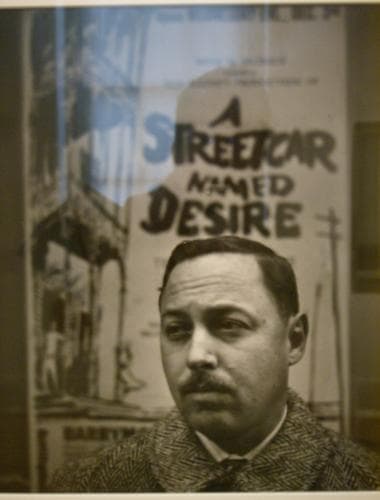
Thomas Lanier Williams III, known by his pen name Tennessee Williams, was an American playwright and screenwriter. Along with contemporaries Eugene O'Neill and Arthur Miller, he is considered among the three foremost playwrights of 20th-century American drama.
Similar books
- Cat on a Hot Tin Roof
Tennessee Williams
4.1 (52k) average on GoodreadsFictionExplores family dysfunction, hidden desires, and Southern Gothic themes by the same author.
- Death of a Salesman
Arthur Miller
3.5 (186k) average on GoodreadsFictionA poignant American tragedy about a character clinging to past glories and illusions in a changing world.
- Nineteen Eighty-Four
George Orwell
4.2 (5.5M) average on GoodreadsFictionWinston Smith dreams of truth and rebellion in a world where Big Brother watches all, but he confronts the terrifying power of a regime that controls not just actions, but thoughts.
- The Frozen River
Ariel Lawhon
4.4 (600k) average on GoodreadsFictionIn 1789 Maine, a heroic midwife's diary helps her expose a murder and get justice in a town that wants to silence her.
- A Man Called Ove
Fredrik Backman
4.4 (569k) average on GoodreadsFictionA stubborn widower, who lives by strict rules, finds his quiet world changed by a lively new family next door, making him face his past and find happiness in human connection.
- The Art of Racing in the Rain
Garth Stein
4.2 (452k) average on GoodreadsFictionThrough the eyes of Enzo, a wise and observant dog, a race car driver's family navigates a journey of love, loss, and resilience, learning that life's most important lessons often come in the curves, not just on the straightaways.






Enjoyed the summary?
A summary gives you the shape of the book. The book itself has the detail, the examples and the voice.
Find A Streetcar Named Desire on AmazonAs an Amazon Associate, BookBrief earns from qualifying purchases. How we're funded