

Synopsis
Covers the whole plot, including the ending.
- Difficulty
- Medium
- Pacing
- Slow
- Mood
- Intense, Tense, Melancholy, Psychological
- Read it if
- You enjoy intense family dramas, psychological depth, and iconic Southern Gothic literature exploring themes of mendacity, sexuality, and inheritance.
- Skip it if
- You prefer fast-paced plots, lighthearted stories, or are uncomfortable with themes of alcoholism, repressed sexuality, and familial toxicity.
Cat on a Hot Tin Roof Plot Summary
Covers the whole plot, including the ending.
Maggie's Frustration and Brick's Indifference
The play opens in the Pollitt family's Mississippi plantation home, in Maggie 'the Cat' Pollitt's bedroom. Maggie, beautiful and lively, dresses for Big Daddy's 65th birthday party while talking to her husband, Brick. Brick, a former football hero, is depressed and relies heavily on alcohol, nursing a broken ankle. He mostly ignores Maggie, his responses short or dismissive. Maggie fears being childless and losing their share of Big Daddy's inheritance to Brick's brother Gooper and his wife Mae, who have five 'no-neck monster' children. She hints at Brick's perceived homosexuality and his strained relationship with his deceased friend, Skipper, accusing him of being disgusted by her sexually. Brick remains emotionally distant, primarily concerned with pouring another drink.
The Pressure of Procreation
Mae and Gooper enter Maggie and Brick's bedroom, pretending to check on Brick. Their true intention is to subtly highlight their reproductive success and Maggie's failure to produce an heir. They bring their loud, disruptive children, further emphasizing the contrast between their bustling family and Brick and Maggie's sterile marriage. Mae constantly makes veiled remarks about Maggie's childless state and Brick's drinking. Gooper, a lawyer, tries to discuss estate matters, clearly positioning himself as the favored son. Maggie, despite her outward confidence, feels intense pressure to conceive, understanding it is her only leverage in the family power struggle for Big Daddy's fortune. Brick remains largely aloof, observing the family's schemes with detached cynicism.
Big Daddy's Return and Health
Big Daddy returns from the Ochsner Clinic in New Orleans, supposedly having received a clean bill of health. The family, including Big Mama, Mae, Gooper, and their children, gathers to celebrate his 65th birthday, feigning joy and relief. However, the doctor has privately informed Big Mama and Gooper that Big Daddy is dying of terminal cancer. The 'clean bill of health' is a lie to spare him pain during his final months. Big Mama, unaware of the deeper family dynamics, is overjoyed by Big Daddy's supposed recovery, while Mae and Gooper see it as an opportunity to solidify their claim on the inheritance. Brick, though seemingly detached, observes the hypocrisy around him.
Big Daddy Confronts Brick
Big Daddy enters Brick's room, dismissing the others, determined to have a frank conversation with his favorite son. He expresses disappointment in Brick's alcoholism and lack of ambition, urging him to stop drinking and take an interest in the plantation. Big Daddy believes Brick's problem stems from his disgust with Maggie and his grief over Skipper's death. He tries to uncover the nature of Brick and Skipper's relationship, hinting at a suppressed truth. Brick, initially resistant and defensive, eventually opens up, revealing his profound disgust with the 'mendacity' and hypocrisy he perceives in the world, especially within his own family. This conversation is a raw exploration of their fractured relationship and Brick's inner torment, with Big Daddy trying desperately to connect.
The Revelation of Big Daddy's Illness
During their intense conversation, Big Daddy continues to press Brick about his issues, dismissing Brick's claims of 'mendacity' as an excuse. Frustrated by his father's denial and the family's conspiracy of silence, Brick brutally reveals the truth: Big Daddy is dying of cancer, and the 'clean bill of health' is a lie. The revelation shatters Big Daddy's celebratory mood and forces him to confront his mortality. He reacts with shock, anger, and profound disbelief, initially lashing out at Brick for his cruelty. This moment is a turning point, as the veneer of happiness and denial is ripped away, exposing the raw fear and desperation beneath the family's surface.
Big Mama's Grief and Family Feud
Big Mama enters the room, still believing Big Daddy is well, only to be confronted with the devastating truth of his terminal illness. Her initial reaction is hysterical grief and denial, followed by a fierce protectiveness over Big Daddy. Meanwhile, Mae and Gooper, ever opportunistic, immediately begin to press their claims for Big Daddy's estate, presenting carefully prepared legal documents for him to sign. They argue that as the only son with children, Gooper is the natural heir, and Brick's alcoholism makes him unfit. Big Mama vehemently defends Brick and Big Daddy's wishes, leading to a bitter family quarrel over money and loyalty, further highlighting the deep-seated avarice and emotional dysfunction within the Pollitt family.
Maggie's Desperate Lie
Amidst the chaotic family argument over Big Daddy's will, Maggie, seeing her and Brick's inheritance slipping away, makes a desperate and dramatic announcement: she is pregnant. This declaration immediately shifts the family's focus. Big Mama is overjoyed at the prospect of a grandchild, seeing it as a symbol of hope and continuity. Mae and Gooper are visibly stunned and suspicious, accusing Maggie of lying, but they cannot publicly refute her without appearing heartless. Brick, though initially shocked, remains silent, neither confirming nor denying Maggie's claim. This bold lie is Maggie's final, desperate attempt to secure their financial future and win Big Daddy's favor, demonstrating her fierce determination and strategic manipulation.
Brick's Confession and Maggie's Resolve
Later, after the family commotion subsides, Brick confronts Maggie about her pregnancy lie. He is disgusted by her manipulation and her continuous attempts to force intimacy upon him. Maggie, in turn, presses him about his relationship with Skipper, suggesting it was more than just friendship and that Brick's inability to accept this truth led to Skipper's self-destruction and Brick's own alcoholism. Brick confesses his profound 'disgust' with Skipper's homosexual advances and his own subsequent feelings of guilt. Maggie, however, declares her unwavering love for Brick and her intention to make her lie a reality. She locks away Brick's liquor, promising to sleep with him and conceive a child, asserting her will to save their marriage and secure their future, even if it means forcing the issue.
The Unspoken Truth and Lingering Mendacity
The play concludes with Big Daddy's fate sealed, the family's mendacity exposed, and Maggie's lie hanging in the air. Big Daddy grapples with his impending death, and the true nature of Brick and Skipper's relationship remains a source of torment for Brick. Maggie is determined to fulfill her promise of having a child with Brick, even against his will, believing it is the only way to save them both. The final scene leaves the audience with unresolved tension and the lingering question of whether Maggie's forceful love can truly break through Brick's wall of indifference and self-disgust, or if the family's cycle of lies and unspoken truths will continue indefinitely. The 'cat on a hot tin roof' continues to walk a precarious path.
Principal Figures
Maggie Pollitt
Protagonist
The vivacious, desperate 'Cat' fighting for her marriage and inheritance.
Maggie, known as 'Maggie the Cat,' is a beautiful, quick-witted, and fiercely determined woman. She is desperate to secure her and Brick's place in the Pollitt family, primarily through having a child and securing Big Daddy's inheritance. Her dialogue is often a rapid-fire monologue, revealing her anxieties, frustrations, and strategic thinking. She is deeply in love with Brick, despite his coldness, and refuses to give up on their marriage. Maggie embodies resilience and a raw, almost animalistic will to survive and thrive within the oppressive family dynamics, often resorting to manipulation and blunt honesty.
Relationships: Brick Pollitt (Husband; one-sided love, sexual frustration, emotional distance); Big Daddy Pollitt (Father-in-law; seeks his approval and inheritance); Big Mama Pollitt (Mother-in-law; often at odds, but seeks her support); Mae Pollitt (Sister-in-law; rival for inheritance and family favor)
Brick Pollitt
Protagonist
A former football hero consumed by alcohol, grief, and self-disgust.
Brick is Maggie's husband, a once-glorious football star now crippled by a broken ankle, alcoholism, and a profound sense of 'disgust' with life's 'mendacity.' He is emotionally withdrawn, haunted by the death of his best friend, Skipper, and unable to connect with Maggie. His primary coping mechanism is alcohol, which allows him to maintain a state of detached indifference. Brick represents the destructive power of repressed emotions and societal expectations, particularly concerning masculinity and sexuality. He seeks an elusive 'click' of peace that his drinking temporarily provides, avoiding confrontation with his inner turmoil.
Relationships: Maggie Pollitt (Wife; emotionally distant, sexually repulsed, relies on her but rejects her advances); Big Daddy Pollitt (Father; complex relationship of love, disappointment, and shared understanding); Skipper (Deceased best friend; source of deep guilt, grief, and repressed feelings); Gooper Pollitt (Brother; rivalry for Big Daddy's affection and inheritance)
Big Daddy Pollitt
Supporting
The wealthy, dying patriarch of the Pollitt family.
Big Daddy is the patriarch of the Pollitt family, a self-made millionaire who built a vast cotton plantation from nothing. He is crude, powerful, and deeply cynical, yet possesses a surprising capacity for insight and a longing for genuine connection, particularly with Brick. He despises the 'mendacity' of his family, especially Big Mama, Mae, and Gooper, who he believes are only interested in his money. Facing his own mortality, initially unaware of his terminal cancer, he strives to understand Brick's unhappiness and reconcile with him, revealing a hidden tenderness beneath his gruff exterior.
Relationships: Big Mama Pollitt (Wife; outwardly dismissive and critical, but deeply reliant on her); Brick Pollitt (Favorite son; seeks to understand and reconnect with him); Gooper Pollitt (Less favored son; views him as opportunistic and dull); Maggie Pollitt (Daughter-in-law; finds her attractive but sees her as manipulative)
Big Mama Pollitt
Supporting
Big Daddy's long-suffering, often oblivious wife.
Big Mama is Big Daddy's wife, a large, boisterous woman who is deeply devoted to her husband, despite his constant insults and dismissiveness. She is often portrayed as somewhat naive and emotionally overbearing, easily manipulated by her children, Mae and Gooper, regarding the inheritance. Big Mama genuinely loves her family and believes in traditional values, especially the importance of family unity and having children. Her grief upon learning of Big Daddy's illness is genuine, and she fiercely defends Brick and Big Daddy's legacy against Gooper and Mae's avarice, showcasing her underlying strength and loyalty.
Relationships: Big Daddy Pollitt (Husband; deeply devoted, despite his abuse); Brick Pollitt (Son; loves him, worries about him, defends him); Gooper Pollitt (Son; tries to support him, but ultimately prioritizes Big Daddy's wishes); Mae Pollitt (Daughter-in-law; aligns with her in family matters, but can be critical)
Gooper Pollitt
Antagonist
Brick's older brother, a lawyer focused on securing the family inheritance.
Gooper is Brick's older brother, a successful but uninspired lawyer who has always felt overshadowed by Brick's athletic prowess and Big Daddy's favoritism. He is pragmatic, calculating, and driven by a strong desire for financial security and recognition. With his wife Mae, he actively schemes to secure Big Daddy's inheritance, believing it is his due as the 'responsible' son with a large family. Gooper represents the more conventional, materialistic aspects of the family, lacking the emotional depth or complexity of Brick or Big Daddy. He is a clear antagonist to Brick and Maggie's interests.
Relationships: Mae Pollitt (Wife; conspiratorial partner in their quest for inheritance); Big Daddy Pollitt (Father; seeks his approval and inheritance, but feels unloved); Brick Pollitt (Brother; rival for family affection and inheritance); Maggie Pollitt (Sister-in-law; rival for inheritance)
Mae Pollitt
Antagonist
Gooper's wife, manipulative and obsessed with their children and inheritance.
Mae is Gooper's wife, a shrewd and manipulative woman who is fiercely devoted to her five children, whom she proudly calls her 'no-neck monsters.' She actively participates in Gooper's schemes to gain control of Big Daddy's estate, constantly highlighting Maggie's childlessness and Brick's alcoholism to undermine their position. Mae is outwardly charming but inwardly venomous, embodying the superficiality and avarice that Big Daddy despises. She constantly tries to present her family as the ideal, while subtly criticizing Brick and Maggie, driven by a deep-seated insecurity and desire for social and financial ascendancy.
Relationships: Gooper Pollitt (Husband; conspiratorial partner); Maggie Pollitt (Sister-in-law; primary rival, despises her 'childless' status); Big Mama Pollitt (Mother-in-law; tries to curry favor with her); Big Daddy Pollitt (Father-in-law; seeks his approval and inheritance)
Skipper
Mentioned
Brick's deceased best friend, whose memory haunts Brick.
Skipper is Brick's deceased best friend and football teammate, whose memory casts a long shadow over Brick's life and marriage. Although he never appears onstage, his presence is profoundly felt through Brick's grief, guilt, and Maggie's accusations. Skipper's struggles with his own identity and his unspoken feelings for Brick are central to Brick's self-disgust and alcoholism. His death, a suspected suicide linked to drug and alcohol abuse, is the catalyst for Brick's complete emotional breakdown and withdrawal, representing a lost innocence and an unacknowledged truth.
Relationships: Brick Pollitt (Best friend; intense, possibly romantic, bond that ended tragically); Maggie Pollitt (Knew her through Brick; object of her jealousy and suspicion)
Themes & Insights
Mendacity and Truth
Mendacity, or untruthfulness, is central to the play, with Brick frequently using the word to describe the pervasive hypocrisy and deceit within his family and society. The Pollitt family is riddled with lies: Big Daddy's terminal illness is initially concealed, Maggie fabricates a pregnancy, and Brick's true feelings about Skipper and his own sexuality are repressed. The play explores the destructive nature of these lies, how they poison relationships, and the painful consequences of confronting or avoiding the truth. Big Daddy's raw conversation with Brick, where Brick forces him to face his impending death, highlights the brutal necessity of truth, even when it is devastating.
“What is the victory of a cat on a hot tin roof? I wish I knew... Just staying on it, I guess, as long as she can.”
Repression and Desire
Repression, especially of sexual desire and identity, is a dominant theme. Brick's self-disgust stems from his inability to confront his complex feelings for Skipper, which Maggie suggests had a homosexual undertone. His rejection of Maggie's sexual advances, coupled with his alcoholism, is a direct manifestation of this repression. Maggie, in contrast, is overflowing with desire – for Brick, for a child, for security – but her desires are constantly thwarted. The play suggests that denying one's true nature or desires leads to unhappiness and destructive coping mechanisms, highlighting the societal pressures that force individuals to conform to prescribed roles, especially regarding sexuality and masculinity.
“I'm not living with you. We occupy the same cage.”
Family Dysfunction and Inheritance
The Pollitt family is a microcosm of dysfunction, driven by avarice, resentment, and a desperate struggle for Big Daddy's vast fortune. The impending death of Big Daddy brings out the worst in Mae and Gooper, who shamelessly scheme to secure their inheritance, contrasting sharply with Brick's indifference to money. Big Mama's loyalty is tested, and Maggie's lie about her pregnancy is a direct response to the pressure of securing their share. The play shows how wealth and the expectation of inheritance can corrupt family bonds, turning love and loyalty into calculated maneuvers, and revealing the corrosive effects of greed on human relationships, where emotional needs are secondary to financial gain.
“Mendacity is a system that we live in. Liquor is one way out an' death's the other.”
The Illusion of Happiness
The Pollitt family maintains a fragile facade of happiness and normalcy, especially during Big Daddy's birthday celebration and the initial lie about his health. Big Mama's forced cheerfulness, Mae and Gooper's performative concern, and Maggie's relentless optimism all contribute to this illusion. Brick, however, sees through it all, his 'disgust' stemming from the 'mendacity' of pretending things are fine when they are fundamentally broken. The play meticulously strips away these layers of pretense, revealing the raw pain, fear, and desperation beneath. It suggests that true happiness cannot exist where truth is suppressed and genuine connection is absent, highlighting the emotional cost of maintaining social illusions.
“You can't buy back your life, but you can buy back the illusion of it.”
Plot Devices & Literary Techniques
The Broken Ankle
A physical manifestation of Brick's emotional paralysis.
Brick's broken ankle, sustained while drunkenly attempting to jump hurdles, serves as a powerful symbol of his emotional and psychological paralysis. It physically confines him to the bedroom, forcing him to confront Maggie and Big Daddy, and preventing him from escaping his problems through physical activity or simply walking away. The injury is a constant reminder of his self-destructive behavior and his inability to move forward, mirroring his arrested development and his deep-seated psychological wounds. It grounds the play in a single location and forces the characters into intense, unavoidable confrontations.
Alcoholism
Brick's primary escape mechanism and a symbol of his repression.
Brick's relentless drinking is not merely a habit but a deliberate coping mechanism. He drinks until he feels the 'click' of peace, a temporary escape from his profound 'disgust' with life's mendacity and his own unresolved grief and guilt over Skipper. The alcohol serves as a barrier between him and Maggie, and between him and his own emotions. It represents his refusal to engage with his problems and his self-destructive path. The presence of the liquor cabinet and Brick's constant need for a drink underscore his addiction and his desperate search for oblivion, making it a central element in the play's exploration of escape and reality.
The 'No-Neck Monsters'
Mae and Gooper's children, symbolizing their crass ambition.
Mae and Gooper's five children, derogatorily called 'no-neck monsters' by Maggie, serve as a stark contrast to Maggie and Brick's childless state. They are loud, disruptive, and often used by Mae and Gooper as pawns to highlight their fertility and claim on the inheritance. These children symbolize the materialistic and superficial aspects of the Pollitt family, reflecting the parents' ambition and lack of genuine warmth. Their presence emphasizes the pressure on Maggie to produce an heir and underscores the avarice that pervades the family dynamics, demonstrating how even children can be weaponized in the fight for wealth and status.
The Hot Tin Roof Metaphor
Maggie's precarious and uncomfortable existence.
The titular 'cat on a hot tin roof' is a metaphor Maggie uses to describe her own desperate and precarious situation. She is constantly on edge, fighting for her survival, her marriage, and her position within the family, all while enduring Brick's coldness and the family's scrutiny. The 'hot tin roof' represents the intense pressure, discomfort, and danger of her existence, where she must constantly balance her desires with the hostile environment around her. It encapsulates her resilience, her vulnerability, and her fierce determination to hold on, even when everything seems to be burning beneath her.
Cat on a Hot Tin Roof Quotes
“What is the victory of a cat on a hot tin roof? I wish I knew. . . . Just staying on it, I guess, wouldn't you say?”
“Ignorance—of morality—is a misfortune, not a sin.”
“I'm not living with you. We occupy the same cage, that's all.”
“We're all liars, God damn it, all liars!”
“A man can't live with a woman he don't love.”
“Time is short. And it don't make sense to waste what little there is on things you don't care about.”
“You can be young without money but you can't be old without it.”
“Truth, truth, what is truth?”
“You don't live in a glass house if you're throwing stones.”
“The human animal is a beast that dies and dies and dies and the knowledge that he's going to die makes him die a million times before he's dead.”
“I'm not going to be some childless woman!”
“Mendacity is a system that we live in. Liquor is one way out an' death's the other.”
“I can't stand liars. Can't stand 'em, can't stand 'em!”
“You can't buy love, you can't buy health, you can't buy happiness, but you can buy a heap of comfort.”
Quiz
10 questions on the plot and the characters. Each answer comes with a short explanation.
Question 1
What is the primary reason Big Daddy is celebrating his birthday at the start of the play?
- He has just retired from his plantation business.
- He believes he has been given a clean bill of health regarding his cancer.
- He is announcing his decision to divide his estate among his sons.
- He has returned from a long trip to Europe.
Show answer
B. He believes he has been given a clean bill of health regarding his cancer. Big Daddy's birthday celebration is initially joyful because he, and the rest of the family (except the doctor and Big Mama), believes he is not dying of cancer, but rather suffering from a 'spastic colon.'
Question 2
What is Brick's primary coping mechanism for dealing with his emotional pain and disillusionment?
- Engaging in frequent arguments with Maggie.
- Writing poetry in isolation.
- Heavy consumption of alcohol.
- Focusing on his past football achievements.
Show answer
C. Heavy consumption of alcohol. Brick constantly drinks alcohol, specifically 'liquor,' to numb himself from his pain and disgust with the world, particularly after the death of his friend Skipper.
Question 3
Why does Maggie feel she is a 'cat on a hot tin roof'?
- She is constantly trying to escape the oppressive heat of the Mississippi summer.
- She is in a precarious and uncomfortable position, fighting for her place and survival without Brick's love or an heir.
- She is literally afraid of cats and believes they bring bad luck.
- She is constantly being chased by Gooper and Mae, who want her out of the house.
Show answer
B. She is in a precarious and uncomfortable position, fighting for her place and survival without Brick's love or an heir. Maggie feels like a 'cat on a hot tin roof' because she is in a desperate and uncomfortable situation, constantly striving to secure her future and maintain her marriage without the love or children she desires from Brick, all while facing the judgment of the family.
Question 4
What specific physical injury does Brick sustain before the play begins?
- A broken arm from a fall down the stairs.
- A sprained ankle from playing football.
- A broken leg from falling over a hurdle in his old high school stadium.
- A concussion from a car accident.
Show answer
C. A broken leg from falling over a hurdle in his old high school stadium. Brick broke his leg trying to jump hurdles on the high school athletic field while drunk, symbolizing his inability to escape his past and present pain.
Question 5
What is the primary source of conflict between Maggie and Mae (Sister Woman)?
- Mae believes Maggie is spending too much of Big Daddy's money.
- They are vying for Big Daddy's affection and attention.
- Mae is jealous of Maggie's beauty and past social success.
- They are in fierce competition to produce an heir and secure Big Daddy's inheritance.
Show answer
D. They are in fierce competition to produce an heir and secure Big Daddy's inheritance. Mae and Gooper have several children, while Maggie and Brick have none. Mae constantly highlights this fact to underscore Maggie's failure to produce an heir, which is crucial for inheriting Big Daddy's estate.
Question 6
What is Big Daddy's attitude towards his sons' wives, Maggie and Mae?
- He finds both of them charming and supportive daughters-in-law.
- He openly expresses his disdain for both, finding them materialistic and annoying.
- He favors Maggie due to her beauty and quick wit.
- He is indifferent to them, focusing solely on his sons.
Show answer
B. He openly expresses his disdain for both, finding them materialistic and annoying. Big Daddy is quite blunt and expresses his dislike for both Maggie ('Mendacity!') and Mae ('Sister Woman'). He finds them both grasping and irritating, particularly their constant chatter and attempts to curry favor.
Question 7
What is the 'mendacity' that Big Daddy frequently rails against?
- The false belief that money can buy happiness.
- The dishonesty and pretense that permeates his family's relationships and their refusal to face uncomfortable truths.
- The lies told by doctors about his health condition.
- The hypocrisy of the church and its followers.
Show answer
B. The dishonesty and pretense that permeates his family's relationships and their refusal to face uncomfortable truths. Big Daddy's 'mendacity' refers to the pervasive lying, pretense, and emotional dishonesty within his family, particularly regarding his illness, Brick's alcoholism, and the nature of their relationships.
Question 8
What is the significance of the 'click' that Brick mentions?
- The sound of his crutch hitting the floor, reminding him of his injury.
- The moment he feels a temporary peace or escape from his pain and disgust after enough alcohol.
- The sound of the family locking him out of conversations.
- The moment he realizes the true extent of his father's illness.
Show answer
B. The moment he feels a temporary peace or escape from his pain and disgust after enough alcohol. Brick describes the 'click' as a moment of peace and freedom from the 'mendacity' of the world, which he achieves only after consuming enough alcohol. It's a temporary escape from his suffering.
Question 9
What is the ultimate fate of Big Daddy, as revealed to the audience (though initially hidden from him)?
- He makes a full recovery and lives many more years.
- He succumbs to his 'spastic colon' but not cancer.
- He is dying of an aggressive, inoperable cancer.
- He decides to leave the plantation to Big Mama and travel the world.
Show answer
C. He is dying of an aggressive, inoperable cancer. Despite the family's initial attempts to conceal the truth, it is revealed that Big Daddy is dying of cancer, a fact that profoundly impacts the family dynamics and the scramble for inheritance.
Question 10
At the end of the play, what drastic action does Maggie take to try and save her marriage and secure her position?
- She threatens to leave Brick and the plantation forever.
- She confesses her past infidelity to Brick.
- She announces she is pregnant, even though it is a lie, and locks Brick's liquor away.
- She confronts Big Mama and demands her share of the inheritance.
Show answer
C. She announces she is pregnant, even though it is a lie, and locks Brick's liquor away. In a desperate attempt to win back Brick's affection, secure her position, and have an heir, Maggie lies and announces to the family that she is pregnant. She then takes Brick's liquor and hides it, hoping to force him to confront their relationship.
Cat on a Hot Tin Roof FAQ
What is the central conflict in 'Cat on a Hot Tin Roof'?
The central conflict revolves around the Pollitt family's gathering to celebrate Big Daddy's birthday, while also grappling with his impending death from cancer, which he is unaware of. This impending loss fuels a bitter struggle for his inheritance among his sons, Gooper and Brick, and their wives, while exposing deep-seated family dysfunctions, lies, and repressed desires.
Who is Maggie 'the Cat' and what is her primary struggle?
Maggie 'the Cat' is Brick Pollitt's wife, a vibrant and determined woman who feels trapped and unfulfilled in her marriage. Her primary struggle is to conceive a child with Brick to secure their share of Big Daddy's inheritance, and to reignite the passion in her emotionally distant and alcoholic husband, who has withdrawn from her both physically and emotionally.
Describe Brick Pollitt's character and his personal demons.
Brick Pollitt is a former football hero now consumed by alcoholism and a profound sense of disgust, particularly with mendacity. He is deeply troubled by the death of his friend Skipper, and his guilt over their relationship, which he struggles to confront. His alcoholism is a coping mechanism to numb his pain and avoid emotional intimacy, especially with Maggie.
What is the significance of Big Daddy's cancer diagnosis?
Big Daddy's cancer diagnosis, initially hidden from him, serves as the catalyst for the play's intense drama, forcing the family to confront their truths and lies. It exposes the greed of Gooper and Mae, the desperation of Maggie, and Big Daddy's own mortality, leading him to a raw, honest confrontation with Brick about life's meaning and their relationship.
How does the setting of the Mississippi Delta plantation contribute to the play's atmosphere?
The setting of the opulent, yet stifling, Mississippi Delta plantation mansion, particularly Brick and Maggie's bedroom, creates an atmosphere of confinement and decay. The heat and humidity symbolize the oppressive emotional climate and the suffocating secrets within the family, while the vast wealth of the plantation underscores the material stakes of the inheritance.
What is the underlying 'mendacity' that Brick constantly refers to?
Brick's 'mendacity' refers to the pervasive dishonesty and hypocrisy he perceives in the world, particularly within his own family. This includes the family's lies about Big Daddy's health, Gooper and Mae's feigned affection, and the societal pressures that led to Skipper's self-destruction, all of which disgust Brick and drive his withdrawal into alcohol.
What is the true nature of Brick's relationship with Skipper, and how does it affect him?
The true nature of Brick's relationship with Skipper is ambiguous but strongly hinted to have been homoerotic, at least on Skipper's part. Brick vehemently denies any sexual aspect, but Skipper's unrequited love and subsequent breakdown, fueled by his own repression and societal pressures, deeply traumatize Brick and contribute to his guilt and alcoholism after Skipper's death.
How do Mae and Gooper attempt to undermine Maggie and Brick?
Mae and Gooper constantly try to undermine Maggie and Brick by highlighting their childlessness and Brick's alcoholism, using their own numerous children as proof of their fitness to inherit. They spread gossip, criticize Maggie's attempts to conceive, and generally portray themselves as the more responsible and deserving heirs to Big Daddy's estate.
What is the significance of the 'cat on a hot tin roof' metaphor?
The 'cat on a hot tin roof' metaphor, primarily applied to Maggie, signifies her precarious and desperate position. She is trapped in an unfulfilling marriage, constantly fighting for her survival and future without the comfort or security of Brick's love or a child, enduring the 'hot' pressure of family expectations and her own unfulfilled desires.
How does the play explore themes of sexuality and repression?
The play profoundly explores sexuality and repression through Brick's denial of his relationship with Skipper, his aversion to intimacy with Maggie, and Maggie's frustrated desires. It suggests that societal norms and personal anxieties can force individuals to repress their true sexual identities and desires, leading to immense psychological pain and destructive behaviors like Brick's alcoholism.
What role does alcohol play in Brick's psychological state?
Alcohol serves as Brick's primary escape from his psychological torment, allowing him to numb the pain of Skipper's death, his guilt, and his disgust with the world's mendacity. It enables him to maintain a detached indifference, avoiding emotional confrontations and the demands of intimacy, effectively creating a barrier between him and his wife, Maggie.
Analyze the power dynamics between Maggie and Brick.
The power dynamics between Maggie and Brick are complex and constantly shifting. Maggie, despite her vulnerability, wields a desperate strength and determination, constantly pushing Brick for intimacy and a child. Brick, though seemingly passive and broken, holds power through his withdrawal and refusal to engage, forcing Maggie to constantly pursue him and creating an imbalance of desire and control.
How does Big Daddy's confrontation with Brick reveal their true relationship?
Big Daddy's raw, honest confrontation with Brick in Act II, after learning of his own imminent death, strips away years of pretense. It reveals Big Daddy's deep, if flawed, love for Brick and his desire for an honest connection, while also exposing Brick's deep-seated resentment and inability to reciprocate, highlighting their shared struggles with truth and intimacy.
What is the significance of Maggie's lie about her pregnancy at the end of the play?
Maggie's lie about her pregnancy at the end is a desperate, yet powerful, act of self-preservation and a bid for a future with Brick. It's an attempt to force Brick into a commitment, secure their inheritance, and create a narrative of hope amidst the family's despair. It leaves the audience to ponder whether this 'mendacity' can lead to a genuine beginning.
How does the play critique the American Dream?
The play critiques the American Dream by showcasing how wealth and material success, embodied by Big Daddy's plantation, fail to bring happiness or genuine connection. Instead, the pursuit of inheritance corrupts family relationships, exposes moral decay, and highlights the emptiness beneath a facade of prosperity, suggesting that the dream is often built on lies and repression.
What is the impact of the play's open ending regarding Brick and Maggie's future?
The play's open ending, with Maggie's declaration of pregnancy and her intention to make love to Brick, leaves their future ambiguous. It suggests a possibility of reconciliation and a new beginning, but also hints at the fragility of hope built on a lie. The audience is left to wonder if Brick will truly change or if Maggie's efforts will ultimately be in vain, emphasizing the enduring struggle for truth and love.
How did Tennessee Williams' revisions of the play affect its interpretation?
Williams' revisions, particularly the 1974 definitive edition, often deepened the psychological complexities and explicit themes, especially regarding Brick's repressed sexuality and Big Daddy's character. These changes led to a more nuanced understanding of the characters' motivations and the play's critique of societal repression, offering a more challenging and less hopeful ending in some versions compared to the more optimistic Broadway premiere.
What is the enduring relevance of 'Cat on a Hot Tin Roof' today?
The enduring relevance of 'Cat on a Hot Tin Roof' lies in its timeless exploration of universal themes: family dysfunction, the corrosive power of lies, the pain of unfulfilled desires, and the struggle for authenticity. Its raw portrayal of human psychology, repressed sexuality, and the pursuit of truth continues to resonate, making it a powerful commentary on the complexities of human relationships and societal pressures.
About the author
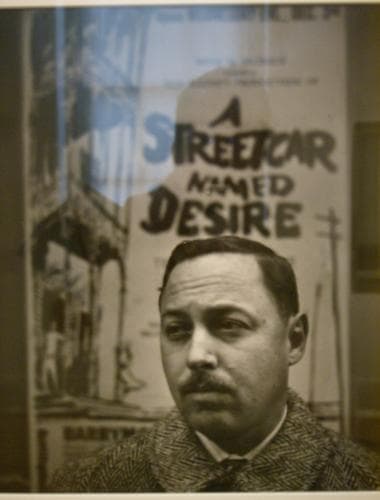
Thomas Lanier Williams III, known by his pen name Tennessee Williams, was an American playwright and screenwriter. Along with contemporaries Eugene O'Neill and Arthur Miller, he is considered among the three foremost playwrights of 20th-century American drama.
Similar books
- A Streetcar Named Desire
Tennessee Williams
4.0 (261k) average on GoodreadsFictionExplores similar themes of desire, illusion, and decay in the American South, with iconic female protagonists.
- The Sound and the Fury
William Faulkner
3.9 (158k) average on GoodreadsLiterary FictionFaulkner's novel also explores the decay of a Southern aristocratic family and uses multiple perspectives to reveal deep-seated psychological wounds. However, Williams's play is more immediate and theatrical, relying on intense dialogue and direct confrontation rather than Faulkner's stream-of-consciousness narrative. Williams's focus is on the present moment's dramatic tension, while Faulkner explores a broader historical and psychological sweep.
- Nineteen Eighty-Four
George Orwell
4.2 (5.5M) average on GoodreadsFictionWinston Smith dreams of truth and rebellion in a world where Big Brother watches all, but he confronts the terrifying power of a regime that controls not just actions, but thoughts.
- The Frozen River
Ariel Lawhon
4.4 (600k) average on GoodreadsFictionIn 1789 Maine, a heroic midwife's diary helps her expose a murder and get justice in a town that wants to silence her.
- A Man Called Ove
Fredrik Backman
4.4 (569k) average on GoodreadsFictionA stubborn widower, who lives by strict rules, finds his quiet world changed by a lively new family next door, making him face his past and find happiness in human connection.
- The Art of Racing in the Rain
Garth Stein
4.2 (452k) average on GoodreadsFictionThrough the eyes of Enzo, a wise and observant dog, a race car driver's family navigates a journey of love, loss, and resilience, learning that life's most important lessons often come in the curves, not just on the straightaways.





Enjoyed the summary?
A summary gives you the shape of the book. The book itself has the detail, the examples and the voice.
Find Cat on a Hot Tin Roof on AmazonAs an Amazon Associate, BookBrief earns from qualifying purchases. How we're funded