
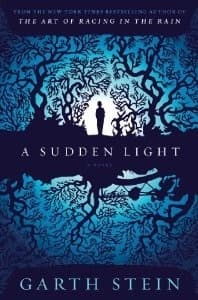
Synopsis
Covers the whole plot, including the ending.
- Difficulty
- Medium
- Pacing
- Moderate
- Mood
- Atmospheric, Melancholy, Mysterious, Reflective
- Read it if
- You enjoy atmospheric ghost stories intertwined with rich family sagas and historical mysteries.
- Skip it if
- You prefer fast-paced thrillers or dislike supernatural elements in your historical fiction.
A Sudden Light Plot Summary
Covers the whole plot, including the ending.
Arrival at Riddell House
In the summer of 1990, fourteen-year-old Trevor Riddell arrives at Riddell House with his father, Jones Riddell. His parents are separated, and Jones wants to convince his sick father, Samuel, to sell the large Riddell estate overlooking Puget Sound. Jones plans to send Samuel to a care facility, sell the property to developers for 'tract housing for millionaires,' and split the money with his sister, Serena. Trevor immediately notices the house's unique design, built from huge, whole trees, and its wild grounds, which show the family's timber past. His parents' difficult relationship makes his arrival feel both like a safe place and a place with an unsettling purpose.
Meeting Grandpa Samuel and Aunt Serena
When he arrives, Trevor meets his Grandpa Samuel, who has dementia and often moves between clear thinking and confusion, sometimes talking as if to unseen people. He also meets his Aunt Serena, Jones's sister, who also wants to sell the property but holds a deep anger toward her brother. The family tension is clear, with Jones and Serena often arguing about how to handle Samuel and the estate. Trevor watches these interactions, feeling like an outsider but increasingly drawn into the family's history and the house's mystery. Samuel's broken memories and unclear comments hint at a deeper, unspoken past connected to the Riddell legacy.
The Presence in the House
Soon after arriving, Trevor starts to notice strange things in Riddell House. Objects move on their own, doors creak open, and he feels a clear, intelligent presence watching him. Unlike his grandfather's seemingly random talks, these events feel purposeful and directed. He first tries to explain them away, but the ongoing and specific nature of the events, especially the smell of cedar and a distinct coldness, convinces him the house is haunted. This realization both scares and fascinates him, and he starts to suspect the ghost is trying to tell him something important about the Riddell family's past and the estate's future.
Elijah Riddell's Ghost
Through Samuel's broken memories, old family letters, and his own clearer talks with the ghost, Trevor learns the ghost is Elijah Riddell, the family patriarch and founder of the Riddell Timber company. Elijah, a powerful and driven man, cut down millions of trees, building his fortune and the grand Riddell House from them. However, he later felt deep regret for his actions. Trevor realizes Elijah's spirit is restless because his final wish, that the Riddell estate be allowed to return to wild forest as penance for the environmental damage, has not been fulfilled. This discovery gives Trevor a strong sense of purpose in the house.
Uncovering the Past
Guided by Elijah's ghost and his own curiosity, Trevor explores the hidden parts of Riddell House, finding old journals, letters, and photos. He puts together Elijah's life, learning about his ambition, his love for the land, and his eventual regret. He also uncovers the story of Elijah's relationship with his wife, Lena, and how she shaped his views. Trevor learns about the large scale of the Riddell Timber operation and its harmful effect on the old-growth forests of the Pacific Northwest. This historical research helps him understand Elijah's reasons and the heavy guilt that still hangs over the estate.
Lena's Influence and Lena's Light
Trevor discovers that Elijah's wife, Lena, had a deep, almost spiritual connection to nature and the land. She was a spiritual woman who saw the value and life in the trees, a contrast to Elijah's initial focus on their commercial worth. Lena's influence slowly softened Elijah's heart and gave him a sense of responsibility and regret for the destruction caused by his timber company. Trevor learns about 'Lena's Light,' a spiritual energy Lena fostered and which Elijah wanted to keep alive after her death. This light, Trevor realizes, is linked to the land and the house, and its fading shows the family's separation from their roots and Elijah's unfulfilled wish.
The Plan to Sell
Despite Trevor's growing understanding of Elijah's wishes and the land's spiritual meaning, Jones and Serena remain set on selling the Riddell estate for development. They see Samuel's dementia as a chance to gain control and are increasingly annoyed by his resistance and Trevor's interest in the house's history. Their reasons are purely financial, driven by personal debt and a desire for a new start, which strongly conflicts with the Riddell family's environmental and spiritual legacy. Their actions create growing tension in the house, as Trevor feels increasing pressure from Elijah's ghost to stop the sale.
Trevor's Communication with Elijah
As tension rises, Trevor's ability to sense and talk with Elijah's ghost grows stronger. He becomes the main person through whom Elijah communicates, interpreting changes in temperature, the smell of cedar, and moving objects as direct messages. Elijah uses Trevor to reveal specific historical details and to show how urgent his plea is. This special bond gives Trevor a sense of purpose beyond his parents' marriage problems. He realizes he is the only one who can truly understand and act on Elijah's final wish, placing a heavy responsibility on him.
The Family Confrontation
With his knowledge of Elijah's will and Lena's spiritual legacy, Trevor confronts his father, aunt, and grandfather, trying to explain the ghost's presence and the importance of saving the land. His family, especially Jones and Serena, dismiss his claims as childish fantasies or signs of stress. They are too focused on their money problems and their own ideas of Samuel's wishes to seriously consider a ghost's intervention. This leads to a heated argument, where Trevor feels alone and misunderstood, but more determined than ever to honor Elijah's request and protect the spirit of Riddell House.
Samuel's Clarity and Confession
In a key moment, Grandpa Samuel has a period of surprising clarity. He reveals old family secrets, admitting his own part in the past and how he failed to uphold Elijah's wishes. He speaks of Lena's Light and the property's true spiritual meaning, confirming Trevor's understanding of Elijah's regret and the land's importance. This revelation confirms Trevor's experiences and gives him a stronger basis to argue against the sale. Samuel's confession also sheds light on the Riddell legacy's burden and the family's struggle with their past actions.
The Resolution of the Sale
Through Trevor's persistence, Samuel's clear moments, and the undeniable, increasingly strong appearances of Elijah's ghost, Jones and Serena are finally forced to accept the truth. The ghost's influence becomes too strong to ignore, affecting their decisions and making the idea of selling the house harder. They begin to understand the estate's deeper meaning, moving beyond just money to grasp the land's spiritual and historical importance. This leads to a difficult but ultimately unifying decision to honor Elijah's final wish, preventing development and allowing the land to return to its natural state.
Reconciliation and Lena's Light Restored
With the decision made to save the land, a sense of peace settles over Riddell House. Trevor's parents start to heal their own relationship, finding common ground in their shared experience and their son's journey. The family begins to heal old wounds, acknowledging the past and looking to a future that honors both their ancestors and the environment. Lena's Light, which had been fading, is renewed, bringing a clear sense of warmth and spiritual energy back into the house. Trevor, having played a key role in this reconciliation, leaves the experience with a deeper understanding of himself, his family, and the connection between life, death, and nature.
Principal Figures
Trevor Riddell
Protagonist
A fourteen-year-old boy who becomes the conduit for his family's ancestral ghost.
Trevor is a sensitive and observant fourteen-year-old boy, struggling with his parents' imminent separation. He is initially an outsider in the grand, mysterious Riddell House, but his innate curiosity and openness make him receptive to the supernatural. He is intelligent and empathetic, quickly grasping the complexities of his family's history and the environmental burden of their legacy. His journey is one of self-discovery, as he navigates the adult world of his family's problems while simultaneously communicating with the spirit world.
Relationships: Jones Riddell (son-father, initially strained, later understanding); Elijah Riddell (descendant-ancestral ghost, becomes his confidant and medium); Samuel Riddell (grandson-grandfather, initially distant due to dementia, later a bond of shared understanding); Serena Riddell (nephew-aunt, initially antagonistic, later respectful)
Elijah Riddell
Antagonist/Guiding Spirit
The restless ghost of the Riddell patriarch, seeking to fulfill his final wish.
Elijah Riddell is the powerful and complex patriarch of the Riddell family, who built a vast timber fortune but later regretted the environmental destruction he caused. As a ghost, he is a formidable presence, communicating through subtle and increasingly overt manifestations. He is driven by a profound sense of remorse and a desperate need to see his final wish – for the estate to return to nature – fulfilled. His character embodies both the destructive power of ambition and the redemptive potential of regret and spiritual awakening, influenced heavily by his wife, Lena.
Relationships: Lena Riddell (husband-wife, deep spiritual connection, her influence shaped his remorse); Trevor Riddell (ancestor-descendant, becomes his primary conduit and hope for redemption); Samuel Riddell (father-son, Samuel failed to uphold Elijah's wishes); Jones Riddell (great-grandson-ancestor, initially oblivious to Elijah's influence)
Jones Riddell
Supporting Character
Trevor's father, financially struggling and focused on selling the family estate.
Jones Riddell is Trevor's father, a man burdened by financial difficulties and a failing marriage. He is practical, somewhat cynical, and initially dismissive of anything that doesn't align with his goal of selling Riddell House for profit. He carries a deep-seated resentment towards his family's legacy and a strained relationship with his father, Samuel, and sister, Serena. His journey involves confronting his own past, his failures, and ultimately, opening himself to the spiritual history of his family, largely through Trevor's influence.
Relationships: Trevor Riddell (father-son, initially distant, later understanding and supportive); Samuel Riddell (son-father, strained and resentful); Serena Riddell (brother-sister, competitive and often antagonistic); Elijah Riddell (great-grandson-ancestor, initially unaware of his influence)
Samuel Riddell
Supporting Character
Trevor's grandfather, suffering from dementia, who holds the key to family secrets.
Samuel Riddell is Trevor's grandfather, a man in the throes of dementia. He drifts between moments of lucidity and confusion, often speaking as if conversing with unseen presences (Elijah). He carries the weight of his family's history and his own failures to uphold Elijah's final wishes. Despite his mental decline, Samuel serves as a crucial link to the past, offering fragmented but vital clues that help Trevor understand the ghost's agenda. His eventual moments of clarity are pivotal in validating Trevor's experiences and shifting the family's perspective.
Relationships: Trevor Riddell (grandfather-grandson, initially distant, later a bond of shared understanding); Elijah Riddell (son-father, failed to uphold his father's wishes, haunted by it); Jones Riddell (father-son, strained and distant); Serena Riddell (father-daughter, complex, she sees him as an obstacle)
Serena Riddell
Supporting Character
Trevor's aunt, driven by financial gain and sibling rivalry.
Serena Riddell is Jones's sister and Trevor's aunt. She is ambitious, strong-willed, and equally determined to sell the Riddell estate for financial gain. She harbors a long-standing rivalry with her brother, Jones, and is initially dismissive of Trevor's claims about the ghost. Serena represents the more pragmatic and less spiritually attuned side of the family, focused on material wealth over ancestral legacy. Her journey involves a reluctant but eventually necessary shift in perspective, forced by the undeniable presence of Elijah's spirit.
Relationships: Jones Riddell (sister-brother, competitive and often antagonistic); Trevor Riddell (aunt-nephew, initially dismissive, later respectful); Samuel Riddell (daughter-father, sees him as an obstacle to her plans); Elijah Riddell (great-granddaughter-ancestor, initially unaware of his influence)
Lena Riddell
Mentioned/Guiding Influence
Elijah's spiritual wife, whose connection to nature shaped his remorse and the house's essence.
Lena Riddell is Elijah's deceased wife, a character who profoundly influenced Elijah's later life and his remorse over the timber industry. She possessed a deep, spiritual connection to nature, seeing the life force in trees and the land. Her presence is felt through the memories of Elijah, Samuel, and the very essence of Riddell House, particularly through the concept of 'Lena's Light.' Although she is not a ghost in the same way Elijah is, her spiritual legacy is central to the story's themes of environmentalism and interconnectedness.
Relationships: Elijah Riddell (wife-husband, her spiritual influence was profound on him); Samuel Riddell (mother-son, passed on some of her spiritual understanding); Trevor Riddell (ancestor-descendant, her spiritual legacy guides him)
Trevor's Mother (unnamed)
Supporting Character
Trevor's mother, whose marital troubles initiate the family's journey to Riddell House.
Trevor's mother is struggling with her marriage to Jones, leading to their trial separation and the family's move to Riddell House. While less central to the supernatural plot, her emotional state and the fragility of her marriage provide the initial catalyst for Trevor's journey. She represents the contemporary family's struggles and the need for healing. Her eventual reconciliation with Jones and her acceptance of the house's spiritual significance are key to the story's resolution.
Relationships: Trevor Riddell (mother-son, supportive but initially preoccupied with her own problems); Jones Riddell (wife-husband, strained relationship that eventually heals)
Themes & Insights
Legacy and Inheritance
The novel explores different kinds of legacy: the money from the Riddell timber fortune, the environmental legacy of destruction and the desire to make amends, and the spiritual legacy of Lena's connection to the land. Trevor deals with the weight of these multi-generational legacies, understanding that his family's past actions (Elijah's logging) directly affect their present and future. The house itself, built from the very trees that represent both wealth and destruction, is a strong symbol of this complex inheritance.
“The house itself was a living thing, built from the very trees that had been taken, and it held the stories of all who had lived within its cedar walls.”
Man's Relationship with Nature
A main theme is the difficult and often damaging relationship between people and nature. The Riddell family's wealth came from using old forests, which led to Elijah's deep regret. The ghost's main goal is to fix this historical wrong by letting the land return to its wild state. The story contrasts the initial view of nature as a resource to be used with Lena's spiritual respect for the land, suggesting care and connection instead of conquest. The natural beauty of the Pacific Northwest is always present and acts as a character itself.
“He had taken the trees, yes, but he had also loved them. And in his final years, that love had turned to a profound, aching regret.”
Redemption and Forgiveness
The novel looks at the chance for redemption, both for a person and for a family line. Elijah's ghost shows his unfulfilled wish to make up for his past actions. Trevor's role is to help with this redemption, not just for Elijah, but for the whole Riddell family, who have lived under the shadow of this unresolved past. The story suggests that true forgiveness and healing come from facing past wrongs, taking responsibility, and actively working to make amends, both spiritually and practically, as seen in the family's choice to save the land.
“The house held more than just wood and nails; it held the echoes of their choices, the weight of their mistakes, and the faint, persistent hope of redemption.”
The Power of Storytelling and Memory
Memory, both personal and shared, is important. Grandpa Samuel's dementia shows how fragile individual memory is, yet his broken recollections are vital clues. The house itself holds family stories, which Trevor finds through old letters, journals, and talking directly with Elijah's ghost. The story's structure, told from Trevor's adult view looking back, highlights how these stories are passed down, understood, and shape identity across generations. Finding these hidden stories is key for the family's healing.
“Memories, Trevor understood, were not always facts. Sometimes they were feelings, impressions, whispers from the past that still had the power to shape the present.”
Family Dysfunction and Reconciliation
At its core, the novel is a family drama about a troubled family dealing with communication problems, anger, and money issues. Trevor's parents are close to divorce, and Jones and Serena are in a sibling rivalry. Elijah's ghost acts as a trigger, forcing the living family members to face not only his legacy but also their own conflicts and unresolved problems. Through shared experiences and the clear presence of the past, the family is forced to communicate, understand each other, and work toward reconciliation and healing.
“It wasn't just the house that was falling apart; it was the family within it, splintered and creaking under the weight of unspoken words and inherited burdens.”
Plot Devices & Literary Techniques
The Haunted House
Riddell House serves as both setting and a character, imbued with the family's history and a restless spirit.
Riddell House is more than just a setting; it's a sentient entity, built from the very trees that define the family's legacy. Its unique construction from whole trees and its sprawling, untamed grounds make it a powerful symbol of the Riddell family's connection to nature, both destructive and spiritual. The house acts as a repository of memories and emotions, physically manifesting the presence of Elijah's ghost through cold spots, moving objects, and the scent of cedar. It functions as a catalyst for the plot, forcing the family to confront its past and facilitating Trevor's communication with the supernatural.
The Unreliable Narrator (Dementia)
Grandpa Samuel's dementia provides fragmented, cryptic clues that Trevor must piece together.
Grandpa Samuel's dementia serves as a crucial plot device. His fragmented memories, confused ramblings, and moments of surprising lucidity provide Trevor with vital, albeit incomplete, pieces of the family's history and Elijah's true wishes. This unreliability forces Trevor (and the reader) to actively interpret and connect the dots, adding a layer of mystery and intellectual engagement. It also highlights the theme of memory's fragility and the difficulty of uncovering historical truth, especially when filtered through a damaged mind. Samuel's 'conversations' with Elijah, initially dismissed as senility, are later revealed to be genuine interactions.
The Generational Curse/Burden
The family is burdened by the environmental and spiritual consequences of their ancestors' actions.
The Riddell family is under a generational curse or burden stemming from Elijah's massive deforestation and his unfulfilled final wish. This burden manifests as financial struggles, interpersonal conflict, and a spiritual malaise that affects the house and its inhabitants. The ghost of Elijah is a direct representation of this unresolved past, actively preventing the family from moving forward until they address the historical wrong. Trevor's role is to break this cycle by understanding and honoring the past, thereby releasing the family from the weight of their ancestors' actions and allowing for healing and reconciliation.
Lena's Light
A spiritual energy representing the land's life force and Lena Riddell's connection to nature.
'Lena's Light' is a metaphorical and somewhat literal plot device, representing the spiritual essence and life force of the Riddell estate, deeply connected to Elijah's wife, Lena. It symbolizes the intrinsic value of nature and the spiritual health of the family. Its weakening signifies the family's disconnection from their roots and the land, and its restoration indicates their healing and reconciliation with Elijah's wishes. This 'light' guides Trevor's understanding of the deeper meaning behind the estate and provides a tangible (though ethereal) goal for the family to work towards, beyond mere financial gain.
A Sudden Light Quotes
“Your house is not a museum. It is a home. And homes are meant to be lived in, not preserved.”
“The past is not something you escape. It is something you carry.”
“Sometimes the greatest love is the one you can't have, the one that remains a ghost.”
“Trees remember. They remember everything. And sometimes, they speak.”
“A house, like a person, has a soul. And sometimes, that soul is troubled.”
“The truth is rarely simple, and often, it's not what you want to hear.”
“We are all haunted by something. By the things we did, and the things we didn't do.”
“There are no accidents. Only events whose purpose we don't yet understand.”
“The living often fear the dead more than the dead fear the living.”
“Sometimes, the only way to move forward is to look back, and truly understand what happened.”
“Love is a kind of madness, a beautiful, terrifying madness.”
“The greatest stories are not told, they are lived.”
“Silence can be louder than any scream, especially when it holds a secret.”
Quiz
10 questions on the plot and the characters. Each answer comes with a short explanation.
Question 1
What is the primary reason Trevor Riddell's father, Jones, brings Trevor to Riddell House at the beginning of the story?
- To help his father reconcile with his estranged sister, Serena.
- To assist in convincing Grandpa Samuel to move to a graduated living facility and sell the estate.
- To introduce Trevor to his extended family for the first time.
- To escape from his parents' failing marriage for the summer.
Show answer
B. To assist in convincing Grandpa Samuel to move to a graduated living facility and sell the estate. Jones Riddell brings Trevor to Riddell House with the explicit goal of joining forces with his sister, Serena, to move Grandpa Samuel and sell the property.
Question 2
What unique architectural feature is Riddell House known for, reflecting its origin from a timber fortune?
- It is made entirely of marble quarried from the family's land.
- It is constructed of giant, whole trees.
- It features intricate carvings of Pacific Northwest wildlife on every surface.
- It is a floating house built on Puget Sound.
Show answer
B. It is constructed of giant, whole trees. The description states that Riddell House is 'constructed of giant, whole trees,' showcasing its connection to the family's timber legacy.
Question 3
What is the main obstacle preventing the Riddell family from easily selling the Riddell House and property?
- A complex legal battle over property lines with a neighboring estate.
- The land is burdened by the final wishes of Elijah, the family patriarch, who mandated it return to untamed forestland.
- The local government has designated the land a historical landmark, preventing sale.
- Grandpa Samuel refuses to sign any documents due to his dementia.
Show answer
B. The land is burdened by the final wishes of Elijah, the family patriarch, who mandated it return to untamed forestland. The core conflict revolves around Elijah's final wish that the land be allowed to return to untamed forestland as penance for the family's timber harvesting.
Question 4
Who is the 'ghost with an agenda' that Trevor discovers living in Riddell House?
- The spirit of a former groundskeeper seeking revenge.
- The lingering presence of Elijah Riddell, the family patriarch.
- A manifestation of Trevor's own anxieties about his parents' marriage.
- A metaphorical representation of the family's hidden secrets.
Show answer
B. The lingering presence of Elijah Riddell, the family patriarch. The ghost's agenda is tied to Elijah's wish for the land, strongly implying the ghost is Elijah himself, seeking to ensure his final mandate is fulfilled.
Question 5
In what year does the main narrative of Trevor's summer at Riddell House take place?
- 1980
- 1990
- 2000
- Present day
Show answer
B. 1990 The first sentence of the plot summary clearly states, 'In the summer of 1990, fourteen-year-old Trevor Riddell gets his first glimpse of Riddell House.'
Question 6
What is the intended fate of the Riddell House property if Jones and Serena succeed in their original plan?
- It would be donated to a historical society.
- It would be converted into a nature preserve.
- It would be developed into 'tract housing for millionaires.'
- It would be maintained as a family vacation home.
Show answer
C. It would be developed into 'tract housing for millionaires.' Jones and Serena's goal is to 'sell off the house and property for development into 'tract housing for millionaires,''.
Question 7
The story is described as a 'penance' for the Riddell Timber company's actions. What specific action does this penance refer to?
- The company's unethical labor practices.
- The millions of trees harvested over the decades.
- A fraudulent business deal that led to the family's bankruptcy.
- The neglect of the Riddell House property for many years.
Show answer
B. The millions of trees harvested over the decades. Elijah mandated the land return to untamed forestland 'as a penance for the millions of trees harvested over the decades by the Riddell Timber company.'
Question 8
What role does Trevor's 'willingness to face the past' play in the story, according to the summary?
- It allows him to impress his grandfather and gain an inheritance.
- It helps him understand the timber industry's impact on the environment.
- It holds the key to his family's future and resolving the ghost's agenda.
- It enables him to convince his parents to get back together.
Show answer
C. It holds the key to his family's future and resolving the ghost's agenda. The summary states, 'Trevor’s willingness to face the past holds the key to his family’s future,' directly linking his actions to the resolution of the central conflict.
Question 9
Beyond being a ghost story, what other genre elements are explicitly mentioned as being part of 'A Sudden Light'?
- Science fiction and political thriller.
- Romance and war narrative.
- Multigenerational family saga and historical novel.
- Detective fiction and dystopian future.
Show answer
C. Multigenerational family saga and historical novel. The description explicitly states it is 'at once a multigenerational family saga, a historical novel, a ghost story, and the story of a contemporary family’s struggle to connect with each other.'
Question 10
What is the overarching theme Garth Stein's writing reflects, as mentioned in the summary, regarding human connection and understanding?
- The inevitability of conflict within families.
- The power of wealth to corrupt family bonds.
- An outsized capacity for empathy and keen understanding of human motivation, and the universal threads that connect us all.
- The struggle between modern progress and traditional values.
Show answer
C. An outsized capacity for empathy and keen understanding of human motivation, and the universal threads that connect us all. The summary concludes by stating the book 'reflects Garth Stein’s outsized capacity for empathy and keen understanding of human motivation, and his rare ability to see the unseen: the universal threads that connect us all.'
A Sudden Light FAQ
What is the central conflict Trevor Riddell faces upon arriving at Riddell House?
Trevor arrives at Riddell House in 1990 with his father, Jones, who intends to convince his ailing father, Samuel, to sell the estate. However, Trevor quickly discovers the house is haunted by the ghost of Elijah Riddell, his great-grandfather, who opposes the sale due to a past vow to return the land to untamed forest.
Who is Elijah Riddell and what is his significance to the plot?
Elijah Riddell is Trevor's great-grandfather and the patriarch who built Riddell House from his timber fortune. He is the ghost haunting the mansion, driven by a desire to fulfill his penance for deforestation by ensuring the land is never developed and instead reverts to its natural state, directly conflicting with Jones's plans.
What is the primary motivation behind Jones Riddell's desire to sell Riddell House?
Jones Riddell is facing financial difficulties, including a trial separation from Trevor's mother, and sees the sale of Riddell House as a solution to his monetary problems. He hopes to use his share of the profits to stabilize his life and potentially reconcile with his wife.
How does Trevor's relationship with his Grandpa Samuel evolve throughout the story?
Initially, Trevor views Samuel as an elderly man with dementia, but as he delves into the family's past, he begins to understand Samuel's role in the family secrets and his connection to Elijah. This deepens their bond as Trevor seeks to uncover the truth and ultimately help his grandfather find peace.
What is the significance of the Riddell House itself, beyond being just a setting?
Riddell House is more than just a home; it's a character built from giant, whole trees, symbolizing both the family's immense wealth derived from timber and their destructive impact on the environment. It acts as a repository of family history and secrets, literally embodying the conflict between human ambition and nature.
What 'hidden detail' explains Elijah's strong connection to the land and his desire for its restoration?
Elijah's connection stems from a profound sense of guilt and responsibility for the vast deforestation committed by the Riddell Timber company. He made a vow, a 'penance,' to ensure the land would eventually return to its natural, untamed state, a detail that fuels his ghostly agenda.
How does Serena Riddell, Jones's sister, factor into the family's plans and the ghost's agenda?
Serena is initially aligned with Jones's plan to sell the house, seeing it as a practical solution to their financial woes. However, her own experiences and understanding of the family's history, particularly her relationship with Samuel, complicate her resolve, potentially making her a reluctant ally or obstacle to both sides.
What specific historical context of the Pacific Northwest informs the Riddell family's legacy?
The historical context of the Pacific Northwest's booming timber industry and its subsequent environmental impact is crucial. The Riddell family's fortune was built on this industry, and Elijah's atonement reflects the region's evolving awareness of conservation versus resource exploitation.
Are there any subtle clues regarding the nature of Elijah's haunting beyond simple spectral presence?
Elijah's haunting is not merely about scaring people; it's an active, purposeful presence influencing events and revealing past truths. The 'flickering' of Samuel's dementia might subtly hint at Elijah's influence or attempts to communicate through his son, suggesting a deeper, more manipulative form of haunting.
How does Trevor's coming-of-age experience relate to his parents' trial separation and the family secrets?
Trevor's coming-of-age is directly tied to the fragility of his parents' marriage and the revelations within Riddell House. He is forced to confront adult realities, including the complexities of family history, morality, and the consequences of past actions, which accelerate his personal growth beyond typical adolescent concerns.
Analyze the psychological impact of Elijah's 'penance' on the subsequent Riddell generations, particularly Samuel and Jones.
Elijah's unfulfilled penance creates a lingering burden of guilt and unresolved conflict that subtly affects Samuel's dementia and Jones's desperation. This generational trauma manifests as a deep-seated tension surrounding the land's fate, influencing their decisions and creating a cycle of unresolved issues.
What psychological journey does Trevor undertake in accepting the reality of the ghost and the family's past?
Trevor moves from initial skepticism or fear to a profound acceptance and understanding of Elijah's presence and motivations. This journey involves confronting uncomfortable truths about his ancestors, developing empathy for their struggles, and ultimately finding his own agency in resolving the family's long-standing conflicts.
How does the author use the concept of 'seeing the unseen' to explore human connection and empathy?
The author uses 'seeing the unseen' literally through Trevor's interaction with Elijah's ghost, but also metaphorically to explore hidden family dynamics and unspoken motivations. It suggests that true empathy comes from understanding the deeper, often invisible threads that connect individuals across generations and reveal their true desires and burdens.
Is Elijah's ghost purely malevolent, or are there nuances to his character and actions?
Elijah's ghost is not purely malevolent; his actions are driven by a deep-seated sense of guilt and a desire for redemption through fulfilling his penance. While his methods may be disruptive, his ultimate goal is to correct a past wrong, making him a complex figure motivated by a strong moral imperative.
How does the book blend the genres of historical fiction, fantasy, and mystery effectively?
The book seamlessly blends historical fiction by rooting the family's legacy in the Pacific Northwest timber industry, fantasy through the literal presence of Elijah's ghost, and mystery as Trevor uncovers the secrets behind Elijah's vow and the family's past. These elements converge to create a rich, multi-layered narrative that is both grounded and supernatural.
What is the ultimate message regarding environmental responsibility conveyed through Elijah's story?
Elijah's story serves as a powerful allegory for environmental responsibility, highlighting the long-term consequences of unchecked resource exploitation. His 'penance' underscores the idea that humans have a duty to balance progress with conservation, and that neglecting this responsibility can haunt future generations.
Could Trevor's encounters with Elijah be interpreted solely as a manifestation of his psychological distress or the family's collective guilt, rather than a literal ghost?
While the book presents Elijah as a literal ghost, one could interpret Trevor's encounters as a psychological manifestation of the family's collective guilt and the immense pressure of their history. This interpretation would frame the 'ghost' as a powerful symbol of inherited trauma and the subconscious forces driving the family's conflicts.
What is the significance of the 'sudden light' referenced in the title, both literally and metaphorically?
The 'sudden light' likely refers to moments of clarity or revelation that Trevor experiences as he uncovers family secrets and understands the ghost's motives. Metaphorically, it represents the illumination of truth after generations of darkness and hidden pasts, bringing understanding and potential resolution to the Riddell family.
Similar books
- The House of the Spirits
Isabel Allende
4.2 (190k) average on GoodreadsFantasyMulti-generational family saga with magical realism and historical depth.
- Rebecca
Daphne du Maurier
4.2 (450k) average on GoodreadsThrillerAtmospheric, old house with a strong, lingering presence influencing current events.
- Practical Magic
Alice Hoffman
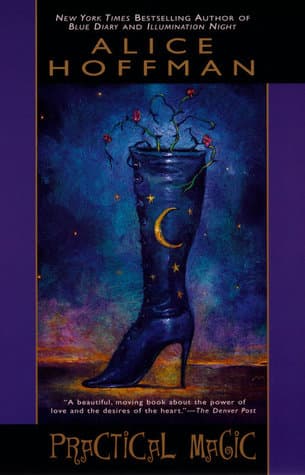
3.8 (75k) average on GoodreadsFantasyWhile both novels blend magic with family drama, Hoffman's 'Practical Magic' integrates its magical realism more organically into the daily lives of its characters, making the fantastical feel utterly commonplace. Stein's 'A Sudden Light' sometimes struggles to achieve this same seamlessness with Lena's 'light' element, which can feel more overtly symbolic and less grounded than the ghost of Elijah.
- Harry Potter and the Sorcerer's Stone
J.K. Rowling
4.5 (7M) average on GoodreadsFantasyRescued from a miserable life under the stairs, an orphaned boy discovers he's a wizard destined for a magical school, where he uncovers a dangerous secret tied to the dark wizard who murdered his parents.
- The Hunger Games
Suzanne Collins
4.3 (6.4M) average on GoodreadsFantasyIn a future where children fight to the death on live television, Katniss Everdeen volunteers for the arena, turning a death sentence into a fight for survival and a spark of rebellion.
- 1984
George Orwell
4.2 (3.1M) average on GoodreadsPoliticsIn a future where surveillance and thought control are absolute, a man's search for truth clashes with the Party, showing that hope can be a form of rebellion.





Enjoyed the summary?
A summary gives you the shape of the book. The book itself has the detail, the examples and the voice.
Find A Sudden Light on AmazonAs an Amazon Associate, BookBrief earns from qualifying purchases. How we're funded