

Synopsis
Covers the whole plot, including the ending.
- Difficulty
- Medium
- Pacing
- Moderate
- Mood
- Witty, Satirical, Melancholy, Dramatic
- Read it if
- You enjoy sharp wit, social commentary, and dramas that expose Victorian hypocrisy.
- Skip it if
- You prefer fast-paced action or plots without significant social critique.
A Woman of No Importance Plot Summary
Covers the whole plot, including the ending.
Lady Hunstanton's Country House Party
The play opens at Lady Hunstanton's country estate, where a house party is happening. Guests, including the cynical Lord Illingworth, the charming Mrs. Allonby, the moralizing Lady Caroline Pontefract, and the earnest Miss Worsley, talk and comment on society. Lady Hunstanton, a kind but somewhat ditzy hostess, leads the gathering. The conversation is mainly about societal expectations, marriage, and the nature of men and women, with Lord Illingworth often giving provocative and cynical observations. Gerald Arbuthnot, a young and ambitious man, is also there, waiting for news about a potential secretarial position.
Gerald's New Appointment and Mrs. Arbuthnot's Arrival
It is announced that Gerald Arbuthnot has been offered the position of private secretary to Lord Illingworth, a big step for the young man. Gerald is excited to start his new life. However, his mother, Mrs. Arbuthnot, arrives at the house party, called by Lady Hunstanton. Mrs. Arbuthnot is a woman of quiet dignity and clear sorrow. Her reaction to Gerald's appointment is one of dismay, almost horror. She tries to stop Gerald from taking the position but cannot tell him her true reasons, causing confusion and frustration.
Mrs. Arbuthnot's Desperate Plea to Lord Illingworth
Overwhelmed, Mrs. Arbuthnot meets privately with Lord Illingworth. In a tense and emotional talk, it is revealed that Lord Illingworth is Gerald's father, a fact he had hidden and Mrs. Arbuthnot had guarded. She asks him to release Gerald from the position, explaining the pain and shame she has endured as an unmarried mother. Lord Illingworth, at first dismissive and arrogant, faces the past, and Mrs. Arbuthnot's suffering becomes clear.
Gerald Learns the Truth
Gerald, confused and hurt by his mother's opposition to his career, eventually learns the truth about his parentage from Lord Illingworth himself, who, in a moment of cynical honesty, admits to being his father. Gerald is shocked and conflicted. He confronts his mother, asking why she kept such a secret. Mrs. Arbuthnot, forced to confess, tells the story of her abandonment and the social ostracism she faced as a single mother, sacrificing everything to raise him with honor despite the cost.
Gerald's Loyalty and Rejection of Illingworth
Initially torn, Gerald chooses to stand by his mother. He is disgusted by Lord Illingworth's casual attitude towards his past and his mother's suffering. He rejects the offer of a privileged life and career under his biological father, recognizing his mother's moral integrity. Gerald declares his love and respect for Mrs. Arbuthnot, vowing to protect her and uphold her honor, effectively disowning Lord Illingworth and all he represents. This decision marks a turning point in Gerald's character, as he prioritizes family loyalty and moral rightness over social advancement.
Lord Illingworth's Proposal and Mrs. Arbuthnot's Refusal
Lord Illingworth, perhaps moved by Gerald's rejection or a fleeting sense of guilt, proposes marriage to Mrs. Arbuthnot, offering to legitimize their son and restore her social standing. However, Mrs. Arbuthnot refuses. She explains that while she once loved him, his abandonment and her suffering have changed her. She cannot forgive his past actions or accept a marriage born out of convenience or duty instead of genuine love and respect. Her refusal shows her moral compass and her desire to live authentically.
The Confrontation with Lord Illingworth's Betrayal
Mrs. Arbuthnot confronts Lord Illingworth, detailing the suffering he caused by abandoning her when she was pregnant. She describes the societal scorn she faced and the sacrifice of her life and reputation to raise Gerald. She emphasizes that his offer of marriage now is too late and cannot undo the pain and shame she endured. Her words are a strong criticism of his past actions and show her resilience and strength, highlighting the consequences of his 'woman of no importance' mentality.
The Scandal Revealed (Subtly)
While the full details of the scandal are not broadcast to the entire house party, the guests gradually become aware of the tension and the drama. The sudden change in Gerald's plans, Mrs. Arbuthnot's distress, and Lord Illingworth's unusual demeanor all contribute to a shift in the atmosphere. The witty talk gives way to hushed conversations and knowing glances, as the society members, especially the astute Mrs. Allonby and the naive Miss Worsley, begin to understand the events, even if the precise nature of the relationships remains somewhat veiled to some.
Miss Worsley's Idealism and Lord Illingworth's Cynicism
Throughout the play, Miss Worsley, a young American woman, represents a fresh, idealistic view on life and morality. She admires Lord Illingworth's intellect but is troubled by his cynical statements on love, marriage, and societal values. Her innocent questions and genuine belief in goodness often highlight the moral decay and hypocrisy Lord Illingworth embodies. Their interactions contrast two opposing worldviews: one that seeks purity and truth, and another that enjoys superficiality and moral relativism, ultimately showing the play's central themes of virtue and vice.
The Denouement: A Woman of No Importance
In the final act, Mrs. Arbuthnot rejects Lord Illingworth's attempts to re-enter her life. When he reaches out to touch Gerald, she intervenes, striking him with his own glove, a symbol of her defiance and reclaiming her dignity. She declares that he is 'a man of no importance,' reversing the societal judgment that had been cast upon her. With Gerald by her side, Mrs. Arbuthnot leaves the house party, choosing a life of integrity and love with her son over the superficiality and moral compromise of high society. Her exit signifies her triumph over social ostracism and her assertion of self-worth.
A Woman of No Importance Characters
Mrs. Arbuthnot
Protagonist
A woman of profound integrity who sacrificed everything for her son.
Mrs. Arbuthnot is a dignified, quietly suffering woman who carries the heavy burden of a past secret. As an unmarried mother, she endured social ostracism and immense hardship to raise her son, Gerald, with honor and love. She is deeply moral, resilient, and fiercely protective of her son, prioritizing his well-being and moral upbringing above all else. Her past has made her wary of society's judgments and the superficiality of the upper class, leading her to value genuine love and integrity above reputation.
Relationships: Gerald Arbuthnot (Devoted mother, fiercely protective.); Lord Illingworth (Past lover, father of her child, object of her profound resentment and moral judgment.)
Lord Illingworth
Antagonist
A witty, cynical, and morally bankrupt aristocrat.
Lord Illingworth is a prominent figure in society, known for his sharp wit, sophisticated charm, and deeply cynical worldview. He embodies the moral laxity and hypocrisy of the Victorian upper class. He is Gerald's biological father, whom he abandoned along with Mrs. Arbuthnot decades ago, viewing his actions as mere youthful indiscretion. He is arrogant, self-serving, and initially dismissive of Mrs. Arbuthnot's suffering, believing that social status and cleverness can excuse any moral failing.
Relationships: Gerald Arbuthnot (Biological father, initially seeks to employ him, then offers to acknowledge him, but is ultimately rejected.); Mrs. Arbuthnot (Past lover, mother of his child, whom he abandoned and whose suffering he dismisses.); Mrs. Allonby (Flirtatious intellectual sparring partner.)
Gerald Arbuthnot
Supporting
An ambitious young man who learns the true meaning of honor and loyalty.
Gerald is a young, earnest, and ambitious man eager to make his way in the world. He deeply loves and respects his mother, Mrs. Arbuthnot, though he is initially unaware of her past and the sacrifices she made. He is initially drawn to the allure of Lord Illingworth's patronage and the opportunities it presents. Upon learning the truth about his parentage, Gerald undergoes a significant moral awakening, choosing to stand by his mother and reject the superficiality and moral failings of his biological father.
Relationships: Mrs. Arbuthnot (Devoted son, fiercely loyal.); Lord Illingworth (Biological son, initially admires him but ultimately rejects him.)
Miss Hester Worsley
Supporting
An idealistic American heiress who champions moral purity.
Miss Worsley is a young, wealthy American woman visiting England. She is characterized by her strong moral convictions, idealism, and a somewhat naive belief in the inherent goodness of people. She openly expresses her disapproval of the cynical attitudes prevalent in English high society, particularly those of Lord Illingworth. Her presence in the play serves as a moral counterpoint to the jadedness of many of the other characters, highlighting the hypocrisy and superficiality she observes.
Relationships: Lord Illingworth (Intellectual sparring partner, whose cynicism she disapproves of.); Lady Hunstanton (Guest at her house party.)
Lady Hunstanton
Supporting
A kind, well-meaning but somewhat ditzy society hostess.
Lady Hunstanton is the affable and somewhat scatterbrained hostess of the country house party. She is well-intentioned and tries to maintain a pleasant atmosphere, but often misses the deeper implications of conversations and events. Her pronouncements are frequently amusingly irrelevant, and she serves to lighten the tone while also highlighting the superficiality of polite society, where profound truths are often overlooked in favor of social niceties and gossip.
Relationships: All guests (Hostess, trying to keep everyone comfortable and entertained.)
Mrs. Allonby
Supporting
A witty and cynical society woman, skilled in flirtatious banter.
Mrs. Allonby is a sophisticated and charming society woman who engages in witty, often cynical, banter with Lord Illingworth. She represents a segment of society that finds amusement in intellectual games and social observations, often at the expense of genuine emotion or moral depth. She is a master of the epigram and enjoys provocative discussions, but her wit often masks a certain hollowness beneath the surface.
Relationships: Lord Illingworth (Flirtatious intellectual sparring partner.); Lady Caroline Pontefract (Fellow guest, often a target of her subtle jabs.)
Lady Caroline Pontefract
Supporting
A rigid and moralistic society woman concerned with duty and propriety.
Lady Caroline is a rather rigid and opinionated society woman, obsessed with duty, propriety, and the proper behavior of her husband, Sir John. She is often critical and expresses strong, traditional views on marriage and social conduct. Her character provides a contrast to the more liberal and cynical views of others, highlighting the different facets of Victorian society's moral landscape. Her pronouncements are often comically stern and reveal a preoccupation with social order.
Relationships: Sir John Pontefract (Husband, whom she constantly chides and directs.); Mrs. Allonby (Fellow guest, whose views she often disapproves of.)
Sir John Pontefract
Supporting
Lady Caroline's long-suffering and submissive husband.
Sir John is Lady Caroline's husband, a meek and somewhat henpecked man. He is often the target of his wife's criticisms and instructions, and his responses are typically brief and resigned. He serves primarily as a comedic foil to Lady Caroline and embodies the idea of a man who has lost his voice within his marriage, highlighting the societal dynamics of some Victorian relationships.
Relationships: Lady Caroline Pontefract (Husband, constantly managed and directed by her.)
A Woman of No Importance Themes
Hypocrisy and Social Judgment
The play shows the hypocrisy of Victorian society, which condemns women for moral transgressions while often overlooking similar actions by men. Mrs. Arbuthnot is ostracized for having an illegitimate child, while Lord Illingworth, the father, keeps his social standing and witty reputation. The witty banter among the upper-class characters, especially Lord Illingworth and Mrs. Allonby, often reveals a shallowness that hides deeper moral failings and a willingness to judge others harshly. Miss Worsley's idealism provides a contrast, highlighting the moral bankruptcy of the 'society' that calls Mrs. Arbuthnot a 'woman of no importance.'
“A man who desires to get a reputation for wit must never tell the truth.”
The Double Standard
A central theme is the double standard applied to men and women in Victorian society, especially concerning sexual morality. Mrs. Arbuthnot's life is ruined by a single 'mistake,' leading to decades of social shame and isolation, simply because she had a child out of wedlock. Lord Illingworth, the father, suffers no such consequences; his reputation remains intact, and he continues to thrive in society, even making cynical remarks on marriage and morality. The play shows how society punishes the 'fallen woman' while excusing the 'fallen man,' causing suffering for one gender while granting impunity to the other. Mrs. Arbuthnot's final rejection of Illingworth is a strong statement against this injustice.
“A man's life is of more value than a woman's. It has a higher price, that is all.”
Maternal Love and Sacrifice
Mrs. Arbuthnot's character shows the sacrificial nature of maternal love. Despite social pressure and personal suffering, she chooses to raise her son, Gerald, with devotion and integrity. She sacrifices her reputation, social standing, and happiness to give him a moral upbringing. Her love contrasts with Lord Illingworth's casual disregard for his son and his mother's well-being. Gerald's choice to stand by his mother, rejecting his biological father's offer of a privileged life, shows the power and value of her selfless love and sacrifice.
“My son, my son! You are dearer to me than life itself.”
Redemption and Forgiveness
The theme of redemption and forgiveness is explored through Mrs. Arbuthnot's refusal to forgive Lord Illingworth and her own self-redemption. While Lord Illingworth makes a belated offer of marriage, it seems like a practical attempt to fix a social inconvenience rather than genuine remorse. Mrs. Arbuthnot, having endured decades of suffering, finds that forgiveness is not possible for such a betrayal. Instead, she finds her own redemption not through societal acceptance or marriage, but by asserting her self-worth and moral integrity, choosing to live authentically with her son rather than compromise her values. Her refusal to accept Illingworth's terms shows her reclaiming power and dignity.
“I will not forgive you. I will not forgive you!”
The Nature of Identity and Reputation
The play looks at how identity is shaped by personal choices and societal perception. Mrs. Arbuthnot's identity is defined by society as a 'fallen woman' due to her past, regardless of her present integrity. Lord Illingworth's identity is that of a charming wit, despite his moral failings. Gerald struggles with his identity upon discovering his true parentage, having to reconcile the image of his loving mother with the revelation of his cynical biological father. Ultimately, the play suggests that true identity and worth come from one's actions and moral character, rather than from social reputation or the judgments of others, as Mrs. Arbuthnot reclaims her identity by declaring Illingworth 'a man of no importance'.
“What is a cynic? A man who knows the price of everything and the value of nothing.”
Plot Devices & Literary Techniques
Dramatic Irony
The audience is aware of the characters' hidden relationships and pasts before they are revealed on stage.
Wilde masterfully uses dramatic irony, particularly regarding the relationship between Mrs. Arbuthnot, Gerald, and Lord Illingworth. The audience quickly infers the truth about Gerald's parentage, or at least the deep connection between Mrs. Arbuthnot and Lord Illingworth, long before the characters on stage explicitly state it. This creates tension and suspense, as the audience watches Mrs. Arbuthnot's distress and Lord Illingworth's casual cruelty with the full knowledge of the devastating impact of their shared past, anticipating the inevitable revelation and its fallout.
Epigrammatic Dialogue
Witty, concise, and often paradoxical statements used to convey social commentary.
Wilde's signature use of epigrammatic dialogue is a key plot device. Characters, especially Lord Illingworth and Mrs. Allonby, frequently exchange clever, often cynical, one-liners that serve multiple purposes. They entertain the audience, establish the characters' personalities, and, crucially, function as a form of social commentary. These witty remarks often expose the superficiality, hypocrisy, and moral relativism of Victorian high society, while simultaneously advancing the plot by revealing character motivations and setting the tone for the unfolding drama.
The Hidden Past
A secret from the past that drives the central conflict and character motivations.
The entire plot hinges on Mrs. Arbuthnot's long-concealed secret: that Lord Illingworth is Gerald's father and that she bore him out of wedlock. This 'hidden past' creates the initial tension, fuels Mrs. Arbuthnot's desperate attempts to prevent Gerald from working for Illingworth, and ultimately leads to the dramatic revelations and confrontations. The gradual unveiling of this secret, and its profound impact on all involved, is the primary engine of the play's dramatic action, highlighting the lasting consequences of past choices and societal judgments.
Symbolism of the Glove
An everyday object used to represent a powerful act of defiance and reclaiming of dignity.
The moment Mrs. Arbuthnot strikes Lord Illingworth with his own glove is a potent symbolic act. The glove, initially an item of his sophisticated attire, is turned against him, representing her rejection of his world and his values. It signifies her reclaiming of power, dignity, and agency after years of suffering in silence. This physical act, rather than mere words, visually underscores her defiance and her declaration that he is 'a man of no importance,' reversing the societal judgment that had long been cast upon her.
A Woman of No Importance Quotes
“The only way a woman can ever reform a man is by boring him so completely that he loses all possible interest in life.”
“Children begin by loving their parents; as they grow older they judge them; sometimes they forgive them.”
“To get into the best society nowadays, one has either to feed people, amuse people, or shock people—that is all.”
“The world is a stage, but the play is badly cast.”
“A man's life is of more value than a woman's. It has a career.”
“One should always be in love. That is the reason one should never marry.”
“Fashion is what one wears oneself. What is unfashionable is what other people wear.”
“We are all in the gutter, but some of us are looking at the stars.”
“Scandal is gossip made tedious by morality.”
“The past is what one remembers. The future is what one hopes for. The present is what one lives.”
“A man who desires to get a reputation for good taste at once announces that he dislikes something that is popular.”
“It is always a silly thing to give advice, but to give good advice is absolutely fatal.”
“The world has been made by men, and made for men.”
“There are moments when one has to choose between living one's own life, fully, entirely, completely—or dragging out some false, shallow, degrading existence that the world chooses to call a life.”
Quiz
10 questions on the plot and the characters. Each answer comes with a short explanation.
Question 1
At whose country home is the house party taking place when the play begins?
- Lady Caroline Pontefract's
- Lady Hunstanton's
- Mrs. Allonby's
- Lord Illingworth's
Show answer
B. Lady Hunstanton's The house party, central to the play's opening events, is explicitly stated to be at Lady Hunstanton's country home.
Question 2
What position is Gerald Arbuthnot offered that his mother initially opposes?
- A tutor for Lady Hunstanton's nephew
- A diplomat in a foreign embassy
- Secretary to Lord Illingworth
- An artist's apprentice in London
Show answer
C. Secretary to Lord Illingworth Gerald Arbuthnot is appointed secretary to Lord Illingworth, a position his mother, Mrs. Arbuthnot, is deeply reluctant for him to accept due to her past with Lord Illingworth.
Question 3
What is the primary reason Mrs. Arbuthnot does not want Gerald to work for Lord Illingworth?
- She believes Lord Illingworth is financially unstable.
- Lord Illingworth is Gerald's biological father.
- She thinks Lord Illingworth will corrupt Gerald's morals.
- She wants Gerald to pursue a different career path.
Show answer
B. Lord Illingworth is Gerald's biological father. The core secret of the play is that Lord Illingworth is the father of Gerald Arbuthnot, a fact Mrs. Arbuthnot has kept hidden for years, making her desperate to keep them apart professionally.
Question 4
Which character is described as 'sophisticated' and 'witty' and is the target of Mrs. Arbuthnot's long-concealed secret?
- Mr. Kelvil
- Lord Illingworth
- Archdeacon Daubeny
- Mr. Ernest Woolton
Show answer
B. Lord Illingworth Lord Illingworth is introduced as the sophisticated and witty character who offers Gerald the secretary position, and he is the man whose past connection to Mrs. Arbuthnot forms the central conflict.
Question 5
What is the societal consequence Mrs. Arbuthnot fears if the truth about Gerald's parentage is revealed?
- She will lose her inheritance.
- Gerald will be disowned by his current family.
- She will be ostracized and Gerald's future ruined by scandal.
- Lord Illingworth will demand custody of Gerald.
Show answer
C. She will be ostracized and Gerald's future ruined by scandal. Mrs. Arbuthnot's greatest fear is the social ruin that would befall both her and Gerald if the scandal of his illegitimate birth were to become public knowledge in Victorian society.
Question 6
What does Mrs. Arbuthnot mean by the phrase, 'who will believe Lord Illingworth to be a man of no importance?'
- She doubts his political influence.
- She is referring to his high social standing and the difficulty of convincing others of his moral failings.
- She believes he is genuinely a good man despite her personal feelings.
- She is being sarcastic about his actual lack of power.
Show answer
B. She is referring to his high social standing and the difficulty of convincing others of his moral failings. This line highlights the theme of social hypocrisy. Mrs. Arbuthnot knows Lord Illingworth holds significant social power and respect, making it nearly impossible for her to expose his past actions without being discredited herself.
Question 7
Before the revelation, how does Gerald Arbuthnot generally perceive Lord Illingworth?
- As a distant and intimidating figure.
- As a mentor and an admirable figure he looks up to.
- As a rival for social status.
- As an eccentric but harmless old man.
Show answer
B. As a mentor and an admirable figure he looks up to. Gerald is eager to work for Lord Illingworth and views him with admiration, unaware of their true relationship or Lord Illingworth's past actions towards his mother.
Question 8
What is the central irony conveyed by the play's title, 'A Woman of No Importance,' in relation to Mrs. Arbuthnot?
- She holds significant political power despite her social standing.
- Her social standing is low, but her moral integrity and the impact of her past are profoundly important.
- She is literally a woman with no influence in the plot.
- The title refers to another character, not Mrs. Arbuthnot.
Show answer
B. Her social standing is low, but her moral integrity and the impact of her past are profoundly important. The title is deeply ironic. While Mrs. Arbuthnot, as an unmarried mother, is considered 'a woman of no importance' by Victorian society, her moral strength and the consequences of her past actions are central to the entire drama and hold immense importance.
Question 9
How does Oscar Wilde use the dialogue of the other house guests, particularly the ladies, to comment on Victorian society's views on morality?
- They consistently advocate for progressive social reforms.
- Their witty, often cynical, remarks expose the hypocrisy and double standards applied to men and women.
- They serve as a moral chorus, always upholding traditional values.
- Their conversations are largely irrelevant to the play's main themes.
Show answer
B. Their witty, often cynical, remarks expose the hypocrisy and double standards applied to men and women. Wilde's signature wit is used through the characters' dialogue, especially the ladies, to satirize and expose the superficiality and hypocrisy of Victorian upper-class morality, particularly the differing standards for men and women regarding sexual transgression.
Question 10
What specific action does Mrs. Arbuthnot take in the climax of the play to protect Gerald from Lord Illingworth's influence?
- She publicly denounces Lord Illingworth in front of all the guests.
- She threatens to reveal a deeper secret about Lord Illingworth's past.
- She prevents Gerald from leaving with Lord Illingworth and ultimately strikes Lord Illingworth with his own glove.
- She appeals to Lady Hunstanton to intervene on her behalf.
Show answer
C. She prevents Gerald from leaving with Lord Illingworth and ultimately strikes Lord Illingworth with his own glove. In a powerful climactic moment, Mrs. Arbuthnot confronts Lord Illingworth, prevents Gerald from going with him, and famously strikes Lord Illingworth with his glove, symbolizing her rejection of his authority and her protection of her son.
A Woman of No Importance FAQ
What is the central conflict that drives the plot of 'A Woman of No Importance'?
The central conflict revolves around Mrs. Arbuthnot's desperate attempt to prevent her son, Gerald Arbuthnot, from accepting a secretarial position with Lord Illingworth, the man who seduced and abandoned her twenty years prior, leaving her to raise their illegitimate son in shame. Her fear is that Gerald will discover his true parentage and the dark secret of her past, shattering his illusions and exposing her long-held pain.
Who is Mrs. Arbuthnot, and what is her significance to the story?
Mrs. Arbuthnot is a reclusive, pious woman who has lived a life of quiet suffering and sacrifice, raising her illegitimate son, Gerald, under the shadow of social ostracism. She embodies the Victorian ideal of the 'fallen woman' who pays a heavy price for a youthful indiscretion, and her unwavering devotion to her son and bitter resentment towards Lord Illingworth are central to the play's emotional core.
Describe Lord Illingworth's character and his role in the unfolding drama.
Lord Illingworth is a charming, cynical, and highly intelligent aristocrat, known for his witty epigrams and casual disregard for conventional morality. He represents the hypocritical male privilege of Victorian society, having abandoned Mrs. Arbuthnot and Gerald without consequence, only to reappear as a powerful figure in Gerald's life, oblivious to the emotional devastation he caused.
How does Gerald Arbuthnot's ambition contribute to the play's tension?
Gerald Arbuthnot's ambition to become Lord Illingworth's secretary is the catalyst for the entire drama, forcing Mrs. Arbuthnot to confront her past and the man who ruined her. His youthful idealism and desire for social advancement blind him to the truth, making him an unwitting pawn in a deeply personal and painful conflict between his parents.
What role do the various members of Lady Hunstanton's house party play in the narrative?
The house party guests, including Lady Hunstanton, Lady Caroline Pontefract, Mrs. Allonby, and Miss Worsley, serve as a witty, often superficial, Greek chorus, commenting on social conventions, gender roles, and morality. Their drawing-room banter and epigrammatic exchanges highlight the societal hypocrisy and double standards that underpin the central tragedy, providing both comic relief and sharp social commentary.
What is the significance of the title 'A Woman of No Importance'?
The title refers primarily to Mrs. Arbuthnot, who, as a 'fallen woman' and single mother, is deemed socially insignificant and disposable by Victorian society. However, it is deeply ironic, as her moral strength and the profound impact of her past actions on others prove her to be a woman of immense, albeit tragic, importance, far more significant than the seemingly powerful Lord Illingworth.
Are there any subtle clues early in the play that hint at the relationship between Lord Illingworth and Mrs. Arbuthnot?
Yes, subtle clues include Mrs. Arbuthnot's extreme reluctance to attend Lady Hunstanton's party and her immediate, visceral disapproval of Gerald's proposed position with Lord Illingworth. Her veiled comments about 'men of no importance' and her unusual distress whenever Lord Illingworth is mentioned provide early indicators of a deeper, troubled history between them.
How does the character of Hester Worsley, the American Puritan, serve as a moral counterpoint?
Hester Worsley represents an unwavering, often harsh, moral purity and a strong sense of justice, contrasting sharply with the cynical pragmatism of the English aristocracy. Her initial condemnation of 'fallen women' like Mrs. Arbuthnot, and her eventual empathy and fierce defense of her, highlight the play's critique of societal hypocrisy and the arbitrary nature of social judgment.
What is the symbolic meaning behind Mrs. Arbuthnot's refusal to let Lord Illingworth touch Gerald?
Mrs. Arbuthnot's fierce refusal to allow Lord Illingworth to touch Gerald symbolizes her desire to protect her son from his father's corrupting influence and the taint of his past. It also signifies her reclamation of motherhood and her defiance against the man who abandoned them, asserting her sole right to guide and protect her son from further harm.
Analyze Mrs. Arbuthnot's psychological state throughout the play, especially her blend of piety and bitterness.
Mrs. Arbuthnot lives in a perpetual state of suppressed trauma and moral conflict. Her deep piety is a coping mechanism, a way to find solace and strength in her ostracized life, but it is constantly at war with a profound bitterness and resentment towards Lord Illingworth. This internal struggle manifests in her self-sacrificing love for Gerald and her desperate, almost primal, need for justice and recognition of her suffering.
How does Lord Illingworth's wit function as a psychological defense mechanism?
Lord Illingworth's constant stream of witty epigrams and cynical observations serves as a sophisticated psychological defense mechanism, allowing him to maintain emotional distance and avoid genuine introspection. His cleverness deflects serious moral responsibility, masks his past cruelty, and positions him above the emotional fray, preventing him from engaging with the profound consequences of his actions.
Discuss Gerald Arbuthnot's psychological journey from naive ambition to disillusioned understanding.
Gerald begins as a naive, ambitious young man, eager for social recognition and blind to the complexities of his mother's past. His psychological journey involves a painful awakening to the truth of his parentage, leading to initial shock and confusion, followed by a profound disillusionment with his father and a newfound, fierce loyalty and understanding for his mother's sacrifices. He matures from a boy seeking approval to a man defending his family's honor.
What is the psychological impact of societal hypocrisy on characters like Mrs. Arbuthnot and Hester Worsley?
Societal hypocrisy forces Mrs. Arbuthnot into a life of shame and isolation, leading to chronic emotional suffering and a deep-seated bitterness. For Hester Worsley, it initially fuels her rigid moral judgment, but witnessing the human cost of these double standards compels her to challenge her own prejudices and develop empathy, revealing the damaging psychological toll of a society that punishes some while excusing others.
What is Wilde's ultimate commentary on Victorian morality and gender roles through this play?
Wilde critiques the profound hypocrisy of Victorian morality, which harshly condemned women for sexual indiscretions while largely excusing men for similar, or worse, actions. He exposes the restrictive and damaging nature of gender roles, particularly the 'fallen woman' trope, and subtly advocates for a more compassionate and equitable society where individuals are judged by their character rather than by outdated social codes.
Is Mrs. Arbuthnot's final act of tearing up Lord Illingworth's letter an act of revenge, self-preservation, or something else?
Mrs. Arbuthnot's act of tearing up Lord Illingworth's letter, which offered marriage, is a complex mix of self-preservation, defiance, and a refusal to compromise her moral integrity. It is not pure revenge, but a powerful assertion of her dignity and a rejection of a life that would force her back into a relationship with the man who wronged her, choosing instead to protect her son and maintain her hard-won independence.
How does the play challenge the traditional notions of 'importance' and 'worth' in society?
The play fundamentally challenges traditional notions of 'importance' by showing that social status and wit (like Lord Illingworth's) do not equate to moral worth, while a woman shunned by society (Mrs. Arbuthnot) can possess immense strength, integrity, and the capacity for profound love. It argues that true worth lies in character, sacrifice, and genuine human connection, rather than superficial social standing.
Could Lord Illingworth have genuinely changed or redeemed himself by offering marriage to Mrs. Arbuthnot?
While Lord Illingworth's offer of marriage might appear to be a gesture of redemption, the play suggests it is more likely driven by a desire to preserve his social standing and avoid scandal, or perhaps a fleeting moment of conscience rather than true remorse. His past behavior and cynical nature make genuine, lasting redemption seem unlikely, and Mrs. Arbuthnot correctly perceives his offer as too little, too late, and ultimately self-serving.
How does the play's ending, with Mrs. Arbuthnot and Gerald leaving together, resolve the central conflict?
The ending resolves the central conflict by affirming Mrs. Arbuthnot's choice to prioritize her son and their shared future over social restoration or material comfort. By rejecting Lord Illingworth's offer and leaving with Gerald, she asserts her independence and secures her son's respect, finding a form of peace and dignity outside the confines of a hypocritical society, even if it means continued social ostracism.
About the author
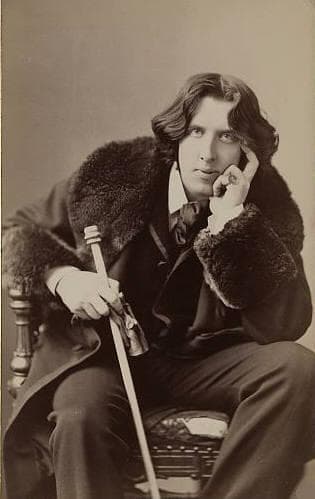
Oscar Fingal O'Fflahertie Wills Wilde was an Irish poet and playwright. After writing in different forms throughout the 1880s, he became one of the most popular playwrights in London in the early 1890s. He is best remembered for his epigrams and plays, his novel The Picture of Dorian Gray, and the circumstances of his criminal conviction for gross indecency for consensual homosexual acts in "one of the first celebrity trials", imprisonment, and early death from meningitis at the age of 46.
Similar books
- Hedda Gabler
Henrik Ibsen
3.8 (30k) average on GoodreadsFictionExplores complex female characters and societal constraints.
- Pride and Prejudice
Jane Austen
4.3 (3M) average on GoodreadsHistorical FictionFocuses on social standing, reputation, and marriage in a specific era.
- Nineteen Eighty-Four
George Orwell
4.2 (5.5M) average on GoodreadsFictionWinston Smith dreams of truth and rebellion in a world where Big Brother watches all, but he confronts the terrifying power of a regime that controls not just actions, but thoughts.
- The Frozen River
Ariel Lawhon
4.4 (600k) average on GoodreadsFictionIn 1789 Maine, a heroic midwife's diary helps her expose a murder and get justice in a town that wants to silence her.
- A Man Called Ove
Fredrik Backman
4.4 (569k) average on GoodreadsFictionA stubborn widower, who lives by strict rules, finds his quiet world changed by a lively new family next door, making him face his past and find happiness in human connection.
- The Art of Racing in the Rain
Garth Stein
4.2 (452k) average on GoodreadsFictionThrough the eyes of Enzo, a wise and observant dog, a race car driver's family navigates a journey of love, loss, and resilience, learning that life's most important lessons often come in the curves, not just on the straightaways.






Enjoyed the summary?
A summary gives you the shape of the book. The book itself has the detail, the examples and the voice.
Find A Woman of No Importance on AmazonAs an Amazon Associate, BookBrief earns from qualifying purchases. How we're funded