
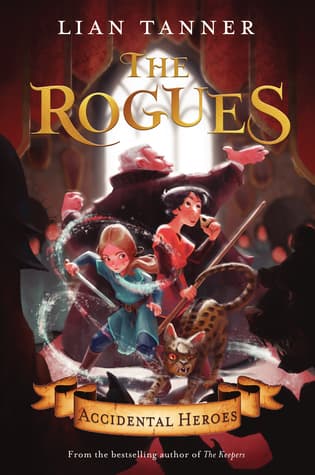
Synopsis
Covers the whole plot, including the ending.
- Difficulty
- Easy
- Pacing
- Moderate
- Mood
- Whimsical, Mysterious, Adventurous, Humorous
- Read it if
- You enjoy whimsical, middle-grade fantasy mysteries with plucky young heroes, hidden magic, and a touch of humor.
- Skip it if
- You prefer gritty, dark fantasy or stories with complex adult themes.
Accidental Heroes Plot Summary
Covers the whole plot, including the ending.
Pummel Arrives in Berren
Pummel, a farm boy, arrives in the confusing city of Berren, looking for work after his family's farm faced problems. He finds the city's customs strange and sees the fear of 'disloyalty' connected to anything unusual. His innocence makes him an easy target. He meets Lord Rump and his sharp granddaughter, Duckling, at their unusual shop. Lord Rump, a master of manipulation, quickly sees Pummel as a 'disposable boy' perfect for his new 'Scheme,' which Duckling helps with, hoping it will be her grandfather's last.
The Strong-hold and the Stopped Time
Lord Rump's 'Scheme' involves getting into the Strong-hold of Berren, a fortress at the city's center, rumored to hold the Young Margrave. Pummel is given a false identity and a simple delivery task. Duckling guides him using her knowledge of the city's hidden paths, watching his reactions. Inside the Strong-hold, they notice something wrong: time moves strangely or stops in some areas. This unnatural event suggests the deeper, hidden magic in Berren.
Encountering the Young Margrave
Inside the Strong-hold, Pummel and Duckling find the Young Margrave, who is not the respected figure they expected. He is a young, weak boy, clearly a prisoner. This discovery complicates Lord Rump's plan, showing his 'Scheme' is more dangerous than just gaining access. It turns out Lord Rump plans to replace the Young Margrave with a magically created double, taking control of the Faithful Throne through a puppet ruler. Duckling, despite her involvement, starts to question her grandfather's actions and the true cost of his goals.
The Plot to Kill the Heir
Lord Rump's real, terrible plan is revealed: he intends to kill the real Young Margrave once the magical copy is in place, ensuring his full control. This shocks Duckling, who had always thought her grandfather's plans, while bold, were not deadly. Pummel, despite his initial confusion, understands the danger to the innocent Young Margrave. The children realize they are not just pawns but are caught in a plot for power, and their own lives are at risk if they fail or try to expose Lord Rump.
Awakening to Magic
Facing an impossible situation and the immediate threat to the Young Margrave and themselves, Pummel and Duckling must confront the reality of magic. Though they grew up in a city where believing in magic is 'disloyal' and dangerous, their desperate situation awakens their abilities. Pummel, through sheer will and a connection to nature, begins to control elements. Duckling, with her sharp mind, starts to sense and influence magical flows. This new magic is their only hope against Lord Rump's powerful plans.
Escaping the Strong-hold
With their new magical abilities, Pummel and Duckling plan to rescue the Young Margrave from the Strong-hold. Pummel uses his growing ability to control plants, creating distractions and barriers. Duckling manipulates time distortions within the fortress to confuse pursuers and open paths. They navigate the Strong-hold's complex halls, avoiding Lord Rump's guards and magical traps. The escape is dangerous, testing their new powers and their growing trust, as they work to protect the Young Margrave and reach safety outside the Strong-hold's walls.
The City in Chaos
The escape from the Strong-hold, with visible magic and the Young Margrave's sudden appearance, causes an uproar in Berren. The city's long denial of magic, enforced by rulers, begins to break as clear evidence appears. Lord Rump's control starts to crack, and the people, once calm, are now divided between fear, disbelief, and a growing sense of wonder and rebellion. The children's actions have started a societal change, forcing Berren to face its hidden magical past.
Confronting Lord Rump
Pummel and Duckling, now more confident and united, confront Lord Rump. The confrontation is a battle of wits and magic. Lord Rump reveals himself as an old sorcerer who has long controlled Berren from the shadows, his 'Schemes' always aimed at gaining power. He uses dark magic against the children. Duckling, using her knowledge of her grandfather's methods and weaknesses, works with Pummel, whose raw magic is surprisingly effective against Rump's spells. The battle is fierce, with Berren's fate and the Young Margrave's life at stake.
The Truth About Berren's Magic
During and after their fight with Lord Rump, Pummel and Duckling learn Berren's true history. They find that magic was not just disbelieved but actively suppressed by an old magical pact or curse, possibly started by Lord Rump or an ancestor, to prevent its widespread use. This suppression caused the city's strange events – disappearing people, sudden tree growth, and stopped time in the Strong-hold – all magic trying to break free. The 'disloyalty' linked to magic was a way to maintain control.
Restoring Balance
After Lord Rump's defeat, Pummel and Duckling, with the Young Margrave's help, begin restoring magical balance to Berren. They must find a way to remove the old suppression without causing chaos. This means understanding the city's magical ley lines and safely reintroducing magic into daily life. Their combined efforts, using Pummel's connection to nature's magic and Duckling's strategic insight, begin to heal the city. The strange events normalize, and citizens, initially confused, slowly accept Berren's new magical reality.
The New Margrave and a New Era
With Lord Rump defeated and magic no longer suppressed, the true Young Margrave is reinstated to the Faithful Throne. He is now a leader who understands the importance of magic and truth. Berren enters a new era where magic is not feared but acknowledged and part of society. Pummel, no longer a 'disposable boy,' finds purpose in understanding and guiding Berren's re-emerging magic. Duckling, free from her grandfather's influence, uses her intelligence and new magical abilities to shape this new world, ensuring such suppression never happens again. The city begins to heal, embracing its true identity.
Principal Figures
Pummel
Protagonist
A naive but resilient farm boy who discovers his innate magical abilities.
Pummel is a sturdy, good-hearted farm boy, initially bewildered by the complexities and strange customs of Berren. He is honest, loyal, and possesses a strong moral compass, which makes him an unlikely hero. Despite his initial naivete, he proves to be incredibly resilient and adaptable. His connection to nature, honed by his rural upbringing, is the source of his powerful, untamed magic. He is driven by a desire to do what is right and protect the innocent, even when it puts him in danger.
Relationships: Duckling (Initially a reluctant alliance, evolving into a strong friendship and partnership based on mutual respect and shared purpose.); Lord Rump (Initially a pawn, later a determined adversary.)
Duckling
Protagonist
Lord Rump's sharp-witted granddaughter, torn between loyalty and morality.
Duckling is intelligent, cunning, and resourceful, raised in the shadow of her manipulative grandfather, Lord Rump. She possesses a dry wit and a pragmatic outlook, often appearing cynical but hiding a deep-seated desire for integrity. While initially complicit in her grandfather's schemes, she has a clear moral line she refuses to cross. Her keen observational skills and logical mind are her greatest assets, which later extend to understanding complex magical patterns. She is driven by the hope that her grandfather will stop his nefarious 'Schemes' and a growing sense of responsibility for the innocent.
Relationships: Lord Rump (Complex and conflicted; a granddaughter assisting her manipulative grandfather, eventually turning against him.); Pummel (Initially a handler/observer, evolving into a strong friendship and partnership based on mutual respect and shared purpose.); Young Margrave (Protector and ally.)
Lord Rump
Antagonist
A devious, ancient sorcerer seeking absolute power over Berren.
Lord Rump is the primary antagonist, a charming yet utterly ruthless and manipulative sorcerer. He presents himself as a quirky, eccentric old man, but beneath this facade lies a calculating mind and immense magical power. He is the architect of the magical suppression in Berren and orchestrated the plot to replace the Young Margrave, all in pursuit of ultimate control. His motivation is pure power, and he views others, including his own granddaughter, as expendable pawns in his grand 'Schemes.' He embodies the corruption that comes with unchecked power and the danger of denying truth.
Relationships: Duckling (Manipulative grandfather, exploiting his granddaughter's loyalty.); Pummel (Views him as a disposable tool.); Young Margrave (Target for assassination and replacement.)
The Young Margrave
Supporting
The rightful heir to the Faithful Throne, held captive and destined for replacement.
The Young Margrave is a young, innocent boy, initially depicted as frail and vulnerable due to his prolonged captivity within the Strong-hold. He is the legitimate heir to Berren's throne but has been isolated and manipulated, making him a pawn in Lord Rump's power grab. His existence is a symbol of the truth being suppressed in Berren. Despite his weakness, he possesses an inherent goodness and a quiet dignity. His rescue is the catalyst for the city's awakening to magic and truth.
Relationships: Pummel (Rescuer and protector.); Duckling (Rescuer and protector.); Lord Rump (Captor and intended victim.)
Berren Citizens
Mentioned
The populace of Berren, conditioned to deny magic and accept strange occurrences.
The citizens of Berren are a collective character, representing the society that has been deeply conditioned by Lord Rump's long-standing magical suppression. They are fearful of 'disloyalty' and have learned to rationalize or ignore the many strange phenomena that plague their city, rather than acknowledge the existence of magic. They are initially complacent and easily swayed by authority, but their collective consciousness begins to stir as magic becomes undeniable. Their arc represents the societal awakening and the challenge of accepting a new reality.
Themes & Insights
The Suppression of Truth and Magic
The main theme is Berren's deliberate denial of magic, equating belief in it with 'disloyalty.' This suppression is not just cultural; powerful figures like Lord Rump enforce it, causing strange events to be explained away. The story shows how denying basic truths, like magic, creates problems in society and allows manipulation. Pummel and Duckling's journey forces the city to face this denial, showing that truth, like magic, cannot be contained forever. For example, 'disappearing people' and 'overnight trees' are physical signs of magic trying to break through this suppression.
“To believe in magic would be disloyal.”
The Nature of Power and Corruption
This theme explores how unchecked power, especially when used through manipulation, corrupts. Lord Rump shows this, using his magic and cleverness to control Berren for a long time, seeing people as pawns in his quest for total power. His willingness to kill the Young Margrave shows how deep his corruption runs. The story contrasts his corrupt power with Pummel and Duckling's developing, moral power, suggesting that real power comes from self-awareness, compassion, and using one's abilities responsibly. The entire plot to replace the Young Margrave is an example of corrupt political ambition.
“Some secrets are too dangerous to be known, but more dangerous still is the man who keeps them.”
Coming of Age and Self-Discovery
Pummel and Duckling both grow significantly. Pummel, initially a naive farm boy, discovers his magic and courage. Duckling, burdened by her grandfather's legacy, learns to follow her own moral path, breaking free from his influence and using her unique talents. Their journey is one of self-discovery, as they find their magical potential and define their identities and values apart from societal norms and family expectations. Their partnership is key to both their individual and shared development.
“It turned out that sometimes, the only way to find your way was to make your own path.”
The Importance of Loyalty and Betrayal
Loyalty is a complex theme, explored through Duckling's mixed feelings for her grandfather and Pummel's strong loyalty to what is right. The idea of 'disloyalty' is used by rulers to suppress magic, creating a false sense of allegiance. Lord Rump's betrayal of his granddaughter and the Young Margrave shows how destructive deceit is. In contrast, the growing loyalty and trust between Pummel and Duckling, formed in danger, becomes a strong force against the villain, showing that true loyalty is built on shared values and respect, not manipulation.
“Loyalty is a fine thing, but sometimes, loyalty to a lie can be the most dangerous thing of all.”
Plot Devices & Literary Techniques
Magical Suppression
An enforced societal denial of magic that distorts reality in Berren.
This device creates the core conflict and mystery of Berren. The city's inhabitants are conditioned to disbelieve in magic, associating it with 'disloyalty,' despite numerous strange occurrences like trees sprouting overnight or people disappearing. This suppression isn't just psychological; it's an active magical dampening field or curse, possibly orchestrated by Lord Rump, that forces magic into subtle, distorted manifestations. Its lifting is central to the resolution, as it allows characters to discover their powers and the city to confront its true nature.
The Strong-hold's Stopped Time
A localized temporal anomaly that signals deeper magical instability.
The Strong-hold, where time moves erratically or is completely stopped in sections, serves as a significant plot device. It immediately signals to the characters and reader that something is profoundly wrong and magical, directly contradicting Berren's 'no magic' ethos. This anomaly creates both obstacles and opportunities for Pummel and Duckling, allowing for unique escape routes and complicating Lord Rump's plans. It acts as a physical manifestation of the city's suppressed magic attempting to break free, hinting at the true nature of Berren's magical history.
The Disposable Boy
A narrative label for a character intended to be a mere pawn, highlighting their vulnerability and potential for defiance.
Pummel is explicitly labeled a 'disposable boy' by Lord Rump, indicating his intended role as a convenient, expendable pawn in the villain's scheme. This device immediately establishes the power imbalance and moral depravity of Lord Rump. It also serves to underscore Pummel's initial naivete and vulnerability. More importantly, it sets up his character arc: his journey from a disposable pawn to an indispensable hero who defies this label through his courage and burgeoning magical abilities, proving that no individual is truly disposable.
The Doppelgänger Plot
A plan to replace a key figure with a magical duplicate, serving as the central political intrigue.
Lord Rump's scheme to replace the Young Margrave with a magically created doppelgänger is the primary driver of the immediate political conflict. This device raises the stakes, introducing the threat of assassination and the usurpation of power through magical deceit. It forces Duckling to confront her grandfather's true villainy and compels Pummel to act. The existence of the doppelgänger also highlights the manipulative nature of magic when used for nefarious purposes, contrasting it with the protagonists' more organic and morally aligned magical awakening.
Accidental Heroes Quotes
“The world was full of stories, and some of them were even true.”
“It’s amazing what you can do when you don’t know you can’t.”
“Sometimes the best way to hide something is to put it right where everyone can see it.”
“Being brave isn’t about not being scared. It’s about being scared and doing it anyway.”
“Every secret has a way of wanting to be told, eventually.”
“Maps are only as good as the people who draw them, and the people who read them.”
“You can’t always choose your adventures, but you can choose how you have them.”
“The past isn’t just behind you; it’s all around you, if you know where to look.”
“Sometimes the most ordinary things can be the most extraordinary, if you just look at them right.”
“Trust is a tricky thing. Easy to lose, hard to get back.”
“The best kind of hero is the one who doesn't know they are one.”
“Even the smallest crack can let in the most light.”
“Questions are good. It's the answers that often get you into trouble.”
“Home isn't a place, it's a feeling. And sometimes, you find it in the most unexpected company.”
Quiz
10 questions on the plot and the characters. Each answer comes with a short explanation.
Question 1
What is the initial reason Pummel comes to the city of Berren?
- To find his lost family members.
- To escape a drought in his farming village.
- To look for work.
- To deliver a message to Lord Rump.
Show answer
C. To look for work. Pummel is described as a farm boy looking for work in the city, which is how he becomes available for Lord Rump's schemes.
Question 2
What is the general attitude of the people of Berren towards magic?
- They actively practice it in secret.
- They believe it is disloyal and refuse to acknowledge it.
- They are curious about it but fear its power.
- They openly celebrate it during festivals.
Show answer
B. They believe it is disloyal and refuse to acknowledge it. The book explicitly states that 'no one believes in magic. To believe in magic would be disloyal…'
Question 3
Who is the 'disposable boy' Lord Rump and Duckling initially need for their scheme?
- The Young Margrave.
- Pummel.
- A guard from the Strong-hold.
- A street urchin from the market.
Show answer
B. Pummel. Pummel, the farm boy looking for work, 'fits the bill perfectly' as the disposable boy for Lord Rump's plan.
Question 4
What promise does Duckling extract from her grandfather, Lord Rump, regarding his schemes?
- That she will be allowed to lead the next one.
- That he will share the profits with her equally.
- That this current scheme will be his very last.
- That no one will get hurt during the scheme.
Show answer
C. That this current scheme will be his very last. Duckling is happy to involve Pummel 'as long as Grandpa keeps his promise - that this will be his very last Scheme.'
Question 5
What unusual characteristic is noted about the Strong-hold of Berren?
- It is made entirely of glass.
- Time has stopped within its walls.
- It is constantly moving and changing location.
- It is guarded by invisible sentinels.
Show answer
B. Time has stopped within its walls. The synopsis states that Lord Rump's intrigues take the children into the Strong-hold 'where time has stopped'.
Question 6
What is the ultimate goal of Lord Rump's plot that ensnares Duckling and Pummel?
- To steal the royal treasury.
- To overthrow the current government.
- To kill the heir to the Faithful Throne.
- To gain control of the city's water supply.
Show answer
C. To kill the heir to the Faithful Throne. The children become 'entwined in a plot to kill the heir to the Faithful Throne'.
Question 7
What must Duckling and Pummel learn to do to save themselves and the Young Margrave?
- Master sword fighting techniques.
- Recruit an army of loyal citizens.
- Use the magic that no one believes in.
- Negotiate a peace treaty with Lord Rump.
Show answer
C. Use the magic that no one believes in. The synopsis concludes that to protect the Young Margrave and save themselves, they 'must learn to use the magic that no one believes in.'
Question 8
What is the significance of the phrase 'disloyal' in relation to magic in Berren?
- It implies that magic is associated with foreign enemies.
- It suggests that acknowledging magic is an act against the established authority or belief system.
- It means only specific, chosen individuals are allowed to practice magic.
- It refers to magic users who have betrayed their magical oath.
Show answer
B. It suggests that acknowledging magic is an act against the established authority or belief system. The context 'To believe in magic would be disloyal' implies that the ruling powers or the societal norms have suppressed the belief in magic, making it an act of defiance or treason to acknowledge its existence.
Question 9
Considering the genre elements, what role does the 'strange things' like disappearing people and sprouting trees play in the narrative?
- They are purely decorative background details.
- They are early manifestations of the magic that the city denies, foreshadowing its importance.
- They are unrelated scientific anomalies.
- They are pranks orchestrated by Lord Rump.
Show answer
B. They are early manifestations of the magic that the city denies, foreshadowing its importance. Given that the city denies magic but 'strange things happen' that are clearly supernatural, these events serve as early indicators of the magic that will eventually become central to the plot, despite the city's denial.
Question 10
How does Duckling's motivation for participating in Lord Rump's scheme differ from her grandfather's likely motivation?
- Duckling seeks power, while Lord Rump seeks wealth.
- Duckling is motivated by an end to scheming, while Lord Rump is driven by continued intrigue and a specific goal (killing the heir).
- Duckling aims to protect Pummel, while Lord Rump sees him as disposable.
- Duckling wants to expose magic, while Lord Rump wants to suppress it.
Show answer
B. Duckling is motivated by an end to scheming, while Lord Rump is driven by continued intrigue and a specific goal (killing the heir). Duckling agrees to participate 'as long as Grandpa keeps his promise - that this will be his very last Scheme,' indicating her desire for an end to his machinations. Lord Rump, however, is actively pursuing a plot 'to kill the heir to the Faithful Throne,' suggesting a more ambitious and ongoing motivation.
Accidental Heroes FAQ
What is the central premise of 'Accidental Heroes'?
The story centers on Pummel, a farm boy, and Duckling, the granddaughter of the devious Lord Rump, who become unwillingly entangled in a plot to kill the Young Margrave within the city of Berren. They must navigate a city that denies magic, even as strange magical occurrences happen all around them, ultimately learning to wield the very power no one believes in to save themselves and the heir.
Who are the main protagonists and what are their initial motivations?
Pummel is a naive farm boy seeking work in the city, making him an easy target for Lord Rump's schemes. Duckling is Lord Rump's manipulative granddaughter, initially happy to ensnare Pummel as long as her grandfather promises this will be his 'very last Scheme,' hinting at a history of her involvement in his plots.
What is the significance of the city of Berren's denial of magic?
Berren's strict denial of magic, viewing belief in it as disloyal, creates a unique conflict where characters witness extraordinary events but struggle to accept their true nature. This societal conditioning makes it harder for Pummel and Duckling to understand and utilize the magic they discover, adding to the mystery and danger.
Who is Lord Rump and what is his 'Scheme'?
Lord Rump is a devious schemer who uses his granddaughter, Duckling, and later Pummel, as pawns in his elaborate plan. His 'Scheme' involves gaining access to the Strong-hold of Berren and ultimately assassinating the Young Margrave, the heir to the Faithful Throne, for reasons that unfold throughout the narrative.
What role does the Strong-hold of Berren play in the plot?
The Strong-hold of Berren is a critical location where much of the main action takes place. It is described as a place 'where time has stopped,' suggesting a powerful magical anomaly that Lord Rump intends to exploit, and it becomes the primary setting for the children's efforts to protect the Young Margrave.
What are some of the 'strange things' happening in Berren that hint at magic?
The book mentions people disappearing and trees sprouting overnight, which are clear indicators of magical activity despite the city's denial. These seemingly random events are subtly connected to the larger magical forces at play and the underlying truth about Berren's past and present.
How does the 'time has stopped' aspect of the Strong-hold foreshadow later magical revelations?
The Strong-hold's frozen time suggests a powerful, uncontrolled magical effect, hinting that magic in Berren is not merely incidental but deeply woven into the fabric of certain places. This detail foreshadows that Pummel and Duckling will encounter and perhaps even manipulate time-related magic themselves.
Are there any subtle clues about the true nature of the 'disloyalty' associated with magic?
The strong societal taboo against believing in magic, labeling it as 'disloyal,' implies that the ruling powers or the city's founders actively suppressed magical knowledge. This suggests a deliberate historical cover-up, possibly to maintain control or prevent a past catastrophe from recurring.
How does Duckling's desire for Lord Rump's 'very last Scheme' reveal her character's internal conflict?
Duckling's insistence on this being Lord Rump's final plot indicates a weariness or moral struggle within her. While she's complicit, she's also seeking an end to the deception, suggesting she's not entirely heartless and might be capable of a change of allegiance or genuine remorse.
How does Pummel's initial naivety make him a suitable 'disposable boy' for Lord Rump, and how does this evolve?
Pummel's farm-boy naivety and desperate search for work make him easily manipulated and overlooked, fitting Lord Rump's need for an unwitting pawn. This vulnerability, however, also forces him to quickly adapt and develop resourcefulness, leading him to challenge his own beliefs and Rump's authority.
What psychological impact does living in a city that denies obvious truths have on its citizens, particularly the children?
Living in Berren creates a collective cognitive dissonance, where people ignore clear evidence of magic to uphold loyalty. For children like Pummel and Duckling, this means they must unlearn ingrained societal norms and trust their own perceptions, fostering a strong sense of independence and critical thinking.
In what ways do Pummel and Duckling's contrasting personalities complement each other in their quest?
Pummel's earnestness and moral compass often clash with Duckling's cunning and pragmatic approach. However, his innocence allows him to see magic more readily, while her manipulative skills help them navigate dangerous social situations, making them a balanced and effective team despite their differences.
Is Lord Rump's motivation purely power, or are there deeper reasons for his plot against the Young Margrave?
While the synopsis points to a plot against the Young Margrave, Lord Rump's motivations could be more complex than simple power-grabbing. His 'devious' nature suggests a history of intricate planning, possibly hinting at a personal vendetta, a political ideology, or even a misguided attempt to 'fix' Berren through his own means.
How might the concept of 'loyalty' in Berren be interpreted as a form of control or oppression?
The idea that believing in magic is 'disloyal' suggests that loyalty is being enforced to maintain a specific, perhaps false, reality. This interpretation views loyalty not as a virtue, but as a tool used by the ruling class to suppress truth, critical thought, and individual agency, keeping citizens compliant and ignorant of Berren's true magical nature.
What thematic message about truth and perception does 'Accidental Heroes' convey through Berren's denial of magic?
The book strongly conveys that truth can be obscured by societal norms and powerful narratives, forcing individuals to trust their own senses and intuition. It suggests that what society dictates as 'real' or 'disloyal' can be a deliberate manipulation, and true heroism often involves challenging these established perceptions.
Could Duckling's 'last Scheme' promise from Lord Rump be a genuine turning point for her character, or just another manipulation?
This promise could be a pivotal moment for Duckling, indicating a desire to escape her grandfather's influence and choose a different path. Alternatively, it might be another layer of her own cunning, a way to ensure her grandfather remains invested while she gauges her own options for survival or advancement.
How does the title 'Accidental Heroes' reflect the journey of Pummel and Duckling?
The title highlights that neither Pummel nor Duckling set out to be heroes; they are thrust into their roles by Lord Rump's machinations. Their heroism emerges from their desperate need to survive and protect themselves, ultimately leading them to protect the Young Margrave and confront the magic that defines Berren.
About the author

Lian Tanner is an author known for her works of children's and young adult fiction. Her notable books include "Museum of Thieves," "City of Lies," and "Accidental Heroes," which explore themes of adventure and discovery in imaginative settings. Tanner's writing often features strong characters and intricate plots, appealing to a wide range of young readers.
Similar books
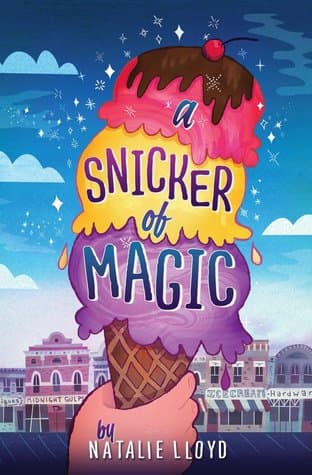
- A Snicker of Magic
Natalie Lloyd
4.1 (12k) average on GoodreadsFantasyExplores a town where magic is present but often misunderstood or suppressed.
- Aru Shah and the End of Time
Roshani Chokshi
4.1 (13k) average on GoodreadsFantasyBoth 'Accidental Heroes' and 'Aru Shah and the End of Time' feature reluctant young heroes thrust into magical adventures to save their worlds. Chokshi's work, however, is deeply rooted in Hindu mythology, offering a vibrant cultural tapestry that enriches its world-building and character motivations in a way that 'Accidental Heroes,' with its more generic fantasy setting, does not. Chokshi's humor is often more sophisticated, and her characters, particularly Aru, exhibit a more pronounced sense of agency and growth through their trials. Tanner's book focuses more on the immediate mystery and the hero's internal awakening, while Chokshi blends epic quest narratives with personal growth and cultural exploration, a blend often praised by critics like Rick Riordan.
- Harry Potter and the Sorcerer's Stone
J.K. Rowling
4.5 (7M) average on GoodreadsFantasyRescued from a miserable life under the stairs, an orphaned boy discovers he's a wizard destined for a magical school, where he uncovers a dangerous secret tied to the dark wizard who murdered his parents.
- The Hunger Games
Suzanne Collins
4.3 (6.4M) average on GoodreadsFantasyIn a future where children fight to the death on live television, Katniss Everdeen volunteers for the arena, turning a death sentence into a fight for survival and a spark of rebellion.
- 1984
George Orwell
4.2 (3.1M) average on GoodreadsPoliticsIn a future where surveillance and thought control are absolute, a man's search for truth clashes with the Party, showing that hope can be a form of rebellion.
- Divergent
Veronica Roth
4.2 (2.9M) average on GoodreadsFantasyIn a society divided by virtues, a sixteen-year-old's difference from the norm starts a rebellion that threatens her world.





Enjoyed the summary?
A summary gives you the shape of the book. The book itself has the detail, the examples and the voice.
Find Accidental Heroes on AmazonAs an Amazon Associate, BookBrief earns from qualifying purchases. How we're funded