
Core Idea
- Difficulty
- Easy
- Read it if
- You enjoy highly dramatic, emotionally charged romance novels with a significant focus on the 'bad boy' trope, explicit sexual content, and a narrative driven by the tumultuous dynamics of an obsessive relationship.
- Skip it if
- You prefer healthy relationship portrayals, character development focused on personal growth outside of a partner, or find themes of emotional abuse and manipulation triggering or unappealing in romance.
Key Takeaways from After
The Allure of the 'Bad Boy' Archetype
Why characters like Hardin Scott often captivate, despite their toxic traits.
The novel 'After' clearly shows why the 'bad boy' character remains popular. This type often has traits like rebelliousness, emotional distance, and a dangerous edge. Hardin Scott fits this perfectly with his tattoos, piercings, British accent, and unpredictable temper. This character often attracts protagonists (and readers) through a mix of mystery, perceived depth, and the exciting idea of 'taming' someone wild. Tessa's initial dislike quickly turns into a strong fascination, driven by the newness and raw passion Hardin brings out. This suggests that for many, the draw is not just physical, but psychological—a wish to find vulnerability under a tough exterior and experience a 'real' or intense emotional connection, even if it comes at a high emotional cost.
“For all his attitude, Tessa should hate Hardin. And she does—until she finds herself alone with him in his room. Something about his dark mood grabs her, and when they kiss it ignites within her a passion she’s never known before.”
In the book: Tessa's immediate, visceral reaction to Hardin's rudeness and then the subsequent, undeniable pull she feels when they are alone, leading to their first passionate kiss, despite her existing relationship and his overt cruelty.
Try this: Reflect on why certain character types are consistently attractive in fiction. Consider if these fictional attractions mirror any real-life patterns or desires. Analyze the difference between 'exciting' and 'healthy' relationships in narratives.
Related ideas: bad-boy-trope, toxic-relationships, character-archetypes
The Destructive Cycle of Push and Pull
How inconsistent affection creates emotional dependency and turmoil.
A main theme in 'After' is the constant push-and-pull that defines Tessa and Hardin's relationship. Hardin moves between intense affection and cruel rejection, complimenting Tessa one moment and then disappearing or insulting her the next. This unstable behavior creates constant emotional insecurity, where Tessa always seeks his approval and tries to 'solve' Hardin. This pattern, common in emotionally abusive relationships, keeps the victim hooked, as moments of warmth offer just enough hope to endure the cold periods. The unpredictable rewards make the 'good' moments feel powerful and keep Tessa trying to find a perceived 'real' Hardin, even as her own well-being suffers.
“He’ll call her beautiful, then insist he isn't the one for her and disappear again and again. Despite the reckless way he treats her, Tessa is compelled to dig deeper and find the real Hardin beneath all his lies.”
In the book: Hardin's repeated pattern of drawing Tessa in with intimacy and compliments, only to abruptly push her away with harsh words or by vanishing, forcing Tessa to constantly pursue and forgive him.
Try this: Identify and critically evaluate patterns of inconsistent affection in real-life or fictional relationships. Understand how intermittent reinforcement can be psychologically binding and recognize its potential for harm.
Related ideas: intermittent-reinforcement, emotional-abuse, relationship-dynamics
Loss of Self in Intense Relationships
The erosion of personal identity when consumed by another.
Tessa Young's journey in 'After' shows how someone can lose their sense of self when caught in an intense, chaotic relationship. First shown as an ambitious 'good girl' with a clear plan, Tessa's identity quickly becomes tied to Hardin's unstable life. Her priorities change greatly from school and her established life to dealing with Hardin's moods and understanding his complex behavior. This absorption leads her to make choices that go against her old values, push away her support system, and ignore her own goals. The novel suggests that the intensity of the connection, while exciting at first, slowly overshadows her individuality, leaving her defined by the relationship rather than her own aspirations.
“Tessa already has the perfect boyfriend. So why is she trying so hard to overcome her own hurt pride and Hardin’s prejudice about nice girls like her? Unless…could this be love?”
In the book: Tessa's drastic change in behavior, from a studious, reserved student to someone who frequently misses classes, confronts Hardin, and distances herself from her former boyfriend and mother, all in pursuit of Hardin.
Try this: Assess how relationships impact personal goals and identity. Prioritize self-preservation and personal growth within any partnership. Maintain independent interests and support systems.
Related ideas: identity-loss, codependency, self-neglect
The Idealization of 'Fixing' a Partner
The romanticized, yet often futile, desire to change someone.
'After' uses the romantic idea of the 'fixer'—the belief that a partner's love can change a troubled person. Tessa often thinks there is a 'real' Hardin under his cruel outside, a vulnerable man she can save or heal with her steady love and patience. This story, while emotionally engaging, can be problematic because it puts an unfair burden on one partner and often excuses destructive behavior. It keeps alive the dangerous fantasy that love means enduring hardship to unlock someone's potential, rather than meaning mutual respect and accepting a partner as they are. This idealization stops Tessa from seeing Hardin's actions clearly and instead frames them as problems to overcome.
“Despite the reckless way he treats her, Tessa is compelled to dig deeper and find the real Hardin beneath all his lies.”
In the book: Tessa's persistent attempts to understand Hardin's 'dark mood' and 'lies,' believing that if she just pushes hard enough, she will reveal a better, softer version of him, despite his repeated cruelty.
Try this: Question narratives that glorify 'fixing' a troubled partner. Focus on personal accountability and mutual growth in relationships rather than attempting to change someone against their will. Recognize that love doesn't conquer all destructive behaviors.
Related ideas: fixer-trope, romanticized-abuse, unhealthy-expectations
The Power of First Sexual Awakening
How intense physical chemistry can overshadow red flags.
For Tessa, her relationship with Hardin is her first real sexual awakening, a powerful and overwhelming experience that greatly affects her judgment. The novel highlights the strong passion and physical connection she feels with Hardin, a big contrast to her 'sweet, reliable boyfriend.' This intense physical chemistry is a strong anchor, often making Hardin's problematic behavior seem less important and making it hard for Tessa to leave. The newness and intensity of this newfound passion can be intoxicating, leading people to excuse or minimize serious emotional and psychological red flags. It shows how basic desires, especially when first discovered, can deeply influence relationship decisions.
“Something about his dark mood grabs her, and when they kiss it ignites within her a passion she’s never known before.”
In the book: Tessa's internal monologue repeatedly focusing on the unparalleled physical sensations and passion she experiences with Hardin, which she describes as unlike anything she's ever known, despite his mistreatment.
Try this: Recognize that intense physical chemistry, while powerful, does not equate to a healthy or sustainable relationship. Prioritize emotional safety and respect alongside physical attraction. Understand how new experiences can influence perception.
Related ideas: sexual-awakening, physical-chemistry, red-flags
Parental Influence and Rebellion
The complex dynamic between upbringing and defiant choices.
Tessa's mother plays a significant, though often indirect, role in her attraction to Hardin. Her mother's strict control and high expectations for Tessa's life—insisting on a 'good' boyfriend and a clear career path—create a situation ripe for rebellion. Hardin, with his rebellious nature and complete disregard for social rules, represents everything Tessa's mother would disapprove of. This suggests that Tessa's pursuit of Hardin might, in part, be an unconscious act of defiance against her mother's rigid control and an attempt to show her own independence, even if it leads her down a destructive path. The tension between parental expectations and personal desire is a strong underlying theme throughout the novel, driving many of Tessa's choices.
“She’s got direction, ambition, and a mother who’s intent on keeping her that way.”
In the book: Tessa's constant internal and external struggles with her mother's disapproval of Hardin, often leading her to defend him or actively hide aspects of their relationship, reinforcing the rebellious undertones.
Try this: Examine how family dynamics and parental expectations might influence personal relationship choices. Differentiate between healthy independence and destructive rebellion. Seek self-autonomy through constructive means.
Related ideas: parental-control, rebellion, autonomy
The Appeal of Emotional Extremes
Why some are drawn to high-drama relationships over stability.
'After' clearly shows how intoxicating emotional extremes can be. Tessa's life before Hardin was stable, predictable, and perhaps boring. Hardin brings chaos, intense passion, deep hurt, and exciting highs. For some, the sheer intensity of such a relationship, even with its destructive lows, can feel more 'alive' or 'real' than a calm, stable partnership. This pursuit of emotional extremes can be a way to cope, a search for validation, or simply a new experience that feels more authentic than a measured existence. The story suggests that the emotional roller coaster, despite its pain, becomes addictive, making the idea of returning to a 'normal' life seem dull by comparison.
“There was the time before Tessa met Hardin, and then there’s everything AFTER... Life will never be the same.”
In the book: Tessa's repeated internal comparisons between her steady, predictable relationship with Noah and the tumultuous, yet undeniably exciting, relationship with Hardin, often preferring the latter despite its pain.
Try this: Reflect on the difference between excitement and stability in relationships. Understand the potential psychological draw of high-drama dynamics and their long-term consequences. Prioritize emotional safety over fleeting intensity.
Related ideas: emotional-intensity, drama-addiction, relationship-stability
The Role of Social Influence and Peer Pressure
How external validation and group dynamics shape relationship choices.
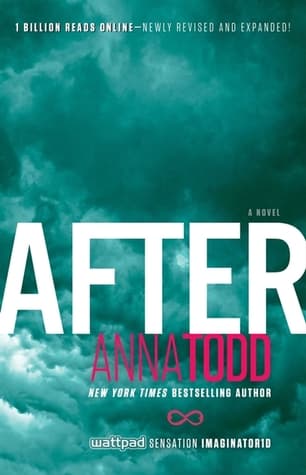
While not directly stated in the summary, 'After' starting as fanfiction with '1 billion reads online' shows how much social influence and peer validation played a part in its appeal and, by extension, in the characters' choices. The 'Internet's most talked-about book' suggests a shared experience where readers are drawn into a common story, possibly shaping their views on what 'love' or an 'exciting' relationship means. In the story, Tessa's interactions with Hardin's friends, who initially judge her, also influence her desire to prove herself and fit into his world. The pressure to conform or be accepted by a new social group can subtly reinforce staying in a problematic relationship, especially for a freshman in a new environment.
“Experience the Internet’s most talked-about book for yourself!”
In the book: The book's origin as highly popular online fanfiction itself serves as meta-evidence of social influence. Within the plot, Tessa's initial discomfort and eventual integration into Hardin's unconventional friend group, despite their initial judgment of her.
Try this: Be critically aware of how popular narratives and social trends can shape perceptions of relationships. Evaluate internal motivations versus external pressures when making relationship decisions. Seek diverse perspectives.
Related ideas: social-influence, peer-pressure, fanfiction-culture
The Illusion of Control and Agency
The struggle to maintain independence in a dominant relationship.
Tessa's repeated efforts to set boundaries or pull away from Hardin are always undermined by his manipulation and her own emotional weakness. Each time she tries to take control or distance herself, Hardin responds with a stronger pull, a moment of vulnerability, or a passionate reunion that disarms her. This gives Tessa the illusion of control—she thinks she is making choices, but she often reacts to Hardin's provocations or manipulations. The dynamic shows how one partner can subtly, or not so subtly, take away another's sense of control, making it very hard to escape the cycle, as every attempt at independence is met with a stronger re-entanglement.
“He pushes her away again and again, yet every time she pushes back, he only pulls her in deeper.”
In the book: Tessa's internal battles where she resolves to end things with Hardin, only to be drawn back in by his dramatic apologies, intense kisses, or sudden displays of affection, making her feel unable to resist.
Try this: Recognize manipulative patterns that erode personal agency. Prioritize genuine respect for boundaries and choices in a relationship. Seek support from external networks when feeling a loss of control.
Related ideas: manipulation, loss-of-agency, boundaries
The Blurred Lines of Love and Addiction
When intense emotional attachment mimics unhealthy dependency.
The question 'Unless…could this be love?' captures how 'After' blurs the lines between true affection and emotional addiction. Tessa's strong attachment to Hardin, despite his cruelty and the suffering he causes, often seems more like an addiction than a healthy, mutual love. The highs are thrilling, the lows are devastating, and she constantly craves the next 'fix' of his attention or affection. This pattern, marked by obsession, withdrawal symptoms, and a compulsive return despite negative outcomes, is a sign of addictive behavior. The story makes readers consider when intense emotional involvement crosses the line from passionate love into a harmful, self-destructive dependence.
“Unless…could this be love?”
In the book: Tessa's inability to stay away from Hardin, her constant thoughts about him, her willingness to endure significant pain for fleeting moments of connection, and the intense emotional distress she experiences when they are apart.
Try this: Differentiate between healthy love, characterized by mutual respect and support, and addictive attachment, driven by emotional highs and lows. Seek relationships that foster well-being, not just intense feelings. Reflect on the psychological elements of 'love'.
Related ideas: love-addiction, emotional-dependency, toxic-love
After Quotes
“Before you, my life was like a Macy's window at Christmas: beautiful to look at, but empty inside. You filled it. You are my everything.”
“Sometimes you have to let go of the picture of what you thought life would be like and enjoy the story that you are actually living.”
“I knew from the moment I met you, you were going to be nothing but trouble. But I also knew I couldn't walk away.”
“You're like a drug, Tessa. I'm addicted to you, and I can't get enough.”
“My life started the day I met you.”
“He's not a bad person, Tessa. He's just... lost.”
“I can't imagine a life without you anymore. It's impossible.”
“I want to be the person you deserve. I want to be better for you.”
“You are my favorite book, the one I always want to reread.”
“It's funny how someone can be so wrong for you, but feel so right.”
“I never knew what love was until I met you.”
“He makes me feel things I didn't even know existed.”
“Our love story isn't perfect, but it's ours. And I wouldn't trade it for anything.”
“I'm not going to give up on us. Not ever.”
Quiz
10 questions on the main ideas. Each answer comes with a short explanation.
Question 1
What is Tessa's initial perception of Hardin when she first encounters him?
- He is charming and considerate.
- He is rude and different from what she's used to.
- He is shy and reserved.
- He is just like her boyfriend back home.
Show answer
B. He is rude and different from what she's used to. The description states Hardin is 'rude—to the point of cruelty, even' and 'different from what she’s used to,' which aligns with Tessa's initial negative perception.
Question 2
What significant detail about Hardin's appearance is mentioned in the description?
- He has bright blue eyes and blonde hair.
- He has tousled brown hair, tattoos, and a lip ring.
- He wears glasses and always dresses formally.
- He has a clean-cut image with no distinguishing features.
Show answer
B. He has tousled brown hair, tattoos, and a lip ring. The text explicitly states Hardin has 'tousled brown hair, cocky British accent, tattoos, and lip ring,' making this the correct option.
Question 3
What is Tessa's initial relationship status when she arrives at college?
- She is single and looking for a new relationship.
- She has a sweet, reliable boyfriend back home.
- She is in an on-again, off-again relationship.
- She is engaged to her high school sweetheart.
Show answer
B. She has a sweet, reliable boyfriend back home. The summary clearly states, 'Tessa is a good girl with a sweet, reliable boyfriend back home.'
Question 4
Despite Hardin's cruel behavior, what compels Tessa to dig deeper into his personality?
- His unwavering kindness and gentle nature.
- A passion ignited when they kiss and something about his dark mood.
- Her mother's insistence that she befriend him.
- His constant apologies and efforts to change.
Show answer
B. A passion ignited when they kiss and something about his dark mood. The text states, 'Something about his dark mood grabs her, and when they kiss it ignites within her a passion she’s never known before,' which drives her to understand him.
Question 5
What is Hardin's contradictory behavior towards Tessa, as described?
- He consistently praises her while secretly disliking her.
- He'll call her beautiful, then insist he isn't the one for her and disappear.
- He constantly seeks her out but refuses to speak to her.
- He is openly affectionate but secretly plots against her.
Show answer
B. He'll call her beautiful, then insist he isn't the one for her and disappear. The description highlights this specific contradiction: 'He’ll call her beautiful, then insist he isn't the one for her and disappear again and again.'
Question 6
What is the central conflict Tessa faces regarding her feelings for Hardin?
- She is torn between two equally kind and reliable boyfriends.
- She has a perfect boyfriend but is drawn to Hardin despite his reckless treatment.
- She wants to be with Hardin but he is already in a committed relationship.
- She wants to focus on her studies but Hardin distracts her with intellectual debates.
Show answer
B. She has a perfect boyfriend but is drawn to Hardin despite his reckless treatment. The text poses the question directly: 'Tessa already has the perfect boyfriend. So why is she trying so hard to overcome her own hurt pride and Hardin’s prejudice about nice girls like her?'
Question 7
How did 'After' gain initial popularity before its revised and expanded publication?
- It was first released as a graphic novel.
- It was a fanfiction that racked up 1 billion reads online.
- It was a screenplay that won an award.
- It was initially published as a series of short stories in a literary magazine.
Show answer
B. It was a fanfiction that racked up 1 billion reads online. The description explicitly states, 'Anna Todd’s After fanfiction racked up 1 billion reads online and captivated readers across the globe.'
Question 8
What is the implied consequence of Tessa meeting Hardin, according to the final line of the summary?
- Her academic performance will significantly improve.
- Life will never be the same for her.
- She will return home to her old life and boyfriend.
- She will find a new sense of peace and stability.
Show answer
B. Life will never be the same for her. The summary concludes with 'Life will never be the same,' emphasizing the transformative impact of their relationship.
Question 9
The description emphasizes Hardin's 'prejudice about nice girls like her.' What does this suggest about his initial view of Tessa?
- He admires her kindness and seeks a similar partner.
- He views her 'nice girl' persona with skepticism or disdain, possibly seeing it as naive or fake.
- He is intimidated by her intelligence and good nature.
- He believes 'nice girls' are the only ones worth pursuing.
Show answer
B. He views her 'nice girl' persona with skepticism or disdain, possibly seeing it as naive or fake. The phrase 'prejudice about nice girls like her' implies a preconceived negative judgment or bias, suggesting he doesn't value or trust girls he perceives as 'nice,' possibly seeing them as too innocent or not genuine.
Question 10
The summary highlights Tessa's 'direction, ambition, and a mother who’s intent on keeping her that way.' How does this contrast with her developing relationship with Hardin?
- Hardin encourages and supports her academic and career ambitions.
- Her relationship with Hardin introduces chaos and unpredictability, potentially disrupting her carefully planned future.
- Hardin's influence helps her become even more focused and disciplined.
- Her mother approves of Hardin, seeing him as a positive influence on her direction.
Show answer
B. Her relationship with Hardin introduces chaos and unpredictability, potentially disrupting her carefully planned future. Tessa's 'direction' and 'ambition' suggest a structured, predictable path, while Hardin's 'reckless way he treats her' and his 'dark mood' introduce elements of passion and unpredictability that are likely to conflict with her established life plan and her mother's expectations.
After FAQ
What is the main plot of 'After' by Anna Todd?
'After' follows Tessa Young, a studious college freshman with a steady boyfriend, whose life takes an unexpected turn when she meets Hardin Scott, a rebellious and enigmatic student. Their intense and tumultuous relationship challenges Tessa's preconceived notions about love and life, leading her on a journey of self-discovery.
Who are the main characters in 'After'?
The two central characters are Tessa Young, a dedicated and somewhat naive college student, and Hardin Scott, a brooding British rebel with a complicated past. Their dynamic and often volatile interactions drive the narrative.
Does Tessa end up with Hardin in 'After'?
The first book, 'After,' details the beginning of Tessa and Hardin's incredibly passionate and often destructive relationship. While they are deeply intertwined, their journey is filled with ups and downs, leaving readers to wonder about the ultimate fate of their romance as the series progresses.
What makes Hardin Scott an appealing character despite his flaws?
Hardin's appeal often stems from his mysterious nature, vulnerability hidden beneath a tough exterior, and the intense passion he shares with Tessa. Readers are drawn to the challenge of understanding him and the emotional depth of his character.
How is 'After' different from other New Adult romance novels?
'After' is often noted for its highly angsty and dramatic portrayal of a relationship, originating as fanfiction. It delves into themes of toxic love, self-discovery through a challenging partner, and the intense emotional rollercoaster of first love, often pushing boundaries more than traditional New Adult stories.
Is 'After' appropriate for all readers?
'After' contains mature themes, including explicit sexual content, strong language, and depictions of a tumultuous and sometimes unhealthy relationship dynamic. It is generally recommended for mature young adult and adult readers.
What is the significance of the 'before Tessa met Hardin' and 'after' concept?
This concept highlights the transformative impact Hardin has on Tessa's life. Her experiences with him fundamentally alter her perspective, her choices, and her understanding of herself, marking a distinct division in her personal journey.
Does 'After' work as a standalone novel, or is it part of a series?
'After' is the first book in a multi-part series. While it concludes a significant arc, the story of Tessa and Hardin's relationship continues and evolves through subsequent books, providing a more complete narrative.
What kind of themes does 'After' explore regarding relationships?
The book explores themes of passionate but often toxic relationships, the complexities of first love, self-discovery, breaking free from parental expectations, and the blurred lines between love, obsession, and self-destruction. It delves into the intensity and challenges of an all-consuming romance.
About the author

Anna Todd is a "New York Times" bestselling author known for her "After" series, which began as a fanfiction on Wattpad. The series, including titles like "After Ever Happy" and "After We Collided," has achieved global success and been adapted into a film franchise. Todd's work often explores themes of intense romance and young adult relationships.
Similar books
- Fifty Shades of Grey
E.L. James
3.7 (1.9M) average on GoodreadsRomanceFeatures an innocent female protagonist drawn into a dominant, complex relationship with a troubled male lead, with a strong focus on sexual awakening and power dynamics.
- Twilight
Stephenie Meyer
3.9 (842) average on GoodreadsLiterary FictionExplores an intense, all-consuming first love with supernatural elements, where the female lead becomes deeply entwined with a mysterious, potentially dangerous male.
- Beautiful Disaster
Jamie McGuire
4.1 (547k) average on GoodreadsYoung AdultFollows a good girl falling for a tattooed bad boy with a troubled past, characterized by a volatile and passionate relationship.
- The Diary of a Young Girl
Anne Frank
4.2 (2.7M) average on GoodreadsBiographyDuring the Nazi occupation, a teenage girl's diary, written from a secret annex, shares observations on humanity, hope, and the wait for freedom.
- Twisted 1. Twisted love
Ana Huang
3.7 (1.7M) average on GoodreadsA quiet billionaire with a difficult past finds his guarded heart opening to the woman he must protect, but their growing passion uncovers dangerous secrets and a shared, traumatic history.
- Eat, Pray, Love
Elizabeth Gilbert
3.6 (1.5M) average on GoodreadsLifestyleA heartbroken writer leaves her conventional life for a year-long global search for pleasure in Italy, spiritual devotion in India, and unexpected love and balance in Bali.






Enjoyed the summary?
A summary gives you the shape of the book. The book itself has the detail, the examples and the voice.
Find After on AmazonAs an Amazon Associate, BookBrief earns from qualifying purchases. How we're funded