

Core Idea
- Difficulty
- Easy
- Read it if
- You are at a crossroads in your life, feeling lost, or contemplating a major personal transformation, and are open to a spiritual and emotional journey.
- Skip it if
- You prefer highly academic or prescriptive self-help, or find memoirs focused on personal spiritual quests unengaging.
Key Takeaways from Eat, Pray, Love
The Courage to Detonate Your Life
Sometimes, the only way to rebuild is to first destroy what isn't working.
Gilbert's journey starts not with a small change, but with a complete dismantling of her seemingly perfect life. She had a husband, a house, a career – all the signs of social success – yet felt a deep emptiness and panic. This shows how important it can be to completely break down a life structure that no longer fits one's true self, even if it looks ideal from the outside. It means realizing that true happiness sometimes requires a brave, even painful, act of letting go, creating space for genuine desires instead of expected ones. Her choice to divorce, sell her things, and travel alone for a year was a direct response to this inner problem, showing the power of honest self-reflection.
“I was looking for God, and I was looking for myself, and I was looking for a good meal. And I was looking for love.”
In the book: Gilbert's graphic descriptions of her divorce, the intense depression that followed, and the subsequent decision to leave everything behind and travel for a year, funding it with an advance for a book about her journey.
Try this: Reflect on areas of your life where you feel a persistent unease or inauthenticity, despite external appearances. Consider what elements, if any, might need to be radically re-evaluated or even removed to create space for genuine growth and happiness. This doesn't always mean a literal divorce or world trip, but a deep internal audit and courageous action.
Related ideas: radical-self-honesty, deconstruction-of-self, courage-to-change
The Pleasure Principle: Embrace La Dolce Vita
True pleasure isn't indulgence; it's a mindful appreciation of life's simple joys.
Gilbert's time in Italy is a lesson in rediscovering pleasure, especially through food and language. After years of emotional trouble and self-denial, she intentionally dives into Italian culture, where enjoyment is a way of life, not a sin. She learns to savor every bite of pasta, every conversation, every moment of simply being. This is not about thoughtless overeating, but a conscious effort to find joy and sensuality, allowing herself to gain 'the twenty-three happiest pounds of her life.' It highlights how often we deny ourselves simple pleasures due to guilt, fear, or constantly trying to be productive. It also shows how vital it is to re-learn how to enjoy life's basic offerings.
“To eat is a necessity, but to eat intelligently is an art.”
In the book: Her detailed descriptions of learning Italian, her passionate relationship with pasta and pizza, her friendships with locals, and her active decision to gain weight and embrace her body without judgment.
Try this: Consciously integrate small, mindful pleasures into your daily routine. This could be savoring a meal without distraction, taking time to enjoy a cup of coffee, or engaging in a hobby purely for enjoyment, free from the pressure of productivity or self-improvement. Practice saying 'yes' to joy.
Related ideas: mindful-eating, sensory-experience, hedonism-redefined
Finding God in the Quiet: The Discipline of Devotion
Spiritual awakening often requires rigorous internal work, not just external seeking.
India challenges Gilbert to face her deepest fears and spiritual doubts, moving past surface-level spirituality to a strict practice of devotion. Her time at the ashram, with its firm schedule of meditation, chanting, and selfless service (seva), pushes her into an uncomfortable but changing inner state. This phase shows that true spiritual growth is not always peaceful; it often involves disciplined effort, facing inner struggles, and a willingness to be uncomfortable. It is about building an inner connection with the divine, whatever form that takes for the individual, and understanding that this connection needs consistent, sometimes hard, practice rather than fleeting inspiration.
“To find the Beloved, you must become the Beloved.”
In the book: Her struggles with meditation, her vivid descriptions of the ashram's daily routine, her interactions with the Guru, and the profound internal shifts she experiences, including confronting her own self-loathing.
Try this: Explore a spiritual or mindfulness practice that resonates with you, committing to it consistently even when it feels challenging. This could be daily meditation, journaling, prayer, or a structured contemplative practice. Focus on the internal discipline rather than immediate results.
Related ideas: spiritual-discipline, mindfulness-practice, inner-work
The Power of the 'Word': Your Inner Monologue Matters
The stories you tell yourself create your reality; learn to narrate a better one.
A major insight for Gilbert in India comes from understanding the power of her inner thoughts, especially the constant, negative self-talk that troubled her. By repeating the mantra 'Om Namah Shivaya,' she learns to quiet her 'monkey mind' and replace harmful thoughts with positive ones. This shows how much our inner voice affects our well-being and how we see reality. Gilbert's journey demonstrates that self-compassion and spiritual connection often begin by consciously choosing the words and stories we let control our inner world, effectively training our minds for peace and self-acceptance.
“Om Namah Shivaya. I honor the divinity within myself.”
In the book: Her detailed explanation of her internal dialogue, personifying her depression as 'the squatting man,' and the transformative effect of consistently repeating the mantra during meditation, which helped her quiet the negative voices.
Try this: Become aware of your dominant internal narratives. When you notice negative self-talk, consciously challenge or reframe it. Consider adopting a personal mantra or affirmation to repeat regularly, especially during moments of stress or self-doubt, to gently steer your mind towards a more positive and compassionate internal landscape.
Related ideas: cognitive-restructuring, self-talk, mantra-practice
Balance: The Art of Worldly & Divine
True fulfillment lies in integrating pleasure with purpose, not choosing between them.
Bali is the end of Gilbert's journey, where she aims to find balance between the sensual pleasures of Italy and the spiritual devotion of India. Her talks with Ketut Liyer, the medicine man, and Wayan, the healer, highlight the Balinese idea of balance – between light and dark, joy and sorrow, the material and the spiritual. This idea goes against the common belief that pleasure and spirituality, or self-care and service, are opposites. Instead, it supports a whole approach to life, where all parts are combined, creating a richer, more lasting path to happiness. It is about finding one's 'center' amid life's contradictions.
“The only way out of the labyrinth of suffering is to forgive.”
In the book: Her learning about the Balinese concept of balance, her interactions with Ketut Liyer who emphasizes living a long, happy life by balancing all aspects, and her work helping Wayan, demonstrating service while also experiencing joy.
Try this: Identify areas in your life where you feel an imbalance (e.g., too much work, not enough play; too much giving, not enough receiving). Consciously seek ways to integrate the opposing forces, finding sustainable rhythms that honor both your earthly desires and your spiritual needs. Aim for integration, not elimination.
Related ideas: holistic-living, integration-of-self, spiritual-balance
The Unexpected Path to Love
Authentic connection often arrives when you stop searching and start living.
After two failed relationships and a year of intense self-discovery, Gilbert unexpectedly finds love with Felipe in Bali. This is important because it changes the usual romantic story, showing that true love often appears when one is complete and self-sufficient, rather than when actively looking for a partner to complete them. Her first hesitation about the relationship, coming from past pain and a desire to keep her new independence, shows how important it is to enter relationships from a place of strength, not need. It is about finding a partner who adds to, rather than defines, your individual journey.
“I will not surrender to a man again. I will not make a man my God.”
In the book: Her initial reluctance to engage with Felipe, her internal struggle with the idea of another relationship, and the eventual, organic development of their love after she had already achieved significant personal growth.
Try this: Focus on cultivating self-love, independence, and personal fulfillment before actively pursuing a romantic relationship. Understand that a healthy partnership is built on two whole individuals choosing to share their lives, not on two halves seeking completion. Trust that genuine connection will find you when you are ready.
Related ideas: self-love-first, authentic-connection, unexpected-romance
The Responsibility of Contentment
Your happiness is ultimately your own creation, not a byproduct of external circumstances.
Gilbert's entire adventure shows the power of taking full responsibility for one's own happiness. She does not wait for outside factors to change; she actively shapes her environment and inner state to help healing and growth. This idea states that happiness is not something that happens to you, but something you create through conscious choices, inner work, and a willingness to break free from social expectations that do not match your true self. It is a call to action, empowering individuals to recognize their ability to shape their emotional state, rather than simply accepting fate.
“You are the only person alive who has the power to make you happy... or unhappy.”
In the book: Her proactive decision to leave her old life, her structured plan to spend time in Italy, India, and Bali focusing on specific aspects of self-discovery, and her consistent internal reflection throughout the journey.
Try this: Identify one area where you've been waiting for external circumstances or others to bring you happiness. Take a concrete, actionable step this week to actively cultivate that happiness for yourself, taking full responsibility for the outcome. Shift from 'waiting for' to 'creating'.
Related ideas: personal-agency, self-sovereignty, happiness-is-a-choice
The Guru Within: Trust Your Inner Guidance
While external teachers can guide, true wisdom ultimately resides within.
Throughout her journey, Gilbert meets various teachers – from her Italian language tutor to the guru in India and the medicine man in Bali. Yet, the main lesson is that these outside guides help awaken an inner wisdom. While she learns valuable things from each, the real change happens when she combines these teachings and learns to trust her own intuition and inner voice. This emphasizes that while mentors and spiritual guidance are helpful, the ultimate authority on one's path to self-discovery and happiness is the 'guru within,' the intuitive wisdom that lives in each person, waiting to be heard and trusted.
“God dwells within you, as you.”
In the book: Her reliance on her own internal dialogue and decision-making throughout her solo travel, even while receiving guidance from her spiritual teachers. Her realization that the answers she sought were ultimately her own to discover and embody.
Try this: Practice listening to your intuition. When faced with a decision, take time to quiet external noise and check in with your inner knowing, even if it contradicts conventional advice. Journaling or meditation can help strengthen this internal connection. Trust yourself more.
Related ideas: inner-wisdom, intuition-development, self-reliance
Embrace Imperfection: The Messiness of Growth
Self-discovery is not a linear, polished process, but a messy, human one.
Gilbert's memoir is refreshingly honest about the struggles, doubts, and setbacks she faces. She does not present a perfect version of self-discovery; she openly shares her moments of despair, her difficulty with meditation, her occasional returns to old habits, and her fear of vulnerability. This highlights the important understanding that personal growth is naturally imperfect and often messy. It is not about reaching a flawless state of enlightenment, but about embracing the human experience in all its complexity, allowing for mistakes, and finding grace in the ongoing process of becoming. Her journey is relatable precisely because of its imperfections.
“I am a woman in search of a miracle.”
In the book: Her detailed accounts of crying on the bathroom floor, her internal battles during meditation, her struggles with self-forgiveness, and her initial resistance to love in Bali.
Try this: Give yourself permission to be imperfect on your path of personal growth. Acknowledge setbacks as part of the process, rather than failures. Cultivate self-compassion for your struggles and celebrate the small, messy steps forward. Recognize that authenticity often lies in vulnerability.
Related ideas: self-compassion, vulnerability, non-linear-growth
The Global Classroom: Learning Through Cultural Immersion
Stepping outside your comfort zone and into another culture offers profound self-insights.
Gilbert's choice of Italy, India, and Bali was purposeful, each offering a different cultural view for examining pleasure, devotion, and balance. This emphasizes how much cultural immersion can change a person. By leaving her familiar surroundings and engaging deeply with different ways of life, she gains perspectives she could never have found at home. The 'global classroom' forces her to confront her own biases, broaden her understanding of human experience, and ultimately, see herself more clearly by seeing the world differently. It is not just about seeing new places, but about letting new places change you.
“I met God in India. He was a cowboy from Texas.”
In the book: Her detailed observations of Italian life, her deep dive into ashram routines in India, and her interactions with local healers and communities in Bali, all of which directly informed her personal growth and understanding.
Try this: Seek opportunities for cultural immersion, whether through travel, engaging with diverse communities locally, or deeply studying a different culture. Actively listen, observe, and allow these new perspectives to challenge your assumptions and broaden your understanding of yourself and the world.
Related ideas: cultural-exchange, global-perspective, transformative-travel
Eat, Pray, Love Quotes
“I am a member of the human race. I am a member of the female sex. I am an American. I am a writer. In the past, I have been, among other things, a bartender, a waitress, a cook, a freelance journalist, a magazine staff writer, a literary agent, a public relations consultant, and a dog walker. I have lived in New York City for the past ten years. I am thirty-four years old. I am married. I am miserable.”
“To lose balance sometimes for love is part of living a balanced life.”
“You were given life; it is your duty (and also your entitlement as a human being) to find something beautiful within life, no matter how slight.”
“Having a life of your own, where you don’t need to be saved, is the greatest gift you can give yourself.”
“This is a good sign, having a broken heart. It means we have tried for something.”
“When you're feeling lost, that's when you're closest to finding something new.”
“We are all just walking each other home.”
“I’m choosing happiness over suffering, I know I am. I’m making space for the unknown future to fill up my life with yet-to-be-determined things.”
“The women in my family have always been strong, but they haven't always been happy.”
“The search for God is a search for love. When we love, we are like God.”
“Do you know how many times I have asked myself, 'Is this it?' And every time, the answer has been 'No.'”
“You have to participate relentlessly in the manifestations of your own blessings.”
“I met a man once who told me that there is no such thing as an original thought. He said that we are all just conduits for ideas that are floating around in the universe.”
“It’s an anathema to me, the idea of living in a world where you have to be miserable to be good.”
“I don't need to be saved. I just need to be understood.”
Quiz
10 questions on the main ideas. Each answer comes with a short explanation.
Question 1
What was the primary focus of Elizabeth Gilbert's time in Rome during her year-long journey?
- Intense spiritual devotion and meditation
- Learning the art of pleasure and enjoying life
- Volunteering at a local charity organization
- Developing a new career as a chef
Show answer
B. Learning the art of pleasure and enjoying life In Rome, Gilbert aimed to study the art of pleasure, which included learning Italian and indulging in food, gaining 'the twenty-three happiest pounds of her life.'
Question 2
Before embarking on her journey, what was Elizabeth Gilbert's primary emotional state despite having what society considered a successful life?
- Contentment and fulfillment
- Excitement and anticipation
- Panic, grief, and confusion
- Ambivalence and detachment
Show answer
C. Panic, grief, and confusion The book states that despite having a husband, a house, and a successful career, Gilbert was 'consumed with panic, grief, and confusion' around the time she turned thirty.
Question 3
Which country did Elizabeth Gilbert visit to focus on the 'art of devotion'?
- Italy
- India
- Indonesia (Bali)
- Thailand
Show answer
B. India India was the destination chosen for the 'art of devotion,' where she engaged in spiritual exploration with a guru.
Question 4
What was the specific aim of Elizabeth Gilbert's time in Bali?
- To learn a new language fluently
- To find balance between worldly enjoyment and divine transcendence
- To complete a challenging physical endurance retreat
- To establish a new business venture
Show answer
B. To find balance between worldly enjoyment and divine transcendence In Bali, Gilbert 'studied the art of balance between worldly enjoyment and divine transcendence,' becoming the pupil of an elderly medicine man.
Question 5
What significant personal event occurred for Elizabeth Gilbert during her time in Bali, contrasting with her initial aim for solitude?
- She decided to adopt a child.
- She reconciled with her ex-husband.
- She unexpectedly fell in love.
- She published a new novel.
Show answer
C. She unexpectedly fell in love. While in Bali, Gilbert 'fell in love the best way—unexpectedly,' which was a major development in her journey of self-discovery.
Question 6
The book suggests that Gilbert's crisis around age thirty was an 'early-onslaught midlife crisis.' What does this imply about her experience?
- She was experiencing symptoms of a physical illness typically seen in middle age.
- She was facing existential questions and a desire for change much earlier than is typical.
- She was reacting to societal pressures to have children by a certain age.
- She was simply bored with her life and looking for an excuse to travel.
Show answer
B. She was facing existential questions and a desire for change much earlier than is typical. A midlife crisis typically involves a period of intense questioning and re-evaluation of one's life. Gilbert experienced this 'panic, grief, and confusion' at an earlier age than the traditional midlife stage.
Question 7
What radical step did Gilbert take to create the time and space for her self-discovery journey?
- She invested all her savings into a new business venture.
- She married someone new before leaving on her trip.
- She got rid of her belongings, quit her job, and undertook a yearlong solo journey.
- She decided to pursue a new academic degree abroad.
Show answer
C. She got rid of her belongings, quit her job, and undertook a yearlong solo journey. To recover and find herself, Gilbert 'got rid of her belongings, quit her job, and undertook a yearlong journey around the world—all alone.'
Question 8
How does the book specifically frame the ultimate message regarding contentment and societal ideals?
- Contentment is primarily achieved through adherence to traditional societal expectations.
- True contentment comes from claiming responsibility for one's own happiness and not imitating society's ideals.
- Spiritual enlightenment is only possible through complete renunciation of worldly pleasures.
- Love is the sole path to personal fulfillment, regardless of other life circumstances.
Show answer
B. True contentment comes from claiming responsibility for one's own happiness and not imitating society's ideals. The summary states, 'Eat, Pray, Love is about what can happen when you claim responsibility for your own contentment and stop trying to live in imitation of society’s ideals.'
Question 9
What role did a 'surprisingly wise cowboy from Texas' play in Gilbert's spiritual exploration in India?
- He taught her how to ride horses and manage a ranch.
- He became her spiritual mentor alongside the native guru.
- He was a fellow traveler who shared her skepticism about spirituality.
- He helped her navigate the practicalities of travel in India.
Show answer
B. He became her spiritual mentor alongside the native guru. In India, she 'embarked on four uninterrupted months of spiritual exploration' with 'the help of a native guru and a surprisingly wise cowboy from Texas,' indicating his role in her devotion.
Question 10
The book is described as an 'intensely articulate and moving memoir of self-discovery.' What does 'self-discovery' primarily refer to in the context of Gilbert's journey?
- Discovering new academic interests and pursuing a different career path.
- Learning new languages and becoming a polyglot.
- Finding out who she really was and what she really wanted, independent of past expectations.
- Uncovering hidden family history and ancestral roots.
Show answer
C. Finding out who she really was and what she really wanted, independent of past expectations. The summary explicitly states her goal was 'to find out who she really was and what she really wanted,' which is the core of her self-discovery journey.
Eat, Pray, Love FAQ
What is 'Eat, Pray, Love' about?
'Eat, Pray, Love' chronicles Elizabeth Gilbert's year-long journey of self-discovery after a difficult divorce and depression. She travels to Italy for pleasure, India for spiritual devotion, and Bali for balance, ultimately finding herself and unexpected love.
Does traveling alone really help with self-discovery?
For Elizabeth Gilbert, traveling alone provided the necessary space and time away from her familiar life and societal expectations to confront her inner turmoil and redefine her identity. It allowed her to focus entirely on her own needs and desires without external influences.
What is the 'art of pleasure' as explored in the book?
In 'Eat, Pray, Love,' the 'art of pleasure' refers to Gilbert's experience in Italy, where she immersed herself in the joy of food, language, and culture. It's about savoring life's simple delights and allowing oneself to enjoy the present moment without guilt or reservation.
How different is 'Eat, Pray, Love' from other travel memoirs?
'Eat, Pray, Love' distinguishes itself by deeply integrating personal spiritual and emotional transformation with travel, rather than just recounting adventures. It's a profound exploration of identity, healing, and finding balance, making it more of a spiritual quest than a typical travelogue.
What spiritual practices does Elizabeth Gilbert engage in during her time in India?
In India, Gilbert dedicates herself to intense spiritual exploration, primarily through meditation and living in an ashram. She seeks to understand and practice devotion, guided by a guru, to overcome her inner turmoil and find peace.
Does 'Eat, Pray, Love' offer practical advice for someone going through a divorce?
While not a self-help book, 'Eat, Pray, Love' offers an inspiring example of taking radical steps for self-care and recovery after a divorce. It highlights the importance of claiming responsibility for one's own happiness and allowing time for healing and rediscovery.
What is the significance of Bali in 'Eat, Pray, Love'?
Bali represents the culmination of Gilbert's journey, where she seeks to find balance between worldly enjoyment and divine transcendence. It's also where she studies with a medicine man and unexpectedly finds love, integrating all aspects of her newfound self.
Is 'Eat, Pray, Love' a true story?
Yes, 'Eat, Pray, Love' is a non-fiction memoir, recounting Elizabeth Gilbert's authentic experiences and personal journey of self-discovery following a challenging period in her life. All events and reflections shared in the book are based on her real-life adventures.
Does the book encourage quitting your job and traveling the world?
The book doesn't explicitly encourage everyone to quit their job and travel, but rather inspires readers to claim responsibility for their own contentment and make significant changes when needed. Gilbert's journey serves as a powerful metaphor for prioritizing personal well-being and self-discovery.
About the author

Elizabeth Gilbert is an American author known for her works that explore themes of self-discovery and creativity. Her notable books include "Eat, Pray, Love," a memoir about her journey of personal growth, "City of Girls," a novel set in 1940s New York, and "Big Magic: Creative Living Beyond Fear," which offers insights into the creative process. Other significant works include "The Signature of All Things" and "The Last American Man."
Similar books
- Wild: From Lost to Found on the Pacific Crest Trail
Cheryl Strayed
4.0 (615k) average on GoodreadsLifestyleA memoir of a woman's journey of self-discovery through a physical challenge after personal loss.
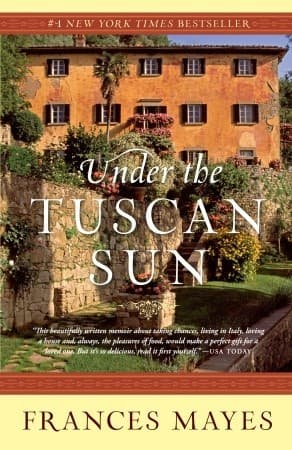
- Under the Tuscan Sun
Frances Mayes
3.8 (316k) average on GoodreadsLifestyleA memoir about a woman who rebuilds her life and finds joy in a new culture and environment.
- THE ALCHEMIST
Paulo Coelho
3.6 (3k) average on GoodreadsFictionA fictional allegorical tale about following one's personal legend and finding spiritual enlightenment.
- Into Thin Air: A Personal Account of the Mount Everest Disaster
Jon Krakauer
4.2 (395k) average on GoodreadsLifestyleOn May 10, 1996, ambition and a sudden, violent storm turned Mount Everest into a deadly trap, leaving Jon Krakauer to tell the harrowing story of a disaster that took lives and shattered climbers' dreams.
- On The Road
Jack Kerouac
3.6 (349k) average on GoodreadsLifestyleDean Moriarty and Sal Paradise go on a wild, cross-country trip with jazz, drugs, and a desperate search for meaning on America's post-war roads.
- A Walk in the Woods: Rediscovering America on the Appalachian Trail
Bill Bryson
4.1 (346k) average on GoodreadsLifestyleBill Bryson humorously describes his ill-prepared yet insightful attempt to hike the Appalachian Trail, meeting unique characters and the raw beauty of the wilderness.




Enjoyed the summary?
A summary gives you the shape of the book. The book itself has the detail, the examples and the voice.
Find Eat, Pray, Love on AmazonAs an Amazon Associate, BookBrief earns from qualifying purchases. How we're funded