

Synopsis
Covers the whole plot, including the ending.
- Difficulty
- Medium
- Pacing
- Fast
- Mood
- Dark, Suspenseful, Disturbing, Thought-provoking
- Read it if
- You enjoy intense psychological thrillers that explore moral ambiguities and the dark side of human nature, especially within a young adult context.
- Skip it if
- You prefer stories with clear-cut heroes and villains, or you are sensitive to graphic violence and themes of child endangerment.
After the First Death Plot Summary
Covers the whole plot, including the ending.
The Bus Hijacking and Miro's Initiation
The novel opens with Miro, a young, new terrorist, participating in his first major operation: the hijacking of a summer camp bus with twenty-five preschoolers and their two counselors, Kate and Sister Mary. The operation is led by Artkin, a calculating leader, and includes other members like Antibbe and Raymond. Their goal is to exchange the children for the release of fifteen imprisoned terrorists. Miro's task is to guard the children and ensure no one escapes, a responsibility he takes seriously, even as he struggles with the idea of harming innocents. He wants to prove himself to Artkin and the organization.
Ben Marchand's Internal Conflict and Mission
Ben Marchand, the son of General Marchand, is recruited by his father, a high-ranking military official, for a secret mission. General Marchand, despite his personal dislike for Ben, sees his son's skills and 'invisibility' as ideal for infiltrating the terrorist group. Ben's mission is to deliver a dummy weapon, a 'toy' gun, to the terrorists, which he is told will allow them to be captured without bloodshed. Ben is conflicted, haunted by past failures and his difficult relationship with his father, but accepts the mission, hoping to earn his father's respect and help save the hostages.
Kate's Courage and Sister Mary's Sacrifice
Inside the bus, Kate, a young and resourceful counselor, tries to keep the terrified children calm. She discreetly tries to learn about the terrorists and their intentions. Sister Mary, the other counselor, driven by a strong sense of duty and faith, makes a sudden, desperate move to alert authorities by trying to drop a note out the window. Miro immediately notices her action, and under Artkin's orders, shoots and kills her. This shows the terrorists' ruthlessness and sends a message to the remaining hostages and the authorities. This act traumatizes Kate and the children.
Miro's Struggle with Humanity
After Sister Mary's death, Miro is disturbed by the violence, despite his training. He finds himself drawn to Kate, observing her resilience and compassion for the children. He struggles with the organization's belief that the children are just tools, not individuals. A moment happens when he is ordered to kill a specific child to prove his loyalty. He hesitates, unable to do it, which Artkin sees as weakness. This internal conflict shows the tension between his ingrained ideology and his emerging human empathy.
Ben's Delivery and the Deception
Ben successfully delivers the package containing the 'toy' gun to the terrorist contact. He believes he has completed his part in a clever, bloodless plan to end the standoff. He feels accomplishment and pride, believing he has done something meaningful and earned his father's approval. However, the reader knows, through General Marchand's thoughts, that Ben is just a pawn in a darker, more cynical strategy, and the 'toy' gun is not what it seems.
The General's Ruthless Strategy
General Marchand, wanting to make a statement against terrorism, tells his aide, Sergeant Rilke, his true strategy. He never intended for the terrorists to be captured alive or for the children to be rescued peacefully. The 'toy' gun delivered by Ben is a real, loaded weapon. Marchand's plan is to give the terrorists a weapon, then use their inevitable use of it to justify a violent military assault, eliminating them and sending a message that his side will never negotiate. He sees the children and even his own son as expendable in this larger war.
The Confrontation and Kate's Plea
As the standoff reaches its end, the terrorists, now armed with the weapon Ben delivered, prepare for the military assault. Kate, sensing the danger, makes a plea to Miro. She appeals to his humanity, asking him not to harm the children and to consider the senselessness of their actions. Her words affect Miro, who is already unsure about his commitment to the cause. This interaction increases Miro's internal conflict between his duty and his conscience.
Miro's Act of Defiance and Ben's Discovery
When the military assault begins, Miro, instead of firing on the children as ordered by Artkin, makes a decision. He shoots Artkin, defying his leader and the organization's ideology. At the same time, Ben, seeing the chaos and the military's aggressive actions, realizes with horror that his father manipulated him. He sees the 'toy' gun, now a symbol of his father's betrayal, and understands that he was used to arm the terrorists, making the violent outcome certain. The realization shatters his perception of his father and his own role.
The Aftermath and Ben's Despair
The military assault is swift and brutal. Many terrorists are killed, and some children are harmed in the crossfire. After this, Ben feels guilt and despair. He struggles with the truth that he contributed to the violence and the potential deaths of innocent children. Unable to accept his actions and shattered by his father's manipulation, Ben walks into the path of an oncoming truck, committing suicide. His death is a tragic consequence of the general's strategy and Ben's own internal torment.
Miro's Escape and Uncertain Future
Amidst the chaos and the military's operation, Miro escapes the scene. His fate is unclear; he is neither captured nor confirmed dead. His act of shooting Artkin suggests a break from his past, but his future is uncertain. He is a survivor, but now a man without a clear cause or affiliation, having defied his terrorist group. His escape leaves the reader to wonder if he will find redemption or be consumed by the violence he has seen and participated in.
Principal Figures
Miro
Protagonist/Antagonist
Young, inexperienced terrorist grappling with his humanity.
Miro is a young man, possibly a teenager, indoctrinated into the 'We Are Everywhere' terrorist organization. He is on his first major mission, guarding the hijacked bus. He is initially zealous and eager to prove himself to Artkin, adhering to the group's brutal ideology. However, as the crisis unfolds, he struggles with the inherent violence and the innocence of the children, particularly the youngest. He finds himself drawn to Kate's resilience and compassion, and his conscience is repeatedly challenged, leading to internal conflict and a pivotal act of defiance against Artkin.
Relationships: Artkin (mentor/leader, but also a figure of fear and eventual defiance); Kate (hostage he guards, but also a source of moral challenge and fascination)
Ben Marchand
Protagonist
General Marchand's son, manipulated into a deadly mission.
Ben is a young man haunted by past failures and a strained relationship with his father, General Marchand. He desperately seeks his father's approval and a sense of purpose. He is recruited for a secret mission to deliver a 'toy' gun to the terrorists, believing he is aiding a bloodless resolution. Ben is naive and easily manipulated, driven by a desire to be seen as a hero. His eventual realization of his father's betrayal and his own unwitting role in the tragedy leads to profound despair and ultimately, suicide.
Relationships: General Marchand (estranged father, manipulator); Sergeant Rilke (his father's aide, witness to his manipulation)
General Marchand
Antagonist
Ruthless military leader who prioritizes his agenda over human lives.
General Marchand is a cold, calculating, and utterly ruthless military official. He is driven by a deep-seated desire to eradicate terrorism at any cost, even if it means sacrificing innocent lives, including his own son's. He views people as pawns in his strategic games and believes the end justifies the means. His manipulation of Ben and his cynical plan to arm the terrorists to justify a violent assault reveal his profound moral corruption and detachment from human empathy. He represents the extreme, unyielding face of authority.
Relationships: Ben Marchand (estranged son, victim of his manipulation); Sergeant Rilke (loyal aide, confidante to his ruthless plans)
Artkin
Antagonist
The cold, calculating leader of the terrorist cell.
Artkin is the leader of the 'We Are Everywhere' terrorist group responsible for the bus hijacking. He is a hardened, experienced terrorist, utterly devoid of compassion and driven solely by the organization's agenda. He is a master manipulator, using fear and ideological rhetoric to control his subordinates, especially Miro. Artkin embodies the extreme, dehumanizing aspects of terrorism, viewing the children as mere bargaining chips. His death at Miro's hands signifies a pivotal moment of defiance within the group.
Relationships: Miro (subordinate, target of his indoctrination and control); Antibbe (fellow terrorist)
Kate
Supporting
Brave and compassionate bus counselor, protecting the children.
Kate is one of the two counselors on the hijacked bus. Despite her youth and fear, she displays remarkable courage, resilience, and compassion. She prioritizes the safety and well-being of the preschoolers, trying to keep them calm and protect them from the terrorists. She observes Miro closely and, sensing his internal conflict, makes a powerful appeal to his humanity, becoming a moral compass within the terrifying situation. Her strength in adversity highlights the resilience of the human spirit.
Relationships: Miro (hostage-taker, but also a recipient of her moral appeals); Sister Mary (fellow counselor, colleague)
Sister Mary
Supporting
Devout and courageous counselor who sacrifices herself.
Sister Mary is the older, more experienced counselor on the bus. Deeply religious and committed to protecting the children, she makes a desperate, selfless attempt to alert the authorities by trying to drop a note out the window. Her act of defiance, though brief, leads to her immediate execution by Miro, under Artkin's orders. Her death serves as a stark reminder of the terrorists' brutality and deeply affects Kate and the children, as well as Miro, who carries the guilt of her killing.
Relationships: Kate (fellow counselor, colleague); Miro (her killer)
Sergeant Rilke
Supporting
General Marchand's aide, privy to his ruthless plans.
Sergeant Rilke is General Marchand's loyal and efficient aide. He is present for the general's briefings and is the primary recipient of Marchand's cynical monologues, through which the general reveals his true, ruthless intentions regarding the hostage crisis. Rilke acts as a silent witness to Marchand's moral depravity, never overtly challenging him, but his presence allows the reader insight into the general's Machiavellian mind. He represents the silent complicity often found in hierarchical structures.
Relationships: General Marchand (superior officer, confidante)
Antibbe
Supporting
Member of the terrorist group, more experienced than Miro.
Antibbe is another member of the terrorist cell, older and more seasoned than Miro. He follows Artkin's orders without question and serves as a foil to Miro's internal struggles. He reinforces the group's hardened ideology and is less conflicted about the violence. His presence emphasizes Miro's relative youth and inexperience within the brutal world of terrorism, highlighting Miro's unique internal journey.
Raymond
Mentioned
Another member of the terrorist group.
Raymond is briefly mentioned as one of the terrorists involved in the hijacking. His role is minor, primarily serving to complete the roster of the terrorist cell. He does not have significant dialogue or actions but contributes to the overall sense of threat and the numerical strength of the hijackers.
Themes & Insights
Loss of Innocence and Moral Corruption
The novel explores lost innocence, especially through Miro and Ben. Miro, a young terrorist, faces the brutality of his training, struggling with the murder of Sister Mary and the potential harm to children, which challenges his hardened worldview. Ben, initially naive, loses his innocence when he realizes his father's manipulative and deadly scheme. The preschoolers on the bus are direct victims, their childhood terrorized. General Marchand shows moral corruption, sacrificing lives, including his son's, for his strategic agenda, showing how war and extremism can dehumanize.
“And the boy, Miro, had chosen to kill the General's son instead of the girl. Chosen to kill. But the boy had not chosen to kill the children.”
The Dehumanizing Nature of War and Extremism
Cormier shows how extremist ideologies and the 'war on terror' strip away humanity. The terrorists, especially Artkin, see children as 'packages' or tools to achieve their goals, showing the dehumanization in their cause. General Marchand mirrors this, seeing his own son and the hostages as expendable in his larger strategy against terrorism. This theme is shown by the cold, calculating language used by both sides to justify their actions, showing how both terrorists and counter-terrorists can lose sight of individual human value in pursuit of their objectives.
“They were not children. They were packages. Cargo. The General's cargo. The General's son.”
Manipulation and Betrayal
Manipulation and betrayal are central to the plot, mainly through General Marchand and his son, Ben. The General manipulates Ben into delivering a real weapon disguised as a 'toy' gun, betraying his son's trust and putting him in a morally compromised position. This manipulation leads to Ben's despair and suicide and fuels the violent climax of the story. The terrorists also manipulate Miro, using ideology and threats to control his actions, testing his loyalty and pushing him towards violence. This theme shows the destructive power of deceit and the shattering impact of broken trust from those in power.
“He had done his father's bidding. He had delivered the 'toy' gun. He had delivered death.”
Duty vs. Conscience
This theme is most clear in Miro's internal struggle. He is torn between his duty to the 'We Are Everywhere' organization and its ideology, and his conscience, which is troubled by the harm inflicted on innocent children and Sister Mary. Kate's appeals to his humanity intensify this conflict. Miro chooses conscience over duty when he shoots Artkin instead of the children. Similarly, Ben struggles with his duty to his father and country versus his growing unease and eventual horror at the consequences of his actions, leading to his tragic end. This theme explores the moral compromises individuals face in extreme situations.
“He had done his duty. But was it right? Was it truly right to kill?”
The Cycle of Violence
The novel suggests that violence creates more violence, making a relentless and destructive cycle. The terrorists commit violence to protest perceived injustices, while General Marchand responds with equally brutal and manipulative counter-violence, believing it will end terrorism. However, Marchand's actions, especially his willingness to sacrifice innocents and manipulate his own son, reflect the same moral bankruptcy he attributes to the terrorists. The tragic deaths and the unclear ending (Miro's escape) imply that these acts of violence do not bring resolution but rather continue a struggle, leaving trauma and more potential for conflict.
“And the war would go on. It would never end. Not really.”
Plot Devices & Literary Techniques
Multiple Perspectives/Shifting Narrative Focus
Alternating viewpoints between Miro, Ben, and General Marchand.
The novel employs a shifting narrative focus, primarily alternating between the internal thoughts and experiences of Miro, Ben Marchand, and General Marchand. This allows the reader to understand the motivations, fears, and moral dilemmas of each key player. It builds suspense by revealing information incrementally and offers a complex, multi-faceted view of the conflict, demonstrating how different individuals perceive and justify their roles in the crisis. This technique is crucial for exploring the themes of duty vs. conscience and the dehumanizing nature of war from various angles.
Dramatic Irony
The reader knows more than the characters, especially Ben.
Dramatic irony is a powerful device throughout the novel. The most significant example is the reader's knowledge of General Marchand's true intentions regarding the 'toy' gun, while Ben remains blissfully unaware of his father's manipulation. This creates immense tension and dread as Ben innocently carries out his mission, believing he is a hero, while the reader anticipates the tragic consequences of his actions. This irony underscores the themes of betrayal and the devastating impact of manipulation, making Ben's eventual realization all the more heartbreaking.
Symbolism of the 'Toy' Gun
Represents manipulation, false hope, and the reality of violence.
The 'toy' gun serves as a potent symbol. To Ben, it initially represents a clever, bloodless solution and his chance for redemption and his father's approval. However, it is actually a real, loaded weapon, symbolizing General Marchand's cynical manipulation and the ultimate betrayal of his son. It also represents the false pretenses under which violence is often initiated and the devastating reality that 'toys' in the hands of power can become instruments of death, directly leading to the violent climax and Ben's tragic end.
Foreshadowing
Hints and clues that suggest future tragic events.
Cormier uses subtle and overt foreshadowing to build tension and a sense of impending doom. General Marchand's cold, calculating monologues about the necessity of making a 'statement' and his dismissive attitude towards casualties hint at his ruthless plan. Miro's internal struggles and his inability to kill a child early on foreshadow his eventual defiance of Artkin. The general atmosphere of dread and the escalating stakes continuously suggest that a peaceful resolution is unlikely, preparing the reader for the tragic events that unfold, particularly Ben's ultimate despair.
After the First Death Quotes
“After the first death, there is no other.”
“I am the bridge. I am the one who must cross over.”
“We are all victims, but some of us are more victim than others.”
“The world is a terrible place, and we are all in it together.”
“I have become what I feared most.”
“There are no heroes, only survivors.”
“The children are the future, but what future is left for them?”
“Fear is a weapon, and we are all armed with it.”
“In the end, we are all alone with our choices.”
“The truth is a fragile thing, easily broken and hard to mend.”
“We play our parts, but who writes the script?”
“Death is not the end; it is the beginning of memory.”
“Sometimes the bravest thing is to do nothing at all.”
“We are all prisoners of our own making.”
Quiz
10 questions on the plot and the characters. Each answer comes with a short explanation.
Question 1
What is the primary setting where most of the hostage crisis takes place?
- A school bus in rural Massachusetts
- A military base in Virginia
- A shopping mall in New York City
- An airport terminal in Washington D.C.
Show answer
A. A school bus in rural Massachusetts The central plot revolves around terrorists hijacking a school bus carrying young children in rural Massachusetts, with most of the action confined to this claustrophobic setting.
Question 2
Who is the 16-year-old bus driver who becomes an unexpected hero during the hijacking?
- Kate Forrester
- Miro Shantas
- Ben Marchand
- Artkin
Show answer
A. Kate Forrester Kate Forrester is the teenage bus driver who shows remarkable courage while trying to protect the children from the terrorists, becoming a central protagonist.
Question 3
What is the real name of the terrorist leader who goes by the alias 'Artkin'?
- Miro Shantas
- Ben Marchand
- Raymond Marchand
- It is never revealed
Show answer
D. It is never revealed A key element of the book's mystery is that Artkin's true identity remains unknown throughout the story, adding to the psychological tension and themes of deception.
Question 4
Why does General Marchand send his son Ben to negotiate with the terrorists?
- Ben is a trained military negotiator
- The terrorists specifically demanded Ben as a hostage
- General Marchand wants to test Ben's courage and loyalty
- Ben volunteered against his father's wishes
Show answer
C. General Marchand wants to test Ben's courage and loyalty General Marchand's manipulation of his son reveals the book's exploration of paternal authority and sacrifice, as he uses Ben as a pawn in the crisis.
Question 5
What psychological technique does Miro use to distance himself from the violence he commits?
- He imagines himself as a character in a movie
- He refers to killing as 'the first death' and subsequent killings as easier
- He blames all his actions on Artkin's orders
- He convinces himself the children are already dead
Show answer
B. He refers to killing as 'the first death' and subsequent killings as easier The title 'After the First Death' refers directly to Miro's psychological justification that killing becomes easier after the first time, a central theme in the book.
Question 6
How does Kate attempt to secretly communicate with authorities during the hijacking?
- She uses a hidden cell phone in her pocket
- She writes notes and drops them out the window
- She taps Morse code messages on the bus steering wheel
- She uses hand signals to a police sniper
Show answer
C. She taps Morse code messages on the bus steering wheel Kate's resourcefulness is shown through her use of Morse code tapping, demonstrating her intelligence and determination to save the children despite the danger.
Question 7
What ultimately happens to Ben Marchand during the confrontation with the terrorists?
- He escapes unharmed and becomes a hero
- He is killed by the terrorists
- He joins the terrorists after sympathizing with their cause
- He rescues all the children single-handedly
Show answer
B. He is killed by the terrorists Ben's death is a pivotal moment that highlights the brutal reality of the situation and the consequences of his father's manipulation.
Question 8
What is the terrorists' stated political motivation for the hijacking?
- To protest environmental policies
- To demand the release of imprisoned comrades
- To expose government corruption
- To start a revolution against the military
Show answer
B. To demand the release of imprisoned comrades While the terrorists claim to be fighting for the release of imprisoned comrades, the book suggests their motivations may be more complex and personal.
Question 9
How does the narrative structure of the book contribute to its psychological tension?
- It uses only Kate's first-person perspective
- It shifts between multiple perspectives including Kate, Ben, and Miro
- It is told entirely in flashback after the crisis ends
- It uses an omniscient narrator who reveals all characters' thoughts
Show answer
B. It shifts between multiple perspectives including Kate, Ben, and Miro The shifting perspectives between Kate, Ben, and Miro allow readers to experience the crisis from multiple angles, deepening the psychological complexity and moral ambiguity.
Question 10
What symbolic meaning does the school bus itself carry in the novel?
- It represents American freedom and mobility
- It symbolizes the vulnerability of innocence in a violent world
- It stands for technological progress gone wrong
- It represents the military-industrial complex
Show answer
B. It symbolizes the vulnerability of innocence in a violent world The school bus - typically associated with safety, childhood, and innocence - becomes a prison and battlefield, powerfully illustrating the novel's themes of violated innocence and unexpected violence.
After the First Death FAQ
What is 'After the First Death' about?
The novel follows a terrorist group led by Artkin that hijacks a school bus of young children in a small New England town. The story intertwines perspectives of Kate Forrester, the teenage bus driver; Ben Marchand, the son of a general involved in negotiations; and Miro, one of the young terrorists, exploring themes of innocence, violence, and psychological manipulation.
Why should I read 'After the First Death'?
It's a gripping psychological thriller that delves into moral ambiguity, the loss of innocence, and the psychological effects of terrorism on both victims and perpetrators. Cormier's unflinching exploration of dark themes through multiple perspectives makes it a thought-provoking and unsettling read that challenges simplistic notions of good and evil.
What is the background/setting of 'After the First Death'?
The story takes place in contemporary (for its 1979 publication) small-town New England, primarily focusing on the hijacked school bus and the surrounding wooded area where negotiations occur. The setting creates a claustrophobic atmosphere that heightens the psychological tension between the children, Kate, and the terrorists.
What are the most memorable quotes?
Key quotes include Artkin's chilling 'After the first death, there is no other' (referencing Dylan Thomas), which becomes the novel's central motif about the irreversible loss of innocence. Another is Miro's realization 'I am not a monster' as he grapples with his humanity, highlighting the psychological complexity Cormier brings to even the terrorists.
What writing style does the author use?
Cormier employs a fragmented, multi-perspective narrative that shifts between Kate, Ben, and Miro, often using flashbacks and internal monologues. His prose is stark and economical, creating psychological tension through understatement rather than graphic violence, which makes the emotional impact more profound.
What minor details add significant meaning?
The children's drawings on the bus windows become symbols of lost innocence as the hijacking progresses. Kate's memory of her father calling her 'brave' becomes a recurring motif that she questions throughout her ordeal. Miro's fascination with American comic books subtly contrasts his violent actions with remnants of childhood.
What are some subtle foreshadowing moments?
Early descriptions of the bus as a 'yellow coffin' foreshadow the impending violence. Ben's father General Marchand repeatedly emphasizes that 'sacrifices must be made' long before Ben's ultimate fate is revealed. Kate's initial confidence in handling the bus subtly erodes, hinting at her psychological breakdown.
What unexpected character connections exist?
Ben Marchand is revealed to be more deeply connected to the terrorist plot than initially apparent, as his father's military decisions indirectly caused the terrorists' grievances. Miro develops an unexpected psychological connection with Kate despite being her captor, creating moral complexity in their interactions.
What are unspoken character motivations?
Artkin is driven not just by political goals but by a deeper need to prove his ideology's superiority through psychological domination. Kate's determination to protect the children stems from unresolved guilt about her mother's death. Ben participates in the operation partly to earn his cold father's approval.
What psychological complexities do characters exhibit?
Miro struggles with conflicting identities as both a committed terrorist and a teenager who remembers childhood innocence. Kate experiences dissociation and guilt as she questions whether her actions truly help the children. Ben grapples with the moral compromise between his father's ruthless pragmatism and his own conscience.
What are the major emotional turning points?
The first child's death shatters everyone's remaining innocence and escalates the crisis. Kate's failed escape attempt marks her transition from hopeful resistance to despairing survival. Ben's realization of his father's willingness to sacrifice him creates the novel's most devastating emotional rupture.
How do relationship dynamics evolve?
Kate and the children's relationship shifts from casual acquaintance to profound protective bonding under duress. The power dynamic between Artkin and Miro changes as Miro begins questioning his leader's methods. Ben's relationship with his father deteriorates from distant respect to bitter betrayal.
Which parts remain ambiguous or open-ended?
The ultimate fate of several characters is left uncertain, particularly what happens to Kate after the final confrontation. Whether Miro achieves any redemption or continues his terrorist path is unresolved. The political effectiveness of the terrorists' actions is never clearly determined.
What are controversial scenes or decisions?
General Marchand's decision to potentially sacrifice his son Ben for operational goals sparks debate about utilitarianism versus personal morality. The graphic psychological deterioration of child characters divided readers about appropriate content for young adult literature. Kate's passive moments have been criticized as stereotypical while others see them as realistic trauma responses.
'After the First Death' ending explained: how it ends & what it means
The novel concludes with Ben's apparent suicide after realizing his father's betrayal, while Kate survives but is psychologically shattered. The ambiguous ending suggests that surviving violence doesn't mean overcoming it, and that institutional forces (represented by General Marchand) can be as destructive as overt terrorism. The title's meaning is fully realized: once innocence is destroyed, everything that follows is fundamentally altered.
About the author

Robert Cormier was an American author known for his young adult fiction that often explores complex themes of morality and the human experience. His notable works include The Chocolate War, After the First Death, Heroes, Tenderness, Beyond the Chocolate War, and We All Fall Down. Cormier's writing is characterized by its realistic portrayal of adolescence and its challenges.
Similar books
- The Chocolate War
Robert Cormier
3.5 (40k) average on GoodreadsYoung AdultExplores dark themes, moral corruption, and the loss of innocence in a challenging young adult narrative.
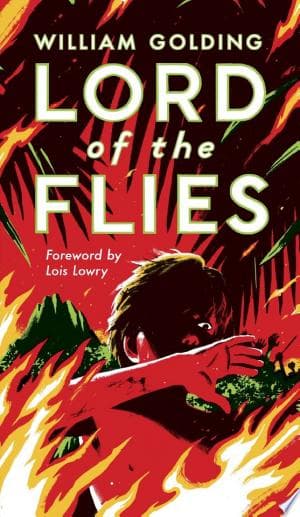
- Lord of the Flies
William Golding
3.7 (2.3M) average on GoodreadsYoung AdultExamines human nature under extreme pressure, the breakdown of order, and the descent into savagery.
- The Lottery
Shirley Jackson
4.1 (58k) average on GoodreadsScience FictionA short, impactful story about the disturbing nature of tradition and the capacity for cruelty within a community.
- I Know What You Did Last Summer
Lois Duncan
3.5 (12k) average on GoodreadsThrillerDuncan's novel focuses on personal guilt and suspense related to a secret accident, while Cormier's After the First Death delves into the far more complex and politically charged themes of terrorism, state power, and systemic violence, offering a broader and more profound critique of human nature.
- Angels & Demons
Dan Brown
3.9 (2.7M) average on GoodreadsThrillerA Harvard symbologist races through Rome's ancient sites, deciphering cryptic clues to unmask the Illuminati and stop a vengeful plot to destroy the Vatican with a stolen antimatter weapon.
- Gone Girl
Gillian Flynn
4.1 (2.3M) average on GoodreadsThrillerA wife's sudden disappearance on her fifth anniversary reveals a web of lies and psychological warfare, exposing the secrets within a seemingly perfect marriage.





Enjoyed the summary?
A summary gives you the shape of the book. The book itself has the detail, the examples and the voice.
Find After the First Death on AmazonAs an Amazon Associate, BookBrief earns from qualifying purchases. How we're funded