

Synopsis
Covers the whole plot, including the ending.
- Difficulty
- Medium
- Pacing
- Moderate
- Mood
- Dark, Thought-provoking, Intense, Cynical
- Read it if
- You're looking for a powerful, unflinching exploration of conformity, rebellion, and institutional corruption in a high school setting.
- Skip it if
- You prefer stories with clear heroes and villains, or a more optimistic outlook on challenging authority.
The Chocolate War Plot Summary
Covers the whole plot, including the ending.
Tryouts and the Poster
Jerry Renault, a Trinity freshman, endures football tryouts, feeling physical and emotional pain under Coach Rollins. He is new, still finding his place, and feels pressure to fit in. In his locker, he finds a poster asking, 'Do I dare disturb the universe?' This question sparks defiance and introspection, setting the stage for his actions. Meanwhile, Archie Costello, The Vigils' Assigner, watches the tryouts, already planning his next assignment, showing his power and manipulative nature within the school's secret society.
The Vigils' Assignment for Jerry
Brother Leon, the interim headmaster, announces the annual chocolate sale, an event crucial for school funding and his reputation. He aims to break previous sales records and puts immense pressure on students. At the same time, Archie Costello, The Vigils' cunning and cruel Assigner, gives Jerry Renault his first assignment: refuse to sell chocolates for ten days. Jerry, still thinking about 'disturbing the universe,' accepts, not fully understanding the consequences. This act of defiance, initially a simple Vigils prank, soon becomes far more significant.
Jerry's Initial Refusal
Jerry Renault, following The Vigils' assignment, publicly refuses to sell chocolates when Brother Leon calls his name. This shocks Brother Leon and other students, as no one has openly defied the sale before. Brother Leon, enraged but trying to stay calm, singles out Jerry, but Jerry stands firm. The ten days pass, and Jerry continues his silent protest, amusing The Vigils and increasingly frustrating Brother Leon, who sees Jerry's defiance as a personal insult and a threat to his authority and the sale's success.
The Vigils' Withdrawal and Jerry's Continued Defiance
After ten days, The Vigils, through Obie, tell Jerry his assignment is over and he can start selling chocolates. To everyone's surprise, especially Archie's, Jerry continues to refuse. He has moved past the prank; his refusal is now a personal stand, an answer to the 'disturb the universe' question. This independent defiance angers Archie, who loses control over Jerry, and further fuels Brother Leon's anger. Jerry's continued refusal turns a simple prank into a real rebellion, challenging Trinity's established order.
Brother Leon's Desperation and Archie's Manipulation
Brother Leon, desperate for the chocolate sale to succeed and to crush Jerry's rebellion, sees his authority weakening. He implicitly collaborates with Archie Costello, recognizing Archie's power to manipulate the student body. Archie, enjoying the chaos and challenge, begins a campaign of psychological warfare against Jerry. He uses his influence to turn the entire student body against Jerry, making him an outcast. The school environment becomes hostile, with Jerry isolated and facing subtle but constant intimidation and ostracism orchestrated by Archie and The Vigils.
The Boycott of Jerry's Chocolates
Archie's campaign against Jerry grows. He assigns Vigils members to spread rumors and intimidate students, ensuring no one buys chocolates from Jerry. Students who try to support Jerry or show sympathy are quickly targeted and isolated. The unsold chocolates pile on Jerry's desk, a constant reminder of his failure and isolation. Pressure mounts on Jerry as he faces collective disapproval and hostility from his peers, orchestrated by Archie's cunning and ruthless tactics. The school becomes a hostile environment for Jerry, where conformity is enforced through fear.
Goobers' Despair and Confession
Goobers, last year's top chocolate salesman, struggles under Brother Leon's immense pressure to sell his quota. He is physically and emotionally exhausted, his room filled with unsold chocolates. He confides in Jerry, expressing deep resentment and hatred for Brother Leon and the chocolate sale. Goobers' confession highlights the toxic environment created by Brother Leon's obsession and Archie's schemes, showing that Jerry is not the only one suffering, though he is the only one openly resisting. His breakdown foreshadows the potential consequences of defying the system.
The Escalation of Harassment
As Jerry holds his ground, the harassment orchestrated by Archie becomes more open and cruel. Jerry's locker is vandalized, his schoolwork destroyed, and he endures constant verbal abuse and shoves in hallways. He becomes an outcast, ostracized by almost all classmates, even those who secretly admire his courage. The school, under The Vigils' unspoken rule, ignores the bullying, effectively enabling Archie's reign of terror. Jerry's resolve is tested daily as he endures this escalating torment.
The Boxing Match Challenge
To completely humiliate Jerry and reassert The Vigils' power, Archie proposes a public boxing match between Jerry and Emile Janza, a brutal bully. The event is framed as a school fundraiser for the chocolate sale, drawing a large crowd. Jerry, knowing the odds are against him, accepts the challenge, seeing it as his last stand. Archie designs this public spectacle to be Jerry's ultimate degradation, a final, violent act to break his spirit and ensure no one else dares to 'disturb the universe' at Trinity.
The Fight and Its Aftermath
The boxing match occurs in the school gym, a chaotic and violent spectacle orchestrated by Archie. Emile Janza, following Archie's subtle cues, brutally beats Jerry, inflicting severe injuries. The crowd, initially excited, grows uncomfortable with the brutality, but no one intervenes. The fight is rigged, with Archie manipulating the referee and rules to ensure Jerry's defeat. Jerry is left severely injured, his spirit broken, and his defiance crushed. The novel ends with Jerry being taken away in an ambulance, his rebellion extinguished, and the dark forces of conformity and corruption having triumphed at Trinity.
The Chocolate War Characters
Jerry Renault
Protagonist
A freshman at Trinity who dares to defy the system.
Jerry is an introspective and principled freshman at Trinity High School. He is new to the school and initially struggles with fitting in, but possesses a strong sense of integrity and a quiet courage. He is deeply affected by the poster asking, 'Do I dare disturb the universe?', which becomes a catalyst for his actions. He is not naturally rebellious but is driven by a desire to stand up for what he believes is right, even when it means facing immense pressure and isolation. His internal struggle between conformity and individuality is central to the story.
Relationships: Brother Leon (Antagonistic, a symbol of institutional corruption); Archie Costello (Antagonistic, the primary manipulator and tormentor); Goobers (Fellow student, shares a bond of quiet suffering and resentment)
Archie Costello
Antagonist
The cunning and sadistic Assigner of The Vigils.
Archie is a brilliant but deeply malicious senior and the 'Assigner' of The Vigils, a secret society that effectively runs the school. He is a master manipulator, using psychological warfare and fear to control his peers. He thrives on chaos and the exercise of power, finding amusement in the suffering of others. Archie rarely gets his hands dirty, preferring to orchestrate events from the shadows. His intelligence is matched only by his cruelty, and he represents the unchecked abuse of power within the school's social structure. He is motivated by a desire for control and to maintain his position as the ultimate authority among the students.
Relationships: Jerry Renault (Primary target of his manipulation and cruelty); Brother Leon (Implicit alliance, mutual use of each other for control); Obie (Subordinate, often disgusted by Archie's actions but loyal)
Brother Leon
Antagonist
The ambitious and corrupt interim headmaster of Trinity.
Brother Leon is the interim headmaster of Trinity and a teacher of English. He is ambitious, insecure, and obsessed with control and appearances. He is determined to make the annual chocolate sale an unprecedented success, seeing it as a way to solidify his position and gain prestige. He uses intimidation, emotional manipulation, and outright bullying to pressure students into compliance. He secretly tolerates and even implicitly encourages The Vigils' activities because they help him maintain order and enforce his will. He represents the corrupt and hypocritical adult authority figures who enable the abuses within the school.
Relationships: Jerry Renault (Direct antagonist, views Jerry's defiance as a personal threat); Archie Costello (Unspoken alliance, uses Archie's power to enforce his will); Goobers (Pressures and torments Goobers over chocolate sales)
Obie
Supporting
The secretary of The Vigils, resentful of Archie.
Obie is the secretary of The Vigils, responsible for recording Archie's assignments and coordinating the society's activities. He is deeply resentful of Archie's power and cruelty, often fantasizing about his downfall. Despite his disgust, Obie remains loyal to Archie, partly out of fear and partly out of a strange fascination with Archie's manipulative genius. He serves as an observer and chronicler of Archie's actions, providing an internal perspective on the workings of The Vigils and highlighting Archie's unchecked power. Obie's internal conflict reflects the moral compromises made by those who are complicit in the system.
Relationships: Archie Costello (Subordinate and resentful observer); Jerry Renault (Carries out Archie's assignments against Jerry)
Emile Janza
Supporting
A brutal bully and enforcer for The Vigils.
Emile Janza is a physically imposing and violent student at Trinity, known for his cruelty and willingness to engage in physical intimidation. He is one of Archie's most effective enforcers, readily carrying out the more brutal assignments for The Vigils. Janza enjoys inflicting pain and is easily manipulated by Archie's suggestions. He represents the raw, physical power that underpins The Vigils' authority and the direct threat Jerry faces. His lack of conscience makes him a dangerous tool in Archie's hands, especially in the climactic boxing match.
Relationships: Archie Costello (Enforcer, takes orders from Archie); Jerry Renault (Physical antagonist, beats Jerry in the fight)
Goobers
Supporting
The former top chocolate salesman, broken by pressure.
Goobers is a student at Trinity who was the top chocolate salesman in the previous year. He is a diligent and somewhat naive boy who succumbs to the immense pressure from Brother Leon to sell his quota. He is physically and emotionally exhausted by the task, representing the silent suffering of the students who conform. Goobers' internal monologue reveals his deep resentment towards Brother Leon and the sale, making him a foil to Jerry who openly defies the system. His breakdown highlights the psychological toll of the school's oppressive environment.
Relationships: Brother Leon (Victim of Brother Leon's pressure); Jerry Renault (Shares a bond of understanding and suffering)
Brother Jacques
Mentioned
The previous headmaster, revered by the students.
Brother Jacques is the former headmaster of Trinity, who is currently ill. He is mentioned frequently by students and faculty as a kind and fair leader, a stark contrast to Brother Leon. His absence creates a power vacuum that Brother Leon attempts to fill, often by authoritarian means. He represents a lost era of compassion and integrity at Trinity, and his memory serves as a benchmark against which Brother Leon's actions are judged.
The Vigils
Supporting
A secret society that wields significant power over Trinity's student body.
The Vigils are a powerful, clandestine student organization at Trinity, led by Archie Costello. They operate through assignments, pranks, and intimidation, effectively controlling the social dynamics of the school. Their influence is so pervasive that even Brother Leon tacitly acknowledges and uses their power. The Vigils represent the corrupting influence of unchecked power among peers and the peer pressure that enforces conformity. They are a manifestation of the dark side of human nature, thriving on manipulation and fear.
Relationships: Archie Costello (Led by Archie, who uses them as his instruments); Jerry Renault (The primary vehicle for Jerry's torment)
The Chocolate War Themes
The Corrupting Nature of Power
The novel shows how power, whether held by adults or students, can corrupt and be abused. Brother Leon's desperate desire for a successful chocolate sale leads him to unethical and cruel tactics. Archie Costello's position as Assigner of The Vigils allows him to manipulate and torment others for his own amusement. The unchecked authority of both characters creates an oppressive environment, demonstrating that absolute power corrupts absolutely. This is clear in Brother Leon's intimidation of students like Goobers and Archie's systematic campaign against Jerry, ending in the rigged boxing match.
“Jerry remembered the poster in his locker: Do I dare disturb the universe? Yes, he thought, I dare.”
Conformity vs. Individuality
This is the novel's central conflict. Jerry Renault's refusal to sell chocolates, initially a Vigils assignment, becomes a personal stand against Trinity's oppressive conformity. The school's system, enforced by Brother Leon and The Vigils, demands absolute adherence to its rules and expectations. Jerry's defiance highlights the immense pressure to conform and the severe consequences of choosing individuality. The tragic outcome of Jerry's rebellion shows the difficulty, and often futility, of an individual challenging a deeply entrenched and corrupt collective, as seen when the entire student body turns against him.
“Nobody had ever said no to Brother Leon before. Or to the Vigils. Or to the school. It was a first.”
The Abuse of Authority
The novel examines how authority figures, both adult and peer-based, abuse their positions. Brother Leon, as interim headmaster, uses fear and manipulation to ensure the chocolate sale's success, prioritizing personal ambition over student well-being. Archie Costello, as The Vigils' leader, wields significant power over the student body, using it for cruel pranks and psychological torture. The adults in the school, by ignoring or tacitly allowing The Vigils' activities, are complicit in this abuse. The climax, where Jerry is severely beaten in a 'fight' sanctioned by the school, is the clearest example of this theme.
“He knew that Archie was the one who pulled the strings, the one who manipulated the puppets. And he knew that he, Obie, was one of the puppets.”
The Pervasiveness of Fear
Fear is a dominant force at Trinity, used by both Brother Leon and Archie to maintain control. Students fear Brother Leon's wrath if they don't sell chocolates and The Vigils' retribution if they defy Archie. This fear leads to widespread conformity and silence, preventing anyone from supporting Jerry or challenging the status quo. Obie's resentment of Archie is constantly overshadowed by his fear. Even students who initially admire Jerry's courage eventually succumb to the fear of being ostracized or targeted, showing how fear can paralyze collective action.
“Fear was a constant, a dull ache in the belly, a cold hand on the heart.”
Loss of Innocence
The novel follows Jerry Renault's painful journey from an innocent freshman to a disillusioned and broken individual. He enters Trinity with hope and a desire to understand his place, symbolized by the 'disturb the universe' poster. However, his experiences with Brother Leon's corrupt power and Archie's sadistic manipulation strip him of his idealism. The brutal ending, where Jerry is physically and emotionally crushed, signifies a profound loss of innocence, suggesting that in this world, goodness and defiance are often punished, leaving little room for hope.
“He thought of the poster, the question. He had disturbed the universe, all right. But had it been worth it?”
Plot Devices & Literary Techniques
The Poster: 'Do I dare disturb the universe?'
A symbolic question that catalyzes Jerry's rebellion.
This poster, found in Jerry's locker, serves as a powerful symbol and a direct challenge to Jerry. It encapsulates the novel's central theme of conformity versus individuality. For Jerry, it's not just a rhetorical question but a call to action, prompting him to question the established order at Trinity. His decision to continue refusing to sell chocolates, even after The Vigils' assignment ends, is his answer to this question, transforming a prank into a genuine act of rebellion and defining his character arc.
The Vigils
A secret society that acts as a parallel, darker authority within the school.
The Vigils are a crucial plot device, representing the dark, unchecked power that exists among the students, often mirroring and amplifying the abuses of the adult faculty. They serve as Archie Costello's instrument of manipulation and control, allowing him to orchestrate the systematic harassment of Jerry. Their existence highlights the complicity of the adult staff (like Brother Leon) who either ignore or implicitly sanction their activities, revealing the corrupt underbelly of the school's social structure and the pervasive nature of peer pressure.
The Chocolate Sale
A seemingly innocuous event that becomes a battleground for power and control.
The annual chocolate sale is initially presented as a standard school fundraiser, but it quickly becomes the central arena for the conflict between Brother Leon's ambition, Archie's manipulation, and Jerry's defiance. It is the catalyst for Jerry's rebellion and the focal point of Brother Leon's desperate need for control. The chocolates themselves become symbols of conformity and the pressure to succeed, and Jerry's refusal to sell them transforms a simple product into a powerful statement against the school's oppressive system.
Archie's Black Box
A psychological tool used by Archie to maintain his power and avoid consequences.
The black box contains marbles, one of which is black. Before assigning a particularly cruel task, Archie is forced to draw from the box. If he draws the black marble, he must perform the assignment himself. This device adds an element of suspense and psychological tension. It demonstrates Archie's cunning, as he rarely draws the black marble, suggesting manipulation or luck. It also highlights his cowardice, as he fears having to personally execute his own cruel assignments, yet it acts as a symbolic check on his power, even if an ineffective one.
The Football Tryouts
An early metaphor for the physical and psychological struggles at Trinity.
The grueling football tryouts that Jerry endures at the beginning of the novel serve as an early metaphor for the larger struggles he will face at Trinity. The physical pain, the pressure to perform, the feeling of being observed and judged, and the hierarchy established by Coach Rollins all parallel the oppressive environment of the school. It introduces the theme of suffering for a cause and foreshadows the physical and emotional toll Jerry's rebellion will take on him, establishing a baseline for the harsh realities of the school.
The Chocolate War Quotes
“Jerry, they can make you do anything they want. It's a free country, but they can still make you do it.”
“Go ahead, refuse. See what happens.”
“The world was a conspiracy of the beautiful and the strong, leaving the ugly and the weak to suffer.”
“Don't disturb the universe.”
“He knew that if he did not sell the chocolates, he would be an outcast, a pariah. But he knew, too, that if he did sell them, he would be a hypocrite.”
“He learned that to be a hero, one must be alone.”
“The world was a series of choices, and sometimes the choices were rotten.”
“Conformity was the only sin.”
“He knew what was coming. It was the moment of truth, the moment when he would discover if he was a man or a boy.”
“It was not a question of courage. It was a question of survival.”
“They had won. He had lost. It was as simple as that.”
“But it was not courage. It was fear. Fear of being alone, fear of being different.”
“You do what you have to do. What else is there?”
“The universe was not disturbed. It was merely rearranged.”
Quiz
10 questions on the plot and the characters. Each answer comes with a short explanation.
Question 1
What is the name of the secret society that controls student life at Trinity?
- The Guardians
- The Vigils
- The Brotherhood
- The Sentinels
Show answer
B. The Vigils The Vigils are the secret society led by Archie that manipulates students and teachers at Trinity.
Question 2
What is the initial reason Jerry Renault decides to refuse to sell the chocolates?
- He wants to protest Brother Leon's unfair teaching methods.
- He is following a Vigil assignment to disrupt the sale for a short period.
- He genuinely dislikes chocolate and thinks the sale is pointless.
- He wants to get expelled from Trinity.
Show answer
B. He is following a Vigil assignment to disrupt the sale for a short period. Jerry's initial refusal is part of a Vigil assignment. He is supposed to refuse for ten days and then comply.
Question 3
Who is the 'Assigner' for The Vigils, responsible for creating the assignments?
- Goober
- Brother Leon
- Archie Costello
- Emile Janza
Show answer
C. Archie Costello Archie Costello is the manipulative and intelligent Assigner for The Vigils, who uses his intellect to control others.
Question 4
What is the total number of boxes of chocolates Brother Leon expects each student to sell?
- 20 boxes
- 25 boxes
- 50 boxes
- 100 boxes
Show answer
C. 50 boxes Brother Leon raises the quota to 50 boxes per student, a significant increase that makes the task much harder.
Question 5
What iconic question is written on the poster in Jerry's locker, which he often contemplates?
- Why do we fall?
- Do I dare disturb the universe?
- What is truth?
- Who am I?
Show answer
B. Do I dare disturb the universe? The poster with the question 'Do I dare disturb the universe?' is a central motif representing Jerry's internal struggle and eventual defiance.
Question 6
How does Brother Leon react to Jerry's continued refusal to sell the chocolates, even after the Vigil assignment is over?
- He tries to reason with Jerry privately.
- He ignores Jerry, hoping he will eventually conform.
- He collaborates with Archie and The Vigils to break Jerry's spirit.
- He expels Jerry immediately.
Show answer
C. He collaborates with Archie and The Vigils to break Jerry's spirit. Brother Leon sees Jerry's defiance as a threat to his authority and the chocolate sale, and he secretly works with Archie to ensure Jerry's failure and humiliation.
Question 7
What is the ultimate outcome for Jerry Renault at the end of the novel?
- He successfully sells all his chocolates and becomes a hero.
- He is expelled from Trinity.
- He is severely beaten and realizes the futility of fighting the system.
- He joins The Vigils and becomes Archie's successor.
Show answer
C. He is severely beaten and realizes the futility of fighting the system. In the climactic boxing match, Jerry is brutally beaten by Emile Janza, a staged event orchestrated by Archie, leading Jerry to understand that challenging the system is a losing battle.
Question 8
What character is known for his physical prowess and is manipulated by Archie to carry out violent acts?
- Goober
- Obie
- Emile Janza
- Carter
Show answer
C. Emile Janza Emile Janza is the thuggish character whom Archie uses for intimidation and violence, culminating in the fight against Jerry.
Question 9
What theme is most prominently explored through Jerry's struggle against The Vigils and Brother Leon?
- The importance of teamwork and cooperation.
- The triumph of good over evil.
- The corrupting nature of power and the futility of individual rebellion.
- The joys of adolescence and school spirit.
Show answer
C. The corrupting nature of power and the futility of individual rebellion. The novel is a dark exploration of power, conformity, and the difficulty, if not impossibility, of an individual standing up against a corrupt system without suffering severe consequences.
Question 10
What does Archie Costello possess that he fears will reveal his inner thoughts and expose his true nature?
- A diary
- A black box with marbles
- A secret letter from the Headmaster
- A recording of his conversations
Show answer
B. A black box with marbles Archie carries a black box containing three marbles, one of which is black. If he draws the black marble, he must complete the assignment himself, a fear that keeps his manipulations in check.
The Chocolate War FAQ
What is the central conflict in 'The Chocolate War'?
The central conflict revolves around Jerry Renault's refusal to sell chocolates for Trinity's annual fundraiser, defying both the school administration, represented by Brother Leon, and the powerful secret society, The Vigils, led by Archie Costello. This act of individual rebellion quickly escalates into a psychological and physical battle for control and conformity within the school.
Who are The Vigils and what is their role at Trinity?
The Vigils are a secret society of students at Trinity High, holding immense unofficial power. Led by the manipulative Archie Costello, their 'assignments' dictate student behavior, often through intimidation and cruelty, and they effectively control much of the student body, even influencing teachers like Brother Leon.
Why does Jerry Renault initially decide to refuse selling the chocolates?
Jerry's initial refusal is an assignment from The Vigils, orchestrated by Archie, to not sell chocolates for ten days. However, after the ten days are up, Jerry continues his refusal, driven by a deeper, personal question of whether he dares to disturb the universe, finding a sense of identity and defiance in his stand.
How does Brother Leon react to Jerry's refusal?
Brother Leon, the acting headmaster who desperately needs the chocolate sale to be a success to secure his position and reputation, sees Jerry's refusal as a personal affront and a threat to his authority. He manipulates and pressures students and The Vigils to force Jerry into submission, demonstrating his own corrupt and cruel nature.
What is the outcome of Jerry's stand against the chocolate sale?
Jerry's defiance ultimately leads to his brutal defeat in a rigged boxing match against Emile Janza, orchestrated by The Vigils. He is severely beaten and hospitalized, and his act of rebellion is crushed, serving as a stark warning to other students about the futility of resisting the established powers at Trinity.
What is the significance of the poster in Jerry's locker?
The poster, bearing the question 'Do I dare disturb the universe?', serves as a profound internal monologue and a catalyst for Jerry's actions. It represents his yearning for individuality and his struggle with conformity, giving a deeper, existential meaning to his seemingly simple act of refusing to sell chocolates.
How does Archie Costello maintain his power within The Vigils?
Archie maintains his power through his cunning intellect, psychological manipulation, and the fear he instills in others, particularly through his 'black box.' This box contains marbles, and if he draws a black one, he must perform the assignment himself, a risk that keeps the other Vigils on edge and reinforces his authority.
What role does Obie play in The Vigils, and what is his true feeling towards Archie?
Obie is Archie's reluctant second-in-command and chronicler of The Vigils' assignments. He despises Archie and resents his manipulation, but he is too weak and afraid to challenge him directly, often fantasizing about Archie's downfall but never acting on it, highlighting his own complicity.
How does the 'black box' function, and what does it reveal about Archie?
The 'black box' is a small, wooden box containing white marbles and one black marble. If Archie draws the black marble, he must personally carry out the assignment. It reveals Archie's calculated risk-taking and his understanding of human psychology, as the mere possibility of drawing the black marble keeps the other Vigils in line and fearful of his power.
Analyze the psychological motivations behind Brother Leon's actions.
Brother Leon is driven by insecurity, ambition, and a desperate need for control and validation. His cruelty stems from a profound fear of failure and exposure, as he sees the chocolate sale as his chance to solidify his power as acting headmaster. His manipulation of students and The Vigils reveals a deep-seated corruption and lack of moral compass.
What psychological impact does The Vigils' system of assignments have on the student body?
The Vigils' assignments create an atmosphere of fear, paranoia, and conformity among the students. Students are constantly aware of the group's power and the potential for being targeted, leading them to suppress individuality and comply with the group's unspoken rules, fostering a culture of intimidation and silence.
How does Jerry's psychological state evolve throughout his defiance?
Jerry begins with a mix of defiance and self-doubt, initially following The Vigils' assignment. As he continues his refusal, he experiences moments of exhilaration and a growing sense of self-worth. However, as the pressure intensifies, his psychological state shifts to isolation, confusion, and ultimately, a crushing sense of defeat and disillusionment.
Explore the concept of 'mob mentality' as depicted in the novel.
'The Chocolate War' powerfully illustrates mob mentality through the rapid escalation of hostility towards Jerry. The students, initially indifferent or even supportive, are easily swayed by The Vigils' propaganda and the pressure to conform, turning into a cruel, unthinking collective that participates in Jerry's ostracization and ultimate downfall.
Is Jerry's defeat a complete failure, or does it carry any symbolic victory?
While Jerry's physical defeat is absolute and seemingly crushes his spirit, his stand can be interpreted as a symbolic victory for individual conscience. He dared to disturb the universe, exposing the corruption and cruelty within Trinity, even if the immediate outcome was brutal. His sacrifice highlights the cost of integrity in a corrupt system.
What is the novel's message about the nature of power and corruption?
The novel suggests that power, whether official (Brother Leon) or unofficial (The Vigils), can easily corrupt and be used for selfish, cruel ends. It shows how institutions can become breeding grounds for manipulation and how those in power often exploit fear and conformity to maintain their control, regardless of moral cost.
How does Cormier use symbolism to enhance the story's themes?
Cormier uses rich symbolism: the chocolate itself represents conformity and materialism; the poster 'Do I dare disturb the universe?' embodies Jerry's internal struggle; the black box symbolizes Archie's manipulative power and the arbitrary nature of cruelty. These symbols deepen the exploration of individualism, power, and corruption.
What is the significance of the novel's ending, particularly Jerry's final thoughts?
The ending, with Jerry severely beaten and contemplating the futility of his stand, is deliberately bleak and anti-heroic. It suggests that challenging corrupt power often leads to brutal consequences and that individual courage can be crushed. His final advice to Goober, 'Don't disturb the universe,' is a bitter capitulation, questioning the value of defiance.
Why is 'The Chocolate War' considered a controversial book?
'The Chocolate War' is controversial due to its dark and unflinching portrayal of adolescent cruelty, institutional corruption, and its bleak, unresolved ending where the protagonist is defeated without redemption. It challenges traditional notions of heroism in young adult fiction, depicting a world where good does not always triumph.
About the author

Robert Cormier was an American author known for his young adult fiction that often explores complex themes of morality and the human experience. His notable works include The Chocolate War, After the First Death, Heroes, Tenderness, Beyond the Chocolate War, and We All Fall Down. Cormier's writing is characterized by its realistic portrayal of adolescence and its challenges.
Similar books
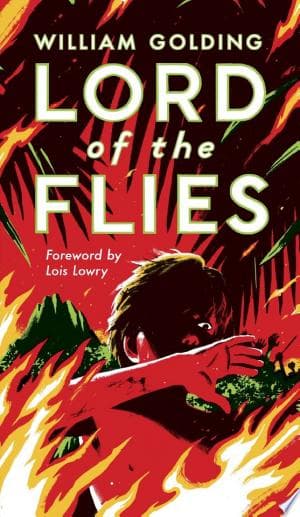
- Lord of the Flies
William Golding
3.7 (2.3M) average on GoodreadsYoung AdultExplores the darker aspects of human nature and the breakdown of order within a contained society.
- 1984
George Orwell
4.2 (3.1M) average on GoodreadsPoliticsFeatures an individual's futile struggle against an oppressive and all-encompassing system.
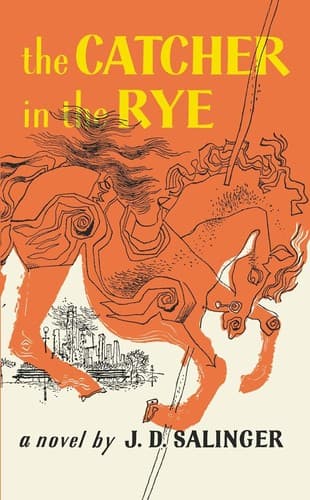
- The Catcher in the Rye
J.D. Salinger
3.8 (2.7M) average on GoodreadsYoung AdultFocuses on a disillusioned teenager rebelling against the 'phoniness' of the adult world.
- The Giver
Lois Lowry
4.1 (1.8M) average on GoodreadsFantasyBoth novels explore themes of conformity and rebellion against a rigid social structure. However, 'The Giver' offers a more ambiguous but ultimately hopeful resolution, with the protagonist actively pursuing escape and change, whereas 'The Chocolate War' presents a more crushing defeat for the individual.
- Harry Potter and the Sorcerer's Stone
J.K. Rowling
4.5 (7M) average on GoodreadsFantasyRescued from a miserable life under the stairs, an orphaned boy discovers he's a wizard destined for a magical school, where he uncovers a dangerous secret tied to the dark wizard who murdered his parents.
- The Hunger Games
Suzanne Collins
4.3 (6.4M) average on GoodreadsFantasyIn a future where children fight to the death on live television, Katniss Everdeen volunteers for the arena, turning a death sentence into a fight for survival and a spark of rebellion.




Enjoyed the summary?
A summary gives you the shape of the book. The book itself has the detail, the examples and the voice.
Find The Chocolate War on AmazonAs an Amazon Associate, BookBrief earns from qualifying purchases. How we're funded