
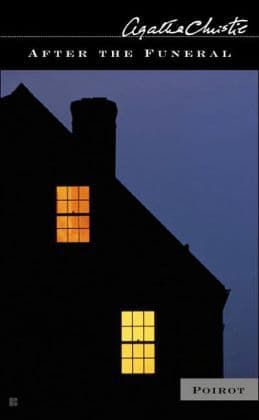
Synopsis
Covers the whole plot, including the ending.
- Difficulty
- Easy
- Pacing
- Moderate
- Mood
- Intriguing, Suspenseful, Classic
- Read it if
- You enjoy classic British mysteries with a clever detective, intricate plots, and a focus on psychological manipulation and family secrets.
- Skip it if
- You prefer fast-paced thrillers or stories with graphic violence and explicit content.
After the Funeral Plot Summary
Covers the whole plot, including the ending.
Richard Abernethie's Funeral and Cora's Incriminating Remark
The wealthy Richard Abernethie dies suddenly at his country estate, Enderby Hall. His death seems natural. His solicitor, Mr. Entwhistle, gathers the family for the funeral and the will reading. Present are Richard's brother-in-law, Timothy Abernethie, and his wife, Maud; his nieces Rosamund Shane and Susan Banks; his nephew George Crossfield; and his eccentric sister, Cora Lansquenet. During the will reading, which divides Richard's money among the family, Cora startles everyone by loudly saying, 'It's been hushed up very nicely, hasn't it... But he was murdered, wasn't he?' Most people dismiss her comment, but it deeply disturbs Mr. Entwhistle.
Cora's Brutal Murder
The day after Richard Abernethie's funeral, Cora Lansquenet returns to her home in a quiet village, where she lives with her companion, Miss Gilchrist. That evening, while Miss Gilchrist is out, Cora is murdered with a hatchet in her sitting room. The discovery of her body shocks the family and the police, making her earlier declaration at the will reading seem like a premonition or an accusation. Inspector Morton is on the case, and Mr. Entwhistle, troubled by the events, asks his friend, Hercule Poirot, for help. He believes there is a connection between Richard's death and Cora's murder.
Poirot's Investigation Begins
Hercule Poirot, at Mr. Entwhistle's request, takes the case. He starts by interviewing the Abernethie family and their close associates, including Miss Gilchrist. Poirot is interested in Cora's character, her relationship with Richard, and any motives for her murder. He learns that Cora was considered a harmless eccentric, often making dramatic statements. Family members offer different opinions on Cora's statement; some dismiss it as a morbid joke, others admit it made them uncomfortable. Poirot also focuses on the details of Richard Abernethie's death, looking for inconsistencies that might support Cora's claim of murder.
The Search for a Motive and a Killer
Poirot and Inspector Morton look into the financial implications of Richard Abernethie's will. Richard's money was to be divided among his nieces and nephews, with Cora receiving a large sum. Her death means her share will now go to the remaining heirs. This puts the family members under suspicion, as they all benefit from Cora's death. Poirot carefully checks the alibis of everyone involved for the time of Cora's murder. He also considers that Richard was murdered, and Cora was killed because she knew something or was about to expose the truth. The investigation uncovers family secrets and resentments.
A Look at Richard's Death
Poirot focuses on the details of Richard Abernethie's death. Richard had a terminal illness, and his death was officially from natural causes. However, Cora's statement suggests otherwise. Poirot considers poison or a staged death. He questions Dr. Harrison, Richard's physician, and the household staff, including the butler, Lanscombe, and the housekeeper, Mrs. Jacks. While no immediate evidence of foul play is found, Poirot notes how efficiently the death was handled and the lack of suspicion at the time. He suspects that if Richard was murdered, it was done with great cleverness and planning.
The Disappearance of a Painting
During his interviews, Poirot learns about a painting Cora Lansquenet had recently bought and was proud of – a landscape by a lesser-known artist. After her murder, the painting is gone. This detail initially seems small, but it interests Poirot. He questions Miss Gilchrist about the painting, but she claims not to know where it is or if it existed. This difference makes Poirot suspicious, as he believes the painting might be key to understanding Cora's last days or the motive for her murder. The missing artwork becomes a focus of his inquiry.
Miss Gilchrist's Peculiar Behavior
Poirot pays close attention to Miss Gilchrist, Cora's companion. He notes her meek and devoted manner but also sees peculiar habits. She bakes often and makes elaborate cakes. Poirot also learns she has an interest in art and some knowledge of painting. Her alibi for the night of Cora's murder, visiting a friend, seems solid but Poirot has doubts. He senses a hidden strength or cunning beneath her quiet exterior. He also finds it odd that she 'discovered' the hatchet, supposedly used in the murder, hidden in a coal scuttle.
The Truth About Cora and the Impersonation
Through investigation, Poirot reveals a startling truth: the woman murdered in Cora's house was not Cora Lansquenet, but Miss Gilchrist. The real Cora Lansquenet was the murderer. Miss Gilchrist, a struggling artist whose career had failed, resented Cora's inheritance and casual success. She planned to murder Cora, impersonate her at the will reading, and then 'die' as Cora, thus inheriting her fortune. She drugged Cora, then killed her with a hatchet. She then assumed Cora's identity; the 'Cora' who made the shocking statement at the will reading was Miss Gilchrist.
The Plan Unravels: Richard's Murder and the Motive
Poirot further explains that Miss Gilchrist, while impersonating Cora, also murdered Richard Abernethie. She did so to start the will reading and the subsequent 'death' of Cora (herself) to claim the inheritance. She used a subtle poison, possibly in Richard's medication, to make his death seem natural. Her statement at the will reading – 'He was murdered, wasn't he?' – was a calculated risk. If dismissed, she was safe. If it sparked an investigation, she intended to be the 'murdered' Cora, diverting suspicion from herself and framing an innocent person. The missing painting was a fake, painted by Miss Gilchrist to establish her artistic credentials and create a distraction.
The Proof and Confession
Poirot's final piece of evidence involves Miss Gilchrist's love for baking and her habit of leaving a small piece of marzipan or a cherry in the same place on her cakes. He realized that the 'Cora' who was murdered had not baked a specific cake found in the house, whereas the 'Cora' at the will reading had. This subtle detail, along with other inconsistencies in her story and her physical appearance (which she had altered slightly to resemble Cora), finally breaks Miss Gilchrist. Confronted with Poirot's logic and evidence, she confesses to both murders, driven by greed and a desire to escape poverty and anonymity.
Principal Figures
Hercule Poirot
Protagonist
Brilliant Belgian detective, called in by Mr. Entwhistle to investigate the Abernethie murders.
Poirot is a meticulously observant and intellectually superior detective, known for his 'little grey cells' and his precise methods. He is initially brought into the case by Mr. Entwhistle, who is disturbed by Cora's remark and her subsequent murder. Poirot approaches the investigation with his characteristic psychological insight, paying close attention to human nature, small details, and inconsistencies. He is less interested in physical evidence and more in the 'order and method' of the crime and the motivations behind it. His calm demeanor belies a sharp mind that can unravel the most complex deceptions.
Relationships: Mr. Entwhistle (trusted colleague and friend); Inspector Morton (collaborative professional relationship)
Cora Lansquenet (initially believed victim)
Victim/Deceased
Eccentric, artistic sister of Richard Abernethie, whose shocking remark at the funeral leads to her perceived murder.
Cora is depicted as an unconventional, somewhat childish woman who lives a bohemian lifestyle as an artist. She is known for her dramatic statements and tendency to speak her mind, often without filtering. Her family largely dismisses her as harmlessly eccentric. She is the initial victim, brutally murdered after making the statement, 'He was murdered, wasn't he?' at her brother Richard's will reading. However, it is later revealed that the murdered woman was actually Miss Gilchrist, and the real Cora was the killer's first victim.
Relationships: Richard Abernethie (brother); Miss Gilchrist (companion/secret victimizer)
Miss Gilchrist (actual murderer)
Antagonist/Culprit
Cora Lansquenet's seemingly meek companion, who is revealed to be the cunning murderer and impersonator.
Miss Gilchrist initially appears as a quiet, devoted, and rather unremarkable companion to Cora. She is a former art teacher and baker, seemingly harmless. However, beneath this unassuming exterior lies a bitter, resentful, and highly intelligent woman driven by financial desperation and a sense of injustice. She orchestrates a complex plan to murder Richard Abernethie, then Cora, and impersonate Cora to inherit the Abernethie fortune. Her meticulous planning and ability to maintain a facade are central to the mystery. Her love of baking and a distinctive habit with marzipan prove to be her undoing.
Relationships: Cora Lansquenet (employer/victim); Richard Abernethie (victim)
Richard Abernethie
First Victim/Catalyst
Wealthy patriarch whose seemingly natural death sets the entire murder plot in motion.
Richard Abernethie is the wealthy head of the Abernethie family, whose sudden death from a terminal illness is initially deemed natural. His will and the subsequent gathering of his relatives are the starting point for the intricate murder plot. Though deceased, his character and wealth are central to the motives of the killer. He is described as a strong, influential figure in the family, and his passing creates a vacuum that the killer exploits for financial gain. His death is later revealed to be murder by poisoning, orchestrated by Miss Gilchrist.
Relationships: Cora Lansquenet (sister); Timothy Abernethie (brother-in-law); Rosamund Shane (niece); Susan Banks (niece); George Crossfield (nephew)
Mr. Entwhistle
Supporting
Richard Abernethie's family solicitor and Poirot's primary contact.
Mr. Entwhistle is the meticulous and morally upright family solicitor for the Abernethies. He is present at the will reading when Cora makes her shocking accusation and is deeply disturbed by it. When Cora is subsequently murdered, his unease grows into a conviction that something is terribly wrong, leading him to seek Hercule Poirot's help. He acts as Poirot's liaison with the family and provides valuable background information, often serving as a sounding board for Poirot's theories. He is a man of integrity and a keen observer, though not a detective himself.
Relationships: Hercule Poirot (trusted friend and colleague); Abernethie Family (family solicitor)
Timothy Abernethie
Supporting
Richard's brother-in-law, a hypochondriac and one of the heirs.
Timothy is Richard's brother-in-law, a perpetually ailing and rather self-pitying man who is largely dependent on his wife, Maud. He is one of the beneficiaries of Richard's will. His constant complaints about his health and his general air of weakness make him an unlikely suspect, but he is nonetheless part of the family dynamic that Poirot investigates. He often serves as a source of exasperation for other family members, but his presence highlights the varied personalities within the Abernethie clan.
Relationships: Richard Abernethie (brother-in-law); Maud Abernethie (wife)
Maud Abernethie
Supporting
Timothy's long-suffering wife, a practical and somewhat cynical woman.
Maud is Timothy's wife, a practical and sensible woman who bears her husband's hypochondria with a weary resignation. She is one of the heirs and is often the voice of reason or cynicism among the family. She has a clear memory of the events surrounding Richard's death and Cora's statement. Her observations and reactions provide Poirot with insights into the family's dynamics and their perceptions of Cora. She is generally straightforward and less prone to dramatics than some other family members.
Relationships: Timothy Abernethie (husband); Richard Abernethie (brother-in-law)
Rosamund Shane
Supporting
Richard's glamorous niece, an actress.
Rosamund is Richard's beautiful and glamorous niece, an actress. She is one of the beneficiaries of the will and is initially shocked by Cora's statement and later by her murder. She represents a more modern, independent member of the family, focused on her career and personal life. Her interactions with Poirot reveal her concern for the family's reputation but also a certain detachment. She provides a contrast to the more traditional or eccentric family members.
Relationships: Richard Abernethie (uncle); Susan Banks (cousin); George Crossfield (cousin)
Susan Banks
Supporting
Richard's sensitive and intelligent niece, married to a vicar.
Susan is another of Richard's nieces, married to a vicar. She is portrayed as sensitive, intelligent, and more thoughtful than some of her relatives. She is genuinely disturbed by Cora's remark and her subsequent death, and she actively tries to piece together what might have happened. She is one of the more sympathetic characters, often reflecting the moral quandaries posed by the murders. Her perspective offers a window into the more introspective side of the family.
Relationships: Richard Abernethie (uncle); Rosamund Shane (cousin); George Crossfield (cousin)
George Crossfield
Supporting
Richard's nephew, a businessman, and one of the heirs.
George is Richard's nephew, a pragmatic businessman. He is one of the beneficiaries of the will and approaches the situation with a more practical, less emotional mindset than some of his relatives. He is concerned about the financial implications and the family's reputation. His interactions with Poirot are direct and to the point, as he tries to understand the facts of the case. He represents the more grounded, financially-minded aspect of the family.
Relationships: Richard Abernethie (uncle); Rosamund Shane (cousin); Susan Banks (cousin)
Themes & Insights
Appearance vs. Reality
This theme is central to the mystery, as almost everything is not what it seems. Richard Abernethie's death appears natural but is murder. Cora's murder appears to be the main crime, but the victim is actually Miss Gilchrist. Miss Gilchrist appears to be a meek companion but is a cunning killer. Poirot constantly emphasizes looking past the surface, questioning accepted truths, and finding the real nature of events and people. The missing painting, initially a small detail, is a fake, further blurring the lines between real and fabricated.
“It is the small things, the little inconsistencies, that often lead to the great truths.”
Greed and Inheritance
The large Abernethie fortune drives the entire murder plot. The desire for wealth motivates Miss Gilchrist to commit two murders and create a complex impersonation. The will reading, which details the distribution of Richard's money, directly precedes Cora's 'murder' and shows how each family member stands to gain or lose. Poirot carefully examines the financial motives of all the heirs, understanding that money often causes such crimes. The theme explores how the promise of wealth can corrupt and drive people to extreme actions.
“Money is a terrible thing. It has caused more misery than almost anything else in the world.”
Identity and Impersonation
The main twist of the novel involves identity. Miss Gilchrist's plan depends entirely on her ability to assume Cora Lansquenet's identity, first at the will reading and then by staging her own 'death' as Cora. The story constantly plays with who Cora truly is, and how easily one person can be mistaken for another, especially by those who don't know them well. Poirot's investigation looks into the subtle differences in mannerisms, habits, and even physical appearance that distinguish people, ultimately exposing the impersonation.
“It is not always the face that tells the truth, but the little habits, the way of doing things.”
Justice and Order
As in many Poirot novels, the main theme is the pursuit of justice and the restoration of order from chaos. The murders disrupt the peace of the Abernethie family and society. Poirot, with his belief in logic and method, sees it as his duty to uncover the truth and ensure the guilty are held accountable. His methodical approach, sifting through lies and deceptions, shows his dedication to justice. The resolution of the crimes, despite their complexity, ultimately confirms the triumph of truth and order.
“It is the truth that matters, however ugly it may be. The truth will set us free, even from ourselves.”
Plot Devices & Literary Techniques
The 'Impossible' Statement
Cora's declaration at the will reading, initially dismissed, becomes the central enigma.
Cora Lansquenet's startling remark, 'But he was murdered, wasn't he?' at Richard Abernethie's will reading, serves as the primary hook and plot device. It immediately establishes doubt about Richard's seemingly natural death and sets the stage for the subsequent murder. The statement is 'impossible' because Richard's death was officially natural, yet it holds a sinister truth. This device creates immediate tension and mystery, compelling both Mr. Entwhistle and the reader to question what truly happened, and why Cora would say such a thing. It's a classic Christie misdirection, making the reader focus on the 'who' of Cora's murder rather than the 'who' of her identity.
Impersonation as a Central Twist
The killer assumes the identity of a victim, creating a complex layer of deception.
The revelation that the 'Cora' who made the incriminating statement and was subsequently murdered was actually Miss Gilchrist, while the real Cora was the first victim, is the novel's most significant plot device. This impersonation completely recontextualizes all preceding events, turning the expected victim into the perpetrator. It allows the murderer to control the narrative, deflect suspicion, and benefit from the inheritance. Poirot's task is to unravel this elaborate deception, relying on subtle clues rather than overt evidence to prove that the person everyone believed to be Cora was, in fact, someone else entirely.
The Seemingly Insignificant Detail
Small, overlooked habits or objects prove crucial to solving the mystery.
Poirot famously relies on 'the little grey cells' to notice details others miss. In 'After the Funeral', several seemingly insignificant details become critical. The missing (and later revealed to be fake) painting by Cora, Miss Gilchrist's distinctive way of arranging marzipan on her cakes, and even the precise type of hatchet used for the murder all contribute to Poirot's deductions. These small observations allow him to build a case that transcends the obvious and exposes the intricate web of lies, demonstrating how minor inconsistencies can betray a meticulously planned crime.
The Locked Room/Alibi Challenge
The killer's seemingly airtight alibi for Cora's murder is meticulously deconstructed.
While not a literal 'locked room' mystery, the circumstances of Cora's murder present a strong alibi challenge. Miss Gilchrist, the perceived victim, had a seemingly perfect alibi for the time of the murder, having been out visiting a friend. Poirot must dismantle this alibi not by proving its falsity directly, but by revealing that the 'victim' was actually the perpetrator. This device forces the detective to look beyond the obvious timelines and alibis, instead focusing on the identity of the person who was supposedly 'murdered' and the true sequence of events. It's a clever subversion of the traditional alibi challenge.
After the Funeral Quotes
“It is not the most brilliant idea that is the most successful, but the one that is most accurately timed.”
“Human nature is very odd. It is often the very thing we don't want to think about that we think about most.”
“Everyone has something to hide, even if they don't know it themselves.”
“The past is never dead. It's not even past.”
“You can never tell what a person is really like until you see them in a crisis.”
“It is always the simple things that are the most difficult to see.”
“Truth, my friend, is a stubborn thing. It has a way of coming out, no matter how much you try to bury it.”
“Money is a terrible thing. It can make honest men dishonest.”
“The human heart is an abyss. Sometimes it is better not to look too closely.”
“There are some people who can't bear to be contradicted, and others who can't bear to be agreed with.”
“A lie, however artfully contrived, always leaves some small crack through which the truth can slip.”
“It is not enough to have a good mind. One must also know how to use it.”
“The most dangerous people are often those who seem the most harmless.”
“Grief is a strange thing. It can make people do very unexpected things.”
Quiz
10 questions on the plot and the characters. Each answer comes with a short explanation.
Question 1
Who is the family solicitor who enlists Hercule Poirot's help?
- Mr. Entwhistle
- Mr. Gilsby
- Mr. Abernethie
- Mr. MacAlister
Show answer
A. Mr. Entwhistle Mr. Entwhistle is the family solicitor for the Abernethie family and is the one who contacts Hercule Poirot after Cora's murder and her unsettling remark.
Question 2
What significant remark does Cora make at her brother Richard's funeral, prior to her own murder?
- “I always knew Richard had a secret life.”
- “It’s been hushed up very nicely, hasn’t it…But he was murdered, wasn’t he?”
- “The will is completely unfair to me.”
- “I'm afraid I'll be next.”
Show answer
B. “It’s been hushed up very nicely, hasn’t it…But he was murdered, wasn’t he?” Cora's chilling remark, 'It’s been hushed up very nicely, hasn’t it…But he was murdered, wasn’t he?', is the central piece of information that sets the entire investigation in motion.
Question 3
How is Cora Lansquenet (née Abernethie) murdered?
- She is poisoned.
- She is strangled.
- She is shot.
- She is savagely murdered with a hatchet.
Show answer
D. She is savagely murdered with a hatchet. Cora is brutally murdered with a hatchet, a detail that makes her death particularly shocking and emphasizes the urgency of the investigation.
Question 4
Which family member is initially suspected due to their erratic behavior and a history of mental instability?
- George Crossfield
- Rosamund Shane
- Helen Abernethie
- Timothy Abernethie
Show answer
D. Timothy Abernethie Timothy Abernethie, Richard's brother, is known for his hypochondria and often difficult personality, making him a plausible, though ultimately incorrect, suspect for some characters.
Question 5
What is the primary motivation behind the murders in 'After the Funeral'?
- Revenge for a past slight.
- To prevent a secret from being revealed.
- Greed and inheritance.
- A sudden fit of madness.
Show answer
C. Greed and inheritance. The core motive behind the intricate plot and the murders is the desire to secure a large inheritance, a common theme in Christie's work.
Question 6
Who is the true identity of the murderer?
- Susan Banks
- Timothy Abernethie
- Miss Gilchrist
- George Crossfield
Show answer
C. Miss Gilchrist Miss Gilchrist, Cora's companion, is ultimately revealed as the murderer, having meticulously planned the crimes for financial gain.
Question 7
What specific object does the murderer use to establish an alibi for the first murder?
- A misplaced will.
- A broken clock.
- A painting that was swapped.
- A diary entry.
Show answer
C. A painting that was swapped. The murderer swaps a painting, a detail that becomes crucial in establishing a false timeline and alibi, demonstrating the killer's meticulous planning.
Question 8
What is the crucial 'trick' employed by the murderer to impersonate Cora Lansquenet?
- Wearing a disguise during the will reading.
- Having a twin sister who looked exactly like Cora.
- Utilizing a dental plate and makeup to alter appearance.
- Mimicking Cora's voice perfectly.
Show answer
C. Utilizing a dental plate and makeup to alter appearance. The murderer, Miss Gilchrist, impersonates Cora using a dental plate and makeup. This elaborate deception allows her to make the 'murdered' comment at the will reading, framing Richard's death as murder and setting up the subsequent plot.
Question 9
What is the true nature of Richard Abernethie's death?
- He was murdered by a disgruntled former employee.
- He died of natural causes, as initially believed.
- He committed suicide.
- He was accidentally killed by one of his relatives.
Show answer
B. He died of natural causes, as initially believed. Despite Cora's sensational claim, Richard Abernethie actually died of natural causes. The 'murder' claim was a fabrication by the killer to set the stage for the subsequent crimes and inheritance scheme.
Question 10
What significant detail about Miss Gilchrist's past proves crucial in Poirot's understanding of her motive and method?
- Her previous career as an actress.
- Her experience as a professional caterer and cake decorator.
- Her history of gambling debts.
- Her estranged relationship with her own family.
Show answer
B. Her experience as a professional caterer and cake decorator. Miss Gilchrist's past as a professional cake decorator and caterer is vital. This background explains her skill in using a dental plate to alter her appearance, her meticulous planning, and her ability to handle poisons, making her the perfect mastermind for such an intricate plot.
After the Funeral FAQ
What is 'After the Funeral' about?
'After the Funeral' begins with the sudden death of Richard Abernethie, a wealthy man. At the reading of his will, his eccentric sister Cora makes a shocking statement, claiming Richard was murdered. When Cora herself is brutally murdered the next day, her earlier remark takes on sinister significance, prompting the family solicitor, Mr. Entwhistle, to call upon Hercule Poirot to investigate a complex web of family secrets and deceit.
Why should I read 'After the Funeral'?
You should read 'After the Funeral' for its classic Christie intricate plotting, a clever motive that hides in plain sight, and a fascinating exploration of family dynamics and inheritance. It features Hercule Poirot at his sharpest, meticulously piecing together clues from seemingly disparate events and character testimonies to expose a truly unexpected killer.
What is the background/setting of 'After the Funeral'?
The story is primarily set in the immediate aftermath of Richard Abernethie's death, focusing on the various Abernethie family members and their associates. Key locations include the grand Victorian mansion of Enderby Hall, the scene of the will reading, and Cora Lansquenet's home where she is murdered, all contributing to a classic English country house mystery atmosphere.
What are the most memorable quotes?
One of the most memorable and pivotal 'quotes' is Cora's shocking declaration at the will reading: 'It's been hushed up very nicely, hasn't it...But he was murdered, wasn't he?' This statement directly propels the entire investigation and underscores the central mystery of the book.
What writing style does the author use?
Agatha Christie employs her signature clear, concise, and engaging writing style, focusing on dialogue and character observation to advance the plot. The narrative is often presented through the perspective of Mr. Entwhistle initially, giving a slightly detached yet insightful view of the family before Poirot takes center stage with his methodical deductions.
What minor details add significant meaning?
A seemingly minor detail is the change in the painting of Richard's father, which plays a crucial role in the killer's alibi and the eventual unraveling of the disguise. Also, the meticulous descriptions of the various family members' reactions and their subtle inconsistencies during the will reading provide early, often overlooked, clues to their true characters and potential involvement.
What are some subtle foreshadowing moments?
Cora's 'eccentricity' and perceived lack of intelligence are subtly emphasized, which later serves to mask the true nature of her character and the killer's elaborate plan. Additionally, the initial dismissals of Cora's murder as a mere robbery, despite its peculiar circumstances, subtly foreshadow the deeper, more personal motive at play.
What unexpected character connections exist?
The most unexpected connection is between the victim, Cora, and the actual murderer, who is revealed to have a much closer and more manipulative relationship with her than initially perceived. This connection is vital to understanding the motive behind both Richard's 'murder' and Cora's actual one.
What are unspoken character motivations?
The unspoken motivation for many characters revolves around their financial security and social standing, particularly after Richard's death. While they outwardly express grief, their underlying anxieties about the inheritance and their future are palpable, driving much of their behavior and interactions with each other and the will.
What psychological complexities do characters exhibit?
Helen Abernethie, for instance, exhibits a complex blend of pragmatism and suppressed emotional turmoil, trying to maintain composure for the family while dealing with her own grief and suspicions. The killer, on the other hand, displays remarkable psychological fortitude and manipulative prowess, maintaining a convincing facade throughout the investigation.
What are the major emotional turning points?
The first major emotional turning point is Cora's audacious statement at the will reading, which shatters the family's composure and introduces immediate tension. The second is her subsequent murder, which transforms the family's mild discomfort into genuine fear and suspicion, forcing them to confront the possibility of a killer in their midst.
How do relationship dynamics evolve?
Initially, the family dynamics are strained by Richard's death and the will's contents, with various members harboring resentment or suspicion towards each other. As the investigation progresses, these dynamics become more fraught, with alliances shifting and long-held grievances surfacing, ultimately leading to a complete re-evaluation of who can be trusted.
Which parts remain ambiguous or open-ended?
While Poirot meticulously solves the central mystery, some minor interpersonal tensions and the lingering bitterness among certain family members, particularly around their financial disappointments, are left somewhat unresolved. The emotional fallout for some characters, beyond the immediate resolution of the crime, is also implied rather than explicitly detailed.
What are controversial scenes or decisions?
Cora's initial statement, 'He was murdered, wasn't he?' is highly controversial within the family, as it directly challenges the official cause of death and casts a shadow of suspicion. The killer's audacious and cold-blooded decision to murder Cora to cover up their initial deception is also a shocking and controversial act that drives the plot.
After the Funeral ending explained: how it ends & what it means
The ending reveals that Richard Abernethie was not murdered; he died of natural causes. Cora's statement was a cunning ruse orchestrated by the killer, who was actually Susan Banks, Richard's niece and Cora's companion. Susan murdered Cora, disguised herself as Cora for the will reading to make the 'murder' claim, and then planned to inherit from Richard. Poirot exposes Susan's elaborate impersonation and her motive, which was to secure a larger inheritance by eliminating Cora, who stood to inherit a significant sum. The ending signifies the dangerous lengths people will go to for money and the brilliance of Poirot in seeing through the most elaborate deceptions.
About the author
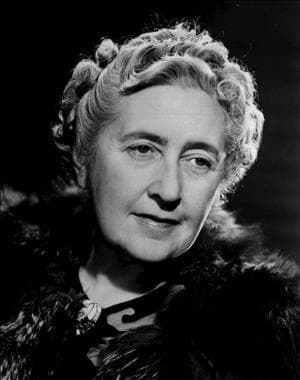
Dame Agatha Mary Clarissa Christie, Lady Mallowan, was an English writer known for her 66 detective novels and 14 short story collections, particularly those revolving around fictional detectives Hercule Poirot and Miss Marple. She also wrote the world's longest-running play, the murder mystery The Mousetrap, which has been performed in the West End since 1952. A writer during the "Golden Age of Detective Fiction", Christie has been called the "Queen of Crime". She also wrote six novels under the pseudonym Mary Westmacott. In 1971, she was made a Dame (DBE) by Queen Elizabeth II for her contributions to literature. Guinness World Records lists Christie as the best-selling fiction writer of all time, her novels having sold more than two billion copies.
Similar books
- And Then There Were None
Agatha Christie
4.3 (822k) average on GoodreadsThrillerFeatures a group of people brought together under mysterious circumstances, with a high body count and a clever, intricate plot.
- THE MURDER OF ROGER ACKROYD
Agatha Christie
4.2 (153k) average on GoodreadsThrillerAnother Hercule Poirot mystery with a shocking twist and a focus on misdirection and psychological games.
- Gaudy Night
Dorothy L. Sayers
4.2 (23k) average on GoodreadsHistorical FictionA Golden Age mystery with a strong emphasis on character development, intellectual puzzles, and a detailed investigation.
- Angels & Demons
Dan Brown
3.9 (2.7M) average on GoodreadsThrillerA Harvard symbologist races through Rome's ancient sites, deciphering cryptic clues to unmask the Illuminati and stop a vengeful plot to destroy the Vatican with a stolen antimatter weapon.
- Gone Girl
Gillian Flynn
4.1 (2.3M) average on GoodreadsThrillerA wife's sudden disappearance on her fifth anniversary reveals a web of lies and psychological warfare, exposing the secrets within a seemingly perfect marriage.
- The Girl on the Train
Paula Hawkins
3.9 (2.1M) average on GoodreadsThrillerA woman’s fascination with a seemingly perfect couple she watches from her daily train commute leads her into a dark investigation when she witnesses something that shatters their idyllic image.



Enjoyed the summary?
A summary gives you the shape of the book. The book itself has the detail, the examples and the voice.
Find After the Funeral on AmazonAs an Amazon Associate, BookBrief earns from qualifying purchases. How we're funded