
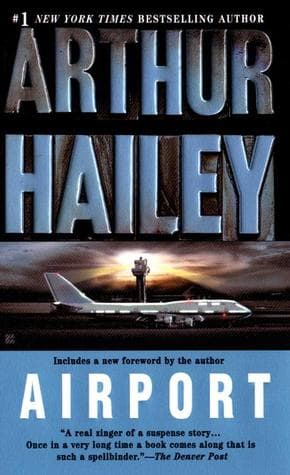
Synopsis
Covers the whole plot, including the ending.
- Difficulty
- Medium
- Pacing
- Variable
- Mood
- Suspenseful, Procedural, Dramatic, Tense
- Read it if
- You enjoy detailed, procedural thrillers set in high-pressure environments, with multiple interwoven storylines and a focus on the mechanics of an industry.
- Skip it if
- You prefer character-driven dramas over plot-heavy narratives, or find extensive technical details tedious.
Airport Plot Summary
Covers the whole plot, including the ending.
The Blizzard Begins
The novel begins on a Friday evening at Lincoln International Airport, a major Chicago hub. A blizzard starts, quickly covering runways and disrupting flight schedules. Mel Bakersfeld, the airport general manager, is already under great pressure. His marriage to Cindy is failing, his work life is a constant fight against rules and public opinion, and now he faces a major operational crisis. He tries to keep the airport open despite worsening conditions and increasing strain on his staff and resources. The weather quickly turns from a problem into a full emergency, with snowplows struggling and visibility dropping low.
Bomber's Motive
Meanwhile, D.O. Guerrero, a failed building contractor facing financial ruin and a breakdown, plans to commit suicide by blowing up a Trans America Airlines Boeing 707, Flight Two, flying to Rome. His goal is for his wife, Inez, to receive a large life insurance payout, as the policy has a double indemnity clause for accidental death. Inez, unaware of his true intentions or the bomb, tries to stop him from boarding, fearing he is having another mental health crisis. Guerrero, however, is set on his plan, driven by a twisted desire to provide for his family.
Flight Two Takes Off
Despite Inez's urgent pleas and the general chaos of the blizzard, D.O. Guerrero boards Trans America Flight Two. He gets past security, carrying a briefcase with a homemade nitroglycerin bomb. Captain Vernon Demerest, Mel Bakersfeld's brother-in-law and an experienced but arrogant pilot, commands Flight Two. Demerest's affair with Gwen Meighen, the chief stewardess on his flight, adds another layer of personal drama. As the plane gets ready to leave, the ground crew, led by Joe Patroni, struggles to clear a path for takeoff in the accumulating snow.
Runway Blockage
A critical event happens on Runway 30, the airport's longest and main runway. A small commuter plane, Global Air 42, piloted by a nervous young captain, goes off the taxiway because of poor visibility and snow. It gets stuck in a snowdrift, blocking the runway. This creates a severe bottleneck, as all other runways are either too short or not properly equipped for large jetliners. Mel Bakersfeld, with help from his operations team, including Tanya Livingston, his sharp assistant, must find a way to move the stranded aircraft quickly and safely. This task is made harder by the blizzard and the size of the equipment needed.
The Bomb Threat Revealed
Inez Guerrero, after failing to stop her husband from boarding, finds a note he left detailing his suicide-bombing plan. Horrified, she immediately contacts airport authorities. News of the bomb threat on Trans America Flight Two reaches Mel Bakersfeld and his team, adding a terrifying new problem to the already critical situation. The FBI is immediately told and takes over the investigation, pressing Mel to find the aircraft and prevent the disaster. The threat forces tense coordination among airport management, airline officials, and federal agents, all racing against time.
Mid-Air Crisis
On Flight Two, Captain Demerest and Gwen Meighen learn about the bomb threat. Gwen, using her calm manner and sharp observation skills, identifies D.O. Guerrero as the likely suspect. She confronts him in the lavatory, where he has locked himself to detonate the bomb. During the struggle, the bomb explodes early, critically injuring Guerrero and blowing a hole in the fuselage, causing a rapid decompression. Gwen is also seriously injured. The aircraft is significantly damaged, but Captain Demerest, despite the chaos and loss of cabin pressure, manages to control the crippled plane.
The Return Attempt
With a large hole in its fuselage and critical systems damaged, Trans America Flight Two must abandon its Rome destination and attempt an emergency return to Lincoln International. Captain Demerest expertly flies the damaged aircraft, while the crew tends to the injured and tries to keep order among the panicked passengers. Back at the airport, Mel Bakersfeld and his team, now fully aware of the damage, prepare for the extremely dangerous landing. The main challenge remains the blocked Runway 30, which must be cleared at all costs to give Flight Two its only viable landing option.
Clearing Runway 30
Joe Patroni, the tough and resourceful maintenance chief, takes charge of the huge task of moving Global Air 42 from Runway 30. Despite the blizzard, the stranded plane's immense weight, and the lack of proper equipment for such a maneuver, Patroni creates a bold plan. He uses a combination of heavy snowplows, tugs, and sheer force, pushing safety limits. The operation is full of danger, with equipment breaking down and time running out as the damaged jetliner approaches. Patroni's determination and cleverness are the only hope for clearing the runway in time.
The Emergency Landing
In a tense sequence, Captain Demerest, against all odds, brings the crippled Trans America Flight Two in for an emergency landing at Lincoln International. The runway has been cleared just in time, thanks to Patroni's heroic efforts. Demerest performs a perfect landing, despite the aircraft's damaged landing gear and compromised control surfaces. Emergency services are ready to help as the plane touches down. The successful landing shows the pilot's skill and nerve and the coordinated efforts of everyone on the ground.
Aftermath and Reflection
In the immediate aftermath, passengers and crew are safely evacuated, and the injured, including Gwen Meighen and the dying D.O. Guerrero, receive medical attention. Mel Bakersfeld reflects on the day's events, the immense pressure, and the human cost. His personal life also changes: his wife, Cindy, begins to understand the demands of his job, and there is hope for their reconciliation. The airport, though scarred, has survived the storm and the crisis, showing the resilience of its staff and the complex workings of modern aviation. The novel ends with a sense of exhausted relief and the ongoing challenges of managing a large international airport.
Principal Figures
Mel Bakersfeld
Protagonist
The dedicated but weary General Manager of Lincoln International Airport.
Mel is a brilliant and highly competent airport manager, deeply committed to his work and the safety of the airport. He is a man of integrity, constantly battling bureaucratic red tape, political pressures, and the relentless demands of his job. This dedication, however, has strained his marriage to Cindy, leading to a sense of isolation and weariness. He is empathetic but also firm, making tough decisions under immense pressure. He embodies the unseen heroes who keep complex systems running.
Relationships: Cindy Bakersfeld (Estranged wife); Vernon Demerest (Brother-in-law); Tanya Livingston (Devoted assistant and potential romantic interest)
Vernon Demerest
Supporting
An arrogant but highly skilled airline captain.
Vernon is Mel Bakersfeld's brother-in-law and a senior captain for Trans America Airlines. He is undeniably an excellent pilot, possessing exceptional skill and nerve, but he is also characterized by his arrogance, self-importance, and infidelity. He is having an affair with Gwen Meighen, the chief stewardess on his flight. Despite his personal flaws, his professional competence is crucial in the face of the mid-air emergency, showcasing a duality of character where personal shortcomings contrast with professional excellence.
Relationships: Mel Bakersfeld (Brother-in-law); Gwen Meighen (Lover and chief stewardess)
Joe Patroni
Supporting
The gruff but ingenious chief of airport maintenance.
Joe Patroni is a larger-than-life character, a tough, no-nonsense, and incredibly resourceful maintenance chief. He is a master problem-solver, often bending rules and pushing limits to get the job done, especially under pressure. His loyalty to Mel Bakersfeld and his commitment to the airport's smooth operation are unwavering. He represents the blue-collar backbone of the airport, demonstrating practical intelligence and sheer will in overcoming seemingly insurmountable mechanical and logistical challenges.
Relationships: Mel Bakersfeld (Boss and respected colleague)
Gwen Meighen
Supporting
The intelligent and courageous chief stewardess.
Gwen is the chief stewardess on Trans America Flight Two and Vernon Demerest's mistress. She is intelligent, highly competent, and possesses remarkable composure under pressure. Despite the emotional complexities of her relationship with Vernon, she maintains her professional integrity. Her quick thinking and bravery are instrumental in identifying D.O. Guerrero and confronting him, ultimately saving many lives, though at great personal cost. She embodies grace under pressure and professional dedication.
Relationships: Vernon Demerest (Lover and captain); D.O. Guerrero (Antagonist, whom she confronts)
D.O. Guerrero
Antagonist
A desperate and mentally unstable man who attempts to bomb a plane.
D.O. Guerrero is a former building contractor driven to financial ruin and mental instability. He plans to blow up Flight Two with himself on board so his family can collect his life insurance, which includes a double indemnity clause for accidental death. He is a tragic figure, consumed by desperation and a distorted sense of responsibility to his family. His actions set the central conflict of the plot in motion, making him the primary antagonist, though his motivations stem from profound personal despair rather than pure malice.
Relationships: Inez Guerrero (Wife); Gwen Meighen (Victim of his bomb)
Cindy Bakersfeld
Supporting
Mel Bakersfeld's estranged wife.
Cindy is Mel's wife, a woman frustrated and lonely due to Mel's overwhelming dedication to his job. She feels neglected and misunderstood, leading to tension and distance in their marriage. Her character highlights the personal sacrifices and strain that come with a demanding career like Mel's. While initially critical and somewhat self-absorbed, the crisis at the airport forces her to gain a deeper understanding of Mel's responsibilities and the immense pressure he operates under.
Relationships: Mel Bakersfeld (Estranged wife)
Inez Guerrero
Supporting
D.O. Guerrero's distraught wife.
Inez is D.O. Guerrero's wife, a woman deeply concerned about her husband's deteriorating mental state. She is initially unaware of his bomb plot, believing he is simply having another breakdown. Her frantic attempts to prevent him from boarding the plane and her eventual discovery of his suicide note are crucial in alerting the authorities to the bomb threat. She is a sympathetic character, a victim of her husband's desperation and the circumstances that drive him to his tragic plan.
Relationships: D.O. Guerrero (Husband)
Tanya Livingston
Supporting
Mel Bakersfeld's efficient and perceptive assistant.
Tanya is Mel Bakersfeld's highly capable and loyal assistant. She is intelligent, efficient, and possesses a keen understanding of airport operations and Mel's work. She often acts as his confidante and sounding board, offering both professional support and personal understanding. There's an underlying current of unspoken affection or admiration between her and Mel, highlighting the emotional bonds formed in high-pressure work environments.
Relationships: Mel Bakersfeld (Boss and close colleague)
Themes & Insights
Human Resilience in Crisis
The novel explores human resilience, showing how people react to extreme pressure and life-threatening situations. Mel Bakersfeld's dedication to keeping the airport open despite the blizzard and bomb threat, Joe Patroni's efforts to clear the runway, and Gwen Meighen's bravery in confronting Guerrero all show this theme. Their ability to adapt, innovate, and perform under stress highlights the strength of the human spirit when facing overwhelming odds. The entire airport staff, from air traffic controllers to snowplow operators, shows remarkable strength.
“'In the final analysis, it was human beings, not machines, who mastered the crisis.”
The Interconnectedness of Modern Systems
Hailey shows the complex and fragile connections of modern technological systems, especially in a large operation like an international airport. The failure of one part – a blizzard, a stalled plane, a bomb – causes many effects across the entire system. The novel details how every department, from maintenance to air traffic control, security, and airline operations, must work together perfectly. The disruption of Runway 30, for instance, has far-reaching consequences for all flights, showing how one point of failure can endanger the entire network. This theme highlights the delicate balance needed to maintain complex infrastructure.
“'An airport, like a human body, was a collection of interdependent systems, and when one failed, others were inevitably affected.”
Personal Sacrifice and Professional Duty
The conflict between personal life and work duty appears often, most clearly in Mel Bakersfeld. His dedication to the airport has greatly strained his marriage, leading to loneliness and misunderstanding with Cindy. Similarly, Vernon Demerest's professional skill is contrasted with his personal infidelity. The novel explores the heavy toll that demanding jobs can take on personal lives and the often-unseen sacrifices made for duty. However, it also suggests that in a crisis, work duty can provide a strong sense of purpose and shared identity.
“'He knew the airport better than he knew his own wife, and sometimes, he suspected, loved it more.”
The Human Element in Technology
While the novel shows advanced aviation technology, it always stresses that human factors – skill, decision-making, courage, and sometimes mistakes – ultimately determine outcomes. Despite advanced aircraft and ground equipment, a pilot's judgment, a maintenance chief's cleverness, a stewardess's bravery, or a desperate man's destructive act drive the story. The blizzard and the bomb are outside forces, but the characters' responses, their strengths and weaknesses, are central to both the crisis and its solution. This shows that technology is just a tool, and human actions remain most important.
“'Machines could be replaced, but human judgment, once lost, was irretrievable.”
Plot Devices & Literary Techniques
Ticking Clock
The relentless pressure of time accelerates the unfolding crisis.
The 'ticking clock' device is central to the novel's thriller aspect. The impending arrival of the damaged Flight Two, coupled with the urgent need to clear Runway 30, creates intense temporal pressure. Every minute counts, amplifying the tension as characters race against time to prevent further disaster. The blizzard itself also functions as a natural ticking clock, constantly worsening conditions and limiting the window for effective action. This device keeps the reader on edge, emphasizing the urgency of each decision and action.
Foreshadowing
Subtle hints and early descriptions hint at future dangers.
Foreshadowing is used to build suspense and hint at the catastrophic events to come. Early descriptions of D.O. Guerrero's erratic behavior and financial desperation, combined with the detailed explanation of his life insurance policy, subtly prepare the reader for his desperate act. Similarly, discussions about runway capacity and the potential for a blocked runway lay the groundwork for the later crisis with Global Air 42. These hints create a sense of impending doom, engaging the reader's anticipation without revealing the full plot too soon.
Red Herring
Misleading clues or suspects divert attention from the real threat.
While not a strong red herring, the initial chaos of the blizzard and the myriad of minor incidents (like the old woman trying to sneak her cat on board, or the minor runway incursions) serve to distract from the truly catastrophic event unfolding with Guerrero. These smaller problems, while real challenges for Mel Bakersfeld, momentarily divert the reader's attention and resources of the airport staff from the hidden, more sinister threat of the bomb, making its revelation more impactful.
Crisis as Catalyst
The central crisis forces characters to confront their personal and professional issues.
The blizzard and the bomb threat act as a powerful catalyst, forcing many characters to confront their personal and professional dilemmas. Mel Bakersfeld's strained marriage is brought into sharper focus, leading to a potential reconciliation. Vernon Demerest's arrogance is put to the ultimate test, requiring him to rely solely on his piloting skills. The crisis strips away superficial concerns, revealing the true character and capabilities of the individuals involved, and often leading to personal growth or resolution.
Airport Quotes
“The airport was a world in itself, a microcosm of human aspirations and anxieties, a place where lives intersected with the speed and unpredictability of a jet stream.”
“There was a special kind of loneliness in an airport, even when surrounded by thousands of people. It was the loneliness of departure, of arrival, of being in transit.”
“Duty was a hard taskmaster, but it was also a shield against the chaos of personal feelings.”
“The best pilots, like the best surgeons, were those who could remain calmest when the unexpected happened.”
“In the air, you were alone. On the ground, you had a thousand people to tell you what to do.”
“Human error, like metal fatigue, was an ever-present, insidious threat.”
“Marriage, he reflected, was a series of small, tactical compromises.”
“A man's worth was often measured not by what he accomplished, but by what he survived.”
“The greatest danger was not knowing what you didn't know.”
“Panic was a contagion, spreading faster than any virus.”
“Every problem had a solution, though sometimes the solution was worse than the problem.”
“The true test of leadership was not in avoiding mistakes, but in recovering from them.”
“Time, in an emergency, seemed to both accelerate and crawl.”
“He understood then that sometimes, the only way to move forward was to let go of the past, even if it meant letting go of a dream.”
Quiz
10 questions on the plot and the characters. Each answer comes with a short explanation.
Question 1
What is the primary natural disaster causing chaos at Lincoln International Airport?
- A severe thunderstorm
- A major earthquake
- A raging blizzard
- A widespread fog bank
Show answer
C. A raging blizzard The book explicitly states that a 'raging blizzard wreaks havoc at Lincoln International Airport', making it the central natural disaster.
Question 2
What is the name of the airport where the main events of the story take place?
- O'Hare International
- Lincoln International
- Midway Airport
- Chicago Metropolitan
Show answer
B. Lincoln International The description clearly names 'Lincoln International Airport outside Chicago' as the setting.
Question 3
How many hours do the primary tense human drama and crisis unfold over?
- Three hours
- Twelve hours
- Seven hours
- Twenty-four hours
Show answer
C. Seven hours The synopsis states, 'Over the course of seven pulse-pounding hours, a tense human drama plays out.'
Question 4
Which of the following character types is NOT explicitly mentioned as striving to avert disaster?
- A brilliant airport manager
- An arrogant pilot
- A seasoned air traffic controller
- A beautiful stewardess
Show answer
C. A seasoned air traffic controller The description mentions 'a brilliant airport manager, an arrogant pilot, a tough maintenance man, and a beautiful stewardess' but does not specifically list an air traffic controller.
Question 5
What is one of the key themes highlighted by the novel, in addition to suspense?
- A critique of corporate greed
- A realistic depiction of the airline industry
- The psychological impact of isolation
- The historical evolution of flight
Show answer
B. A realistic depiction of the airline industry The description states, 'Airport is both a realistic depiction of the airline industry and a novel of nail-biting suspense,' indicating this dual focus.
Question 6
What specifically is 'endangering thousands of lives' during the blizzard?
- A terrorist threat at the airport
- The unstoppable force of nature (blizzard)
- A contagious disease outbreak
- Structural damage to the terminal building
Show answer
B. The unstoppable force of nature (blizzard) The text states the blizzard is 'endangering thousands of lives' as an 'unstoppable force of nature,' directly linking the danger to the weather event.
Question 7
Besides the airport personnel, what other entity is struggling to reach its destination amidst the crisis?
- A convoy of emergency vehicles
- A lone plane in the air
- A train carrying critical supplies
- A group of stranded passengers trying to leave
Show answer
B. A lone plane in the air The summary mentions, 'And in the air, a lone plane struggles to reach its destination,' indicating another critical element of the unfolding drama.
Question 8
The novel features a 'diverse cast of vibrant characters.' Which character archetype is specifically described with a negative trait?
- The airport manager
- The pilot
- The maintenance man
- The stewardess
Show answer
B. The pilot The description identifies 'an arrogant pilot,' making 'arrogant' the specific negative trait mentioned for a character archetype.
Question 9
What is the primary goal of the airport and airline personnel during the blizzard?
- To identify and apprehend a saboteur
- To cope with the blizzard and avert disaster
- To evacuate all passengers immediately
- To secure new funding for airport expansion
Show answer
B. To cope with the blizzard and avert disaster The text states, 'airport and airline personnel try to cope with this unstoppable force of nature... and... strive to avert disaster,' clearly outlining their primary objective.
Question 10
What specific characteristic is attributed to the airport manager in the story?
- Ambitious
- Brilliant
- Ruthless
- Inexperienced
Show answer
B. Brilliant The description explicitly mentions 'a brilliant airport manager' as one of the key characters.
Airport FAQ
What is the central conflict driving the plot of 'Airport'?
The central conflict revolves around Lincoln International Airport's struggle to maintain operations and ensure passenger safety during a severe blizzard. This natural disaster exacerbates existing operational challenges and personal dramas, pushing the airport staff to their limits as they try to avert multiple potential catastrophes.
Who is Mel Bakersfield and what is his primary role?
Mel Bakersfield is the brilliant and dedicated General Manager of Lincoln International Airport. His primary role is to oversee all airport operations, make critical decisions during the blizzard, and manage the diverse personalities and departments under immense pressure to keep the airport functioning and safe.
What significant aerial crisis occurs during the blizzard?
A major aerial crisis involves Trans Global Airlines Flight Two, a Boeing 707 en route to Rome, which experiences a catastrophic explosion due to a passenger's suicide bombing attempt. This incident severely damages the plane and necessitates an emergency return to Lincoln, creating an urgent and dangerous landing situation.
Who is Captain Joe Patroni and what is his expertise?
Captain Joe Patroni is a tough and highly experienced maintenance chief and pilot for Trans Global Airlines. His expertise lies in his intimate knowledge of aircraft mechanics and his exceptional piloting skills, which become crucial when he is tasked with guiding the damaged Flight Two to a safe landing.
What personal struggles does Mel Bakersfield face throughout the novel?
Mel Bakersfield faces significant personal struggles, including his failing marriage to Cindy and his growing attraction to Tanya Livingston, the head of passenger relations. These personal conflicts are interwoven with the professional pressures, highlighting the toll his demanding job takes on his private life.
How does D.O. Guerrero's desperate act connect to the broader themes of the novel?
D.O. Guerrero's desperate act of attempting to blow up Flight Two for insurance money highlights themes of human desperation, the vulnerability of air travel, and the immense pressure individuals can face. His tragic decision serves as a catalyst for the main aerial drama and exposes the security weaknesses of the time.
What is the significance of the stalled snowplow on the runway?
The stalled snowplow, driven by a fatigued worker, is a critical hidden detail that compounds the crisis. It blocks the only usable runway, making the emergency landing of Flight Two even more perilous and forcing Bakersfield and Patroni to improvise under extreme time constraints.
How does the character of Ada Quonsett, the stowaway, contribute to the plot beyond her immediate situation?
Ada Quonsett, the elderly, frequent stowaway, provides a surprising moment of heroism when she alerts flight attendants to Guerrero's suspicious activity, indirectly contributing to the understanding of the explosion's cause. She also offers a touch of comic relief and demonstrates the diverse types of people who pass through an airport.
What role does Tanya Livingston play in the airport's operations and Mel's personal life?
Tanya Livingston is the efficient and compassionate head of Trans Global's passenger relations, responsible for managing thousands of stranded passengers. She becomes a crucial professional ally and a significant personal interest for Mel Bakersfield, representing a potential new beginning amidst his marital woes.
Analyze Mel Bakersfield's leadership style under duress.
Mel Bakersfield exhibits a pragmatic and highly resilient leadership style. He remains calm under immense pressure, makes decisive and often difficult choices, and effectively delegates while also getting directly involved in problem-solving. His ability to weigh risks and prioritize lives over procedure defines his management during the crisis.
How does Captain Joe Patroni's personality influence his actions during the Flight Two emergency?
Captain Joe Patroni's tough, no-nonsense personality and unwavering confidence are crucial during the Flight Two emergency. His deep technical knowledge combined with his assertive demeanor allows him to take charge, inspire trust, and execute an incredibly difficult landing with precision, overcoming extreme odds through sheer will.
Discuss the psychological impact of the blizzard and the crises on the airport staff.
The blizzard and subsequent crises exert immense psychological pressure on the airport staff, leading to fatigue, anxiety, and moments of despair, but also revealing incredible resilience and teamwork. Characters like Mel and Patroni demonstrate how professionals can maintain focus and perform under extreme stress, while others show the human cost of such demands.
How does the novel explore the concept of responsibility?
The novel deeply explores responsibility through multiple characters: Mel Bakersfield's ultimate responsibility for the airport, Captain Demerest's responsibility for his aircraft, and D.O. Guerrero's tragic responsibility for his actions. It showcases the weight of duty and the moral dilemmas faced when lives are at stake, highlighting the personal and professional burdens.
Is 'Airport' primarily a story about human triumph over nature, or human fallibility?
'Airport' is arguably a blend of both. While it celebrates human triumph in the face of a brutal blizzard and a catastrophic aircraft incident through the heroism of characters like Patroni and Bakersfield, it also profoundly explores human fallibility through D.O. Guerrero's desperate act and the operational oversights that contribute to the escalating crises.
How does the novel portray the airline industry of its time?
The novel portrays the airline industry as a complex, highly interdependent system filled with dedicated professionals, but also susceptible to natural forces, human error, and security vulnerabilities. It highlights the intricate coordination required for daily operations and the immense pressures faced by those who keep it running, offering a realistic, behind-the-scenes look.
What is the ultimate message regarding the balance between technology and human element in air travel?
The novel suggests that while technology is advanced and crucial, the human element remains paramount. The blizzard and the bombing expose technology's limitations, while the ingenuity, courage, and quick thinking of individuals like Mel Bakersfield and Joe Patroni ultimately avert greater disaster, emphasizing that human skill and judgment are irreplaceable.
Does the ending offer a sense of resolution for all characters, or are some left with lingering issues?
While the immediate crisis of Flight Two is resolved, the ending leaves some characters with lingering issues. Mel Bakersfield's marriage is likely beyond repair, though he finds a potential new path with Tanya. The airport faces immense cleanup and recovery. The resolution is primarily professional, with personal futures remaining somewhat open-ended.
About the author
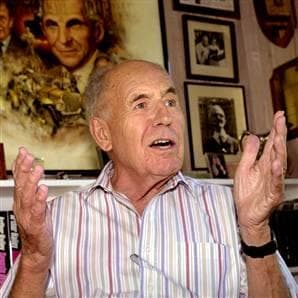
Arthur Hailey was a British-Canadian novelist renowned for his meticulously researched, fast-paced thrillers often set in specific industries. His major works, including 'Airport,' 'Hotel,' and 'Strong Medicine,' became international bestsellers, captivating readers with their detailed portrayals of complex professional environments and gripping narratives.
Similar books
- The Andromeda Strain
Michael Crichton
3.9 (223k) average on GoodreadsThrillerFeatures a detailed, procedural plot with a focus on a contained crisis and scientific/technical accuracy.
- Hotel
Arthur Hailey
4.0 (13k) average on GoodreadsThrillerAnother Arthur Hailey novel known for its intricate look into an industry (hotel management) with multiple character arcs and a central crisis.
- Jaws
Peter Benchley
4.0 (137k) average on GoodreadsThrillerBenchley's 'Jaws' (1974) is another iconic thriller that pits humans against a natural, external threat. Both novels excel at building suspense and exploring how a crisis impacts a community and its leaders. However, 'Jaws' has a tighter focus on a smaller cast of protagonists (Brody, Hooper, Quint) and a more singular, monstrous antagonist. 'Airport' is more sprawling, dealing with multiple internal and external threats (blizzard, bomber, operational failures) and a much larger cast, showcasing a broader tapestry of human responses within a massive, interconnected system. While 'Jaws' explores primal fears, 'Airport' taps into anxieties about technological failure and complex human systems.
- Angels & Demons
Dan Brown
3.9 (2.7M) average on GoodreadsThrillerA Harvard symbologist races through Rome's ancient sites, deciphering cryptic clues to unmask the Illuminati and stop a vengeful plot to destroy the Vatican with a stolen antimatter weapon.
- Gone Girl
Gillian Flynn
4.1 (2.3M) average on GoodreadsThrillerA wife's sudden disappearance on her fifth anniversary reveals a web of lies and psychological warfare, exposing the secrets within a seemingly perfect marriage.
- The Girl on the Train
Paula Hawkins
3.9 (2.1M) average on GoodreadsThrillerA woman’s fascination with a seemingly perfect couple she watches from her daily train commute leads her into a dark investigation when she witnesses something that shatters their idyllic image.






Enjoyed the summary?
A summary gives you the shape of the book. The book itself has the detail, the examples and the voice.
Find Airport on AmazonAs an Amazon Associate, BookBrief earns from qualifying purchases. How we're funded