
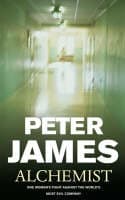
Synopsis
Covers the whole plot, including the ending.
- Difficulty
- Medium
- Pacing
- Variable
- Mood
- Suspenseful, Terrifying, Dark, Mysterious
- Read it if
- You enjoy supernatural thrillers with a historical mystery, demonic entities, and a race against time.
- Skip it if
- You dislike horror elements, demonic possession, or stories with a strong supernatural focus.
Alchemist Plot Summary
Covers the whole plot, including the ending.
The Discovery of the Manuscript
Dr. Richard Anderson, a talented but disgraced archaeologist, leads a team excavating an ancient monastery in the Carpathian Mountains. His funding is low, and his career is in jeopardy. They find a hidden chamber with a well-preserved, centuries-old manuscript. The text is in an old code, hinting at alchemical secrets and a dark past. Anderson is drawn to deciphering its contents, believing it will save his academic reputation.
The First Translation and Disturbing Visions
Richard starts translating 'The Book of Azazel.' As he reads its passages about alchemical processes, spiritual rituals, and strange prophecies, he experiences disturbing psychological events. He has vivid, terrifying nightmares and sees fleeting shadows. He first dismisses these as stress, unaware of the ancient text's influence on his mind and surroundings.
A Series of Unexplained Accidents
The excavation site becomes tense as a series of horrifying accidents affect Richard's team. A worker falls to his death, a research assistant dies in a rockslide, and another gets a severe, unexplained illness. Authorities are baffled, but Richard sees a link between these events and the manuscript. He notices a pattern: those near the book, or skeptical of its power, seem most at risk.
The Arrival of Dr. Sarah Miller
Concerned by the deaths, Richard's university sends Dr. Sarah Miller, an expert in ancient languages, to assist and investigate. Sarah is practical and rational, initially dismissing Richard's paranoia as delusion. She finds the manuscript rare but views it only as an academic artifact. Her arrival creates tension with Richard, who struggles between scientific skepticism and the terrifying reality unfolding.
Sarah's Encounters with the Unexplained
Despite her initial doubts, Sarah begins to experience unsettling events. She hears whispers, sees objects move, and feels a heavy, malevolent presence near the manuscript. One night, she has a terrifying hallucination of grotesque figures from the book's illustrations. These experiences force her to consider that something beyond science is happening. Her rational view crumbles, and she realizes Richard's warnings were true.
Unveiling the Alchemist's Purpose
Working together, Richard and Sarah decipher more of 'The Book of Azazel.' They learn it is not just an alchemical text, but a grimoire for summoning and binding Azazel, a powerful ancient entity. The original alchemist, a mad zealot, tried to use Azazel's power for immortality but failed, leaving an incomplete ritual in the manuscript. They realize the entity is not dormant but has been gaining strength, feeding on fear and death, preparing to fully manifest.
The Monastery's Dark History
Through more research and local stories, Richard and Sarah discover the monastery's dark past. It was built on an ancient pagan site, known for its powerful ley lines and as a place of sacrifice. The monks, trying to purify the land, accidentally attracted and trapped the entity the alchemist later sought to control. The monastery's location and structure were meant to contain, but also empower, the malevolent presence that had been dormant for centuries, now awakened by the manuscript.
The Entity's Escalating Influence
As Richard and Sarah work to stop the entity, Azazel's influence grows stronger. Attacks become more direct and personal. They experience violent poltergeist activity and terrifying apparitions. Azazel tries to possess people, including their remaining team members, turning them against Richard and Sarah. The entity tries to manipulate their fears and doubts, hoping to divide them and weaken their resolve, knowing their combined intellect is its biggest threat.
The Race to Complete the Counter-Ritual
Realizing normal methods will not work, Richard and Sarah look for a counter-ritual in the manuscript or related texts. They find fragmented passages hinting at a way to banish Azazel, but the information is cryptic and dangerous. The ritual requires specific items, done at a precise time and place in the monastery, with significant personal risk. They must decipher the remaining clues while fighting Azazel's increasingly powerful attempts to stop them from completing the counter-ritual and sealing it away.
The Climactic Confrontation
The climax occurs in the heart of the ancient monastery, where the manuscript was found, during a powerful storm. Richard and Sarah, with their knowledge and desperate resolve, begin the counter-ritual. Azazel fully manifests, a terrifying, formless entity of pure evil, unleashing its power to stop them. The monastery seems to come alive, walls crumbling, ancient symbols glowing with dark energy. Richard and Sarah must perform the ritual perfectly, battling Azazel's physical and psychological attacks. One mistake means their death and the unleashing of evil on the world.
The Sealing and Its Aftermath
With their intellect, courage, and a last-minute sacrifice by a loyal team member, Richard and Sarah complete the counter-ritual. With a blinding flash and a roar, Azazel is banished, receding into the shadows, sealed again within the monastery. The damaged building falls silent. Richard and Sarah survive, but they are changed, bearing deep psychological scars. The manuscript is re-sealed and hidden, its secrets guarded, ensuring it can never again unleash such terror.
Alchemist Characters
Dr. Richard Anderson
Protagonist
A disgraced archaeologist seeking redemption, drawn into a supernatural nightmare.
Richard is a brilliant but emotionally guarded archaeologist, whose career was derailed by a scandal involving falsified findings. He is driven by a desperate need for academic redemption, which makes him initially blind to the supernatural dangers of the manuscript. He possesses a keen intellect and a stubborn determination, but also a deep-seated scientific skepticism that is severely tested by the events unfolding around him. He struggles with guilt over his past and a growing fear for his own sanity.
Relationships: Dr. Sarah Miller (Initially professional and skeptical, evolving into a trusting, collaborative partnership against a common enemy.); Azazel (The primary antagonist; Richard is initially its unwitting liberator, then its primary target and eventual opponent.)
Dr. Sarah Miller
Supporting
A pragmatic linguist whose rational worldview is shattered by the supernatural.
Sarah is a highly respected and rational linguist and expert in ancient religious texts. She is initially dismissive of Richard's growing fears, approaching the manuscript purely from an academic, scientific perspective. She is intelligent, observant, and possesses a strong will. Her journey is one of profound internal conflict as she witnesses undeniable evidence of the supernatural, forcing her to question everything she believes. She provides a crucial counterbalance to Richard's initial obsession.
Relationships: Dr. Richard Anderson (Initially a professional associate and skeptic of Richard's claims, evolving into a trusting, collaborative partner and intellectual equal.); Azazel (An entity she initially disbelieves, then becomes a direct target of, and ultimately helps to defeat.)
Azazel
Antagonist
An ancient, malevolent entity seeking liberation and dominion, bound within the manuscript.
Azazel is not a physical being in the traditional sense, but an ancient, powerful, and purely malevolent entity, a demonic intelligence associated with alchemy and dark rituals. It has been imprisoned for centuries within 'The Book of Azazel' and the monastery itself. It feeds on fear, death, and negative energy, slowly gaining strength as the manuscript is translated and its secrets are revealed. Its ultimate goal is complete liberation from its prison to wreak havoc upon the world. It manipulates, possesses, and terrorizes its victims, operating through psychological torment and physical manifestation.
Relationships: Dr. Richard Anderson (Views Richard as a pawn who inadvertently frees it, then as its primary obstacle.); Dr. Sarah Miller (Sees Sarah as another obstacle to its freedom, attempting to corrupt or destroy her.)
Professor Elias Thorne
Supporting
Richard's former mentor, now a distant and skeptical academic authority.
Professor Thorne is Richard's former mentor and a highly respected figure in the archaeological community. He holds a position of authority at the university funding Richard's excavation. He is initially supportive of Richard's work but grows increasingly concerned by the mounting accidents and Richard's increasingly erratic behavior. Thorne represents the rigid, rational academic establishment, struggling to reconcile the strange reports from the monastery with his scientific worldview. He sends Sarah Miller to investigate, hoping to bring order and reason to the chaotic situation.
Relationships: Dr. Richard Anderson (Mentor and former advocate, now a cautious superior overseeing Richard's project.); Dr. Sarah Miller (Colleague and trusted expert, dispatched by Thorne to assess the situation.)
Mihai
Supporting
A local foreman at the excavation site, steeped in local superstitions.
Mihai is the Romanian foreman of the local laborers at the excavation site. He is a practical man, but also deeply superstitious, having grown up with the local legends and folklore surrounding the monastery and the surrounding mountains. He is the first to sense that something is profoundly wrong, attributing the accidents to ancient curses or malevolent spirits. His warnings are initially dismissed, but as events escalate, his knowledge of local traditions proves surprisingly insightful, offering clues that the academics overlook.
Relationships: Dr. Richard Anderson (Employee and local guide, whose warnings are initially ignored.); Azazel (A victim of its malevolent influence, succumbing to its power.)
The Alchemist (Historical Figure)
Mentioned
The ancient creator of 'The Book of Azazel,' whose ambition unleashed the entity.
The Alchemist is a historical figure, a mad genius from centuries past who discovered the existence of Azazel and sought to harness its power for his own nefarious ends – immortality and ultimate dominion. He meticulously crafted 'The Book of Azazel' as a grimoire, detailing the rituals for summoning and binding the entity. His ambition ultimately led to his downfall, and he left the incomplete ritual, along with the bound entity, within the manuscript. His legacy is the terror that Richard and Sarah must now confront.
Relationships: Azazel (The original summoner and attempted enslaver of the entity, ultimately failing to control it.)
Alchemist Themes
The Peril of Forbidden Knowledge
The main theme is the danger of pursuing knowledge humanity is not meant to have. Dr. Anderson's ambition to decipher 'The Book of Azazel' for academic fame accidentally releases an ancient evil. The manuscript itself represents this forbidden knowledge, a text promising power but bringing destruction. The story shows that some secrets are best left buried, as the translation of the text directly leads to more supernatural events and deaths.
“There are some doors that, once opened, can never be truly closed.”
The Conflict Between Science and Superstition (or the Supernatural)
The novel explores the conflict between rational, scientific understanding and inexplicable supernatural forces. Richard and Sarah, both educated academics, initially dismiss strange events as coincidences or stress. But as the entity's manifestations become undeniable, their scientific views are shattered. The story shows the limits of purely rational thought when faced with forces beyond human understanding. Mihai, the superstitious local foreman, serves as a contrast; his early warnings, based on folklore, prove more accurate than the academics' initial skepticism.
“We seek to categorize and explain, but some things simply defy our neat little boxes.”
Redemption and Responsibility
Richard Anderson's story is about redemption. Disgraced and trying to save his career, his first reason for finding the manuscript is selfish. However, as he understands the horror he has unleashed, his focus shifts from personal gain to a desperate responsibility to contain the evil. This change shows how extreme adversity can make people confront past mistakes and strive for a greater purpose. His desire for redemption becomes tied to his responsibility to protect humanity from Azazel.
“It wasn't about proving myself anymore. It was about stopping what I'd started.”
The Insidious Nature of Evil
Azazel is not a creature of brute force but an entity that uses psychological manipulation, fear, and corruption. Its influence is subtle, slowly eroding the sanity and trust among the characters before physical manifestations occur. The evil it represents is ancient and patient, feeding on the negative emotions and weaknesses of its victims. This slow, creeping dread is more terrifying than overt violence, as it undermines the characters' sense of reality and self, making them question their own minds and each other.
“True darkness doesn't always roar; sometimes, it whispers in the quietest corners of your mind.”
Plot Devices & Literary Techniques
The Accursed Manuscript ('The Book of Azazel')
The central artifact that triggers and contains the supernatural threat.
This ancient, coded text is the primary catalyst for all the events in the novel. It functions as a grimoire, containing the rituals to summon and bind Azazel. Its very presence and translation act as a key, slowly unlocking the entity's power. It also serves as a source of both peril and potential salvation, as the counter-ritual is also hidden within its pages or related texts. The manuscript is not merely a book; it is a prison and a conduit for the malevolent force.
The Remote Monastery Setting
An isolated, ancient location that enhances dread and serves as the entity's prison/locus of power.
The dilapidated monastery in the Carpathian Mountains provides an ideal setting for a horror thriller. Its isolation cuts the characters off from outside help, amplifying their sense of vulnerability. Its ancient history, built on a pagan site and later used to contain the entity, makes it a powerful locus for supernatural activity. The labyrinthine ruins, hidden chambers, and sense of forgotten time contribute to the oppressive atmosphere and provide the perfect stage for the entity's manifestations and the final confrontation.
Psychological Manipulation and Hallucinations
The entity's primary method of attack, eroding the characters' sanity.
Azazel primarily attacks its victims not through physical force, but by preying on their minds. It induces terrifying hallucinations, vivid nightmares, and sows seeds of doubt and paranoia among the characters. This psychological warfare is crucial for building suspense and dread, as it makes the characters question their own sanity and the reality of what they are experiencing. It weakens their resolve and isolates them, making them more susceptible to the entity's ultimate goal of possession and liberation.
The Slowly Unveiling Mystery
Information about the entity and its weaknesses is revealed gradually.
The narrative structure relies heavily on a slow, methodical unveiling of the mystery surrounding Azazel and its origins. Richard and Sarah piece together clues from the manuscript, local folklore, and historical records. This gradual revelation builds suspense, as each new piece of information makes the threat more terrifying and the stakes higher. It also provides a sense of intellectual challenge for the characters, as they race against time to understand their enemy before it fully manifests.
Alchemist Quotes
“The past is a ghost, the future a dream, and all we ever have is now.”
“Every man has a secret he guards, and every secret has a price.”
“Sometimes the greatest dangers are the ones you invite in yourself.”
“Justice isn't always about the law, sometimes it's about making things right.”
“Fear is a powerful motivator, but it can also be a blinding one.”
“The truth is rarely simple, and often, it's the last thing people want to hear.”
“There are some shadows even the brightest light can't dispel.”
“Revenge is a dish best served cold, but it often leaves a bitter taste.”
“The line between genius and madness is often blurred, especially when obsession takes hold.”
“Sometimes the only way to escape your past is to face it head-on.”
“Trust is a fragile thing, easily broken and almost impossible to fully mend.”
“The greatest lies are often told with the most sincere intentions.”
“Every lock has a key, and every secret has a way of coming out.”
“The world is full of monsters, and not all of them hide in the dark.”
“Sometimes the most dangerous weapon is the one you never see coming.”
Quiz
10 questions on the plot and the characters. Each answer comes with a short explanation.
Question 1
Which ancient text does forensic psychologist Dr. Alex Delaware discover hidden within the walls of the old house, providing a crucial clue?
- A Latin translation of 'De Alchemia'
- A medieval grimoire on demonology
- An illuminated manuscript of the Bible
- A collection of ancient Roman medical texts
Show answer
A. A Latin translation of 'De Alchemia' Dr. Alex Delaware finds a Latin translation of 'De Alchemia' hidden in the walls, a text central to the alchemical themes and the killer's motives.
Question 2
What is the name of the reclusive, eccentric old woman who lives next door to the house where the murders occur and holds vital information?
- Agnes Periwinkle
- Eleanor Vance
- Dorothea Finch
- Matilda Hayes
Show answer
C. Dorothea Finch Dorothea Finch is the reclusive neighbor who possesses crucial historical context about the house and its former occupants.
Question 3
What is the primary motivation behind the killer's gruesome experiments, according to their twisted interpretation?
- To achieve immortality through blood transfusion
- To create the 'Philosopher's Stone' using human essence
- To resurrect a loved one through forbidden rituals
- To purify the human soul through extreme suffering
Show answer
B. To create the 'Philosopher's Stone' using human essence The killer's actions are driven by a deranged belief in achieving the Philosopher's Stone, not through metallurgy, but through the 'purification' of human essence.
Question 4
Which character is initially suspected due to their expertise in obscure historical texts and their secretive nature?
- Milo Sturgis, the detective
- Dr. Leslie Chen, the pathologist
- Professor Alistair Thorne, an academic
- Robin Castagna, Alex's girlfriend
Show answer
C. Professor Alistair Thorne, an academic Professor Alistair Thorne, with his deep knowledge of ancient texts and somewhat reclusive demeanor, becomes an early suspect for Alex and Milo.
Question 5
What distinct physical characteristic of the victims' bodies initially baffles the forensic team?
- Their organs are perfectly preserved, almost mummified.
- Their skin is unusually pale and covered in strange symbols.
- Their bodies show evidence of having been drained of a specific fluid.
- They appear to have aged rapidly post-mortem.
Show answer
C. Their bodies show evidence of having been drained of a specific fluid. The victims' bodies show signs of having been systematically drained of a specific bodily fluid, leading the investigators to suspect a ritualistic or alchemical motive.
Question 6
What is the hidden room in the old house primarily used for by the killer?
- A clandestine drug laboratory
- An interrogation chamber for victims
- A ritualistic alchemy laboratory
- A secret bunker for hiding evidence
Show answer
C. A ritualistic alchemy laboratory The hidden room is revealed to be a meticulously set up, albeit gruesome, laboratory where the killer performs their twisted alchemical experiments.
Question 7
Which historical figure's alchemical writings are heavily referenced and misinterpreted by the killer?
- Isaac Newton
- Paracelsus
- Nicolas Flamel
- Roger Bacon
Show answer
B. Paracelsus The killer draws heavily, and erroneously, from the writings of Paracelsus, particularly his theories on the human body and vital essences, to justify their horrifying acts.
Question 8
What specific item found near one of the victims links the present-day murders to a historical event in the house?
- An antique silver locket with a family crest
- A fragment of a handwritten letter from the 18th century
- A unique, hand-carved wooden doll
- A discarded, historically significant medical instrument
Show answer
B. A fragment of a handwritten letter from the 18th century A fragment of an old letter found near a victim helps connect the current crimes to a dark history involving the house's previous occupants and their alchemical obsessions.
Question 9
What is the significance of the recurring symbol of the Ouroboros in the killer's macabre work?
- It represents the killer's desire for eternal youth.
- It symbolizes the cyclical nature of life and death, and the 'perfection' sought in alchemy.
- It is a personal emblem of the killer's secret society.
- It serves as a warning to those who might uncover their activities.
Show answer
B. It symbolizes the cyclical nature of life and death, and the 'perfection' sought in alchemy. The Ouroboros, an ancient symbol of a serpent eating its own tail, is used by the killer to represent the alchemical pursuit of perfection, eternity, and the cyclical transformation of matter.
Question 10
Who is Dr. Alex Delaware's long-term girlfriend, who often provides emotional support and a grounding perspective?
- Petra Connor
- Robin Castagna
- Terry Gault
- Claire Delaware
Show answer
B. Robin Castagna Robin Castagna is Alex Delaware's long-term girlfriend, a successful musician and luthier, who frequently appears in the series and offers Alex stability.
Alchemist FAQ
What is the core premise of Peter James' 'Alchemist'?
'Alchemist' centers on Dr. John Hargreaves, a brilliant but disgraced scientist who develops a revolutionary drug intended to cure all diseases and reverse aging. However, his experimental breakthrough takes a terrifying turn when the subjects begin to exhibit monstrous side effects, transforming into predatory, bloodthirsty creatures with an insatiable hunger for human flesh. The novel explores the catastrophic consequences of unchecked scientific ambition.
Who is Dr. John Hargreaves and what motivates his research?
Dr. John Hargreaves is a disgraced geneticist, ostracized from the scientific community after a scandal involving unethical animal testing. His primary motivation stems from a profound desire to regain his former glory and prove his genius, coupled with a desperate hope to find a cure for his own terminal illness. This personal desperation drives him to increasingly extreme and dangerous experiments.
What role does Dr. Elizabeth Fane play in the unfolding disaster?
Dr. Elizabeth Fane is a former colleague and love interest of Dr. Hargreaves, who initially dismisses his claims but later becomes instrumental in uncovering the horrific truth about his experiments. She represents the ethical counterpoint to Hargreaves' ambition, tirelessly working to understand and contain the rapidly escalating biological threat. Her scientific acumen is crucial to the investigation.
What are the primary 'alchemical' transformations witnessed in the book?
The 'alchemical' transformations in the book refer to the rapid and grotesque biological changes induced by Hargreaves' drug, known as 'Vitae.' Subjects experience accelerated cellular regeneration that mutates them into monstrous, super-strong, and highly aggressive entities with sharp claws and teeth. These transformations also confer extreme resilience and an insatiable predatory instinct, making them incredibly difficult to stop.
Where does the story primarily take place?
The story primarily unfolds in a secluded, high-tech laboratory hidden beneath a remote country estate, where Dr. Hargreaves conducts his experiments in secret. As the creatures escape, the setting expands to include the surrounding rural areas and eventually threatens nearby towns, escalating the scale of the horror from an isolated incident to a potential regional catastrophe. The isolated lab serves as a breeding ground for terror.
Are there any subtle foreshadowing elements regarding the drug's true nature early on?
Yes, there are subtle hints, such as the initial test subjects (animals) exhibiting unusual aggression and accelerated growth, which Hargreaves dismisses as minor side effects. Additionally, his obsession with 'perfecting' the formula, rather than simply curing, suggests an underlying hubris that foreshadows the uncontrolled power of the drug. These early warning signs are often overlooked by Hargreaves in his single-minded pursuit.
What is the significance of Hargreaves' terminal illness beyond just motivation?
Hargreaves' terminal illness serves as a crucial plot device, pushing him to test the drug on himself, believing it to be his only salvation. This act directly leads to his own monstrous transformation, ironically turning him into the very thing he unleashed. It highlights the ultimate hubris and tragic irony of his quest, as he becomes a victim of his own creation. His personal stake deepens the horror.
Is there a governmental or corporate conspiracy element at play, or is it purely Hargreaves' solo venture?
While Hargreaves' initial experiments are a solo venture, the novel hints at shadowy government agencies becoming involved once the threat escalates beyond containment. There's a subtle implication that such powerful biological agents could be weaponized, adding a layer of political intrigue and a larger, more dangerous potential future for such research. This suggests a broader world of potential misuse.
How does Dr. Hargreaves' past disgrace influence his decision-making throughout the novel?
Hargreaves' past disgrace fuels his desperation and blinds him to ethical boundaries, making him increasingly reckless. He views his new research as his last chance at redemption, leading him to ignore warning signs and bypass crucial safety protocols. His wounded ego overrides caution, contributing directly to the catastrophic outcomes of his experiments. This past trauma shapes his present actions.
Analyze the psychological impact of the transformations on the victims, particularly Hargreaves himself.
The transformations are psychologically devastating. Initially, victims experience confusion and terror as their bodies betray them, followed by an overwhelming, primal hunger that eclipses their humanity. For Hargreaves, his transformation is a horrifying realization of his own monstrous ambition, turning his intellect into a tool for pure survival and predation, stripping him of his identity and any semblance of his former self. It's a descent into an animalistic state.
How does Dr. Elizabeth Fane cope with the moral dilemmas presented by Hargreaves' work?
Dr. Elizabeth Fane grapples with profound moral dilemmas, torn between her scientific curiosity, her past affection for Hargreaves, and her strong ethical compass. She is forced to confront the horrific consequences of scientific hubris and ultimately chooses to prioritize humanity's safety over preserving any remnants of Hargreaves' legacy or protecting him, even if it means destroying his life's work. Her struggle highlights the cost of responsibility.
What psychological elements make the creatures so terrifying beyond their physical attributes?
Beyond their physical prowess, the creatures are terrifying due to their loss of humanity and their relentless, primal hunger. The knowledge that these were once human beings, now reduced to savage predators, is deeply disturbing. Their lack of reason, coupled with their single-minded pursuit of prey, creates an unstoppable force of nature, preying on fundamental human fears of loss of control and identity. They represent a perversion of life.
Is 'Alchemist' primarily a cautionary tale about genetic engineering, or does it explore broader themes?
'Alchemist' is undoubtedly a cautionary tale about the perils of unchecked genetic engineering and scientific hubris, but it also delves into broader themes. It explores the blurred lines between genius and madness, the corrupting influence of ambition, and humanity's inherent desire for immortality and perfection, often at a terrible cost. The novel questions the very definition of humanity when faced with radical biological alteration.
How does the ending of 'Alchemist' leave room for debate or future possibilities?
The ending of 'Alchemist' is deliberately ambiguous regarding the complete eradication of the threat. While the immediate danger is contained, there are lingering questions about whether all the mutated creatures were destroyed, or if samples of the 'Vitae' drug could still exist. This open-endedness leaves room for debate on the permanence of humanity's victory and the potential for a recurrence, suggesting that such scientific Pandora's Boxes are never truly closed. It hints at the enduring nature of the problem.
Could the 'Alchemist' be interpreted as a modern Frankenstein story?
Yes, 'Alchemist' shares significant thematic parallels with 'Frankenstein.' Dr. Hargreaves, like Victor Frankenstein, is a brilliant scientist driven by ambition to create life (or prolong it indefinitely) through radical means, only for his creation to become a monstrous threat that he cannot control. Both stories explore the tragic consequences of scientists playing God and the horror that arises when scientific pursuit overshadows ethical responsibility and foresight. The creation turns on its creator.
What is the novel's stance on the ethics of 'playing God' with human biology?
The novel takes a decidedly critical stance on 'playing God' with human biology, portraying the consequences as catastrophic and morally reprehensible. Through Hargreaves' downfall and the horrific transformations, the book argues that there are boundaries in scientific experimentation that should not be crossed, especially when it involves fundamentally altering life itself. It serves as a stark warning against hubris and the pursuit of power over nature. The narrative champions ethical restraint.
Is there a specific moment where Dr. Hargreaves could have stopped but didn't?
A crucial moment is when the animal test subjects exhibit severe, unexpected aggression and mutations. Dr. Hargreaves, instead of halting his research and re-evaluating, rationalizes these disturbing results as mere 'anomalies' or 'unforeseen side effects' that can be perfected away. His refusal to acknowledge these clear warning signs, driven by his desperation and ambition, represents a critical point of no return where he could have prevented the subsequent human tragedies. He actively chooses to ignore the red flags.
How does the pacing contribute to the 'terror and suspense' described?
The pacing in 'Alchemist' is expertly crafted to build terror and suspense. It begins with a slow burn, gradually revealing the disturbing nature of Hargreaves' experiments, before accelerating into a relentless, high-stakes chase as the creatures escape and multiply. Short, intense chapters focusing on the victims' perspectives, interspersed with the scientific investigation, create a sense of urgency and dread, culminating in a breathless fight for survival. The escalating threat mirrors the increasing speed of the narrative.
About the author

Peter James is a British author known for his work in fiction, particularly in the thriller genre. His notable books include "Denial," which explores themes of truth and deception, "Alchemist," a story intertwining mystery and adventure, and "Host," which delves into suspenseful narratives. James has gained recognition for his engaging storytelling and complex characters.
Similar books
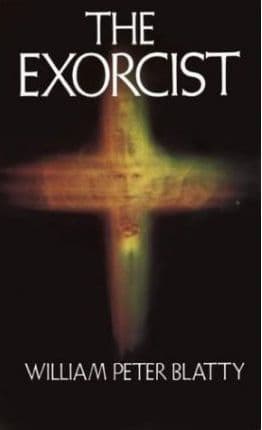
- The Exorcist
William Peter Blatty
4.2 (181k) average on GoodreadsThrillerFeatures demonic possession and a battle against a powerful evil entity.
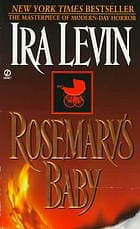
- Rosemary's Baby
Ira Levin
4.0 (112k) average on GoodreadsThrillerInvolves a slow-burn supernatural horror with a growing sense of dread.
- The Haunting of Hill House
Shirley Jackson
3.8 (162k) average on GoodreadsThrillerSimilar in its slow-burn dread and atmospheric horror, focusing on psychological impact and unsettling supernatural occurrences rather than overt gore. Jackson's work, however, is often cited by literary critics like Harold Bloom for its unparalleled psychological depth and ambiguity, which 'Alchemist' doesn't quite reach, opting for a more direct narrative resolution.
- The Stand
Stephen King
4.3 (616k) average on GoodreadsThrillerBoth novels involve a large-scale confrontation with an ancient, malevolent entity and a race against time. King's The Stand is known for its epic scope and prolonged, desperate struggle against evil, particularly in its extended edition. 'Alchemist' shares the sense of urgency and a clear antagonist but concludes its climactic confrontation more swiftly, lacking the sprawling, drawn-out battle that characterizes King's magnum opus.
- Angels & Demons
Dan Brown
3.9 (2.7M) average on GoodreadsThrillerA Harvard symbologist races through Rome's ancient sites, deciphering cryptic clues to unmask the Illuminati and stop a vengeful plot to destroy the Vatican with a stolen antimatter weapon.
- Gone Girl
Gillian Flynn
4.1 (2.3M) average on GoodreadsThrillerA wife's sudden disappearance on her fifth anniversary reveals a web of lies and psychological warfare, exposing the secrets within a seemingly perfect marriage.




Enjoyed the summary?
A summary gives you the shape of the book. The book itself has the detail, the examples and the voice.
Find Alchemist on AmazonAs an Amazon Associate, BookBrief earns from qualifying purchases. How we're funded