
Synopsis
Covers the whole plot, including the ending.
- Difficulty
- Medium
- Pacing
- Moderate
- Mood
- Atmospheric, Mysterious, Introspective, Melancholy, Hopeful
- Read it if
- You enjoy atmospheric, character-driven stories with a touch of magical realism, exploring themes of family, self-discovery, and the human condition.
- Skip it if
- You prefer fast-paced plots with clear-cut fantasy systems or straightforward resolutions to magical problems.
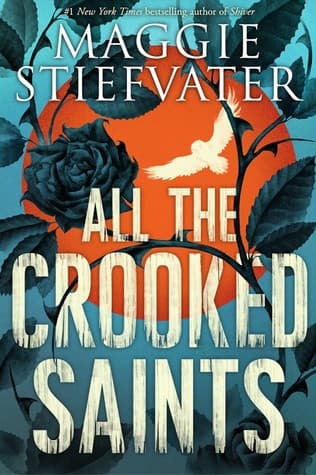
All the Crooked Saints Plot Summary
Covers the whole plot, including the ending.
The Soria Family and the Desert Saints
Bicho Raro, Colorado, is a remote desert town where the Soria family has lived for generations. They have a unique and difficult tradition: they can perform miracles, but these miracles always leave a 'dark saint' behind, a physical sign of the supplicant's inner darkness. To become whole again, the supplicant must resolve their own darkness. The Soria family members also have their own internal struggles. Daniel Soria, the current 'Saint of Bicho Raro,' performs many miracles but cannot perform one for himself. His cousin, Beatriz Soria, is a smart but unemotional girl, always trying to understand her lack of feelings. Their other cousin, Joaquin Soria, secretly runs a pirate radio station as Diablo Diablo, broadcasting the town's strange tales and his own worries.
Pete and the Radio Broadcast
Pete, a young man with a mysterious past and his own dark saint—a physical sign of his past mistakes—arrives in Bicho Raro. He was drawn to the town by Joaquin's Diablo Diablo radio broadcasts, which hinted at the town's miraculous nature. Pete has been wandering, looking for a way to resolve his own darkness, which feels like a constant, heavy presence. He immediately senses the strange energy of Bicho Raro and the Soria family. His arrival, while seeming like a coincidence, starts a series of events that will challenge the Soria family's traditions and the town's understanding of miracles.
Beatriz's Experiments and Daniel's Burden
Beatriz, interested in how Soria miracles work and her own emotional emptiness, begins to observe Pete and his dark saint with scientific curiosity, hoping to understand the phenomena. She sees miracles as a puzzle to solve, not a spiritual act. Meanwhile, Daniel is overwhelmed by constant requests for miracles from townspeople and visitors. He feels trapped by his role as the Saint, unable to help himself or find personal satisfaction. His miracles, while helping others, only seem to increase his own sense of isolation and tiredness, as he takes on the suffering he sees.
Joaquin's Confessions and the Town's Secrets
Joaquin, through his Diablo Diablo broadcasts, offers a unique view into Bicho Raro's strange world. He interviews townspeople, shares his own worries, and speculates on the nature of Soria miracles, often accidentally revealing deeper truths about the community and his family. His radio show becomes a confessional for the town, allowing its oddities and hidden pains to surface. He struggles with his own identity and purpose, feeling overshadowed by Daniel's saintly role and Beatriz's intelligence. His broadcasts are a way to exert his own influence and find his voice among the family's powerful legacy.
The Arrival of Antonia and the Challenge to Tradition
Antonia, a Soria who left Bicho Raro years ago, returns, bringing a fresh, often critical, view of the family's traditions. Unlike the current Sorias, she believes the supplicant should be actively involved in their own miracle, rather than just receiving it. Her return stirs up old tensions and forces the family to rethink their long-held beliefs about how miracles should be performed and what they truly mean. She challenges Daniel's passive approach and Beatriz's detached observations, advocating for a more engaged and empathetic understanding of the miraculous process.
Pete's Past Revealed and the Search for Redemption
As Pete spends more time in Bicho Raro, his dark saint grows heavier and more oppressive, reflecting his unresolved guilt and the burden of his past actions. He desperately seeks a miracle that will truly free him, not just a temporary fix. He forms an unexpected connection with Beatriz, who, despite her lack of emotions, finds herself drawn to his struggle. Pete's journey becomes a main focus, as he deals with self-forgiveness and the true meaning of healing, pushing the limits of what the Soria family considers a 'successful' miracle.
Beatriz's Awakening and the Nature of Emotion
Through her interactions with Pete and her observations of the town's suffering and hope, Beatriz begins to feel emotions for the first time. This awakening is both confusing and exciting, forcing her to reconsider her scientific, detached approach to life and miracles. She starts to understand that emotions are not just inconvenient variables but important parts of the human experience, essential for true understanding and connection. Her intellectual curiosity shifts from just observing to actively taking part in Bicho Raro's emotional life, especially in her growing bond with Pete.
Daniel's Crisis and the Limits of Miracles
Daniel, increasingly burdened by his saintly duties and realizing his miracles offer only temporary relief, experiences a deep crisis of faith. He sees the endless cycle of dark saints and the superficiality of many requests. He questions how effective Soria miracles truly are and his own ability to bring real healing. This personal trouble forces him to face his own needs and desires, realizing he cannot keep sacrificing himself indefinitely without finding his own way to wholeness. He begins to seek a different kind of miracle, one that involves self-discovery rather than self-sacrifice.
Joaquin's Public Confession and the Power of Truth
Inspired by the unfolding events and his own growing understanding of the Soria traditions, Joaquin takes to the airwaves for his most personal broadcast yet. As Diablo Diablo, he confesses his own darkness, his fears, and his hopes, encouraging the townspeople to face their own inner struggles. His public vulnerability deeply resonates with the community, showing the power of truth and shared humanity. His broadcast becomes a catalyst for others to acknowledge their own 'dark saints' and begin their personal journeys towards healing, showing that sometimes, the most powerful miracle is simply speaking one's truth.
The Community's Collective Healing
Inspired by Joaquin's broadcast and the Sorias' changing views, the townspeople of Bicho Raro begin to actively engage with their own dark saints. They no longer passively wait for a Soria miracle but instead start personal journeys of introspection and self-forgiveness. This collective effort changes the town, creating a sense of shared responsibility and empathy. The definition of a 'miracle' expands beyond a simple external intervention to include the internal work of healing and self-acceptance, showing that true change comes from within.
Beatriz and Pete's Shared Path
As Beatriz continues to experience and understand her emotions, she and Pete grow closer. Their connection, initially rooted in her scientific curiosity and his desperate need, develops into a deep love. They find comfort and strength in each other, supporting their individual journeys toward wholeness. Pete's dark saint, once a crushing burden, begins to lighten as he faces his past with Beatriz's help. Their relationship shows that love and connection are powerful forces for self-acceptance and healing, offering a different kind of miracle.
Daniel's Self-Miracle and New Direction
Daniel, having shed the immense pressure of being the sole Saint, finally performs a miracle for himself. This is not a traditional Soria miracle but an internal one, where he accepts his own needs and chooses his own path forward. He finds a new sense of purpose and peace, no longer defined only by his ability to perform miracles for others. He begins to understand that true strength is not in endless sacrifice but in self-awareness and self-care. His journey marks a departure from the old Soria traditions, paving the way for a more balanced and sustainable future for the family.
The Soria Family's Evolution
The Soria family, through the individual and collective journeys of Beatriz, Daniel, and Joaquin, undergoes a deep change. They move away from the rigid, often difficult, traditions of the past, embracing a more nuanced and compassionate understanding of miracles. They realize that true miracles involve self-awareness, empathy, and the willingness to face one's own darkness. The family's legacy is no longer about simply performing external interventions but about fostering internal growth and community healing, creating a new, more hopeful future for Bicho Raro.
Principal Figures
Beatriz Soria
Protagonist
The analytical Soria cousin who lacks emotions but seeks understanding.
Beatriz is a brilliant, highly logical young woman who experiences the world with a scientific detachment. She lacks the capacity for emotions, viewing them as inconvenient variables, and is constantly analyzing her own thoughts and the world around her. She is driven by a deep desire to understand the mechanics of the Soria miracles and her own unique psychological state. Despite her emotional void, she possesses a keen observational intellect and a burgeoning curiosity about human connection.
Relationships: Daniel Soria (Cousin, intellectual contrast); Joaquin Soria (Cousin, often observes his broadcasts); Pete (Love interest, catalyst for her emotional awakening)
Daniel Soria
Protagonist
The Saint of Bicho Raro, burdened by performing miracles for everyone but himself.
Daniel is the current 'Saint of Bicho Raro,' inheriting the responsibility of performing miracles for the town and its visitors. He is compassionate and dedicated but also deeply weary and isolated by his role. He feels trapped by the expectations placed upon him and struggles with the inability to perform a miracle for his own happiness or peace. His miracles, while effective for others, leave him feeling drained and unfulfilled, internalizing the darkness he witnesses.
Relationships: Beatriz Soria (Cousin, quiet observer of his struggles); Joaquin Soria (Cousin, often feels overshadowed by Daniel's role); Antonia (Aunt, challenges his approach to miracles)
Joaquin Soria
Protagonist
The renegade radio host, Diablo Diablo, who broadcasts the town's secrets and his own anxieties.
Joaquin is a creative and anxious young man who secretly runs a pirate radio station under the pseudonym Diablo Diablo. He uses his broadcasts to share the strange stories of Bicho Raro, express his own fears and desires, and connect with the community in a unique way. He feels a strong sense of responsibility towards his family and town but also longs for individual recognition beyond the Soria legacy. His broadcasts are his outlet, his confession booth, and his way of shaping the narrative of his unusual home.
Relationships: Beatriz Soria (Cousin, occasionally a subject of his broadcasts); Daniel Soria (Cousin, often feels overshadowed by him); Pete (Initially a listener, later a subject of his broadcasts)
Pete
Supporting
A mysterious stranger burdened by a dark saint, seeking redemption in Bicho Raro.
Pete is a young man who arrives in Bicho Raro drawn by Joaquin's radio broadcasts, carrying a heavy 'dark saint' that embodies his past mistakes and guilt. He is earnest and determined to find a true miracle that will free him from his burden. He is initially quiet and guarded but opens up to the Soria cousins, particularly Beatriz. His journey is one of self-forgiveness and confronting the consequences of his actions, representing the supplicant's active role in their own healing.
Relationships: Beatriz Soria (Love interest, catalyst for his healing); Joaquin Soria (Listener of his radio show); Daniel Soria (Seeks his miraculous intervention)
Antonia
Supporting
A former Soria who returns to Bicho Raro, challenging the family's traditions.
Antonia is an older Soria family member who left Bicho Raro years ago but returns to the town. She possesses a different, more active philosophy regarding miracles, believing that supplicants must participate in their own healing rather than passively receiving it. She is sharp, insightful, and unafraid to challenge the established norms of the Soria family, particularly Daniel's approach to his duties. She acts as a catalyst for change within the family, pushing them to re-evaluate their understanding of their gifts.
Relationships: Daniel Soria (Aunt, challenges his methods); Beatriz Soria (Aunt, provides a different perspective); Joaquin Soria (Aunt, encourages his truth-telling)
The Dark Saints
Mentioned
Physical manifestations of supplicants' unresolved darkness, left behind after a Soria miracle.
The Dark Saints are spectral, often unsettling, figures that are left behind whenever a Soria performs a miracle. They are physical embodiments of the supplicant's internal darkness, their unresolved guilt, fear, or pain. They cannot be seen by just anyone, only by those with their own darkness or those attuned to the Soria magic. The presence of these saints serves as a constant reminder that the Soria miracles are not a complete solution, but merely a temporary alleviation, requiring the supplicant to do the internal work to truly resolve their issues. They are a central symbolic element of the Soria family's burden and the town's unique atmosphere.
Relationships: Soria Family (Their legacy and burden); Supplicants (Their unresolved internal struggles)
La Madre
Supporting
The matriarch of the Soria family, keeper of traditions.
La Madre is the elderly matriarch of the Soria family, deeply entrenched in the traditions and history of Bicho Raro. She holds significant authority and is a guardian of the family's unique powers and responsibilities. While she upholds the established ways, she is not entirely impervious to the evolving perspectives of her grandchildren, especially as the town's understanding of miracles begins to shift. She represents the weight of tradition and the deep roots of the Soria family in Bicho Raro.
Relationships: Daniel Soria (Grandson, looks to him to uphold traditions); Beatriz Soria (Granddaughter, often perplexed by her lack of emotion); Joaquin Soria (Grandson, often unaware of his radio activities)
Themes & Insights
The Nature of Miracles and Healing
The book explores the idea that true miracles are not external events but internal processes of self-awareness, forgiveness, and active participation in one's own healing. The Soria family's traditional miracles offer temporary relief but leave behind 'dark saints,' symbolizing unresolved internal darkness. The story suggests that lasting healing comes from confronting one's own issues, as seen in Pete's journey and the townspeople's eventual collective efforts. This changes 'miracle' from passive reception to active, internal change.
“A miracle was not a solution. It was a beginning. A miracle was a question, not an answer.”
Family Legacy and Individuality
The Soria cousins deal with the heavy legacy of their family's miraculous abilities and the expectations that come with it. Daniel feels trapped by his role as the Saint, Beatriz struggles with her emotional detachment in a family defined by strong feelings, and Joaquin seeks his own voice through his radio show. The story examines the tension between inherited identity and the desire for personal freedom, ultimately showing how each cousin finds a way to honor their heritage while making their own unique path, redefining what it means to be a Soria.
“Being a Soria was not a gift. It was a responsibility. And sometimes, a curse.”
Emotion vs. Logic
Beatriz's character shows the conflict between pure logic and the need for emotion. Her lack of feelings initially gives her a unique, detached view of the world and miracles. However, her journey, especially through her connection with Pete, shows that emotions are not just obstacles to objective analysis but essential parts of human understanding, connection, and even true healing. The book argues for combining both logic and emotion for a complete experience of life and self.
“Feelings were not a flaw. They were data. Complicated, messy, often inconvenient data, but data nonetheless.”
The Burden of Secrets and the Power of Truth
Many characters in Bicho Raro, including Pete and Joaquin, carry secrets and unacknowledged burdens that appear as 'dark saints' or internal worries. The town itself has a history of hidden truths. The story highlights how these unspoken burdens prevent true healing and connection. Joaquin's radio show, especially his public confession, becomes a powerful force for others to share their own truths, showing that vulnerability and open communication are important steps towards healing and collective recovery, breaking the cycle of hidden darkness.
“The only way to get rid of a dark saint was to face the dark truth it represented.”
Love as a Catalyst for Change
The romantic relationship between Beatriz and Pete helps both their individual changes. For Beatriz, her love for Pete unlocks her ability to feel emotions, allowing her to experience the world in a deep new way. For Pete, Beatriz's acceptance and understanding help him face his past and begin to forgive himself, lightening the burden of his dark saint. Their connection shows how love, empathy, and mutual support can be a powerful force for personal growth and healing, offering a unique kind of miracle.
“Sometimes, the most miraculous thing you could do was simply to be present for someone else's darkness.”
Plot Devices & Literary Techniques
The Dark Saints
Physical manifestations of unresolved guilt or pain.
The Dark Saints are spectral, visible-to-some entities that appear after a Soria miracle, representing the supplicant's unresolved internal darkness. They are a constant visual reminder that the Soria miracles are not a complete solution, but a temporary alleviation. They serve as a powerful externalization of internal conflict, forcing characters to confront their pasts and highlighting the novel's central theme that true healing requires self-reflection and active participation, rather than passive reception of a miracle.
Diablo Diablo Radio Show
Joaquin's pirate radio station, broadcasting town secrets and personal anxieties.
Joaquin's secret radio show, 'Diablo Diablo,' acts as a narrative device for exposing the hidden lives and eccentricities of Bicho Raro. It allows for the dissemination of information, gossip, and personal confessions, often from an anonymous or slightly detached perspective. The show builds suspense, reveals character motivations, and ultimately becomes a platform for Joaquin's own growth, transforming from a secretive outlet into a powerful tool for community connection and collective catharsis when he uses it to broadcast his own vulnerabilities.
Beatriz's Emotional Void
A congenital inability to feel emotions, allowing for objective observation.
Beatriz's lack of emotions is a key plot device that allows her to observe the Soria miracles and human behavior with a scientific, detached perspective. This provides a unique lens through which the reader understands the town's strange phenomena. Her emotional void also creates her central character arc, as her journey involves the gradual awakening of her feelings, demonstrating the transformative power of connection and love. It serves as a narrative counterpoint to the highly emotional and often irrational nature of the miracles themselves.
The Desert Setting of Bicho Raro
A remote, isolated town that fosters unique traditions and a sense of otherworldliness.
The isolated, desert setting of Bicho Raro is more than just a backdrop; it's a character in itself. Its remoteness contributes to the Soria family's unique traditions remaining intact and largely unquestioned for generations. The harsh, stark landscape mirrors the internal struggles of the characters and the often-difficult nature of their miracles. The desert fosters a sense of otherworldliness and self-containment, creating a crucible where characters are forced to confront themselves and their community without external distractions, making their transformations more profound.
All the Crooked Saints Quotes
“Every saint has a miracle. Every miracle has a price.”
“Most people, if they saw their darkness made manifest, would be afraid. The Sorias were not most people.”
“The hardest part of a miracle was not performing it, but living with it afterward.”
“The desert was a place where things got lost, and sometimes, if you were lucky, found again.”
“It was impossible to be a saint without being a little bit broken.”
“Love was not a miracle. It was the reason for them.”
“Sometimes the darkness you carried was just a shadow, and sometimes it was a cage.”
“The desert did not forgive. It simply waited.”
“A miracle was a promise, and a promise was a burden.”
“Everyone had a darkness. The trick was learning to dance with it, not be consumed by it.”
“The road to sainthood was paved with good intentions and terrible mistakes.”
“It was not the miracle that changed you, but the trying.”
“Some stories started at the beginning, but this one started with a miracle, and then another, and then another.”
“There were many ways to be lost, and many ways to be found.”
Quiz
10 questions on the plot and the characters. Each answer comes with a short explanation.
Question 1
What is the primary ability of the Soria family members in Bicho Raro?
- They can communicate with animals.
- They can perform unusual miracles.
- They can see into the future.
- They can control the weather.
Show answer
B. They can perform unusual miracles. The Soria family is known for their ability to perform unusual miracles, which is a central element of the story.
Question 2
Which cousin is described as 'the girl without feelings, who wants only to be free to examine her thoughts'?
- Daniel
- Joaquin
- Beatriz
- Isabel
Show answer
C. Beatriz Beatriz is specifically characterized as the cousin 'without feelings' and driven by her desire to examine her thoughts.
Question 3
What is the alias Joaquin uses for his renegade radio station?
- Night Rider
- Desert Star
- Diablo Diablo
- Radio Rebel
Show answer
C. Diablo Diablo Joaquin operates his radio station under the distinctive name 'Diablo Diablo'.
Question 4
What is the town where the Soria family resides called?
- Santa Fe, New Mexico
- Bicho Raro, Colorado
- Miracle Springs, Arizona
- Crooked Creek, Nevada
Show answer
B. Bicho Raro, Colorado The setting for the story and the Soria family is the unique town of Bicho Raro, Colorado.
Question 5
What is the common desire shared by all the main characters and visitors to Bicho Raro?
- To escape the town.
- To find forbidden love.
- A miracle.
- Scientific dreams.
Show answer
C. A miracle. The narrative explicitly states, 'Here is a thing everyone wants: A miracle,' highlighting the central theme and desire of the characters.
Question 6
What is the unique characteristic of the miracles performed in Bicho Raro?
- They always bring great joy.
- They are never quite what you expect.
- They only happen at night.
- They require a blood sacrifice.
Show answer
B. They are never quite what you expect. The description warns that 'the miracles of Bicho Raro are never quite what you expect,' implying they often come with unforeseen consequences or are not straightforward.
Question 7
Daniel Soria is known by what specific title or role within Bicho Raro?
- The Town Sheriff
- The Saint of Bicho Raro
- The Desert Healer
- The Miracle Worker
Show answer
B. The Saint of Bicho Raro Daniel is explicitly referred to as 'the Saint of Bicho Raro,' indicating his prominent role in performing miracles for others.
Question 8
What is the 'thing everyone fears' in relation to miracles, according to the description?
- That they won't happen.
- What it takes to get one.
- The attention they bring.
- Their temporary nature.
Show answer
B. What it takes to get one. The text states, 'Here is a thing everyone fears: What it takes to get one,' suggesting that miracles come with a significant cost or sacrifice.
Question 9
Beyond the Soria family, what other specific, unusual elements are mentioned as part of the Bicho Raro landscape?
- Talking cacti and shifting sands.
- Dark saints, miracle-mad owls, and one or two orphans.
- Ancient ruins and hidden treasures.
- Ghostly apparitions and sentient vehicles.
Show answer
B. Dark saints, miracle-mad owls, and one or two orphans. The description paints a vivid picture of Bicho Raro including 'dark saints, forbidden love, scientific dreams, miracle-mad owls, estranged affections, one or two orphans, and a sky full of watchful desert stars.'
Question 10
What is Daniel's personal struggle despite being the 'Saint of Bicho Raro'?
- He can only perform miracles for himself.
- He performs miracles for everyone but himself.
- He fears performing miracles.
- He has lost his ability to perform miracles.
Show answer
B. He performs miracles for everyone but himself. Daniel's character description highlights his specific plight: he 'performs miracles for everyone but himself,' indicating a personal sacrifice or inability to use his gift for his own benefit.
All the Crooked Saints FAQ
What is the core premise of 'All the Crooked Saints'?
'All the Crooked Saints' centers on the Soria family in Bicho Raro, Colorado, who possess the unique ability to perform miracles. However, these miracles always come with a dark consequence: a 'dark miracle' that reflects the recipient's inner turmoil, which only lifts when the recipient resolves their internal conflict.
Who are the three main Soria cousins, and what are their primary desires?
The three main Soria cousins are Beatriz, who is emotionless and seeks freedom to pursue her intellectual curiosities; Daniel, the 'Saint of Bicho Raro,' who performs miracles for others but struggles with his own; and Joaquin, who broadcasts a renegade radio show as Diablo Diablo and longs for connection and purpose beyond the family's traditions.
What is a 'dark miracle' in the context of Bicho Raro, and how does it manifest?
A 'dark miracle' is the twisted consequence of a Soria miracle, manifesting as a physical or psychological affliction that embodies the recipient's unresolved inner conflict or sin. For instance, a man who wishes to forget his past might find himself unable to recognize his own face, or a woman who desires a child might have one made of straw.
How do visitors come to Bicho Raro, and what is their typical expectation?
Visitors are drawn to Bicho Raro by whispers of the Soria family's miraculous abilities, often arriving with desperate hopes for solutions to their problems. They expect straightforward divine intervention, unaware of the 'dark miracle' that accompanies every wish granted.
What role does the desert setting play in the novel's atmosphere and themes?
The isolated, stark desert landscape of Bicho Raro reinforces themes of desolation, spiritual longing, and the harsh realities of life. Its vastness and silence create an almost mythical backdrop for the Soria family's unique existence, emphasizing their detachment from the outside world and the ancient, almost forgotten nature of their gifts.
How does the owl motif connect to the Soria family's miracles and the town's secrets?
The miracle-mad owls are symbolic observers and conduits of the town's mystical energy, sometimes appearing to guide or warn. They represent the ancient wisdom and the unsettling, watchful nature of Bicho Raro's magic, hinting at connections beyond human understanding and the deep-seated secrets of the Soria lineage.
What is the significance of Joaquin's radio show, Diablo Diablo, beyond just broadcasting music?
Joaquin's Diablo Diablo radio show serves as an emotional outlet for him and a hidden lifeline for others in Bicho Raro, allowing him to connect with the town's unspoken desires and fears. It's his way of seeking truth and challenging the Soria family's rigid traditions, offering a voice to those burdened by their own dark miracles.
Are there any clues in the narrative about the ultimate origin or source of the Soria family's powers?
The novel hints at the ancient and almost inherent nature of the Soria family's powers, suggesting they are deeply rooted in the land and perhaps even a consequence of a foundational, long-forgotten event or pact. There's a cyclical, almost fated quality to their abilities, implying a lineage stretching back generations without a clear, singular origin point.
How does Beatriz's lack of emotions impact her ability to understand and navigate the family's miracles?
Beatriz's anhedonia allows her a unique, detached perspective on the miracles and their dark consequences, enabling her to analyze them with scientific precision rather than emotional bias. This intellectual approach gives her an advantage in understanding the mechanics of the 'dark miracles,' but also isolates her from the emotional suffering of others and her family.
What psychological burden does Daniel carry as the 'Saint of Bicho Raro,' and how does it manifest?
Daniel carries the immense psychological burden of responsibility for the suffering caused by the dark miracles, feeling an obligation to help everyone but himself. His inability to perform a miracle for his own salvation reflects his deep-seated guilt and self-sacrificing nature, making him a prisoner of his own gift and the family's expectations.
How do the 'dark miracles' act as psychological metaphors for the recipients' internal struggles?
Each 'dark miracle' is a profound psychological metaphor, externally manifesting the recipient's deepest fears, unresolved guilt, or repressed desires. For example, a person yearning for escape might find themselves literally turning into a bird, highlighting how their internal state traps them until they confront it.
In what ways do the Soria cousins represent different approaches to coping with trauma and family legacy?
Beatriz represents intellectual detachment and analysis, Joaquin embodies rebellion and emotional expression, and Daniel symbolizes self-sacrifice and tradition. Together, they illustrate diverse psychological responses to the weighty legacy of their family's miraculous yet cursed abilities, each seeking their own form of freedom or redemption.
Does the novel suggest that the Soria family's miracles are ultimately a blessing or a curse?
The novel presents the Soria family's miracles as both a blessing and a curse, a complex duality. While they offer hope and change, the inherent 'dark miracles' reveal the painful truth that true resolution must come from within, making the gift a catalyst for self-confrontation rather than an easy solution.
What is the significance of the ending, particularly regarding the future of the Soria family's powers?
The ending suggests a potential shift in the Soria family's relationship with their powers, hinting at a future where the 'dark miracles' might be understood or even controlled differently. It implies a cycle of redemption and self-awareness, where the family members might finally find a way to live with their gifts without succumbing to their darker aspects.
How does the concept of 'redemption' play out for the Soria cousins and the visitors to Bicho Raro?
Redemption in 'All the Crooked Saints' is not granted by the miracles themselves, but earned through the arduous process of confronting and resolving one's internal 'dark miracle.' For the Soria cousins and visitors, it involves deep introspection, painful self-acceptance, and often a radical change in perspective or behavior.
Is the romance element in the story a primary focus, or does it serve a supporting role?
The romance element, particularly between certain cousins and visitors, serves as a significant supporting role rather than the primary focus. It acts as a catalyst for personal growth, providing emotional connections that help characters confront their 'dark miracles' and understand themselves, enriching the broader themes of family and self-discovery.
How does the narrative challenge traditional notions of 'sainthood' and 'miracles'?
The narrative challenges traditional notions by depicting miracles not as divine blessings, but as morally ambiguous forces that expose inner flaws and demand self-reckoning. It redefines 'sainthood' as the painful, often lonely journey of confronting one's own darkness and finding resolution, rather than a state of effortless grace.
About the author

Maggie Stiefvater is an American author known for her young adult fiction, particularly in the fantasy genre. Her notable works include "The Raven Boys," "Linger," "The Dream Thieves," "Blue Lily, Lily Blue," "The Scorpio Races," and "The Raven King," which often explore themes of magic, friendship, and self-discovery. Stiefvater's writing is characterized by its lyrical prose and intricate world-building.
Similar books
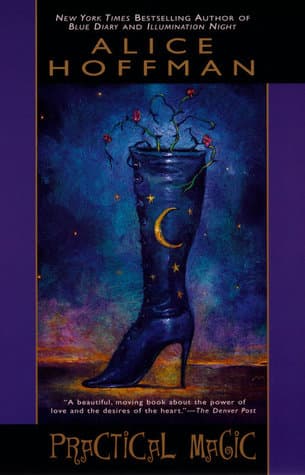
- Practical Magic
Alice Hoffman
3.8 (75k) average on GoodreadsFantasyFeatures a family with magical abilities and a strong sense of place, blending the magical with the mundane.
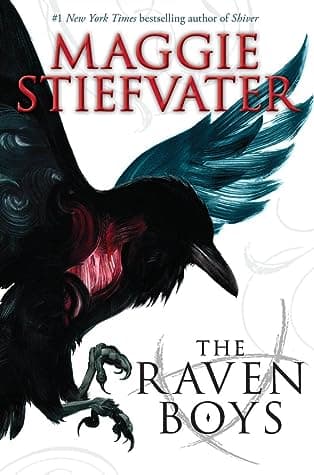
- The Raven Boys
Maggie Stiefvater
4.0 (270k) average on GoodreadsFantasyShares Stiefvater's distinctive prose, atmospheric world-building, and focus on complex character relationships.
- One Hundred Years of Solitude
Gabriel García Márquez
4.1 (753k) average on GoodreadsLiterary FictionExplores a family's history and magical realism in a multi-generational, introspective narrative.
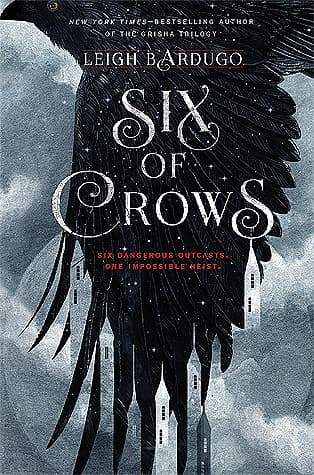
- Six of Crows
Leigh Bardugo
4.4 (316k) average on GoodreadsFantasyWhile both are YA fantasy, Bardugo's Six of Crows is a high-octane, plot-driven heist novel with extensive world-building and a focus on external conflict and intricate schemes. All the Crooked Saints, in contrast, is far more introspective, character-focused, and explores internal struggles and magical realism within a specific, contained setting.
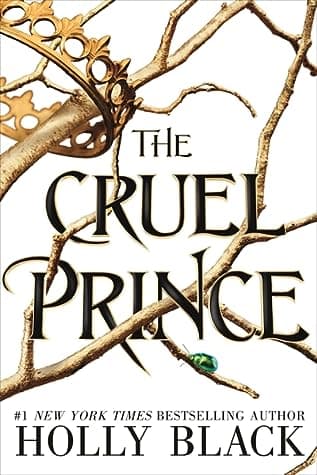
- The Cruel Prince
Holly Black
4.1 (216k) average on GoodreadsFantasyBlack's The Cruel Prince centers on intricate fae politics, court intrigue, and power struggles within a fantastical realm. All the Crooked Saints foregoes such grand-scale world-building for a more intimate, almost claustrophobic focus on a single family's unique magical abilities and their personal burdens, emphasizing psychological depth over political maneuvering.
- Harry Potter and the Sorcerer's Stone
J.K. Rowling
4.5 (7M) average on GoodreadsFantasyRescued from a miserable life under the stairs, an orphaned boy discovers he's a wizard destined for a magical school, where he uncovers a dangerous secret tied to the dark wizard who murdered his parents.


Enjoyed the summary?
A summary gives you the shape of the book. The book itself has the detail, the examples and the voice.
Find All the Crooked Saints on AmazonAs an Amazon Associate, BookBrief earns from qualifying purchases. How we're funded