
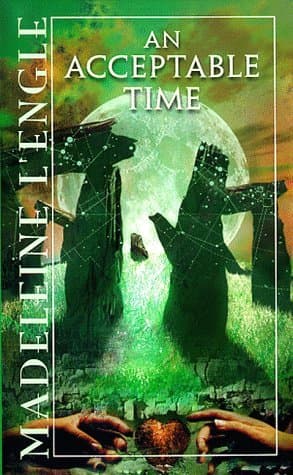
Synopsis
Covers the whole plot, including the ending.
- Difficulty
- Medium
- Pacing
- Moderate
- Mood
- Adventurous, contemplative, slightly suspenseful
An Acceptable Time Plot Summary
Covers the whole plot, including the ending.
Arrival at the Farm and the First Quiver
Sixteen-year-old Polly O'Keefe arrives at her grandparents' Vermont farm, home to her famous scientist grandmother and grandfather, the Murrys. She hopes for a peaceful summer, perhaps even a chance to work on her own scientific theories. Soon after she arrives, she feels a strange, localized earthquake, a 'quiver' that seems to affect only the area around the Murry's property. This event is unsettling and feels different from a typical tremor. Her grandparents, used to unusual events, don't dismiss her experience, but they don't immediately recognize its importance. Polly, however, feels a deep unease and a sense that something extraordinary has happened or is about to.
The Mysterious Standing Stones
While exploring the woods near her grandparents' house, Polly finds a clearing with a circle of ancient standing stones, like Stonehenge. She feels an inexplicable pull toward them. As she approaches, the air around the stones seems to shimmer, and she senses a presence, almost a whisper from another time. This experience is both thrilling and terrifying. She tries to explain it scientifically, but the feeling is too strong to ignore. She returns to the stones repeatedly, drawn by their mystery, and begins to suspect they are more than just old rocks; they seem to hum with a hidden energy, a silent promise of something beyond her current understanding. The stones become central to her growing sense of the uncanny.
Through the Time Gate
During one of her visits to the standing stones, a powerful flash of lightning, a loud thunderclap, and another 'quiver' of the earth strike the clearing. When the light clears, Polly finds herself in a dramatically altered setting – jagged, unfamiliar mountains, dense mist, and a strong sense of ancientness. The farm is gone. From the mist, she sees a group of young men, dressed in animal skins and carrying spears, moving toward her with suspicion and awe. She has accidentally stepped through a time gate, a thin place between eras, and landed three thousand years in the past, in a prehistoric, Celtic-like society. Her modern clothes and appearance make her an immediate outsider.
Meeting the People of the Past
The young men, led by a cautious but curious individual named Karmi, bring Polly to their village. At first, she causes both fear and fascination. The villagers, who speak an ancient form of Gaelic, struggle to understand her, and she, them. She quickly learns that their society is deeply rooted in nature, ritual, and a strong connection to the land and its spirits. She meets the tribe's wise woman, Anaral, who seems to intuitively understand Polly's unique situation. Polly observes their daily lives, their hunting practices, their family structures, and their belief system, which includes reverence for nature and a darker aspect involving human sacrifice to appease their gods during hard times.
The Threat of Sacrifice
As Polly spends more time in the past, she learns about the tribe's desperate customs. During famine, plague, or other disasters, they believe that offering a human sacrifice to their gods is the only way to restore balance and ensure survival. Polly sees the preparations for such a ritual, and her modern sensibilities are horrified. She realizes the extreme danger she is in. Her foreignness, her unusual appearance, and her sudden arrival make her a prime candidate for such a sacrifice. She understands that while some, like Karmi, might be intrigued by her, others, especially those in power or driven by fear, might see her as an ideal offering to their deities, a way to appease angry spirits.
Encounters with Bran and the Druids
Polly encounters Bran, a powerful and mysterious figure who seems to understand the land and its mysteries more deeply than the common villagers. He is connected to ancient Druidic traditions, a precursor to later, more formalized Druid orders. Bran recognizes something special in Polly, sensing her unique connection to the 'thin places' and the flow of time. He speaks in riddles and offers cryptic advice, hinting at the true nature of the standing stones and the time gate. He is a protector of sorts, but also a figure of immense power, capable of great good and potentially great harm. Through Bran, Polly begins to grasp the spiritual and temporal importance of her predicament.
The Search for a Way Back
Polly becomes increasingly desperate to find a way back to her own time. She understands that the time gate is not always open and might close permanently, trapping her in the ancient past. She revisits the standing stones, trying to replicate the conditions of her arrival, but without success. She discusses her predicament with Karmi and Anaral, trying to explain the concept of different times, which is incredibly difficult for them to grasp. Bran, however, seems to understand, offering guidance that is more mystical than scientific. Polly begins to realize that her return might not depend solely on scientific principles but also on a deeper, spiritual alignment with the forces that govern time and space.
The Growing Bond with Karmi
During her time in the ancient past, Polly develops a complex and tender relationship with Karmi. He is one of the first to encounter her and shows genuine curiosity and kindness. Despite the language barrier and their vastly different worlds, a connection forms between them. Karmi is intrigued by Polly's knowledge and her unusual ways, while Polly finds herself drawn to his strength, his connection to nature, and his earnest desire to protect her. This relationship adds another layer of emotional complexity to her predicament, making her eventual departure, if it happens, even more poignant. She feels a pull toward this ancient world, not just out of fear, but also out of a growing affection.
The Intervention and the Ritual
As the time for the human sacrifice ritual approaches, Polly cannot stand by. Driven by her modern moral compass, she attempts to intervene, to reason with the villagers, and to disrupt the ancient custom. Her actions are met with confusion, anger, and suspicion from some, while others, like Karmi, are torn. Her defiance puts her in even greater peril, as she is seen as challenging the very fabric of their beliefs and possibly angering the gods further. This intervention highlights the vast cultural and ethical gap between her time and theirs, and she risks becoming the sacrifice herself in her desperate attempt to save another.
The Return and the Lingering Effects
Through a combination of Bran's mystical guidance, her own desperate will, and another powerful convergence of natural forces at the standing stones, Polly is finally able to step back through the time gate. She finds herself returned to her grandparents' farm, just moments after she left, but deeply changed. The experience has left a lasting mark on her soul and mind. She is no longer the same girl who arrived at the farm. She carries the memories, the sounds, the smells, and the emotional weight of her time in the ancient past. While her grandparents are relieved, they sense a new depth and wisdom in her. The ancient world, though unseen, now coexists within her.
Reconciling Past and Present
Back in her own time, Polly struggles to reconcile her extraordinary experience with the mundane reality of her present. The world of television, cars, and scientific instruments seems foreign and sterile after the raw life of the ancient past. She grapples with the ethical implications of what she witnessed and her inability to truly change the past. Her grandparents offer support, recognizing the depth of her journey, and help her process the scientific and philosophical implications of time travel. Polly realizes that her encounter with the past has been a lesson in humanity, history, and the interconnectedness of all times and peoples.
A Glimpse of the Future, Acknowledging the Past
Polly begins to see that her experience has given her a unique perspective on life, time, and human nature. She understands the power of ancient beliefs and the human struggle for survival and meaning. While she carries a sense of loss for the ancient world and the connections she made, she also gains a deeper appreciation for her own time and the progress of humanity. The book concludes with Polly finding a measure of peace, recognizing that the past is not truly gone, but continues to resonate. She is left with the understanding that her journey was a spiritual and intellectual awakening that will shape her future.
Principal Figures
Polly O'Keefe
Protagonist
A curious and intelligent teenager who travels through time.
Polly O'Keefe is a sixteen-year-old, intelligent, and scientifically minded girl, the granddaughter of the renowned Murry family. She is initially eager for a quiet summer at her grandparents' farm to pursue her own intellectual interests. She is observant, analytical, and possesses a strong moral compass. Her journey through time forces her to confront ancient beliefs, human sacrifice, and the raw realities of a prehistoric world. She is courageous, empathetic, and struggles deeply with the ethical dilemmas presented by her situation.
Relationships: Dr. and Mrs. Murry (Granddaughter); Karmi (Romantic interest/Friend); Bran (Mystical guide/Protector); Anaral (Confidante/Wise woman)
Karmi
Supporting
A young, curious man from the ancient past.
Karmi is one of the young men who first encounters Polly in the past. He is strong, brave, and deeply connected to his tribe's traditions, yet possesses an open mind and a natural curiosity that sets him apart. He is initially wary of Polly but quickly becomes intrigued by her and acts as her protector and guide within his ancient world. He struggles to understand her foreignness but develops a genuine affection and bond with her, often defending her against the suspicions of his people.
Relationships: Polly O'Keefe (Romantic interest/Friend); Bran (Respected elder/Leader)
Bran
Supporting
An enigmatic and powerful Druidic figure from the past.
Bran is a mysterious and powerful man deeply connected to the ancient Druidic traditions, a precursor to the formalized Druid priests. He possesses a deep understanding of the land, its spirits, and the 'thin places' where time can bend. He is wise, often speaking in riddles, and seems to have an intuitive grasp of Polly's unique situation as a time traveler. He acts as a mystical guide and protector for Polly, helping her navigate the dangers of the past and providing cryptic clues for her return. He represents the ancient wisdom and spiritual power of the land.
Relationships: Polly O'Keefe (Mystical guide/Protector); Karmi (Respected elder/Leader)
Anaral
Supporting
The wise woman of the ancient tribe.
Anaral is the wise woman or shamaness of Karmi's tribe. She is older, respected, and possesses a deep knowledge of herbs, healing, and the spiritual customs of her people. While initially cautious of Polly, she comes to see her as a unique being, perhaps even a spirit, and offers her a degree of protection and understanding. She is a figure of authority and tradition, but also of quiet wisdom and compassion, providing comfort and guidance to Polly in a bewildering world. She represents the nurturing and spiritual heart of the ancient community.
Relationships: Polly O'Keefe (Confidante/Protector)
Dr. Murry (Alex)
Supporting
Polly's brilliant and supportive grandfather.
Dr. Alex Murry is Polly's grandfather, a renowned scientist and physicist. He is intelligent, open-minded, and accustomed to the unusual, having experienced many extraordinary events himself. He provides a grounding scientific perspective for Polly's experiences, attempting to understand the mechanics of time travel. He is deeply supportive of Polly, offering intellectual guidance and emotional comfort upon her return, helping her process the profound implications of her journey. He represents the rational, scientific side of the Murry family's approach to the unknown.
Relationships: Polly O'Keefe (Grandfather/Mentor); Mrs. Murry (Husband)
Mrs. Murry (Kate)
Supporting
Polly's compassionate and intuitive grandmother.
Mrs. Kate Murry is Polly's grandmother, a brilliant scientist and a Nobel laureate. She is highly intelligent, but also possesses a strong intuitive sense and deep empathy. She is a comforting presence for Polly, offering emotional support and understanding, particularly as Polly grapples with the traumatic aspects of her time travel. Mrs. Murry represents the compassionate and nurturing aspect of the family, balancing her husband's scientific rigor with a profound understanding of the human heart and spirit.
Relationships: Polly O'Keefe (Grandmother/Confidante); Dr. Murry (Wife)
Tig
Minor
A young boy from the ancient past.
Tig is a young boy from Karmi's tribe. He is curious and playful, representing the innocent and less suspicious side of the ancient community. He forms a bond with Polly, finding her unusual appearance and stories fascinating. His presence often provides a moment of lightness amidst the tension and danger. He helps Polly feel a sense of connection and belonging, however fleeting, within the ancient world, reminding her of the universal human capacity for wonder.
Relationships: Polly O'Keefe (Friend)
The Elders/Shamans of the Tribe
Antagonist (collective)
The traditional leaders who uphold the practice of human sacrifice.
This collective represents the more rigid, fear-driven aspects of the ancient tribe. They are the keepers of tradition and the interpreters of the gods' will, particularly concerning the practice of human sacrifice during times of hardship. They view Polly with suspicion and fear, seeing her as an outsider, a potential threat, or even a suitable offering to appease their deities. They embody the cultural and moral challenges Polly faces, representing the ancient world's starkest differences from her own.
Relationships: Polly O'Keefe (Opponents/Threat)
Themes & Insights
The Nature of Time and Reality
The novel explores time not as a linear progression but as a fluid, interconnected entity, with 'thin places' where different eras can intersect. Polly's journey challenges the modern scientific understanding of time, suggesting that reality is far more complex and malleable than commonly perceived. It examines the idea that past, present, and future might coexist or be accessible through specific convergences of natural and possibly spiritual forces. The book suggests that scientific and mystical understandings of time can converge.
“Time is not a line, but a vast, intricate tapestry, and there are places where the threads knot together, where the warp and weft of different ages touch.”
Cultural Clash and Empathy
Polly's journey into the ancient past highlights the vast differences in cultural norms, belief systems, and moral frameworks across millennia. She is confronted with practices like human sacrifice, which are abhorrent to her modern sensibilities but deeply ingrained and understood within the ancient tribe's context of survival and appeasing gods. The theme explores the challenge of understanding and empathizing with cultures vastly different from one's own, even when those differences are morally confronting, pushing Polly to move beyond judgment to a deeper level of human understanding.
“How could she judge them, when their lives were so utterly dependent on the whims of weather and harvest, on the very breath of the earth?”
The Interplay of Science and Spirituality
L'Engle consistently links scientific concepts with mystical and spiritual experiences. Polly, a scientifically inclined teenager, grapples with phenomena that defy purely rational explanation, such as the time gate and Bran's intuitive knowledge. The novel suggests that science and spirituality are not mutually exclusive but rather different lenses through which to understand the universe's mysteries. The standing stones, for instance, are both a geological formation and a site of immense spiritual power, blurring the lines between the tangible and the ethereal.
“Perhaps the oldest wisdom was not a rejection of science, but a deeper knowing, a science of the spirit.”
Coming of Age and Self-Discovery
Polly's time travel is a coming-of-age experience. She is thrust out of her comfortable, modern world and forced to adapt, survive, and make difficult moral choices in a harsh, ancient environment. This extraordinary challenge forces her to mature rapidly, understand her own values, and develop a deeper sense of self. The journey is not just about returning home, but about discovering who she is and what she believes in when stripped of her familiar surroundings and faced with fundamental human struggles.
“She had gone through the gate a girl, and returned a woman, carrying the weight of three thousand years in her heart.”
The Enduring Human Spirit
Despite the vast differences in technology, language, and custom, the novel highlights the enduring qualities of the human spirit across millennia. Polly finds common ground in love, fear, curiosity, and the desire for connection with the ancient people. The book emphasizes that fundamental human emotions and needs remain constant, suggesting a shared humanity that transcends time. It celebrates the resilience, adaptability, and capacity for both cruelty and kindness that have characterized humanity throughout its history.
“The faces were different, the words strange, but the laughter, the sorrow, the love—those were the same, echoing across the ages.”
Plot Devices & Literary Techniques
The Standing Stones/Time Gate
A physical portal that allows travel between different eras.
The standing stones in the woods near the Murry farm function as a 'thin place' or a time gate, a localized portal through which Polly travels three thousand years into the past. This device is both a physical landmark and a nexus of mystical energy, activated by specific atmospheric conditions (lightning, quivers). It serves as the primary mechanism for the plot's central conflict and adventure, providing the means for Polly's journey and her eventual return. It represents the mystery of time and the unknown forces that govern it, blurring the lines between science and magic.
Language Barrier
The inability to communicate due to different languages.
Upon arriving in the past, Polly faces a significant language barrier, as the ancient people speak an early form of Gaelic. This device immediately creates tension, misunderstanding, and isolation for Polly. It forces her to rely on observation, intuition, and the kindness of others for survival. It also highlights the profound cultural differences and the challenge of bridging such gaps, emphasizing the universality of non-verbal communication and the struggle to convey complex ideas across vast temporal and linguistic divides. It underscores her foreignness and vulnerability.
Cultural Disorientation
The shock and confusion of encountering a vastly different culture.
Polly experiences profound cultural disorientation, from the lack of modern amenities to the ancient tribe's beliefs in human sacrifice. This device is crucial for highlighting the vast chasm between her modern world and the prehistoric past. It forces Polly to constantly re-evaluate her assumptions, challenge her moral framework, and adapt to radically different survival strategies and social norms. This disorientation fuels much of the internal and external conflict, making her journey not just physical but deeply psychological and philosophical, driving her growth and understanding of humanity.
The 'Quiver'
A localized, supernatural tremor signaling shifts in time.
The 'quiver' is a specific, localized seismic event that Polly experiences multiple times, preceding and accompanying her passage through the time gate. Unlike a normal earthquake, it has a peculiar, almost resonant quality. This device acts as a mystical indicator of temporal shifts or disturbances in the fabric of reality. It serves as a recurring motif, building suspense and signaling impending changes. The quiver is not just a natural phenomenon but an almost sentient pulse of the 'thin places,' connecting the scientific with the supernatural and foreshadowing the extraordinary events to come.
Quiz
10 questions on the plot and the characters. Each answer comes with a short explanation.
Question 1
What causes Polly to be transported to the past?
- A magical spell cast by an unknown sorcerer.
- A malfunctioning time machine.
- A sudden flash of lightning and a quiver in the ground.
- She accidentally stepped through a portal.
Show answer
C. A sudden flash of lightning and a quiver in the ground. The book explicitly states that a flash of lightning and a quiver in the ground are the catalysts for Polly's temporal displacement.
Question 2
What is the approximate time period Polly is transported to?
- The distant future, millions of years from now.
- The medieval era, during the time of knights.
- Three thousand years ago.
- The Victorian era.
Show answer
C. Three thousand years ago. The question states that Polly is dropped into a world that existed three thousand years ago.
Question 3
What is the primary danger Polly faces from the people she encounters in the past?
- They are hostile and want to steal her belongings.
- They believe in human sacrifice.
- They are cannibals.
- They plan to enslave her.
Show answer
B. They believe in human sacrifice. The synopsis highlights the danger of facing people who believe in human sacrifice.
Question 4
What is Polly's main goal upon arriving in the past?
- To explore the ancient world and its customs.
- To find a way to communicate with her grandparents.
- To find her way back to the present before the time gate closes.
- To warn the people of the past about future events.
Show answer
C. To find her way back to the present before the time gate closes. Polly's immediate concern is her return to her own time, as indicated by the urgency of the closing time gate.
Question 5
What visual elements describe the environment Polly finds herself in after the time displacement?
- A bustling city with tall buildings.
- A dense jungle with exotic animals.
- Mist and jagged mountains.
- A vast desert with sand dunes.
Show answer
C. Mist and jagged mountains. The text specifically mentions mist and jagged mountains as the scenery that replaces her grandparents' farm.
Question 6
What does the presence of young men carrying spears suggest about the society Polly has entered?
- It is a technologically advanced society.
- It is a peaceful and agrarian society.
- It is a primitive or tribal society, possibly with military or hunting practices.
- It is a society deeply involved in artistic pursuits.
Show answer
C. It is a primitive or tribal society, possibly with military or hunting practices. Spears are typically associated with primitive weaponry used for hunting or warfare in early societies.
Question 7
The term 'time gate' implies what about the method of travel?
- It is a natural phenomenon that cannot be controlled.
- It is a deliberate portal or passage through time.
- It is a form of teleportation.
- It is a dream sequence.
Show answer
B. It is a deliberate portal or passage through time. A 'time gate' suggests a specific opening or portal that allows passage through time, implying it's a distinct event or structure.
Question 8
What literary genre elements are most prominent in the provided synopsis?
- Romance and historical drama.
- Mystery and thriller.
- Science fiction (time travel) and fantasy (unexplained phenomena).
- Comedy and satire.
Show answer
C. Science fiction (time travel) and fantasy (unexplained phenomena). The core elements of time travel and the mysterious opening of a 'time gate' firmly place this within science fiction, while the unexplained nature of the event and the potential for magical or supernatural elements lean towards fantasy.
Question 9
Considering the context of the book, what might be the underlying theme related to Polly's experience?
- The importance of historical preservation.
- The challenges of adapting to vastly different cultures and belief systems.
- The dangers of unchecked technological advancement.
- The inevitability of fate.
Show answer
B. The challenges of adapting to vastly different cultures and belief systems. Polly is thrust into a world with a completely different belief system (human sacrifice) and societal structure, forcing her to navigate these differences to survive and return home. This highlights the challenges of cultural adaptation.
Question 10
The phrase 'An Acceptable Time' in the title, when juxtaposed with Polly's predicament, could suggest:
- That the past is a more acceptable time for humans than the present.
- That there is a specific, perhaps destined, moment in time that is crucial for Polly's journey or understanding.
- That Polly must accept her fate and live in the past.
- That the time travel itself is an acceptable occurrence.
Show answer
B. That there is a specific, perhaps destined, moment in time that is crucial for Polly's journey or understanding. Titles in literature often carry symbolic weight. 'An Acceptable Time' suggests a specific, perhaps fated or necessary, point in time that is significant to the narrative's resolution or Polly's character arc, rather than a general preference for the past.
An Acceptable Time FAQ
What is An Acceptable Time about?
An Acceptable Time is a fantasy novel where the protagonist, Polly, is unexpectedly transported through a time gate to a world set three thousand years in the past. She must find a way back to her own time before the gate closes, while facing the dangers of a primitive society.
Who is the main character in An Acceptable Time?
The main character is Polly O'Keefe, a young girl who finds herself displaced in time. She is the daughter of Meg Murry and Calvin O'Keefe from Madeleine L'Engle's earlier novels.
What genre is An Acceptable Time?
An Acceptable Time blends elements of fantasy, science fiction, and young adult literature. It features time travel, a non-modern setting, and themes relevant to younger readers.
What is the significance of the title 'An Acceptable Time'?
The title refers to a concept within the book related to the flow of time and the possibility of intervening or altering events. It suggests a specific moment when change might be possible or necessary.
Is An Acceptable Time part of a series?
Yes, An Acceptable Time is part of Madeleine L'Engle's Time Quintet series, though it can be read as a standalone story. It features characters and themes that connect to other books in the series.
What are the main themes explored in An Acceptable Time?
The book explores themes of time, destiny, sacrifice, faith, and the consequences of human actions. It also touches upon the idea of accepting one's place and time.
How does An Acceptable Time compare to other Madeleine L'Engle books?
Like many of L'Engle's works, An Acceptable Time features complex themes, spiritual undertones, and strong, relatable characters facing extraordinary circumstances. It shares the blend of science fiction and fantasy found in books like 'A Wrinkle in Time'.
What kind of challenges does Polly face in the past?
Polly faces immediate dangers from the people of the past who are suspicious of her and believe in human sacrifice. She must also contend with the mystery of the time gate and the urgency of returning home before it closes.
Who are the 'young men carrying spears' that Polly encounters?
These are inhabitants of the world Polly is transported to, living three thousand years in the past. They represent the immediate threat and the alien nature of the time period she finds herself in.
What is the role of human sacrifice in the story?
Human sacrifice is presented as a belief system of the people Polly encounters in the past, adding a significant element of danger and cultural conflict to her situation. It highlights the primitive and potentially brutal nature of the society.
About the author
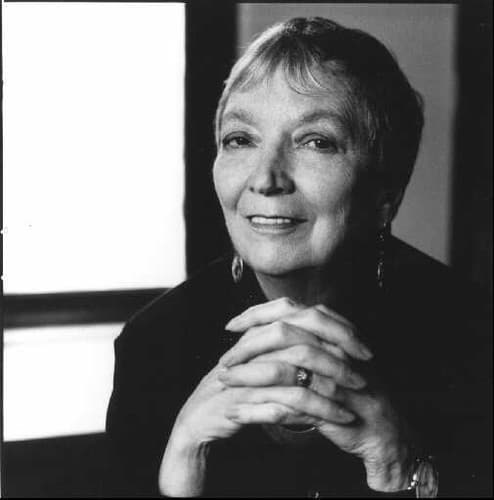
Madeleine L'Engle was an American writer of fiction, non-fiction, poetry, and young adult fiction, including A Wrinkle in Time and its sequels: A Wind in the Door, A Swiftly Tilting Planet, Many Waters, and An Acceptable Time. Her works reflect both her Christian faith and her strong interest in modern science.
Similar books
- A Wrinkle in Time
Madeleine L'Engle
4.0 (1.1M) average on GoodreadsFantasy"An Acceptable Time" shares L'Engle's hallmark exploration of time travel and interdimensional concepts, much like its predecessor "A Wrinkle in Time." However, "An Acceptable Time" shifts the focus from the broader cosmic struggle of good versus evil to a more intimate exploration of personal ancestry and the impact of individual choices across historical epochs. While "A Wrinkle in Time" introduced the fantastical elements, "An Acceptable Time" delves deeper into the societal structures and belief systems of a specific historical period, offering a more grounded, albeit still magical, journey into the past. The stakes in "An Acceptable Time" feel more internal and personal to Polly, rather than the universe-spanning threats faced by Meg.
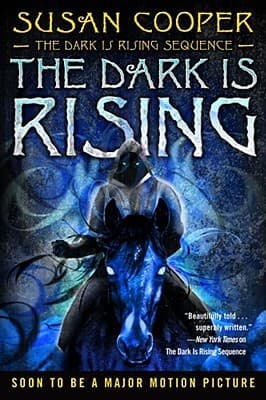
- The Dark Is Rising
Susan Cooper
4.1 (51k) average on GoodreadsFantasyBoth "An Acceptable Time" and Susan Cooper's "The Dark Is Rising" series immerse their protagonists in ancient mythologies and battles between light and dark forces. While L'Engle's novel draws heavily from Celtic lore, Cooper's series is deeply rooted in British folklore and Arthurian legends. A key difference lies in the nature of the magic: L'Engle's time travel often has a more scientific, albeit fantastical, underpinning, whereas Cooper's magic is more elemental and inherent to the land and ancient powers. "An Acceptable Time" focuses more on a single character's direct interaction with the past, while "The Dark Is Rising" features a broader ensemble of characters involved in an ongoing, epic struggle. Both, however, excel at creating a sense of ancient power and destiny.
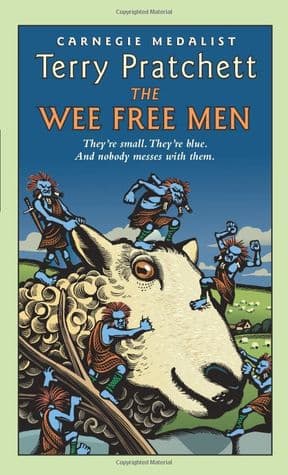
- The Wee Free Men
Terry Pratchett
4.3 (94k) average on GoodreadsFantasyWhile both "An Acceptable Time" and Terry Pratchett's "The Wee Free Men" feature strong, intelligent young female protagonists encountering magical realms, their tones and approaches differ significantly. L'Engle's novel maintains a more serious, contemplative, and sometimes spiritual tone, exploring complex philosophical questions through Polly's journey. Pratchett, on the other hand, infuses "The Wee Free Men" with his characteristic wit, satire, and humor, even while dealing with serious themes of responsibility and courage. Both authors excel at world-building and creating memorable characters, but Pratchett's Discworld offers a more overtly whimsical and comedic fantasy experience, contrasting with L'Engle's more introspective and earnest exploration of time and identity.
- Harry Potter and the Sorcerer's Stone
J.K. Rowling
4.5 (7M) average on GoodreadsFantasyRescued from a miserable life under the stairs, an orphaned boy discovers he's a wizard destined for a magical school, where he uncovers a dangerous secret tied to the dark wizard who murdered his parents.
- The Hunger Games
Suzanne Collins
4.3 (6.4M) average on GoodreadsFantasyIn a future where children fight to the death on live television, Katniss Everdeen volunteers for the arena, turning a death sentence into a fight for survival and a spark of rebellion.
- 1984
George Orwell
4.2 (3.1M) average on GoodreadsPoliticsIn a future where surveillance and thought control are absolute, a man's search for truth clashes with the Party, showing that hope can be a form of rebellion.




Enjoyed the summary?
A summary gives you the shape of the book. The book itself has the detail, the examples and the voice.
Find An Acceptable Time on AmazonAs an Amazon Associate, BookBrief earns from qualifying purchases. How we're funded