
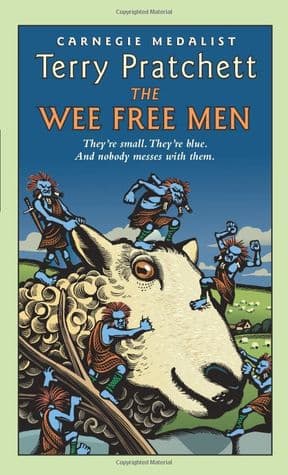
Synopsis
Covers the whole plot, including the ending.
- Difficulty
- Easy
- Pacing
- Moderate
- Mood
- Humorous, Adventurous, Witty, Whimsical, Slightly Dark
- Read it if
- You enjoy clever, humorous fantasy with a strong, resourceful young female protagonist and a unique take on fairy tales.
- Skip it if
- You prefer serious, dark fantasy without comedic elements or a more traditional magic system.
The Wee Free Men Plot Summary
Covers the whole plot, including the ending.
The World Collides
Ten-year-old Tiffany Aching, a practical and smart shepherdess on the Chalk, sees strange things, including a talking toad. The toad, once a lawyer, warns her that another world is colliding with hers and that monsters are returning because 'there's no one to stop them.' Tiffany, with her common sense and a frying pan, says she will stop them. She starts to notice other odd events, like a stream disappearing and a headless horseman arriving, showing that the line between her world and Fairyland is weakening and old threats are indeed coming back.
The Wee Free Men Arrive
After the toad's warning, Tiffany is visited by the Nac Mac Feegle, also called the Wee Free Men or 'pictsies' – small, blue, tattooed, sword-wielding, sheep-stealing beings. They first try to steal her sheep but are impressed by her quick thinking and how she outsmarts them. Their kelda (queen), the current Rob Anybody's wife, died, and they see Tiffany's hidden magic, thinking her a possible new kelda. They promise loyalty to her, in their own wild way, sensing she is 'the one' who can help them with a coming threat.
Barclay Kidnapped
During the night, while Tiffany watches her family, her baby brother, Wentworth (nicknamed Barclay), is kidnapped by the Queen of the Elves' agents. The Queen, wanting a child of the Chalk for unknown reasons, used the weakening world boundaries. This act makes Tiffany even more determined. With the Nac Mac Feegle now with her, and the talking toad giving reluctant advice, Tiffany knows she must go into Fairyland to rescue Barclay, facing the very monsters she was warned about.
Entering Fairyland
Tiffany, with the Nac Mac Feegle and the toad, enters Fairyland through a magic gate. The realm is beautiful but scary, always changing and full of illusions. The Feegle, despite their bravery, are careful in this world, especially around the Queen. Tiffany uses her practical nature and common sense to navigate the confusing place, often seeing through the illusions that trap others. They meet their first real threats, like the dromes, creatures that turn dreams into nightmares, and the terrifying grimhounds, large black dogs with fiery eyes.
The Dromes and Grimhounds
Inside Fairyland, Tiffany and the Nac Mac Feegle face the Queen's servants. They first meet the dromes, which try to trap them in pleasant but deadly dream worlds. Tiffany, with her grounded nature, is mostly safe from their illusions and wakes the Feegle. Later, grimhounds, scary ghost dogs, chase them. The Feegle fight bravely, but it is Tiffany's quick thinking and understanding of the creatures' weaknesses – their dislike of the normal and real – that lets them escape, proving her worth as their leader.
Meeting Miss Tick
During their trip, Tiffany meets Miss Tick, a respected traveling witch who is also a 'chalk witch' like Tiffany's grandmother. Miss Tick gives Tiffany good advice and some magic tools, including a thimble, which is surprisingly useful for fighting the Queen's magic. She sees Tiffany's natural magic talent and her unique 'headology' – the common sense and practical wisdom needed for a witch. Miss Tick also tells more about the Queen's nature and Fairyland's dangers, preparing Tiffany for the final fight.
The Queen's Captives
As they go deeper into Fairyland, Tiffany finds that her brother Barclay is not the Queen's only captive. The Queen has taken many children from different worlds, keeping them in a dream-like state, drawing power from their dreams. Tiffany is shocked by this and becomes even more set on defeating the Queen and freeing all the children. This discovery expands her mission from just saving her brother to freeing all the Queen's child-victims, solidifying her role as a protector.
The Battle for the Castle
The Nac Mac Feegle, led by Rob Anybody, launch a wild but effective attack on the Queen's castle. They are fearless and relentless, using their small size and strong fighting skills to battle the Queen's larger, more ghostly servants. Their sheer, stubborn courage and loyalty to Tiffany are clear as they create a distraction, letting Tiffany get into the main fortress. This battle shows the Feegle's unique bravery and their steady support for their chosen 'kelda'.
Confronting the Queen
Tiffany finally confronts the Queen of the Elves in her throne room. The Queen is a being of great power and illusion, trying to tempt Tiffany with false promises and beautiful but dangerous dreams. Tiffany resists the Queen's magic, relying on her common sense, her knowledge of her own world, and the practical wisdom from her grandmother. She uses her frying pan, not as a weapon, but as a symbol of her real world, and eventually faces the Queen's deepest fear: being forgotten and replaced by the ordinary.
The Queen's Defeat
Tiffany defeats the Queen by not falling for her illusions and by reminding her of the power of ordinary, real life. She uses the thimble Miss Tick gave her, filling it with the 'truth' of the Chalk, which weakens the Queen's magic. By stating the reality of her world and the importance of family and common sense, Tiffany breaks the Queen's power. The Queen, unable to handle such grounded reality, is banished, and all the stolen children, including Barclay, are freed from their dream-like state.
The Aftermath
With the Queen defeated and the children rescued, Tiffany and the Nac Mac Feegle return to the Chalk. Barclay is safely back with his family, unaware of his adventure. Tiffany, however, is changed. She has accepted her role as a witch and earned the Nac Mac Feegle's respect and loyalty. The boundaries between worlds become stable, and Tiffany understands her new job to protect her home. She is now a witch-in-training, ready for future challenges with her mix of common sense and growing magic.
The Wee Free Men Characters
Tiffany Aching
Protagonist
A ten-year-old shepherdess with an extraordinary amount of common sense and a burgeoning magical talent.
Tiffany is a highly intelligent, pragmatic, and observant young girl from the Chalk. She possesses an innate sense of 'headology,' a practical wisdom that allows her to see through illusions and understand the world on a deeper level. She is brave, determined, and deeply connected to her family and the land she lives on. Unlike traditional witches, her magic often manifests as common sense and a strong will, rather than flashy spells.
Relationships: Wentworth Aching (Younger brother, whom she rescues from the Queen.); Granny Aching (Deceased grandmother, a strong influence and inspiration for Tiffany's witchly path.); Nac Mac Feegle (Her loyal, if chaotic, allies and subjects, whom she leads.); Miss Tick (Mentor figure, a travelling witch who guides Tiffany.); The Queen of the Elves (Antagonist, the powerful Fae ruler whom Tiffany defeats.)
Rob Anybody
Supporting
The current Big Man (leader) of the Nac Mac Feegle clan.
Rob Anybody is a boisterous, courageous, and fiercely loyal Nac Mac Feegle. He is the 'Big Man' of the Chalk clan and often acts as Tiffany's chief enforcer and advisor, though his advice is usually accompanied by a fight. He is deeply devoted to his clan and, once he recognizes Tiffany as their new 'kelda,' his loyalty to her is absolute. He is prone to exaggeration and a good brawl, but possesses a surprising amount of wisdom when it comes to the ways of his people and the dangers of Fairyland.
Relationships: Tiffany Aching (His 'kelda' (queen) and leader, whom he deeply respects.); Nac Mac Feegle (Leader of his clan, fiercely protective of them.)
The Talking Toad
Supporting
A former human lawyer, cursed into amphibian form, who serves as an informant.
The Talking Toad is a cynical and somewhat cowardly character, cursed into his amphibian form by the Queen of the Elves. He provides Tiffany with crucial information about the dangers of Fairyland and the Queen's nature, acting as a reluctant guide. Despite his grumbling, he is ultimately helpful, driven by a desire for self-preservation and perhaps a lingering sense of justice from his former life as a lawyer. He represents the voice of caution and the consequences of dabbling with the Fae.
Relationships: Tiffany Aching (Reluctant guide and informant.); The Queen of the Elves (His tormentor, who cursed him.)
The Queen of the Elves
Antagonist
The beautiful and cruel ruler of Fairyland, who steals children for her own purposes.
The Queen of the Elves is the primary antagonist, a powerful and ancient being of pure, unadulterated glamour and cruelty. She thrives on dreams and imagination, viewing the mundane world as beneath her. She steals children from various worlds, including Tiffany's brother, to keep them in a dream-like state, drawing power from their imagination. She is incapable of understanding human reality, common sense, or love, and her world is one of constant illusion and manipulation. She represents the seductive but ultimately destructive nature of unchecked fantasy.
Relationships: Tiffany Aching (Her ultimate vanquisher.); Barclay Aching (Her captive, along with other children.)
Miss Tick
Supporting
A wise and practical travelling witch who offers guidance to Tiffany.
Miss Tick is a witch who travels in a caravan pulled by a large, intelligent goose. She is knowledgeable about the ways of witchcraft and the dangers of Fairyland, having a deep understanding of 'headology.' She acts as a mentor figure to Tiffany, recognizing her potential and providing her with crucial advice and a symbolic thimble. Miss Tick represents the established, practical side of witchcraft, grounded in common sense and a connection to the land, much like Tiffany's grandmother.
Relationships: Tiffany Aching (Mentor and guide.); Granny Aching (Implied peer or acquaintance, sharing similar witchly traditions.)
Granny Aching
Mentioned
Tiffany's deceased grandmother, a wise and influential figure.
Granny Aching is Tiffany's deceased grandmother, a shepherdess renowned for her wisdom, common sense, and quiet strength. Although she never appears physically, her presence is strongly felt throughout the book. Tiffany constantly draws on her grandmother's teachings and memories, particularly her understanding of the Chalk and her practical approach to life. Granny Aching embodies the spirit of the Chalk witch, and her legacy guides Tiffany on her path.
Relationships: Tiffany Aching (Granddaughter and spiritual heir.); The Chalk (Deeply connected to the land and its traditions.)
Wentworth Aching (Barclay)
Supporting
Tiffany's baby brother, whose kidnapping sparks her quest.
Wentworth, or Barclay, is Tiffany's baby brother, a typical infant who is prone to sticky fingers and a love for jam. His kidnapping by the Queen of the Elves is the catalyst for Tiffany's journey into Fairyland. Although he is mostly a plot device, his innocence and helplessness underscore the Queen's cruelty and provide Tiffany with a powerful personal motivation for her quest. He remains largely unaware of the magical events unfolding around him.
Relationships: Tiffany Aching (Older sister and rescuer.); The Queen of the Elves (His abductor.)
Daft Wullie
Supporting
A Nac Mac Feegle, known for his simple-mindedness and loyalty.
Daft Wullie is one of the Nac Mac Feegle, characterized by his endearing simple-mindedness and unwavering loyalty. He often misunderstands situations but is always ready for a fight in defense of Tiffany or his clan. Despite his lack of intellectual prowess, he is a brave and reliable warrior. His literal interpretations and straightforward nature provide much of the comic relief, while also highlighting the Feegle's unique perspective on the world.
Relationships: Tiffany Aching (Loyal subject.); Nac Mac Feegle (Member of the clan.)
The Wee Free Men Themes
The Power of Common Sense and Reality
The novel shows the strength of practicality, grounded wisdom, and the ordinary over glamorous, but empty, fantasy. Tiffany's 'headology' and her strong connection to the real world of the Chalk are her most powerful tools against the Queen's illusions. Her frying pan, a symbol of home reality, works better than any magic sword against the Queen's magic, as it stands for the solid, undeniable truth the Queen cannot understand or control. This theme suggests that true power is not in complex magic, but in understanding and valuing everyday life.
“'There's a lot of things that are important in life,' said Granny Aching. 'And one of them is knowing what isn't important.”
Coming of Age and Identity
Tiffany's journey is a classic coming-of-age story. She starts as a smart, observant child and, through her trials, finds her identity as a witch and a leader. Her quest to rescue her brother makes her face her fears, rely on her own cleverness, and use her unique abilities. By the end, she has not only saved her brother but also found her place in the world, understanding her job to protect her home and people. This theme explores the move from childhood innocence to accepting adult responsibilities and self-discovery.
“'There's me,' said Tiffany. It wasn't a question.”
The Nature of Good and Evil
The book looks at good and evil not as clear forces, but as parts of understanding and viewpoint. The Queen of the Elves is not 'evil' in the usual way, but a being of pure, unfeeling glamour and self-interest, unable to feel empathy or understand reality. Her actions, though cruel, come from her nature. On the other hand, the Nac Mac Feegle, while mischievous and prone to theft and fighting, are very loyal and ultimately act for good. This theme suggests that true evil is when there is no connection and understanding, while even flawed beings can show goodness through loyalty and care.
“She doesn't hate you,' said the toad. 'She doesn't hate anything. She just doesn't care.”
The Importance of Home and Belonging
Tiffany's strong connection to the Chalk, her family, and her community is a main theme. Her reason to rescue Barclay comes from her love for her family, and her understanding of her home's traditions and realities gives her strength against Fairyland's strange world. The Chalk represents stability, warmth, and real life, unlike the Queen's shifting, illusory realm. The story emphasizes that one's roots and sense of belonging provide a anchor against chaos and a source of inner power.
“The Chalk,' she said. 'That's my home. And it's not a dream. It's real.”
The Power of Stories and Belief
Stories, myths, and beliefs are important. The Queen of the Elves gets power from dreams and imagination, but Tiffany's grounded reality proves stronger. The Nac Mac Feegle's existence comes from a mix of myth and hard reality. The book suggests that while stories can create worlds, the most lasting power is in the shared, lived stories of everyday life and the beliefs that connect communities. Tiffany's ability to 'believe' in her own reality, even when facing strong magic, is key to her success.
“You have to know what you believe,' said Miss Tick. 'It's the only thing that makes you a witch.”
Plot Devices & Literary Techniques
The Frying Pan
A mundane kitchen utensil that becomes a symbol of reality and a weapon against illusions.
Tiffany's frying pan is not a magical artifact, but a symbol of her grounded reality and common sense. She uses it not just as a physical weapon against the Queen's creatures, but as a practical tool that represents the mundane world, which the Queen cannot comprehend or control. Its ordinary nature makes it an extraordinary weapon in a world of illusion, highlighting the theme that true power can be found in the everyday and the real.
The Thimble
A small, ordinary sewing thimble imbued with the 'truth' of the Chalk.
Given to Tiffany by Miss Tick, the thimble is initially mundane but becomes a potent weapon when Tiffany fills it with the 'truth' of her home, the Chalk. It acts as a conduit for Tiffany's connection to reality and her understanding of the world. Against the Queen's illusions, the thimble, filled with the essence of ordinary life, becomes a powerful counter-spell, demonstrating that the small, real things hold immense power against grand, fabricated magic.
The Nac Mac Feegle
A clan of small, blue, sword-wielding 'pictsies' who serve as comic relief and fierce allies.
The Nac Mac Feegle serve multiple plot functions: they are the primary source of comic relief with their chaotic behavior and unique dialect; they are fierce, loyal warriors who provide physical protection for Tiffany; and they represent a connection to ancient, wild magic that is both dangerous and protective. Their role as Tiffany's 'bodyguards' and 'subjects' underscores her emerging leadership and their unwavering loyalty is crucial to her success against the Queen's forces.
The Colliding Worlds
The supernatural phenomenon causing the boundaries between Tiffany's world and Fairyland to weaken.
The 'colliding worlds' is the inciting incident that sets the entire plot in motion. It explains the appearance of magical creatures in Tiffany's world and the Queen's ability to abduct her brother. This device creates the urgency and stakes for Tiffany's quest, establishing that her world is under threat and she is the only one capable of bridging the gap and restoring balance. It provides the magical framework for the fantastical elements of the story.
The Wee Free Men Quotes
“Ach, just because I'm not a lady doesn't mean I'm not a woman.”
“The thing about people who try to take your mind is that they don't know what they're doing with it. They just want it. They don't want to think with it.”
“There's a lot of things you can't see with your eyes. You have to see them with your brain.”
“It's not stealing if you give it back. It's borrowing.”
“I'll be a witch. I'll be the best witch ever.”
“She was a witch, and she was going to have to learn to be a witch, and the first thing she was going to have to learn was that witches don't just happen. They're made.”
“The Nac Mac Feegle, also known as the Wee Free Men, the pictsies, the Chalk, and – occasionally – 'Och, for two minutes, just leave me alone, ye tiny blue bastards!'”
“You can't be a witch without a hat. It's like being a king without a crown.”
“Sometimes it's not enough to be clever. You have to be smart.”
“A good head for heights is useful. A good head for depths is even better.”
“She knew that you could be a lady and still know how to make a cheese.”
“It was impossible to be angry with the Nac Mac Feegle for very long, because they were so very, very small.”
“You can't run away from who you are. All you can do is run around in circles.”
“If you're going to think, you may as well think big.”
Quiz
10 questions on the plot and the characters. Each answer comes with a short explanation.
Question 1
What is Tiffany Aching's primary weapon when she initially confronts the monsters from Fairyland?
- A sword
- A magical staff
- A frying pan
- Her bare hands
Show answer
C. A frying pan The text explicitly states Tiffany is 'Armed only with a frying pan and her common sense' when she stands against the monsters.
Question 2
Which of the following creatures is NOT mentioned as one that Tiffany and the Nac Mac Feegle battle in Fairyland?
- Brutal flying fairies
- Dream-spinning dromes
- Goblins
- Grimhounds
Show answer
C. Goblins The description lists 'brutal flying fairies, dream-spinning dromes, and grimhounds' as adversaries, but goblins are not mentioned.
Question 3
What is the main reason Tiffany enters Fairyland?
- To become a powerful witch
- To seek her kidnapped brother
- To defeat the Queen of the Elves for personal glory
- To explore the magical landscape
Show answer
B. To seek her kidnapped brother The synopsis clearly states Tiffany is 'Forced into Fairyland to seek her kidnapped brother.'
Question 4
Who does Tiffany ally herself with in Fairyland?
- A group of wise old witches
- The Queen of the Elves
- The Nac Mac Feegle
- A talking toad
Show answer
C. The Nac Mac Feegle The text states Tiffany 'allies herself with the Chalk's local Nac Mac Feegle'.
Question 5
What specific characteristics are used to describe the grimhounds?
- Small, furry, and invisible
- Black dogs with eyes of fire and teeth of razors
- Giant, winged beasts with venomous claws
- Spectral figures that steal memories
Show answer
B. Black dogs with eyes of fire and teeth of razors The description explicitly characterizes grimhounds as 'black dogs with eyes of fire and teeth of razors'.
Question 6
What is the primary role of the Nac Mac Feegle, as described in the summary, in relation to their home country?
- They are scholarly guardians of ancient magic.
- They are a clan of sheep-stealing, sword-wielding blue men.
- They are farmers who cultivate magical crops.
- They are diplomatic envoys to other magical realms.
Show answer
B. They are a clan of sheep-stealing, sword-wielding blue men. The text describes the Nac Mac Feegle as 'a clan of sheep-stealing, sword-wielding, six-inch-high blue men'.
Question 7
What does the toad's initial statement to Tiffany about the monsters imply about the state of the world before Tiffany's involvement?
- Monsters are naturally peaceful until provoked.
- There was no one capable or willing to stop them from coming back.
- The monsters were invited back by the Queen of the Elves.
- The monsters are a natural part of the Chalk country's ecosystem.
Show answer
B. There was no one capable or willing to stop them from coming back. The toad says, 'All the monsters are coming back,' and when Tiffany asks 'Why?', the toad replies, 'There's no one to stop them,' indicating a lack of protectors.
Question 8
What is the nature of the Queen of the Elves' rule, as described in the summary?
- Benevolent and just, maintaining peace between worlds.
- Democratic, with counsel from her subjects.
- Absolute, ruling a world where reality intertwines with nightmare.
- Limited by ancient magical treaties.
Show answer
C. Absolute, ruling a world where reality intertwines with nightmare. The text describes the Queen of the Elves as the 'absolute ruler of a world in which reality intertwines with nightmare'.
Question 9
How does Tiffany's character, as introduced, suggest her approach to challenges, beyond just her weapon?
- She relies solely on brute force.
- She is a 'young witch-to-be' armed with a frying pan and 'common sense', implying practicality and wit.
- She is timid and seeks help from others immediately.
- She is reckless and charges into danger without thought.
Show answer
B. She is a 'young witch-to-be' armed with a frying pan and 'common sense', implying practicality and wit. The phrase 'Armed only with a frying pan and her common sense' highlights her practicality and intelligence as key tools, alongside her potential as a witch.
Question 10
The synopsis mentions that 'Another world is colliding with this one.' What is the implication of this collision for Tiffany's home, the Chalk country?
- It means the Chalk country will merge peacefully with the other world.
- It suggests the Chalk country is being invaded by monsters from Fairyland.
- It implies a new trade route will open between the worlds.
- It signifies a benevolent exchange of cultures.
Show answer
B. It suggests the Chalk country is being invaded by monsters from Fairyland. The toad states 'All the monsters are coming back' because 'Another world is colliding with this one,' directly linking the collision to a monstrous invasion of Tiffany's home.
The Wee Free Men FAQ
What is the central conflict of 'The Wee Free Men'?
The central conflict revolves around Tiffany Aching, a young girl from the Chalk, who must rescue her kidnapped brother, Wentworth, from the Queen of the Elves. This forces her into Fairyland, a dangerous realm where the Queen's power threatens to merge with Tiffany's world, bringing monsters and chaos.
Who are the Nac Mac Feegle and what role do they play?
The Nac Mac Feegle, also known as the Wee Free Men, are a clan of six-inch-tall, blue-skinned, red-haired 'pictsie' creatures who are fierce, loyal, and prone to fighting. They become Tiffany's unexpected allies and bodyguards in Fairyland, providing much-needed muscle and humor against the Queen's creatures.
What unique weapon does Tiffany Aching primarily use?
Tiffany Aching's primary weapon is a frying pan, which she wields with surprising effectiveness against various magical threats. This mundane item symbolizes her grounded, practical nature and common sense, contrasting with the fantastical dangers she faces.
What is the significance of 'the Chalk' in the story?
The Chalk is Tiffany Aching's home, a unique region known for its specific geology and a strong sense of community and tradition. It represents reality, hard work, and common sense, which serve as Tiffany's anchors against the illusions and dangers of Fairyland.
Who is the main antagonist and what are her powers?
The main antagonist is the Queen of the Elves, a powerful and cruel entity who rules Fairyland. Her powers include manipulating dreams, creating terrifying illusions, and twisting reality to suit her whims, making her a formidable foe for Tiffany.
How does the toad character contribute to Tiffany's journey?
The toad, formerly a lawyer cursed by the Queen, serves as an initial guide and source of crucial information for Tiffany. He alerts her to the collision of worlds and the disappearance of witches, prompting her to take action and seek out the Nac Mac Feegle.
What is the true nature of the 'dreams' spun by the dromes?
The 'dreams' spun by the dromes are not benign fantasies but rather powerful, manipulative illusions designed to trap and subdue their victims. They often reflect the deepest desires or fears of individuals, making escape from them particularly difficult without strong mental fortitude.
What is the significance of Tiffany's 'inner ear' or 'listening' ability?
Tiffany's ability to 'listen' is a key indicator of her innate magical talent and her connection to the land and people around her. It allows her to perceive truths beyond the surface, understand deeper meanings, and resist the Queen's illusions, showcasing her potential as a witch.
How does the book subtly introduce the concept of 'headology'?
The book introduces 'headology' through Tiffany's practical problem-solving and her understanding of people and situations, even before she formally learns about witchcraft. Her ability to use common sense, observation, and psychological insight to influence events or people is a nascent form of this Discworld witching principle.
How does Tiffany's common sense serve as a psychological defense?
Tiffany's common sense acts as a powerful psychological defense against the Queen's illusions and the chaotic nature of Fairyland. Her grounded perspective allows her to see through the Queen's tricks and maintain her grip on reality, preventing her from being overwhelmed by fear or false desires.
What psychological journey does Tiffany undergo during the rescue mission?
Tiffany undergoes a journey of self-discovery and empowerment. She transforms from a curious but ordinary girl into a determined and capable individual who trusts her own judgment and abilities. This journey builds her confidence in the face of overwhelming odds and confirms her potential as a witch.
How does the Queen of the Elves exploit psychological vulnerabilities?
The Queen of the Elves exploits psychological vulnerabilities by crafting illusions that appeal to deepest desires or amplify fears, such as showing Tiffany her grandmother or tempting her with power. She seeks to break her victims' wills by manipulating their emotional landscape.
What is the psychological impact of Fairyland's shifting reality on its visitors?
Fairyland's constantly shifting reality has a disorienting and terrifying psychological impact, making it difficult for visitors to trust their senses or maintain a stable sense of self. This environment is designed to induce fear, confusion, and despair, making escape seem impossible.
Is the Queen of the Elves purely evil, or is there a deeper interpretation of her nature?
While the Queen's actions are undeniably cruel and destructive, some interpretations suggest she embodies a wild, amoral force of nature rather than pure malice. Her 'evil' stems from a lack of understanding or care for human concepts of right and wrong, viewing others as mere playthings or extensions of her will.
How does the book challenge traditional fairy tale tropes?
The book challenges traditional fairy tale tropes by portraying Fairyland as dangerous and malevolent, rather than enchanting, and by presenting its protagonist, Tiffany, as a practical, common-sense hero who relies on wit and a frying pan rather than magic wands or prince charming. The 'fairies' are also far from benevolent.
What larger themes about childhood and responsibility does the story explore?
The story explores themes of childhood responsibility, showing how Tiffany, despite her young age, steps up to protect her family and home when adults cannot. It highlights the often-underestimated wisdom and capability of children, particularly when faced with significant challenges.
What is the ultimate message about the power of 'common sense' in a magical world?
The ultimate message is that common sense, grounded thinking, and practical observation are incredibly powerful, even in the face of overwhelming magic. Tiffany's ability to apply logic and reason allows her to see through illusions and find solutions where pure magic might fail, emphasizing its value.
How does the ending set up Tiffany Aching's future within the Discworld universe?
The ending firmly establishes Tiffany's potential as a witch, earning the respect of the Nac Mac Feegle and demonstrating her unique abilities. It signals the beginning of her journey into witchcraft, hinting at future mentors like Granny Weatherwax and her ongoing role in protecting the Chalk and beyond.
About the author
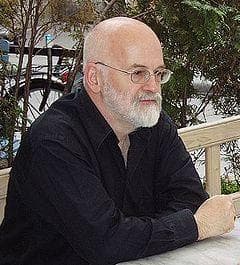
Sir Terence David John Pratchett was an English humorist, satirist, and author of fantasy novels, especially comical works. He is best known for his Discworld series of 41 novels.
Similar books
- Harry Potter and the Sorcerer's Stone
J.K. Rowling
4.5 (7M) average on GoodreadsFantasyRescued from a miserable life under the stairs, an orphaned boy discovers he's a wizard destined for a magical school, where he uncovers a dangerous secret tied to the dark wizard who murdered his parents.
- The Hunger Games
Suzanne Collins
4.3 (6.4M) average on GoodreadsFantasyIn a future where children fight to the death on live television, Katniss Everdeen volunteers for the arena, turning a death sentence into a fight for survival and a spark of rebellion.
- 1984
George Orwell
4.2 (3.1M) average on GoodreadsPoliticsIn a future where surveillance and thought control are absolute, a man's search for truth clashes with the Party, showing that hope can be a form of rebellion.
- Divergent
Veronica Roth
4.2 (2.9M) average on GoodreadsFantasyIn a society divided by virtues, a sixteen-year-old's difference from the norm starts a rebellion that threatens her world.
- The Hobbit, or There and Back Again
J.R.R. Tolkien
4.3 (2.9M) average on GoodreadsFantasyA comfort-loving hobbit named Bilbo Baggins is whisked away by a mischievous wizard and a band of dwarves on an unexpected journey to reclaim stolen treasure from a fearsome dragon, discovering courage and a magical ring along the way.
- Animal Farm
George Orwell
4.0 (2.7M) average on GoodreadsPoliticsA farm animals' rebellion against humans turns into a pig-led dictatorship, showing how power corrupts and revolutionary ideals are betrayed.






Enjoyed the summary?
A summary gives you the shape of the book. The book itself has the detail, the examples and the voice.
Find The Wee Free Men on AmazonAs an Amazon Associate, BookBrief earns from qualifying purchases. How we're funded