

Synopsis
Covers the whole plot, including the ending.
- Difficulty
- Hard
- Pacing
- Moderate
- Mood
- Intellectual, Mysterious, Atmospheric, Convoluted
- Read it if
- You enjoy intricate historical mysteries with multiple unreliable narrators, deeply researched historical settings, and complex political and scientific intrigue.
- Skip it if
- You prefer straightforward narratives, fast-paced action, or dislike lengthy books with a focus on intellectual and philosophical debates.
An Instance of the Fingerpost Plot Summary
Covers the whole plot, including the ending.
Marco da Cola's Arrival and the Death of Robert Grove
The story begins with Marco da Cola, an Italian physician, arriving in Oxford in 1663. He plans to study English scientific advancements and find a patron. He quickly becomes friends with Dr. Richard Lower, a physician known for anatomical experiments. Marco is present when Robert Grove, a fellow of New College, is found dead in his rooms, poisoned. Grove's death happens shortly after a heated argument with his student, Sarah Blundy, a young woman known for her independent spirit and alleged radical views. The authorities, especially Justice John Thurloe, quickly suspect Sarah. This is mainly because of circumstantial evidence and her association with politically undesirable figures. Marco wants to understand the case and perhaps find a patron, so he begins his own investigation, observing Oxford's intellectual and political scene.
John Wallis's Account: Cryptography and Political Intrigue
John Wallis, a cryptographer and mathematician, gives his account. He reveals a more complex political situation around Grove's death. Wallis, who has worked for both Cromwell's Commonwealth and now King Charles II, explains he was asked to decipher coded messages about potential Catholic and Royalist plots. He says Robert Grove was not just an academic but also involved in these secret activities, possibly as an informant or double agent. Wallis's perspective implicates several powerful figures, including Dr. Richard Lower and Anthony Wood. He suggests Grove's death was not a simple murder but a planned killing linked to the political climate of the Restoration. He also points out Sarah Blundy's unwitting role in these schemes.
Jack Prescot's Perspective: Revenge and Familial Honor
Jack Prescot, the son of a Royalist executed during the Commonwealth, offers his version of events. He wants revenge and to clear his family's name. Jack believes his father was betrayed by informers, and he wants to expose them. His story focuses on Sir Harry Vane and John Thurloe, whom he suspects of planning his father's downfall. Jack becomes involved with Sarah Blundy, initially thinking she has information important to his search. He describes his interactions with various Oxford figures, including Grove. He uncovers evidence suggesting Grove was involved in the political maneuvering that led to his father's death. Jack's account shows Sarah as a victim of circumstances, manipulated by powerful men, rather than a killer.
Anthony Wood's Chronicles: Gossip, History, and Hidden Motives
Anthony Wood, an Oxford antiquarian, presents his detailed, often gossipy, account of the events. Wood's narrative describes Oxford life, full of details about the university's people, rivalries, and scandals. He first portrays Sarah Blundy as a dangerous radical and a witch-like figure, reflecting common prejudices of the time. However, as his account continues, Wood's careful record-keeping, combined with his personal animosities and insights, gradually reveals the hidden motives and true characters of those involved. He exposes the intellectual arrogance of figures like Richard Lower and the political opportunism of others. He suggests Grove's death was a mix of academic rivalry, political schemes, and personal vendettas, with Sarah Blundy as an easy target.
Sarah Blundy's Trial and Execution
Despite the different and often contradictory accounts from Marco, Wallis, Prescot, and Wood, the legal proceedings against Sarah Blundy continue. The evidence presented, which is mostly circumstantial and influenced by the political climate and societal prejudices against independent women, is enough to convict her. Sarah is found guilty of Robert Grove's murder. Her execution is a public event. Her death leaves many questions unanswered, especially for those who believed she was innocent or suspected deeper plots.
Unveiling the True Perpetrator: The Role of Robert Boyle
By comparing and analyzing the four narratives, the true killer of Robert Grove is revealed to be Robert Boyle, the scientist. Boyle wanted to protect his reputation and prevent Grove from exposing his involvement in certain politically sensitive experiments and potentially heretical scientific theories. Grove had discovered Boyle's secrets and planned to reveal them, which would have greatly harmed Boyle's standing in the Royal Society and with the King. Boyle cleverly manipulated circumstances and people, including Dr. Richard Lower, to frame Sarah Blundy for the crime, diverting suspicion from himself.
The Motives Behind the Murder: Science, Politics, and Reputation
Grove's murder was a result of several motives. Robert Boyle wanted to silence Grove to protect his scientific reputation and the secrecy of his controversial experiments, especially those involving blood transfusion and the nature of life, which could be seen as heretical. Grove himself was involved in political espionage, acting as an informant for different groups, which made him a liability. The political climate of the Restoration, with its constant fear of Catholic plots and republican uprisings, made it easy to hide such a crime behind larger concerns. The desire for personal advancement and protecting one's social standing also played roles in the decisions and actions of many characters.
The Aftermath and Lingering Questions
Even though the reader eventually understands the truth, the official record remains the same: Sarah Blundy was convicted and executed for Robert Grove's murder. The powerful figures involved, especially Robert Boyle, avoid justice, and their reputations stay intact. Marco da Cola, disappointed by the corruption, eventually leaves England. Jack Prescot continues his search for familial honor, forever changed by the events. John Wallis continues his cryptography work, always aware of the hidden truths. Anthony Wood continues his detailed chronicling, his insights often overlooked. The novel ends with a sense of how fragile truth and justice are in a world ruled by power, prejudice, and self-interest.
Principal Figures
Marco da Cola
Protagonist/Narrator
An Italian physician seeking knowledge and patronage in Restoration England.
Marco is an intelligent and observant Venetian physician who travels to Oxford, ostensibly to study English scientific advancements, particularly those of the Royal Society. He quickly becomes an unwitting investigator into Robert Grove's murder. Driven by intellectual curiosity and a pragmatic desire to secure a patron and advance his career, Marco is initially naive about the complex political and social undercurrents of England. His narrative is the first and sets a somewhat detached, scientific tone, though he grows increasingly disillusioned by the injustice he witnesses. He is fascinated by the emerging science of blood transfusion.
Relationships: Robert Grove (Victim of the murder he investigates); Dr. Richard Lower (Fellow physician and initial contact in Oxford); Sarah Blundy (The accused, whom he initially finds intriguing and later pities)
Sarah Blundy
Accused/Supporting
A strong-willed young woman accused of murder, caught in political and social turmoil.
Sarah is a young woman of independent mind and spirit, often seen as an outsider due to her radical family background and her association with politically suspect figures. She was Robert Grove's protégé and is the primary suspect in his murder. Intelligent and resilient, she represents the marginalized and the easily scapegoated in the turbulent Restoration era. Her innocence is a central mystery of the novel, and her fate underscores the themes of injustice and prejudice. She is depicted as a victim of circumstance and the machinations of powerful men.
Relationships: Robert Grove (Mentor and victim); Jack Prescot (Brief romantic entanglement and fellow outcast); John Thurloe (Her judge and persecutor)
Robert Grove
Victim/Central Figure
A New College fellow whose murder sparks the central mystery.
Robert Grove is the victim whose death drives the entire plot. He is a fellow of New College, Oxford, and a man deeply entangled in the political and scientific intrigues of the time. Described as intelligent but also ambitious and opportunistic, Grove was involved in various secret dealings, including acting as an informant for different factions. His complex character and hidden activities provide multiple potential motives for his murder, making the investigation convoluted. He was a mentor to Sarah Blundy and had knowledge that threatened several powerful individuals.
Relationships: Sarah Blundy (Mentor/protégé); Robert Boyle (Colleague with whom he had a dangerous secret); John Wallis (Known to Wallis through cryptological work)
John Wallis
Narrator/Supporting
A brilliant cryptographer and mathematician, privy to state secrets.
Wallis is a renowned mathematician and cryptographer who worked for both Cromwell's Commonwealth and King Charles II. His narrative reveals the deep political conspiracies and espionage that permeate Oxford and the English government. Wallis is a man of logic and intellect, accustomed to decoding hidden messages and understanding the true motivations behind political actions. His account is crucial for understanding the larger political context of Grove's murder and the involvement of powerful figures. He views events through a lens of state security and coded information.
Relationships: Robert Grove (Acquaintance, aware of his political dealings); John Thurloe (Former colleague in intelligence); King Charles II (Serves as his cryptographer)
Jack Prescot
Narrator/Supporting
The vengeful son of an executed Royalist, seeking justice and redemption.
Jack Prescot is a young man consumed by a desire for revenge and to clear his family's name. His father was executed as a Royalist traitor during the Commonwealth, and Jack believes he was betrayed. He is impulsive, passionate, and often reckless, driven by a strong sense of honor and grievance. His narrative highlights the personal toll of the civil war and the lingering animosities in Restoration England. He becomes entangled with Sarah Blundy, initially believing she holds information relevant to his quest, and his perspective humanizes her, portraying her as a victim rather than a villain.
Relationships: Sarah Blundy (Romantic interest and fellow outcast); John Thurloe (Enemy, whom he blames for his father's death); Robert Grove (Figure he investigates for his connection to his father's fate)
Anthony Wood
Narrator/Supporting
An Oxford antiquarian and chronicler, meticulous in his (often biased) observations.
Anthony Wood is a meticulous, if often prejudiced, Oxford antiquarian and diarist. His narrative is a rich, gossipy chronicle of Oxford life, filled with personal anecdotes, academic rivalries, and social observations. Wood is a traditionalist, initially suspicious of new science and independent women like Sarah Blundy. However, his dedication to recording details, even those that contradict his initial biases, eventually allows the truth to emerge. His narrative provides a ground-level view of Oxford society and the prevalent attitudes of the time, often revealing the petty jealousies and intellectual arrogance of the university's figures.
Relationships: Robert Grove (Acquaintance, subject of his chronicles); Sarah Blundy (Subject of his initial scorn, later more nuanced observation); Dr. Richard Lower (Source of gossip and academic rivalry)
Dr. Richard Lower
Supporting
An ambitious physician and anatomist, involved in controversial scientific experiments.
Dr. Richard Lower is a prominent and ambitious physician and anatomist in Oxford, known for his pioneering (and sometimes shocking) experiments, particularly involving blood transfusion. He is a colleague and rival of Robert Boyle and is initially a contact for Marco da Cola. Lower is portrayed as intelligent but somewhat arrogant and self-serving, willing to overlook moral implications in pursuit of scientific fame and advancement. He plays a key, though often unwitting, role in the events surrounding Grove's death, particularly in the handling of the poison.
Relationships: Marco da Cola (Initial host and scientific colleague); Robert Boyle (Scientific colleague and rival); Robert Grove (Acquaintance, possibly involved in his experiments)
Robert Boyle
Antagonist/Mentioned
The renowned natural philosopher, revealed as the true murderer.
Robert Boyle, a historical figure and one of the founders of modern chemistry, is revealed to be the true murderer of Robert Grove. In the novel, he is depicted as a brilliant but ruthlessly pragmatic scientist, driven to protect his reputation and the secrecy of his controversial experiments, particularly those that bordered on the heretical. Grove had discovered Boyle's secrets, making him a dangerous liability. Boyle masterfully manipulates events and individuals, including Dr. Richard Lower, to frame Sarah Blundy, thus diverting all suspicion from himself. His actions underscore the dark side of ambition and the lengths to which powerful men will go to protect their status.
Relationships: Robert Grove (Victim, whom he silenced); Dr. Richard Lower (Unwitting accomplice); Sarah Blundy (The innocent scapegoat he frames)
John Thurloe
Supporting
A former spymaster for Cromwell, now a Justice of the Peace, driven by political expediency.
John Thurloe is a formidable figure, a former spymaster for Oliver Cromwell who, despite the Restoration, retains significant power and influence as a Justice of the Peace. He is a pragmatist, primarily concerned with political stability and order, and is quick to attribute Grove's murder to Sarah Blundy, viewing her as a convenient scapegoat whose conviction serves to quell potential unrest and reinforce authority. He represents the unyielding hand of power and justice, often prioritizing political expediency over true justice. His past involvement with espionage connects him to Wallis and to the broader political conspiracies.
Relationships: Sarah Blundy (Her judge and prosecutor); John Wallis (Former colleague in intelligence); Jack Prescot (Enemy, blamed for his father's death)
Themes & Insights
The Elusiveness of Truth and Subjectivity of Narrative
The main theme of the novel is how hard it is to find objective truth, especially when seen through many subjective perspectives. Each narrator—Marco, Wallis, Prescot, and Wood—tells their version of events, shaped by their biases, experiences, and goals. What one narrator leaves out, another includes; what one misunderstands, another clarifies. This makes the reader actively put together the 'true' story, showing how personal motivations, political loyalties, and social prejudices can greatly change reality. The book asks the reader to question every account, similar to how difficult it is to reconstruct past events.
“For the truth is that the past is a story we tell ourselves, and we are forever remaking it.”
Justice and Injustice
The novel shows the difference between legal justice and true justice. Sarah Blundy's wrongful conviction and execution for Robert Grove's murder is an example of injustice. It is driven by political convenience and societal prejudice rather than facts. The powerful (Robert Boyle, John Thurloe) are not held accountable, while the vulnerable are sacrificed. The legal system is shown to be easily manipulated and blind to deeper truths. This highlights how power dynamics and social status decide who is punished and who is protected. The reveal of the true killer, who remains unpunished, highlights this theme.
“Justice, I have learned, is a matter of who tells the best story, and who has the power to make it believed.”
Science vs. Superstition/Religion
Set during a time of intense intellectual change, the novel examines the tension between new scientific rationalism and old religious beliefs and superstitions. Robert Boyle's controversial experiments, especially those involving blood and the nature of life, push the limits of what religious authorities find acceptable, giving a reason for Grove's murder (to prevent exposure). Sarah Blundy is easily labeled a 'witch' or radical because of her independent thinking and association with certain ideas. The fear of the unknown and the struggle to combine new scientific discoveries with established beliefs are constant influences on how characters see events and each other.
“There are those who would see all new knowledge as a challenge to God, and others who would see it as a path to understanding His works.”
Political Intrigue and Power
The Restoration era is shown as a time of shifting political loyalties, espionage, and constant fear of conspiracy. Robert Grove's murder is deeply connected to this political climate, involving spies, informants, and plots against the Crown. Characters like John Wallis and John Thurloe are important for understanding the widespread political maneuvering. The novel shows how personal lives are linked to larger political struggles, and how powerful figures manipulate events and individuals to keep their authority and prevent their secrets from being revealed. The fear of Catholic plots and republican uprisings provides a convenient cover for the real motives behind the murder.
“In these times, every man is a spy, and every word a potential betrayal.”
The Nature of Memory and History
Each narrator's account is presented as a 'history' or 'memory' of the events. This shows how subjective and reconstructive both history and memory are. Anthony Wood's careful chronicles, despite their biases, try to preserve history. The differences between the narratives show how memory is flawed and shaped by individual experience. The novel suggests that 'history' is not one objective story but a collection of often contradictory personal stories, influenced by those who record it. The reader must sort through these memories to build a consistent, though still interpretive, understanding of the past.
“Memory is a treacherous thing, and the past is always being rewritten.”
Plot Devices & Literary Techniques
Multiple First-Person Narrators
Four distinct perspectives offering conflicting accounts of the same events.
The novel employs four first-person narrators—Marco da Cola, John Wallis, Jack Prescot, and Anthony Wood—each recounting the events surrounding Robert Grove's murder from their unique vantage point. This device creates ambiguity, forcing the reader to constantly question the reliability of each account and piece together the 'truth' from conflicting information. Each narrator has their own biases, motivations, and access to information, contributing to the central theme of the elusiveness of truth. The differing styles and concerns of each narrator also provide a rich tapestry of the historical period.
Unreliable Narrators
Each narrator's account is colored by their biases, agenda, and limited knowledge.
Beyond simply having multiple narrators, each character recounting the story is, to varying degrees, unreliable. Marco is naive, Wallis is politically constrained, Prescot is driven by revenge, and Wood is prejudiced and gossipy. Their unreliability is not always malicious but stems from their subjective experiences, incomplete information, or personal agendas. This device actively engages the reader in detective work, requiring critical evaluation of each statement and a constant re-evaluation of previously accepted 'facts' as new perspectives emerge. The ultimate truth is only revealed through the synthesis of these flawed accounts.
Historical Context as a Narrative Tool
The political and scientific ferment of Restoration England shapes the plot and motives.
The intricate historical context of Restoration England, including the aftermath of the Civil War, the fear of Catholic plots, the rise of the Royal Society, and the intellectual debates of Oxford, is not merely a backdrop but an active plot device. It provides plausible motives for characters (e.g., political espionage, scientific rivalry, religious heresy) and explains the societal prejudices (e.g., against Sarah Blundy). The political instability and the secrecy surrounding new scientific discoveries create a fertile ground for murder and cover-ups, making the specific historical moment integral to the mystery's complexity.
The Fingerpost Metaphor
A symbolic representation of diverging paths and the search for direction/truth.
The title 'An Instance of the Fingerpost' alludes to the old term for a signpost, symbolizing the diverging paths of interpretation and truth presented by the four narratives. Each account points in a different direction, guiding the reader along a distinct investigative path. The 'instance' implies a single, specific case where these divergent paths must be navigated to find a singular, correct destination (the truth of the murder). It serves as a constant reminder of the novel's central structural and thematic challenge: making sense of conflicting directions to reach a definitive conclusion.
Epistolary Structure (Implied)
The narratives are presented as written accounts, mimicking historical documents.
While not strictly an epistolary novel in the sense of letters, the four narratives are presented as distinct, written accounts or memoirs, each with its own prefatory remarks and concluding thoughts. This structure mimics the collection of historical documents or testimonies, lending an air of authenticity and academic rigor to the mystery. It reinforces the idea that the reader is sifting through primary sources, much like a historian, to construct a coherent understanding of the past. The 'found manuscript' feel enhances the historical immersion and the puzzle-solving aspect of the novel.
An Instance of the Fingerpost Quotes
“Truth is a slippery thing, and the more you try to grasp it, the more it eludes you.”
“In Oxford, a man's reputation is his most precious possession, and it can be destroyed by the merest whisper.”
“The past is not a fixed country; it shifts and changes with each telling.”
“A man may see what he wishes to see, and believe what he wishes to believe, and call it truth.”
“In matters of science, as in matters of faith, certainty is the enemy of understanding.”
“The dead do not speak, but they leave behind clues that the living must decipher.”
“Power is not in the throne, but in the minds of those who believe in it.”
“A secret shared is no longer a secret, but a weapon.”
“The greatest crimes are often committed in the name of the highest ideals.”
“In the end, we are all prisoners of our own perspectives.”
“Justice is a blind goddess, but she is not deaf to the clamor of the powerful.”
“The fingerpost points the way, but it does not guarantee the destination.”
“Love and hatred are two sides of the same coin, and both can drive a man to madness.”
“A scholar's pride is his downfall, for it blinds him to the truth that lies outside his books.”
Quiz
10 questions on the plot and the characters. Each answer comes with a short explanation.
Question 1
What is the primary narrative structure of 'An Instance of the Fingerpost'?
- A single omniscient narrator recounting events chronologically
- Four separate accounts from different witnesses of the same events
- A series of letters exchanged between the main characters
- A detective's first-person investigation report
Show answer
B. Four separate accounts from different witnesses of the same events The novel is structured around four distinct narratives from different witnesses: an Italian physician, the son of a Royalist traitor, a master cryptographer, and an Oxford antiquarian, each providing their version of the murder mystery.
Question 2
Who is found dead under suspicious circumstances at the beginning of the novel?
- A prominent Oxford antiquarian
- A fellow of New College
- A master cryptographer working for the king
- An Italian physician
Show answer
B. A fellow of New College The central mystery revolves around the death of a fellow of New College in Oxford, which sets off the investigation and the conflicting testimonies from the four narrators.
Question 3
Which historical period serves as the backdrop for the novel?
- The English Civil War during Cromwell's rule
- The Restoration of Charles II in the 1660s
- The Tudor era under Queen Elizabeth I
- The Victorian period in the 19th century
Show answer
B. The Restoration of Charles II in the 1660s The story is set in England in the 1660s, shortly after Charles II was restored to the throne following the civil war and Cromwell's republic, a time of significant intellectual and political change.
Question 4
What is the profession of the first narrator, Marco da Cola?
- A master cryptographer
- An Oxford antiquarian
- An Italian physician
- The son of a Royalist traitor
Show answer
C. An Italian physician Marco da Cola is an Italian physician who is intent on claiming credit for the invention of blood transfusion, and his account is the first of the four narratives in the book.
Question 5
Why is a young woman accused of murder in the story?
- She is found with the murder weapon
- She had a public argument with the victim
- She is implicated based on circumstantial evidence from the witnesses' accounts
- She confesses to the crime under pressure
Show answer
C. She is implicated based on circumstantial evidence from the witnesses' accounts The accusation arises from the conflicting testimonies of the four narrators, who provide different perspectives and evidence that point to her involvement, highlighting the novel's theme of unreliable narration.
Question 6
Which narrator has worked as a cryptographer for both Cromwell and King Charles II?
- John Wallis
- Marco da Cola
- Anthony Wood
- Jack Prestcott
Show answer
A. John Wallis John Wallis is the master cryptographer who served both sides during the political turmoil, reflecting the novel's exploration of loyalty and truth in a divided historical context.
Question 7
What major theme is explored through the four conflicting narratives?
- The inevitability of fate in historical events
- The reliability of memory and subjective truth
- The superiority of scientific methods over superstition
- The importance of royal authority in justice
Show answer
B. The reliability of memory and subjective truth The novel delves into how truth is constructed through personal biases and perspectives, as each narrator's account differs, challenging the reader to discern what really happened.
Question 8
What is the significance of the title 'An Instance of the Fingerpost'?
- It refers to a type of ancient manuscript found in Oxford
- It symbolizes the crossroads where the murder took place
- It is a term from logic denoting a piece of evidence that points conclusively to one explanation
- It describes the gesture of accusation made by the young woman
Show answer
C. It is a term from logic denoting a piece of evidence that points conclusively to one explanation The title comes from philosophical logic, where a 'fingerpost' is evidence that definitively indicates a single truth, mirroring the novel's structure where only one narrator reveals the actual events.
Question 9
Which narrator is revealed to have provided the true account of the murder?
- Marco da Cola, the Italian physician
- Jack Prestcott, the son of a Royalist traitor
- John Wallis, the master cryptographer
- Anthony Wood, the Oxford antiquarian
Show answer
D. Anthony Wood, the Oxford antiquarian Anthony Wood's narrative is the one that uncovers the extraordinary truth behind the murder, resolving the contradictions from the other accounts and fulfilling the promise of the title.
Question 10
How does the setting of Oxford contribute to the novel's themes?
- It provides a secluded location that simplifies the investigation
- It serves as a neutral ground with no political significance
- It represents a center of intellectual ferment where science, religion, and politics intersect
- It is used primarily for its picturesque historical architecture
Show answer
C. It represents a center of intellectual ferment where science, religion, and politics intersect Oxford in the 1660s is depicted as a hub of competing ideas—scientific advancement, religious conflict, and political intrigue—which amplifies the novel's exploration of truth, power, and perspective through the narrators' diverse backgrounds.
An Instance of the Fingerpost FAQ
What is 'An Instance of the Fingerpost' about?
The novel centers on the suspicious death of Robert Grove, a fellow of New College in Oxford during the 1660s Restoration period. Four witnesses—Marco da Cola, Jack Prestcott, John Wallis, and Anthony Wood—provide conflicting accounts of the murder and the subsequent trial of Sarah Blundy, a young woman accused of the crime. Each narrator reveals different layers of political intrigue, scientific ambition, and personal vendettas, with only one ultimately disclosing the truth.
Why should I read 'An Instance of the Fingerpost'?
This novel offers a masterfully crafted historical mystery that explores truth, perspective, and power through four distinct, unreliable narrators. Set against the rich backdrop of post-Civil War Oxford, it blends scientific discovery, religious conflict, and political espionage into a gripping narrative that challenges readers to piece together the puzzle alongside the characters.
What is the background/setting of 'An Instance of the Fingerpost'?
The story takes place in 1660s Oxford, England, shortly after the Restoration of Charles II to the throne. This period is marked by intense intellectual ferment, with debates over new scientific methods, lingering tensions between Royalists and Parliamentarians, and religious strife between Anglicans and dissenters, all of which shape the characters' motivations and the central mystery.
What are the most memorable quotes?
Key quotes include Marco da Cola's reflection, 'Truth is not a constant, but a variable, dependent on the observer,' highlighting the novel's theme of subjective reality. Another is Anthony Wood's lament, 'In Oxford, the past is never dead; it is not even past,' emphasizing the setting's historical weight and the characters' entangled histories.
What writing style does the author use?
Iain Pears employs a multi-perspective narrative style, with each of the four sections written in the first-person voice of a different witness. The prose varies from Marco da Cola's scientific detachment to Jack Prestcott's emotional fervor, creating a layered, unreliable storytelling technique that mirrors the novel's exploration of truth and perception.
What minor details add significant meaning?
Small details like the repeated references to blood transfusion experiments by Marco da Cola symbolize the era's clash between old superstitions and new science, while Sarah Blundy's herbal knowledge hints at her deeper involvement in the plot. The antiquarian Anthony Wood's meticulous records subtly expose connections between characters that others overlook.
What are some subtle foreshadowing moments?
Early in Marco da Cola's account, his obsession with claiming credit for medical innovations foreshadows his willingness to distort the truth. Jack Prestcott's fixation on clearing his father's name subtly hints at his later manipulations. Sarah Blundy's calm demeanor during her trial foreshadows her unexpected role in the resolution.
What unexpected character connections exist?
It is revealed that John Wallis, the cryptographer, secretly worked for both Cromwell and Charles II, linking political factions. Sarah Blundy is connected to multiple narrators through past interactions that only emerge in later accounts, such as her knowledge of Marco da Cola's experiments and her family's ties to Jack Prestcott's father.
What are unspoken character motivations?
Marco da Cola is driven by a desire for scientific fame, leading him to omit or alter facts. Jack Prestcott's quest to restore his family's honor masks a deeper need for personal vindication. John Wallis's loyalty shifts based on political survival, while Anthony Wood's antiquarian pursuits hide a moral judgment of the other characters.
What psychological complexities do characters exhibit?
Marco da Cola displays a blend of intellectual arrogance and insecurity, while Jack Prestcott grapples with paranoia and grief over his father's legacy. Sarah Blundy embodies resilience and cunning, often underestimated due to her social status. John Wallis's dual allegiances reveal a pragmatic, almost amoral, adaptability to power.
What are the major emotional turning points?
Key moments include Sarah Blundy's trial, where her defiance shocks the community; Jack Prestcott's discovery of documents implicating his father, leading to a crisis of identity; and the climax where the true narrator's revelation forces other characters to confront their deceptions, culminating in a poignant resolution for Sarah.
How do relationship dynamics evolve?
Initially, characters like Marco da Cola and Jack Prestcott view each other with suspicion, but their accounts gradually reveal shared secrets. Sarah Blundy's relationships shift from being seen as a mere accused murderer to a pivotal figure influencing all narrators. The antiquarian Anthony Wood's detached observations eventually expose the emotional core of these interactions.
Which parts remain ambiguous or open-ended?
The exact nature of Robert Grove's death retains some ambiguity, as each narrator's bias clouds the facts. Sarah Blundy's full motivations and her ultimate fate are left partially unresolved, inviting interpretation. The reliability of the final narrator's account is subtly questioned, leaving readers to ponder if any single truth exists.
What are controversial scenes or decisions?
Sarah Blundy's trial and potential execution spark debate over justice and class bias. Marco da Cola's unethical medical experiments, including blood transfusions, raise moral questions about scientific progress. Jack Prestcott's manipulation of evidence to clear his father's name challenges notions of honor and truth.
'An Instance of the Fingerpost' ending explained: how it ends & what it means
The novel concludes with Anthony Wood's account revealing that Sarah Blundy was not the murderer; instead, the crime was tied to political espionage involving John Wallis. This ending underscores themes of subjective truth and historical interpretation, suggesting that power and perspective shape reality more than objective facts.
What deeper themes are explored through the multiple narratives?
The four accounts delve into themes of truth versus perception, as each narrator's version reflects personal biases and ambitions. The novel also critiques the Restoration era's political and scientific conflicts, showing how individuals navigate a world where loyalty and knowledge are constantly contested.
How does the historical context influence the plot?
The post-Civil War setting drives the plot through characters like John Wallis, whose cryptographer role highlights ongoing political surveillance, and Jack Prestcott, whose family's Royalist past fuels his actions. Scientific debates, such as those over blood transfusion, mirror the era's tension between innovation and tradition, affecting key events like Grove's death.
What role does Sarah Blundy play beyond being the accused?
Sarah Blundy serves as a catalyst for the narrators' revelations, with her knowledge of herbs and connections to Oxford's underworld exposing hidden networks. Her resilience challenges societal norms, and her interactions reveal the hypocrisy and ambitions of the male characters, making her a symbol of marginalized voices in history.
How does the structure of four narratives enhance the mystery?
The multi-perspective structure allows readers to piece together clues from conflicting accounts, such as discrepancies in timelines or character descriptions. This technique builds suspense by gradually uncovering layers of deception, with each narrator adding new information that recontextualizes earlier events, keeping the mystery engaging until the final reveal.
About the author

Iain Pears is a British author known for his historical fiction. His notable works include "An Instance of the Fingerpost," a complex narrative set in 17th-century England, and "The Dream of Scipio," which intertwines stories from different eras in France. Pears' writing often explores themes of history, art, and philosophy.
Similar books
- The Name of the Rose
Umberto Eco
4.1 (301k) average on GoodreadsHistorical FictionFeatures a medieval monastery setting, philosophical and theological debates, and a complex murder mystery with a scholarly protagonist.
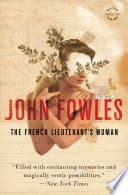
- The French Lieutenant's Woman
John Fowles
3.9 (47k) average on GoodreadsLiterary FictionExplores Victorian society, uses metafiction, and features multiple perspectives and ambiguous endings, challenging the reader's perception of truth.
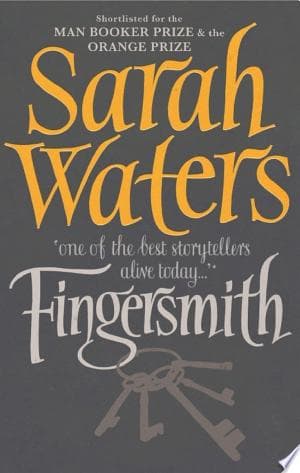
- Fingersmith
Sarah Waters
4.0 (81k) average on GoodreadsHistorical FictionA Victorian-era mystery with significant plot twists, unreliable narrators, and a focus on hidden identities and societal secrets.
- Angels & Demons
Dan Brown
3.9 (2.7M) average on GoodreadsThrillerA Harvard symbologist races through Rome's ancient sites, deciphering cryptic clues to unmask the Illuminati and stop a vengeful plot to destroy the Vatican with a stolen antimatter weapon.
- Gone Girl
Gillian Flynn
4.1 (2.3M) average on GoodreadsThrillerA wife's sudden disappearance on her fifth anniversary reveals a web of lies and psychological warfare, exposing the secrets within a seemingly perfect marriage.
- The Girl on the Train
Paula Hawkins
3.9 (2.1M) average on GoodreadsThrillerA woman’s fascination with a seemingly perfect couple she watches from her daily train commute leads her into a dark investigation when she witnesses something that shatters their idyllic image.




Enjoyed the summary?
A summary gives you the shape of the book. The book itself has the detail, the examples and the voice.
Find An Instance of the Fingerpost on AmazonAs an Amazon Associate, BookBrief earns from qualifying purchases. How we're funded