

Synopsis
Covers the whole plot, including the ending.
- Difficulty
- Medium
- Pacing
- Moderate
- Mood
- Atmospheric, Suspenseful, Dark, Romantic
- Read it if
- You love intricate, multi-layered historical mysteries with strong female characters, forbidden romance, and stunning plot twists.
- Skip it if
- You prefer straightforward narratives without extensive internal monologues or morally ambiguous characters.
Fingersmith Plot Summary
Covers the whole plot, including the ending.
Sue's Unconventional Upbringing and a Tempting Offer
Susan Trinder, known as Sue, tells about her early life in a London lodging house run by Mrs. Sucksby, a baby-farmer and receiver of stolen goods. Raised among thieves, Sue learns the trade and sees Mrs. Sucksby as her mother. One day, a man named Richard Rivers, or 'Gentleman,' approaches Mrs. Sucksby with a plan. He intends to marry a wealthy heiress, Maud Lilly, who lives on her uncle's estate, then have her committed to an asylum to take her fortune. He needs a 'fingersmith' to act as Maud's maid, earn her trust, and help him carry out the plan. Sue, despite her initial doubts, agrees, seeing it as a way to secure a good future for herself and Mrs. Sucksby.
Arrival at Briar and the Peculiar Household
Sue travels to Briar, the isolated country estate where Maud Lilly lives with her eccentric uncle, Christopher Lilly. Posing as a respectable maid, 'Susan Smith,' Sue starts her new job. The house is a maze of dusty rooms, and Maud is a quiet, reserved young woman, seemingly trapped by her uncle's studies. Mr. Lilly is a reclusive book collector, obsessed with his large collection of rare and often pornographic books. He makes Maud help him in his library, copying and reading aloud passages from these illicit texts for potential buyers. Sue watches the strange relationship between uncle and niece, feeling pity for Maud, even as she works towards betraying her.
A Deepening Bond and Shifting Loyalties
As Sue spends more time with Maud, their relationship develops. Maud, at first cold, slowly confides in Sue, sharing her loneliness and her dislike for her uncle and his degrading work. Sue feels drawn to Maud's vulnerability and intelligence, and their bond grows into an unexpected closeness. Sue starts to question the ethics of her part in Gentleman's plan, struggling with her loyalty to Mrs. Sucksby and her growing feelings for Maud. She feels a deep conflict, torn between the promise of wealth and the love she feels for the heiress she is meant to betray.
The Wedding and the Betrayal
The wedding day arrives. Gentleman, having won Maud over, marries her in a quiet ceremony. Soon after, the plan to commit Maud to an asylum begins. Sue, playing her role, helps to 'subdue' Maud, who seems to have a mental breakdown. Maud is then taken away, supposedly to a private asylum. Sue, believing she has finished her task and secured Maud's fate, returns to London with Gentleman, expecting her share of the fortune. However, a sense of unease starts to bother her, as she deals with the guilt of her actions and the strong memories of Maud's distress.
Sue's Confinement and the Shocking Revelation
Upon returning to Mrs. Sucksby's house, Sue is drugged and wakes up locked in a padded cell, in what appears to be a private asylum. She is horrified and confused, believing Gentleman and Mrs. Sucksby betrayed her. During her confinement, she slowly puts together information and overhears conversations that reveal a shocking truth: she is not Sue Trinder, the fingersmith, but Maud Lilly. The woman she thought was Maud was actually Sue Trinder, the real fingersmith, who had swapped places with her. The entire scheme, including her upbringing, had been an elaborate deception by Mrs. Sucksby and Gentleman to secure the inheritance for the real Sue.
Maud's Perspective: The Truth Unfolds
The story then switches to Maud's view, showing her life before Sue arrived. Born to a wealthy mother who died in childbirth, Maud was raised by her eccentric Uncle Lilly, who used her for his pornographic library. He taught her to read and write, specifically to help him with his illicit trade. Maud reveals she knew about Gentleman's plan and had been involved from the start. She had met the real Sue Trinder weeks before the 'switch,' and they had planned to swap identities, with Maud posing as Sue and Sue posing as Maud, to escape their oppressive lives and claim the fortune. Maud's seemingly helpless manner was an act.
The Plan's Execution and Maud's Escape
Maud, now free from the asylum and posing as Sue Trinder, returns to Mrs. Sucksby's house. She confronts Mrs. Sucksby, who, despite her part in the deception, truly cares for both girls. Maud learns more about her true parents and the complex web of lies that defined her life. She discovers her mother was Mrs. Sucksby's sister, and Mrs. Sucksby had been involved in a previous scheme with Uncle Lilly concerning Maud's inheritance. Maud, now knowing the full truth and with her new freedom, begins to navigate the world outside Briar and the asylum, seeking justice and a new beginning.
A Confrontation and a Reckoning
Maud, disguised as Sue, confronts Gentleman, who is now living off the inheritance he believes he has. She reveals her true identity and the full extent of the deception, exposing his villainy. She also confronts her Uncle Lilly, making him acknowledge his abuses and the truth about her mother's past. The confrontation is tense, as Maud, no longer timid, stands firm. The complex web of lies, betrayals, and hidden motives starts to unravel, leading to a dramatic moment where the true villains are exposed and some justice is sought. The old system of manipulation and exploitation begins to break down.
Reunion and Reconciliation
After their separate experiences and discoveries, Maud and Sue reunite. Sue, released from the asylum (after Maud's help and the scheme's exposure), is at first confused and angry. Their reunion is full of betrayal, hurt, and lingering affection. Slowly, through honest talks and shared understanding of their manipulation, they begin to heal the wounds from the deception. They reconcile, recognizing the depth of their bond and the unique circumstances that brought them together. Their love, formed in deceit, becomes stronger and more genuine.
A New Beginning
With the various schemes dismantled and the truth known, Maud and Sue are free to make their own way. They decide to leave their pasts behind and build a new life together. The inheritance, now theirs (or a portion of it, after everything settles), gives them the means to live independently. Their journey is one of healing, trust, and rebuilding. The novel ends with them starting a future together, having found not only love but also a deep sense of belonging and family in each other, leaving behind the shadows of Briar and the London slums.
Principal Figures
Susan 'Sue' Trinder
Protagonist
An orphaned fingersmith entangled in a complex inheritance scheme, who discovers her true identity.
Sue is initially presented as a street-smart, pragmatic orphan raised by Mrs. Sucksby among petty thieves. She is fiercely loyal to Mrs. Sucksby and her 'family,' but also possesses a compassionate heart, which becomes evident in her growing affection for Maud. She is a survivor, quick-witted and adaptable. Her initial motivation is to secure a better life through the inheritance scheme, but her feelings for Maud complicate her resolve. Her journey is one of profound self-discovery, as she uncovers her true identity as Maud Lilly and re-evaluates everything she thought she knew about her life.
Relationships: Maud Lilly (Intimate, complex, initially manipulative but develops into profound love and partnership); Mrs. Sucksby (Maternal figure, but also a manipulator and accomplice in the scheme); Richard 'Gentleman' Rivers (Co-conspirator, later an antagonist and betrayer)
Maud Lilly
Protagonist
A seemingly fragile heiress, forced to work for her uncle, who orchestrates a clever deception to escape her confinement.
Maud is initially portrayed as a demure, intellectual, and vulnerable heiress, trapped in her uncle's isolated mansion and forced to assist him with his illicit library. However, this persona is a carefully constructed facade. She is intelligent, cunning, and resourceful, having endured years of emotional abuse and manipulation from her uncle. Her true nature is revealed when the narrative shifts, showing her to be the mastermind behind the identity switch, driven by a desperate desire for freedom and revenge against her uncle. Her love for Sue is genuine, but initially intertwined with her manipulative plan.
Relationships: Susan 'Sue' Trinder (Intimate, complex, initially manipulative but develops into profound love and partnership); Uncle Christopher Lilly (Abusive guardian, exploiter, her primary antagonist); Mrs. Sucksby (Co-conspirator, maternal figure, her true aunt); Richard 'Gentleman' Rivers (Co-conspirator, later an antagonist)
Mrs. Sucksby
Supporting
A pragmatic baby-farmer and fence who acts as a maternal figure to Sue, but is deeply involved in the inheritance scheme.
Mrs. Sucksby is a formidable and complex character. She runs a lodging house that doubles as a hub for petty criminals and a 'baby-farm.' She genuinely loves Sue and views her as her own daughter, providing her with a rough but loving upbringing. However, she is also a shrewd and amoral manipulator, deeply entangled in the inheritance scheme involving Maud and Sue. Her motivations are a blend of self-preservation, financial gain, and a protective, albeit twisted, love for the girls. She is revealed to be Maud's aunt, adding another layer to her complicated loyalties and actions.
Relationships: Susan 'Sue' Trinder (Adoptive mother, co-conspirator); Maud Lilly (Niece, co-conspirator, ultimately a beloved family member); Richard 'Gentleman' Rivers (Business associate, co-conspirator)
Richard 'Gentleman' Rivers
Antagonist
A charming but ruthless con artist who devises the scheme to defraud Maud Lilly.
Gentleman is the primary antagonist, a smooth-talking, opportunistic con artist. He is intelligent and calculating, possessing a deceptive charm that he uses to manipulate others, particularly Maud. His sole motivation is wealth, and he is utterly devoid of moral scruples, willing to commit Maud to a madhouse to achieve his ends. He is a master of disguise and deception, adept at playing various roles to suit his nefarious purposes. He ultimately betrays everyone, including Mrs. Sucksby and, unknowingly, the real Maud.
Relationships: Susan 'Sue' Trinder (Co-conspirator, later her betrayer); Maud Lilly (Target of his scheme, his 'wife' in the deception); Mrs. Sucksby (Business associate, co-conspirator)
Christopher Lilly
Antagonist
Maud's reclusive and perverse uncle, obsessed with his pornographic library and the architect of Maud's intellectual confinement.
Uncle Lilly is Maud's guardian and a significant antagonist. He is a reclusive scholar, consumed by his vast and illicit library of erotica and pornography. He forces Maud to assist him in his work, reading and copying passages from the books, which is a form of emotional and intellectual abuse. He is a controlling and manipulative figure, obsessed with preserving his collection and maintaining his secluded lifestyle. His past actions, particularly concerning Maud's mother, are central to the novel's larger mystery and the inheritance scheme. He represents a patriarchal and exploitative power structure.
Relationships: Maud Lilly (Abusive guardian, exploiter, uncle); Mrs. Sucksby (Past accomplice, brother-in-law)
Dainty
Supporting
One of Mrs. Sucksby's 'family' of petty thieves, a loyal friend to Sue.
Dainty is a young woman living in Mrs. Sucksby's house, part of the 'family' of fingersmiths. She is Sue's closest friend in the early part of the novel, sharing a camaraderie born of their shared upbringing in the criminal underworld. Dainty is fiercely loyal and protective of Sue, demonstrating genuine affection. She serves as a grounding figure for Sue, representing the life Sue believes she is leaving behind. Her concern for Sue's well-being is evident, and she is one of the few characters who offers unconditional support.
Relationships: Susan 'Sue' Trinder (Close friend, adopted sister)
John Ibbs
Supporting
A kindly but simple man from Mrs. Sucksby's household, smitten with Sue.
John Ibbs is another member of Mrs. Sucksby's household, a simple and good-natured man who works as a general handyman and helps with the children. He is deeply, if somewhat naively, in love with Sue and dreams of marrying her. His devotion to Sue is genuine and provides a stark contrast to the manipulative relationships she experiences elsewhere. He represents a simpler, more honest life that Sue might have had, had she not been drawn into the larger scheme. His presence highlights Sue's internal conflict and her longing for genuine affection.
Relationships: Susan 'Sue' Trinder (Unrequited love interest, friend)
Charles
Mentioned
Mrs. Sucksby's deceased son, whose memory deeply affects her.
Charles is Mrs. Sucksby's son, who died young. Although never appearing directly in the novel, his memory profoundly influences Mrs. Sucksby's character and motivations. His death is a source of deep grief for her, and it is hinted that some of her actions, particularly her desire to provide a secure future, are driven by a lingering maternal protectiveness, perhaps subconsciously projecting onto Sue and Maud. His existence adds a layer of pathos to Mrs. Sucksby's otherwise hardened exterior.
Relationships: Mrs. Sucksby (Son)
Themes & Insights
Identity and Self-Discovery
The novel explores how identity changes and is formed. Sue's entire life is a lie, and her journey is about removing false stories to find her true self as Maud Lilly. Maud, in turn, creates a false identity as 'Sue' to escape her past. Both women must face who they truly are, apart from the roles others imposed on them. The constant questioning of names, parents, and personal history makes the reader consider how much of one's identity is natural versus how much is shaped by environment and manipulation. This idea is central to the plot, as the 'switch' forces both main characters into deep self-reflection.
“What was I, if not Sue Trinder? What was I, if not a fingersmith? I had no other self to be.”
Deception and Manipulation
Deception drives the plot, woven into every part of the story. From Gentleman's first con to Mrs. Sucksby's elaborate plan, and Maud's own calculated act, characters constantly mislead and manipulate each other. The novel shows how easily people can be fooled, especially when trust is involved. The dual narrative structure executes this idea well, as the reader is initially deceived alongside Sue, only for the truth to be dramatically revealed. This idea goes beyond plot points to explore the psychological impact of living a lie and the moral compromises made for freedom or money.
“I had been a part of a deception so vast, so perfect, that it had swallowed my very name.”
Love and Betrayal
The complex relationship between Sue and Maud is at the novel's core, showing both deep love and devastating betrayal. Their initial bond is based on a lie, with Sue planning to betray Maud. However, real affection grows, only to be broken by Maud's own calculated deceit. The novel explores the pain of being betrayed by someone you love, but also the chance for forgiveness and the strength of true connection. This idea extends to Mrs. Sucksby's complicated love for both girls, which exists alongside her manipulative actions, showing the messy reality of human affection.
“I loved her, I hated her, I loved her again, and all the time I knew I would never truly be free of her.”
Class and Social Mobility
The contrast between Mrs. Sucksby's London slums and the isolated, oppressive grandeur of Briar shows the strict class structures of Victorian England. Sue, from the lower class, tries to escape poverty through the inheritance scheme, wanting the social mobility that wealth offers. Maud, though wealthy, is trapped by her social standing and her uncle's control, showing that privilege does not equal freedom. The novel subtly critiques the limits placed on people by their birth and circumstances, and the desperate actions people take to rise above their assigned social roles.
“What was a name, after all? Just a word. But a fortune, that was a thing of substance.”
Sexual Repression and Exploitation
The common idea of sexual repression and exploitation is shown through Uncle Lilly's pornographic library and his treatment of Maud. Maud is forced into a role that is both intellectually stimulating and deeply humiliating, reading and copying illicit texts for her uncle's perverse pleasure and profit. This shows the societal limits on women's sexuality and agency in the Victorian era, where they could be both objects of desire and victims of exploitation. The implicit and explicit sexual tension between Sue and Maud also challenges these norms, offering an alternative view of female desire and intimacy.
“He taught me to read, not for pleasure, but for his pleasure. To read the words that would burn my cheeks and stain my soul.”
Plot Devices & Literary Techniques
Dual Narrative / Shifting Perspective
The story is told from two distinct first-person perspectives, creating suspense and revealing hidden truths.
The novel is famously divided into three parts, with the first part narrated by Sue Trinder, and the second part by Maud Lilly. This shift in perspective is a crucial plot device. It initially creates a sense of reliability around Sue's account, only to completely upend the reader's understanding of events when Maud's narrative reveals the full extent of the deception and the identity switch. This technique generates immense suspense, allows for dramatic reveals, and forces the reader to re-evaluate every detail presented in the first half of the book, creating a powerful sense of disorientation and enlightenment.
Unreliable Narrator
Both protagonists, Sue and Maud, serve as unreliable narrators at different points, manipulating the reader's perception.
In the first part, Sue is an unreliable narrator because she is fundamentally ignorant of the larger scheme and her own true identity. Her perspective, though honest from her limited understanding, leads the reader to believe a false reality. In the second part, Maud is also an unreliable narrator in retrospect, as her earlier actions and words were part of a performance designed to deceive. This device keeps the reader constantly questioning what is real and who can be trusted, mirroring the characters' own experiences of betrayal and revelation. It's a key element in the novel's mystery and suspense.
The 'Switch' / Identity Swap
A central plot point where two characters exchange identities to achieve their goals.
The core of the novel's intricate plot revolves around the planned identity swap between the true Maud Lilly and the true Sue Trinder. This device is not merely a twist; it's the engine that drives the entire narrative, dictating the characters' actions, motivations, and ultimate fates. It allows for the exploration of themes like identity, deception, and the malleability of self. The meticulous planning and execution of the switch, and its subsequent unraveling, form the backbone of the mystery and the emotional impact of the story, forcing both characters into unfamiliar roles and ultimately leading to their self-discovery.
The Pornographic Library
A symbolic setting and plot catalyst, representing exploitation, intellectual confinement, and hidden desires.
Uncle Lilly's vast library of rare and often illicit books serves as more than just a setting; it's a powerful symbol. It represents the oppressive and perverse world Maud is trapped in, where knowledge is twisted for exploitation rather than enlightenment. The forced act of Maud reading and copying these texts is a form of sexual and intellectual confinement. The library also acts as a catalyst for the plot, as it's the source of Maud's inheritance and the reason for Gentleman's scheme. It symbolizes the dark underbelly of Victorian society and the hidden desires that lurk beneath a veneer of respectability.
The Asylum
A physical and metaphorical prison, representing societal control, madness, and the ultimate threat of being silenced.
The asylum is a crucial setting and a potent symbol. For Sue (the real Maud), it represents the ultimate betrayal and the loss of her identity, a place where sanity is questioned and individual agency is stripped away. For Maud (the real Sue), it is the intended destination for her 'victim.' The threat of the asylum hangs over both women, representing the societal power to label and confine those who challenge norms or become inconvenient. It highlights the vulnerability of women in Victorian society to being deemed 'mad' and silenced, and serves as a literal and metaphorical prison from which both protagonists must escape.
Fingersmith Quotes
“My name, in those days, was Susan Trinder. People called me Sue. I know the colour of my hair, and of my eyes: I have a memory of my face, which is like a memory of a face in a book.”
“There is a sort of ache, I think, that comes from not being able to touch the thing you want.”
“I had been made a fool of. I had been made a fool of, and I had made a fool of myself.”
“She had a way of looking at you that made you feel she knew all your secrets, and forgave you for them.”
“The world is full of things that are not what they seem.”
“I thought I was hard, but I was only brittle.”
“Love is a kind of theft, I think. It takes something from you, and gives you something else in return.”
“You can't trust anyone in this world, not even yourself.”
“The past is a ghost that haunts us, but it is also the ground we stand on.”
“I wanted to be the one to save her, but I was the one who needed saving.”
“In the dark, all cats are grey, and all secrets are safe.”
“Sometimes the heart knows things the mind cannot explain.”
“We are all actors in our own dramas, but some of us have better scripts than others.”
“The truth is a slippery thing, and once you let it go, it's hard to catch again.”
Quiz
10 questions on the plot and the characters. Each answer comes with a short explanation.
Question 1
What is the primary occupation of Sue Trinder's adoptive family in London?
- Factory workers
- Petty thieves (fingersmiths)
- Street performers
- Servants in wealthy households
Show answer
B. Petty thieves (fingersmiths) Sue grows up among petty thieves known as 'fingersmiths' under Mrs. Sucksby's care, which is central to the plot's criminal underworld setting.
Question 2
Who is the other orphan whose fate is linked to Sue's from birth?
- Maud Lilly
- Richard Rivers
- Mrs. Sucksby
- Gentleman
Show answer
A. Maud Lilly Maud Lilly grows up in a gloomy mansion, and her life becomes intertwined with Sue's through a complex scheme involving inheritance and deception.
Question 3
What year is the novel primarily set in?
- 1850
- 1862
- 1875
- 1888
Show answer
B. 1862 The book is set in London 1862, a key detail that establishes its Victorian-era historical context.
Question 4
What is the initial scheme that Sue becomes involved in regarding Maud Lilly?
- To help Maud escape an arranged marriage
- To steal Maud's inheritance by having her committed to an asylum
- To kidnap Maud for ransom
- To forge Maud's signature on legal documents
Show answer
B. To steal Maud's inheritance by having her committed to an asylum Sue is recruited as a maid to Maud to help a con man, Gentleman, trick Maud into marriage and then have her declared insane to steal her fortune.
Question 5
How does the relationship between Sue and Maud evolve during the scheme?
- They remain enemies throughout
- They develop a romantic bond that complicates the plan
- Sue betrays Maud immediately
- Maud discovers Sue's identity early on
Show answer
B. They develop a romantic bond that complicates the plan As Sue spends time with Maud, they fall in love, which creates moral dilemmas and twists in the plot, central to the romance and mystery themes.
Question 6
What role does Mrs. Sucksby play in Sue's life?
- She is Sue's biological mother
- She is a cruel guardian who exploits Sue
- She is a rough but loving caregiver who raises Sue among thieves
- She is a wealthy benefactor who adopts Sue
Show answer
C. She is a rough but loving caregiver who raises Sue among thieves Mrs. Sucksby provides a maternal, albeit criminal, upbringing for Sue, influencing her loyalty and actions throughout the story.
Question 7
Which of these is a major theme explored in 'Fingersmith'?
- The corruption of the industrial revolution
- Deception and identity
- The glory of British imperialism
- The simplicity of rural life
Show answer
B. Deception and identity The novel delves into themes of deception, with characters assuming false roles and identities, driving the plot's twists and mysteries.
Question 8
What shocking revelation occurs about Sue's and Maud's backgrounds later in the book?
- They are long-lost sisters
- Their identities were switched at birth
- They are both heirs to the same fortune
- They are unrelated and the scheme was a misunderstanding
Show answer
B. Their identities were switched at birth A major plot twist reveals that Sue and Maud were swapped as infants, meaning Sue is the true heiress and Maud was raised among thieves, upending their perceived roles.
Question 9
How does the setting of Maud's gloomy mansion contribute to the story?
- It symbolizes freedom and escape
- It represents Victorian oppression and secrecy, particularly for women
- It serves as a comic relief from the criminal underworld
- It is where all characters happily reunite
Show answer
B. It represents Victorian oppression and secrecy, particularly for women The mansion, where Maud is confined and forced to transcribe obscene books, highlights themes of gender oppression and hidden truths in Victorian society.
Question 10
What is the ultimate fate of Sue and Maud by the end of the novel?
- They part ways forever after the scheme fails
- They are both imprisoned for their crimes
- They escape together and build a new life, overcoming the deception
- One dies tragically while the other inherits the fortune
Show answer
C. They escape together and build a new life, overcoming the deception Despite the twists and betrayals, Sue and Maud reconcile and find happiness together, emphasizing the romance and resilience themes in the conclusion.
Fingersmith FAQ
What is 'Fingersmith' about?
'Fingersmith' follows Sue Trinder, an orphan raised among petty thieves in Victorian London, who becomes embroiled in a complex scheme to defraud a wealthy heiress, Maud Lilly. The plot involves deception, betrayal, and unexpected romance, with multiple twists that reveal hidden connections between the characters. The story explores themes of identity, class, and desire through its intricate narrative structure.
Why should I read 'Fingersmith'?
You should read 'Fingersmith' for its masterful plot twists, rich historical detail of 1860s London, and complex exploration of gender and sexuality. Sarah Waters creates deeply psychological characters whose motivations and relationships drive a suspenseful, layered story that subverts traditional Victorian tropes. The novel's clever structure and shocking revelations make it a compelling page-turner with literary depth.
What is the background/setting of 'Fingersmith'?
The novel is set in 1862 London and its surroundings, contrasting two distinct environments: the gritty, impoverished world of thieves in Borough (where Sue lives with Mrs. Sucksby) and the oppressive, gothic atmosphere of Briar, the remote country estate where Maud Lilly resides. This historical setting highlights Victorian class divisions, gender restrictions, and the underground criminal networks of the time.
What are the most memorable quotes?
Key quotes include: 'I had been made a thief from the moment I drew breath' (Sue's reflection on her fate), and Maud's lament, 'I am a book, and I can be read.' Another significant line is Mrs. Sucksby's pragmatic wisdom: 'There's many a girl been ruined by less.' These lines encapsulate themes of destiny, objectification, and survival central to the novel.
What writing style does the author use?
Sarah Waters employs a dense, atmospheric prose style rich with Victorian-era detail, using dual first-person narratives from Sue and Maud's perspectives. The writing is meticulously researched to evoke 1860s London, with a focus on sensory descriptions and psychological interiority. Waters' style builds suspense through gradual revelation and unreliable narration, mirroring the novel's themes of deception.
What minor details add significant meaning?
Minor details like Sue's locket (which contains a hidden picture linking her to Maud) and the repeated motif of gloves (symbolizing hidden identities and touch) carry great significance. The meticulous descriptions of Maud's uncle's library, where she is forced to transcribe pornography, subtly foreshadow her rebellion and the novel's exploration of suppressed desire.
What are some subtle foreshadowing moments?
Early scenes where Mrs. Sucksby shows unusual affection for Sue hint at their true biological connection. Maud's initial resistance to the scheme against her, and her knowledge of Sue's background, foreshadow her own deceptive plans. The recurring references to 'fingersmiths' not just as thieves but as manipulators of fate subtly prepare readers for the plot's many betrayals.
What unexpected character connections exist?
The most shocking connection is that Mrs. Sucksby is actually Sue's birth mother, having swapped her with Maud as babies to secure Maud's inheritance. This reveals that Sue and Maud were switched at birth, making Maud the true daughter of thieves and Sue the rightful heiress to Briar. These hidden ties drive the central conflicts of identity and betrayal.
What are unspoken character motivations?
Sue's deep-seated desire for belonging and family drives her initial compliance with the plot against Maud, despite her growing affection. Maud's motivation stems from a lifetime of repression under her uncle's control, leading her to secretly plan her own escape using Sue. Mrs. Sucksby's actions are motivated by maternal love for Sue and a ruthless determination to secure her future, even through deception.
What psychological complexities do characters exhibit?
Sue grapples with conflicting loyalties between her criminal 'family' and her genuine feelings for Maud, revealing her capacity for both cunning and empathy. Maud exhibits a dual nature: outwardly submissive but inwardly calculating, shaped by years of psychological abuse. Their relationship explores the complexity of desire, trust, and self-discovery in a restrictive society.
What are the major emotional turning points?
Key emotional turns include Sue's realization of her love for Maud during their intimate moments at Briar, Maud's betrayal when she has Sue committed to an asylum, and Sue's devastating discovery of the baby swap. The climax where Mrs. Sucksby confesses the truth and sacrifices herself for Sue provides a poignant resolution to their twisted maternal bond.
How do relationship dynamics evolve?
Sue and Maud's relationship evolves from manipulative scheme to genuine intimacy, then to bitter betrayal after the asylum plot, and finally to a hard-won reconciliation based on mutual understanding. Mrs. Sucksby's relationship with Sue shifts from seemingly maternal care to revealed biological connection, culminating in her sacrificial act. These dynamics underscore themes of trust and identity.
Which parts remain ambiguous or open-ended?
The novel leaves ambiguous whether Sue and Maud's final reunion leads to lasting happiness or remains fraught with the shadows of their past betrayals. The fate of characters like Gentleman Richard is not fully resolved, and the broader societal implications of their escaped criminal lives are left open. The ending suggests hope but doesn't guarantee a traditional 'happy ever after.'
What are controversial scenes or decisions?
Controversial scenes include Maud's calculated decision to have Sue committed to a brutal asylum, which some readers see as unforgivable betrayal. Mrs. Sucksby's lifelong deception of both girls, including the baby swap, raises ethical questions about maternal love and manipulation. The graphic depictions of Victorian asylums and pornography transcription also provoke debate about exploitation and agency.
'Fingersmith' ending explained: how it ends & what it means
The novel ends with Sue and Maud reunited after Mrs. Sucksby's execution, living together in London with their shared inheritance. This conclusion represents a hard-won freedom from the plots that controlled them, suggesting they have forged a new identity outside societal constraints. The ending emphasizes themes of self-determination and the possibility of redemption through honest love, despite a past built on deception.
What is the significance of the title 'Fingersmith'?
The title 'Fingersmith' refers literally to petty thieves (like Sue's upbringing), but metaphorically extends to all characters who 'pick' or manipulate others' lives—including Maud transcribing texts with her fingers, and the broader deceptions that drive the plot. It symbolizes how each character uses cunning and skill to navigate a society that seeks to control them, particularly through gender and class constraints.
How does the novel subvert Victorian literary tropes?
Waters subverts tropes by making her female protagonists active conspirators rather than passive victims, and by centering a lesbian romance in a genre typically focused on heterosexual relationships. The gothic elements of Briar are undermined by revealing its horrors as man-made rather than supernatural. The novel also challenges class narratives by showing how identity is constructed, not inherent.
About the author

Sarah Ann Waters is a Welsh novelist. She is best known for her novels set in Victorian society and featuring lesbian protagonists, such as Tipping the Velvet and Fingersmith.
Similar books
- The Paying Guests
Sarah Waters
3.4 (73k) average on GoodreadsLiterary FictionAnother Sarah Waters novel with a rich historical setting, queer romance, and a sense of impending doom.
- Alias Grace
Margaret Atwood
4.0 (111k) average on GoodreadsLiterary FictionFeatures a compelling female protagonist accused of a crime, exploring themes of truth, memory, and societal constraints in a historical setting.
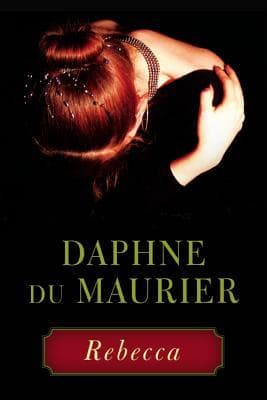
- Rebecca
Daphne du Maurier
4.2 (450k) average on GoodreadsThrillerA gothic mystery with a strong sense of place, psychological tension, and a dark secret at its heart, told through a female narrator's perspective.
- Tipping the Velvet
Sarah Waters
4.0 (58k) average on GoodreadsHistorical FictionWaters' own debut novel, Tipping the Velvet, shares Fingersmith's focus on lesbian identity and performance within Victorian society. However, Fingersmith showcases a significant maturation in Waters' craft, particularly in its tighter plotting and more sophisticated use of narrative structure. Tipping the Velvet is more of a picaresque journey, following Nancy Astley's adventures through music halls and cross-dressing, while Fingersmith is a more contained and intense psychological thriller, driven by secrets and betrayals. The romance in Fingersmith feels more deeply intertwined with the central mystery, creating a higher stakes emotional core.
- To Kill a Mockingbird
Harper Lee
4.3 (4.5M) average on GoodreadsHistorical FictionIn the 1930s Jim Crow South, Harper Lee writes about racial injustice, moral growth, and the quiet courage of a lawyer father, Atticus Finch, as seen through his young daughter's eyes.
- The Great Gatsby
F. Scott Fitzgerald
3.9 (3.8M) average on GoodreadsHistorical FictionIn the opulent Roaring Twenties, a mysterious millionaire's lavish parties hide his desperate, tragic pursuit of a lost love, exposing the emptiness within the American Dream.





Enjoyed the summary?
A summary gives you the shape of the book. The book itself has the detail, the examples and the voice.
Find Fingersmith on AmazonAs an Amazon Associate, BookBrief earns from qualifying purchases. How we're funded