
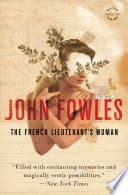
Synopsis
Covers the whole plot, including the ending.
- Difficulty
- Medium
- Pacing
- Moderate
- Mood
- Literary, Reflective, Romantic, Challenging
- Read it if
- You enjoy complex historical novels that deconstruct Victorian society and explore the nature of storytelling and free will.
- Skip it if
- You prefer straightforward narratives with definitive endings and clear character motivations.
The French Lieutenant's Woman Plot Summary
Covers the whole plot, including the ending.
Lyme Regis and the Mysterious Woman
In 1867, Charles Smithson, a wealthy paleontologist, visits Lyme Regis with his fiancée, Ernestina Freeman. While walking, Charles sees a woman looking out to sea. He learns she is Sarah Woodruff, a former governess disgraced for an alleged affair with a French lieutenant who left her. Sarah is now avoided by society and lives alone, known as 'the French Lieutenant's Woman.' Charles is immediately drawn to her sadness and the scandal, finding her very different from the conventional Ernestina.
Growing Fascination and Secret Meetings
Charles's initial pity for Sarah quickly turns into a strong fascination. He finds reasons to visit the isolated Undercliff where Sarah often walks, hoping to see her. During one meeting, Sarah shows a more complex side, hinting that she chose her isolation. Charles feels pulled into her mind, a pull he cannot explain. These secret meetings become more frequent, creating a conflict between his duty to Ernestina and his growing interest in Sarah.
The Proposal and Sarah's Plea
Charles, struggling with his feelings, proposes to Ernestina again, confirming his commitment. However, Sarah, after hearing about his engagement, seeks him out, supposedly for medical advice for her employer, Mrs. Poulteney. During their talk, Sarah admits her deep despair, suggesting Charles is her only hope. She describes herself as trapped and wanting a future beyond Victorian society. Her vulnerability and intense gaze further involve Charles, making him question his upcoming marriage and planned life.
The Confession and the Lie
Sarah continues to influence Charles, sharing more about her past. She confesses that the French lieutenant, Varguennes, did not abandon her; she chose to be with him, knowing the social cost, as an act of defiance and a search for authenticity. She admits to deliberately creating her reputation as a fallen woman to escape Victorian life's expectations. This confession, while shocking, also deepens Charles's admiration for her unusual spirit, further separating him from Ernestina's polite society.
The Break with Ernestina
Charles's inner conflict peaks after an intense meeting with Sarah in an abandoned barn. Though they are not physically intimate, their connection is clear. Later, overwhelmed by his feelings and Sarah's influence, Charles tells Ernestina he cannot marry her. This decision causes a scandal for Ernestina and her family, and for Charles, who loses his social standing and money. He ends the engagement, fully committing to the unknown path Sarah represents, believing she is his true match.
The Search for Sarah
After Charles breaks his engagement, he looks for Sarah, expecting to find her. Instead, he discovers she has vanished from Lyme Regis without a trace. Her disappearance leaves Charles confused and desperate. He searches the town, asking everyone if they saw her, but finds nothing. The woman who had consumed his thoughts and changed his life is now gone, leaving him to deal with the results of his actions and the emptiness she left.
Scandal and Social Ruin
Charles's decision to break his engagement has serious consequences. He faces social rejection, and the Freeman family sues him for breach of promise. His reputation is ruined, and his financial future is damaged. He must leave Lyme Regis, his academic career uncertain. This time is a downfall for Charles, stripped of his conventional life and left with only Sarah's memory and the questions her disappearance raises. He becomes an outcast, like Sarah, but without her apparent self-control.
Exile and Self-Discovery
Devastated, Charles leaves England and travels through Europe and America to escape the scandal and find new purpose. He continues his paleontology studies but also thinks deeply about his past choices, his Victorian upbringing, and Sarah's impact on his ideas of freedom and truth. This exile, though painful, helps him shed some of his ingrained Victorian ways and develop a more independent, modern view, preparing him for an uncertain future.
The First Ending: Reconciliation and Convention
The narrator steps in, offering a traditional Victorian ending where Charles eventually finds Sarah. They get back together, and she explains her disappearance as a test of his commitment and an act of independence. They marry and live a respectable, if somewhat unusual, life. This ending gives the reader closure and fits the romantic expectations of the time. However, the narrator questions its truth, suggesting it is just one possible outcome, showing how artificial literary conventions can be.
The Second Ending: Sarah's Independence
In a very different ending, Charles finally finds Sarah three years later in London. She is living with the Pre-Raphaelite artist Dante Gabriel Rossetti, working as his muse. Sarah, now independent, reveals that her past confessions and pleas were partly planned to free herself from Victorian limits. She rejects Charles, saying she needs to live for herself, not as a part of any man. This ending leaves Charles heartbroken but also enlightened, facing Sarah's modern spirit and his own lingering Victorian expectations.
The Third Ending: Ambiguity and Freedom
The narrator again suggests a third, more unclear ending. After Sarah rejects him at Rossetti's house, Charles leaves, shattered but also deeply changed. He is left alone to think about his experiences and Sarah's freedom. This ending highlights life's uncertainty and the lack of clear answers. Charles must make his own way, stripped of his illusions, but also possibly freed from his past, embracing a future defined by choice rather than social expectation. It is the most modern ending.
Principal Figures
Charles Smithson
Protagonist
A Victorian gentleman torn between convention and forbidden desire.
Charles Smithson is a privileged, educated, and somewhat complacent paleontologist, deeply embedded in the social strictures of Victorian England. Initially engaged to Ernestina Freeman, he represents the conventional, rational man of his era. His encounter with Sarah Woodruff slowly chips away at his Victorian sensibilities, exposing his hidden desires for authenticity and freedom. He is intelligent and observant but initially lacks self-awareness, relying on societal norms to guide his life. His journey is one of disillusionment and painful self-discovery, leading him to question everything he once held dear.
Relationships: Ernestina Freeman (Fiancée, symbol of Victorian convention and duty); Sarah Woodruff (Object of obsession, illicit love interest, catalyst for his transformation); Mrs. Poulteney (Sarah's employer, a symbol of rigid religious hypocrisy)
Sarah Woodruff
Antagonist/Catalyst
The enigmatic 'French Lieutenant's Woman,' a symbol of defiance and modern independence.
Sarah Woodruff is a former governess ostracized by Lyme Regis society for an alleged affair with a French lieutenant. She is melancholic, intelligent, and deeply unconventional, deliberately cultivating her outcast status to achieve a form of personal freedom. Sarah is a complex character, embodying both Victorian repression and a nascent modern feminism. She is an unreliable narrator of her own story, using her perceived vulnerability and suffering to manipulate Charles and ultimately pursue her own independence. Her true motives remain elusive, making her a powerful symbol of the unknowable feminine.
Relationships: Charles Smithson (Object of manipulation, potential lover, means to her liberation); Ernestina Freeman (Rival, foil to her unconventionality); Mrs. Poulteney (Employer, symbol of the oppressive Victorian morality she defies)
Ernestina Freeman
Supporting
Charles's conventional fiancée, representing Victorian societal expectations.
Ernestina Freeman is Charles's fiancée, a charming, wealthy, and conventionally beautiful young woman. She embodies the ideal Victorian wife: innocent, demure, and eager to please. She is genuinely fond of Charles and represents the stable, respectable future he is expected to have. However, her superficiality and lack of deep intellectual curiosity make her a stark contrast to Sarah. Her role is primarily to highlight Charles's internal conflict and the suffocating nature of Victorian expectations. Her heartbreak after Charles breaks off the engagement underscores the harsh social consequences of defying convention.
Relationships: Charles Smithson (Fiancée, symbol of his duty and societal obligation); Sarah Woodruff (Rival, antithesis of her conventionality)
The Narrator
Meta-fictional Character
An omniscient, self-aware authorial voice who comments on the story and its conventions.
The Narrator is a distinct character in the novel, breaking the fourth wall to directly address the reader, comment on the process of storytelling, and offer alternative endings. This figure is both an omniscient observer of the Victorian world and a modern intellectual, providing historical context, philosophical musings, and critical analysis of Victorian literature and society. The Narrator's presence emphasizes the constructed nature of fiction and challenges the reader to question narrative authority and the illusion of reality. He is a guide, a philosopher, and a provocateur, constantly reminding the reader that they are engaging with a work of art.
Relationships: Reader (Direct address, intellectual engagement); John Fowles (implied) (Authorial persona)
Mrs. Poulteney
Supporting
Sarah's employer, a symbol of rigid Victorian religious hypocrisy.
Mrs. Poulteney is a wealthy, devoutly religious, and deeply hypocritical widow who employs Sarah Woodruff. She embodies the most rigid and judgmental aspects of Victorian morality, using her piety to justify her cruel treatment of Sarah and others. She is obsessed with maintaining appearances and enforcing strict social codes, particularly concerning female chastity and obedience. Her character serves as a foil to Sarah's rebellious spirit and highlights the oppressive social environment from which Sarah seeks to escape. She is a source of both comedic relief and genuine antagonism.
Relationships: Sarah Woodruff (Employer, oppressor); Charles Smithson (Acquaintance, recipient of her social pronouncements)
Dr. Grogan
Supporting
A pragmatic and intelligent physician, Charles's confidant.
Dr. Grogan is a well-respected, intelligent, and relatively progressive physician in Lyme Regis. He serves as Charles's confidant and offers a more scientific and less judgmental perspective on Sarah's situation than most other characters. He is a man of reason and observation, capable of seeing beyond superficial appearances, though even he struggles to fully comprehend Sarah's complex psychology. He represents a glimmer of enlightened thought within the Victorian era and provides Charles with some intellectual companionship and grounded advice, though Charles often chooses to ignore it.
Relationships: Charles Smithson (Confidant, intellectual peer); Sarah Woodruff (Patient, subject of psychological speculation)
Themes & Insights
Freedom vs. Constraint
This theme looks at the conflict between personal freedom and the strict social, moral, and sexual rules of Victorian society. Sarah Woodruff shows this struggle, choosing to be an outcast to escape the expectations placed on women. Charles, initially shaped by these rules, struggles with his desire for freedom when he meets Sarah's unusual spirit. The multiple endings emphasize this theme, showing different levels of freedom or re-entrapment for the characters, and for the reader, the freedom to choose a story outcome. The novel itself, through its meta-fictional elements, aims to free itself from typical story rules.
“I am not to be pitied. I have chosen my own fate.”
The Nature of Truth and Reality
Fowles constantly questions what is real and true in the story. Sarah's character is ambiguous; her confessions and reasons constantly change, making it impossible for Charles (and the reader) to know her true nature. The narrator's comments, offering different historical contexts, philosophical thoughts, and multiple endings, break the idea of a single, objective reality. This theme challenges the reader to look closely at story authority and the constructed nature of both historical and fictional accounts, suggesting that truth is often personal and hard to grasp.
“The novelist is a god, and his reader must worship him in silence.”
Victorianism vs. Modernity
The novel clearly contrasts the end of the Victorian era with the start of modern times. Charles Smithson represents the Victorian gentleman, bound by duty and social rules. Sarah Woodruff, with her rebellious spirit and independence, embodies the emerging modern woman, pushing against the patriarchy and seeking self-definition outside marriage. The novel highlights Victorian hypocrisy, class differences, and sexual repression, while also showing how individuals like Sarah and, eventually, Charles, begin to break free, hinting at 20th-century ideas and social change.
“I was born into the age of steam, and I have lived to see the age of electricity.”
The Role of the Author and Reader
Through extensive comments about its own making, Fowles explores the relationship between the author, the fictional world, and the reader. The narrator often steps out of the story to discuss writing, the limits of historical knowledge, and his choices as the 'god' of his creation. By offering multiple endings, the novel directly invites the reader to take part in the storytelling, asking them to consider which ending feels most true or satisfying. This theme breaks down traditional story authority and lets the reader become an active interpreter rather than a passive receiver of the story.
“How can I, who know the future, tell you what happened?”
Plot Devices & Literary Techniques
Metafiction
The novel explicitly draws attention to its own fictionality.
Fowles employs metafiction by having an omniscient narrator directly address the reader, comment on the act of writing, discuss literary conventions, and even appear as a character in the story. This device breaks the fourth wall, reminding the reader that they are consuming a constructed narrative. It serves to deconstruct the illusion of reality in fiction, challenge the reader's expectations, and allow Fowles to critically analyze Victorian literature and society from a modern perspective, all while inviting the reader to question narrative authority and the nature of truth.
Multiple Endings
The story concludes with two (or three, depending on interpretation) distinct outcomes.
Instead of a single, definitive conclusion, Fowles presents two primary, contradictory endings (and a third, more ambiguous one). The first is a conventional, romantically satisfying resolution, while the second is a more modern, challenging, and less 'happy' outcome. This device forces the reader to confront the arbitrary nature of narrative closure and the author's power over character fates. It underscores the themes of freedom and choice, both for the characters and for the reader, and emphasizes the ambiguity of life itself, refusing to provide easy answers or traditional moral lessons.
Unreliable Narrator (Sarah Woodruff)
Sarah's account of her past and motivations is inconsistent and manipulative.
Sarah Woodruff continually revises her story and motivations, particularly concerning her relationship with the French lieutenant. She presents herself as a victim, then a defiant agent, then a manipulative strategist. This makes her an unreliable narrator of her own history, challenging Charles (and the reader) to discern her true intentions and character. This device deepens the mystery surrounding Sarah, highlights the theme of the nature of truth, and reflects the difficulty of truly knowing another person, especially one who actively constructs their own identity and narrative for strategic purposes.
Historical Interventions
The narrator frequently inserts historical facts and philosophical digressions.
Throughout the narrative, the narrator pauses the story to provide detailed historical context about Victorian England, including social customs, scientific advancements (like paleontology), philosophical ideas (like Darwinism), and literary trends. These interventions are not mere background but serve to enrich the understanding of the characters' world, highlight the societal pressures they face, and contrast Victorian sensibilities with modern perspectives. They also reinforce the metafictional aspect, reminding the reader of the historical distance and the author's role in interpreting the past.
The French Lieutenant's Woman Quotes
“Perhaps to be too conscious of the past is to be a prisoner of it. And perhaps, in the end, we are all prisoners of our own consciousness, of our own way of seeing the world.”
“The past is a foreign country; they do things differently there.”
“I am not a woman. I am a person.”
“We are all in the most profound sense alone.”
“To be free is to choose.”
“The only way to be rid of a temptation is to yield to it.”
“There are some questions which it is better not to ask.”
“Perhaps I am a kind of ghost, an anachronism.”
“The Victorians, like us, lived in a world of accelerating change.”
“He who is in love is wise and is made wise by love.”
“The freedom of the artist is to choose his own ending.”
“What is love but a name for that which we do not understand?”
“To be an object of obsession is a terrible thing.”
“The greatest prison where I was ever immured was myself.”
Quiz
10 questions on the plot and the characters. Each answer comes with a short explanation.
Question 1
What is the full name of the 'French Lieutenant's Woman'?
- Sarah Woodruff
- Sarah Wodrow
- Sarah Woodley
- Sophie Woodruff
Show answer
A. Sarah Woodruff The 'French Lieutenant's Woman' is Sarah Woodruff, the enigmatic figure around whom much of the novel's plot revolves.
Question 2
What is Charles Smithson's profession at the beginning of the novel?
- A doctor
- A paleontologist/gentleman of science
- A lawyer
- A merchant
Show answer
B. A paleontologist/gentleman of science Charles Smithson is a gentleman of science, with a particular interest in paleontology, which is evident in his fossil hunting expeditions.
Question 3
In which English coastal town is the majority of the novel set?
- Brighton
- Dover
- Lyme Regis
- Weymouth
Show answer
C. Lyme Regis The primary setting for the novel's events is the picturesque coastal town of Lyme Regis in Dorset.
Question 4
What is the name of Charles Smithson's initial fiancée?
- Ernestina Freeman
- Eleanor Freeman
- Emily Freeman
- Elizabeth Freeman
Show answer
A. Ernestina Freeman Charles is engaged to the wealthy and conventional Ernestina Freeman before his entanglement with Sarah Woodruff.
Question 5
How many distinct endings does Fowles present for the novel?
- One
- Two
- Three
- Four
Show answer
C. Three Fowles famously provides three different endings to the novel, inviting the reader to consider the implications of each and the nature of narrative choice.
Question 6
What is the central theme explored by the narrator's meta-fictional interventions?
- The superiority of Victorian morality
- The author's control over characters and narrative freedom
- The inevitability of fate
- The decline of the British Empire
Show answer
B. The author's control over characters and narrative freedom The narrator frequently interjects to discuss his role as author, challenging the illusion of reality and highlighting the constructed nature of the story, thus exploring the theme of authorial control versus character autonomy.
Question 7
What is the widely believed, though false, story about Sarah Woodruff's past that gives her the moniker 'The French Lieutenant's Woman'?
- She eloped with a French aristocrat.
- She was seduced and abandoned by a shipwrecked French naval officer.
- She worked as a governess for a French family.
- She inherited money from a French relative.
Show answer
B. She was seduced and abandoned by a shipwrecked French naval officer. The local gossip claims Sarah had an illicit affair with a wounded French lieutenant who was shipwrecked, and he subsequently abandoned her.
Question 8
Which prominent Victorian figure does the narrator briefly appear as and interact with Charles in one of the endings?
- Charles Dickens
- Alfred, Lord Tennyson
- Dante Gabriel Rossetti
- Thomas Hardy
Show answer
C. Dante Gabriel Rossetti In one of the endings, the narrator appears as a man in a hansom cab, and then is revealed to be the poet and painter Dante Gabriel Rossetti, who hosts Sarah Woodruff at his house.
Question 9
What specific social and scientific theory popular in the Victorian era does Charles Smithson often reflect upon, particularly in relation to his own changing perceptions?
- Utilitarianism
- Phrenology
- Darwin's theory of evolution by natural selection
- Lamarckism
Show answer
C. Darwin's theory of evolution by natural selection Charles, as a paleontologist, is very much aware of and reflects on Darwin's theory of evolution, and the narrator uses it as a metaphor for the changing social and moral landscape, and Charles's own 'evolution'.
Question 10
What is the primary reason Sarah Woodruff gives for her unconventional behavior and self-imposed social exile?
- She is secretly married to another man.
- She seeks to achieve true freedom and individuality from Victorian societal constraints.
- She is attempting to escape a debt.
- She is suffering from a terminal illness.
Show answer
B. She seeks to achieve true freedom and individuality from Victorian societal constraints. Sarah explicitly states that her actions, including her supposed 'fall', are a deliberate attempt to gain freedom and autonomy from the restrictive expectations of Victorian society, even if it means social ostracization.
The French Lieutenant's Woman FAQ
What is the central premise of 'The French Lieutenant's Woman'?
The novel follows Charles Smithson, a Victorian gentleman engaged to Ernestina Freeman, who becomes captivated by the mysterious and ostracized Sarah Woodruff, known as 'The French Lieutenant's Woman.' Their forbidden attraction challenges the rigid social conventions and moral codes of 19th-century Lyme Regis, forcing Charles to confront his societal obligations and personal desires.
Who is Sarah Woodruff and why is she an enigmatic figure?
Sarah Woodruff is a governess in Lyme Regis who claims to have been seduced and abandoned by a French lieutenant, earning her the titular scorn and ostracization. Her melancholic demeanor, intelligence, and refusal to conform to societal expectations make her a fascinating and elusive character whose true motivations are constantly debated throughout the narrative.
How does Charles Smithson's character evolve throughout the story?
Initially a conventional, somewhat complacent Victorian paleontologist, Charles is gradually drawn out of his comfortable existence by Sarah's mystery. His pursuit of her leads him to question his class, his engagement to Ernestina, and his understanding of love and freedom, ultimately transforming him from a man of convention to one grappling with existential choices.
What role does Ernestina Freeman play in the narrative?
Ernestina is Charles's wealthy, conventionally beautiful, and socially acceptable fiancée, representing the epitome of Victorian domesticity and propriety. She embodies the secure, predictable future Charles is expected to embrace, serving as a stark contrast to Sarah's wildness and the disruptive passion Sarah ignites in him.
How does the narrator break the fourth wall and what is its significance?
The omniscient narrator frequently interjects into the story, directly addressing the reader, commenting on the craft of fiction, and discussing the historical context. This metafictional device highlights the constructed nature of the narrative, challenges the reader's assumptions about realism, and emphasizes the author's control and the characters' lack of free will within the story.
What are the three distinct endings presented by Fowles, and what does each imply?
Fowles offers three endings: in the first, Charles marries Ernestina; in the second, Charles finds Sarah in London and they reconcile; in the third, Charles finds Sarah, but she rejects him, having found her own independence. These endings explore different facets of Victorian morality, romantic fulfillment, and individual freedom, leaving the reader to ponder the nature of choice and consequence.
What is the significance of the fossil hunting and paleontology motifs?
Charles's interest in paleontology reflects his scientific, rational worldview and his connection to the natural, ancient world, contrasting with the immediate social pressures of his time. The discovery of fossils, representing relics of a past era, metaphorically mirrors the novel's exploration of Victorian society as a historical artifact, subject to analysis and eventual change.
How does the novel critique Victorian society and its gender roles?
The novel sharply critiques the hypocrisy, repression, and rigid class structure of Victorian England, particularly its oppressive treatment of women. Sarah's ostracization for sexual transgression, Ernestina's limited agency, and Charles's struggle with societal expectations all expose the era's restrictive moral codes and the profound impact they had on individual lives.
What psychological complexities does Sarah Woodruff exhibit?
Sarah displays traits of melancholia, cunning, and a fierce desire for independence, often blurring the line between genuine distress and calculated manipulation. Her actions can be interpreted as a rebellion against a society that offers women few choices, or as a manifestation of a deeply wounded psyche seeking agency and self-definition.
What is the significance of the title, 'The French Lieutenant's Woman'?
The title refers to Sarah's public identity, a label imposed by society that defines her by a man and a perceived transgression. It highlights her marginalized status and the power of social judgment, while also underscoring her mysterious allure and the central enigma surrounding her past with the French lieutenant, Varguennes.
How does Fowles use the setting of Lyme Regis to enhance the narrative?
Lyme Regis, with its dramatic Cobb, fossil-rich cliffs, and wild, untamed coastline, serves as a powerful backdrop that mirrors the emotional turmoil and wildness of Sarah and Charles's relationship. The natural landscape contrasts sharply with the stifling Victorian drawing rooms, symbolizing freedom and the primal forces at play.
Discuss the theme of freedom versus societal constraint.
This is a central theme, explored through Charles's internal conflict between his duty to Ernestina and his passionate pull towards Sarah, and Sarah's relentless pursuit of independence from societal expectations. The novel questions whether true freedom is attainable within the confines of any historical or personal circumstance, or if it's merely an illusion.
What is the psychological impact of Sarah's actions on Charles?
Sarah's deliberate mystification and her calculated provocations profoundly destabilize Charles, forcing him to question his identity, his desires, and the very foundations of his Victorian worldview. He experiences intense emotional turmoil, guilt, and a profound sense of loss, leading to a breakdown of his previous self-assuredness.
How does the author's presence in the narrative affect the reader's experience?
The author's frequent intrusions, including his appearance on a train and his direct address to the reader, constantly remind the audience that they are engaging with a constructed story. This metafictional approach encourages critical thinking about narrative, authorship, and the nature of reality versus fiction, preventing passive consumption of the plot.
Is Sarah Woodruff a proto-feminist figure?
Many interpretations view Sarah as a proto-feminist. Her cunning, her refusal to be defined by men, and her eventual pursuit of an independent life (in some endings) align with feminist ideals of female agency and self-determination, making her a powerful symbol of rebellion against patriarchal Victorian norms.
How does Fowles's use of language evoke the Victorian era while remaining modern?
Fowles masterfully employs a rich, formal prose style that echoes 19th-century literature, complete with detailed descriptions and elaborate sentence structures. However, his modern sensibilities shine through in the psychological depth of his characters, the metafictional elements, and the frank exploration of themes like sexuality and existential choice, creating a unique blend.
What is the significance of the character of Mrs. Poulteney?
Mrs. Poulteney is Sarah's wealthy, hypocritically pious employer, representing the rigid, judgmental, and cruel aspects of Victorian moralism. Her treatment of Sarah exemplifies the societal condemnation faced by women who deviated from expected norms, highlighting the harsh realities of class and gender in the era.
How does Charles's scientific background influence his perception of Sarah?
Initially, Charles attempts to 'classify' Sarah like a specimen, applying a scientific, rational lens to her mystery. However, her enigmatic nature defies such categorization, forcing him to abandon his purely empirical approach and engage with her on a more emotional, intuitive, and ultimately, human level, challenging his scientific objectivity.
About the author
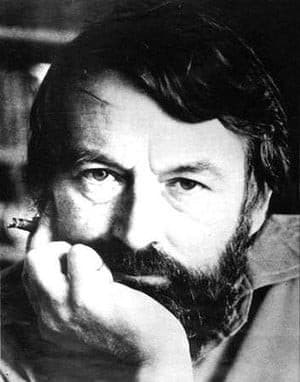
John Robert Fowles was an English novelist of international renown, critically positioned between modernism and postmodernism. His work was influenced by Jean-Paul Sartre and Albert Camus, among others.
Similar books
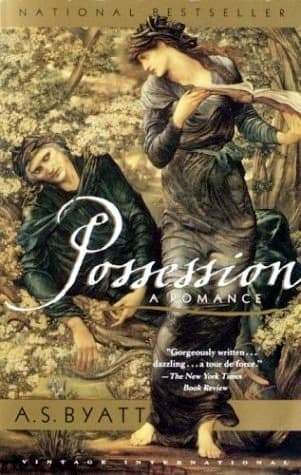
- Possession
A.S. Byatt
4.3 (13k) average on GoodreadsRomanceExplores Victorian literary figures and themes with a modern narrative frame.
- Fingersmith
Sarah Waters
4.0 (81k) average on GoodreadsHistorical FictionA compelling Victorian-era novel with intricate plot twists and strong character development.
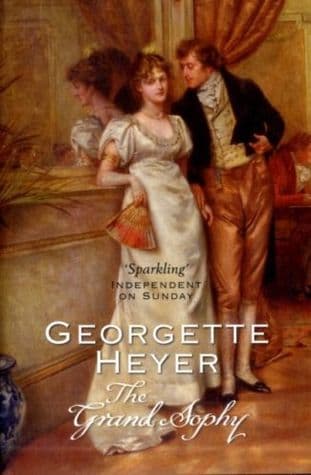
- The Grand Sophy
Georgette Heyer
4.2 (26k) average on GoodreadsHistorical FictionHeyer's novel is a classic Regency romance, offering meticulous historical detail and engaging characters, but it adheres to traditional narrative structures and genre conventions. It provides escapism and a satisfying, predictable resolution, contrasting sharply with Fowles's metafictional experimentation and ambiguous endings. Heyer doesn't question the act of storytelling; she perfects a specific mode of it.
- The Old Man and the Sea
Ernest Hemingway
3.8 (831k) average on GoodreadsLiterary FictionA Cuban fisherman's long struggle with a giant marlin becomes a story of endurance and dignity, now retold for young adults with illustrations, phonetic guides, and writing prompts in Traditional Chinese.
- One Hundred Years of Solitude
Gabriel García Márquez
4.1 (753k) average on GoodreadsLiterary FictionThrough the multi-generational story of the Buendía family, a mythical town deals with the repeating patterns of time, love, and solitude, as the extraordinary mixes with the ordinary.
- The Goldfinch
Donna Tartt
3.9 (720k) average on GoodreadsLiterary FictionHaunted by a tragic explosion and clutching a stolen Dutch masterpiece, a young orphan navigates the opulent drawing rooms of New York and the gritty underbelly of the art world, desperately seeking connection and redemption amidst a life spiraling into crime and obsession.




Enjoyed the summary?
A summary gives you the shape of the book. The book itself has the detail, the examples and the voice.
Find The French Lieutenant's Woman on AmazonAs an Amazon Associate, BookBrief earns from qualifying purchases. How we're funded