
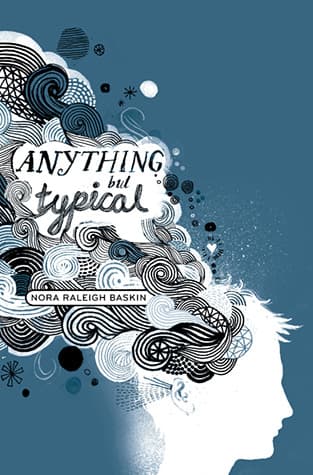
Synopsis
Covers the whole plot, including the ending.
- Difficulty
- Easy
- Pacing
- Moderate
- Mood
- Heartwarming, Hopeful, Insightful, Empathetic
- Read it if
- You enjoy heartwarming stories about finding connection and understanding, especially those featuring neurodivergent characters.
- Skip it if
- You prefer fast-paced action or high-stakes fantasy over character-driven contemporary narratives.
Anything But Typical Plot Summary
Covers the whole plot, including the ending.
A Day in Jason's Life: Routine and Challenges
Jason Blake, a twelve-year-old boy with autism, starts his day with breakfast and preparing for school. He experiences sensory overload, from the smell of toast to the texture of his clothes, and he constantly works to 'act normal.' At school, he struggles with social cues and the expectations of his teachers and peers. During lunch, he carefully arranges his food, a ritual that brings him comfort, but a classmate, Aaron, tries to talk to him, which Jason finds difficult. He wants to connect but cannot express himself in typical ways, which often leads to frustration and misunderstanding from others.
The Sanctuary of StoryKingdom
Jason's passion is writing stories, especially a fantasy saga about a hero named Tangent. He posts his chapters on an online writing forum called StoryKingdom, using the username 'Nonverbal.' Online, he feels free from the judgment and sensory challenges of the real world. He can express his thoughts and emotions through his characters and plots. StoryKingdom is his sanctuary, a place where his words define him. He crafts Tangent's adventures, finding a sense of control and purpose often missing in his daily life, and receives feedback from other users, which he likes.
A New Connection: PhoenixBird
While browsing StoryKingdom, Jason discovers stories by another user, 'PhoenixBird.' He likes her writing, finding a connection with her themes and style. He starts commenting on her stories, and she comments on his. Their exchanges become more frequent and personal, moving beyond just critiques of their writing. Jason feels a strong connection with PhoenixBird, who seems to understand him in a way no one else does. He shares his vulnerabilities and deepest thoughts, something he rarely does offline. He feels a true friendship growing, built purely on shared words and understanding, without the complexities of face-to-face interaction.
The Invitation to the Convention
The StoryKingdom website announces its first annual convention, a gathering where writers can meet. PhoenixBird suggests they attend and meet there. This invitation makes Jason very anxious. He wants to meet the person who understands him so well, but he fears that his autism and his difficulties with social interaction will ruin the connection they've built online. He fears that once PhoenixBird sees the 'real' Jason, she will no longer see the articulate, imaginative writer she knows from StoryKingdom. The thought of disappointing her, or ruining their friendship, weighs heavily on him.
Confiding in His Parents
Jason struggles with how to tell his parents about PhoenixBird and the convention. He knows they mean well, but often struggle to understand his perspective and the nuances of his autism. He tries to explain how much his connection with PhoenixBird means to him, saying she is his 'first real friend,' but finds it hard to explain the difference between his online persona and his everyday self. His parents, especially his mother, are hesitant at first due to concerns about online safety and Jason's ability to handle the social demands of a convention. They worry about him being overwhelmed or misunderstood, but seeing his earnest desire, they agree to take him.
The Journey and Anticipation
The day of the convention arrives, and Jason, with his parents and younger sister, spends the car ride feeling excited and anxious. He mentally practices conversations, tries to anticipate every scenario, and imagines what PhoenixBird might be like. He hopes she will see beyond his autism, but the fear of rejection is strong. His parents try to reassure him, but Jason's mind is full of 'what ifs.' He continues to develop his Tangent story in his head, finding a temporary escape in his fantasy world, even as the real-world meeting gets closer.
Meeting Rebecca: A Tentative Start
At the convention, Jason spots a girl wearing a phoenix pin, identifying her as PhoenixBird. Her name is Rebecca. When they meet, Jason's anxieties immediately show. He struggles to make eye contact, his voice is quiet, and he finds it difficult to make small talk. Rebecca, who is neurotypical, tries to be friendly, but the interaction is awkward. Jason feels himself failing to be the articulate, confident writer he is online. He notices her initial surprise and perhaps disappointment, which confirms his deepest fears. The easy communication they shared online is gone, replaced by social barriers.
The Misunderstanding and Retreat
During their brief interaction, Jason's specific behaviors – his difficulty with transitions, his literal interpretations, and his sensory sensitivities – create an awkward dynamic. He struggles to process the fast social cues and conversation. Rebecca, though trying to understand, does not know how to connect. Feeling overwhelmed and misinterpreted, Jason retreats. He finds a quiet corner, feeling the familiar sting of rejection and the confirmation of his fear that his 'typical' self is too much for the neurotypical world, even for someone who understood his writing so deeply. He feels a loss for the online connection he cherished.
A Glimmer of Hope: Shared Stories
Later, Rebecca finds Jason. She tries again to connect. She pulls out her laptop and suggests they read some of their favorite stories from StoryKingdom, including each other's. As they share their writing, their online connection begins to re-emerge. Jason, through his stories, can express himself fully, and Rebecca, seeing his words, remembers why she felt such a strong bond with 'Nonverbal.' The shared narrative helps them communicate and appreciate each other's inner worlds, bypassing some of the social hurdles that had initially separated them.
Acceptance and a New Beginning
As they continue to talk about their stories, Jason realizes that Rebecca is looking past his 'typical' behaviors and seeing the person who creates those worlds. Rebecca, in turn, understands Jason's challenges and his way of experiencing the world better. While their in-person interactions may never be as seamless as their online ones, a new foundation of understanding is laid. Jason learns that true friendship is not about perfectly mimicking neurotypical social norms, but about finding someone who accepts and appreciates his authentic self, both the 'Nonverbal' writer and the Jason Blake who lives in the world. They part with a renewed sense of connection, promising to continue their online exchanges and perhaps meet again, with a greater understanding of each other.
Anything But Typical Characters
Jason Blake
Protagonist
A twelve-year-old autistic boy who finds his voice through online writing.
Jason is a highly intelligent and imaginative twelve-year-old boy with autism. He experiences the world with heightened sensory awareness and struggles significantly with social communication, nonverbal cues, and typical social interactions. Internally, he is articulate, thoughtful, and deeply empathetic, but these qualities are often masked by his outward behaviors, leading to misunderstandings from others. His passion for writing, particularly his fantasy saga about Tangent, provides him with an outlet for self-expression and a sense of control. He yearns for genuine connection but fears rejection due to his autism.
Relationships: PhoenixBird/Rebecca (Online friend, then real-life friend); Mom (Supportive but sometimes overprotective parent); Dad (Supportive and understanding parent); Sarah (Younger sister, sometimes a source of irritation, sometimes comfort); Aaron (Classmate, attempts friendship with varying success)
PhoenixBird / Rebecca
Supporting
Jason's online friend and fellow writer, who helps him bridge the gap between his online and offline worlds.
Rebecca, known online as 'PhoenixBird,' is a neurotypical girl who shares Jason's passion for creative writing on StoryKingdom. She is articulate, imaginative, and initially connects with Jason purely through his words, finding his stories compelling and unique. When they meet in person, she initially struggles to reconcile the eloquent online 'Nonverbal' with the socially challenged Jason. However, her persistence and genuine desire for connection lead her to look beyond his autism, eventually understanding and appreciating him for who he is. She represents the possibility of true understanding across neurodevelopmental differences.
Relationships: Jason Blake/Nonverbal (Online friend, then real-life friend)
Mom (Mrs. Blake)
Supporting
Jason's mother, who strives to understand and support him.
Jason's mom is a loving and dedicated parent who often carries the burden of managing Jason's daily challenges and advocating for him. She is protective and sometimes anxious about Jason's ability to navigate the neurotypical world, often trying to anticipate and prevent situations that might overwhelm him. While she sometimes struggles to fully grasp Jason's internal experience, her actions are always driven by a deep love and desire for his well-being and happiness. She represents the parental struggle to balance protection with fostering independence for a child with special needs.
Relationships: Jason Blake (Mother-son); Dad (Spouse); Sarah (Mother-daughter)
Dad (Mr. Blake)
Supporting
Jason's father, who offers a more relaxed and understanding approach.
Jason's dad is generally more laid-back and perhaps more intuitively understanding of Jason's unique thought processes than his mother. He often serves as a calming presence and a voice of reason, encouraging Jason to try new things while respecting his boundaries. He is supportive of Jason's interests, including his writing, and believes in Jason's potential to connect with others, even if it's in unconventional ways. He helps Jason's mom see the value in Jason's desire to attend the convention, providing a balanced perspective.
Relationships: Jason Blake (Father-son); Mom (Spouse); Sarah (Father-daughter)
Sarah Blake
Supporting
Jason's younger sister, who sometimes finds him frustrating but also cares for him.
Sarah is Jason's younger sister, who, like many siblings of children with special needs, experiences a mix of emotions towards him. She sometimes finds his behaviors confusing or annoying, and occasionally expresses typical sibling frustration. However, she also shows moments of insight and genuine affection for Jason, understanding him in ways adults sometimes cannot. Her presence highlights the family dynamics and the impact of Jason's autism on those closest to him, portraying a realistic sibling relationship.
Relationships: Jason Blake (Sister-brother); Mom (Daughter-mother); Dad (Daughter-father)
Aaron
Supporting
A classmate who tries to befriend Jason at school.
Aaron is a neurotypical classmate of Jason's who genuinely attempts to be friendly and interact with him at school. He tries to engage Jason in conversation and play, often not fully understanding why Jason struggles to reciprocate in typical ways. While his efforts are well-intentioned, they sometimes overwhelm Jason. Aaron represents the neurotypical world's attempts at connection, sometimes clumsy but often sincere, and highlights the communication barrier Jason frequently faces in daily life.
Relationships: Jason Blake (Classmate, attempts friendship)
Tangent
Mentioned
The hero of Jason's fantasy story.
Tangent is the protagonist of Jason's elaborate online fantasy story. He is a brave, questing hero who embarks on a journey to find his true identity and overcome challenges. Tangent represents Jason's idealized self – articulate, capable, and understood. Through Tangent, Jason explores themes of identity, belonging, and heroism that resonate deeply with his own struggles in the real world. The creation of Tangent's world is a profound act of self-expression for Jason.
Mrs. Nelson
Supporting
Jason's teacher, who tries to support him in the classroom.
Mrs. Nelson is Jason's teacher at school. She is generally patient and understanding of Jason's autism, making efforts to accommodate his needs in the classroom. However, like many educators, she operates within the constraints of a neurotypical school system and sometimes struggles to fully bridge the communication gap with Jason. She represents the institutional support and challenges faced by autistic students in mainstream education.
Relationships: Jason Blake (Teacher-student)
Anything But Typical Themes
Identity and Self-Discovery
The novel explores Jason's struggle to define his identity, both as an autistic individual and as a person with a rich internal life. Online, as 'Nonverbal,' he feels fully himself, articulate and understood. In the physical world, his autism often overshadows his true personality, making him feel like a 'typical' person trying to fit into a neurotypical mold. His journey to the StoryKingdom convention is a quest to reconcile these two identities and find acceptance for his whole self, not just the part that is easily understood. His fantasy writing also helps him explore himself.
“Online, I am Nonverbal, and I can be anything. In real life, I am Jason Blake, and I am just me, trying to be normal.”
Communication and Connection
A central theme is the nature of communication and the human need for connection. Jason finds it nearly impossible to communicate effectively in person due to his autism, leading to isolation and misunderstanding. However, through the written word on StoryKingdom, he forms a deep connection with PhoenixBird. The stark contrast between his online eloquence and his offline struggles shows that communication isn't one-size-fits-all. The book suggests that true connection can overcome traditional social barriers when there is a willingness to understand and adapt.
“Words are easier than faces. Stories are easier than real life.”
The Neurotypical vs. Neurodivergent Divide
The novel shows the challenges of living as a neurodivergent individual in a predominantly neurotypical world. Jason constantly feels pressure to 'act normal,' to suppress his stims, make eye contact, and understand social cues that are not intuitive to him. The narrative shows the sensory overload, social anxiety, and misunderstandings that stem from this divide. The StoryKingdom convention becomes an example of this theme, as Jason fears that his 'typical' self will alienate Rebecca, who only knows his 'Nonverbal' persona. The book advocates for empathy and understanding across this divide.
“The hardest thing about being me is trying to be normal.”
The Power of Storytelling
Storytelling is a transforming force in the book. For Jason, writing his fantasy saga about Tangent is not just a hobby; it is his main way of self-expression, emotional processing, and escape. Through his characters, he can express complex feelings and navigate challenges he faces in his own life. The online writing community, StoryKingdom, provides a safe space where his words are valued above all else, allowing him to connect deeply with others. Ultimately, it is through shared stories that Jason and Rebecca overcome their initial in-person awkwardness and rediscover their connection.
“When I write, I can be anyone. I can be Tangent, brave and strong, and everyone understands me.”
Plot Devices & Literary Techniques
First-Person Narrative (Jason's Perspective)
Provides direct insight into an autistic mind.
The entire story is told from Jason's first-person perspective, allowing readers direct access to his thoughts, sensory experiences, and emotional world. This device is crucial for understanding the challenges and unique insights of an autistic individual, making his struggles with communication and social interaction palpable. It subverts common external perceptions of autism by revealing the rich internal life that often goes unseen, fostering empathy and challenging stereotypes about neurodivergence.
Online Forum (StoryKingdom)
A sanctuary for authentic self-expression and connection.
StoryKingdom serves as a digital safe space where Jason can express his true self without the social and sensory barriers of the physical world. It's where his writing, not his 'typical' behaviors, defines him. This online community allows him to connect with PhoenixBird/Rebecca on an intellectual and emotional level that would be nearly impossible for him offline, highlighting the potential of digital platforms to facilitate connection for neurodivergent individuals.
Jason's Fantasy Story (Tangent's Quest)
A metaphor for Jason's internal journey and a means of self-expression.
Jason's ongoing fantasy story about Tangent, a hero on a quest, functions as an extended metaphor for Jason's own journey of self-discovery and navigating a challenging world. The themes, struggles, and triumphs of Tangent often mirror Jason's internal experiences and desires. It also serves as a critical plot device for character development, as Jason uses his writing to process emotions, articulate complex thoughts, and connect with others who appreciate his imaginative world.
Sensory Details and Overload
Immerses readers in Jason's unique perception of the world.
The narrative is rich with specific sensory details – the smell of toast, the texture of clothes, the loudness of conversations, the brightness of lights. These details are not merely descriptive; they are central to Jason's experience of the world, often leading to sensory overload and anxiety. This device effectively immerses the reader in Jason's neurodivergent perspective, making his challenges understandable and fostering empathy for how seemingly mundane environments can be overwhelming for him.
Anything But Typical Quotes
“I think in pictures. Words are like a second language to me.”
“Sometimes I think I am the only real person and everyone else is just a character in my story.”
“I don't like surprises. I like to know what is going to happen next.”
“Writing is the only place I can be myself without anyone telling me I'm doing it wrong.”
“It's hard to explain what it's like to be me. It's like trying to describe a color to someone who has never seen it.”
“I don't want to be fixed. I just want to be understood.”
“The world is too loud, too bright, too everything.”
“In my stories, I can control everything. In real life, I can't control anything.”
“Sometimes the right words are like a puzzle I can't solve.”
“I am not broken. I am just wired differently.”
“Friendship is a code I haven't learned to crack yet.”
“My brain is like a computer that never shuts down.”
“The internet is my safe place. No one can see me here.”
“I don't need to be normal. I just need to be me.”
Quiz
10 questions on the plot and the characters. Each answer comes with a short explanation.
Question 1
What is the name of the online writing website where Jason and PhoenixBird connect?
- StorySpace
- Storyboard
- WritersCorner
- CreativeTales
Show answer
B. Storyboard In the book, Jason and PhoenixBird (Rebecca) both post their stories on an online platform called Storyboard, which serves as a safe space for Jason to express himself through writing.
Question 2
Why does Jason feel terrified about meeting PhoenixBird in person?
- He worries she won't like his stories
- He fears she will only see his autism and not his true self
- He is afraid of traveling to meet her
- He thinks she might be a fictional character
Show answer
B. He fears she will only see his autism and not his true self Jason's central conflict is his fear that if he meets Rebecca (PhoenixBird) face-to-face, she will focus on his autistic behaviors rather than seeing the person he is through his writing, which reflects his true identity.
Question 3
What is Jason's primary method of coping with the challenges of his neurotypical world?
- Playing video games
- Writing stories
- Talking to his parents
- Avoiding social situations
Show answer
B. Writing stories Writing allows Jason to be himself and communicate in a way that feels natural to him, serving as a key outlet and coping mechanism throughout the story.
Question 4
How does Jason first discover PhoenixBird's real name?
- She tells him in a private message on Storyboard
- He overhears it at a writing conference
- His parents find out and tell him
- She writes it in one of her posted stories
Show answer
B. He overhears it at a writing conference Jason learns that PhoenixBird's real name is Rebecca when he attends a writing conference and overhears someone calling her by that name, which heightens his anxiety about their potential meeting.
Question 5
What significant event does Jason's mother encourage him to attend, leading to a major plot development?
- A school talent show
- A writing conference where PhoenixBird will be
- A therapy session for autistic children
- A family vacation
Show answer
B. A writing conference where PhoenixBird will be Jason's mother pushes him to go to a writing conference, knowing that PhoenixBird (Rebecca) will be there, which forces Jason to confront his fears about in-person interaction and friendship.
Question 6
Which of the following best describes Jason's relationship with his younger brother, Jeremy?
- They are very close and share everything
- Jeremy is often embarrassed by Jason's behavior
- They rarely interact due to Jason's autism
- Jeremy helps Jason navigate social situations
Show answer
B. Jeremy is often embarrassed by Jason's behavior Jeremy, as a neurotypical sibling, sometimes feels embarrassed by Jason's autistic traits in public, reflecting the family dynamics and challenges of autism in a neurotypical world.
Question 7
What does Jason's experience with PhoenixBird ultimately teach him about friendship and acceptance?
- That online friends are always better than real-life ones
- That true friendship sees beyond surface differences to the person inside
- That he should avoid making friends to prevent disappointment
- That his autism makes friendship impossible
Show answer
B. That true friendship sees beyond surface differences to the person inside Through his connection with Rebecca, Jason learns that genuine friendship involves acceptance of who he is, including his autism, rather than hiding or fearing it, a key theme in the book.
Question 8
In the context of the story, what does Jason's writing primarily symbolize?
- His desire to become a famous author
- A barrier between him and the real world
- His true voice and identity, free from societal judgments
- A homework assignment he must complete
Show answer
C. His true voice and identity, free from societal judgments Jason's writing represents his authentic self, allowing him to communicate and connect in ways that verbal interactions often hinder due to his autism, symbolizing self-expression and inner truth.
Question 9
How does the book handle the theme of 'fitting in' in relation to Jason's autism?
- It suggests Jason should change to fit into neurotypical norms
- It argues that autism is a disability that prevents fitting in
- It explores the tension between wanting acceptance and staying true to oneself
- It shows that fitting in is easy if one tries hard enough
Show answer
C. It explores the tension between wanting acceptance and staying true to oneself The book delves into Jason's struggle with the desire to be accepted by others while fearing that his autistic traits will lead to rejection, highlighting a nuanced view of identity and belonging.
Question 10
What role do Jason's parents play in his journey throughout the story?
- They are largely absent and uninvolved in his life
- They pressure him to act more neurotypical
- They support his interests while navigating the challenges of his autism
- They discourage his writing to focus on social skills
Show answer
C. They support his interests while navigating the challenges of his autism Jason's parents are depicted as supportive figures who encourage his writing and try to help him engage with the world, though they also grapple with the difficulties of raising an autistic child in a neurotypical society.
Anything But Typical FAQ
What is 'Anything But Typical' about?
The novel follows Jason Blake, a 12-year-old autistic boy navigating a neurotypical world where he often feels misunderstood. He finds solace in writing stories on an online forum, where he connects with a girl named Rebecca (screenname PhoenixBird), who shares his passion. The story explores Jason's internal conflict between his desire for friendship and his fear that Rebecca will only see his autism if they meet in person.
Why should I read 'Anything But Typical'?
This book offers a rare and authentic first-person perspective of an autistic child's experiences, written with sensitivity and insight by Nora Raleigh Baskin. It delves into universal themes of friendship, self-acceptance, and the fear of not being understood, making it relatable for anyone who has ever felt like an outsider. The narrative blends Jason's daily struggles with his creative writing, highlighting how art can be a refuge.
What is the background/setting of 'Anything But Typical'?
The story is set in contemporary suburban America, primarily in Jason's home, school, and online. Key settings include his middle school, where he faces social challenges and sensory overload, and the online writing forum 'Storyboard,' where he feels free to express himself. The contrast between the physical world and the digital space underscores Jason's journey toward connection.
What are the most memorable quotes from 'Anything But Typical'?
Notable quotes include Jason's reflection, 'Most days it's just a matter of time before something goes wrong,' capturing his anxiety in a neurotypical world. Another is, 'I can be myself when I write,' emphasizing writing as his safe haven. Rebecca's message, 'I like your stories because they're true,' highlights the authenticity Jason craves in relationships.
What writing style does the author use in 'Anything But Typical'?
Nora Raleigh Baskin employs a first-person narrative from Jason's perspective, using straightforward, honest prose that mirrors his logical and detail-oriented thought processes. The style includes sensory descriptions (e.g., sounds, lights) to convey Jason's autism, interspersed with excerpts from his online stories, blending reality with his creative inner world.
What minor details add significant meaning in 'Anything But Typical'?
Small details like Jason's fixation on patterns, such as counting ceiling tiles or noticing repetitive sounds, illustrate his autism and coping mechanisms. The color blue recurs in his stories and thoughts, symbolizing calm and safety. His careful editing of online posts shows his desire for control in a chaotic world, adding depth to his character.
What are some subtle foreshadowing moments in 'Anything But Typical'?
Early in the book, Jason's anxiety about meeting Rebecca foreshadows the climax where he must decide whether to attend a writing conference she'll be at. His stories often feature characters who hide their true selves, hinting at his fear of rejection. Mentions of 'things going wrong' subtly predict social mishaps, like when he accidentally offends a classmate.
What unexpected character connections exist in 'Anything But Typical'?
Jason's connection with Rebecca is built entirely online, yet it feels more genuine than his in-person interactions. His younger brother, Jeremy, who is neurotypical, shows unexpected empathy by defending Jason, highlighting that understanding can come from unlikely places. Jason's teacher, Mr. Browning, subtly supports his writing, acting as a bridge between his online and real worlds.
What are unspoken character motivations in 'Anything But Typical'?
Jason is motivated by a deep-seated fear of being reduced to his autism, driving his hesitation to meet Rebecca. Rebecca's motivation to connect with Jason stems from her own loneliness and appreciation for honest storytelling. Jason's parents are motivated by love but often struggle to understand his needs, leading to overprotectiveness that Jason resents.
What psychological complexities do characters exhibit in 'Anything But Typical'?
Jason exhibits complexity through his dual desire for friendship and isolation, reflecting common autistic traits of social anxiety. He processes emotions logically, yet his writing reveals deep vulnerability. Rebecca shows complexity by seeking authenticity in a superficial world, while Jason's mother grapples with guilt and hope, trying to balance support with letting him be independent.
What are the major emotional turning points in 'Anything But Typical'?
Key turning points include when Jason first messages Rebecca and feels understood, when he decides to attend the writing conference despite his fears, and the climax where he meets Rebecca and realizes she accepts him as he is. Another is when he stands up to a bully, marking a shift in his self-confidence.
How do relationship dynamics evolve in 'Anything But Typical'?
Jason's relationship with Rebecca evolves from online anonymity to a tentative real-life friendship, based on mutual respect for writing. With his family, dynamics shift as they learn to trust his abilities, such as when his parents allow him to go to the conference. His bond with his brother deepens through small acts of support, showing growth in understanding.
Which parts remain ambiguous or open-ended in 'Anything But Typical'?
The story leaves some aspects open, such as the long-term outcome of Jason and Rebecca's friendship after the conference, and whether Jason will continue to navigate social situations more easily. It also doesn't fully resolve how his family will adjust to his growing independence, leaving room for reader interpretation about his future.
What are controversial scenes or decisions in 'Anything But Typical'?
Some readers might debate Jason's decision to meet Rebecca, as it risks emotional pain, or his parents' choice to let him attend the conference alone. Scenes where Jason is bullied or misunderstood could spark discussion about inclusion and empathy. The portrayal of autism has been praised for authenticity but might be critiqued for focusing on challenges.
'Anything But Typical' ending explained: how it ends & what it means
The book ends with Jason meeting Rebecca at the writing conference; she accepts him without judgment, seeing him for who he is beyond his autism. This signifies a breakthrough in self-acceptance and the possibility of genuine connection. It implies that being 'typical' isn't necessary for friendship, and authenticity can bridge differences, offering a hopeful message about inclusion.
Similar books
- Wonder
R.J. Palacio
4.4 (733k) average on GoodreadsChildren'sExplores themes of acceptance, friendship, and seeing beyond outward appearances through the eyes of a unique child.
- Mockingbird
Kathryn Erskine
4.1 (5k) average on GoodreadsScience FictionDeals with a young girl with Asperger's syndrome trying to make sense of the world and cope with loss.
- Counting by 7s
Holly Goldberg Sloan
4.2 (61k) average on GoodreadsChildren'sSloan's novel features Willow Chance, a neurodivergent character whose internal monologue and struggles with grief and connection feel more grounded and less reliant on a single extraordinary talent. It explores emotional complexity and social integration in a way that feels perhaps more realistic for many neurodivergent children.
- Harry Potter and the Sorcerer's Stone
J.K. Rowling
4.5 (7M) average on GoodreadsFantasyRescued from a miserable life under the stairs, an orphaned boy discovers he's a wizard destined for a magical school, where he uncovers a dangerous secret tied to the dark wizard who murdered his parents.
- The Hobbit, or There and Back Again
J.R.R. Tolkien
4.3 (2.9M) average on GoodreadsFantasyA comfort-loving hobbit named Bilbo Baggins is whisked away by a mischievous wizard and a band of dwarves on an unexpected journey to reclaim stolen treasure from a fearsome dragon, discovering courage and a magical ring along the way.
- Harry Potter and the Goblet of Fire
J.K. Rowling
4.6 (2.6M) average on GoodreadsFantasyA bewildered Harry Potter, underage and thrust into a deadly Triwizard Tournament, must brave dragons, mermaids, and a resurgent dark magic to survive a year that will forever alter the wizarding world.





Enjoyed the summary?
A summary gives you the shape of the book. The book itself has the detail, the examples and the voice.
Find Anything But Typical on AmazonAs an Amazon Associate, BookBrief earns from qualifying purchases. How we're funded