
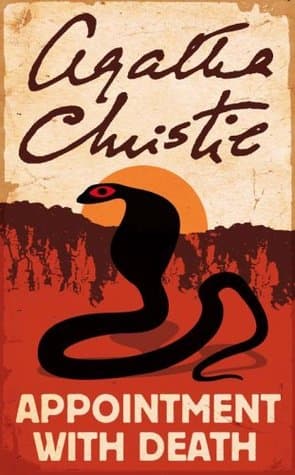
Synopsis
Covers the whole plot, including the ending.
- Difficulty
- Easy
- Pacing
- Moderate
- Mood
- Suspenseful, Classic, Intriguing, Psychological
- Read it if
- You enjoy classic Golden Age mysteries with a limited pool of suspects and a focus on psychological manipulation.
- Skip it if
- You prefer fast-paced, action-driven thrillers or stories with minimal character development.
Appointment with Death Plot Summary
Covers the whole plot, including the ending.
A Malicious Remark in Jerusalem
The story opens with Hercule Poirot on holiday in Jerusalem. While relaxing on the terrace of his hotel, he overhears a chilling conversation between a young man and a young woman. The man, later identified as Raymond Boynton, states emphatically to his sister Carol, 'You see, don't you, that she's got to be killed?' This remark, made about their stepmother, Mrs. Boynton, immediately interests Poirot. Mrs. Boynton is soon revealed to be a tyrannical matriarch, known for her psychological cruelty and complete dominance over her adult stepchildren and daughter. She keeps them in perpetual fear and subservience. Her presence casts a dark shadow over the entire family, setting the stage for potential tragedy during their upcoming travels.
The Boynton Family's Oppressive Journey
The Boynton family, consisting of Mrs. Boynton, her stepchildren Lennox, Raymond, Carol, and her biological daughter Ginerva (Jinny), along with Lennox's wife Nadine and family friend Jefferson Cope, embarks on a tour of the Middle East. Their journey takes them through various sites, including Jerusalem and eventually Petra. Mrs. Boynton's oppressive nature is constantly on display. She manipulates and belittles her children, forbidding them from pursuing personal desires or forming independent relationships. Her control is absolute, and the children appear cowed, living in suppressed resentment and fear. Other tourists, including Dr. Sarah King and Lady Westholme, witness this dysfunctional dynamic, reinforcing Poirot's initial perception of the family's misery.
Arrival in Petra and Mounting Tensions
The tour group, including the Boyntons, Poirot, Dr. Sarah King, Lady Westholme, Jefferson Cope, and Miss Amabel Pierce, arrives at the ancient city of Petra. The remote and dramatic landscape provides a fitting backdrop for the escalating tensions within the Boynton family. Mrs. Boynton's control becomes even more suffocating. She deliberately thwarts Jinny's budding romance with Jefferson Cope and tries to sabotage Nadine's relationship with Lennox. The children, particularly Carol and Raymond, show increasing signs of desperation and resentment. Their earlier overheard remark seems less a casual comment and more a genuine desire. The atmosphere is thick with unspoken threats and dread, noticed by several members of the tour group.
Mrs. Boynton's Death
On a hot afternoon in Petra, Mrs. Boynton is found dead while resting alone in a secluded alcove among the ruins. Initially, her death is attributed to natural causes, as she had a known heart condition. However, Dr. Sarah King, who examines the body, notes a tiny, almost imperceptible puncture mark on her wrist, suggesting an injection. This detail, combined with Poirot's prior knowledge of the family's desire for her death and his observation of their strained dynamics, immediately raises his suspicions. He begins to investigate, convinced that Mrs. Boynton was murdered, and that the killer is one of the members of the tour group, most likely within her own family.
Poirot's Interrogations Begin
With the discovery of the puncture mark, Poirot, aided by Colonel Carbury, starts his investigation. He gathers the entire group and begins a series of meticulous interrogations. He focuses on establishing the movements and alibis of each person during the critical time of Mrs. Boynton's death. He learns that many had opportunities to approach the secluded alcove where she died. The family members, despite their obvious relief, maintain their innocence, offering vague or contradictory accounts of their whereabouts. Poirot also questions the other tourists, including Dr. King, Lady Westholme, Jefferson Cope, and Miss Pierce. Each presents a different perspective on Mrs. Boynton and her family.
Unraveling the Family's Secrets
As Poirot continues his investigation, he uncovers more about the Boynton family's troubled history. He learns that Mrs. Boynton adopted the three stepchildren after marrying their father, and her cruelty began early, isolating them from the outside world and each other. He discovers that Mrs. Boynton had once been a sadistic prison wardress, a detail that further explains her psychological manipulation. This past life gave her knowledge of how to inflict suffering and maintain control. The children's alibis are weak, and their collective relief at her death is palpable, making them all strong suspects. Poirot also realizes that the children's loyalty to each other, despite their individual suffering, is a significant factor.
The Search for the Syringe and Poison
A key piece of evidence, the murder weapon—a syringe—and the poison used, are nowhere to be found. Poirot, along with Colonel Carbury, meticulously searches the area around the crime scene and the suspects' belongings. The absence of these items frustrates the investigation, suggesting a carefully planned murder and disposal. The method of injection points to someone with medical knowledge or access to such tools, which initially puts Dr. Sarah King under suspicion. However, Poirot considers all possibilities, knowing that the killer could have acquired or improvised the means. The lack of physical evidence makes the psychological aspects of the case even more important.
The Role of the Other Tourists
Poirot turns his attention to the other members of the tour group. Dr. Sarah King, a young and compassionate doctor, expresses concern for the Boynton children and is initially a suspect due to her medical background. Lady Westholme, a formidable former Member of Parliament, holds strong opinions and a hidden past. Jefferson Cope, an American family friend, is genuinely fond of Jinny and wants to free her from her mother's grip. Miss Amabel Pierce, a nervous and impressionable woman, is easily swayed and provides some unreliable observations. Poirot sifts through their statements, looking for inconsistencies, hidden agendas, or any overlooked details that might explain Mrs. Boynton's death.
The Revelation of the 'Dummy' Syringe
Poirot's investigation takes a turn when he realizes that the puncture mark on Mrs. Boynton's wrist might not be the actual point of injection for the poison. He thinks a 'dummy' injection was administered after death or in a non-lethal manner to mislead investigators. He recalls a seemingly insignificant detail about an old scratch on Mrs. Boynton's wrist, which could have been used to simulate a fresh injection mark. This realization means that the actual poison might have been administered differently, perhaps orally, and at a different time, broadening the pool of potential methods and suspects. This insight forces him to re-evaluate the timelines and alibis he had gathered.
The True Killer Revealed
Through his deductions, Poirot finally reveals the true killer: Lady Westholme. He explains that Lady Westholme, a woman of public standing, had a dark secret in her past—she had been imprisoned for a serious crime many years ago. Mrs. Boynton, in her previous life as a prison wardress, had recognized Lady Westholme and was blackmailing her, threatening to expose her past and ruin her career. Desperate to protect her reputation, Lady Westholme seized the opportunity in Petra. She administered the poison orally, likely through a drugged drink, and then later used a hatpin to create the 'dummy' puncture mark on Mrs. Boynton's wrist to frame the family and mislead the investigation into believing it was an injection. Confronted with Poirot's evidence, Lady Westholme confesses and subsequently takes her own life.
Justice and New Beginnings
With Lady Westholme's confession and suicide, the case is closed, and justice is served. The Boynton children, finally free from their mother's tyrannical grip, begin healing and forging their own paths. Lennox and Nadine can pursue their relationship without interference, Raymond and Carol are no longer bound by fear, and Jinny is free to be with Jefferson Cope. Dr. Sarah King and Jefferson Cope, who developed a mutual affection during the investigation, also find a hopeful future together. Poirot reflects on Mrs. Boynton's cruelty and the liberation her death brings to those she tormented, allowing a new dawn for the long-suffering family.
Appointment with Death Characters
Hercule Poirot
Protagonist
Belgian detective, astute observer, and master of psychology.
Hercule Poirot is a world-renowned Belgian detective on holiday in Jerusalem when he overhears a chilling remark that sets the stage for his next case. He is known for his meticulous attention to detail, his 'little grey cells,' and his deep understanding of human psychology. Poirot is initially intrigued by the Boynton family's dynamics and becomes actively involved after Mrs. Boynton's suspicious death in Petra. He systematically questions suspects, analyzes alibis, and uncovers hidden motives, ultimately piecing together the complex puzzle of the murder. His calm demeanor belies a sharp intellect and an unwavering commitment to justice.
Relationships: Colonel Carbury (collaborator in investigation); Mrs. Boynton (victim of his investigation)
Mrs. Boynton
Victim/Antagonist
The tyrannical matriarch whose death sets the plot in motion.
Mrs. Boynton is the victim of the murder and the central antagonist of the story, even in death. She is a monstrously cruel and psychologically abusive woman who holds her four adult children (three stepchildren, one biological daughter) in a state of complete subjugation. Her past as a sadistic prison wardress explains her methods of control. She delights in tormenting her family, preventing them from forming relationships, pursuing careers, or finding happiness. Her oppressive presence is the catalyst for the intense resentment that pervades the family and makes her death almost a relief to all who know her. Her character embodies pure malice and psychological manipulation.
Relationships: Lennox Boynton (stepson, victim of abuse); Raymond Boynton (stepson, victim of abuse); Carol Boynton (stepdaughter, victim of abuse); Ginerva (Jinny) Boynton (biological daughter, victim of abuse); Nadine Boynton (daughter-in-law, also controlled)
Dr. Sarah King
Supporting
Young, compassionate doctor who assists Poirot and falls in love.
Dr. Sarah King is a young, intelligent, and compassionate doctor who is part of the tour group. She is one of the first to suspect foul play in Mrs. Boynton's death, noting the small puncture mark on the wrist. She is deeply empathetic towards the Boynton children, recognizing the abuse they suffer. Her medical knowledge proves valuable in the investigation, and she becomes a confidante to Poirot. She also develops a romantic interest in Jefferson Cope, finding common ground in their desire to help Jinny Boynton. Sarah represents a moral compass and a voice of reason amidst the family's dysfunction.
Relationships: Hercule Poirot (collaborator/confidante); Jefferson Cope (romantic interest); Boynton Children (empathetic observer)
Jefferson Cope
Supporting
American family friend, deeply concerned for Jinny Boynton.
Jefferson Cope is an American family friend who has known the Boyntons for some time and is secretly in love with Jinny. He is genuinely good-hearted and deeply concerned about Jinny's welfare under her mother's oppressive thumb. He attempts to free Jinny from Mrs. Boynton's control, even proposing marriage, which Mrs. Boynton vehemently opposes. His clear affection for Jinny and his desire to help the family makes him an early suspect, as he has a strong motive to remove Mrs. Boynton. He forms a bond with Dr. Sarah King, sharing his worries about Jinny and eventually falling in love with her.
Relationships: Ginerva (Jinny) Boynton (romantic interest); Dr. Sarah King (romantic interest); Mrs. Boynton (antagonistic toward her control)
Lady Westholme
Antagonist
Former Member of Parliament, the true murderer of Mrs. Boynton.
Lady Westholme is a formidable and authoritative former Member of Parliament, known for her strong will and public image. She is part of the tour group and initially appears to be an upright citizen. However, she harbors a dark secret: a past criminal conviction that Mrs. Boynton, having recognized her from her time as a wardress, is using to blackmail her. This desperate situation drives Lady Westholme to murder Mrs. Boynton to protect her reputation and career. She meticulously plans the murder, using a 'dummy' injection to deflect suspicion, and attempts to frame the Boynton children. Her character represents the lengths to which people will go to preserve their secrets.
Relationships: Mrs. Boynton (blackmailer/victim); Hercule Poirot (antagonist to his investigation)
Ginerva (Jinny) Boynton
Supporting
Biological daughter, the most psychologically fragile of the Boynton children.
Jinny is Mrs. Boynton's biological daughter and appears to be the most psychologically fragile and deeply traumatized of the children. She is highly susceptible to her mother's manipulations, often lapsing into fugue states or displaying erratic behavior. Her mother actively sabotages her attempts at happiness, particularly her relationship with Jefferson Cope. Jinny's emotional vulnerability and her fervent desire for freedom make her a strong suspect, as she has the most to gain from her mother's death. She represents the extreme psychological damage inflicted by Mrs. Boynton's abuse.
Relationships: Mrs. Boynton (mother, abuser); Jefferson Cope (romantic interest); Lennox, Raymond, Carol Boynton (half-siblings, fellow victims)
Lennox Boynton
Supporting
Eldest stepson, married to Nadine, longs for independence.
Lennox Boynton is the eldest of Mrs. Boynton's stepchildren and the husband of Nadine. He is intelligent but appears utterly dominated by his stepmother, unable to stand up to her. He deeply resents his mother's control, particularly how it affects his marriage and his ability to live an independent life. He is torn between his loyalty to his siblings and his desire to protect Nadine from Mrs. Boynton's malice. His suppressed anger and frustration make him a plausible suspect, as he has a clear motive to escape his mother's tyranny.
Relationships: Mrs. Boynton (stepmother, abuser); Nadine Boynton (wife); Raymond, Carol, Jinny Boynton (siblings, fellow victims)
Nadine Boynton
Supporting
Lennox's wife, an outsider who sees Mrs. Boynton's cruelty clearly.
Nadine Boynton is Lennox's wife and thus an 'outsider' to the core Boynton family dynamic, though still deeply affected by Mrs. Boynton's control. She is perceptive and recognizes the extent of her mother-in-law's psychological abuse. Nadine tries to protect Lennox and herself from Mrs. Boynton's manipulations, often attempting to subtly defy her. Her independent spirit makes her a target for Mrs. Boynton's cruelty. Nadine's perspective is valuable as she is one of the few who can observe the family's dysfunction with a degree of objectivity, making her a sympathetic figure and a potential suspect given her strong desire for freedom.
Relationships: Lennox Boynton (husband); Mrs. Boynton (mother-in-law, antagonist)
Raymond Boynton
Supporting
One of the stepchildren, prone to impulsive remarks and resentment.
Raymond Boynton is one of Mrs. Boynton's stepchildren, a young man who outwardly appears more rebellious than his siblings, though still ultimately under his stepmother's thumb. He is the one who, in Jerusalem, makes the chilling remark, 'You see, don't you, that she's got to be killed?' which Poirot overhears. This impulsive statement immediately marks him as a prime suspect. Raymond displays clear resentment and frustration towards Mrs. Boynton's control, especially her interference with his life and ambitions. His volatile nature and strong motive make him a central figure in Poirot's initial investigation.
Relationships: Mrs. Boynton (stepmother, abuser); Carol, Lennox, Jinny Boynton (siblings, fellow victims)
Carol Boynton
Supporting
One of the stepchildren, shares Raymond's resentment and desire for freedom.
Carol Boynton is another of Mrs. Boynton's stepchildren, often seen in close conversation with Raymond. She is present when Raymond makes the incriminating remark about their mother, indicating her shared sentiment. Carol, like her siblings, suffers under Mrs. Boynton's oppressive rule, yearning for a life of her own. She is intelligent but lacks the agency to escape her mother's grip. Her deep-seated resentment and her desperate desire for independence provide a strong motive, making her another key suspect in Poirot's investigation. She often acts as a silent supporter to her siblings' frustrations.
Relationships: Mrs. Boynton (stepmother, abuser); Raymond, Lennox, Jinny Boynton (siblings, fellow victims)
Colonel Carbury
Supporting
British official who assists Poirot in the investigation.
Colonel Carbury is a British official stationed in the region who becomes involved in the investigation of Mrs. Boynton's death. He works alongside Hercule Poirot, providing local authority and logistical support. While initially skeptical of foul play, he quickly comes to respect Poirot's methods and deductions. He is a pragmatic and straightforward character, helping to manage the practical aspects of the investigation in the remote setting of Petra. Carbury serves as a foil to Poirot's more psychological approach, grounding the investigation in official procedures.
Relationships: Hercule Poirot (collaborator); Mrs. Boynton (victim in his jurisdiction)
Appointment with Death Themes
Tyranny and Psychological Abuse
The novel explores tyranny, personified by Mrs. Boynton, and the devastating effects of psychological abuse. Mrs. Boynton's control over her family is absolute and insidious. It shows as constant belittling, manipulation, and the deliberate thwarting of their personal desires. Her past as a prison wardress informs her methods, turning her home into a mental prison. This theme is central to understanding the family's deep-seated resentment and the pervasive fear and desperation that surrounds them, making her death almost a mercy. The children's inability to escape her grip shows the insidious nature of this abuse.
“You see, don't you, that she's got to be killed?”
Freedom vs. Captivity
This theme is a direct result of Mrs. Boynton's tyranny. The Boynton children are held captive, not by physical bars, but by their mother's psychological manipulation and their own ingrained fear. Each child wants freedom—freedom to love, to work, to simply be themselves. Mrs. Boynton's death offers them the ultimate liberation, allowing them to finally break free from their prolonged mental and emotional imprisonment. The setting of Petra, an ancient city carved into rock, ironically symbolizes both the beautiful, wild freedom of the world and the 'prison' that Mrs. Boynton has created for her family within its confines.
“They were not a family. They were a collection of prisoners.”
Justice and Morality
Poirot's pursuit of justice is a core theme, but the novel also explores the complexities of morality. While Mrs. Boynton's murder is a crime, her victims' suffering raises questions about whether her death, even by violent means, can be seen as a form of 'justice' for the abused. Poirot believes that all murder must be solved, regardless of the victim's character. The revelation of Lady Westholme's motive (blackmail by Mrs. Boynton) adds another layer to this theme, showing how one person's past crimes can lead to another's desperate act, blurring the lines between victim and perpetrator.
“There is evil in the world, Mademoiselle. And where there is evil, there must be justice.”
Secrets and Deception
The story is full of secrets and deception. The Boynton family operates under suppressed emotions and unspoken desires. Mrs. Boynton's past as a prison wardress is a secret she uses to maintain control, and Lady Westholme's criminal past is the crucial secret that drives her to murder. The 'dummy' injection is a deliberate act of deception designed to mislead the investigation. Poirot's task is to uncover these layers of secrecy, revealing the hidden truths and motives that lie beneath the surface of seemingly ordinary interactions and appearances, both within the family and among the other tourists.
“Everyone has a secret, Mademoiselle. And some secrets are deadly.”
The Nature of Evil
The book explores the nature of evil, not just as a violent act, but as a pervasive psychological force. Mrs. Boynton is a unique form of evil, one that thrives on psychological torment rather than physical violence. Her cruelty is subtle, insidious, and deeply damaging, leaving emotional scars more lasting than any physical wound. Poirot observes this evil and recognizes its destructive power. The theme explores how such evil can corrupt relationships, stifle growth, and ultimately drive others to desperate acts, whether it be the children wishing her dead or Lady Westholme committing murder.
“She was not human. She was a monster, sucking the life out of everyone around her.”
Plot Devices & Literary Techniques
The Overheard Remark
A casual comment foreshadows the central crime.
Poirot overhears Raymond Boynton tell Carol, 'You see, don't you, that she's got to be killed?' This seemingly casual but chilling remark serves as a classic Agatha Christie plot device, immediately establishing the victim's oppressive nature and planting the seed of suspicion in both Poirot's mind and the reader's. It acts as a powerful piece of foreshadowing, setting the tone for the entire mystery and ensuring that when Mrs. Boynton is found dead, it is immediately recognized as a potential murder, rather than a mere natural death. This device also highlights the pervasive desire for Mrs. Boynton's demise among her family.
The Closed Circle Mystery
A limited group of suspects in an isolated location.
The novel employs the classic 'closed circle' or 'locked room' mystery trope, albeit in an open-air setting. The murder occurs in the remote, ancient city of Petra, effectively isolating the small tour group from the outside world. This limitation of suspects—the Boynton family and the other tourists—allows Poirot to focus his investigation intensely on a defined set of individuals, scrutinizing their relationships, motives, and alibis without external interference. The isolation of Petra heightens the tension and claustrophobia, emphasizing that the killer must be among them, trapped together until the truth is revealed.
Psychological Profiling
Poirot's reliance on understanding character motives and relationships.
Rather than solely focusing on physical clues, Poirot heavily relies on psychological profiling. He meticulously observes the dynamics within the Boynton family, understanding the deep-seated resentment, fear, and manipulation at play. He recognizes Mrs. Boynton's unique brand of psychological abuse and how it affects each family member. This device allows Poirot to deduce motives that might not be immediately apparent and to understand the 'why' behind the crime, even before he uncovers the 'how.' His insights into human nature are crucial in unraveling the true killer's identity and motive, especially given the lack of obvious physical evidence.
The 'Dummy' Injection
A red herring concerning the method of murder.
The discovery of a tiny puncture mark on Mrs. Boynton's wrist initially points to an injection as the cause of death, leading investigators (and the reader) down a specific path, suspecting someone with medical knowledge or access to a syringe. However, Poirot later deduces that this mark was a 'dummy' – a misleading clue created after the actual poisoning to misdirect suspicion. This device is a clever red herring, challenging assumptions about the murder method and broadening the scope of potential killers and their means. It forces a re-evaluation of all alibis and the timeline of events, proving that appearances can be deceiving.
The Victim's Past
The victim's history provides critical insight into the motive for murder.
Mrs. Boynton's past as a sadistic prison wardress is not merely a character detail; it's a crucial plot device. It explains the depth of her psychological cruelty towards her family and, more importantly, provides the direct motive for Lady Westholme's murder. Mrs. Boynton's recognition of Lady Westholme from her time in prison, and her subsequent blackmail, directly leads to her demise. This device ensures that the murder is not random but deeply rooted in the victim's own actions and history, linking the past to the present crime and adding layers of complexity to the 'why' of the murder.
Appointment with Death Quotes
“One is never afraid of the unknown; one is afraid of the known coming to an end.”
“The truth, however ugly in itself, is always curious and beautiful to seekers after it.”
“To be a successful murderer, one must have no imagination.”
“The young people think love is everything. It isn't. It's a very good second.”
“There is nothing so dangerous for anyone who has something to hide as conversation!”
“It is a curious thought, but it is only when you see people looking ridiculous that you realize just how much you love them.”
“The impossible cannot have happened, therefore the impossible must be possible in spite of appearances.”
“One must always beware of the person who is too anxious to help.”
“The dead are past helping, but the living have their future to think of.”
“People who are very beautiful make their own laws.”
“It is not the past that matters, but the future.”
“There is no detective in England equal to a spinster lady of uncertain age with plenty of time on her hands.”
“The mind is a strange thing. It will not bear to be forced.”
“To know all is to forgive all, they say. I find it isn't true. Forgiveness is a separate thing.”
Quiz
10 questions on the plot and the characters. Each answer comes with a short explanation.
Question 1
Where is Mrs. Boynton's body discovered at the beginning of the novel?
- In her hotel room in Jerusalem
- Among the towering red cliffs of Petra
- On a train traveling through the desert
- At an archaeological dig site
Show answer
B. Among the towering red cliffs of Petra The novel opens with Mrs. Boynton's body found seated among the red cliffs of Petra, Jordan, described as looking like 'some monstrous swollen Buddha.' This iconic setting establishes the exotic Middle Eastern backdrop for the mystery.
Question 2
What is the only physical sign on Mrs. Boynton's body indicating how she was killed?
- A bruise on her neck
- A cut on her hand
- A tiny puncture mark on her wrist
- Poison on her lips
Show answer
C. A tiny puncture mark on her wrist Mrs. Boynton died from a fatal injection, with a tiny puncture mark on her wrist being the sole visible clue. This subtle detail is crucial to the investigation, as it points to murder rather than natural causes.
Question 3
How much time does Hercule Poirot have to solve the mystery after discovering the body?
- 12 hours
- 24 hours
- 48 hours
- One week
Show answer
B. 24 hours Poirot has only 24 hours available to solve the case, adding urgency to the investigation. This time constraint is a key plot element that drives the pacing of the novel.
Question 4
Where did Poirot overhear the chance remark 'You see, don't you, that she's got to be killed?'
- On a boat to Egypt
- In a café in Petra
- Back in Jerusalem
- At the Boynton family home
Show answer
C. Back in Jerusalem Poirot recalls overhearing this ominous remark back in Jerusalem before traveling to Petra. This memory becomes a critical clue, suggesting premeditation and multiple potential suspects who wished Mrs. Boynton dead.
Question 5
Which of the following best describes Mrs. Boynton's character as perceived by Poirot?
- A kind but misunderstood elderly woman
- The most detestable woman he'd ever met
- A victim of circumstance
- An innocent bystander
Show answer
B. The most detestable woman he'd ever met Poirot describes Mrs. Boynton as 'the most detestable woman he'd ever met,' highlighting her tyrannical and abusive nature toward her family. This establishes motive for her murder, as many people had reasons to want her dead.
Question 6
What is the primary method of murder used against Mrs. Boynton?
- Strangulation
- Poisoning by ingestion
- A fatal injection
- A blow to the head
Show answer
C. A fatal injection Mrs. Boynton is killed by a fatal injection, as indicated by the puncture mark on her wrist. This method requires medical knowledge or access to drugs, which becomes an important factor in identifying the murderer.
Question 7
Which theme is most prominently explored through Mrs. Boynton's relationship with her family?
- The joys of travel and adventure
- The corrupting influence of wealth
- Psychological oppression and control
- The importance of family loyalty
Show answer
C. Psychological oppression and control The novel delves into themes of psychological oppression and control, as Mrs. Boynton dominates and manipulates her adult stepchildren, stifling their independence and happiness. This abuse creates strong motives for murder among her family members.
Question 8
Why is the setting of Petra significant to the plot?
- It provides an alibi for all suspects due to its remote location
- It symbolizes freedom and escape for the Boynton family
- It is where Mrs. Boynton was born and raised
- It has no particular significance beyond being exotic
Show answer
B. It symbolizes freedom and escape for the Boynton family Petra represents potential freedom and escape for the oppressed Boynton family members, contrasting with Mrs. Boynton's controlling presence. The exotic, isolated setting also heightens the tension and limits outside interference in the investigation.
Question 9
What does Poirot's recollection of the overheard remark in Jerusalem primarily contribute to the investigation?
- It confirms the exact time of death
- It provides a direct confession from the murderer
- It suggests the murder was premeditated and potentially discussed by multiple people
- It identifies the murder weapon used
Show answer
C. It suggests the murder was premeditated and potentially discussed by multiple people The remark 'she's got to be killed' indicates that Mrs. Boynton's murder was premeditated and possibly conspired by more than one person. This clue expands the suspect pool and complicates Poirot's task of determining who actually carried out the deed.
Question 10
Which aspect of Mrs. Boynton's death makes the case particularly challenging for Poirot?
- The lack of any witnesses to the crime
- The fact that she was beloved by everyone, with no apparent enemies
- The subtlety of the murder method and the abundance of suspects with motive
- Interference from local police who refuse to cooperate
Show answer
C. The subtlety of the murder method and the abundance of suspects with motive The murder is challenging due to the subtle injection method (leaving minimal evidence) and the fact that many people, especially her family, had strong motives to kill the detestable Mrs. Boynton. Poirot must use psychological insight rather than physical clues to identify the culprit.
Appointment with Death FAQ
What is 'Appointment with Death' about?
The novel follows Hercule Poirot as he investigates the murder of the tyrannical Mrs. Boynton, who is found dead from a fatal injection while traveling with her family in Petra, Jordan. With only 24 hours before the authorities arrive, Poirot must unravel the mystery by examining the psychological dynamics of the Boynton family and other travelers, all of whom had motives to kill her.
Why should I read 'Appointment with Death'?
This book offers a classic Agatha Christie mystery with a unique Middle Eastern setting in Petra, blending psychological depth with a tight 24-hour timeline. It explores themes of oppression, freedom, and justice through the complex relationships within the Boynton family, making it a compelling study of human nature alongside the detective work.
What is the background/setting of 'Appointment with Death'?
The story is set primarily in Petra, Jordan, with flashbacks to Jerusalem, against the backdrop of 1930s travel in the Middle East. The isolated, dramatic landscape of Petra's red cliffs mirrors the claustrophobic and oppressive atmosphere created by Mrs. Boynton's control over her family, enhancing the tension of the murder investigation.
What are the most memorable quotes?
Key quotes include Poirot's observation, 'Like some monstrous swollen Buddha, sat the corpse of Mrs. Boynton,' highlighting her imposing presence even in death, and the overheard remark, 'You see, don't you, that she's got to be killed?', which sets the central mystery. Another is Poirot's reflection on evil: 'She was, indeed, the most detestable woman he'd ever met.'
What writing style does the author use?
Agatha Christie employs a third-person narrative with a focus on dialogue and psychological insight, typical of her Poirot series. The prose is concise and atmospheric, using vivid descriptions of Petra to create suspense, while the plot unfolds through interviews and flashbacks, emphasizing character motives over action.
What minor details add significant meaning?
The tiny puncture mark on Mrs. Boynton's wrist, initially overlooked, is crucial as it reveals the method of murder—a fatal injection. Additionally, her habit of sitting immobile 'like a Buddha' symbolizes her oppressive, unchanging control over her family, making her death a release for those around her.
What are some subtle foreshadowing moments?
Early in the book, characters discuss Mrs. Boynton's heart condition and her reliance on digitalis, foreshadowing the use of a drug in her murder. The overheard conversation in Jerusalem, 'she's got to be killed,' directly hints at the plot, while the family's strained interactions suggest an impending violent break from her tyranny.
What unexpected character connections exist?
Unexpected connections include Dr. Gerard's professional interest in psychology, which ties him to the Boynton family's dynamics, and Sarah King's romantic involvement with Raymond Boynton, linking her to the murder motive. Lady Westholme's political ambitions subtly intersect with the travel group, adding layers of suspicion.
What are unspoken character motivations?
Mrs. Boynton's children, such as Raymond and Carol, are motivated by a deep-seated desire for freedom from her psychological abuse, which they never openly admit until after her death. Lennox Boynton's passivity masks a resentment that fuels his potential involvement, while other travelers like Nadine have hidden financial or personal stakes.
What psychological complexities do characters exhibit?
Mrs. Boynton exhibits narcissistic and controlling traits, using emotional manipulation to keep her family dependent. Her victims, like Raymond and Carol, show signs of Stockholm syndrome, vacillating between hatred and loyalty. Poirot's method delves into these psychological wounds, revealing how oppression can drive ordinary people to murder.
What are the major emotional turning points?
Key emotional turns include the moment Mrs. Boynton's body is discovered, shattering the family's facade of normalcy, and Poirot's interviews that force characters to confront their suppressed feelings. The climax occurs when the murderer's identity is revealed, leading to catharsis for the Boynton family as they grapple with guilt and liberation.
How do relationship dynamics evolve?
Initially, the Boynton family relationships are dominated by fear and submission to Mrs. Boynton. After her death, dynamics shift as secrets emerge: siblings like Raymond and Carol begin to assert independence, while marriages such as Lennox and Nadine's face strain under revealed truths. Poirot's investigation catalyzes these changes, moving from oppression to fragile reconciliation.
Which parts remain ambiguous or open-ended?
The novel leaves some ambiguity around the exact moral justification for the murder, as Poirot reflects on whether justice was served. Additionally, the future of the Boynton family after the events is not fully resolved, leaving readers to ponder if they can truly recover from years of abuse or if new conflicts will arise.
What are controversial scenes or decisions?
A controversial aspect is Poirot's handling of the murderer, as he sometimes withholds full legal consequences based on psychological understanding, raising debates about vigilante justice vs. law. The depiction of Mrs. Boynton's extreme villainy can also spark discussion on whether it justifies the murder in readers' eyes.
'Appointment with Death' ending explained: how it ends & what it means
The ending reveals that Mrs. Boynton was killed by a fatal injection of digitalis, administered by a family member or associate driven to desperation. Poirot solves the case by piecing together psychological clues, leading to the murderer's confession. It signifies themes of liberation from tyranny, but also the moral complexities of taking a life, even for a 'good' cause.
About the author
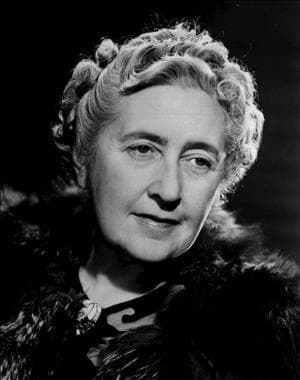
Dame Agatha Mary Clarissa Christie, Lady Mallowan, was an English writer known for her 66 detective novels and 14 short story collections, particularly those revolving around fictional detectives Hercule Poirot and Miss Marple. She also wrote the world's longest-running play, the murder mystery The Mousetrap, which has been performed in the West End since 1952. A writer during the "Golden Age of Detective Fiction", Christie has been called the "Queen of Crime". She also wrote six novels under the pseudonym Mary Westmacott. In 1971, she was made a Dame (DBE) by Queen Elizabeth II for her contributions to literature. Guinness World Records lists Christie as the best-selling fiction writer of all time, her novels having sold more than two billion copies.
Similar books
- Death on the Nile
Agatha Christie
4.1 (127k) average on GoodreadsThrillerAnother Poirot mystery set in an exotic location with a contained group of suspects.
- And Then There Were None
Agatha Christie
4.3 (822k) average on GoodreadsThrillerFeatures a group of people trapped together, facing a murderer among them, and a strong sense of psychological tension.
- Rebecca
Daphne du Maurier
4.2 (450k) average on GoodreadsThrillerExplores themes of psychological torment and a powerful, deceased matriarch's lingering influence.
- Angels & Demons
Dan Brown
3.9 (2.7M) average on GoodreadsThrillerA Harvard symbologist races through Rome's ancient sites, deciphering cryptic clues to unmask the Illuminati and stop a vengeful plot to destroy the Vatican with a stolen antimatter weapon.
- Gone Girl
Gillian Flynn
4.1 (2.3M) average on GoodreadsThrillerA wife's sudden disappearance on her fifth anniversary reveals a web of lies and psychological warfare, exposing the secrets within a seemingly perfect marriage.
- The Girl on the Train
Paula Hawkins
3.9 (2.1M) average on GoodreadsThrillerA woman’s fascination with a seemingly perfect couple she watches from her daily train commute leads her into a dark investigation when she witnesses something that shatters their idyllic image.




Enjoyed the summary?
A summary gives you the shape of the book. The book itself has the detail, the examples and the voice.
Find Appointment with Death on AmazonAs an Amazon Associate, BookBrief earns from qualifying purchases. How we're funded