
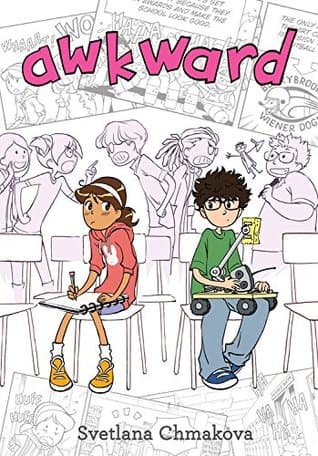
Synopsis
Covers the whole plot, including the ending.
- Difficulty
- Easy
- Pacing
- Moderate
- Mood
- Heartwarming, Humorous, Relatable, Gentle
- Read it if
- You enjoy heartwarming middle school slice-of-life stories with a focus on art, science, and overcoming social awkwardness.
- Skip it if
- You prefer high-stakes fantasy or complex mysteries over character-driven school dramas.
Awkward Plot Summary
Covers the whole plot, including the ending.
First Day Fiasco
Penelope 'Peppi' Torres arrives for her first day at Berrybrook Middle School, determined to follow her cardinal rules: don't get noticed by mean kids and join a club. However, her plans are immediately derailed when she trips in the hallway and collides with a quiet, bespectacled boy named Jaime Thompson. The 'mean girls,' led by Felicity and her friends, witness the incident and begin to mock Peppi, calling her 'nerder girlfriend.' Overwhelmed and embarrassed, Peppi shoves Jaime away and runs off, instantly regretting her actions but too mortified to apologize. She later finds solace in the art club, making new friends like Maritza and Sarah.
Art vs. Science
Peppi tries to move past the incident, but her shame over how she treated Jaime lingers. To her dismay, she soon discovers that Jaime Thompson is in her grade and also a prominent member of the science club — the art club's long-standing rivals. This revelation adds another layer of awkwardness to her already complicated feelings. The two clubs have a fierce, albeit mostly harmless, rivalry, often competing for school resources and recognition. Peppi finds herself caught between her new friends in the art club and her guilt concerning Jaime, whom she secretly admires.
The Proposal
The annual school fair approaches, and both the art club and the science club set their sights on using the main hall for their exhibits. The art club, led by president Maritza, proposes an elaborate 'art gallery' concept, while the science club, spearheaded by president Akilah and supported by Jaime, plans a dynamic 'science expo.' The conflict escalates as both clubs present their proposals to the school board, leading to heated arguments and a clear division among the students. Peppi feels increasingly torn, wanting to support her friends but also understanding Jaime's passion for science.
Escalating Rivalry
The competition for the main hall ignites a series of escalating pranks and taunts between the art and science clubs. Graffiti appears on club posters, supplies go missing, and verbal jabs are exchanged in the hallways. Peppi, still feeling guilty about Jaime, tries to remain neutral but finds it difficult. Her art club friends, particularly Maritza, are passionate about winning, and Peppi feels obligated to support them. She observes Jaime during these confrontations, noting his quiet frustration, which only deepens her regret over their initial encounter and makes her hesitant to approach him.
A Moment of Connection
During a particularly tense moment in the school cafeteria, a minor incident involving a spilled drink brings Peppi and Jaime into close proximity. For a fleeting second, their eyes meet, and Peppi senses a shared feeling of discomfort and perhaps even a hint of understanding, despite the ongoing club war. This brief, non-verbal exchange reinforces Peppi's internal struggle and her desire to make amends. She realizes that her initial reaction to Jaime was unfair to him and a reflection of her own insecurities, prompting her to consider a more direct approach.
The Principal's Intervention
The escalating rivalry finally catches the attention of Principal Evans, who calls both club presidents, Maritza and Akilah, along with representatives from each club (including Peppi and Jaime), to her office. Principal Evans, tired of the constant bickering and pranks, proposes a radical solution: a joint art and science fair. This idea is met with initial resistance and skepticism from both sides, as neither club wants to compromise their vision. Peppi and Jaime find themselves on opposing sides of the table, yet again, though Peppi secretly hopes for a resolution.
Working Together (Reluctantly)
Under the principal's directive, the art and science clubs begrudgingly begin to collaborate on the joint fair. Initial meetings are fraught with tension, misunderstandings, and disagreements over themes, space allocation, and promotional materials. Peppi tries to contribute constructively, but old habits of rivalry die hard. She observes Jaime's quiet dedication and his efforts to find common ground, which further solidifies her respect for him. Despite the challenges, small pockets of cooperation begin to emerge as students realize they need to work together to make the fair a success.
Peppi's Apology
Driven by her growing guilt and admiration for Jaime, Peppi decides she can no longer put off apologizing. She approaches him during a joint fair planning session, her heart pounding. Awkwardly, she expresses her sincere regret for shoving him on the first day and for letting the mean girls' comments get to her. Jaime, initially surprised, accepts her apology gracefully, admitting he understood her reaction given the circumstances. This moment marks a turning point in their relationship, dissolving the wall of awkwardness that had stood between them and opening the door for genuine communication.
Building Bridges
With the apology behind them, Peppi and Jaime start to interact more openly. They discover shared interests beyond their respective clubs, particularly their love for creative expression – Peppi through art, Jaime through the imaginative problem-solving of science. They begin to offer each other support and ideas for the fair, bridging the gap between their clubs. Their growing friendship also starts to influence others in both clubs, creating a more cooperative atmosphere and demonstrating that art and science are not mutually exclusive but can complement each other.
The Joint Fair
The day of the joint art and science fair arrives, and despite the initial resistance, it is a success. The main hall is transformed into a display of creativity and innovation, with art installations complementing scientific exhibits. Students from both clubs work together, guiding visitors and explaining their projects. Peppi proudly showcases her artwork, while Jaime impresses attendees with his scientific demonstrations. The fair becomes a testament to their collaboration, proving that breaking down barriers can lead to something greater than either club could achieve alone.
New Friendships and Understanding
The joint fair wins over the school board and the student body and creates new friendships and understanding between the art and science clubs. The initial rivalry is replaced by mutual respect and a sense of camaraderie. Peppi and Jaime's friendship deepens, and they continue to spend time together, exploring their shared interests. The 'mean girls' who initially mocked Peppi are shown to be less significant, as Peppi has found her own confidence and a supportive community. The experience teaches Peppi that true belonging comes from being authentic and brave.
Principal Figures
Penelope 'Peppi' Torres
Protagonist
A shy, artistic middle schooler who learns to overcome her insecurities and speak her mind.
Peppi is an introverted new student at Berrybrook Middle School, prone to overthinking and easily embarrassed. She loves to draw and quickly joins the art club, where she finds a sense of belonging. Her primary internal conflict revolves around her initial, regrettable interaction with Jaime Thompson and her struggle to apologize, which is compounded by the rivalry between her art club and his science club. Peppi values friendship and creativity but initially lacks the confidence to stand up for herself or address uncomfortable situations directly.
Relationships: Jaime Thompson (Initial awkward crush, develops into a close friendship.); Maritza (Close friend and art club president.); Sarah (Friend and fellow art club member.); Felicity (Antagonistic classmate, leader of the 'mean girls'.)
Jaime Thompson
Supporting/Love Interest
A quiet, intelligent science club member who becomes Peppi's friend and crush.
Jaime is a soft-spoken and intelligent boy who is deeply passionate about science. He is a key member of the science club and is often seen with his head in a book or working on a project. Despite his quiet demeanor, he is observant and kind, not holding grudges. He is initially bewildered by Peppi's reaction to their collision but later accepts her apology with grace. Jaime represents intellectual curiosity and calm resilience, often acting as a voice of reason amidst the club rivalry.
Relationships: Penelope 'Peppi' Torres (Initial awkward encounter, develops into a close friendship and mutual crush.); Akilah (Science club president and friend.)
Maritza
Supporting
The energetic and passionate president of the art club and Peppi's close friend.
Maritza is a vibrant and fiercely loyal friend, serving as the enthusiastic president of the art club. She is passionate about art and defending her club's interests, often leading the charge in the rivalry against the science club. While sometimes headstrong and quick to dismiss the science club, she genuinely cares for her friends and is open to new ideas, especially when she sees the benefits. Maritza's spirited nature provides much of the comedic and dramatic tension within the art club.
Relationships: Penelope 'Peppi' Torres (Close friend.); Sarah (Friend and fellow art club member.)
Akilah
Supporting
The focused and determined president of the science club.
Akilah is the intelligent and determined president of the science club. She is highly organized and serious about her club's projects and reputation. Like Maritza, she is passionate about her field and initially staunchly defends the science club's position against the art club. Akilah represents the logical and structured side of the school's academic life, and while competitive, she is also ultimately reasonable and capable of compromise for the greater good of the school.
Relationships: Jaime Thompson (Friend and fellow science club member.)
Sarah
Supporting
A quiet but supportive member of the art club and Peppi's friend.
Sarah is one of Peppi's first friends in the art club. She is generally quieter than Maritza but offers steady support and a calm presence. She shares Peppi's love for art and helps her feel more comfortable in her new environment. Sarah often acts as a sounding board for Peppi and occasionally offers gentle, practical advice.
Relationships: Penelope 'Peppi' Torres (Close friend.); Maritza (Friend and fellow art club member.)
Felicity
Antagonist
The leader of the 'mean girls' who mocks Peppi and Jaime.
Felicity is one of the 'mean girls' who initially targets Peppi and Jaime. She represents the social pressures and anxieties of middle school, particularly the fear of being seen as 'uncool' or 'nerdy.' Her taunts and judgments contribute significantly to Peppi's initial embarrassment and reluctance to approach Jaime. While not a central antagonist, her presence highlights the social hierarchy and challenges Peppi faces.
Relationships: Penelope 'Peppi' Torres (Antagonistic, bullies Peppi.); Jaime Thompson (Mocks Jaime.)
Principal Evans
Supporting
The principal of Berrybrook Middle School who mediates the club rivalry.
Principal Evans is a fair and firm authority figure at Berrybrook Middle School. She steps in when the rivalry between the art and science clubs gets out of hand, demonstrating her commitment to maintaining a positive and cooperative school environment. Her decision to mandate a joint fair is a pivotal plot point, forcing the clubs to confront their differences and work together.
Themes & Insights
Overcoming Social Awkwardness and Insecurity
The novel explores the anxieties of middle school, particularly the fear of embarrassment and social judgment. Peppi's initial reaction to tripping into Jaime – shoving him away out of mortification – is an example of how insecurity can lead to regrettable actions. Her subsequent struggle to apologize and her internal monologue about how others perceive her highlight the universal middle school experience of feeling 'awkward.' The story's resolution shows that confronting these insecurities, rather than running from them, is key to growth and genuine connection, as seen when Peppi finally apologizes to Jaime.
“Cardinal rule #1 for surviving school: Don't get noticed by the mean kids.”
The Importance of Communication and Apology
A central theme is the power of direct communication and sincere apology in resolving conflict and building relationships. Peppi's prolonged guilt over shoving Jaime is a burden she carries throughout the first half of the book. Her inability to articulate her regret creates a barrier between them. Only when she bravely approaches Jaime and offers a heartfelt apology does their relationship begin to heal and evolve. This act of courage demonstrates that honesty, even when difficult, is essential for moving past misunderstandings and fostering trust.
“Sometimes you have to break the rules to survive middle school!”
Bridging Divisions and Finding Common Ground
The rivalry between the art and science clubs is a metaphor for the divisions that can arise from different interests or perceived social groups. Initially, both clubs are entrenched in their separate identities and compete fiercely. However, forced collaboration for the joint fair teaches them the value of finding common ground and appreciating diverse perspectives. The story illustrates that creativity and logic are not mutually exclusive but can complement each other, leading to richer outcomes. This theme is exemplified by the successful joint fair, which showcases the beauty of interdisciplinary cooperation.
“Maybe art and science aren't so different after all. They both take imagination.”
Authenticity vs. Conformity
Peppi initially tries to conform to unspoken social rules ('don't get noticed by mean kids') and allows the taunts of Felicity and her friends to dictate her actions. Her shame over being called 'nerder girlfriend' leads her to push Jaime away. As the story progresses, Peppi learns that true belonging and happiness come from being authentic to herself, pursuing her passions (art), and connecting with people who appreciate her for who she is, rather than trying to fit into a mold or avoid judgment. Her journey is about finding her voice and confidence outside of others' expectations.
“It takes courage to be yourself.”
Plot Devices & Literary Techniques
The School Club Rivalry
A comedic and thematic conflict between the art and science clubs.
The rivalry between the art club and the science club serves as the primary external conflict driving the plot. It creates obstacles for Peppi and Jaime's potential friendship, provides opportunities for character development, and explores the theme of bridging divisions. The escalating pranks and competition for the main hall are humorous but also highlight the pettiness of perceived differences. Ultimately, the rivalry is resolved through forced collaboration, demonstrating the benefits of compromise and mutual respect.
The Embarrassing First Impression
Peppi's initial, regrettable encounter with Jaime Thompson.
Peppi's accidental collision with Jaime and her subsequent panicked reaction of shoving him is the inciting incident of the story. This 'awkward' first impression creates immediate internal conflict for Peppi (guilt, shame) and establishes the central romantic tension. It also provides a clear goal for Peppi: to apologize and make amends. The lingering awkwardness from this event shapes her interactions with Jaime and motivates much of her character arc, making her eventual apology a significant moment of growth.
The Joint Fair Mandate
Principal Evans's decision to force the rival clubs to collaborate.
The principal's intervention and her mandate for a joint art and science fair act as a crucial plot device to force the characters, particularly Peppi and Jaime, to interact and work together despite their clubs' rivalry. This external pressure creates new challenges and opportunities for communication, ultimately leading to the resolution of both the club conflict and Peppi's personal struggle to connect with Jaime. It is the catalyst for the theme of finding common ground and the practical application of collaboration.
Awkward Quotes
“Being in middle school is like being a superhero without the awesome powers.”
“It's hard to be invisible when you're the one who just tripped in front of everyone.”
“Sometimes the hardest part is just showing up.”
“Art isn't about being perfect. It's about being honest.”
“You can't make everyone happy, so you might as well make yourself happy.”
“It's amazing how much drama can fit into one school hallway.”
“Maybe being awkward isn't so bad if you're awkward together.”
“Words are powerful. They can build things up or tear them down.”
“You don't have to be friends with everyone, but you should be kind to everyone.”
“Sometimes the best way to fix a problem is to just talk about it.”
“It's okay to make mistakes. That's how you learn.”
“Having a crush is like having a secret superpower that makes you trip more.”
“Even when things are messy, there's always a way to make something beautiful.”
“The hardest part about saying sorry is actually saying it.”
Quiz
10 questions on the plot and the characters. Each answer comes with a short explanation.
Question 1
What is Penelope (Peppi) Torres's first major mistake on her first day at her new school?
- She forgets her locker combination.
- She trips into Jaime Thompson in the hall.
- She gets lost trying to find the art club.
- She accidentally spills her lunch on a mean kid.
Show answer
B. She trips into Jaime Thompson in the hall. Peppi's first mistake is tripping into Jaime Thompson, which immediately draws attention to her and breaks her first rule of not getting noticed by the mean kids.
Question 2
What nickname do the mean kids give Peppi after her encounter with Jaime?
- The 'Art Nerd'
- The 'Tripper'
- The 'Nerder Girlfriend'
- The 'Science Girl'
Show answer
C. The 'Nerder Girlfriend' After Peppi trips into Jaime, the mean kids start calling her the 'nerder girlfriend', linking her to Jaime.
Question 3
Which school club does Peppi join to make new friends?
- The Science Club
- The Drama Club
- The Art Club
- The Debate Club
Show answer
C. The Art Club Peppi falls back on her second rule and surrounds herself with new friends in the art club.
Question 4
What is Peppi's immediate reaction after shoving Jaime Thompson in the hall?
- She apologizes profusely.
- She offers to help him pick up his books.
- She runs away out of shame.
- She tries to explain herself to the mean kids.
Show answer
C. She runs away out of shame. Peppi handles the crisis by shoving Jaime and running away, feeling ashamed of her actions.
Question 5
What is the relationship between Peppi's club and Jaime's club?
- They are sister clubs, often collaborating.
- They are archrivals.
- They are unaware of each other's existence.
- They are in different wings of the school and never interact.
Show answer
B. They are archrivals. To make matters worse for Peppi, Jaime is a member of her own club's archrivals—the science club!
Question 6
What is Cardinal Rule #1 for surviving school, according to Peppi?
- Always have a study buddy.
- Don't get noticed by the mean kids.
- Join at least two clubs.
- Always be on time for class.
Show answer
B. Don't get noticed by the mean kids. Cardinal rule #1 for surviving school is: Don't get noticed by the mean kids.
Question 7
What is the ultimate lesson Peppi learns by the end of the story, regarding surviving middle school?
- Always follow the rules, no matter what.
- It's best to avoid all confrontation.
- Sometimes you have to break the rules to survive.
- Middle school is impossible to survive.
Show answer
C. Sometimes you have to break the rules to survive. The story concludes with Peppi realizing that sometimes you have to break the rules to survive middle school!
Question 8
Why does Peppi feel ashamed about how she treated Jaime?
- She accidentally broke his glasses.
- She made him late for class.
- She shoved him and ran away instead of helping or apologizing.
- She publicly insulted his intelligence.
Show answer
C. She shoved him and ran away instead of helping or apologizing. Peppi can't help feeling ashamed about the way she treated Jaime—by shoving him and running away.
Question 9
The conflict between the Art Club and the Science Club serves to highlight which theme in the story?
- The importance of academic competition.
- The difficulty of navigating social groups and rivalries in middle school.
- The superiority of creative arts over sciences.
- The need for students to choose one interest and stick to it.
Show answer
B. The difficulty of navigating social groups and rivalries in middle school. The rivalry between the clubs, especially with Jaime being in the opposing one, makes things 'awkward' for Peppi and emphasizes the social challenges and group dynamics of middle school.
Question 10
What is the significance of the title 'Awkward' in relation to Peppi's initial experiences at her new school?
- It refers to the school building's unusual architecture.
- It describes the general feeling of being a new student and the specific social situations Peppi finds herself in, particularly with Jaime.
- It's a direct quote from one of the mean kids.
- It refers to Peppi's physical clumsiness throughout the story.
Show answer
B. It describes the general feeling of being a new student and the specific social situations Peppi finds herself in, particularly with Jaime. The title 'Awkward' perfectly encapsulates Peppi's initial social blunders, her shame regarding Jaime, and the uncomfortable rivalry between the clubs, highlighting the general feeling of navigating middle school.
Awkward FAQ
What is the central conflict Peppi faces at the start of 'Awkward'?
Peppi's central conflict begins when she trips into Jaime Thompson on her first day, immediately attracting the attention of the 'mean kids' led by Jenny, who label her 'nerder girlfriend.' Her panicked reaction of shoving Jaime and running away then creates a deep sense of shame and regret, setting up her internal struggle.
How does Peppi initially try to cope with her social blunder and the bullying?
Initially, Peppi tries to cope by adhering to her 'rule #2' of joining a club with similar interests, finding solace and friendship within the art club. She attempts to immerse herself in creative activities and new friendships to distract herself from the lingering guilt and the taunts about being Jaime's 'nerder girlfriend.'
What role does the rivalry between the art club and the science club play in the story?
The rivalry between the art club and the science club is a major external conflict, providing a backdrop for Peppi and Jaime's forced interactions and deepening their awkwardness. It escalates into a 'club war' over bulletin board space and school fair projects, forcing both Peppi and Jaime to confront their issues amidst larger group dynamics.
Who are some of Peppi's key friends in the art club and how do they support her?
Peppi's key friends in the art club include Maribella and Sarah, who welcome her into their group and provide a sense of belonging. They support her by being understanding listeners, participating in the club war alongside her, and encouraging her artistic pursuits, even when she's distracted by her feelings for Jaime.
How does Jaime Thompson react to Peppi's initial actions and the subsequent 'nerder girlfriend' taunts?
Jaime is initially confused and hurt by Peppi's shove and flight, which is compounded by the 'nerder girlfriend' taunts he also endures. He becomes quiet and withdrawn around her, expressing his discomfort through avoidance and terse replies, making their interactions incredibly strained and uncomfortable for both of them.
Are there any subtle hints about Jaime's feelings for Peppi before they are openly addressed?
Yes, subtle hints include Jaime's recurring presence in Peppi's vicinity, his quiet observation of her, and his eventual willingness to engage with her during the club war, despite his initial shyness. His actions, like helping with the bulletin board or offering a quiet apology, suggest a deeper interest beyond mere politeness.
What is the significance of the bulletin board in the rivalry and resolution?
The bulletin board is a central battleground for the art and science clubs, symbolizing their conflicting priorities and territorial disputes. Its defacement and subsequent collaborative decoration become a catalyst for both escalating the conflict and eventually forcing a truce and cooperation between the clubs, and indirectly, between Peppi and Jaime.
Does the book explore any other characters' struggles with social anxiety or bullying?
While the primary focus is on Peppi and Jaime, the book subtly touches on others' experiences. For instance, some of the 'mean kids' like Jenny show glimpses of their own insecurities and motivations for bullying, suggesting that social struggles are multifaceted, not just confined to the protagonists.
What internal conflict does Peppi experience regarding her 'rules for surviving middle school'?
Peppi's internal conflict centers on her realization that her rigid rules, especially 'don't get noticed' and 'stick to your group,' are insufficient and sometimes detrimental. Her desire to apologize to Jaime and her growing feelings for him force her to question and ultimately break these rules, understanding that genuine connection requires vulnerability.
How does Peppi's shame manifest and what steps does she take to overcome it?
Peppi's shame manifests as avoidance, blushing, and a constant internal monologue of guilt whenever Jaime is near. To overcome it, she first tries to ignore it, then attempts a series of awkward apologies, and finally, through the pressure of the club war, is forced into direct, honest communication with Jaime, leading to genuine reconciliation.
What psychological impact does the 'nerder girlfriend' label have on Peppi and Jaime?
The 'nerder girlfriend' label creates significant social anxiety for both Peppi and Jaime, making them hyper-aware of their interactions and causing them to withdraw. For Peppi, it fuels her shame and fear of social judgment, while for Jaime, it reinforces his quiet nature and makes him even more hesitant to engage with Peppi.
In what ways does Peppi's artistic expression reflect her emotional state throughout the story?
Peppi's artistic expression often reflects her emotional state; when she's stressed or guilty, her art might be less focused or serve as an escape. As she gains confidence and resolves her issues with Jaime, her art becomes more purposeful and collaborative, symbolizing her growing comfort and self-acceptance.
Does the book suggest that breaking 'rules' is always the right approach in middle school?
The book suggests that blindly following rigid 'rules' can hinder personal growth and genuine connection. It implies that sometimes, breaking rules rooted in fear or avoidance is necessary for developing courage, empathy, and authentic relationships, particularly when those rules prevent you from doing the right thing or being yourself.
How does the resolution of the club war parallel the resolution of Peppi and Jaime's personal conflict?
The resolution of the club war, which involves collaboration and mutual respect, directly parallels Peppi and Jaime's personal conflict. Just as the clubs learn to work together for the greater good of the school fair, Peppi and Jaime learn to communicate, apologize, and build a relationship based on understanding rather than avoidance, signifying a broader theme of unity.
What message does 'Awkward' convey about the nature of middle school friendships and rivalries?
'Awkward' conveys that middle school friendships are crucial for support, but also that rivalries can be overcome through understanding and communication. It suggests that superficial differences or initial missteps don't have to define relationships, and that genuine connection can blossom even amidst social pressures and perceived conflicts.
Is the romance aspect of the story the primary focus, or is it secondary to other themes?
While the budding romance between Peppi and Jaime is a significant driving force, it's arguably secondary to the broader themes of self-acceptance, overcoming social anxiety, learning to apologize, and the importance of communication. The romance serves as a catalyst for Peppi's personal growth and her understanding of genuine connection.
How does the book's title, 'Awkward,' perfectly encapsulate its themes and character experiences?
The title 'Awkward' perfectly encapsulates the book's themes by reflecting the pervasive feeling of discomfort and embarrassment that defines middle school, especially for Peppi and Jaime. It highlights the awkwardness of new social situations, first crushes, apologies, and navigating group dynamics, making it relatable to the target audience.
About the author

Svetlana Chmakova is a graphic novelist known for her work in the young adult genre. Her notable books include "Brave," which explores themes of friendship and self-acceptance, and "Awkward," a story about navigating middle school challenges. Chmakova's storytelling often resonates with young readers, addressing relatable experiences in a thoughtful manner.
Similar books
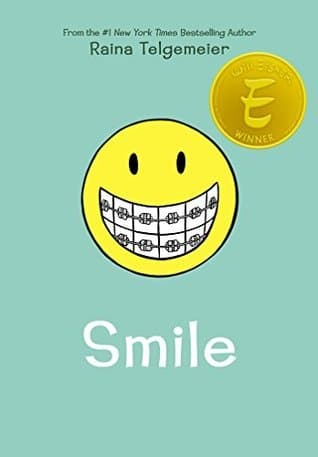
- Smile
Raina Telgemeier
4.3 (183k) average on GoodreadsChildren'sExplores middle school social dynamics and personal growth through a graphic novel format.
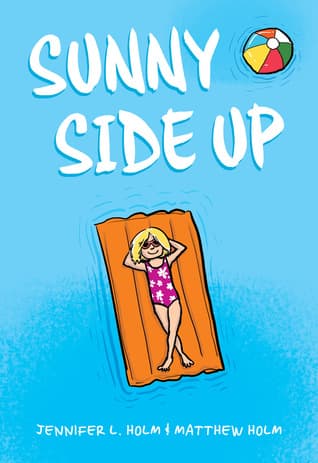
- Sunny Side Up
Jennifer L. Holm
4.1 (30k) average on GoodreadsChildren'sAlso a graphic novel about adolescence, 'Sunny Side Up' delves more into family issues, adjusting to a new environment, and personal growth in a summer setting. 'Awkward' is more squarely focused on the social structures and conflicts within a school environment, and the protagonist's journey to find her place among different cliques and clubs.
- Harry Potter and the Sorcerer's Stone
J.K. Rowling
4.5 (7M) average on GoodreadsFantasyRescued from a miserable life under the stairs, an orphaned boy discovers he's a wizard destined for a magical school, where he uncovers a dangerous secret tied to the dark wizard who murdered his parents.
- The Hunger Games
Suzanne Collins
4.3 (6.4M) average on GoodreadsFantasyIn a future where children fight to the death on live television, Katniss Everdeen volunteers for the arena, turning a death sentence into a fight for survival and a spark of rebellion.
- To Kill a Mockingbird
Harper Lee
4.3 (4.5M) average on GoodreadsHistorical FictionIn the 1930s Jim Crow South, Harper Lee writes about racial injustice, moral growth, and the quiet courage of a lawyer father, Atticus Finch, as seen through his young daughter's eyes.
- The Fault in Our Stars
John Green
4.2 (3.6M) average on GoodreadsYoung AdultA girl with a terminal illness finds her story rewritten when a charming boy with a similar past enters her life at a cancer support group, leading to a star-crossed romance.




Enjoyed the summary?
A summary gives you the shape of the book. The book itself has the detail, the examples and the voice.
Find Awkward on AmazonAs an Amazon Associate, BookBrief earns from qualifying purchases. How we're funded