
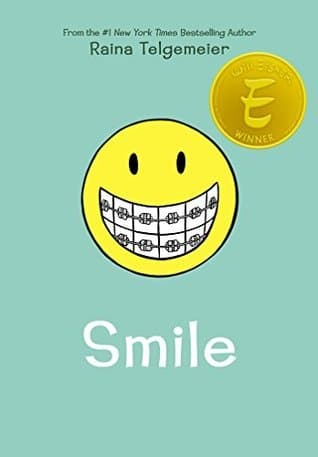
Synopsis
Covers the whole plot, including the ending.
- Difficulty
- Easy
- Pacing
- Moderate
- Mood
- Relatable, Heartwarming, Humorous, Reflective
- Read it if
- You enjoy heartwarming, relatable coming-of-age stories, especially graphic novels about overcoming physical challenges and social anxieties in middle school.
- Skip it if
- You prefer complex fantasy plots or intense dramatic narratives over slice-of-life memoirs.
Smile Plot Summary
Covers the whole plot, including the ending.
The Accident and Initial Shock
Raina, a sixth-grader, is enjoying a normal evening after a Girl Scout meeting, running with her friends. She trips and falls, landing hard on her face. The impact knocks her two front teeth out of alignment and pushes one up into her gums. Her friends are shocked. Raina's mother immediately takes her to the oral surgeon. The initial examination shows significant damage, starting Raina on a long and often painful journey of dental procedures. She just wants to fit in with her peers, much to her dismay.
First Steps in Dental Drama
After the accident, Raina has surgery to reposition her teeth. The procedure is painful, and she has a noticeable gap and a lisp, making her self-conscious. Soon after, she gets her first set of braces. Her friends, especially Jenny and Nicole, are not very supportive; they often make fun of her appearance and her lisp. This period is difficult for Raina. She tries to maintain her friendships while dealing with the physical discomfort and social embarrassment of her dental situation. She feels isolated and misunderstood by those she thought were her closest friends.
Headgear and Social Stigma
As her dental treatment continues, Raina learns she needs to wear headgear. This is a big blow to her self-esteem. The bulky appliance is visible and draws unwanted attention, making her feel even more like an outcast. She tries to hide it from her classmates and avoids social situations where she might be seen wearing it. Her friends, Jenny and Nicole, remain insensitive, focusing on her dental issues instead of offering support. Raina's frustration grows as she feels her appearance is constantly watched. Her desire for normalcy becomes harder to achieve.
The Earthquake and New Beginnings
During her dental struggles, a big earthquake happens. It causes widespread disruption and temporary school closure. This event distracts her from her dental problems and shifts the focus of her classmates. During this time, Raina spends more time with a different group of girls, Kelli and Melissa. They are more understanding and less judgmental about her braces and headgear. This change in her social circle gives Raina some hope. It shows her that not all friendships are based on superficial appearances, and that real connection is possible.
Retainer with Fake Teeth
After her braces are removed, Raina's front teeth still do not look quite right because of the initial damage. To fill the gap and make her smile look normal, she gets a retainer with two fake front teeth attached. This new device is very awkward and makes eating and speaking difficult. She still faces challenges with her old friends, Jenny and Nicole, who continue to make her feel self-conscious. Raina's frustration with her dental journey increases. She grapples with the embarrassment of her appearance, wanting a natural, perfect smile.
Boy Troubles and Misunderstandings
Throughout her dental problems, Raina also deals with the confusing world of middle school crushes. She develops feelings for boys like Sean and Blake, but her insecurities about her teeth and braces often make her hesitant to act on them. There are misunderstandings and awkward encounters, such as when she thinks a boy is interested in her, only to realize he is talking to someone else. These romantic missteps add another layer of emotional difficulty to her already challenging adolescent experience. She feels even more isolated and misunderstood, especially when her friends offer unhelpful or mocking advice.
Friendship Shifts and Betrayal
Raina slowly starts to realize that her friendships with Jenny and Nicole are not healthy. They are often mean-spirited, gossipy, and unsupportive, especially about her dental issues. She overhears them making fun of her and feels a growing distance. This realization is painful but needed for her growth. She starts to spend more time with Kelli and Melissa, who are consistently kinder and more accepting. This time marks a turning point. Raina begins to value real connection over superficial popularity, understanding that true friends should support her, not put her down.
More Surgeries and Long-Term Treatment
Raina's dental journey is not over even as she enters high school. She needs more surgeries, including one for a gum issue caused by the initial impact. The extensive treatment means more time at the orthodontist, more discomfort, and more self-consciousness. Despite progress, her teeth still do not look perfectly natural, and she continues to wear retainers and navigate various dental appliances. This long process tests her patience and strength. She slowly learns to cope with the ongoing challenges, understanding that her smile is a work in progress.
Finding Her Voice and Confidence
As Raina gets older, she begins to find her voice and build confidence, not just in her appearance but in who she is. She starts to draw more, using her artistic talents, and finds comfort in her new, more supportive friendships. While her dental journey continues, she learns to accept her unique situation and not let it completely define her. She realizes that true friends do not care about a perfect smile, and that her worth goes beyond her physical appearance. This new self-assurance helps her navigate the challenges of high school more easily.
A New Smile and Self-Acceptance
Years after her initial accident, Raina's dental treatment finally ends. Her teeth may not be absolutely perfect, but they are healthy and look natural. She has endured countless appointments, surgeries, and embarrassing appliances. She emerges with a beautiful, hard-won smile. More importantly, she has gained a deep sense of self-acceptance and resilience. The journey taught her lessons about friendship, self-worth, and perseverance. She looks back on her experience not with bitterness, but with a sense of accomplishment, having overcome a significant challenge to truly embrace her smile and herself.
Smile Characters
Raina Telgemeier
Protagonist
A sixth-grader who navigates a challenging dental journey and the complexities of adolescence.
Raina is the central character, a relatable middle schooler who just wants to fit in. Her life is dramatically altered by a severe dental injury, forcing her through years of braces, surgeries, and embarrassing appliances. Initially self-conscious and insecure, especially about her appearance and lisp, Raina struggles with friendships and crushes. She is artistic and sensitive, often internalizing her frustrations. Over the course of the book, she learns resilience and self-acceptance, eventually finding her voice and true friends.
Relationships: Mom (Supportive and caring, her primary caregiver during the dental ordeal.); Dad (Supportive and understanding, offering comfort and humor.); Amara (Younger sister, often annoying but occasionally supportive.); Will (Younger brother, playful and sometimes irritating.); Jenny (Former close friend, becomes unsupportive and mean-spirited.); Nicole (Former close friend, often follows Jenny's lead in being unkind.); Kelli (New, supportive friend who accepts Raina unconditionally.); Melissa (New, supportive friend, part of Raina's healthier social circle.); Sean (One of Raina's crushes.); Blake (Another boy Raina has a crush on.)
Raina's Mom
Supporting
Raina's primary caregiver and emotional support throughout her dental journey.
Raina's mom is a constant source of support and comfort for her daughter. She is the one who rushes Raina to the oral surgeon after the accident and diligently takes her to countless appointments. She empathizes with Raina's pain and frustration, offering encouragement and understanding, even when Raina is difficult or upset. Her unwavering presence is crucial for Raina's ability to cope with the physical and emotional challenges of her dental ordeal.
Relationships: Raina Telgemeier (Mother-daughter, deeply supportive and caring.); Raina's Dad (Spousal, co-parenting and sharing responsibilities.); Amara (Mother-daughter.); Will (Mother-son.)
Jenny
Supporting
One of Raina's initial close friends who proves to be unsupportive and superficial.
Jenny is initially one of Raina's best friends in middle school, but her true colors emerge as Raina's dental problems escalate. She is often mean-spirited, gossipy, and makes fun of Raina's appearance, particularly her lisp and headgear. Jenny's behavior contributes significantly to Raina's feelings of insecurity and isolation. She represents the superficial and sometimes cruel nature of middle school friendships that Raina eventually outgrows.
Relationships: Raina Telgemeier (Initially close friend, becomes distant and unsupportive.); Nicole (Close friend, often conspire together.)
Nicole
Supporting
Another of Raina's early friends who follows Jenny's lead in being unkind.
Nicole is Jenny's close friend and often acts as a follower, joining in on Jenny's teasing and unsupportive comments towards Raina. While perhaps not as overtly malicious as Jenny, Nicole's complicity in the bullying still hurts Raina deeply. She represents the peer pressure and lack of independent thought that can characterize some adolescent friendships, failing to stand up for Raina when she needs it most.
Relationships: Raina Telgemeier (Initially close friend, becomes distant and unsupportive.); Jenny (Close friend, often conspire together.)
Kelli
Supporting
A kind and accepting new friend Raina makes during her dental journey.
Kelli is one of the new friends Raina makes, particularly after the earthquake. She is portrayed as kind, understanding, and accepting of Raina's dental issues. Kelli offers genuine support and friendship, contrasting sharply with the negativity Raina experienced from Jenny and Nicole. Her friendship helps Raina feel less isolated and provides a healthier social environment, contributing to Raina's growing self-confidence.
Relationships: Raina Telgemeier (Supportive and genuine friend.); Melissa (Friend.)
Melissa
Supporting
Another supportive new friend who helps Raina feel accepted.
Melissa is part of Raina's new, more positive friend group, alongside Kelli. She is depicted as friendly and accepting, providing Raina with a much-needed sense of belonging. Her presence reinforces the idea that Raina can find genuine connections and that her dental problems do not define her. Melissa's friendship contributes to Raina's overall emotional well-being and her ability to move past the negativity of her old friends.
Relationships: Raina Telgemeier (Supportive and genuine friend.); Kelli (Friend.)
Sean
Mentioned
One of Raina's early crushes, representing the confusion of middle school romance.
Sean is one of the boys Raina develops a crush on during middle school. He represents the typical adolescent infatuations and the awkwardness that often accompanies them. Their interactions are brief and often misunderstood by Raina, adding to her self-consciousness about her appearance and her uncertainty in social situations with boys. He contributes to the theme of navigating crushes and romantic feelings during a vulnerable period.
Relationships: Raina Telgemeier (Raina has a crush on him.)
Blake
Mentioned
Another boy Raina has a crush on, adding to her boy confusion.
Blake is another boy in Raina's class for whom she develops a crush. Similar to Sean, he represents the confusing and often unrequited nature of middle school romance. Raina's interactions with Blake highlight her insecurities about her teeth and her desire to be seen as attractive despite her ongoing dental issues. His presence contributes to the narrative of her navigating both dental and social challenges simultaneously.
Relationships: Raina Telgemeier (Raina has a crush on him.)
Amara
Supporting
Raina's younger sister, often annoying but sometimes offering unexpected support.
Amara is Raina's younger sister. She often embodies the typical sibling dynamic of being annoying, teasing Raina about her braces or lisp. However, there are moments where Amara shows a surprising level of care and concern for her older sister, offering a different kind of familial support. Her presence adds to the realistic portrayal of family life and the complexity of sibling relationships.
Relationships: Raina Telgemeier (Sister, often teasing but occasionally supportive.); Mom (Daughter.); Dad (Daughter.); Will (Sister.)
Smile Themes
Identity and Self-Acceptance
The core of Raina's journey is her struggle to define herself amidst big physical changes and social pressures. Her dental trauma deeply affects her self-image, making her feel unattractive and abnormal. The book explores how she deals with feelings of embarrassment and insecurity, especially about her lisp, braces, and headgear. Ultimately, Raina learns to accept her unique smile and, more broadly, herself. She realizes that her worth is not tied to physical perfection or fitting in with superficial expectations. This is clear when she finally embraces her smile at the end, understanding the long journey it took.
“My teeth were finally... normal. Or at least, normal-looking. And I'd earned them.”
The Nature of Friendship
The story clearly shows how friendships change during adolescence. Initially, Raina holds onto her 'friends' Jenny and Nicole, despite their insensitivity and teasing. The book shows the pain of superficial friendships and the pressure to conform. As Raina matures, she sees how unhealthy these relationships are. She seeks out real connections with Kelli and Melissa, who offer true support and acceptance. This theme highlights the importance of choosing friends who build one up rather than tear one down, showing how Raina's social circle changes to reflect her growing self-worth.
“I thought they were my friends. But they mostly just made fun of me.”
Navigating Adolescence and Puberty
Beyond the dental drama, the book explores the broader challenges of middle and early high school. Raina experiences first crushes, body changes, and the strong desire to fit in. Her dental problems make these typical adolescent anxieties even stronger, making her feel more awkward and noticeable. The story captures the emotional ups and downs of these years—the embarrassment, the longing for normalcy, the confusion of romantic feelings, and the struggle to find one's place in a social group. The earthquake scene, for example, is a temporary break from these personal pressures, showing the larger context of her youth.
“I just wanted to be a normal kid. A normal sixth grader.”
Resilience and Perseverance
Raina's journey shows her remarkable strength in the face of long-lasting physical pain, emotional distress, and social challenges. She endures multiple surgeries, years of uncomfortable appliances like braces and headgear, and constant self-consciousness. Despite moments of despair and frustration, she continues through the difficult dental process. Her persistence is not just about getting a 'perfect' smile. It is about enduring a difficult period of her life and becoming stronger, showing how people can overcome hard times.
“It was just one more thing I had to get through.”
Plot Devices & Literary Techniques
Graphic Novel Format
Visual storytelling that enhances emotional impact and character expression.
The graphic novel format is central to 'Smile's' effectiveness. The use of panels, speech bubbles, and expressive illustrations allows readers to directly witness Raina's pain, embarrassment, and eventual joy. Facial expressions, body language, and visual metaphors (like thought bubbles showing her imagined perfect teeth) convey emotions and plot points that might be harder to capture in prose. This visual medium makes Raina's dental journey and adolescent struggles incredibly relatable and immediate, allowing readers to 'see' her transformation over time.
First-Person Narration (Memoir)
Provides intimate access to Raina's internal thoughts and feelings.
As a memoir, the story is told from Raina's perspective, providing direct access to her inner world. This allows readers to intimately understand her anxieties, hopes, and frustrations throughout her dental ordeal and social challenges. Her candid voice makes her experiences deeply personal and relatable, fostering empathy. We experience her embarrassment, her pain, and her gradual growth directly through her thoughts and observations, making her journey of self-acceptance more impactful.
Symbolism of the 'Smile'
Represents self-confidence, social acceptance, and inner peace.
The 'smile' itself is a powerful symbol in the book. Initially, Raina's injured teeth represent her broken self-image, her insecurity, and her inability to fit in. The journey to a 'perfect' smile becomes a metaphor for her quest for self-acceptance and social normalcy. By the end, her achieved smile doesn't just signify healed teeth; it symbolizes her inner growth, newfound confidence, and the peace she finds in accepting herself, imperfections and all. It's the physical manifestation of her emotional journey.
Contrasting Friendships
Highlights the difference between superficial and genuine social connections.
The narrative effectively uses the contrast between Raina's initial friend group (Jenny and Nicole) and her later friends (Kelli and Melissa) as a plot device. This contrast serves to illustrate the difference between toxic, superficial relationships and supportive, genuine ones. Jenny and Nicole's teasing and unsupportive behavior amplify Raina's insecurities, while Kelli and Melissa's acceptance helps her build confidence. This juxtaposition highlights a crucial part of Raina's emotional growth and decision to prioritize her well-being over social status.
Smile Quotes
“I just want to be normal.”
“Sometimes you just have to smile through the pain.”
“It's not about being perfect. It's about being you.”
“Friends come and go, but the ones who matter stick around.”
“Braces are just temporary. So is middle school.”
“You can't control what happens to you, but you can control how you react.”
“It's okay to not have all the answers.”
“A smile can hide a lot, but it can also heal a lot.”
“Growing up is messy, but it's worth it.”
“Sometimes the hardest part is just getting started.”
“You don't have to be like everyone else to be happy.”
“The little things can make a big difference.”
“It's not the end of the world, even if it feels like it.”
Quiz
10 questions on the plot and the characters. Each answer comes with a short explanation.
Question 1
What event triggers Raina's dental problems at the beginning of the book?
- She gets hit in the mouth during a soccer game
- She trips and falls after a Girl Scouts meeting
- She bites into something hard and breaks her teeth
- She has a bicycle accident on her way home from school
Show answer
B. She trips and falls after a Girl Scouts meeting Raina's dental journey begins when she trips and falls while running after a Girl Scouts meeting, severely injuring her two front teeth. This accident sets off years of orthodontic treatments.
Question 2
What natural disaster occurs in the book that adds to Raina's stress?
- A tornado
- A major earthquake
- A hurricane
- A flood
Show answer
B. A major earthquake A major earthquake strikes San Francisco in 1989, which Raina experiences firsthand. This event adds another layer of anxiety and disruption to her already stressful middle school years.
Question 3
What embarrassing dental device does Raina have to wear that makes her self-conscious?
- A palate expander
- Headgear
- A night guard
- A dental crown
Show answer
B. Headgear Raina has to wear headgear, which she finds particularly embarrassing because it's visible and makes her feel awkward around her peers, adding to her social anxieties.
Question 4
Why do Raina's friends Karin and Nicole eventually stop being friends with her?
- They move to different schools
- They become jealous of Raina's artistic talent
- They exclude and mock her, showing they were never true friends
- They have a fight over a boy they both like
Show answer
C. They exclude and mock her, showing they were never true friends Karin and Nicole gradually exclude Raina, make fun of her, and show mean-spirited behavior, revealing that they were not genuine friends. This betrayal is a painful part of Raina's middle school experience.
Question 5
What is the purpose of the retainer with fake teeth that Raina gets?
- To straighten her teeth without braces
- To replace her missing front teeth temporarily
- To prevent her from grinding her teeth at night
- To help her speak more clearly after surgery
Show answer
B. To replace her missing front teeth temporarily After her accident, Raina's front teeth are severely damaged. The retainer with fake teeth attached serves as a temporary replacement while she undergoes various treatments, helping her smile appear normal.
Question 6
How does Raina's experience with dental issues relate to the broader theme of the book?
- It symbolizes the financial struggles of her family
- It serves as a metaphor for the pain and awkwardness of growing up
- It highlights the importance of good dental hygiene
- It represents her desire to become a dentist
Show answer
B. It serves as a metaphor for the pain and awkwardness of growing up Raina's dental drama parallels the challenges of adolescence—dealing with embarrassment, changing friendships, and self-acceptance. Her journey to fix her smile mirrors her journey to navigate middle school and find confidence.
Question 7
What activity helps Raina cope with stress and express herself throughout the story?
- Playing musical instruments
- Writing poetry
- Drawing and art
- Participating in sports
Show answer
C. Drawing and art Raina frequently turns to drawing as an outlet. Her artistic talent not only helps her deal with anxiety but also becomes a key part of her identity and future, as the book itself is a graphic memoir.
Question 8
What significant realization does Raina have by the end of the book regarding her friendships?
- That she should have tried harder to keep her old friends
- That true friends accept you for who you are, flaws and all
- That she doesn't need friends to be happy
- That making friends in high school will be easier
Show answer
B. That true friends accept you for who you are, flaws and all Through her experiences with unfriendly peers and finding better friends like Samantha, Raina learns that genuine friendships are based on acceptance and support, not superficial judgments.
Question 9
In addition to dental treatments, what other medical issue does Raina face that complicates her recovery?
- A broken arm from the earthquake
- Severe allergies that require medication
- An infection in her gums that delays treatment
- Vision problems requiring glasses
Show answer
C. An infection in her gums that delays treatment Raina develops an infection in her gums, which forces her to pause her orthodontic treatments. This setback adds to her frustration and prolongs her dental ordeal.
Question 10
How does the book's graphic novel format enhance the storytelling of Raina's experiences?
- It makes the dental procedures less scary for readers
- It allows for exaggerated humor that downplays the serious themes
- It visually conveys emotions and awkward moments that words alone might not capture
- It focuses more on action scenes than character development
Show answer
C. It visually conveys emotions and awkward moments that words alone might not capture As a graphic memoir, 'Smile' uses illustrations to vividly depict Raina's embarrassment, pain, and growth. The visual elements help readers empathize with her feelings about her appearance and social struggles.
Smile FAQ
What is 'Smile' by Raina Telgemeier about?
'Smile' is a graphic memoir about Raina's middle school years, focusing on her dental trauma after she trips and knocks out her two front teeth. The story follows her through years of painful treatments like braces, surgery, headgear, and a retainer with fake teeth, while also navigating typical adolescent challenges like friendships, crushes, and family dynamics.
Why should I read 'Smile'?
You should read 'Smile' because it's a relatable and humorous coming-of-age story that tackles universal themes of self-esteem, resilience, and social anxiety. Raina's honest portrayal of her dental struggles and middle school life resonates with readers who've faced similar insecurities, making it both entertaining and comforting.
What is the background/setting of 'Smile'?
The story is set in San Francisco during the late 1980s and early 1990s, specifically focusing on Raina's life from sixth grade through high school. Key settings include her home, school, dental offices, and locations affected by the 1989 Loma Prieta earthquake, which adds a dramatic backdrop to her personal journey.
What are the most memorable quotes from 'Smile'?
Memorable quotes include Raina's internal thoughts like 'I just want to be normal' and her dentist's advice, 'It's going to be a long process, but we'll get there.' Another impactful line is when she reflects, 'Maybe I don't need to be perfect to be happy,' highlighting her growth in self-acceptance.
What writing style does the author use in 'Smile'?
Raina Telgemeier uses a graphic novel format with expressive illustrations and a first-person narrative that blends humor with raw emotion. Her style is conversational and introspective, making complex dental procedures and adolescent angst accessible and engaging for young readers.
What minor details add significant meaning in 'Smile'?
Minor details like Raina's changing hairstyles and clothing subtly reflect her evolving self-image throughout the story. The recurring imagery of her retainer with fake teeth symbolizes her struggle with appearance, while background elements like earthquake cracks mirror her internal fractures and resilience.
What are some subtle foreshadowing moments in 'Smile'?
Early scenes of Raina feeling awkward in social situations foreshadow her later friendship conflicts and dental embarrassments. The mention of minor tremors before the 1989 earthquake subtly hints at the larger upheavals in her life, both literal and metaphorical, that she must endure.
What unexpected character connections exist in 'Smile'?
An unexpected connection is how Raina's dental struggles parallel her social ones; for example, her 'frenemies' like Karin and Nicole often criticize her appearance, mirroring her own insecurities about her teeth. Her supportive family, especially her mom and sister, provide a contrast to these toxic friendships.
What are unspoken character motivations in 'Smile'?
Raina's unspoken motivation is her deep desire for acceptance and normalcy, which drives her to endure painful dental treatments silently. Her friends' motivations, such as Karin's need for social dominance, are revealed through their dismissive behavior rather than explicit dialogue, highlighting adolescent peer pressure.
What psychological complexities do characters exhibit in 'Smile'?
Raina exhibits anxiety and body dysmorphia tied to her dental issues, often internalizing shame. Her friends show complexities like jealousy and insecurity, masking it with cruelty. Raina's growth involves overcoming these psychological hurdles to embrace imperfection and self-worth.
What are the major emotional turning points in 'Smile'?
Major emotional turning points include the initial accident that shatters Raina's confidence, the 1989 earthquake that puts her problems in perspective, and moments when she stands up to bullies or embraces her unique smile. The climax is her decision to stop hiding her retainer, symbolizing self-acceptance.
How do relationship dynamics evolve in 'Smile'?
Raina's relationships evolve from seeking validation in superficial friendships with girls like Karin to valuing genuine connections with supportive peers. Her family dynamics strengthen as they rally during her dental crises, and her romantic interests shift from confusion to clearer self-awareness by the end.
Which parts of 'Smile' remain ambiguous or open-ended?
The story leaves some aspects open-ended, such as the long-term impact of Raina's dental journey on her adult life and the exact nature of her future friendships. Her romantic feelings, like those for Sean, are resolved subtly without explicit closure, reflecting the ongoing nature of adolescent experiences.
What are controversial scenes or decisions in 'Smile'?
Controversial scenes include Raina's friends mocking her appearance and her passive response initially, which some readers debate as realistic versus enabling bullying. Her decision to undergo extensive dental surgery at a young age also sparks discussion about medical choices and parental influence in childhood trauma.
'Smile' ending explained: how it ends & what it means
The ending shows Raina in high school, finally comfortable with her smile after years of treatment, and she reflects on her growth. It means that self-acceptance and resilience triumph over insecurity, with the message that imperfections are part of what makes us unique and that true friends appreciate you for who you are.
About the author

Raina Telgemeier is an American graphic novelist known for her engaging stories aimed at young readers. Her notable works include "Smile," which explores her childhood experiences, "Drama," a tale of middle school theater, "Sisters," a graphic memoir about family dynamics, and "Ghosts," which delves into themes of culture and loss.
Similar books
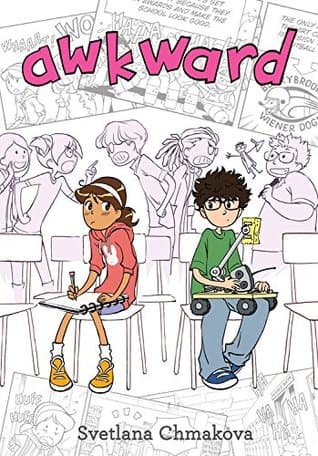
- Awkward
Svetlana Chmakova
3.9 (5k) average on GoodreadsYoung AdultA graphic novel about navigating middle school friendships and finding where you belong.
- Harry Potter and the Sorcerer's Stone
J.K. Rowling
4.5 (7M) average on GoodreadsFantasyRescued from a miserable life under the stairs, an orphaned boy discovers he's a wizard destined for a magical school, where he uncovers a dangerous secret tied to the dark wizard who murdered his parents.
- The Hobbit, or There and Back Again
J.R.R. Tolkien
4.3 (2.9M) average on GoodreadsFantasyA comfort-loving hobbit named Bilbo Baggins is whisked away by a mischievous wizard and a band of dwarves on an unexpected journey to reclaim stolen treasure from a fearsome dragon, discovering courage and a magical ring along the way.
- Harry Potter and the Goblet of Fire
J.K. Rowling
4.6 (2.6M) average on GoodreadsFantasyA bewildered Harry Potter, underage and thrust into a deadly Triwizard Tournament, must brave dragons, mermaids, and a resurgent dark magic to survive a year that will forever alter the wizarding world.
- Harry Potter and the Order of the Phoenix
J.K. Rowling
4.5 (2.5M) average on GoodreadsFantasyIn a year of oppressive secrets and the threat of Voldemort, Harry Potter and Dumbledore's Army secretly train for war, shown through Jim Kay and Neil Packer's dark illustrations.
- The Lightning Thief
Rick Riordan
4.3 (2M) average on GoodreadsFantasyThrust into a world of mythological monsters and divine treachery, an ordinary boy discovers he's the son of Poseidon and must embark on a perilous quest across modern America to prevent an Olympian war.





Enjoyed the summary?
A summary gives you the shape of the book. The book itself has the detail, the examples and the voice.
Find Smile on AmazonAs an Amazon Associate, BookBrief earns from qualifying purchases. How we're funded