

Synopsis
Covers the whole plot, including the ending.
- Difficulty
- Medium
- Pacing
- Moderate
- Mood
- Emotional, Reflective, Thought-provoking, Hopeful
- Read it if
- You enjoy contemporary romance that tackles complex, real-world relationship dilemmas with emotional depth.
- Skip it if
- You prefer lighthearted romance without significant conflict or themes of divorce.
Baby Proof Plot Summary
Covers the whole plot, including the ending.
The Child-Free Pact
Claudia Parr, a thirty-something literary agent in New York City, has always decided not to have children. After several relationships with men who eventually wanted kids, she meets Ben, a charming man who also does not want children. Their shared life philosophy forms the basis of their fast-growing relationship. They fall in love, enjoying their carefree lifestyle, traveling, and focusing on their careers and each other. Their agreement to remain childless comforts Claudia, making Ben seem like the perfect partner. They marry, solidifying their commitment to each other and their shared future without children.
The Unexpected Change of Heart
Several years into their seemingly perfect marriage, Ben reveals he has changed his mind and now wants children. This revelation shatters Claudia's world, as their child-free agreement was a fundamental part of their relationship and her personal identity. She is blindsided and devastated, feeling betrayed and misunderstood. Ben explains his perspective has shifted, possibly influenced by seeing friends and family start their own families. He feels a deep longing for parenthood he can no longer ignore. Claudia, still firm in her decision, cannot understand his change of heart, seeing it as a direct threat to everything they built and her own happiness.
An Unsolvable Dilemma
The couple tries to navigate this conflict. They have difficult, emotional conversations, seeking common ground where none exists. Claudia tries to understand Ben's new desire, while Ben tries to explain his longing and perhaps convince Claudia to reconsider. Neither can sway the other. Claudia feels having a child would fundamentally alter her life in ways she is unwilling to accept, while Ben feels not having one would leave a void. The issue becomes a constant, painful wedge between them, showing that some fundamental differences are irreconcilable, no matter how much love exists.
Separation and Solitude
The tension and emotional strain of their conflicting desires become too much. Recognizing they are at an impasse, Claudia and Ben decide to separate. Claudia moves out of their shared apartment and into her own place, creating a painful physical and emotional distance. This period is difficult for Claudia, as she grapples with the loss of her marriage and the future she had imagined. She feels lonely and grieves, questioning everything she thought she knew about love and compromise. Despite the heartbreak, she remains firm in her conviction about not wanting children.
The Divorce Proceedings
The separation progresses into divorce proceedings. This legal step solidifies the end of their marriage, making the reality of their situation even more stark and painful for Claudia. The process is emotionally draining, forcing them to confront the logistical and financial dissolution of their shared life. Despite the formality, the underlying love and respect they once shared make the divorce particularly agonizing. Claudia struggles with the finality of it all, mourning not just the relationship but also the future she believed she had secured with Ben, a future free of the pressures of parenthood she had so carefully avoided.
Life After Ben
After her divorce, Claudia tries to pick up the pieces of her life. She focuses on her work as a literary agent, finding some solace in her professional success. She also leans on her friends, especially her best friend Sarah, for support and companionship. However, despite her efforts to move forward, Claudia constantly grapples with the emotional wounds from her marriage's collapse. She often thinks about her relationship with Ben, their love, and the devastating nature of their irreconcilable differences. The experience leaves her guarded and uncertain about future relationships, especially regarding her child-free stance.
A New Connection with Richard
As time passes, Claudia meets Richard, an older, divorced man who has grown children from a previous marriage. Richard is charming, intelligent, and, most importantly for Claudia, states he has no desire to have more children. This shared perspective offers Claudia a sense of security and hope she had not felt since her divorce. Their relationship develops slowly, built on mutual respect and understanding. Richard’s calm demeanor and acceptance of her choices are a welcome contrast to the emotional turmoil she experienced with Ben. Claudia begins to cautiously open her heart again, believing she might have finally found a compatible partner.
Ben's New Life
Through mutual friends, Claudia learns Ben has remarried and is expecting a child with his new wife. This news affects Claudia with a mix of emotions. There is sadness and residual heartbreak, seeing Ben achieve the family life he desired, a life she could not give him. Yet, there is also a sense of validation for her own decision; it confirms their incompatibility was real and that Ben truly needed to pursue parenthood. The news forces Claudia to confront the finality of their separation and reinforces her belief that she made the right choice for herself, even if it meant immense pain.
A Moment of Doubt
During a conversation with her best friend, Sarah, who is a loving mother, Claudia experiences a moment of doubt. Sarah, without judgment, shares insights into the joys and challenges of motherhood, prompting Claudia to consider if she might have missed something, or if her conviction was too rigid. This is not a desire to have children, but rather an honest questioning of whether her absolute stance on child-freedom might have cost her a deeply loving relationship. It is a fleeting but powerful moment of vulnerability where she confronts the road not taken, and the sacrifices inherent in any life choice.
Solidifying Her Path
Despite the brief moment of doubt, Claudia ultimately reaffirms her decision not to have children. She realizes her desire to remain child-free is not a fleeting preference but a fundamental aspect of her identity and her vision for a fulfilling life. She understands that while she loved Ben deeply, their differing desires about parenthood were an insurmountable obstacle, and compromising on such a core issue would have led to resentment and unhappiness for both of them. This realization brings her a renewed sense of peace and conviction, allowing her to fully embrace her chosen path, even if it comes with unique challenges.
The Future with Richard
Claudia and Richard's relationship continues to deepen. They find a comfortable rhythm together, enjoying their shared interests, intellectual conversations, and the companionship that comes from two mature individuals who know what they want and do not want in life. Richard's understanding and acceptance of Claudia's child-free stance are crucial to their bond. Their relationship is built on mutual respect, shared values, and a clear understanding of their future together, one that aligns with Claudia's long-held desires. She finds a different kind of happiness with Richard, one that is perhaps less passionate than with Ben, but more stable and aligned with her authentic self.
Baby Proof Characters
Claudia Parr
Protagonist
A determined literary agent who steadfastly chooses a child-free life.
Claudia is a successful and independent literary agent in her mid-thirties, living in New York City. She is intelligent, witty, and fiercely independent, with a clear vision for her life that explicitly excludes motherhood. Her child-free stance is not a casual preference but a deeply ingrained aspect of her identity, born from a desire for personal freedom, professional ambition, and a clear understanding of her own capabilities and limitations. She values spontaneity, intellectual pursuits, and a life unburdened by the demands of raising children. Her journey is one of self-discovery and reaffirmation of her core values, even in the face of heartbreak.
Relationships: Ben (Husband, then ex-husband; shared initial child-free agreement, then fundamental conflict); Richard (New boyfriend; shares her child-free lifestyle, providing stability and understanding); Sarah (Best friend; a supportive mother who helps Claudia process her feelings)
Ben
Antagonist/Supporting
Claudia's loving husband who eventually changes his mind about wanting children.
Ben is Claudia's charming, warm, and initially like-minded husband. He shares her love for travel, spontaneity, and a child-free existence, forming a deep and loving bond with her based on these shared values. However, as he matures and observes friends and family starting families, his perspective shifts, and he develops a profound desire to have children. This change of heart, while understandable from his perspective, becomes the central conflict that ultimately dissolves his marriage to Claudia. He is not malicious but simply has a different, equally valid, longing that cannot be reconciled with Claudia's.
Relationships: Claudia Parr (Wife, then ex-wife; initially compatible, then fundamentally incompatible over children); New Wife (Future wife; shares his desire for children)
Richard
Supporting
Claudia's older, divorced boyfriend who has no desire for more children.
Richard is an older, divorced man with grown children from a previous marriage. He enters Claudia's life after her divorce from Ben and offers a sense of stability and understanding. Richard is intelligent, calm, and, crucially, has no desire to have more children, making him an ideal partner for Claudia. He provides a contrast to the emotional turmoil she experienced with Ben, offering a relationship built on mature understanding and shared life goals. He represents the possibility of a fulfilling child-free partnership for Claudia.
Relationships: Claudia Parr (Boyfriend; shares her child-free lifestyle and provides stability)
Sarah
Supporting
Claudia's best friend and a loving mother.
Sarah is Claudia's loyal and supportive best friend, who is also a devoted mother. She offers Claudia a sounding board and emotional support throughout her divorce and subsequent journey. While Sarah's life as a mother contrasts sharply with Claudia's child-free existence, she never judges Claudia's choices. Instead, she provides a balanced perspective, occasionally prompting Claudia to reflect on her decisions without pushing her. Her role is crucial in helping Claudia process her emotions and reaffirm her own path.
Relationships: Claudia Parr (Best friend; provides emotional support and different life perspective)
Claudia's Parents
Mentioned/Supporting
Supportive but traditional parents who quietly hoped for grandchildren.
Claudia's parents are supportive of her, but they represent a more traditional societal expectation of family. While they don't explicitly pressure Claudia, there's an underlying hope and expectation for grandchildren that Claudia is aware of. Their presence highlights the societal norms that Claudia is consciously bucking, adding another layer to her conviction to remain child-free. They are loving but sometimes struggle to fully grasp Claudia's unconventional choices, though they ultimately respect her decisions.
Relationships: Claudia Parr (Parents; loving but hold traditional family expectations)
Baby Proof Themes
The Irreconcilable Nature of Core Desires
This theme explores how fundamental differences in life goals, especially regarding children, can be insurmountable even with deep love. Claudia and Ben's story shows that while they loved each other immensely, their opposing desires for parenthood created an unbridgeable gap. The novel argues that some desires are so integral to an individual's identity and vision for happiness that compromise is not possible without great personal sacrifice and resentment. The heartbreak comes not from a lack of love, but from the reality that love alone cannot overcome such a fundamental incompatibility, as seen when Ben's change of heart leads directly to their divorce despite their deep affection.
“You can love someone with all your heart, but if you don't want the same things, it's never going to work.”
Defining Happiness and Fulfillment
The novel explores what constitutes a fulfilling life, especially for women, outside of traditional societal expectations. Claudia's journey is a powerful assertion that happiness does not necessarily mean motherhood or a conventional family structure. She actively chooses a life focused on her career, personal freedom, and a partnership built on shared values that exclude raising children. The narrative challenges the idea that a woman must have children to be complete and content, showing that true fulfillment comes from aligning one's life with one's authentic desires, even if those desires are unconventional. Her eventual peace with Richard, who shares her vision, strengthens this theme.
“I knew what I wanted, and just as importantly, I knew what I didn't. And that was a child.”
The Evolution of Personal Desires
This theme highlights how an individual's core desires and life goals can change over time, and the impact this evolution can have on relationships. Ben's transformation from a child-free partner to someone who wants children is central to this. The novel does not villainize his change of heart but portrays it as a natural, though devastating, shift in personal longing. This evolution shows the unpredictable nature of human desires and the challenge of sustaining a relationship when one partner's fundamental vision for the future diverges from the other's, demonstrating that people can grow apart even when they once seemed perfectly aligned.
“People change. Sometimes, what you thought you wanted, what you swore you'd never want, becomes the very thing you crave.”
Societal Pressure vs. Individual Choice
The book explores the societal pressures on women to have children, contrasting this with Claudia's choice. Claudia constantly navigates conversations with friends, family, and even strangers who assume she will eventually have children or question her decision not to. The narrative highlights the judgment and misunderstanding she often faces, reinforcing the idea that her choice is seen as unconventional. Her conviction, despite these pressures and the pain of her divorce, underscores the importance of honoring one's authentic self over conforming to external expectations, asserting the validity of diverse life paths.
“It's like people think you're broken if you don't want kids. Like there's something wrong with you.”
Plot Devices & Literary Techniques
Foreshadowing (Initial Agreement)
The initial, enthusiastic agreement to be child-free subtly hints at potential future conflict.
The early chapters of 'Baby Proof' heavily emphasize Claudia and Ben's mutual, unwavering commitment to a child-free life. While presented as the foundation of their perfect relationship, this very emphasis serves as a subtle form of dramatic irony and foreshadowing. The reader is led to understand that such an absolute, fundamental agreement, especially concerning a life-altering decision like parenthood, is fragile. This setup primes the reader for the inevitable conflict when one partner's stance changes, making Ben's eventual desire for children a devastating but not entirely unpredictable twist.
Parallel Lives (Ben's New Family)
Ben's new life with a wife and child serves as a stark parallel to Claudia's child-free existence.
The revelation that Ben has remarried and is expecting a child functions as a powerful plot device. It creates a direct, tangible parallel between the two paths chosen by Claudia and Ben. For Claudia, it is a painful confirmation of their irreconcilable differences, but also a validation of her own choice. This device allows the author to visually demonstrate the consequences of their divergent desires and to highlight the distinct types of happiness and fulfillment each character finds. It underscores the central theme that different people have different definitions of a complete life.
The 'What If' Scenario (Sarah's Motherhood)
Claudia's best friend Sarah's life as a mother provides a constant 'what if' contrast.
Sarah, Claudia's best friend, is a loving mother who openly shares the joys and challenges of parenthood. Her presence in the narrative serves as a constant 'what if' scenario for Claudia. Sarah's experiences allow Claudia (and the reader) to vicariously explore the realities of motherhood without having to live them. This device helps to humanize the choice not to have children, by showing that Claudia is fully aware of what she is choosing to forgo, and that her decision is not made out of ignorance or selfishness, but from a profound understanding of herself.
Baby Proof Quotes
“I knew what it was like to want something that wasn't mine, to feel the pull of a life that wasn't the one I was living.”
“Sometimes you have to break your own heart to live the life you want.”
“The hardest part of being a parent isn't the sleepless nights or the endless demands, it's the constant fear of not being good enough.”
“Love isn't supposed to be easy. It's supposed to be worth it.”
“Maybe being happy isn't about getting everything you want, but about appreciating everything you have.”
“The truth was, I loved my daughter more than anything, but sometimes I just didn't love being a mother.”
“You can't go back and change the beginning, but you can start where you are and change the ending.”
“Sometimes the person you're meant to be with is the one who helps you become the person you're meant to be.”
“There's a difference between giving up and knowing when you've had enough.”
“It's not about finding someone to complete you, it's about finding someone who accepts you completely.”
“The hardest goodbyes are the ones you never got to say.”
“You don't need a map to find your way; sometimes you just need to trust your own compass.”
“Life doesn't always give you what you want, but it often gives you what you need.”
Quiz
10 questions on the plot and the characters. Each answer comes with a short explanation.
Question 1
What is Claudia Parr's initial stance on having children at the beginning of the novel?
- She desperately wants children and is actively trying to conceive.
- She is indifferent and will go along with whatever her partner wants.
- She is firmly against having children and wants a child-free life.
- She wants to adopt children, but not have biological ones.
Show answer
C. She is firmly against having children and wants a child-free life. The book description explicitly states that Claudia Parr does not want a baby carriage and gives up on finding a man who feels the same way, indicating her firm stance against having children initially.
Question 2
Who is the warm and wonderful man Claudia meets and falls in love with, sharing her desire for a child-free marriage?
- David
- Ben
- Michael
- Tom
Show answer
B. Ben The book description states, 'And just as she gives up on finding a man who feels the same way, she meets warm, wonderful Ben.'
Question 3
What is the central conflict that arises between Claudia and Ben after they are married?
- They disagree on where to live.
- One of them changes their mind and wants children after all.
- They have financial difficulties that strain their relationship.
- One of them has an affair.
Show answer
B. One of them changes their mind and wants children after all. The summary clearly states, 'Then the unexpected occurs: one of them has a change of heart. One of them wants children after all.' This is the core conflict.
Question 4
What is the primary theme explored in 'Baby Proof' regarding relationships?
- The importance of shared hobbies in a marriage.
- The challenges of long-distance relationships.
- Whether true love can overcome fundamental differences, particularly regarding life choices like having children.
- The impact of in-laws on a couple's happiness.
Show answer
C. Whether true love can overcome fundamental differences, particularly regarding life choices like having children. The description highlights the question, 'is there ever a deal-breaker when it comes to true love?' and discusses what happens 'when they suddenly want different things,' specifically regarding children.
Question 5
Which of the following best describes the genre of 'Baby Proof'?
- Mystery
- Thriller
- Romance
- Science Fiction
Show answer
C. Romance The provided information explicitly states 'Romance' as the genre of the book.
Question 6
The novel explores the idea that 'there is no possible compromise' for certain fundamental disagreements. What specific disagreement is highlighted as potentially having no compromise?
- Career ambitions
- Financial spending habits
- The decision to have children
- Religious beliefs
Show answer
C. The decision to have children The summary states, 'It's about feeling that your life is set and then realizing that nothing is as you thought it was—and that there is no possible compromise,' directly after discussing the change of heart about wanting children.
Question 7
What is the primary emotional journey Claudia is likely to experience throughout the book, based on the description?
- From initial joy to growing resentment over trivial matters.
- From firm conviction about her life choices to confronting unexpected challenges and re-evaluating priorities.
- From deep sorrow to finding solace in new friendships.
- From naivety to becoming a hardened cynic about love.
Show answer
B. From firm conviction about her life choices to confronting unexpected challenges and re-evaluating priorities. The description highlights her initial firm stance on being child-free, meeting Ben with shared views, and then the 'unexpected occurs' leading to a change of heart, forcing her to decide 'what is most important in life.'
Question 8
The book is described as exploring 'the things we will do—and won't do—for love.' Which specific 'thing' is most central to this exploration in the context of Claudia and Ben's story?
- Giving up a successful career.
- Relocating to a new city.
- Compromising on one's fundamental desire or aversion to having children.
- Changing one's personality to please a partner.
Show answer
C. Compromising on one's fundamental desire or aversion to having children. The entire premise revolves around the initial agreement to be child-free and then one partner changing their mind about having children, making this the ultimate 'thing' they must confront for love.
Question 9
Based on the summary, what is the 'deal-breaker' that the novel primarily investigates in the context of true love?
- Financial infidelity
- A fundamental difference in the desire to have children.
- Differing political views
- Disagreements over household chores
Show answer
B. A fundamental difference in the desire to have children. The opening line asks, 'is there ever a deal-breaker when it comes to true love?' and the subsequent plot summary immediately details the conflict arising from one partner changing their mind about wanting children, establishing this as the central 'deal-breaker.'
Question 10
The title 'Baby Proof' implies a certain initial state or intention. What does 'Baby Proof' most likely refer to in the context of Claudia and Ben's early relationship?
- Making their home safe for future children.
- Their shared commitment to a life free of children.
- Their efforts to protect a baby from harm.
- Their proof that they are capable parents.
Show answer
B. Their shared commitment to a life free of children. Given Claudia's initial desire for a child-free life and their agreement to a 'child-free marriage,' 'Baby Proof' refers to their attempt to establish a relationship and life that is immune or 'proof' against the arrival of a baby.
Baby Proof FAQ
What is the central conflict in "Baby Proof"?
The central conflict revolves around Claudia Parr and Ben, a couple who initially agree on a child-free marriage. However, Ben later changes his mind and decides he wants children, creating an irreconcilable difference that threatens to end their otherwise perfect relationship.
Who are the main characters in "Baby Proof"?
The main characters are Claudia Parr, a successful editor who is resolute in her decision not to have children, and Ben, her husband, who initially shares her sentiment but later experiences a profound change of heart, desiring to become a father.
What prompts Ben's change of heart regarding having children?
Ben's change of heart is primarily influenced by the birth of his niece, Sarah, and witnessing his brother's joy as a father. This experience makes him realize the profound fulfillment and love associated with parenthood, which he now wants for himself.
How does Claudia react to Ben's desire for children?
Claudia reacts with shock, confusion, and eventually deep sadness and anger, as she feels betrayed by Ben's shift in their fundamental agreement. She struggles to reconcile his new desire with her own unwavering conviction that she does not want to be a mother.
Does Claudia ever consider having children for Ben?
Yes, Claudia does briefly consider the idea, even going as far as researching options and discussing it with friends. However, she ultimately concludes that she cannot genuinely commit to motherhood, realizing it would be a sacrifice of her true self and potentially lead to resentment.
What is the significance of the 'baby proof' title?
The title 'Baby Proof' refers to the initial agreement between Claudia and Ben to 'proof' their relationship against the societal expectation of having children. Ironically, their relationship proves not to be 'baby proof' when one of them changes their mind.
Are there any secondary characters who influence Claudia's or Ben's decisions?
Ben's brother and sister-in-law, particularly after the birth of their daughter, Sarah, significantly influence Ben's desire for children. Claudia's friends also offer differing perspectives, some supporting her child-free choice, others questioning it.
Does the book explore why Claudia is so adamant about not having children?
The book delves into Claudia's personal reasons, revealing that her decision stems from a deep-seated feeling that she lacks the maternal instinct and a strong desire to maintain her independence and career. She doesn't feel a 'calling' to motherhood.
How does Ben's changing desire for children impact his perception of Claudia?
Ben's evolving desire for children causes him to view Claudia differently, seeing her steadfast refusal as a barrier to his future happiness. He begins to question her capacity for 'true' love if it doesn't extend to building a family with him, leading to a sense of disconnect.
What psychological conflict does Claudia face beyond her marriage issues?
Beyond her marital conflict, Claudia grapples with internal conflict regarding societal expectations for women. She struggles with the pressure to conform to the 'motherhood ideal' and the judgment she faces for choosing a different path, impacting her self-worth.
How does the book portray the concept of 'true love' when fundamental desires clash?
The book suggests that while love can be profound, it may not be enough to overcome fundamental differences, especially regarding life-altering decisions like having children. It questions whether 'true love' can exist without shared life goals.
Is there a 'villain' in this story, or are both characters sympathetic?
There isn't a clear 'villain' in the story. Both Claudia and Ben are portrayed sympathetically, each with valid desires and perspectives. The conflict arises from their incompatible wants rather than malice, making their dilemma relatable and heartbreaking.
What does the ending suggest about compromise in relationships?
The ending suggests that while compromise is vital in relationships, some core desires are non-negotiable. For Claudia and Ben, the desire for children becomes an unbridgeable gap, implying that some differences are too profound for even the strongest love to overcome.
Does the book offer a definitive stance on whether it's 'right' or 'wrong' to not want children?
The book deliberately avoids taking a definitive stance, instead exploring the complexities and validity of both choices through its characters. It aims to foster understanding and empathy for individuals who choose different paths regarding parenthood.
How does the author use the supporting characters to highlight the themes of the book?
Supporting characters, like Ben's brother and sister-in-law, exemplify the joys of parenthood, while Claudia's friends represent various perspectives on motherhood and child-free living, offering different mirrors to the protagonists' choices and feelings.
What is the role of communication in Claudia and Ben's relationship breakdown?
Communication plays a crucial role, as their initial agreement to be child-free was clear. However, the breakdown occurs when Ben's feelings evolve, and they struggle to communicate this profound shift without causing irreparable damage, leading to a lack of understanding.
How does society's view of women and motherhood influence Claudia's journey?
Societal expectations place immense pressure on women to desire and have children, making Claudia's child-free choice feel rebellious and often judged. This societal lens adds an external layer of conflict to her personal struggle, making her feel misunderstood.
Does the book explore the concept of regret from either character?
Yes, both characters grapple with potential regret. Ben fears regretting not having children, while Claudia fears regretting having them if she were to give in. This fear of future regret drives many of their difficult decisions and emotional turmoil.
About the author

Emily Giffin is an American author known for her contemporary fiction, often exploring themes of love, relationships, and personal growth. Her notable works include "Something Borrowed," "Something Blue," "Baby Proof," "Heart of the Matter," "All We Ever Wanted," and "Where We Belong." Giffin's storytelling often resonates with readers, addressing complex emotional situations in relatable ways.
Similar books
- The Seven Husbands of Evelyn Hugo
Taylor Jenkins Reid
4.3 (222k) average on GoodreadsHistorical FictionFeatures strong female protagonists making unconventional life choices for love and career.
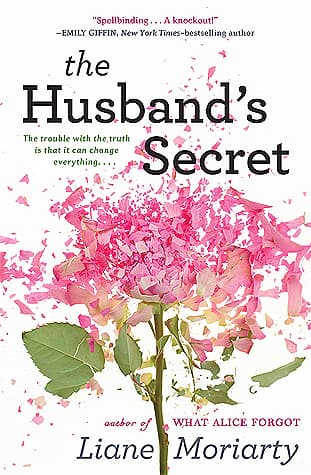
- The Husband's Secret
Liane Moriarty
3.9 (532k) average on GoodreadsThrillerBoth Giffin and Moriarty explore marital secrets and their devastating consequences. However, 'The Husband's Secret' focuses on a hidden past that unravels a family's present, involving multiple perspectives and a more suspenseful, interconnected plot. 'Baby Proof' is more singularly focused on one couple's internal conflict over children. While Moriarty uses external revelations to drive her narrative, Giffin relies on internal shifts in desire. Moriarty typically employs multiple viewpoints, offering a more panoramic view of a community, whereas Giffin maintains a tighter, singular focus on Jody's journey.
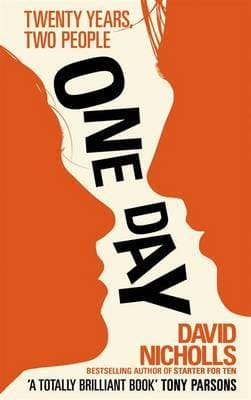
- One Day
David Nicholls
3.8 (287k) average on GoodreadsRomanceBoth novels explore the complexities of long-term relationships and life choices. However, 'One Day' tracks the evolving friendship and romantic tension between two individuals over two decades, focusing on missed opportunities and the passage of time. 'Baby Proof' zeroes in on a specific, fundamental disagreement within an established marriage that leads to its dissolution. Nicholls's narrative often feels more bittersweet and reflective of life's unpredictable turns, while Giffin's is more directly confrontational with a specific marital crisis.
- The Hunger Games
Suzanne Collins
4.3 (6.4M) average on GoodreadsFantasyIn a future where children fight to the death on live television, Katniss Everdeen volunteers for the arena, turning a death sentence into a fight for survival and a spark of rebellion.
- The Great Gatsby
F. Scott Fitzgerald
3.9 (3.8M) average on GoodreadsHistorical FictionIn the opulent Roaring Twenties, a mysterious millionaire's lavish parties hide his desperate, tragic pursuit of a lost love, exposing the emptiness within the American Dream.
- The Fault in Our Stars
John Green
4.2 (3.6M) average on GoodreadsYoung AdultA girl with a terminal illness finds her story rewritten when a charming boy with a similar past enters her life at a cancer support group, leading to a star-crossed romance.




Enjoyed the summary?
A summary gives you the shape of the book. The book itself has the detail, the examples and the voice.
Find Baby Proof on AmazonAs an Amazon Associate, BookBrief earns from qualifying purchases. How we're funded