

Synopsis
Covers the whole plot, including the ending.
- Difficulty
- Easy
- Pacing
- Moderate
- Mood
- Glamorous, Heartbreaking, Intimate, Reflective
- Read it if
- You love stories about old Hollywood glamour, forbidden romance, complex female characters, and narratives that explore the sacrifices made for love and fame.
- Skip it if
- You dislike non-linear narratives, stories with morally ambiguous protagonists, or prefer plots without significant emotional tragedies.
The Seven Husbands of Evelyn Hugo Plot Summary
Covers the whole plot, including the ending.
Evelyn Hugo Chooses Monique Grant
Monique Grant, a struggling biracial magazine reporter recently separated from her husband, David, is stunned when legendary, reclusive Hollywood star Evelyn Hugo specifically requests her to write her definitive biography. Monique's editor, Frankie, is equally surprised but gives Monique the assignment, seeing it as a potential career-making opportunity. Monique travels to Evelyn's luxurious Upper East Side apartment, where Evelyn reveals her intention to tell the complete, unfiltered truth about her life, including the mysteries surrounding her seven marriages, and that she chose Monique for a specific, undisclosed reason. Despite her initial skepticism, Monique agrees, recognizing the immense privilege and potential impact of this exclusive story.
From Hell's Kitchen to Hollywood Stardom
Evelyn begins her story in Hell's Kitchen, New York, as Evelyn Herrera, a Cuban-American girl from a poor, abusive home. At 14, after her mother's death, she marries a local boy, Ernie Diaz, to escape her father and move to Hollywood. Once in Los Angeles, she quickly realizes Ernie is a means to an end. She uses her striking looks to attract a studio executive, Harry Cameron, who sees her potential. He helps her secure a screen test, but not before advising her to dye her dark hair blonde and change her surname to 'Hugo' to appear more 'American' and marketable. This marks her calculated entry into the cutthroat world of 1950s Hollywood, where she quickly learns to manipulate the system for her advancement.
The Rise of Evelyn Hugo and Don Adler
Evelyn's career takes off, and she becomes a major star. Her marriage to Don Adler, a charming but volatile leading man, is her third, and it becomes a highly publicized, passionate, and ultimately destructive relationship. Don's jealousy and abusive tendencies lead to public fights and private turmoil, yet their on-screen chemistry is undeniable, making them a golden couple of Hollywood. Evelyn learns to use the media to her advantage, crafting narratives around her marriages to maintain public interest and sympathy while skillfully navigating studio politics and the demands of stardom. Her ambition is paramount, often at the expense of genuine personal connection.
A Forbidden Love and Strategic Marriages
During the filming of 'Little Women,' Evelyn develops a deep, undeniable love for her co-star, Celia St. James. Their relationship becomes the central, hidden truth of Evelyn's life. To protect their careers and their secret, Evelyn and Celia engage in a series of strategic marriages and public relationships. Evelyn marries Rex North, a respectable actor, and later Mick Riva, a famous singer, both to deflect suspicion from her relationship with Celia and to manage her public image. These marriages, though portrayed as passionate affairs for the media, are often facades, allowing Evelyn and Celia to maintain their clandestine love amidst the judgmental scrutiny of Hollywood and society.
The Harry Cameron Years and Motherhood
Evelyn's sixth marriage is to Harry Cameron, her best friend and a powerful studio executive, who is secretly gay. This marriage is a mutual arrangement, providing both Evelyn and Harry with a conventional front to protect their respective hidden loves and careers. During this period, Evelyn becomes pregnant with Harry's child, Connor. Motherhood brings a new dimension to Evelyn's life, and she deeply loves her daughter, even as she continues to navigate the complexities of her public persona and her enduring, secret relationship with Celia. Harry becomes her closest confidant and an anchor in her life, understanding her better than anyone.
Celia's Betrayal and Reconciliation
A period of estrangement occurs between Evelyn and Celia after Evelyn's public affair with Don Adler, orchestrated to protect Celia's reputation after a scandal. Celia, feeling betrayed, cuts ties with Evelyn. Years later, after Evelyn's marriage to Harry and Celia's own marriage to a man named John, they reconcile. Evelyn and Celia decide to live together quietly in a Spanish villa, finally able to openly express their love away from the Hollywood spotlight. This period represents a rare stretch of peace and genuine happiness for Evelyn, as she prioritizes her true love over public image for the first time in her life, even as Harry remains a vital part of their extended family.
Tragedy Strikes and Evelyn's Final Marriage
Tragedy strikes when Harry Cameron dies in a drunk driving accident, which Evelyn reveals was actually a suicide to protect Celia, who was in the car with him. Harry had been struggling with his sexuality and the pressures of his life. After Harry's death, Evelyn, heartbroken and seeking to protect Celia's legacy and her own secret, marries Max Girard, a director who had always been infatuated with her. This seventh marriage is short-lived and purely transactional, as Max seeks to capitalize on her fame and control her. Evelyn quickly realizes her mistake and divorces him, marking the end of her marital saga.
The Revelation of Monique's Connection
As Evelyn's story reaches the present day, she reveals the true reason she chose Monique. Monique's father was James Grant, a man Evelyn had an affair with years ago. More shockingly, James was actually Harry Cameron's brother. Furthermore, Evelyn confesses that Harry's fatal car crash was not an accident but a suicide, and she was in the car with him. She moved him to the passenger seat to protect his reputation and Celia's, making it appear he was driving drunk. Monique's own father, James, was also in the car and died from the impact. Evelyn had covered up the truth to protect those she loved, including Harry and Celia, and Monique's mother. The revelation devastates Monique, tying her own family tragedy directly to Evelyn's life.
Monique's Reckoning and Decision
Monique is reeling from Evelyn's confession, realizing that her own father died in the same car crash as Harry Cameron, and that Evelyn deliberately concealed the truth for decades. She confronts Evelyn, struggling with feelings of anger, betrayal, and a deep sense of personal connection to the star's story. Monique must decide whether to publish Evelyn's full, unvarnished truth, including the part about her own father's death and Evelyn's involvement in the cover-up. This decision challenges her journalistic ethics, her personal feelings about Evelyn, and the potential impact on her own life and career. She also learns that Evelyn is terminally ill and intends for this book to be her final, complete legacy.
The Legacy of Evelyn Hugo
After much internal struggle, Monique decides to publish Evelyn's biography with all the truths, including the details of her father's death and Evelyn's role in the cover-up. She understands Evelyn's motivations to protect Celia and Harry, even if it caused her personal pain. The book is a massive success, solidifying Evelyn's legacy as a complex, powerful woman who lived life on her own terms, and launching Monique's career. Monique finds a sense of closure regarding her father and a renewed purpose in her life. Evelyn Hugo passes away shortly after the book's release, her final act being to reveal her complete truth to the world through Monique.
The Seven Husbands of Evelyn Hugo Characters
Evelyn Hugo
Protagonist
Aging Hollywood icon, whose life story is the central narrative.
Born Evelyn Herrera in Hell's Kitchen, Evelyn is a stunningly beautiful Cuban-American woman who strategically crafts her image and career in Hollywood. She is ambitious, ruthless, and fiercely protective of those she loves, particularly Celia St. James and Harry Cameron. Her seven marriages are primarily public facades, designed to navigate the conservative Hollywood of her era while hiding her true, forbidden love for Celia. Despite her public glamour, she carries deep secrets and regrets, seeking redemption and a final truth through her biography. She is pragmatic and a master manipulator, but also capable of profound loyalty and love.
Relationships: Celia St. James (The enduring, forbidden love of her life); Harry Cameron (Best friend, confidant, and husband of convenience); Monique Grant (Chosen biographer, with a hidden personal connection); Don Adler (Third husband, tumultuous and abusive relationship); Connor Cameron (Daughter with Harry Cameron)
Monique Grant
Protagonist
Biracial magazine reporter chosen by Evelyn Hugo to write her biography.
Monique is a young, intelligent, and recently separated biracial woman whose journalism career has stagnated. She is initially surprised and intimidated by Evelyn Hugo's choice but sees the opportunity as a chance to redefine herself professionally and personally. As she delves into Evelyn's story, Monique becomes deeply invested, empathizing with Evelyn's struggles and questioning her own life choices. She is ethical and determined, facing a profound personal and professional dilemma when she uncovers the intimate connection between Evelyn's past and her own family's tragedy.
Relationships: Evelyn Hugo (Subject of biography, later revealed to be deeply connected to her family); David Grant (Estranged husband); James Grant (Deceased father, whose story intertwines with Evelyn's); Frankie (Editor and mentor)
Celia St. James
Supporting
Renowned actress and the true love of Evelyn Hugo's life.
Celia St. James is a celebrated actress, known for her angelic beauty and talent, and the woman Evelyn Hugo secretly loves throughout her life. She is passionate, principled, and struggles with the compromises demanded by their forbidden relationship. Celia is often the moral compass for Evelyn, pushing her towards honesty, though she also makes sacrifices for her career and their love. Her relationship with Evelyn is the emotional core of the novel, marked by intense love, jealousy, and eventual reconciliation, enduring for decades despite public scrutiny and personal betrayals.
Relationships: Evelyn Hugo (The love of her life); John Braverman (Husband of convenience)
Harry Cameron
Supporting
Studio executive, Evelyn's best friend, and husband of convenience.
Harry Cameron is a powerful and respected studio executive, openly gay to Evelyn but closeted to the public. He becomes Evelyn's closest confidant, understanding her ambition and her secret love for Celia. Their marriage is a strategic alliance, providing a public facade for both of them while fostering a deep, platonic love and friendship. Harry is kind, intelligent, and fiercely loyal to Evelyn, becoming the father of her daughter, Connor. His tragic death is a pivotal event, revealing the lengths Evelyn went to protect those she cared for.
Relationships: Evelyn Hugo (Best friend, confidant, husband, and co-parent); Connor Cameron (Daughter); James Grant (Brother)
Don Adler
Supporting
Volatile leading man and Evelyn's third husband.
Don Adler is a charismatic but deeply flawed Hollywood leading man, known for his good looks and fiery temper. His marriage to Evelyn is marked by intense passion, public drama, and private abuse. Don is possessive, jealous, and struggles with alcoholism, often lashing out at Evelyn. Despite the toxicity, their on-screen chemistry is undeniable, contributing to their celebrity status. His character represents the darker side of Hollywood's glamour and the personal cost of fame.
Relationships: Evelyn Hugo (Third husband, tumultuous and abusive relationship)
Connor Cameron
Supporting
Evelyn and Harry Cameron's daughter.
Connor is Evelyn Hugo's beloved daughter with Harry Cameron. She represents Evelyn's only biological child and a source of genuine, unconditional love in her life. Though not a major character in the present narrative, her existence highlights Evelyn's capacity for deep maternal affection and the complexities of her chosen family. Evelyn's desire to protect Connor, along with Celia and Harry, influences many of her life decisions, particularly after Harry's death.
Relationships: Evelyn Hugo (Mother); Harry Cameron (Father); Celia St. James (Stepmother figure and Evelyn's partner)
James Grant
Mentioned
Monique's deceased father and Harry Cameron's brother.
James Grant is Monique's deceased father, a character whose tragic death in the same car crash as Harry Cameron forms the central, shocking revelation of the book. He was Harry's younger brother, unknown to Monique until Evelyn's confession. Evelyn had a brief affair with James, and he was in the car when Harry died, making him an innocent victim caught in Evelyn's web of secrets. His role is crucial in connecting Monique personally to Evelyn's narrative and raising the stakes for Monique's journalistic integrity.
Relationships: Monique Grant (Father); Harry Cameron (Brother); Evelyn Hugo (Brief affair)
Frankie
Supporting
Monique's editor at Substack magazine.
Frankie is Monique Grant's editor and boss at Substack magazine. She is sharp, ambitious, and initially skeptical but ultimately supportive of Monique's exclusive assignment to write Evelyn Hugo's biography. Frankie pushes Monique to excel and recognizes the immense career opportunity this presents. She represents the professional world Monique navigates and serves as a sounding board and motivator for Monique as she grapples with the ethical and personal challenges of the story.
Relationships: Monique Grant (Editor and boss)
The Seven Husbands of Evelyn Hugo Themes
Identity and Self-Creation
The novel deeply explores how Evelyn Hugo, born Evelyn Herrera, consciously constructs and reconstructs her identity to survive and thrive in Hollywood. From changing her name and hair color to carefully curating her public persona through her marriages, Evelyn actively shapes who she is perceived to be. This theme extends to her secret life, where her true identity as a woman in love with Celia is hidden. The book questions the authenticity of identity when it's so meticulously manufactured for public consumption versus the private self. Monique, too, grapples with her identity as a biracial woman and a struggling journalist, finding her voice by telling Evelyn's truth.
“I spent my entire life trying to be the woman everyone wanted me to be. Now, in my old age, I am finally free to be the woman I am.”
Forbidden Love and Sacrifice
The central emotional core of the book is the enduring, secret love between Evelyn Hugo and Celia St. James. Their relationship is forbidden by the social mores and homophobic climate of mid-20th century Hollywood, forcing them to make immense sacrifices. They endure public marriages, betrayals, and long periods of separation to protect their careers and their love. This theme highlights the lengths people will go to for love, the pain of living a lie, and the devastating impact of societal judgment on personal happiness. Their love is portrayed as the most real and significant relationship in Evelyn's life, overshadowing all her highly publicized marriages.
“Don’t you understand? I am not a person, I am a star. I have to protect my star.”
The Cost of Fame and Ambition
Evelyn Hugo's relentless ambition drives her rise to superstardom, but the novel details the heavy personal cost of such fame. She makes calculated decisions, uses people, and sacrifices genuine connection for career advancement. The constant scrutiny, the need to maintain a flawless public image, and the pressure to conform to Hollywood's expectations lead to a life of secrets, loneliness, and strategic manipulation. The book illustrates how fame can isolate individuals and force them into compromising positions, blurring the lines between their public and private selves. Evelyn's seven marriages are a direct consequence of her navigating this world.
“When you're given an opportunity to change your life, be ready to do whatever it takes to make it happen. The world doesn't give things, you have to take things.”
Truth vs. Narrative
A fundamental theme is the contrast between the carefully constructed public narrative of Evelyn Hugo's life and the complex, often messy, underlying truth. Evelyn herself is a master storyteller, crafting her own legend. The book explores how stories are made, manipulated, and consumed by the public, and the power of controlling one's own narrative. Monique's role is to uncover the 'real' truth, leading to ethical dilemmas about what to publish and how to reconcile Evelyn's version of events with objective facts. The ultimate truth revealed—about Harry's death and Monique's father—shows the difference between public perception and lived reality.
“People think that they know you. They think they know your story. But they don't. They know the story you've allowed them to know.”
Plot Devices & Literary Techniques
Nested Narrative (Framing Device)
Evelyn Hugo's story is told within Monique Grant's present-day narrative.
The novel employs a nested narrative structure where Evelyn Hugo's life story, spanning decades, is recounted to Monique Grant in the present day. Monique's chapters serve as the framing device, detailing her interactions with Evelyn, her personal struggles, and her process of writing the biography. Evelyn's story, told in chronological order, forms the core of the book. This structure allows for dual perspectives: Evelyn's firsthand account and Monique's journalistic interpretation and personal reaction, building suspense and revealing the connection between the two women gradually.
The Seven Husbands as Milestones
Each husband marks a significant period or strategic decision in Evelyn's life.
Evelyn Hugo's seven husbands are not merely plot points but serve as a structural device to delineate different eras and strategic phases of her career and personal life. Each marriage represents a calculated move, a public facade, or a temporary alliance, allowing Evelyn to navigate Hollywood's pressures, protect her secrets, and advance her career. By focusing on the 'seven husbands,' the novel uses a seemingly scandalous premise to peel back layers, revealing the true, hidden love story and Evelyn's complex motivations, ultimately subverting the initial expectation of a salacious tell-all.
Unreliable Narrator (Subtle)
Evelyn's initial omissions and later revelations challenge the reader's perception of truth.
While Evelyn is ultimately committed to telling the truth, her initial narration subtly functions as an unreliable narrator by withholding crucial information and allowing the reader to form assumptions before revealing the full, often shocking, reality. For example, she initially presents Harry Cameron's death as an accident. This deliberate withholding of information builds suspense and forces both Monique and the reader to question the surface-level narrative, highlighting the theme of truth versus public perception and the selective nature of storytelling, even from a seemingly honest source.
The Reveal of Personal Connection
The sudden, shocking link between Evelyn and Monique's lives.
The ultimate revelation that Monique's deceased father, James Grant, was Harry Cameron's brother and died in the same car crash as Harry, and that Evelyn covered it up, serves as a powerful plot device. This twist transforms Monique from a detached journalist into a deeply implicated participant in Evelyn's story. It raises the stakes significantly, creating a profound ethical and personal dilemma for Monique, forcing her to confront the impact of Evelyn's life on her own family and challenging her journalistic objectivity in a visceral way.
The Seven Husbands of Evelyn Hugo Quotes
“Don’t ever let anyone make you feel like you don’t deserve what you want.”
“When you’re given an opportunity to change your life, be brave enough to do it.”
“People think that intimacy is about sex. But intimacy is about truth. When you realize you can tell someone your truth, when you can show yourself to them, when you are bare, and their response is 'You’re safe with me'—that’s intimacy.”
“The world is an ugly place, Monique. And sometimes the only way to survive is to be a little ugly yourself.”
“Heartbreak is a lot like a tornado. It appears seemingly out of nowhere, it rips your world apart, and then it disappears, leaving you to clean up the mess.”
“I was a movie star. I was a legend. I was a woman who had lived a full and complicated life. And I had loved, truly and deeply, in ways that most people only dream of.”
“You are not a bad person for doing what you needed to do to survive.”
“There’s no such thing as being 'too much.' Or 'not enough.' We are all just ourselves, and that should be celebrated.”
“I gave them Evelyn Hugo. I gave them the glamour, the sex, the scandal. But I kept Celia St. James for myself.”
“When you're a woman in Hollywood, you're constantly fighting to be seen as more than just a body.”
“No one is purely good or purely bad. We're all a mix of both, and that's what makes us human.”
“We need to look at our lives and see what we can do to make them better, even if it means doing the hard thing.”
“It’s okay to want to be loved. It’s okay to want to be seen. It’s okay to want it all.”
“Sometimes, the only way to get what you want is to take it.”
Quiz
10 questions on the plot and the characters. Each answer comes with a short explanation.
Question 1
Why does Evelyn Hugo specifically choose Monique Grant to write her biography?
- Monique Grant is the only reporter Evelyn has ever trusted.
- Monique Grant is a rising star in journalism and Evelyn wants to boost her career.
- Monique Grant's father had a significant, tragic connection to Evelyn's life.
- Evelyn Hugo was impressed by a previous article Monique wrote about her.
Show answer
C. Monique Grant's father had a significant, tragic connection to Evelyn's life. Evelyn chooses Monique because Monique's father, James Grant, was the driver in the car accident that killed Celia St. James and also died himself due to Evelyn's actions, leading to a profound and tragic connection between their lives.
Question 2
Which of Evelyn Hugo's seven husbands was the true love of her life, despite their marriage being a sham?
- Don Adler
- Harry Cameron
- Mick Riva
- Rex North
Show answer
B. Harry Cameron Harry Cameron was Evelyn's best friend and the true love of her life, though their marriage was a marriage of convenience to allow both him and Evelyn's actual lover, Celia St. James, to maintain their public images.
Question 3
What was Evelyn Hugo's primary motivation for marrying her first husband, Ernie Diaz?
- She genuinely loved him and wanted to start a family.
- He was a powerful studio executive who could advance her career.
- He offered her a way out of Hell's Kitchen and a ticket to Hollywood.
- She was pregnant and needed to legitimize the child.
Show answer
C. He offered her a way out of Hell's Kitchen and a ticket to Hollywood. Evelyn married Ernie Diaz primarily to escape her difficult life in Hell's Kitchen and facilitate her move to Los Angeles, seeing him as a means to an end for her acting ambitions.
Question 4
What secret did Evelyn Hugo and Celia St. James keep hidden from the public for decades?
- They were sisters separated at birth.
- They had a long-term romantic relationship.
- They co-owned a secret film studio.
- They were involved in a major financial scandal.
Show answer
B. They had a long-term romantic relationship. Evelyn and Celia had a deep, enduring romantic relationship that spanned decades, which they kept hidden from the public due to the social norms and Hollywood pressures of the time.
Question 5
What is the primary theme explored through Evelyn Hugo's ruthless ambition and her choices?
- The fleeting nature of fame and fortune.
- The sacrifices made for love versus career success.
- The importance of family above all else.
- The inevitable corruption of power.
Show answer
B. The sacrifices made for love versus career success. A central theme is the difficult balance and often painful choices Evelyn makes between her ambition and career success, and her desires for love and personal happiness, particularly in a restrictive Hollywood environment.
Question 6
How did Evelyn Hugo deal with the public backlash and media frenzy surrounding her marriages and divorces?
- She withdrew from the public eye for extended periods.
- She used them to maintain her public image and stay relevant.
- She sued tabloids for defamation repeatedly.
- She released tell-all interviews to control the narrative.
Show answer
B. She used them to maintain her public image and stay relevant. Evelyn was a master manipulator of the media. She understood that scandal kept her relevant and used the public's fascination with her marriages and divorces to her advantage, ensuring she remained a topic of discussion.
Question 7
What significant event causes the final, irreparable rift between Evelyn Hugo and Celia St. James?
- Evelyn's decision to adopt a child without Celia's consent.
- Evelyn's affair with a male co-star that Celia discovered.
- Evelyn's choice to have a child with Harry Cameron after Celia's miscarriage.
- Celia's public denouncement of Evelyn's political views.
Show answer
C. Evelyn's choice to have a child with Harry Cameron after Celia's miscarriage. The ultimate betrayal for Celia was Evelyn's decision to have a baby with Harry Cameron, especially after Celia had a devastating miscarriage and felt Evelyn was replacing their lost future with Harry.
Question 8
What is the 'good deed' Evelyn Hugo performs in the book, which also leads to a significant revelation?
- She funds a new film studio for aspiring actresses.
- She secretly donates millions to an LGBTQ+ charity.
- She takes the blame for a fatal car accident to protect the person she loves.
- She establishes a scholarship fund in Celia St. James's name.
Show answer
C. She takes the blame for a fatal car accident to protect the person she loves. Evelyn takes the blame for the car accident that killed Harry Cameron and Monique's father, James Grant, to protect Celia from public scrutiny and legal repercussions, as Celia was the one driving at the time.
Question 9
What does Evelyn Hugo's decision to retire from Hollywood in the late 1980s signify?
- She was tired of the constant public scrutiny.
- She wanted to spend more time with her family.
- Her career was declining, and she wanted to leave on her own terms.
- She found a new, more fulfilling career path.
Show answer
C. Her career was declining, and she wanted to leave on her own terms. Evelyn, ever the strategist, chose to retire when she noticed her career was starting to wane. She preferred to exit on top, maintaining her legendary status rather than facing a gradual decline in relevance.
Question 10
What is the significance of the fictional magazine 'Vivant' in the story?
- It's the magazine that initially discovered Evelyn Hugo as a young talent.
- It's the prestigious magazine Monique Grant works for when Evelyn contacts her.
- It's a gossip tabloid that frequently published scandalous stories about Evelyn.
- Evelyn Hugo owned 'Vivant' anonymously for many years.
Show answer
B. It's the prestigious magazine Monique Grant works for when Evelyn contacts her. Monique Grant is an unknown writer for Vivant magazine when Evelyn Hugo specifically requests her to write her biography, which is a key plot point initiating their relationship.
The Seven Husbands of Evelyn Hugo FAQ
What is 'The Seven Husbands of Evelyn Hugo' about?
'The Seven Husbands of Evelyn Hugo' chronicles the life of fictional Old Hollywood star Evelyn Hugo, who, in her old age, decides to reveal the true story of her glamorous and scandalous life to unknown magazine reporter Monique Grant. The narrative delves into Evelyn's rise to fame, her seven marriages, and the hidden truths behind her public persona, including a profound, forbidden love.
Why should I read 'The Seven Husbands of Evelyn Hugo'?
You should read this book for its compelling blend of Old Hollywood glamour, intricate character development, and a deeply emotional story of love, sacrifice, and ambition. It offers a fascinating look at the price of fame and the lengths one will go to protect the people they love, all wrapped in a mystery that connects Evelyn's past to Monique's present.
What is the background/setting of 'The Seven Husbands of Evelyn Hugo'?
The story primarily spans from the 1950s to the late 1980s, detailing Evelyn Hugo's career in Hollywood, with a framing narrative set in contemporary New York City where Monique Grant interviews Evelyn. It vividly portrays the Golden Age of Hollywood, its studios, red carpets, and the societal pressures and expectations faced by stars of that era.
What are the most memorable quotes?
One memorable quote is, 'Don't ignore the love you were given for the love you wish you had.' Another powerful line is, 'People think that intimacy is about sex. But intimacy is about truth. When you realize you can tell someone your truth, when you can show yourself to them, when you are naked with them in a way that is free of shame, that is intimacy.'
What writing style does the author use?
Taylor Jenkins Reid employs a dual-narrative structure, alternating between Evelyn Hugo's first-person account of her life (as told to Monique) and Monique's present-day experiences. The style is engaging and conversational, drawing readers into Evelyn's world with vivid descriptions and emotional depth, making her feel incredibly real despite being a fictional character.
What minor details add significant meaning?
The consistent mention of Evelyn's emerald green eyes, which she uses to captivate audiences and manipulate situations, is a subtle detail. It symbolizes her calculated beauty and how she wielded her allure as a tool for survival and success in Hollywood, often hiding her true self behind her public image.
What are some subtle foreshadowing moments?
Early in Evelyn's narrative, her extreme secrecy and guardedness about certain aspects of her life, particularly her relationships, subtly foreshadow the reveal of her true, lifelong love with Celia St. James. Also, the emphasis on Monique's own struggles with her marriage hints at a deeper, personal connection to Evelyn's story.
What unexpected character connections exist?
The most significant unexpected connection is revealed at the end: Evelyn Hugo was married to James Grant, Monique's father-in-law, and she was the driver in the car accident that killed James and Monique's father, David. This revelation explains why Evelyn specifically chose Monique to write her biography.
What are unspoken character motivations?
Evelyn's unspoken motivation for many of her marriages was often to protect her career or to create a public facade to distract from her true relationship with Celia St. James. Similarly, Monique's initial drive to write the biography, beyond career advancement, is subtly fueled by a subconscious need to understand the complexities of love and sacrifice, mirroring her own marital struggles.
What psychological complexities do characters exhibit?
Evelyn Hugo displays immense psychological complexity, characterized by her ruthlessness, resilience, and profound capacity for love. She grapples with the duality of her public persona versus her private self, making morally ambiguous decisions, such as using people or lying, all while harboring deep loyalty and protective instincts for those she truly loves, especially Celia.
What are the major emotional turning points?
A major emotional turning point is Evelyn's first true declaration of love for Celia St. James, solidifying their forbidden romance. Another is the moment when Evelyn has to publicly marry a man to protect Celia from scandal, showcasing the immense sacrifices they made. Finally, the revelation of Evelyn's connection to Monique's family dramatically shifts the emotional landscape for both characters.
How do relationship dynamics evolve?
The central relationship between Evelyn and Celia evolves from a professional rivalry into a deep, passionate, and enduring love that withstands decades of societal pressure and personal sacrifices. Evelyn's relationship with her seven husbands transforms from strategic alliances into varying degrees of companionship or heartbreak, while her dynamic with Monique shifts from interviewer-subject to a complex, almost familial bond.
Which parts remain ambiguous or open-ended?
While the core mystery is resolved, the future of Monique's career and personal life, particularly after the devastating revelations, is left somewhat open-ended. The reader is left to ponder how Monique will process Evelyn's confession and whether she will ultimately publish the biography, and what impact it will have on her own healing and path forward.
What are controversial scenes or decisions?
Evelyn's decision to marry multiple men, often for strategic reasons rather than love, can be seen as controversial, particularly her manipulation of others. Her ultimate act of driving the car to protect her husband, knowing it would lead to a fatal accident for him and Monique's father, is also a highly debated and morally complex decision.
The Seven Husbands of Evelyn Hugo ending explained: how it ends & what it means
The book ends with Evelyn revealing the true reason she chose Monique: Evelyn was married to James Grant, Monique's father-in-law, and was responsible for the car accident that killed both James and Monique's father, David. Evelyn then takes her own life via assisted suicide, having finally unburdened her truths. The ending signifies the profound impact of past secrets, the lasting power of forbidden love, and the complex nature of forgiveness and legacy.
About the author

Taylor Jenkins Reid is an American author known for her contemporary fiction that often explores themes of love and relationships. Her notable works include "Daisy Jones & The Six," a fictional oral history of a rock band, and "The Seven Husbands of Evelyn Hugo," which follows the life of a reclusive Hollywood icon. Other works in her catalog include "Maybe in Another Life" and "After I Do."
Similar books
- Daisy Jones & The Six
Taylor Jenkins Reid
4.2 (272k) average on GoodreadsHistorical FictionFeatures a fictional celebrity's rise and fall told through interviews, exploring fame, love, and intricate relationships.
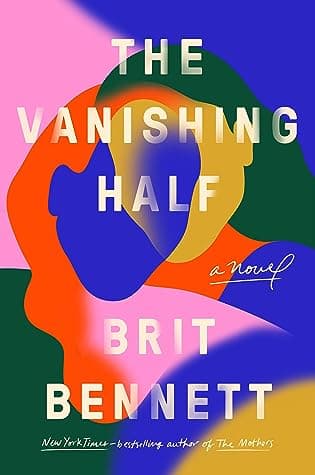
- The Vanishing Half
Brit Bennett
4.3 (132k) average on GoodreadsLiterary FictionDeals with secret identities, difficult choices, and the lasting impact of past decisions on present lives, with strong character focus.
- The Secret Place
Tana French
3.9 (63k) average on GoodreadsThrillerBoth employ a dual-timeline structure to unravel a central mystery or revelation. Reid's strength lies in the emotional resonance and character-driven revelations, prioritizing the emotional journey and exploration of a life lived. French's mysteries are often bleaker, more focused on procedural discovery, and less on the grand emotional sweep of a single character's life.
- To Kill a Mockingbird
Harper Lee
4.3 (4.5M) average on GoodreadsHistorical FictionIn the 1930s Jim Crow South, Harper Lee writes about racial injustice, moral growth, and the quiet courage of a lawyer father, Atticus Finch, as seen through his young daughter's eyes.
- The Great Gatsby
F. Scott Fitzgerald
3.9 (3.8M) average on GoodreadsHistorical FictionIn the opulent Roaring Twenties, a mysterious millionaire's lavish parties hide his desperate, tragic pursuit of a lost love, exposing the emptiness within the American Dream.
- Pride and Prejudice
Jane Austen
4.3 (3M) average on GoodreadsHistorical FictionIn a society focused on status and money, Elizabeth Bennet navigates love and pride, challenging Mr. Darcy and social expectations to find true affection.





Enjoyed the summary?
A summary gives you the shape of the book. The book itself has the detail, the examples and the voice.
Find The Seven Husbands of Evelyn Hugo on AmazonAs an Amazon Associate, BookBrief earns from qualifying purchases. How we're funded