
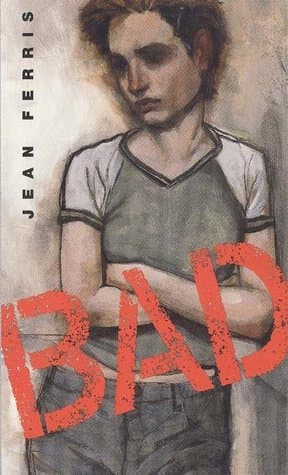
Synopsis
Covers the whole plot, including the ending.
- Difficulty
- Medium
- Pacing
- Moderate
- Mood
- Realistic, Reflective, Hopeful, Gritty
- Read it if
- You enjoy realistic, character-driven stories about troubled teens finding redemption and growth in a challenging environment.
- Skip it if
- You prefer lighthearted stories or are uncomfortable with themes of delinquency and rehabilitation.
Bad Plot Summary
Covers the whole plot, including the ending.
The Convenience Store Robbery
Sixteen-year-old Dallas, with her friends Ray and Jace, decides to rob a convenience store. Ray distracts the clerk while Jace takes money from the register. Dallas, at first unsure, is outside as a lookout but is drawn in by the excitement. When the alarm sounds, Ray and Jace flee in a stolen car, leaving Dallas behind. The police catch her, still holding a candy bar she had impulsively grabbed. This incident is her first major run-in with the law, and she faces the results alone, her friends having vanished.
The Judge's Decision and Father's Refusal
In court, Dallas expects her father, Mr. O'Connor, to speak for her and take her home on probation. However, to her surprise, her father tells the judge he cannot control her and refuses to have her back in his house. This unexpected rejection makes Dallas feel abandoned. The judge, seeing no other choice, sentences Dallas to six months at the Girls' Rehabilitation Center, a place she never thought she would end up. The reality of her situation, and her father's firm stance, begins to set in.
Arrival at the Rehab Center
Dallas arrives at the Girls' Rehabilitation Center, a stark place. She immediately faces the strict rules and the serious staff, especially Mrs. Peters, a counselor who seems to understand her. Dallas gets a room and starts to meet the other girls: the quiet, artistic Ronna, the tough Lisa, the emotional Koko, and the seemingly innocent, yet manipulative, Cassie. The center is full of troubled teenagers, each with their own story and ways of coping, and Dallas feels like an outsider.
Initial Resistance and Friendship with Ronna
Dallas at first resists the center's authority, keeping a defiant attitude and holding onto her old ways of thinking. She struggles with the structured environment, the lack of freedom, and the required group therapy sessions. However, she begins to form a careful friendship with Ronna, a quiet girl who loves to draw. Ronna's calm manner and artistic talent contrast with the aggressive personalities of some of the other girls, showing Dallas a different way of coping and a possible ally.
The Group Therapy Sessions
Group therapy sessions, led by Mrs. Peters, become a main part of Dallas's time there. These sessions are often tense, pushing the girls to examine their actions and their results. Dallas initially stays closed off, but as she watches the others, especially Koko's emotional outbursts and Lisa's cynicism, she slowly starts to open up. The sessions reveal the deep issues that led many of the girls to the center, creating a reluctant shared vulnerability among them.
Cassie's Manipulations
Cassie, a seemingly sweet and fragile girl, is a master manipulator. She often plays the victim, getting sympathy from staff and other girls, while subtly starting conflicts and spreading rumors. Dallas, at first cautious, watches Cassie's tactics. Cassie's actions create tension in the group, especially between Lisa and Koko, and she even tries to cause problems between Dallas and Ronna. Her manipulative behavior shows the complex and often deceptive nature of some residents, making it hard for Dallas to know true intentions.
The Fight and Its Aftermath
Tensions in the center grow, leading to a violent fight between Koko and Lisa, fueled by Cassie's provocations. The fight is brutal, causing injuries and breaking order. Mrs. Peters and other staff step in, but the incident deeply affects the group. Both Koko and Lisa face serious punishments, including longer stays and possible transfers to stricter places. This event makes Dallas face the harsh realities of uncontrolled anger and the severe results of failing to control one's impulses.
Dallas's Self-Reflection and Growth
Seeing the results of the fight and her peers' ongoing struggles, Dallas begins to reflect. She starts to genuinely take part in therapy, admitting her role in the robbery and the underlying issues that led her to her past behavior. She recognizes the thrill-seeking and desire for acceptance that drove her actions. This realization marks a turning point; she moves from blaming others to taking responsibility, understanding that real change must come from within and that she must face both the 'bad' and potentially good parts of herself.
Reconnecting with Her Father
As Dallas progresses in the center, she tries to reconnect with her father. Their first talks are strained, marked by resentment and unspoken hurt. Dallas, however, shows him her growth and her real desire to change. While their relationship is not fully healed, her father begins to see a different side of her – one that is more mature and responsible. These visits are difficult but important, as Dallas tries to rebuild trust and repair the family bonds broken by her past actions and his earlier rejection.
Ronna's Departure and Dallas's Support
Ronna, having finished her program, prepares to leave the center. Dallas feels happy for her friend and sad about their upcoming separation. Before Ronna leaves, Dallas gives her a small gift and expresses her genuine hope for Ronna's future. This interaction shows the strong bond they have formed and Dallas's ability to support others, showing her own emotional maturity and empathy. Ronna's successful rehabilitation inspires Dallas and shows that positive change is possible.
Preparing for Release
As Dallas's six-month term at the center ends, she thinks about her transformation. She is no longer the defiant, thrill-seeking girl who arrived, but a more self-aware and responsible person. She has learned to manage her emotions, understand her motivations, and take responsibility for her actions. Leaving is both exciting and daunting, as she considers how she will use her new understanding and strength to navigate the outside world, away from the structured environment and familiar faces of the center.
The Future: A New Beginning
Dallas's release day finally comes. She says goodbye to Mrs. Peters and the remaining girls, carrying the lessons learned and the friendships made. Though the future is uncertain, Dallas feels hope and determination. She understands that the path ahead will be challenging, but she has a new perspective on herself and the world. The story ends with Dallas stepping out of the center, ready to embrace her new beginning, with a clearer understanding of what it means to be 'bad' and, more importantly, what it means to be good.
Bad Characters
Dallas O'Connor
Protagonist
A thrill-seeking teenager forced to confront her 'bad' choices.
Dallas is a sixteen-year-old girl who initially thrives on the adrenaline rush of 'skating' – petty crime and risky behavior. She is intelligent and observant but struggles with a desire for acceptance and a tendency to externalize blame. Beneath her tough exterior, she harbors vulnerability and a yearning for connection, especially with her estranged father. Her initial defiance gives way to a profound process of self-reflection and growth, revealing a capacity for empathy and responsibility.
Relationships: Mr. O'Connor (Estranged father, initially rejects her but slowly reconciles.); Ray (Former friend, instigator of 'skating' activities, abandons her.); Jace (Former friend, involved in 'skating' activities, abandons her.); Ronna (Close friend at the center, provides quiet support and artistic inspiration.); Lisa (Fellow resident, tough and cynical, initially antagonistic but later a complex peer.); Koko (Fellow resident, emotionally volatile and prone to outbursts.); Cassie (Fellow resident, manipulative and deceptive.); Mrs. Peters (Counselor, a firm but fair mentor who guides Dallas's growth.)
Ronna
Supporting
A quiet, artistic resident who becomes Dallas's closest friend.
Ronna is a gentle and artistic girl at the rehabilitation center, often found drawing or sketching. She is soft-spoken and observant, providing a calm counterpoint to the more volatile personalities in the group. Ronna serves as a source of quiet strength and genuine friendship for Dallas, offering a non-judgmental presence. Her own struggles are less overtly rebellious, stemming from different circumstances, but she is committed to her rehabilitation.
Relationships: Dallas O'Connor (Closest friend and confidante at the center.)
Lisa
Supporting
A tough, cynical resident who challenges Dallas's perceptions.
Lisa is one of the more hardened girls at the center, characterized by her cynicism, tough demeanor, and sharp wit. She has a history of aggression and a deep-seated distrust of authority and vulnerability. Lisa often acts as a provocateur, challenging both her peers and the staff. Her outward toughness masks her own pain and past traumas, which are slowly revealed through her interactions and therapy sessions.
Relationships: Dallas O'Connor (Fellow resident, initially antagonistic but develops a complex peer relationship.); Koko (Fellow resident, often at odds with each other, leading to conflict.)
Koko
Supporting
An emotionally volatile resident prone to dramatic outbursts.
Koko is an emotionally charged resident of the center, known for her dramatic outbursts, quick temper, and deep-seated insecurities. Her behavior is often unpredictable, swinging between aggression and moments of childlike vulnerability. Koko struggles significantly with emotional regulation and expresses her pain through explosive reactions, making her a challenging presence within the group. Her journey in the center is marked by intense emotional struggles and a difficult path towards self-control.
Relationships: Dallas O'Connor (Fellow resident, often observes Koko's struggles.); Lisa (Fellow resident, frequently clashes with Lisa, leading to conflict.)
Cassie
Supporting
A manipulative resident who hides her true nature behind an innocent facade.
Cassie appears sweet and innocent on the surface, often playing the victim to gain sympathy. However, beneath this facade lies a deeply manipulative and deceitful personality. She skillfully instigates conflicts among the other girls, spreads rumors, and diverts attention from her own transgressions. Cassie represents a different kind of 'bad' – one that is not overtly aggressive but subtly destructive, making her a challenging and disruptive force within the rehabilitation center.
Relationships: Dallas O'Connor (Fellow resident, Dallas observes and recognizes Cassie's manipulative tactics.)
Mrs. Peters
Supporting
A firm but empathetic counselor at the rehabilitation center.
Mrs. Peters is a central figure among the staff at the Girls' Rehabilitation Center. She is a no-nonsense counselor who demands accountability and adherence to rules, but her stern exterior belies a deep empathy and dedication to the girls' well-being. She leads the group therapy sessions, pushing the girls to confront their issues and guiding them towards self-awareness. Mrs. Peters acts as a mentor and a consistent force for change, providing both discipline and support to Dallas and the others.
Relationships: Dallas O'Connor (Counselor and mentor, guides Dallas's rehabilitation.)
Mr. O'Connor
Supporting
Dallas's estranged father who initially rejects her.
Mr. O'Connor is Dallas's father, a man who is clearly overwhelmed and frustrated by his daughter's rebellious behavior. His decision to refuse to take Dallas home on probation stems from a place of helplessness and a perceived inability to control her. He struggles with communicating his feelings, often appearing distant or critical. Throughout the story, he slowly begins to soften and reconcile with Dallas as he witnesses her genuine efforts to change.
Relationships: Dallas O'Connor (Father, initially estranged but slowly reconciles.)
Ray
Mentioned
Dallas's former friend and the instigator of their 'skating' activities.
Ray is one of Dallas's former friends and the primary instigator of their 'skating' activities, including the convenience store robbery. He embodies the thrill-seeking, reckless aspect of Dallas's past life. Ray is characterized by his impulsiveness and his readiness to abandon his friends when caught, highlighting the superficiality of their 'friendship' and the consequences of such relationships.
Relationships: Dallas O'Connor (Former friend and accomplice, abandons Dallas after the robbery.)
Bad Themes
Redemption and Self-Acceptance
The novel explores the journey of redemption through Dallas's transformation. Initially, Dallas struggles with being labeled 'bad' and blaming others for her actions. The rehabilitation center forces her to face her choices, understand her reasons, and accept responsibility. Her path involves recognizing both her capacity for reckless behavior and her potential for good. This theme is clear in her participation in therapy and her efforts to reconcile with her father, showing her acceptance of her past while working for a better future.
“Ray called it skating when we did the crazy things . . . I loved the rush, the excitement of 'skating.'”
The Nature of 'Badness'
The book explores what 'bad' behavior means, showing its different forms and causes. It challenges simple ideas of good and evil by presenting various 'bad' girls: Dallas's thrill-seeking, Koko's emotional volatility, Lisa's cynicism, and Cassie's subtle manipulation. The story suggests that 'badness' often comes from unaddressed trauma, a search for identity, or a desperate need for connection. The center tries to uncover these layers, revealing the complexities behind each girl's actions rather than just labeling them as inherently 'bad.'
“There are different kinds of bad, I guess, and mine wasn't the worst, but it was still bad enough.”
The Importance of Accountability and Consequences
A main theme is the need to face the results of one's actions and take personal responsibility. Dallas's journey begins because she is caught and her father refuses to enable her, forcing her into the rehabilitation center. Inside the center, the strict rules and therapy sessions constantly push the girls to own their behavior. The fight between Koko and Lisa, and its serious consequences, further emphasizes that actions have significant results, reinforcing that true change can only start once personal responsibility is accepted.
“You can't change what you don't acknowledge, Dallas.”
Family and Support Systems
The novel highlights the impact of family dynamics and the presence or absence of supportive relationships. Dallas's father's initial rejection, though painful, ultimately helps her seek internal change instead of relying on external rescue. The relationships formed within the center, especially Dallas's friendship with Ronna and the guidance from Mrs. Peters, become important alternative support systems. The story shows that while family relationships can be broken, they are not always beyond repair, and new forms of support can help in healing and personal growth.
“Your father wants to see you, Dallas. It's a start.”
Plot Devices & Literary Techniques
The Rehabilitation Center as a Microcosm
The center serves as a controlled environment reflecting broader societal issues.
The Girls' Rehabilitation Center functions as a microcosm of the larger world, albeit with heightened stakes and enforced structure. It brings together girls from diverse backgrounds, each representing different facets of troubled youth and societal challenges. The interactions within the center—the power struggles, the formation of friendships, the conflicts, and the therapeutic interventions—mirror the complexities of human relationships and the challenges of personal growth in a contained, intense setting. This device allows the author to explore themes of rehabilitation, social dynamics, and the nature of 'badness' within a manageable narrative space.
First-Person Narration
Dallas's perspective provides intimate insight into her internal journey.
The story is told from Dallas's first-person perspective, offering readers direct access to her thoughts, feelings, and evolving perceptions. This device is crucial for understanding her internal struggles, her initial defiance, and her eventual transformation. It allows the reader to experience her journey of self-discovery and empathy firsthand, making her growth more impactful and relatable. The narration reveals her internal monologue, her judgments of others, and her gradual shift towards self-awareness, making her redemption arc deeply personal and authentic.
Symbolism of 'Skating'
The term 'skating' represents thrill-seeking, reckless behavior, and evasion of responsibility.
The term 'skating,' used by Dallas and her friends to describe their illicit activities, symbolizes their approach to life: gliding over consequences, seeking thrills without facing the repercussions, and maintaining a detached, carefree attitude towards their destructive actions. For Dallas, 'skating' represents her past identity and her avoidance of genuine emotional engagement. Her journey in the center is essentially about learning to stop 'skating' and instead confront the solid ground of accountability and self-reflection, making the term a powerful shorthand for her pre-rehabilitation mindset.
Bad Quotes
“Every time I thought I was out, they pulled me back in.”
“Being good was harder work than being bad, and a lot less fun.”
“Sometimes the best way to solve a problem is to make a bigger one.”
“You can't choose your family, but you can choose your friends. And sometimes, your enemies.”
“The truth was a weapon, and I wasn't sure if I was ready to wield it.”
“A good lie always had a kernel of truth in it, just enough to make it believable.”
“Rules were for other people, for those who hadn't learned how to bend them.”
“It wasn't about being bad, it was about being free.”
“Hope was a dangerous thing, especially when you didn't know what to hope for.”
“Even a bad apple can sometimes find a good tree to grow on.”
“The hardest part of changing was admitting you needed to change in the first place.”
“Sometimes, doing the right thing felt terribly wrong.”
“Nobody ever said being good would be easy. They just said it would be worth it.”
“A reputation, once earned, was a stubborn thing to shake.”
Quiz
10 questions on the plot and the characters. Each answer comes with a short explanation.
Question 1
What is the term Dallas and her friends use for their illicit activities like hot-wiring cars and shoplifting?
- Cruising
- Skating
- Thrill-seeking
- Riding
Show answer
B. Skating Dallas and her friends, particularly Ray, refer to their dangerous and illegal activities as 'skating,' which gives them a sense of excitement and detachment from the consequences.
Question 2
What specific crime leads to Dallas's arrest and subsequent placement in the Girls' Rehabilitation Center?
- Shoplifting designer clothes
- Hot-wiring a luxury car
- Robbing a convenience store
- Vandalizing school property
Show answer
C. Robbing a convenience store Dallas is caught while attempting to rob a convenience store with her friends, who manage to escape.
Question 3
Why does Dallas's father refuse to take her home on probation, leading to her being sent to the rehabilitation center?
- He believes she needs stricter punishment.
- He is too busy with work to supervise her.
- He feels he cannot control her anymore.
- He wants her to learn independence.
Show answer
C. He feels he cannot control her anymore. Despite it being her first offense, Dallas's father tells the judge he cannot control her, which results in her being sent to the Girls' Rehabilitation Center for six months.
Question 4
What is Dallas's initial expectation regarding her father's reaction and potential help after her arrest?
- She expects him to be angry but ultimately support her in court.
- She anticipates he will disown her for her actions.
- She thinks he will be indifferent, as he always is.
- She believes he will blame her friends for influencing her.
Show answer
A. She expects him to be angry but ultimately support her in court. Dallas initially believes her father will help her out of trouble since it's her first offense, which makes his refusal to take her home on probation even more shocking to her.
Question 5
How long is Dallas sentenced to stay at the Girls' Rehabilitation Center?
- Three months
- Six months
- One year
- Until she turns eighteen
Show answer
B. Six months The judge sentences Dallas to six months in the Girls' Rehabilitation Center after her father declines to take her home on probation.
Question 6
What is a central theme explored through Dallas's journey in the rehabilitation center?
- The importance of seeking revenge on those who betray you.
- The struggle of troubled teenagers to confront their past and change their lives.
- The ease with which individuals can escape their criminal past.
- The idea that some people are inherently 'bad' and cannot change.
Show answer
B. The struggle of troubled teenagers to confront their past and change their lives. The novel focuses on Dallas's internal struggle and the challenges faced by her and other girls in the center as they try to come to terms with their actions and make positive changes.
Question 7
What does the phrase 'coming to terms with herself - both the bad and the good' imply about Dallas's character development?
- She learns to suppress her 'bad' impulses entirely.
- She acknowledges her flaws and strengths, seeking a balanced self-understanding.
- She decides to embrace her 'bad' side and reject societal norms.
- She realizes that she is only capable of 'good' deeds.
Show answer
B. She acknowledges her flaws and strengths, seeking a balanced self-understanding. This phrase highlights a key aspect of Dallas's growth, suggesting she moves beyond simple labels of 'good' or 'bad' to develop a more complex and integrated understanding of her own identity and actions.
Question 8
Based on the description, what is the author's likely purpose in writing 'Bad'?
- To sensationalize the lives of juvenile delinquents.
- To provide a realistic and empathetic look at the challenges faced by troubled teenagers.
- To advocate for harsher punishments for young offenders.
- To critique the effectiveness of rehabilitation centers.
Show answer
B. To provide a realistic and empathetic look at the challenges faced by troubled teenagers. The inspiration from the author's work in a rehabilitation center and the description of the novel as 'heartfelt and insightful' suggest a purpose of offering a realistic and empathetic portrayal of these young individuals.
Question 9
The novel's title, 'Bad,' is ironic because:
- The girls in the center are truly irredeemable.
- It challenges the simplistic label of 'bad' by exploring the complexities of the characters.
- Dallas actually enjoys being perceived as 'bad.'
- The rehabilitation center itself is 'bad' at its job.
Show answer
B. It challenges the simplistic label of 'bad' by exploring the complexities of the characters. The title 'Bad' serves as an irony, as the novel delves into the nuances of the characters, suggesting that their situations are more complex than a simple 'bad' label, and that they have potential for change.
Question 10
What does the phrase 'many of whom don't expect to change, and those who do often don't make it' reveal about the environment Dallas enters?
- It is a highly optimistic and supportive environment.
- It is a place where cynicism and recidivism are common challenges.
- It suggests the girls are inherently resistant to any form of help.
- It implies that the staff at the center are ineffective.
Show answer
B. It is a place where cynicism and recidivism are common challenges. This detail immediately establishes that the rehabilitation center is a tough environment where hope for change is often met with cynicism or failure, highlighting the significant odds the girls face.
Bad FAQ
What is the central premise of 'Bad' by Jean Ferris?
'Bad' follows sixteen-year-old Dallas, who enjoys the thrill of petty crime, or 'skating,' with her friends. After she is caught robbing a convenience store and her father refuses to take her back, she is sentenced to six months at a Girls' Rehabilitation Center, where she must confront her past choices and decide if she wants to change.
Who are Dallas's primary friends before she is sent to the rehabilitation center?
Before her incarceration, Dallas's main companions are Ray, who often instigates their 'skating' activities like hot-wiring cars and shoplifting, and another friend. These friends abandon Dallas when she is caught robbing the convenience store, leaving her to face the consequences alone.
Why does Dallas's father refuse to take her home on probation?
Dallas's father refuses to take her home on probation because he openly tells the judge he cannot control her. This decision stems from a long history of Dallas's rebellious behavior and his perceived inability to guide her, leading to her placement in the Girls' Rehabilitation Center.
What is the Girls' Rehabilitation Center like, and what kind of girls does Dallas encounter there?
The Girls' Rehabilitation Center is a structured environment designed to reform troubled teenagers. Dallas meets a diverse group of 'bad' girls there, some like herself who are new to the system, others who are repeat offenders, and many who are skeptical about their chances of changing or even desire to do so.
What is the main challenge Dallas faces during her time at the center?
Dallas's main challenge is coming to terms with her own identity, specifically reconciling the 'bad' thrill-seeker she was with the possibility of becoming a 'good' person. She struggles to accept responsibility for her actions and to envision a future free from her past destructive patterns, influenced by both her peers and the center's staff.
Does Dallas ever confront Ray or her other friends after being caught?
The narrative focuses more on Dallas's internal journey and her experiences within the center. While the initial betrayal by Ray and her friends is a catalyst for her situation, the book primarily explores her relationships with the girls at the center and her family, rather than a direct confrontation with her old group.
Are there any characters at the center who initially seem irredeemable but show signs of hope?
The book features several girls who embody different stages of rehabilitation. Some girls, hardened by their pasts, initially resist change and express cynicism, but through interactions with Dallas and the staff, subtle shifts in their perspectives or small acts of vulnerability suggest a glimmer of hope for their future.
How does the author's background working in a girls' rehabilitation center influence the portrayal of the characters and setting?
Jean Ferris's experience likely lends a strong sense of authenticity and nuance to the portrayal of the girls and the center. This background allows for realistic character development, showing the complex motivations, struggles, and occasional triumphs of troubled teenagers, avoiding overly simplistic narratives of good or bad.
What is the significance of the term 'skating' for Dallas and her friends?
'Skating' represents their shared code for engaging in risky, illegal activities, from joyriding to shoplifting. It encapsulates the thrill, the sense of invincibility, and the detachment from consequences that Dallas initially finds appealing, highlighting her initial denial of the seriousness of her actions.
How does Dallas's relationship with her father impact her self-perception and behavior?
Her father's inability to control her and his ultimate refusal to take her home deeply wounds Dallas, reinforcing a sense of being unlovable or beyond help. This rejection likely contributes to her rebellious streak and her initial resistance to conforming, as she struggles with feelings of abandonment and inadequacy.
What internal conflict does Dallas experience regarding her 'bad' identity versus a potential 'good' one?
Dallas grapples with the allure of her 'bad' past, which offered excitement and a sense of belonging with her old friends, against the difficult path of self-improvement. She fears losing her identity if she changes, yet recognizes the destructive nature of her past choices, leading to a profound internal struggle for self-acceptance and transformation.
How do the other girls at the rehabilitation center influence Dallas's psychological journey?
The diverse personalities and backstories of the other girls act as both mirrors and contrasts for Dallas. Some reinforce her initial cynicism, while others, through their vulnerability or small successes, challenge her preconceived notions about change and provide a sense of camaraderie, helping her feel less alone in her struggles.
Is the ending of 'Bad' entirely optimistic, or does it acknowledge the difficulties of rehabilitation?
The ending is generally hopeful but grounded in realism. While Dallas makes significant strides in her personal growth and commitment to change, the book likely acknowledges that the path to full rehabilitation is ongoing and fraught with challenges, reflecting the real-world complexities faced by troubled youth trying to turn their lives around.
What message does the book convey about parental responsibility and its impact on troubled teens?
The book suggests that parental involvement, or lack thereof, plays a significant role. Dallas's father's refusal to take her home highlights the challenges parents face with rebellious children, but also underscores the profound impact of such decisions on a teen's sense of self-worth and their journey toward rehabilitation.
How does 'Bad' challenge typical portrayals of 'bad girls' in young adult fiction?
'Bad' likely moves beyond simplistic stereotypes by offering a nuanced look at the girls' motivations and inner lives. It explores the complexities of their situations, showing that their 'bad' behavior often stems from deeper issues, societal pressures, or personal trauma, rather than just inherent malice.
What role does empathy play in Dallas's transformation?
Empathy is crucial for Dallas's growth. As she listens to the stories of the other girls and witnesses their struggles, she begins to develop a deeper understanding not only of their pain but also of her own. This growing empathy helps her move past self-pity and connect with others, fostering a desire for positive change.
Does the book suggest that society is too quick to label certain teenagers as 'bad'?
Yes, the narrative subtly critiques the label 'bad' by delving into the individual circumstances and internal conflicts of the girls. It implies that these teenagers are often more complex than their labels suggest, highlighting the need for understanding, support, and opportunities for rehabilitation rather than just punishment.
Similar books
- Go Ask Alice
Anonymous
3.7 (293k) average on GoodreadsReferenceA classic, cautionary tale about a teenage girl's descent into drug use and rebellion.
- Speak
Laurie Halse Anderson
4.0 (485k) average on GoodreadsPsychologyCompared to Speak, "Bad" lacks the profound psychological depth and literary craft in exploring trauma and recovery. While both feature adolescent protagonists grappling with difficult experiences, Speak delves into the internal landscape with greater subtlety and impact, making "Bad" feel less sophisticated in its character development and thematic exploration of complex issues like silence and healing.
- Harry Potter and the Sorcerer's Stone
J.K. Rowling
4.5 (7M) average on GoodreadsFantasyRescued from a miserable life under the stairs, an orphaned boy discovers he's a wizard destined for a magical school, where he uncovers a dangerous secret tied to the dark wizard who murdered his parents.
- The Hobbit, or There and Back Again
J.R.R. Tolkien
4.3 (2.9M) average on GoodreadsFantasyA comfort-loving hobbit named Bilbo Baggins is whisked away by a mischievous wizard and a band of dwarves on an unexpected journey to reclaim stolen treasure from a fearsome dragon, discovering courage and a magical ring along the way.
- Harry Potter and the Goblet of Fire
J.K. Rowling
4.6 (2.6M) average on GoodreadsFantasyA bewildered Harry Potter, underage and thrust into a deadly Triwizard Tournament, must brave dragons, mermaids, and a resurgent dark magic to survive a year that will forever alter the wizarding world.
- Harry Potter and the Order of the Phoenix
J.K. Rowling
4.5 (2.5M) average on GoodreadsFantasyIn a year of oppressive secrets and the threat of Voldemort, Harry Potter and Dumbledore's Army secretly train for war, shown through Jim Kay and Neil Packer's dark illustrations.





Enjoyed the summary?
A summary gives you the shape of the book. The book itself has the detail, the examples and the voice.
Find Bad on AmazonAs an Amazon Associate, BookBrief earns from qualifying purchases. How we're funded