
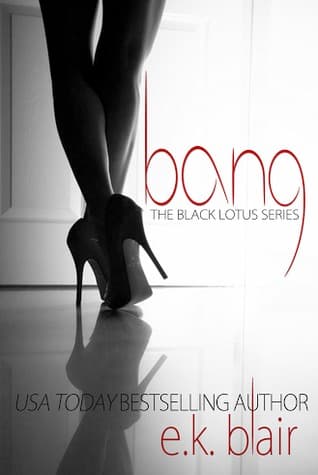
Synopsis
Covers the whole plot, including the ending.
- Difficulty
- Medium
- Pacing
- Moderate
- Mood
- Dark, Suspenseful, Intense, Emotional, Romantic
- Read it if
- You enjoy dark, intense young adult thrillers with strong romantic elements and a focus on revenge and uncovering secrets.
- Skip it if
- You prefer lighthearted stories, are sensitive to dark themes, or dislike morally ambiguous characters and explicit content.
Bang Plot Summary
Covers the whole plot, including the ending.
The Weight of a Secret
Brexley, a young woman with a devastating past, lives for one purpose: revenge on Kason, the man she believes caused her family's death and ruined her childhood. She carries this secret, carefully planning her retribution. Her life is a facade, hiding the deep anger and grief that drive her. She has isolated herself emotionally, believing intimacy would jeopardize her mission. This beginning sets the novel's dark, intense mood, establishing Brexley's damaged mind and her commitment to her goal, even at the cost of her own happiness.
A Calculated Encounter
Brexley begins her long-planned revenge, arranging a 'chance' meeting with Kason. She uses her intelligence and cunning to enter his social circle, appearing harmless, even captivating. Her goal is to get close to him, understand his weaknesses, and find the right moment to strike. This phase is tense as Brexley battles conflicting emotions: her disgust for Kason and the need to maintain her deceptive role. She watches him, learning his habits and associates, while trying to hide her true intentions behind a charming exterior.
Unraveling the Truth
As Brexley spends more time with Kason, she notices things that challenge her belief in his guilt. He does not fit the monster she imagined; he shows surprising kindness and complexity. She observes his interactions with others, especially his younger sister, and sees a different side of him. This causes a major internal conflict for Brexley, forcing her to question the basis of her entire life. Her certainty wavers, and the clear lines of good and evil she once drew begin to blur, bringing doubt and confusion to her carefully planned revenge.
The Unexpected Connection
Against her will, Brexley finds herself drawn to Kason. The emotional intimacy she has guarded so fiercely begins to break down under their growing connection. Their conversations reveal a shared understanding and chemistry that Brexley struggles to reconcile with her mission. This unexpected development throws her into emotional turmoil, making her question Kason's guilt and her own ability to love and forgive. The line between her fake identity and her true self blurs, threatening her focus and resolve.
Whispers of the Past
Driven by her growing doubts and complex feelings for Kason, Brexley intensifies her investigation into the past. She digs deeper, seeking evidence beyond her initial assumptions. She uncovers fragmented memories, old documents, and hushed conversations that point to a larger, more intricate conspiracy behind her family's tragedy. The information suggests Kason might have been a pawn, or at least not the sole perpetrator, in a darker scheme. This revelation shifts her perspective, broadening her search for truth and adding danger to her already perilous situation.
A Shared Trauma
Kason, sensing Brexley's emotional turmoil and trusting her more than he should, starts talking about his own painful past. He reveals a traumatic experience that explains his guardedness and actions. This shared vulnerability creates an even stronger, though conflicted, bond between them. Brexley realizes that Kason, too, is a victim, further eroding her belief that he is purely evil. His revelations force her to consider that their paths were intertwined by fate, not by his malice.
The True Mastermind
Through her investigation and Kason's memories, Brexley finally uncovers the true mastermind behind her family's tragedy. Kason was manipulated and coerced, a pawn in a larger, sinister plot by a powerful, ruthless individual. This revelation is both horrifying and freeing for Brexley. The weight of her misguided revenge lifts, replaced by a desire for justice against the actual perpetrator. Her focus shifts from Kason to this new, formidable enemy, uniting her and Kason in a shared quest for truth and retribution.
Unforeseen Alliance
With the truth revealed, Brexley and Kason form an unexpected, powerful alliance. Their past animosity becomes a shared purpose, driven by a desire for justice and a need to protect each other. They realize the real enemy is more dangerous and influential than they imagined. They combine their strengths, Brexley's cunning and Kason's resources, to plan their next moves. This alliance shows their evolving relationship, moving from hatred and suspicion to trust and a deep, complex love forged in shared suffering.
Confronting the Past
Brexley and Kason carefully plan their confrontation with the true antagonist, knowing the immense risks. They gather evidence, anticipate their enemy's moves, and prepare for a dangerous showdown. The emotional stakes are high, as this confrontation represents their chance for justice, closure, and a future together. They rely on each other for support, acknowledging their profound impact on each other's lives. This phase is tense and suspenseful, building to the climactic confrontation that will decide their fate and resolve their long-standing trauma.
The Final Showdown
The climax arrives as Brexley and Kason confront the true antagonist. The encounter is brutal and intense, testing them physically and emotionally. They face betrayal, violence, and the lingering shadows of their past. Brexley uses her years of planning, and Kason his strength and knowledge, to navigate the perilous situation. The confrontation is not just about physical victory, but also emotional liberation, as they fight to reclaim their stolen lives. The outcome is hard-won, but they succeed in bringing the villain to justice, ensuring the cycle of pain can finally end.
Healing and Hope
With the antagonist defeated and justice served, Brexley and Kason begin the difficult journey of healing. The scars of their past remain, but they are no longer defined by them. They embrace their complex love, understanding that their shared trauma has created an unbreakable bond. The ending focuses on their emotional recovery, rebuilding their lives, and the promise of a future together, free from the shadows of revenge and manipulation. It shows resilience, forgiveness, and the power of love, offering hope after a dark, tumultuous journey.
Bang Characters
Brexley
Protagonist
A young woman driven by a fierce desire for revenge for her family's murder.
Brexley is a complex and deeply scarred young woman. Orphaned and traumatized by the murder of her family, she dedicates her life to avenging them. She is intelligent, cunning, and fiercely independent, capable of meticulous planning and maintaining a deceptive facade. Beneath her hardened exterior, she harbors deep grief, anger, and a profound sense of loss. Her emotional walls are formidable, but she is also capable of great loyalty and, eventually, profound love. Her determination is both her greatest strength and her greatest vulnerability.
Relationships: Kason (Initial target of revenge, later a lover and ally); Her Family (deceased) (Driving force behind her revenge)
Kason
Love Interest / Initial Antagonist
The man Brexley believes murdered her family, who harbors his own dark secrets.
Kason is initially presented as the villain, the object of Brexley's revenge. He is charismatic, powerful, and enigmatic, with a dangerous aura. However, as the story unfolds, he is revealed to be a complex character, burdened by his own past trauma and manipulated into circumstances beyond his control. He possesses a strong sense of loyalty, particularly to his younger sister, and despite his rough exterior, he is capable of deep affection and vulnerability. He struggles with guilt and the consequences of his forced actions.
Relationships: Brexley (Initial target of revenge, later a lover and ally); His younger sister (He deeply cares for and protects her)
The True Antagonist
Antagonist
The manipulative and powerful individual responsible for the wider conspiracy.
This character is the true villain of the story, a shadowy and influential figure who orchestrated the events that destroyed Brexley's family and manipulated Kason. They are ruthless, cunning, and driven by power, wealth, or some other nefarious agenda. Their identity is gradually revealed, intensifying the mystery and shifting the focus of Brexley's revenge. They represent pure malevolence and are a formidable opponent, capable of extensive deception and violence. Their motive is often deeply selfish, impacting many lives without remorse.
Relationships: Kason (Manipulated and coerced); Brexley (Victim of their schemes)
Brexley's Family
Mentioned
The deceased family whose murder drives Brexley's quest for revenge.
Brexley's family, though deceased, are central to her motivation. Their violent end is the catalyst for the entire plot. They are remembered through Brexley's fragmented memories and her enduring grief. While their individual personalities are not deeply explored, their collective loss represents Brexley's stolen innocence and the life she was denied. They symbolize the profound impact of trauma and the powerful desire for justice that can consume a person.
Relationships: Brexley (Daughter/Sister, source of her trauma and motivation)
Kason's Sister
Supporting
Kason's younger sister, whom he deeply cares for and protects.
Kason's younger sister serves as a window into his softer side and a key to understanding his character. Her safety and well-being are paramount to Kason, influencing many of his decisions. She represents innocence and vulnerability in a dark world, and her presence highlights Kason's capacity for love and protection. Brexley's observations of Kason's interactions with his sister are crucial in challenging her preconceived notions about him, contributing to the unraveling of her revenge plot.
Relationships: Kason (Brother, her protector and guardian)
Bang Themes
Revenge vs. Justice
The novel explores the destructive nature of revenge and the difference between personal retribution and true justice. Brexley's life is initially driven by revenge against Kason, believing it will bring peace. However, as she uncovers the truth, her quest becomes a pursuit of justice, realizing her initial target was also a victim. This shift shows how blind revenge can continue cycles of violence and how understanding and truth are necessary for real healing. For example, Brexley's detailed planning to approach Kason highlights her revenge-driven mindset, but her later internal conflict and investigation lead her to seek justice against the true mastermind.
“They say when you take revenge against another you lose a part of your innocence. But I’m not innocent. I haven’t been for a very long time.”
The Nature of Truth and Deception
The story is built on layers of deception, both external and internal. Brexley creates a false identity to enter Kason's world, while Kason himself was deceived and manipulated. The central conflict comes from the gradual uncovering of these deceptions, revealing a complex truth that challenges Brexley's long-held beliefs. This theme emphasizes how easily perception can be warped and how hard it is to see reality when emotions and outside forces are at play. The slow reveal of Kason's true involvement, and then the true antagonist's identity, are key examples of this theme.
“Every plan has a fatal flaw. Sometimes it’s the heart.”
Healing from Trauma
Both Brexley and Kason are deeply scarred by past traumas, and the novel explores their individual and shared paths toward healing. Brexley's trauma appears as an all-consuming need for revenge, while Kason's leads to guardedness and a sense of responsibility for others. Their eventual connection and mutual support are vital to their ability to process and move past their pain. The book suggests that true healing often requires facing the past, accepting vulnerability, and finding connection with others. The final chapters, where they begin to rebuild their lives together, show this theme.
“I mourn that life. Mourn the what-ifs. Until now. I’m ready to take back what was always meant to be mine.”
Love and Forgiveness
Despite beginning with hatred and a desire for vengeance, the novel explores the power of love and forgiveness. Brexley's unexpected feelings for Kason force her to confront her anger and consider forgiveness, for him and for herself. Their love story develops amid chaos and betrayal, showing that even in the darkest situations, connection and empathy can grow. This theme highlights how love can break cycles of bitterness and offer a path toward redemption and a hopeful future. Their journey from enemies to lovers is the main expression of this theme.
“My innocence was stolen from me. Taken was the life I was supposed to have. The soul I was born with. The ruby heart embedded in a life full of hopes and dreams.”
Plot Devices & Literary Techniques
Red Herring
A misleading clue or character that distracts from the true culprit.
Kason initially serves as a major red herring. Brexley, and by extension the reader, is led to believe he is the primary antagonist responsible for her family's murder. His dark demeanor and initial secrets reinforce this perception, making him the obvious target for revenge. This device effectively misdirects the plot, allowing the true antagonist to remain hidden until later in the story and intensifying the surprise when the real culprit is revealed. It also forces Brexley to question her assumptions, driving her deeper into the mystery.
Unreliable Narrator
The protagonist's perspective is colored by trauma and a singular focus on revenge.
Brexley acts as an unreliable narrator, particularly in the initial stages of the story. Her perspective is heavily biased by her past trauma and her unwavering belief in Kason's guilt. Her interpretations of events and Kason's character are filtered through her desire for revenge, leading her to misinterpret clues and dismiss information that contradicts her narrative. This device creates suspense and allows for the gradual revelation of truth, as the reader experiences Brexley's journey of questioning her own deeply held convictions alongside her.
Flashbacks and Fragmented Memories
Brief, often unsettling, glimpses into Brexley's traumatic past.
The novel uses flashbacks and fragmented memories to slowly reveal the details of Brexley's family's murder and her own trauma. These are not always presented chronologically or clearly, reflecting the psychological impact of trauma on memory. They serve to deepen the mystery, provide context for Brexley's motivations, and build suspense as the reader, along with Brexley, pieces together the horrifying events of her past. They are often triggered by specific events or interactions, adding an emotional layer to the unfolding plot.
The Unseen Hand
A powerful, manipulative force operating behind the scenes.
This device refers to the true antagonist, who operates for much of the story from the shadows, pulling strings and manipulating events without direct confrontation. Their influence is felt through the consequences of their actions, the fear they instill, and the way they've shaped both Brexley's and Kason's lives. This creates a sense of pervasive danger and a larger, more intricate conspiracy, elevating the stakes beyond a simple revenge plot and into a fight against a powerful, hidden enemy.
Bang Quotes
“There are some things in life you just can’t walk away from. Not if you want to live with yourself.”
“Sometimes the most beautiful things are the ones that are broken, because they carry the story of their survival.”
“Fear can be a powerful motivator, but it can also be a paralyzing one. The trick is knowing when to let it push you and when to fight back.”
“Every secret has a weight, and eventually, that weight becomes too heavy to bear alone.”
“Love isn't always gentle. Sometimes it's a storm, a wildfire, consuming everything in its path, leaving you breathless and forever changed.”
“The past isn't just something you remember; it's something that lives inside you, shaping every choice, every breath.”
“There’s a difference between being alone and being lonely. One is a choice, the other is a feeling.”
“Sometimes the greatest strength isn't in fighting, but in knowing when to surrender to what you cannot change.”
“Magic isn't just spells and incantations; it's in the unseen connections, the whispers between worlds, the spark that ignites change.”
“Trust is a fragile thing, easily shattered, and once broken, almost impossible to fully mend.”
“The truth doesn't always set you free. Sometimes it just gives you a heavier cage.”
“You can't outrun destiny, but you can choose how you face it.”
“Even in the darkest night, there are stars. You just have to remember to look up.”
Quiz
10 questions on the plot and the characters. Each answer comes with a short explanation.
Question 1
What is the primary motivation driving the protagonist's actions at the beginning of 'Bang'?
- To escape a dangerous situation and start a new life.
- To seek revenge for a stolen life and lost innocence.
- To find a long-lost family member.
- To recover a valuable artifact that was stolen from her.
Show answer
B. To seek revenge for a stolen life and lost innocence. The opening synopsis explicitly states the protagonist's motivation: 'I’m ready to take back what was always meant to be mine,' after her innocence and life were stolen, indicating a quest for revenge.
Question 2
The synopsis mentions a 'fatal flaw' in the protagonist's plan. What is this flaw hinted to be?
- Lack of resources or support.
- The involvement of her own emotions, specifically her heart.
- Underestimation of her enemies.
- A betrayal from an unexpected ally.
Show answer
B. The involvement of her own emotions, specifically her heart. The synopsis directly states, 'But every plan has a fatal flaw. Sometimes it’s the heart,' clearly indicating that emotional entanglement will be a significant challenge or weakness in her scheme.
Question 3
Which of the following best describes the general tone and content warning provided for 'Bang'?
- Lighthearted and humorous, suitable for all ages.
- Intense and romantic, with a focus on fantasy elements.
- Dark, explicit, and potentially disturbing, recommended for mature audiences.
- Thought-provoking and philosophical, exploring moral dilemmas.
Show answer
C. Dark, explicit, and potentially disturbing, recommended for mature audiences. The text explicitly warns: 'Due to the dark and explicit nature of this book, it is recommended for mature audiences only as some scenes may be particularly disturbing.'
Question 4
The protagonist describes her 'innocence' as being 'stolen' and 'taken.' What specific imagery does she use to represent this lost innocence and life?
- A fragile glass bird.
- A ruby heart embedded in a life full of hopes and dreams.
- A golden key to a forgotten door.
- A faded photograph of her childhood.
Show answer
B. A ruby heart embedded in a life full of hopes and dreams. The protagonist states, 'The ruby heart embedded in a life full of hopes and dreams' was taken from her, symbolizing her lost innocence and potential life.
Question 5
How does the protagonist describe her current state of being, contrasting with her past innocence?
- She feels completely pure and untouched by the world.
- She acknowledges that she is no longer innocent and hasn't been for a long time.
- She is actively trying to regain her innocence through good deeds.
- She believes her innocence was never truly lost, only hidden.
Show answer
B. She acknowledges that she is no longer innocent and hasn't been for a long time. The text explicitly states, 'But I’m not innocent. I haven’t been for a very long time,' indicating her awareness of her current, non-innocent state.
Question 6
The protagonist mentions 'mourning the what-ifs.' What does this phrase reveal about her emotional state regarding her past?
- She is indifferent to her past and focused solely on the future.
- She regrets the choices she made that led to her current situation.
- She grieves for the life she could have had if her innocence hadn't been stolen.
- She is nostalgic for simpler times before her current quest began.
Show answer
C. She grieves for the life she could have had if her innocence hadn't been stolen. Mourning 'the what-ifs' implies a deep sadness and regret for the alternative paths her life might have taken, specifically the life that was 'stolen' from her.
Question 7
The author's note about the book's nature suggests that readers should be prepared for what kind of emotional experience?
- A heartwarming tale of redemption.
- A thrilling adventure with light romantic elements.
- A challenging and possibly unsettling journey into dark themes.
- An inspiring story of overcoming adversity without significant conflict.
Show answer
C. A challenging and possibly unsettling journey into dark themes. The warning 'dark and explicit nature' and 'some scenes may be particularly disturbing' indicates the book aims to evoke a challenging and unsettling emotional response from the reader.
Question 8
Considering the themes of 'revenge' and 'lost innocence,' what philosophical question might 'Bang' explore regarding the protagonist's journey?
- Can one truly reclaim what was lost, or only inflict further damage in the attempt?
- Is it possible to find happiness without seeking vengeance?
- Does love conquer all, even in the face of deep-seated hatred?
- Is society inherently corrupt, or can individuals rise above its flaws?
Show answer
A. Can one truly reclaim what was lost, or only inflict further damage in the attempt? The text states, 'They say when you take revenge against another you lose a part of your innocence.' This directly sets up a conflict between the act of revenge and the potential for further loss, questioning whether true reclamation is possible or if it leads to more damage.
Question 9
The phrase 'I mourn that life. Mourn the what-ifs. Until now.' implies a significant shift in the protagonist's approach. What does 'Until now' signify?
- A sudden realization that she no longer cares about her past.
- A transition from passive mourning to active pursuit of her goals.
- The moment she finally found peace with her losses.
- The point where she decided to abandon her revenge plot.
Show answer
B. A transition from passive mourning to active pursuit of her goals. 'Until now' marks the turning point where her state changes from mourning to being 'ready to take back what was always meant to be mine,' indicating a shift from passive grief to active action.
Question 10
Given the genre tags 'Fantasy, Mystery, Young Adult, Romance,' and the dark synopsis, which element is most likely to be intricately woven into the revenge plot, potentially complicating it?
- A magical item or ability that is crucial for her revenge, but comes with a high cost.
- A complex romantic relationship with someone connected to her past or her targets.
- An ancient prophecy that dictates the outcome of her quest.
- A secret society that attempts to recruit her for their own agenda.
Show answer
B. A complex romantic relationship with someone connected to her past or her targets. The 'Romance' genre tag, combined with the 'fatal flaw' being 'the heart' and the protagonist's journey, strongly suggests that a romantic entanglement will play a significant, complicating role in her revenge plot.
Bang FAQ
What is the central premise of 'Bang'?
'Bang' centers on a protagonist seeking revenge after her innocence and a promising future were brutally stolen from her. She meticulously plans to reclaim what she believes was rightfully hers, but her carefully constructed scheme faces an unexpected challenge when her emotions, particularly her heart, begin to complicate the execution.
Who is the main character and what drives her actions?
The main character is a young woman whose name is not immediately revealed, but her primary motivation is a deep-seated desire for vengeance. She is driven by the traumatic loss of her innocence, her 'ruby heart,' and the life she was destined to live, fueling her relentless pursuit to settle scores and reclaim what was taken.
What kind of 'revenge' is the protagonist seeking?
The protagonist is seeking a profound and personal form of revenge, aiming to dismantle the lives of those who wronged her and reclaim the stolen aspects of her own identity and future. Her plan is elaborate and deeply personal, suggesting a desire to inflict a proportional, if not greater, impact on her targets.
What role does romance play in a story focused on revenge?
Romance acts as the 'fatal flaw' mentioned in the synopsis, complicating the protagonist's meticulously planned revenge. It introduces an emotional element that directly conflicts with her hardened resolve and objective, potentially derailing her mission and forcing her to confront the true cost of her actions.
What does the 'ruby heart' symbolize in the narrative?
The 'ruby heart' symbolizes the protagonist's lost innocence, her vibrant soul, and the passionate hopes and dreams she possessed before her trauma. Its theft signifies the profound emotional and spiritual damage inflicted upon her, driving her quest to recover or avenge its loss.
Are there any specific clues about the nature of the protagonist's 'stolen life'?
The text hints at a life 'supposed to have' and a 'soul born with,' suggesting a premeditated act that robbed her of a pre-destined or idyllic future. This implies the 'theft' wasn't just an incidental tragedy, but a targeted destruction of her potential and identity, making her desire for retribution deeply personal.
How does the 'dark and explicit nature' manifest in the story?
The 'dark and explicit nature' likely manifests through graphic depictions of the protagonist's past trauma, the violent or morally ambiguous acts she commits in pursuit of revenge, and potentially disturbing psychological exploration of her damaged psyche. This content is intended for mature audiences due to its intensity.
What psychological impact has the 'stolen innocence' had on the protagonist?
The 'stolen innocence' has profoundly hardened the protagonist, stripping her of empathy and fostering a single-minded obsession with vengeance. She views herself as no longer innocent, suggesting a deep internal shift where her moral compass has been reshaped by trauma and the pursuit of retribution.
How does the protagonist rationalize her violent actions or plans?
The protagonist rationalizes her actions by defining herself as 'not innocent,' believing she has nothing left to lose and that her actions are a justified reclamation of what was taken. She views her quest as a necessary correction for the wrongs inflicted upon her, making her a morally complex character.
What internal conflict does the 'fatal flaw' of the heart create for her?
The 'fatal flaw' of the heart creates a profound internal conflict, forcing the protagonist to choose between her carefully planned revenge and emerging emotional connections. This conflict challenges her hardened resolve, potentially reawakening parts of her 'ruby heart' she believed were gone, and forcing a re-evaluation of her path.
How does the narrative explore the theme of justice versus revenge?
The narrative explores the blurred lines between justice and revenge by presenting the protagonist's actions as a personal quest for retribution rather than legal justice. It prompts readers to consider whether her methods, however extreme, are justified by the severity of her past trauma, or if they perpetuate a cycle of violence.
Does the book suggest that true innocence can ever be regained after such trauma?
The book seems to suggest that true innocence, as it was before the trauma, cannot be fully regained. Instead, the protagonist might find a new form of peace or redemption, but her experiences have irrevocably altered her. The narrative likely explores the journey of coming to terms with a changed self rather than a full restoration.
Is the 'fatal flaw' of the heart a weakness or a potential path to healing?
The 'fatal flaw' of the heart can be interpreted as both a weakness to her revenge plan and a potential path to healing. While it complicates her mission, it also represents the possibility of rediscovering humanity, empathy, and perhaps a different kind of future that isn't solely defined by vengeance.
What is the significance of the title 'Bang'?
The title 'Bang' could signify several things: the sudden, violent impact of the original trauma; the explosive nature of her revenge; the 'bang' of a gun symbolizing her readiness for confrontation; or the dramatic, impactful climax of her story. It suggests a decisive and forceful event.
How does the 'mourning' of her past life influence her present actions?
The protagonist's 'mourning' for her lost life and 'what-ifs' fuels her present actions, transforming her grief into a powerful drive for retribution. This mourning isn't passive; it's an active catalyst that propels her forward, convincing her that only by taking back what was lost can she find a form of closure or peace.
Are there fantasy elements beyond the metaphorical 'ruby heart'?
While the description focuses heavily on psychological and emotional themes, the 'Fantasy' genre tag suggests there might be literal fantasy elements beyond the metaphorical 'ruby heart.' These could include a unique world, magical abilities, or supernatural aspects that intertwine with the revenge plot, though they are not explicitly detailed in the synopsis.
Similar books
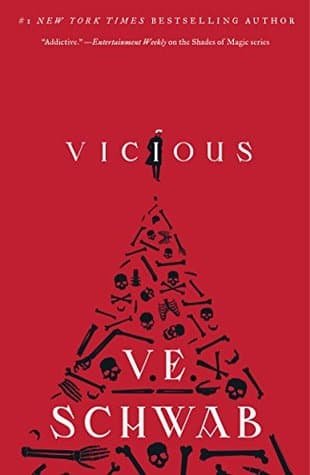
- Vicious
V.E. Schwab
4.0 (7k) average on GoodreadsThrillerFeatures morally gray characters seeking revenge and exploring complex power dynamics.
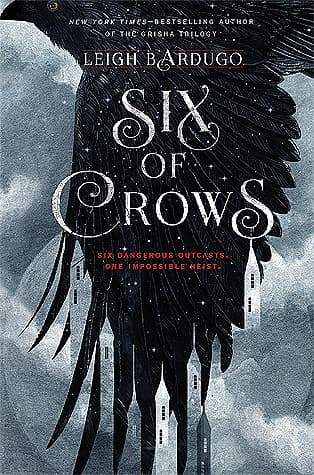
- Six of Crows
Leigh Bardugo
4.4 (316k) average on GoodreadsFantasyWhile 'Bang' incorporates fantasy, 'Six of Crows' offers a far more expansive and deeply integrated fantasy world-building, which might make readers accustomed to high fantasy find 'Bang's' magical elements less robust. Bardugo's character ensemble is also more uniformly developed.
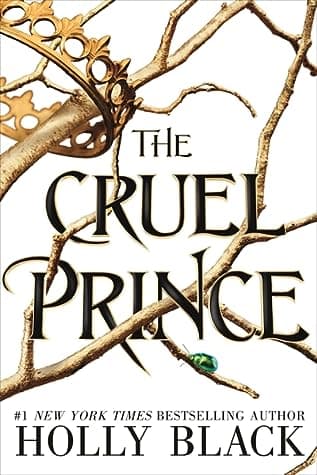
- The Cruel Prince
Holly Black
4.1 (216k) average on GoodreadsFantasyBoth books feature elements of mystery and romance within a fantastical setting. However, 'The Cruel Prince' excels in its intricate political intrigue and the depth of its supporting cast, where even minor characters contribute significantly to the narrative complexity, a point where 'Bang' sometimes falters with its secondary characters.
- Harry Potter and the Sorcerer's Stone
J.K. Rowling
4.5 (7M) average on GoodreadsFantasyRescued from a miserable life under the stairs, an orphaned boy discovers he's a wizard destined for a magical school, where he uncovers a dangerous secret tied to the dark wizard who murdered his parents.
- The Hunger Games
Suzanne Collins
4.3 (6.4M) average on GoodreadsFantasyIn a future where children fight to the death on live television, Katniss Everdeen volunteers for the arena, turning a death sentence into a fight for survival and a spark of rebellion.
- 1984
George Orwell
4.2 (3.1M) average on GoodreadsPoliticsIn a future where surveillance and thought control are absolute, a man's search for truth clashes with the Party, showing that hope can be a form of rebellion.



Enjoyed the summary?
A summary gives you the shape of the book. The book itself has the detail, the examples and the voice.
Find Bang on AmazonAs an Amazon Associate, BookBrief earns from qualifying purchases. How we're funded