
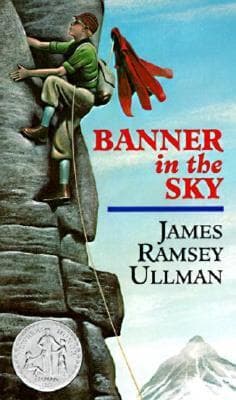
Synopsis
Covers the whole plot, including the ending.
- Difficulty
- Easy
- Pacing
- Moderate
- Mood
- Inspiring, Adventurous, Hopeful, Tense
- Read it if
- You enjoy classic adventure stories about overcoming adversity, mountaineering, and coming-of-age narratives set in dramatic landscapes.
- Skip it if
- You prefer fast-paced, modern fantasy or science fiction, or dislike stories with a strong focus on nature and internal struggle.
Banner in the Sky Plot Summary
Covers the whole plot, including the ending.
Rudi's Forbidden Ascent and Unexpected Rescue
Sixteen-year-old Rudi Matt, a dishwasher in his uncle's hotel in Kurtal, Switzerland, wants to climb the Citadel mountain, the peak where his father, Josef Matt, died years ago. His uncle Franz forbids climbing, but Rudi secretly goes up the mountain. He tries to cross the 'Fortress,' a dangerous icefall, but slips into a crevasse. Captain John Winter, a famous English mountaineer who knew Rudi's father, finds and rescues him. Winter is impressed by Rudi's courage and natural climbing skill, seeing his talent despite his lack of formal training.
Captain Winter's Proposal and Kurtal's Dilemma
After the rescue, Captain Winter says he wants to climb the Citadel, a feat no one has done. He thinks Rudi, with his skill and knowledge of the mountain (from his father), could be a good guide. Winter asks Rudi to join his expedition. This news causes talk in Kurtal. Some, like the old guide Teo, see possible glory for the village. Others, especially Uncle Franz, are strongly against it, still affected by Josef Matt's death. Franz fears Rudi will die on the same mountain, which causes a conflict between Rudi's goals and his family's wish to protect him.
Training with Winter and Facing Franz's Opposition
Rudi starts training with Captain Winter, learning climbing techniques and mountain safety. Winter quickly sees Rudi's talent and potential as a climber. But Uncle Franz still opposes it. He tries to stop Rudi by offering him a better job at the hotel and even threatens to fire him if he continues climbing. Despite the pressure, Rudi's desire to honor his father's memory and reach the summit stays strong, creating a rift in the family.
The Rival Expedition and the Race to the Summit
As Winter and Rudi get ready for their climb, a Swiss-German climbing team, led by Emil Saxo from the nearby village of Broli, arrives in Kurtal with the same goal: to be the first to climb the Citadel. This creates a competitive atmosphere between the two villages and teams. Saxo, known for his ambition, sees Winter and Rudi as competition, adding challenge to Rudi's goal of reaching the summit first and planting his father's banner.
The First Attempt and a Near Disaster
Captain Winter decides to join forces with Saxo's team for the first parts of the climb, believing more people make them stronger for the lower, known sections. Rudi, Winter, Saxo, and other guides set out. They make good progress, but a sudden, bad storm hits the mountain, forcing them back to their high camp. During the dangerous descent, one of Saxo's porters, Lizzi, slips and hangs precariously. Rudi, showing bravery and quick thinking, risks his life to save Lizzi, earning respect even from Saxo, who had called him a beginner.
Winter's Injury and Rudi's Leadership
After the storm and Lizzi's rescue, the combined expedition keeps climbing. But during a hard crossing, Captain Winter badly injures his leg, so he cannot continue. He insists that Rudi, now recognized for his skill and strength, take over leading his team and continue to the summit. This unexpected event puts a large responsibility on Rudi, forcing him to make important decisions and guide the remaining climbers, including Saxo, towards their goal.
The Final Push and Saxo's Treachery
With Winter unable to move, Rudi leads his group, climbing with Saxo's team. As they get near the summit, the terrain gets more dangerous. Saxo, wanting to be the first to climb the Citadel, becomes reckless and tries to go ahead alone, risking himself and everyone. Rudi, despite being young, must use his authority and make hard choices to keep the climbers safe and together, often disagreeing with Saxo's stubborn ambition and challenging his experience.
The Summit at Hand and the Ultimate Test
After days of climbing and overcoming many problems, Rudi, Saxo, and the remaining guides reach the final ridge to the Citadel's summit. The weather is clear, and the peak is close. But at this stage, Saxo slips and hangs by a rope, badly hurt and unable to move. Rudi faces a hard choice: he can cut Saxo's rope to save his own energy and continue to the summit, securing his place in history, or he can risk his life and the chance to reach the peak to save his rival. This moment shows the main idea of the story.
A Life Saved, a Summit Unclaimed
In an act of compassion and true mountaineering spirit, Rudi chooses to save Saxo. He spends hours and a lot of energy to pull the injured Saxo to safety, giving up the immediate chance to stand on the summit. This decision, while costing him the chance to be the first to plant his banner on the peak, shows his character and a deep understanding of human life and friendship over personal glory. The other climbers, though disappointed, are moved by Rudi's heroic act.
The Return and the True Victory
Rudi and the other climbers eventually go back down the mountain, carrying the injured Saxo. They return to Kurtal, where people feel both relief and disappointment. They did not climb the Citadel, but the story of Rudi's rescue of Saxo spreads fast. Captain Winter, now recovering, praises Rudi's actions, saying he achieved a greater victory than just reaching the summit. Rudi, though he did not plant his father's banner on the peak, has grown into a true mountaineer, showing honor, courage, and selflessness. He earns his community's respect and fulfills his father's memory in a meaningful way.
Principal Figures
Rudi Matt
Protagonist
A determined young man driven to conquer the mountain that claimed his father.
Rudi is a sixteen-year-old boy from the Swiss village of Kurtal, working as a dishwasher in his uncle's hotel. He is quiet and somewhat isolated, but possesses an intense, almost obsessive, drive to climb the Citadel. He inherited a natural talent for mountaineering from his late father, Josef Matt, and feels a deep, unspoken connection to the mountain. Initially impulsive and lacking formal training, he quickly learns and adapts, demonstrating innate courage, resilience, and a strong moral compass. His journey is one of self-discovery and proving his worth, not just to others, but to himself.
Relationships: Josef Matt (Deceased father, his legacy inspires Rudi); Uncle Franz (Protective, disapproving uncle and guardian); Captain John Winter (Mentor, rescuer, and father figure); Emil Saxo (Rival climber, later saved by Rudi); Teo (Old guide, supportive friend and mentor)
Captain John Winter
Supporting
A renowned English mountaineer who becomes Rudi's mentor.
Captain Winter is an experienced and highly respected English climber, famous for his mountaineering achievements. He is the first to recognize Rudi's raw talent and potential, serving as a crucial mentor and father figure. Winter is calm, wise, and methodical, embodying the best qualities of a mountaineer: skill, judgment, and integrity. He is driven by a desire to conquer the Citadel but also by a deep respect for the mountain and the spirit of climbing. His injury forces Rudi into a leadership role, but his teachings guide Rudi's ultimate decision.
Relationships: Rudi Matt (Protégé and friend); Josef Matt (Knew him from previous climbing attempts); Emil Saxo (Rival, but also a fellow professional climber)
Uncle Franz
Supporting
Rudi's overprotective uncle, haunted by his brother's death on the Citadel.
Franz Matt is Rudi's guardian and owner of the hotel in Kurtal. He is a stern, practical man, deeply scarred by the death of his brother, Josef, on the Citadel. His strict prohibition against Rudi climbing stems from a place of fear and love, wanting to protect his nephew from the same fate. He represents the voice of caution and the pull of a safer, conventional life. His initial opposition to Rudi's climbing slowly softens as he witnesses Rudi's maturity and the respect he earns, though he never fully sheds his worries.
Relationships: Rudi Matt (Nephew and ward); Josef Matt (Deceased brother)
Emil Saxo
Antagonist/Supporting
An ambitious rival guide whose pride and recklessness challenge Rudi.
Emil Saxo is a highly skilled and experienced guide from the rival village of Broli. He is proud, ambitious, and somewhat arrogant, driven by a fierce desire to be the first to conquer the Citadel. Saxo initially dismisses Rudi as an inexperienced boy, viewing him as a hindrance or competition. His recklessness and ambition often put himself and others at risk. However, after Rudi saves his life, Saxo is forced to confront his own pride and acknowledge Rudi's superior character, even if he still struggles with his competitive nature.
Relationships: Rudi Matt (Rival, then saved by Rudi); Captain John Winter (Rival, fellow professional climber)
Josef Matt
Mentioned
Rudi's deceased father, a legendary climber whose unfulfilled quest inspires Rudi.
Josef Matt is Rudi's father, a legendary and highly respected guide from Kurtal who died attempting to climb the Citadel years before the story begins. Though never seen alive, his presence looms large over the narrative, serving as Rudi's primary inspiration and the reason for his obsession with the mountain. Josef's red shirt becomes a symbolic banner for Rudi's quest. His legacy represents both the allure and the danger of the mountain, and Rudi's journey is, in many ways, an attempt to understand and honor his father's life and death.
Relationships: Rudi Matt (Son, his death is the catalyst for Rudi's journey); Uncle Franz (Brother, his death caused Franz's fear of the mountain); Captain John Winter (Former acquaintance, fellow climber)
Teo
Supporting
An old, experienced guide and friend to Rudi.
Teo is an older, seasoned mountain guide from Kurtal. He is a friend to Rudi and one of the few villagers who understands and supports Rudi's ambition, perhaps seeing a reflection of Josef Matt in the boy. Teo provides encouragement, practical advice, and a sense of connection to the climbing traditions of the village. He represents the wise, old hand who respects both the mountain and the human spirit. He helps bridge the gap between Rudi's youthful ambition and the practical realities of mountaineering.
Relationships: Rudi Matt (Friend and mentor); Uncle Franz (Fellow villager, often at odds over Rudi's climbing)
Lizzi
Supporting
A porter from Saxo's team, rescued by Rudi during a storm.
Lizzi is a porter from Saxo's rival climbing team. He is a relatively minor character but plays a crucial role in demonstrating Rudi's bravery and selflessness. During a storm, Lizzi slips and is left in a perilous position, and Rudi risks his own life to save him. This act not only earns Rudi respect from Saxo but also highlights Rudi's developing character, showing his innate compassion and courage under extreme pressure. Lizzi's rescue serves as a pivotal moment in Rudi's moral development.
Relationships: Rudi Matt (Rescued by Rudi); Emil Saxo (Member of Saxo's team)
Frau Matt
Mentioned
Rudi's mother, a quiet presence in his life.
Frau Matt is Rudi's mother. She is a quieter character, often in the background, but her concern for Rudi is palpable. She shares Uncle Franz's anxieties about Rudi's climbing, having already lost her husband to the mountain. Her presence underscores the emotional toll that mountaineering takes on families and the personal sacrifices involved. While she doesn't actively oppose Rudi as strongly as Franz, her silent worry is a constant reminder of the risks Rudi takes.
Relationships: Rudi Matt (Mother); Uncle Franz (Brother-in-law); Josef Matt (Deceased husband)
Themes & Insights
Man vs. Nature / The Allure of the Unconquered
The Citadel mountain is a main part of the story, showing the greatest challenge and the power of nature. This theme looks at humanity's drive to push limits and achieve what seems impossible. Rudi's focus, his father's death, and Winter's ambition all come from the mountain's strong pull. The book shows both the beauty and the deadly nature of the mountain, highlighting the courage and skill needed to face such a strong force. The mountain tests physical limits, mental strength, and moral character, shaping the climbers.
“The Citadel. It was a mountain. It was a goddess. It was a devil. It was the dream and the despair of all men who loved the high places.”
Identity and Self-Discovery
Rudi's climb up the Citadel is a search for who he is. He wants to understand his father's past, prove his own worth, and find out who he is beyond being 'Josef Matt's son.' Through the challenges of climbing and the moral choices he faces, Rudi learns about his own courage, compassion, and leadership. His choice to save Saxo instead of claiming the summit shows his true character. It proves his identity is shaped not just by what he does, but by the values he holds.
“He had climbed not for himself alone, not for the village, not for the fame that might come with conquest, but for something far greater: for the truth of himself.”
Legacy and Honor
The memory of Rudi's father, Josef Matt, and his unfinished climb of the Citadel, is a strong motivator. Rudi feels he must honor his father's memory and finish what he started, symbolized by the red shirt. But the book takes this idea beyond just finishing a task to explore what true honor means. Rudi redefines his father's memory not by reaching the summit, but by showing compassion, selflessness, and integrity. These traits show the best parts of mountaineering, proving true honor is in character, not just in winning.
“It was not the mountain that was unconquered, but the spirit of man that had been put to the test.”
Courage and Compassion
The story shows physical courage when facing extreme danger, from Rudi's first solo attempt to the dangerous storm. But it also shows compassion as an even higher form of courage. Rudi's decision to risk his life to save Lizzi and later, to give up his summit attempt to save Saxo, shows this idea. It suggests that true strength is not just about overcoming outside problems, but about the inner moral strength to put human life and friendship before personal ambition and fame. This act of compassion defines Rudi's true victory.
“To turn back when the summit was so close... this was a greater courage than any he had shown on the upward climb.”
Mentorship and Guidance
The relationship between Rudi and Captain Winter is important to this theme. Winter sees Rudi's talent and gives him the training, wisdom, and encouragement he needs to become a skilled mountaineer. He acts like a father figure, teaching not just technical skills but also the ethical rules of climbing. The guidance from other experienced climbers like Teo also supports the idea of passing on knowledge and helping the next generation with their goals, creating a community of shared experience.
“He had shown the boy the way, but the boy, in the end, had shown him the meaning.”
Plot Devices & Literary Techniques
The Citadel
The unconquered mountain, serving as both goal and antagonist.
The Citadel is more than just a setting; it is a powerful symbolic entity. It represents the ultimate challenge, the unconquered frontier, and a testing ground for human spirit. Its treacherous slopes, the 'Fortress' icefall, and its unpredictable weather serve as the primary antagonist, constantly pushing the characters to their physical and mental limits. It also acts as a mirror, reflecting the climbers' deepest desires, fears, and moral character. The mountain's unconquered status creates the central conflict and driving force of the narrative.
Josef Matt's Red Shirt
A powerful symbol of legacy, ambition, and eventual redefinition of honor.
Josef Matt's red shirt, intended to be planted as a banner on the summit, is a potent symbol. Initially, it represents Rudi's direct link to his father's unfulfilled ambition and his personal quest for glory. It embodies the legacy he feels compelled to complete. As the story progresses and Rudi matures, the shirt's symbolism evolves. While it remains a reminder of his father, Rudi's eventual decision to save Saxo, foregoing the chance to plant the shirt, redefines what 'planting the banner' truly means – not just conquering a peak, but upholding the highest ideals of humanity. The shirt ultimately symbolizes a different kind of victory.
The 'Fortress' Icefall
A specific geographical feature symbolizing an impassable barrier and personal fear.
The 'Fortress' is a particularly dangerous and difficult icefall on the Citadel, where Rudi's father met his end. It serves as a physical and psychological barrier. For Rudi, it represents the specific place where his father's dream ended and a personal challenge he must overcome to confront his family's past. Conquering the Fortress is a major milestone in the climb and for Rudi's personal growth, demonstrating his developing skill and courage. It is a tangible representation of the mountain's perils and the specific trauma associated with Josef Matt's death.
The Rivalry between Kurtal and Broli
A narrative device to heighten stakes and provide external conflict.
The long-standing rivalry between the two Swiss villages, Kurtal and Broli, particularly embodied by Rudi's team (representing Kurtal) and Saxo's team (representing Broli), serves to heighten the stakes of the first ascent. It adds an element of competitive pressure and local pride to the already dangerous endeavor. This rivalry not only provides external conflict, but also underscores the eventual triumph of camaraderie and human values over narrow village pride, particularly when Rudi saves Saxo, a climber from the rival village.
Banner in the Sky Quotes
“A mountain is not a mountain until you have climbed it.”
“The Citadel is not just a mountain. It is a dream.”
“Fear is a good thing. It keeps you alive.”
“You do not conquer a mountain. You climb it, and it lets you pass.”
“The rope is not just a rope. It is a bond between climbers.”
“Every step upward is a step toward the sky.”
“In the mountains, there are no shortcuts.”
“The wind does not care if you are tired.”
“To climb is to remember those who came before.”
“The summit is only halfway. The descent is where many fail.”
“Snow has a voice if you listen.”
“A true guide leads not with his feet, but with his heart.”
“The mountain does not forgive mistakes.”
“Hope is the last piece of equipment you pack.”
Quiz
10 questions on the plot and the characters. Each answer comes with a short explanation.
Question 1
What is the name of the mountain that Rudi Matt attempts to climb?
- The Matterhorn
- The Citadel
- Mont Blanc
- The Eiger
Show answer
B. The Citadel The Citadel is the fictional but symbolic last great unconquered peak of the Alps in the book, representing the ultimate climbing challenge that claimed Rudi's father's life.
Question 2
What personal item does Rudi take with him as a flag for his climb?
- His father's climbing rope
- His father's red shirt
- A family photograph
- His mother's scarf
Show answer
B. His father's red shirt Rudi takes his father's red shirt as a symbolic banner to plant at the summit, connecting his quest directly to his father's failed attempt.
Question 3
How old is Rudi Matt when he sets out to climb the Citadel?
- 14 years old
- 16 years old
- 18 years old
- 20 years old
Show answer
B. 16 years old At sixteen, Rudi is determined to complete the quest that claimed his father's life, showing his youthful courage and determination.
Question 4
What is the name of the dangerous area on the Citadel where Rudi's father died?
- The Icefall
- The Abyss
- The Fortress
- The Chasm
Show answer
C. The Fortress The Fortress is described as a gaping chasm in the high reaches of the Citadel where Josef Matt met his end, and Rudi must pass through it to continue his ascent.
Question 5
Why is Rudi particularly motivated to climb the Citadel?
- To win a cash prize
- To prove himself to the village
- To pay tribute to his father
- To escape his boring life
Show answer
C. To pay tribute to his father Rudi's primary motivation is to honor his father, Josef Matt, who died attempting the same climb, making it a deeply personal quest rather than one for glory or reward.
Question 6
What does the Citadel symbolize in the story?
- The dangers of nature
- An unconquered challenge and legacy
- Swiss national pride
- The passage to adulthood
Show answer
B. An unconquered challenge and legacy The Citadel represents the ultimate unconquered peak and the legacy of Rudi's father, embodying themes of perseverance, honor, and overcoming impossible odds.
Question 7
What must Rudi do after following his father's footsteps as far as they go?
- Turn back and give up
- Wait for better weather
- Search within himself for strength
- Find a new route up the mountain
Show answer
C. Search within himself for strength The book emphasizes that Rudi must rely on his own inner resources and courage for the final ascent, highlighting the theme of self-discovery and personal growth.
Question 8
What is significant about the Citadel being 'the last great summit of the Alps'?
- It is the tallest mountain in Europe
- It is the only unclimbed major peak
- It is located in a forbidden zone
- It is a mythical mountain
Show answer
B. It is the only unclimbed major peak This detail sets up the Citadel as a unique and formidable challenge, emphasizing why Rudi's father's attempt and his own are so meaningful and daring.
Question 9
How does the book frame Rudi's climb in relation to his father's attempt?
- As a competition to outdo his father
- As a completion of his father's quest
- As a rejection of his father's legacy
- As a scientific expedition
Show answer
B. As a completion of his father's quest Rudi sees his climb not as surpassing his father, but as honoring and finishing what Josef started, turning a tragedy into a tribute through perseverance.
Question 10
What does planting the banner in the sky metaphorically represent for Rudi?
- Claiming the mountain for Switzerland
- Achieving personal and familial redemption
- Winning a climbing competition
- Proving his physical superiority
Show answer
B. Achieving personal and familial redemption The act symbolizes overcoming grief, fulfilling a legacy, and achieving a deeply personal victory that transcends mere physical accomplishment.
Banner in the Sky FAQ
What is 'Banner in the Sky' about?
The novel follows sixteen-year-old Rudi Matt's quest to climb the Citadel, the last unconquered peak in the Alps, where his father Josef died attempting the same ascent. Rudi takes his father's red shirt as a banner and must navigate the treacherous Fortress—a gaping chasm where his father perished—to complete the climb and honor his father's legacy.
Why should I read 'Banner in the Sky'?
It's a compelling coming-of-age adventure that explores themes of courage, legacy, and personal growth against the backdrop of mountaineering history. The vivid descriptions of the Alpine setting and Rudi's emotional journey make it both thrilling and deeply resonant for young adult readers.
What is the background/setting of 'Banner in the Sky'?
Set in the Swiss Alps in the late 19th century, the story takes place in a fictionalized version of the Matterhorn region, where mountaineering is a dangerous and revered pursuit. The Citadel represents the last great unclimbed peak, mirroring real historical climbs like the first ascent of the Matterhorn in 1865.
What are the most memorable quotes?
Key quotes include Rudi's declaration, 'I will plant my banner in the sky,' symbolizing his determination, and references to his father's red shirt as a symbol of legacy. Another poignant line is when Rudi reflects, 'My father died here, but his dream did not,' highlighting the theme of perseverance.
What writing style does the author use?
James Ramsey Ullman employs descriptive, atmospheric prose that vividly captures the Alpine landscape and the tension of mountaineering. The narrative blends adventure with introspective moments, using straightforward language suitable for young adult readers while conveying deep emotional stakes.
What minor details add significant meaning?
The red shirt Rudi carries is a minor but crucial detail—it's his father's, serving as both a practical flag and a symbolic connection to Josef. The description of the Fortress as a 'gaping chasm' not only heightens danger but metaphorically represents the void left by his father's death.
What are some subtle foreshadowing moments?
Early mentions of Josef's failed attempt and the Citadel's unconquered status foreshadow Rudi's eventual climb. The repeated focus on the Fortress as forbidden and deadly hints at the central challenge Rudi must overcome, mirroring his father's fate.
What unexpected character connections exist?
Rudi's connection to his father, though Josef is deceased, drives the entire plot, with Rudi literally following in his footsteps. The mountain guides and villagers who knew Josef often provide indirect mentorship, linking past and present through shared mountaineering culture.
What are unspoken character motivations?
Rudi's desire to climb the Citadel stems not just from adventure but from a deep need to understand and honor his father, whom he never knew. This unspoken longing for connection and validation fuels his perseverance despite the risks.
What psychological complexities do characters exhibit?
Rudi grapples with the weight of his father's legacy, balancing youthful ambition with the fear of failure. His internal struggle involves proving himself not just as a climber but as a worthy successor to Josef, adding layers of identity and courage to his character.
What are the major emotional turning points?
Key moments include Rudi's decision to take his father's shirt, symbolizing his commitment; facing the Fortress, where he confronts his father's death directly; and the final ascent, where he must rely on inner strength rather than just following Josef's path.
How do relationship dynamics evolve?
Rudi's relationship with his father evolves from distant reverence to active emulation as he climbs. His interactions with mentors and fellow climbers shift from dependence to self-reliance, reflecting his growth from a boy following footsteps to a man forging his own path.
Which parts remain ambiguous or open-ended?
The exact details of Josef's death are left somewhat vague, emphasizing mystery over fact. The novel's ending focuses on Rudi's triumph but leaves his future beyond the climb open, inviting readers to ponder whether he finds closure or new challenges.
What are controversial scenes or decisions?
Rudi's decision to climb the Citadel, despite the danger and his youth, could be seen as reckless by some readers. The portrayal of mountaineering as a noble pursuit versus a foolhardy risk sparks debate about bravery and responsibility.
'Banner in the Sky' ending explained: how it ends & what it means
The novel ends with Rudi successfully reaching the summit and planting his father's red shirt as a banner, symbolizing both conquest and tribute. This climax represents Rudi's personal victory over fear and legacy, suggesting that honoring the past requires forging one's own identity.
Similar books
- The Call of the Wild
Jack London
3.9 (341k) average on GoodreadsChildren'sShares themes of nature's power, survival, and a protagonist's journey of self-discovery in a harsh environment.
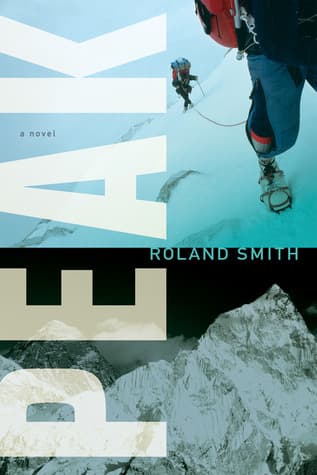
- Peak
Roland Smith
4.0 (18k) average on GoodreadsChildren'sA contemporary young adult novel also centered around a teenager's journey to climb a formidable mountain.
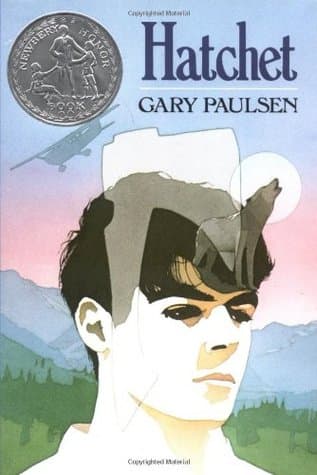
- Hatchet
Gary Paulsen
3.7 (309k) average on GoodreadsChildren'sPaulsen's Hatchet focuses on solitary survival in the wilderness, emphasizing primal instincts and resourcefulness. Banner in the Sky, while also featuring a young protagonist facing natural challenges, places greater emphasis on community, mentorship, and overcoming a familial legacy, with less focus on raw survival.
- The Witch of Blackbird Pond
Elizabeth George Speare
4.0 (135k) average on GoodreadsChildren'sSpeare's novel delves into societal conflict, cultural clashes, and historical injustice within a specific colonial setting. Banner in the Sky uses its historical alpine setting primarily as a backdrop for universal themes of individual aspiration and overcoming self-doubt, with the historical context being less central to the core conflict than in Speare's work.
- Harry Potter and the Sorcerer's Stone
J.K. Rowling
4.5 (7M) average on GoodreadsFantasyRescued from a miserable life under the stairs, an orphaned boy discovers he's a wizard destined for a magical school, where he uncovers a dangerous secret tied to the dark wizard who murdered his parents.
- The Hobbit, or There and Back Again
J.R.R. Tolkien
4.3 (2.9M) average on GoodreadsFantasyA comfort-loving hobbit named Bilbo Baggins is whisked away by a mischievous wizard and a band of dwarves on an unexpected journey to reclaim stolen treasure from a fearsome dragon, discovering courage and a magical ring along the way.




Enjoyed the summary?
A summary gives you the shape of the book. The book itself has the detail, the examples and the voice.
Find Banner in the Sky on AmazonAs an Amazon Associate, BookBrief earns from qualifying purchases. How we're funded