
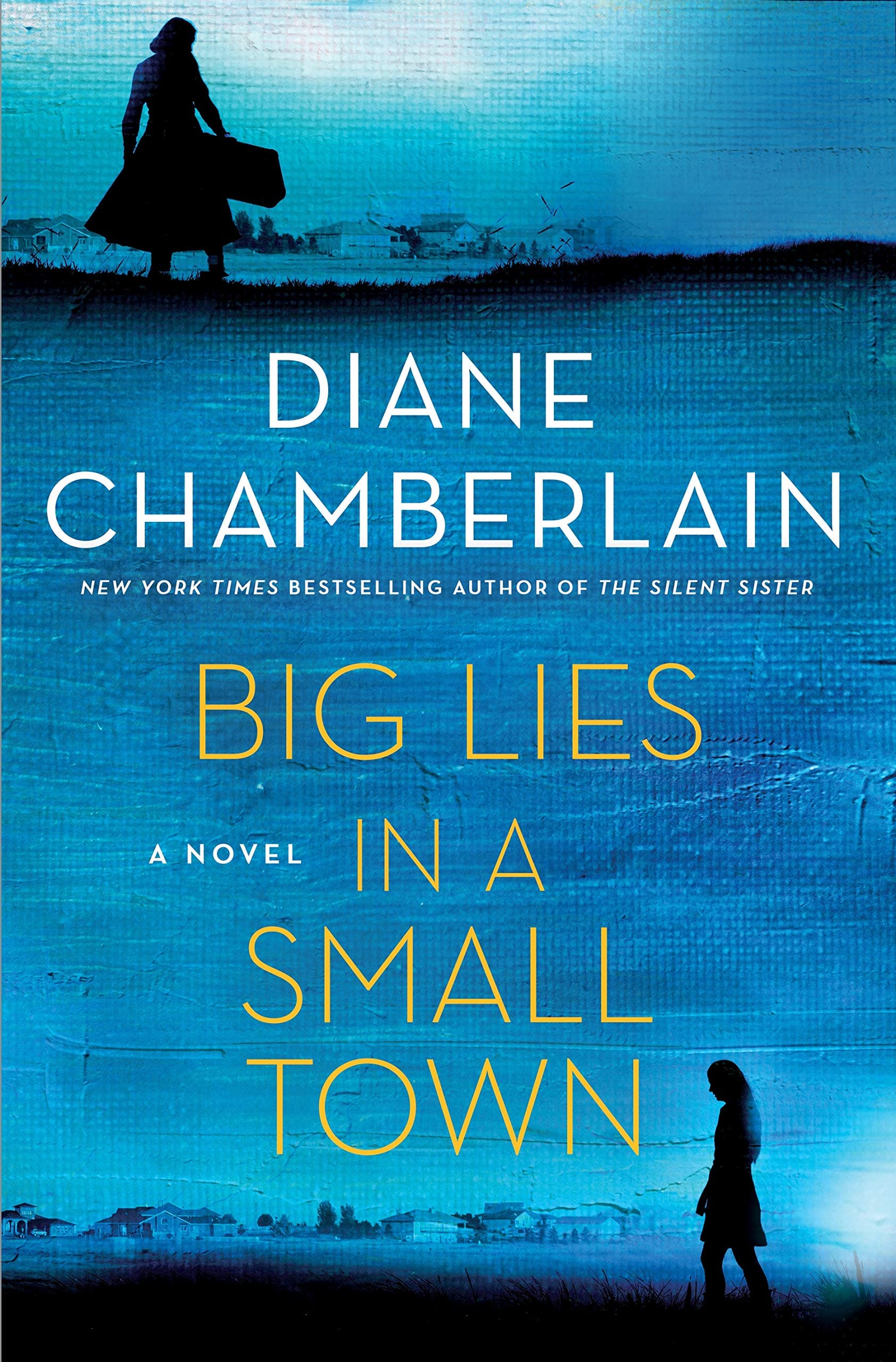
Synopsis
Covers the whole plot, including the ending.
- Difficulty
- Medium
- Pacing
- Moderate
- Mood
- Mysterious, Atmospheric, Reflective, Suspenseful
- Read it if
- You enjoy dual-timeline mysteries, historical fiction with a strong sense of place, and stories about art, secrets, and social justice.
- Skip it if
- You prefer fast-paced thrillers without historical context or find themes of racism and prejudice unsettling.
Big Lies in a Small Town Plot Summary
Covers the whole plot, including the ending.
A Second Chance for Morgan
In 2018, Morgan Christopher is serving a three-year sentence at the North Carolina Women's Correctional Center for a crime her boyfriend, Marcus, committed. Her artistic aspirations are on hold until Jesse Jameson, an attorney representing prominent art collector Jesse Jameson V, visits her. Jameson V, terminally ill, owns a historic post office in Edenton, North Carolina. His will states that Morgan, and only Morgan, must restore a WPA-era mural inside it to inherit his vast estate. Despite no experience in art restoration and being puzzled by the offer, Morgan, desperate for freedom, accepts the unusual condition, leading to her immediate release.
Anna Dale's Arrival in Edenton
In 1940, Anna Dale, a talented but naive artist from New Jersey, wins a national competition to paint a mural for the Edenton, North Carolina post office. Unaware of the town's conservative nature and deep-seated racial prejudices, Anna arrives with her modern ideas. Locals view her with a mix of curiosity and suspicion, especially the prominent Bellamy family. Anna is determined to create a mural that truly reflects the town but soon navigates a complex web of social expectations and hidden tensions.
Morgan Begins the Restoration
Upon arriving in Edenton in 2018, Morgan finds the old post office and the mural in severe disrepair. The artwork is covered in grime, smoke damage, and amateur repairs. She meets Oliver, the meticulous and skeptical curator assigned to oversee her work by Jameson V's estate. Morgan, initially overwhelmed, begins the difficult process of cleaning and restoring the mural. Her presence stirs up old memories and unease among some of Edenton's long-time residents, who view the mural and its history with a mix of reverence and discomfort.
Anna's Immersion and Early Challenges
Anna Dale, in 1940, begins her research for the mural, hoping to capture Edenton's essence. She befriends the kind librarian, Clara, and meets the charismatic Bellamy family, including their son, Jesse Jameson IV. Anna also sees the stark racial segregation in town, especially through her interactions with the African American community, including a young boy named Otis and his grandmother, who work for the Bellamys. She is drawn to the black community's culture, much to the disapproval of some white residents, and considers incorporating their stories into her mural, a controversial idea for the time.
Discoveries Beneath the Surface
As Morgan meticulously cleans the mural in 2018, she finds anomalies. Beneath layers of dirt and subsequent paint, she finds evidence of original details that were later painted over or altered. These include a hidden signature, unusual figures, and a distinct change in artistic style in certain sections. These discoveries fuel her curiosity and confirm her suspicion that the mural holds secrets. Oliver, initially dismissive, becomes more intrigued as Morgan's findings challenge the accepted history of the artwork and its creator, Anna Dale.
Anna's Forbidden Romance and Artistic Vision
In 1940, Anna Dale develops a passionate, secret relationship with Jesse Jameson IV, despite his engagement to a local debutante. Their romance is complicated by social expectations and Edenton's prejudices. Anna, inspired by her experiences, decides to depict the town's racial injustices and the contributions of the African American community in her mural. This directly defies the expectations of white town leaders who wanted a more idealized portrayal. Her artistic choices become a bold statement, risking her reputation and safety.
The Mural's Controversial Unveiling
The finished mural in 1940, titled 'Tobacco Road,' is unveiled to the Edenton community. Instead of the anticipated harmonious depiction, Anna Dale's work provocatively shows the harsh realities of the Jim Crow South, including images of sharecroppers, separate facilities, and the struggles of the black community. The white town leaders, especially the Bellamy family, are outraged. They accuse Anna of betraying their trust and depicting Edenton negatively. The controversial artwork sparks a furious backlash, with demands for its removal or alteration. Anna finds herself ostracized and threatened.
Anna's Disappearance
Amidst the intense public outcry and threats, Anna Dale's relationship with Jesse Jameson IV is exposed, further fueling the scandal. After the mural's unveiling and the pressure, Anna mysteriously disappears from Edenton in 1940. Her belongings are left behind, and no trace of her is found, leading to local speculation of a runaway or something more sinister. The town quickly covers up the scandal, altering the mural to remove the most controversial elements and erasing Anna's memory from official records, leaving her fate an unsolved mystery for decades.
Morgan Uncovers the Truth
In 2018, Morgan, with Oliver's help, continues to peel back layers of paint and lies. She discovers a hidden message in the mural, a series of symbols and figures that, when interpreted, reveal Anna Dale's true intentions and the events leading to her disappearance. Morgan realizes that the mural itself is Anna's final statement, a coded confession and accusation. She uncovers evidence of a struggle, a murder, and a subsequent cover-up orchestrated by powerful figures in Edenton to protect their reputations and maintain the town's image. The truth is far more tragic and violent than anyone imagined.
Confrontation and Resolution
Armed with the overwhelming evidence from the restored mural and her investigations, Morgan confronts Jesse Jameson V, the dying art collector who orchestrated her release. She reveals the full story of Anna Dale's murder, the identity of her killer (Jesse Jameson IV, his father), and the elaborate cover-up that followed. Jameson V, burdened by his family's secret, confesses his knowledge and regret. The truth brings justice for Anna Dale. Morgan, having completed her task and found her own voice as an artist, prepares for a new chapter in her life, cleared of her own past accusations and ready to embrace her future.
Big Lies in a Small Town Characters
Morgan Christopher
Protagonist
A talented artist given a second chance, tasked with restoring a mysterious mural.
Morgan is a young, gifted artist whose life took a wrong turn when she took the fall for her boyfriend's crime. Imprisoned and feeling lost, she's pragmatic and initially skeptical but possesses an innate curiosity and a strong sense of justice. Her artistic eye, though untrained in restoration, proves invaluable in uncovering the mural's secrets. She's resilient, determined, and ultimately finds her purpose and artistic voice through the restoration project.
Relationships: Jesse Jameson V (employer/benefactor, later a confessor); Oliver (colleague/mentor, later a friend and love interest); Marcus (ex-boyfriend, source of her imprisonment)
Anna Dale
Protagonist (Historical)
A passionate, idealistic artist from 1940, whose mural held dangerous truths.
Anna is a young, ambitious artist from New Jersey, chosen to paint the Edenton post office mural in 1940. She is intelligent, independent, and holds strong convictions about social justice, particularly regarding racial equality. Naive to the deeply entrenched prejudices of the South, she bravely incorporates controversial themes into her art, ultimately leading to her tragic demise. She is a woman ahead of her time, unwilling to compromise her artistic vision or moral compass.
Relationships: Jesse Jameson IV (forbidden romantic interest); Clara (friend/confidante); Otis (inspiration/friend from the black community)
Jesse Jameson V
Supporting/Antagonist (initially)
The dying art collector who orchestrates Morgan's release and the mural's restoration.
Jesse Jameson V is a wealthy, enigmatic art collector in 2018, terminally ill and burdened by a lifetime of secrets. He is the grandson of Jesse Jameson IV and the son of the Bellamy family. Driven by a desire for posthumous atonement, he manipulates events to ensure the mural's restoration and the revelation of his family's dark past. His actions are complex, motivated by guilt and a yearning for truth, even if it implicates his own lineage.
Relationships: Morgan Christopher (employer/executor of his will); Jesse Jameson IV (father, whose crime he covers up for decades)
Oliver
Supporting
The meticulous art curator overseeing Morgan's work, who becomes her ally.
Oliver is a professional art curator assigned to supervise Morgan's restoration work in 2018. Initially skeptical of Morgan's abilities and the unusual circumstances, he is rigid, by-the-book, and a stickler for detail. As he witnesses Morgan's discoveries and her genuine talent, he becomes increasingly intrigued and supportive, eventually forming a close bond with her. He provides the technical knowledge and historical context that complements Morgan's artistic intuition.
Relationships: Morgan Christopher (colleague, mentor, friend, and potential love interest)
Jesse Jameson IV
Antagonist (Historical)
A prominent figure in 1940s Edenton, whose charm hid a dark secret.
Jesse Jameson IV is a handsome, charismatic, and influential member of the Bellamy family in 1940s Edenton. He is engaged to a local debutante but becomes romantically involved with Anna Dale. He represents the privileged white elite of the South, embodying both its charm and its inherent prejudices. His character is complex, capable of both affection and ruthless self-preservation, ultimately leading him to commit a terrible act to protect his family's reputation and social standing.
Relationships: Anna Dale (forbidden romantic interest, then victim); Bellamy Family (his powerful and protective family)
Clara
Supporting (Historical)
The kind and perceptive Edenton librarian who befriends Anna Dale.
Clara is the librarian in Edenton in 1940. She is a compassionate and observant woman who provides Anna Dale with historical context and local insights, becoming one of Anna's few allies and confidantes in the town. She represents the quiet decency that existed alongside the town's prejudices. She is supportive of Anna's artistic endeavors, even when they challenge the social norms, and later harbors guilt over Anna's fate.
Relationships: Anna Dale (friend/confidante)
Otis
Supporting (Historical)
A young African American boy whose life and community inspire Anna's mural.
Otis is a young African American boy living in Edenton in 1940, part of the community that works for the Bellamy family. He is bright, observant, and represents the often-unseen lives and struggles of the black population in the Jim Crow South. Anna Dale forms a bond with him and is deeply moved by his experiences and the resilience of his community, which heavily influences the controversial themes in her mural.
Relationships: Anna Dale (inspiration/friend); Grandmother (unnamed) (his guardian, who also works for the Bellamys)
Big Lies in a Small Town Themes
The Power of Art to Reveal Truth
The novel shows how art can be a powerful way to tell the truth, even across decades. Anna Dale's mural, initially created to depict the town's history, becomes a coded message and a silent witness to a crime and a cover-up. Morgan Christopher's restoration process is not just about aesthetics but about uncovering the layers of lies painted over Anna's original vision. The mural literally speaks from the past, allowing Anna's silenced voice to finally be heard, exposing the dark side of a seemingly idyllic town. It highlights how art can transcend time and oppression to deliver justice.
“What Morgan found under the layers of grime was a painting that told the story of madness, violence, and a conspiracy of small town secrets.”
Social Injustice and Racial Prejudice
The deep-seated racial prejudices and social injustices of the Jim Crow South are central to Anna Dale's story. Edenton in 1940 is a town rigidly divided by race, where the black community faces systemic oppression. Anna's decision to include these uncomfortable truths in her mural directly challenges the social order, leading to outrage and ultimately her demise. The novel exposes how privilege and racial bias can lead to violence and the suppression of truth, and how a community can conspire to maintain a false facade of harmony.
“She wanted to paint the real Edenton, not the pretty picture they wanted to see. She wanted to paint the tobacco fields, yes, but also the faces of the people who worked them, the black and the white, the rich and the poor, all together.”
Redemption and Second Chances
Both Morgan Christopher and Jesse Jameson V seek redemption, though in different ways. Morgan, imprisoned for a crime she didn't commit, is given a second chance at freedom and a career through the mural restoration. This opportunity allows her to clear her name and find her purpose. Jesse Jameson V, burdened by his family's secret, orchestrates the mural's restoration as his final act of atonement, seeking to right a decades-old wrong before his death. The novel explores the possibility of finding forgiveness and making amends, even across generations.
“This wasn't just about art anymore; it was about justice. And maybe, just maybe, it was about her own second chance.”
The Weight of Secrets and the Past
The story shows how secrets, especially those involving violence and injustice, can haunt individuals and communities for generations. Anna Dale's murder and the subsequent cover-up by powerful families in Edenton cast a long shadow over the town's history. The mural itself becomes a physical representation of these buried truths, waiting to be uncovered. The novel shows how suppressing the past does not erase it; instead, it allows it to fester, affecting descendants and preventing true healing until the truth is finally revealed. The characters in both timelines are deeply affected by these hidden histories.
“Some secrets, like some paintings, were meant to be revealed, no matter how long they had been hidden.”
Plot Devices & Literary Techniques
The Mural as a Character/Witness
The post office mural acts as a silent narrator and a repository of hidden truths.
The mural is not merely a setting or an object; it functions almost as a character in itself. It is Anna Dale's final testament, imbued with her artistic vision and coded messages. As Morgan restores it, the mural slowly 'speaks,' revealing layers of history, social commentary, and a hidden crime. It acts as a silent witness to the past, holding the key to Anna's fate and the town's darkest secrets. Its physical deterioration and subsequent restoration mirror the decaying truth and its eventual revelation.
Dual Timelines
Alternating narratives between 1940 and 2018 to unravel a historical mystery.
The novel employs a dual timeline structure, alternating chapters between Anna Dale's story in 1940 Edenton and Morgan Christopher's restoration work in 2018. This device allows the reader to experience the mystery unfolding simultaneously from two perspectives: Anna's creation of the controversial mural and her subsequent disappearance, and Morgan's detective work in the present as she uncovers the truth. The parallel narratives build suspense and provide crucial context, with events in the past directly informing Morgan's discoveries in the present.
Art Restoration as Detective Work
The process of restoring the mural serves as a metaphor and method for solving a cold case.
Morgan's lack of formal art restoration training forces her to approach the mural with an intuitive, almost investigative, mindset. The physical act of cleaning, analyzing paint layers, and identifying alterations directly parallels the process of solving a mystery. Each brushstroke, each hidden detail, and each overpainted section becomes a clue. The restoration isn't just about preserving art; it's about forensic examination, allowing Morgan to piece together the narrative of Anna Dale's life and the circumstances of her death, effectively using art as a key to a cold case.
The Unreliable Narrative of History
The story challenges the official, sanitized versions of local history.
The novel highlights how history, particularly local history, can be deliberately shaped and manipulated by those in power to maintain a desired image. The official story of Anna Dale's disappearance and the post office mural is a carefully constructed lie designed to protect the reputations of prominent Edenton families and suppress uncomfortable truths about racial injustice. Morgan's work exposes this 'unreliable narrative of history,' revealing the true, often brutal, events that were actively covered up. It forces a re-examination of what is remembered and what is conveniently forgotten.
Big Lies in a Small Town Quotes
“Art is not a mirror held up to reality, but a hammer with which to shape it.”
“Every secret has a shelf life. Eventually, it spoils.”
“Sometimes the most beautiful things are born from the ugliest truths.”
“Memory is a tricky thing. It edits, it embellishes, it protects.”
“A small town is a tapestry woven with threads of gossip, history, and unspoken rules.”
“The past isn't dead. It's not even past. It's right here, in the dust motes and the shadows.”
“There’s a difference between seeing and truly observing.”
“Some silences speak louder than words.”
“Creativity is often a form of survival, a way to make sense of the senseless.”
“You can't erase history, but you can choose how you tell its story.”
“The greatest masterpieces often have the most complicated backstories.”
“Trust is a fragile thing, easily broken, hard to mend.”
“Every stroke of the brush, every choice of color, holds a piece of the artist's soul.”
“Sometimes, the biggest lies are the ones we tell ourselves to keep going.”
Quiz
10 questions on the plot and the characters. Each answer comes with a short explanation.
Question 1
What is the primary reason Morgan Christopher is in the North Carolina Women's Correctional Center at the beginning of the story?
- She committed a robbery.
- She took the fall for a crime she did not commit.
- She was caught shoplifting.
- She assaulted someone.
Show answer
B. She took the fall for a crime she did not commit. Morgan is serving a three-year stint because she took the fall for a crime she did not commit, which is a key plot point for her release.
Question 2
What skill does Morgan Christopher possess that makes her offer to restore the mural particularly surprising?
- She is an experienced art restorer.
- She has a degree in art history.
- She knows nothing about art restoration.
- She previously worked in a museum.
Show answer
C. She knows nothing about art restoration. The synopsis explicitly states, 'Morgan knows nothing about art restoration,' making her acceptance of the job a desperate move.
Question 3
In what year does Anna Dale win the national contest to paint a mural for the post office in Edenton, North Carolina?
- 1918
- 1940
- 1960
- 2018
Show answer
B. 1940 The historical timeline for Anna Dale's story begins in 'North Carolina, 1940,' when she wins the contest.
Question 4
What specific type of building is the mural located in that Morgan is tasked with restoring?
- A town hall
- A library
- An old post office
- A community center
Show answer
C. An old post office Morgan's assignment is to 'restore an old post office mural in a sleepy southern town,' which is a central element of the plot.
Question 5
What themes are prominently featured in the story that the mural itself helps to uncover?
- Love, friendship, and happiness
- Madness, violence, and a conspiracy of small town secrets
- Innovation, progress, and community growth
- Nature, beauty, and artistic freedom
Show answer
B. Madness, violence, and a conspiracy of small town secrets The synopsis states that 'What she finds under the layers of grime is a painting that tells the story of madness, violence, and a conspiracy of small town secrets,' highlighting the mural's thematic significance.
Question 6
From which state does Anna Dale originate before moving to Edenton, North Carolina?
- New York
- Virginia
- New Jersey
- South Carolina
Show answer
C. New Jersey The text specifies that Anna Dale is 'an artist from New Jersey' when she wins the national contest.
Question 7
What is the primary motivation for Anna Dale to accept the mural painting assignment in Edenton?
- To gain artistic recognition and fame.
- She is alone in the world and desperate for work.
- To escape a troubled past in New Jersey.
- She has family in North Carolina.
Show answer
B. She is alone in the world and desperate for work. The synopsis states Anna accepts because she is 'Alone in the world and desperate for work,' highlighting her personal circumstances.
Question 8
What specific characteristic of the town of Edenton is emphasized as a challenge for Anna Dale?
- It is a bustling metropolis.
- It is a town where prejudices run deep and people hide secrets.
- It is a town known for its progressive artistic community.
- It is a town with a very open and welcoming population.
Show answer
B. It is a town where prejudices run deep and people hide secrets. Anna 'doesn't expect to find herself immersed in a town where prejudices run deep, where people are hiding secrets behind closed doors,' which sets the stage for the mystery.
Question 9
What is the ultimate consequence Anna Dale might face for being 'different' in Edenton, according to the synopsis?
- Social ostracism
- Loss of her artistic commission
- It might just end in murder.
- Being forced to leave town.
Show answer
C. It might just end in murder. The synopsis poses the question, 'where the price of being different might just end in murder,' directly linking her uniqueness to extreme danger.
Question 10
The story structure involves two distinct timelines. What are these two timelines?
- North Carolina, 1918 and North Carolina, 1990
- North Carolina, 1940 and North Carolina, 2018
- New Jersey, 1940 and Edenton, 2018
- North Carolina, 1970 and North Carolina, 2000
Show answer
B. North Carolina, 1940 and North Carolina, 2018 The synopsis clearly divides the narrative into two periods: 'North Carolina, 2018' for Morgan and 'North Carolina, 1940' for Anna.
Big Lies in a Small Town FAQ
What is the central mystery that connects the two timelines in 'Big Lies in a Small Town'?
The central mystery revolves around the disappearance of Anna Dale, the original artist of the Edenton post office mural in 1940. Morgan Christopher, in 2018, is tasked with restoring this very mural and discovers clues within its layers that hint at Anna's fate, linking her own quest for redemption to uncovering the truth of what happened to Anna.
Who is Morgan Christopher and what led her to her current predicament at the beginning of the book?
Morgan Christopher is a young artist serving a three-year sentence in prison for a crime she didn't commit – specifically, taking the fall for her boyfriend's embezzlement scheme. Her artistic dreams are on hold until she receives an unexpected offer for early release in exchange for restoring the Edenton mural.
What is Anna Dale's background and why does she come to Edenton, North Carolina in 1940?
Anna Dale is a young, talented artist from New Jersey, alone in the world and struggling financially. She comes to Edenton after winning a national competition to paint a mural for the town's new post office, seeing it as a much-needed opportunity for work and a fresh start.
What is the significance of the post office mural itself in the story?
The mural is more than just a painting; it's a narrative device and a repository of secrets. For Anna, it's her artistic legacy and a canvas where she subtly documented the hidden truths and prejudices of Edenton. For Morgan, it's a puzzle to be solved, with each layer of grime and paint revealing clues to Anna's disappearance.
How does Morgan get involved in the mural restoration, considering her lack of experience?
Morgan is offered early release from prison by a mysterious benefactor, Jesse Locklear, on the condition that she restore the Edenton mural. Despite her inexperience in restoration, her desperate desire for freedom and her artistic background compel her to accept the daunting task.
What specific 'hidden details' does Morgan discover within the mural that hint at Anna's fate?
Morgan discovers several hidden details, including unusual brushstrokes, altered faces of townsfolk, and a faint, recurring image of a specific flower, the Carolina Jessamine, which she later learns has symbolic significance. Most importantly, she finds a hidden message painted under layers of grime, revealing Anna's distress and fear.
How does the character of Jesse Locklear connect the two timelines?
Jesse Locklear, Anna Dale's former lover and a prominent figure in 1940s Edenton, is the mysterious benefactor who arranges Morgan's release and tasks her with restoring the mural in 2018. His deep, lifelong regret over Anna's disappearance drives his desire for the truth to finally come to light.
Are there any specific historical events or social issues from the 1940s that are subtly woven into the mural or Anna's story?
Yes, the novel subtly incorporates the racial prejudices of the Jim Crow South, particularly through Anna's observations and her relationships with the African American community in Edenton. The mural itself reflects these tensions, as Anna attempts to portray the full, complex reality of the town, not just its idyllic facade.
What is the significance of the character of Gibbes and his relationship with Anna in the 1940s storyline?
Gibbes, a local African American man, becomes a confidante and friend to Anna, offering her insights into the town's underlying racial dynamics and secrets that the white community keeps hidden. His perspective helps Anna understand the true nature of Edenton and influences her artistic choices in the mural, making their relationship crucial for both plot and theme.
How does Morgan's personal journey of redemption and self-discovery parallel Anna Dale's struggles?
Both Morgan and Anna are artists facing societal judgment and personal turmoil. Morgan seeks redemption for a crime she didn't commit, while Anna struggles to assert her artistic vision and individuality against the conservative forces of Edenton. Their shared artistic passion and resilience in the face of adversity create a strong parallel, as Morgan finds healing in uncovering Anna's truth.
Discuss the psychological impact of Edenton's 'small town secrets' on its inhabitants, particularly Anna Dale.
The pervasive 'small town secrets' create an atmosphere of paranoia and conformity in Edenton, where dissent is swiftly punished. For Anna, this environment is stifling and dangerous, forcing her to choose between artistic integrity and personal safety, ultimately leading to her tragic fate when she dares to expose the town's darker truths.
How does the theme of artistic integrity versus compromise manifest in both Anna's and Morgan's experiences?
Anna fiercely defends her artistic vision against the town's demands for a sanitized portrayal, ultimately paying a high price for her integrity. Morgan, initially compromised by her boyfriend's actions, finds her own artistic voice and purpose through restoring Anna's work, learning to value authenticity over expediency and finding a new sense of artistic and personal freedom.
What role does guilt play in the motivations of various characters, especially Jesse Locklear and the townspeople involved in Anna's disappearance?
Guilt profoundly motivates Jesse Locklear, driving his decades-long quest for truth and his decision to involve Morgan. The townspeople who played a role in Anna's disappearance or cover-up live with unspoken guilt, leading to a pervasive silence and fear that permeates Edenton, manifesting in their resistance to Morgan's investigation.
What is the primary message or interpretation about truth and justice that the book conveys?
The book strongly conveys that truth, even when buried for decades, can eventually emerge, and that justice, though delayed, can still be served. It suggests that art can be a powerful vehicle for revealing hidden realities and that individuals who bravely seek truth, like Morgan, can bring closure to past injustices.
How does the novel use the dual timeline structure to enhance the mystery and thematic depth?
The dual timeline structure allows for a slow reveal of information, building suspense as Morgan's discoveries in 2018 directly illuminate Anna's experiences in 1940. It highlights the enduring impact of past events on the present, showing how historical prejudices and secrets continue to resonate and shape lives across generations, enriching the mystery with historical context.
Is there a definitive resolution to Anna Dale's fate, or does the book leave some aspects open to interpretation?
The book provides a definitive resolution to Anna Dale's fate, revealing the full truth of her disappearance and the conspiracy surrounding it. While the journey to that truth is complex and involves uncovering multiple layers of deception, the ultimate outcome of what happened to Anna is clearly revealed by the story's end.
What commentary does the novel make on the role of women artists in different eras?
The novel highlights the challenges faced by women artists, both in the 1940s and the present day. Anna contends with patriarchal expectations and a lack of creative freedom in a conservative small town, while Morgan struggles with societal judgment and the balancing act of personal life and artistic passion. It underscores their resilience and the timeless power of their voices.
How does the concept of 'big lies' manifest in the story, beyond just Anna's disappearance?
The 'big lies' extend beyond Anna's disappearance to encompass the systemic racism, class divisions, and moral hypocrisy prevalent in 1940s Edenton, which the town actively tried to conceal. These lies were perpetuated to maintain a facade of respectability, ultimately leading to tragic consequences and a legacy of suppressed truth that Morgan uncovers.
About the author

Diane Chamberlain is a best-selling author known for her gripping suspense novels that often explore complex family secrets and social issues. Her notable works include 'The Secret Life of CeeCee Wilkes,' 'Necessary Lies,' and 'Big Lies in a Small Town.' Chamberlain's writing is characterized by its emotional depth and intricate plotting, making her a beloved figure in contemporary fiction.
Similar books
- The Giver of Stars
Jojo Moyes
4.3 (183k) average on GoodreadsHistorical FictionHistorical setting in rural America with themes of strong women, community secrets, and overcoming adversity.
- Before We Were Yours
Lisa Wingate
4.4 (376k) average on GoodreadsHistorical FictionBoth novels utilize a dual-timeline structure to uncover historical injustices and secrets impacting contemporary characters. Wingate's book focuses on the Tennessee Children's Home Society scandal, whereas Chamberlain's explores racial prejudice and artistic suppression in the American South. Before We Were Yours arguably presents a more emotionally raw and devastating portrayal of systemic abuse, while Big Lies in a Small Town places a stronger emphasis on artistic legacy and individual redemption.
- Angels & Demons
Dan Brown
3.9 (2.7M) average on GoodreadsThrillerA Harvard symbologist races through Rome's ancient sites, deciphering cryptic clues to unmask the Illuminati and stop a vengeful plot to destroy the Vatican with a stolen antimatter weapon.
- Gone Girl
Gillian Flynn
4.1 (2.3M) average on GoodreadsThrillerA wife's sudden disappearance on her fifth anniversary reveals a web of lies and psychological warfare, exposing the secrets within a seemingly perfect marriage.
- The Girl on the Train
Paula Hawkins
3.9 (2.1M) average on GoodreadsThrillerA woman’s fascination with a seemingly perfect couple she watches from her daily train commute leads her into a dark investigation when she witnesses something that shatters their idyllic image.
- The Da Vinci Code
Dan Brown
3.9 (1.9M) average on GoodreadsThrillerA symbologist and a cryptologist race through European landmarks, deciphering ancient codes and uncovering a conspiracy that could rewrite the foundations of Christianity.




Enjoyed the summary?
A summary gives you the shape of the book. The book itself has the detail, the examples and the voice.
Find Big Lies in a Small Town on AmazonAs an Amazon Associate, BookBrief earns from qualifying purchases. How we're funded