
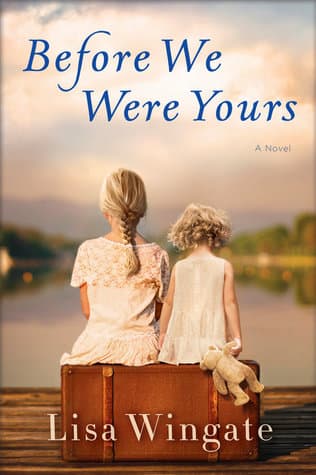
Synopsis
Covers the whole plot, including the ending.
- Difficulty
- Medium
- Pacing
- Moderate
- Mood
- Heartbreaking, Resilient, Hopeful, Suspenseful
- Read it if
- You enjoy historical fiction based on real events, stories of survival against immense odds, and dual timelines that reveal shocking family secrets.
- Skip it if
- You prefer lighthearted stories or are sensitive to themes of child abduction, abuse, and family separation.
Before We Were Yours Plot Summary
Covers the whole plot, including the ending.
The Idyllic Life Aboard the Shantyboat
In 1939, twelve-year-old Rill Foss lives on a shantyboat, 'The Queen Mary,' on the Mississippi River with her four younger siblings: Camellia, Lark, Fern, and Gabion. Their parents, Briny and Queenie, provide a loving but unusual life. One stormy night, Queenie goes into labor early with twins, and Briny takes her to a hospital, leaving Rill in charge with instructions to stay put. The children are excited but soon grow worried as the storm continues and their parents do not return. Rill tries to keep order and reassure her siblings, unaware of what will happen to their family.
Abduction and Arrival at the Tennessee Children's Home Society
While Briny and Queenie are away, strangers, including a sheriff and a woman from the Tennessee Children's Home Society, forcibly remove Rill and her siblings from their shantyboat. Despite Rill's pleas and attempts to protect her family, the children are taken and driven to the Memphis branch of the Tennessee Children's Home Society, run by Georgia Tann. They are told their parents will pick them up soon, but Rill feels something is wrong. The children are separated, given new names, and face harsh conditions and cruel treatment, starting their nightmare.
Life of Torment and Separation at the Orphanage
At the Tennessee Children's Home Society, Rill, renamed May, experiences abuse from the staff, especially Miss Addie. She tries to protect her younger siblings, Camellia (now Judy), Lark (now Polly), Fern (now Sally), and Gabion (now Adam), but they are often separated. Gabion is adopted out quickly, which devastates Rill. Lark, already weak, gets sick and dies, a loss that affects Rill deeply. Camellia is later adopted, leaving Rill and Fern. Rill learns that Georgia Tann is kidnapping and selling children from poor families to wealthy ones, making up their histories.
Rill's Escape and Tragic Return
Rill, desperate to find her parents and rescue Fern, escapes the orphanage. She goes back to the river, hoping to find their shantyboat or a trace of her family. However, she finds 'The Queen Mary' abandoned and falling apart, a symbol of her lost home. Overwhelmed and without help, Rill is caught and returned to the Tennessee Children's Home Society. Her failed escape makes the staff's cruelty worse, further reducing her hope of reuniting with her original family.
Rill's Adoption and New Life
After more time at the orphanage, Rill and Fern are separated again. Rill is adopted by a loving couple, the Seviers, who rename her Elizabeth. They do not know her true history or how she was adopted. Elizabeth finds a stable home, but she carries the trauma of her past and the guilt of not being able to protect her siblings. She never forgets her original family, especially Fern, and the memory of her shantyboat life remains a painful secret she cannot share with her adoptive parents, fearing it would hurt them or bring up old pain.
Avery Stafford's Perfect Life Unravels
In present-day Aiken, South Carolina, Avery Stafford is a federal prosecutor from a political family, engaged to a handsome man, and preparing for a wedding. Her life seems perfect. However, her father, Senator Wells Stafford, has a health problem, bringing Avery home. While cleaning out her grandmother Judy's house, Avery finds an old photo of five children on a shantyboat, a small wooden horse, and a bracelet with the name 'Rill.' These items raise questions about her family's past, especially her grandmother Judy, who had dementia.
Avery's Investigation Begins
Avery feels drawn to the photo and items and starts investigating their origins, despite her mother's subtle disapproval, who wants to keep the family's image clean. Her research leads her to the history of the Tennessee Children's Home Society and Georgia Tann, who kidnapped and sold children. Avery learns that her grandmother Judy was adopted through this organization. This suggests that her grandmother's past, and her own family's foundation, might be based on a sad lie.
Connecting the Past and Present
Avery's investigation grows, taking her to archives, old newspaper articles, and eventually to an elderly woman named May Crandall, who lives in a nursing home and says she is Rill Foss. May initially does not want to share her painful memories, but Avery's persistence and the discovery of shared items, like the wooden horse, start to break down her resistance. Through May's fragmented but clear memories, Avery puts together the story of the Foss children: their abduction, their suffering at the orphanage, and the forced separation of siblings, including her own grandmother, Camellia (Judy).
Unveiling the Family Secret
As Avery learns more from May, she realizes that her grandmother Judy was Camellia Foss, the sister Rill tried to protect. This is shocking for Avery, as it means her family history is connected to Georgia Tann's crimes. She also finds that her great-grandparents, the Staffords, likely knew the truth about Judy's adoption, choosing to keep it secret to protect their social standing. This knowledge makes Avery rethink her identity and her family's morals, especially as her parents try to stop her from pursuing the truth.
Reunion and Reconciliation
Avery, now committed to helping May, arranges a reunion between May and her long-lost sister, Fern, who had also been adopted and renamed. The emotional reunion is a moment of healing for the surviving Foss sisters. Avery also learns of other Foss siblings who may be alive, offering new hope. This journey affects Avery deeply, making her rethink her career, her relationship, and her understanding of family. She finds a new purpose in helping the victims of the Tennessee Children's Home Society, finding meaning by bringing truth and justice to light.
Principal Figures
Rill Foss / May Crandall / Elizabeth Sevier
Protagonist
The eldest Foss child, survivor of the Tennessee Children's Home Society, and keeper of her family's tragic past.
Twelve-year-old Rill Foss is the protagonist of the 1939 timeline, a brave and fiercely protective older sister living on a shantyboat. After being abducted, she endures unspeakable trauma and abuse at the Tennessee Children's Home Society, constantly trying to keep her siblings together. Renamed May and later Elizabeth, she is adopted into a loving family but carries deep guilt and the heavy burden of her lost family. In the present day, as May Crandall, she is an elderly woman whose memories slowly unlock the truth for Avery, ultimately finding a measure of peace and reunion with her long-lost sister, Fern.
Relationships: Briny Foss (Father); Queenie Foss (Mother); Camellia Foss (Judy Stafford) (Younger sister); Lark Foss (Younger sister); Fern Foss (Younger sister); Gabion Foss (Younger brother); Avery Stafford (Granddaughter of her sister Camellia, who helps her uncover the truth); Georgia Tann (Abductor and tormentor)
Avery Stafford
Protagonist
A successful federal prosecutor whose discovery of a family secret unravels her privileged life.
Avery Stafford is the protagonist of the present-day timeline. She is a driven and successful federal prosecutor, engaged to a prominent man, living a seemingly perfect life built on her family's wealth and political influence. Her life takes an unexpected turn when she uncovers a mysterious photograph and old items belonging to her grandmother, Judy. This discovery compels her to investigate her family's hidden past, leading her to the truth about the Tennessee Children's Home Society and her grandmother's true identity as Camellia Foss. Avery's journey is one of self-discovery and moral reckoning.
Relationships: Judy Stafford (Camellia Foss) (Grandmother); Wells Stafford (Father, Senator); Cynthia Stafford (Mother); Trent (Fiancé); Rill Foss (May Crandall) (Aunt (sister of her grandmother), whom she helps); Fern Foss (Aunt (sister of her grandmother))
Camellia Foss / Judy Stafford
Supporting
Rill's younger sister, adopted into the Stafford family and Avery's grandmother.
Camellia Foss is Rill's spirited younger sister, taken from the shantyboat and renamed Judy at the Tennessee Children's Home Society. She is later adopted by the wealthy Stafford family, becoming Avery's grandmother. Judy's life is marked by the trauma of her early childhood, though she never speaks of it. In her old age, she suffers from dementia, and her fragmented memories and hidden artifacts are what initially spark Avery's investigation. Her story represents the lost and stolen childhoods of countless children sold by Georgia Tann.
Relationships: Rill Foss (Older sister); Lark Foss (Younger sister); Fern Foss (Younger sister); Gabion Foss (Younger brother); Avery Stafford (Granddaughter)
Fern Foss
Supporting
Rill's youngest surviving sister, separated and adopted, later reunited.
Fern Foss is one of Rill's younger sisters, a quiet and observant child. She is taken from the shantyboat and endures the horrors of the Tennessee Children's Home Society alongside Rill for a time, before being separated and adopted by a different family. She represents the enduring hope for reunion and the lasting impact of the system on its victims. As an adult, she is eventually located by Avery and reunited with her sister, Rill (May), bringing a powerful moment of closure and healing to their long-separated lives.
Relationships: Rill Foss (Older sister); Camellia Foss (Older sister); Lark Foss (Older sister); Gabion Foss (Older brother); Avery Stafford (Granddaughter of her sister Camellia, who helps her)
Georgia Tann
Antagonist
The cruel and manipulative director of the Tennessee Children's Home Society.
Georgia Tann is the ruthless and unethical director of the Tennessee Children's Home Society, the primary antagonist of the 1939 timeline. Based on a real historical figure, she exploits her position to kidnap poor children, fabricate their histories, and sell them to wealthy families for profit. She maintains an image of philanthropy while operating a horrifying child trafficking ring. Her cruelty and lack of empathy are evident in her treatment of the Foss children, particularly Rill, and she is responsible for the systematic destruction of countless families. Her actions drive the central conflict and trauma of the story.
Relationships: Rill Foss (Victim); Foss Children (Victims)
Briny Foss
Supporting
The loving father of the Foss children, a shantyboat musician.
Briny Foss is the devoted father of the Foss children, a kind and resourceful man who provides for his family on their shantyboat. He is a musician, playing his fiddle for riverboat passengers. His love for his children and wife, Queenie, is evident in his desire to give them a unique and free life. He is tragically separated from his children when he rushes Queenie to the hospital during a storm, leaving Rill in charge. His desperate search for his children, even after their abduction, underscores the profound loss and injustice suffered by the Foss family.
Relationships: Queenie Foss (Wife); Rill Foss (Daughter); Camellia Foss (Daughter); Lark Foss (Daughter); Fern Foss (Daughter); Gabion Foss (Son)
Queenie Foss
Supporting
The nurturing mother of the Foss children, who falls ill.
Queenie Foss is the loving and gentle mother of the Foss children, who nurtures them aboard their shantyboat. She is pregnant with twins when she goes into premature labor during a severe storm, leading Briny to take her to the hospital. Her illness and absence create the window of opportunity for the children's abduction by Georgia Tann's agents. Queenie represents the innocence and vulnerability of families targeted by the Tennessee Children's Home Society. She dies shortly after giving birth to stillborn twins, never knowing the fate of her other children.
Relationships: Briny Foss (Husband); Rill Foss (Daughter); Camellia Foss (Daughter); Lark Foss (Daughter); Fern Foss (Daughter); Gabion Foss (Son)
Lark Foss
Supporting
The frail and artistic middle Foss sister.
Lark Foss is one of Rill's younger sisters, known for her artistic talent and delicate health. She is taken from the shantyboat and brought to the Tennessee Children's Home Society. Her frail constitution makes her particularly vulnerable to the harsh conditions of the orphanage. Tragically, Lark succumbs to illness and dies at the orphanage, a devastating loss for Rill and a stark reminder of the brutality and neglect inflicted upon the children. Her death fuels Rill's guilt and determination to protect her remaining siblings.
Relationships: Rill Foss (Older sister); Camellia Foss (Older sister); Fern Foss (Younger sister); Gabion Foss (Younger brother)
Gabion Foss
Supporting
The youngest Foss child, quickly adopted out.
Gabion Foss is the youngest of the Foss children, a toddler when he is abducted from the shantyboat. Due to his young age, he is quickly adopted out by the Tennessee Children's Home Society, becoming one of the first of Rill's siblings to be permanently separated from the family. His disappearance deeply affects Rill, who never forgets her baby brother. He represents the complete erasure of identity and family ties that Georgia Tann orchestrated, as he would have no memory of his birth family.
Relationships: Rill Foss (Older sister); Camellia Foss (Older sister); Lark Foss (Older sister); Fern Foss (Older sister)
Trent
Supporting
Avery's fiancé, who struggles with her pursuit of the truth.
Trent is Avery Stafford's fiancé, a successful and well-connected man who is initially supportive of Avery but becomes increasingly uncomfortable with her investigation into her family's past. He represents the societal pressure to maintain appearances and uphold the status quo. His reluctance to embrace the painful truths Avery uncovers eventually puts a strain on their relationship, highlighting the clash between Avery's newfound moral compass and the superficiality of her privileged world. His character serves as a foil to Avery's evolving values.
Relationships: Avery Stafford (Fiancé)
Themes & Insights
The Enduring Power of Family Bonds
Despite forced separations, abuse, and decades of silence, the novel shows the strong connections between family members. Rill's love and protective feelings for her siblings drive her throughout her ordeal. In the present, Avery's search is driven by a desire to understand and honor her grandmother's past, leading to the reunion of the surviving Foss sisters. The shantyboat family, though separated, keeps a connection that lasts through time and trauma.
“A family is a boat, and you're all in it, so you might as well row in the same direction.”
Identity and the Weight of the Past
Both Rill and Avery deal with their identities, shaped by their pasts. Rill, without her name and family, tries to connect her traumatic childhood with her adopted life, always thinking about who she 'was.' Avery, first defined by her family's legacy, discovers her identity is based on a stolen past. Her journey makes her face the truths of her family history and redefine who she is, separate from her family's story. The novel explores how the past, remembered or hidden, affects how one sees oneself.
“Sometimes, the things that are most important are the ones we can't see, the ones that are hidden deep inside.”
Social Injustice and the Exploitation of the Vulnerable
The novel shows the reality of the Tennessee Children's Home Society, showing how poverty and social weakness made families like the Fosses easy targets. Georgia Tann's operation targeted the poor and uneducated, taking their children for money. The story reminds us of historical wrongs and the system failures that allowed such events to happen, showing the effects on victims who lost their rights and families.
“Some people think children are like little trees, you can just dig 'em up and replant 'em anywhere. But it ain't true. We got roots, deep ones.”
Memory, Trauma, and Healing
Memory is important, both as a source of pain and a way to heal. Rill's traumatic memories of the orphanage are hidden for decades but eventually come out, guiding Avery's investigation. Judy/Camellia's fragmented memories also help. The novel shows how trauma can shape a life, leading to silence and secrets, but also how facing and sharing those memories, even decades later, can lead to healing and closure, not just for the survivors but also for their descendants.
“The past is a stubborn thing, and it doesn't always stay where we bury it.”
Plot Devices & Literary Techniques
Dual Timeline Narrative
Alternating chapters between 1939 and the present day to gradually reveal the truth.
The novel employs a dual timeline structure, alternating between Rill Foss's experiences in 1939 and Avery Stafford's investigation in the present day. This device builds suspense, allowing the reader to piece together the harrowing history of the Foss children alongside Avery. The juxtaposition of the past's raw trauma and the present's quest for truth creates a compelling narrative flow, revealing the profound, long-lasting impact of the Tennessee Children's Home Society scandal across generations.
The Wooden Horse
A tangible link between the past and present, symbolizing lost childhood and enduring love.
The small, hand-carved wooden horse is a significant symbolic object. It represents the innocent childhood of the Foss children, a tangible piece of their shantyboat life. Its discovery by Avery in her grandmother's attic, alongside the photo and bracelet, acts as a crucial catalyst for her investigation. For Rill, it's a powerful memento of her lost brother, Gabion, and a physical embodiment of the family she fought to protect. The horse connects the two timelines, representing the enduring love and memory that defies time and separation.
The 'Queen Mary' Shantyboat
A symbol of freedom, family, and the innocence lost.
The Foss family's shantyboat, 'The Queen Mary,' is more than just a home; it's a powerful symbol. It represents their unique, free-spirited lifestyle, their close-knit family unit, and their connection to the Mississippi River. Its eventual abandonment and decay symbolize the destruction of their family and the loss of their innocence. For Rill, the memory of the shantyboat remains a nostalgic, yet painful, touchstone of a life that was brutally stolen, contrasting sharply with the sterile, cruel environment of the orphanage.
Hidden Photographs and Artifacts
Physical clues that trigger the investigation and bridge the generational gap.
The discovery of old photographs, particularly the one of the Foss children on the shantyboat, and the bracelet inscribed with 'Rill,' are crucial plot devices. These artifacts serve as tangible evidence of a hidden past, sparking Avery's curiosity and driving her to uncover the truth. They act as breadcrumbs leading her through her family's history and the larger scandal of the Tennessee Children's Home Society, allowing her to connect with the past in a deeply personal way and to give voice to the unspoken stories of the victims.
Before We Were Yours Quotes
“The heart never forgets where we belong.”
“Sometimes you've got to let go of the past to hold on to the future.”
“We are who we are because they were who they were.”
“A family is a patchwork of hearts, stitched together by love.”
“The river gives, and the river takes away.”
“Truth has a way of floating to the surface, no matter how deep you bury it.”
“Home isn't a place on a map. It's a place in your heart.”
“We carry our stories with us, even when we don't know what they are.”
“Sometimes the bravest thing you can do is remember.”
“Love is the only thing that outlives us.”
“A name is just a word until you fill it with your story.”
“The strongest chains are the ones we can't see.”
“Every child deserves a story that begins with love.”
“You can't un-live what you've lived. You can only learn to carry it.”
Quiz
10 questions on the plot and the characters. Each answer comes with a short explanation.
Question 1
What is the name of the cruel director of the Tennessee Children's Home Society orphanage in the book?
- Georgia Tann
- Edith Rill
- May Crandall
- Avery Stafford
Show answer
A. Georgia Tann Georgia Tann was the real-life director of the Tennessee Children's Home Society who kidnapped and sold children. In the book, she is portrayed as the cruel director who separates the Foss children.
Question 2
Where do Rill Foss and her siblings live at the beginning of the story?
- In a mansion in Memphis
- On a shantyboat on the Mississippi River
- In an orphanage in Tennessee
- With wealthy relatives in South Carolina
Show answer
B. On a shantyboat on the Mississippi River The Foss children live a carefree life aboard their family's shantyboat on the Mississippi River until they are forcibly taken to the orphanage.
Question 3
What event triggers the Foss children being taken from their home?
- Their father's arrest
- A fire on the shantyboat
- Their mother's medical emergency during a storm
- A flood that destroys their boat
Show answer
C. Their mother's medical emergency during a storm When their mother goes into labor during a storm, their father rushes her to the hospital, leaving Rill in charge. Strangers arrive and take the children while their parents are away.
Question 4
In the present-day storyline, what is Avery Stafford's profession?
- Journalist
- Federal prosecutor
- Social worker
- Historian
Show answer
B. Federal prosecutor Avery Stafford is a successful federal prosecutor who returns home to South Carolina to help her father during a health crisis, which leads her to uncover family secrets.
Question 5
What is the primary method Georgia Tann uses to profit from the children in her care?
- Forcing them to work in factories
- Selling them to wealthy families for adoption
- Ransoming them back to their parents
- Using them in medical experiments
Show answer
B. Selling them to wealthy families for adoption Based on the real-life scandal, Georgia Tann kidnapped poor children and sold them to affluent families, often falsifying records to make the adoptions seem legal.
Question 6
How does Avery Stafford first become suspicious about her family's history?
- By finding old letters in her grandmother's attic
- Through a chance encounter at a nursing home
- From a DNA test she takes online
- By reading a newspaper article about the Foss family
Show answer
B. Through a chance encounter at a nursing home Avery meets an elderly woman named May at a nursing home who seems to recognize her, sparking questions that lead Avery to investigate her family's past.
Question 7
What is the name of Rill Foss's youngest sibling who is an infant at the start of the story?
- Camellia
- Lark
- Gabion
- Fern
Show answer
D. Fern Fern is the baby of the Foss family. Her vulnerability and the threat of separation from her siblings heighten the tension in Rill's struggle to keep the family together.
Question 8
What significant object does May Crandall show Avery that helps connect the past and present storylines?
- A locket with a photograph
- A shard of pottery from the shantyboat
- A vintage bracelet with a dragonfly charm
- A diary written by Rill Foss
Show answer
C. A vintage bracelet with a dragonfly charm The dragonfly bracelet is a key artifact that May possesses, which ties her to the Foss family and helps Avery unravel the connection between her family and the children from the orphanage.
Question 9
Why is Rill forced to change her name after being taken to the orphanage?
- To protect her from her abusive parents
- As part of a ritual to erase her past identity
- To make it easier for her to be adopted by a new family
- Because she requests a fresh start
Show answer
C. To make it easier for her to be adopted by a new family Georgia Tann often changed children's names to sever their ties to their original families, making them more 'marketable' for adoption and harder to trace.
Question 10
What broader theme does the novel explore through the juxtaposition of Rill's and Avery's stories?
- The inevitability of technological progress
- The importance of wealth in determining happiness
- How hidden histories and family secrets shape identity
- The superiority of modern legal systems over past ones
Show answer
C. How hidden histories and family secrets shape identity The novel contrasts Rill's traumatic past with Avery's privileged present to show how uncovering buried truths can lead to redemption and a deeper understanding of one's roots and identity.
Before We Were Yours FAQ
What is 'Before We Were Yours' about?
The novel follows two timelines: in 1939 Memphis, 12-year-old Rill Foss and her four siblings are kidnapped from their shantyboat home and placed in the Tennessee Children's Home Society orphanage, where they face cruelty under director Georgia Tann. In present-day South Carolina, attorney Avery Stafford uncovers her family's connection to this adoption scandal while investigating her grandmother's mysterious past.
Why should I read 'Before We Were Yours'?
This powerful historical fiction exposes the real-life Tennessee Children's Home Society scandal while telling a gripping dual-timeline story about family, identity, and resilience. The novel balances heartbreaking scenes of the Foss children's suffering with Avery's compelling modern-day investigation, creating an emotionally resonant narrative that sheds light on a dark chapter of American history.
What is the background/setting of 'Before We Were Yours'?
The story alternates between 1939 Memphis, where the Foss family lives on a Mississippi River shantyboat, and present-day Aiken, South Carolina. The 1939 sections primarily occur in the Tennessee Children's Home Society orphanage, a brutal institution based on the real-life organization run by Georgia Tann that kidnapped and sold children from poor families to wealthy adoptive parents.
What are the most memorable quotes from 'Before We Were Yours'?
Key quotes include Rill's realization 'A river ain't too different from a life. It's the going that matters, not the getting there' and Georgia Tann's chilling justification 'Children are better off with those who can provide.' Another powerful line comes from older Rill: 'The heart never forgets where we belong,' which encapsulates the novel's central theme of family bonds enduring through trauma.
What writing style does Lisa Wingate use in 'Before We Were Yours'?
Wingate employs a dual-narrative structure with alternating chapters between Rill's first-person perspective in 1939 and Avery's third-person perspective in the present day. The 1939 chapters use more lyrical, river-inspired language reflecting Rill's upbringing, while the present-day chapters have a more procedural tone fitting Avery's legal background, creating contrast that highlights the emotional journey connecting both timelines.
What minor details add significant meaning to 'Before We Were Yours'?
Small details like the 'river teeth' necklace that connects the timelines, the specific names Rill gives her siblings (Camellia, Lark, Fern, and Gabion), and the recurring motif of water and rivers all carry deep symbolic weight. The children's renaming by the orphanage staff represents their stolen identities, while Avery's discovery of old photographs with torn edges subtly hints at her family's hidden past.
What are some subtle foreshadowing moments in 'Before We Were Yours'?
Early scenes of Rill's mother's difficult pregnancy foreshadow the family's vulnerability. The storm that forces Rill's parents to leave for the hospital sets up the kidnapping. In present-day chapters, Avery's grandmother's dementia-induced confusion about 'rivers and babies' hints at the trauma she experienced. The recurring appearance of May Crandall (older Rill) in Avery's life before their formal meeting creates dramatic irony.
What unexpected character connections exist in 'Before We Were Yours'?
The most significant connection reveals that Avery's grandmother, Judy Stafford, is actually Fern Foss, one of Rill's kidnapped sisters. May Crandall, the elderly woman Avery meets at a nursing home, is Rill herself. Trent Turner, the man helping Avery investigate, has his own family connection to the scandal through his grandmother who worked at the orphanage, creating a web of interconnected lives affected by Georgia Tann's crimes.
What are unspoken character motivations in 'Before We Were Yours'?
Rill's fierce protection of her siblings stems from her promise to her parents and her deep sense of responsibility as the oldest. Avery's investigation is driven not just by curiosity but by her need to understand her place in her privileged family and escape the predetermined path of political expectations. Georgia Tann's cruelty masks her own insecurities and desire for power, using children as commodities to gain social influence.
What psychological complexities do characters exhibit in 'Before We Were Yours'?
Rill develops complex survival mechanisms, balancing hope with brutal realism to protect her siblings. Avery experiences cognitive dissonance as her privileged worldview clashes with her family's complicity in trauma. Judy Stafford/Fern exhibits dissociative behaviors from childhood trauma, manifesting in her dementia as fragmented memories of rivers and lost siblings. Even secondary characters like Trent Turner show layered motivations, helping Avery both professionally and to heal his own family's wounds.
What are the major emotional turning points in 'Before We Were Yours'?
Key emotional turns include Rill's realization that her parents aren't coming back, Camellia's tragic death after escaping the orphanage, the moment the Foss siblings are permanently separated through adoption, and Rill's decision to let Fern go to a loving home. In the present timeline, Avery's discovery of her grandmother's true identity and her confrontation with family secrets create parallel emotional climaxes that bridge the two narratives.
How do relationship dynamics evolve in 'Before We Were Yours'?
Rill's relationship with her siblings transforms from typical sibling interactions to a desperate protective bond under trauma. Avery's relationship with her fiancé Elliot deteriorates as her investigation reveals their incompatible values, while her connection with Trent deepens through shared purpose. Most profoundly, Avery's understanding of her grandmother evolves from seeing her as a confused elderly woman to recognizing her as a trauma survivor whose strength shaped their family.
Which parts of 'Before We Were Yours' remain ambiguous or open-ended?
The novel leaves ambiguous exactly what happened to Rill's parents after that fateful night—whether they searched for their children or met tragic ends themselves. Camellia's ultimate fate after her escape is never fully confirmed. The story also doesn't specify how many other wealthy families like the Staffords were complicit in the adoption scandal, leaving room for readers to consider the broader systemic implications.
What are controversial scenes or decisions in 'Before We Were Yours'?
Georgia Tann's manipulation of adoption records and her justification that poor children were 'better off' with wealthy families presents ethical controversy. Rill's decision to let Fern be adopted separately sparks debate about whether this was abandonment or the ultimate protective act. Avery's choice to potentially expose her family's secret, knowing it could destroy their political legacy, raises questions about truth versus loyalty that readers interpret differently.
'Before We Were Yours' ending explained: how it ends & what it means
The novel ends with Avery confirming that her grandmother is Fern Foss and deciding to honor Rill/May's story by helping other families separated by adoption scandals. Rill's narrative concludes with her finding peace in reconnecting with Fern's descendants. The ending suggests that while trauma cannot be undone, healing comes through truth-telling and preserving family stories, with the river serving as a metaphor for life's continuous flow connecting past and present.
How does the real-life Georgia Tann scandal compare to the novel's portrayal?
Wingate's portrayal closely mirrors historical facts: Georgia Tann really did direct the Tennessee Children's Home Society from the 1920s-1950s, kidnapping approximately 5,000 children primarily from poor families and selling them to wealthy clients. The novel accurately depicts her methods of fabricating orphan status, her political connections that protected her operation, and the lasting trauma inflicted on birth families—though specific characters like the Foss family are fictional composites of real victims.
What symbolic elements are woven throughout 'Before We Were Yours'?
The Mississippi River symbolizes both freedom and danger, representing the Foss family's livelihood and the current that carries them toward tragedy. Water imagery throughout connects to memory, trauma, and cleansing. Names hold deep symbolism: 'Foss' suggests fossilized memories, while the children's adopted names represent stolen identities. The 'river teeth' necklace physically connects the timelines, symbolizing how fragments of the past remain embedded in the present.
How does class privilege function as a theme in 'Before We Were Yours'?
The novel starkly contrasts the Foss family's river poverty with the Staffords' political wealth, showing how Georgia Tann exploited this class divide. Avery's privileged upbringing blinds her to her family's complicity until her investigation forces confrontation. The adoption system depicted privileges wealthy clients' desires over poor children's rights, with Tann justifying her actions through classist assumptions that wealthy homes were inherently superior regardless of how children arrived there.
What role does memory play in 'Before We Were Yours'?
Memory functions as both trauma and salvation: Rill's memories of her river life sustain her in the orphanage, while suppressed memories cause Judy Stafford's dementia symptoms. Avery's investigation is essentially an act of memory recovery, piecing together fragmented family history. The novel suggests that while traumatic memories can be painful, preserving them is essential for healing and preventing historical repetition, as shown through the intergenerational impact of the Foss family's experience.
How does the dual timeline structure enhance 'Before We Were Yours'?
The alternating chapters between 1939 and present day create suspense as readers piece together connections before Avery does. This structure allows Wingate to show both immediate trauma (through Rill's eyes) and long-term consequences (through Avery's investigation). The parallels between Rill's fight to keep her siblings together and Avery's struggle with family expectations create thematic resonance, while the gradual convergence of timelines provides satisfying narrative payoff as hidden connections are revealed.
About the author

Lisa Wingate is an American author known for her works of fiction that often explore themes of family and history. Her notable books include "Before We Were Yours," which delves into a historical scandal involving a children's home, "The Prayer Box," a story about love and loss, and "The Story Keeper," which intertwines the past and present through storytelling.
Similar books
- The Alice Network
Kate Quinn
4.3 (245k) average on GoodreadsHistorical FictionFeatures a strong female protagonist uncovering historical secrets and a dual timeline.
- Orphan Train
Christina Baker Kline
4.2 (373k) average on GoodreadsHistorical FictionExplores themes of lost children, adoption, and uncovering past trauma.
- The Great Alone
Kristin Hannah
4.3 (377k) average on GoodreadsHistorical FictionFocuses on family resilience and survival in difficult circumstances, with emotional depth.
- The Nightingale
Kristin Hannah
4.6 (698k) average on GoodreadsHistorical FictionThe Nightingale also uses a dual timeline and focuses on female resilience during WWII, a broader and more internationally recognized historical event. While both evoke strong emotional responses, Before We Were Yours distinguishes itself by uncovering a specific, lesser-known American historical atrocity, providing a unique and often more shocking revelation for readers.
- The Tattooist of Auschwitz
Heather Morris
4.3 (464k) average on GoodreadsHistorical FictionThe Tattooist of Auschwitz delves into the Holocaust, depicting unimaginable human suffering with an even more graphic and unflinching realism. While Morris's work explores the ultimate evil of genocide, Wingate's novel focuses on the insidious evil of institutionalized child trafficking within seemingly respectable American society, offering a different, yet equally disturbing, dimension of historical injustice within the US context.
- To Kill a Mockingbird
Harper Lee
4.3 (4.5M) average on GoodreadsHistorical FictionIn the 1930s Jim Crow South, Harper Lee writes about racial injustice, moral growth, and the quiet courage of a lawyer father, Atticus Finch, as seen through his young daughter's eyes.




Enjoyed the summary?
A summary gives you the shape of the book. The book itself has the detail, the examples and the voice.
Find Before We Were Yours on AmazonAs an Amazon Associate, BookBrief earns from qualifying purchases. How we're funded