
Estimated read time: 7 min read
One Sentence Summary
In "Big Nate Strikes Again," sixth-grader Nate Wright navigates school challenges and hilarious mishaps while trying to prove his genius and stay out of trouble.
Table of Contents
Introduction
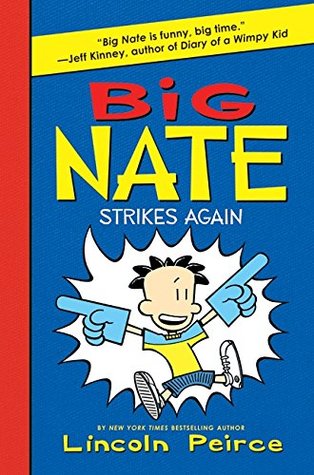
"Big Nate Strikes Again" by Lincoln Peirce is a vibrant and humorous graphic novel that captures the chaotic, mischievous, and often hilarious middle school experience through the eyes of Nate Wright, a spirited sixth grader. This book is the second installment in the widely popular Big Nate series, beloved by children and educators alike for its witty narrative and relatable school-life antics. Its significance lies in its ability to portray the ups and downs of adolescence with laughter, heart, and a touch of rebellion, making it a staple in children’s literature and a valuable resource for understanding youth culture and humor.
Historical Context
Though Big Nate is a contemporary series, it resonates with the timeless challenges of growing up. Set in modern-day America, the story reflects the everyday realities of school life, friendships, and family dynamics that have remained relevant across generations. Lincoln Peirce, inspired by classic comic strips and his own childhood experiences, channels a tradition of American humor that includes influences like Calvin and Hobbes and Peanuts. This blend of classic comic sensibility with modern school scenarios makes Big Nate Strikes Again a culturally rich text for understanding middle-grade literature and youth expression.
Brief Synopsis
Plot Overview
In Big Nate Strikes Again, Nate Wright finds himself embroiled in a series of misadventures, mostly stemming from his relentless attempts to outwit authority figures and prove his genius. The story follows Nate’s school life, highlighting his humorous clashes with teachers, his rivalry with classmate Gina, and the chaos that ensues from his schemes. While the tone remains light and comedic, the book subtly explores themes of friendship, perseverance, and self-identity through Nate’s humorous perspective.
Setting
The story unfolds primarily at P.S. 38, Nate’s middle school, a lively and sometimes chaotic environment where much of the action happens. The school setting is quintessentially American, complete with classrooms, hallways filled with lockers, and a playground that doubles as a battlefield of social hierarchies. The suburban backdrop reflects a typical North American community, enhancing the relatability for readers. The atmosphere is energetic, filled with prank-filled tension and the everyday drama of school life.
Main Characters
| Name | Role | Key Traits | Importance to the Plot |
|---|---|---|---|
| Nate Wright | Protagonist | Mischievous, witty, confident, creative | Central character driving the story’s humor and conflicts |
| Gina Hemphill-Toms | Nate’s Rival | Intelligent, competitive, bossy | Nate’s main antagonist and source of rivalry |
| Mrs. Godfrey | Teacher | Strict, no-nonsense, authoritative | Represents school authority and often clashes with Nate |
| Francis Pope | Nate’s Best Friend | Loyal, nerdy, supportive | Provides comic relief and friendship support |
| Teddy Ortiz | Nate’s Friend | Easygoing, funny, artistic | Adds humor and camaraderie within Nate’s friend group |
Plot Summary
Beginning: Nate’s Schemes and School Life
The story kicks off with Nate plotting ways to prove his brilliance and outsmart his teachers, especially Mrs. Godfrey, whose strict rules become the target of Nate’s pranks. Nate’s school life is punctuated by his rivalry with Gina, whose intelligence and bossy attitude challenge Nate’s dominance in the classroom. Early chapters are filled with humorous attempts by Nate to navigate school rules while maintaining his reputation as the class clown.
Middle: Escalation of Rivalries and Challenges
As the story progresses, Nate’s antics escalate, leading to increasingly elaborate schemes that often backfire spectacularly. The tension between Nate and Gina intensifies, showcasing a battle of wits that is both competitive and comedic. Nate’s friendships with Francis and Teddy provide a supportive backdrop, though even these relationships get tested by Nate’s impulsive behavior. School events, such as class projects and competitions, serve as stages for Nate’s chaotic creativity.
End: Resolution and Growth
The climax involves a major school event where Nate’s plans either succeed or spectacularly fail, delivering laughs and lessons. Despite setbacks, Nate exhibits growth by recognizing the value of friendship and teamwork. The conclusion balances humor with a subtle message about understanding oneself and others, leaving readers with a sense of closure and anticipation for future adventures.
Themes and Motifs
Humor and Mischief
The dominant theme is humor, particularly through Nate’s mischievous exploits. The book celebrates youthful rebellion, channeling the universal desire to challenge authority and find one’s identity.
Friendship and Loyalty
Despite his antics, Nate’s loyalty to his friends highlights the importance of supportive relationships during adolescence. The interplay between friendship and rivalry adds emotional depth to the comedy.
Competition and Self-Improvement
Nate’s rivalry with Gina symbolizes the competitive nature of school life, but also the drive for self-improvement and recognition. This dynamic explores how competition can be both motivating and challenging.
School as a Microcosm
The school setting acts as a microcosm of society, with its hierarchies, rules, and social interactions reflecting larger life lessons. This motif emphasizes the formative nature of school experiences.
Literary Techniques and Style
Lincoln Peirce employs a graphic novel format, combining visual storytelling with witty dialogue and expressive illustrations. This multimodal approach enhances engagement and accessibility, especially for reluctant readers. Peirce’s style is characterized by:
- First-person narrative: Nate’s voice is direct, humorous, and candid, creating intimacy with the reader.
- Comic strip elements: Panels and speech bubbles convey pacing and comedic timing effectively.
- Exaggeration and caricature: Characters’ expressions and situations are exaggerated for comedic effect.
- Symbolism: Nate’s sketches and doodles symbolize his creativity and serve as narrative tools within the text.
This style balances text and image, making the story dynamic and easy to follow while maintaining literary depth.
Author's Background
Lincoln Peirce is an American cartoonist and writer, best known for creating the Big Nate series. His background as a cartoonist is reflected in the strong visual and comedic elements of his work. Peirce draws from his own experiences and classic comic strips, blending humor with relatable childhood experiences. He has authored numerous books and his work has been adapted into various formats, including animated series, reflecting his broad impact on children’s literature and media. Peirce’s legacy lies in his ability to create timeless characters that resonate with readers of all ages.
Key Takeaways
- Creativity and humor are powerful tools for self-expression and coping with challenges.
- Friendship and loyalty provide essential support during adolescence.
- Healthy competition can foster growth, but respect and understanding are crucial.
- School life, with its rules and social dynamics, shapes personal identity and social skills.
- Graphic novels can effectively blend visual art and narrative to engage diverse readers.
Reader's Takeaway
Readers of Big Nate Strikes Again can expect a rollercoaster of laughter intertwined with moments of reflection about growing up. Nate’s humorous viewpoint invites empathy and recognition, encouraging young readers to embrace their individuality and value friendships. The book offers emotional relief through comedy while subtly addressing the struggles of adolescence, making it both entertaining and meaningful.
Conclusion
Big Nate Strikes Again is a compelling and delightful graphic novel that brilliantly captures the essence of middle school life. Lincoln Peirce’s clever storytelling, combined with engaging illustrations, makes this book a must-read for students, educators, and anyone interested in youth culture. It not only entertains but also provides insightful commentary on friendship, competition, and personal growth. For those looking to explore the humorous side of adolescence, Big Nate Strikes Again offers a perfect blend of wit, warmth, and wisdom—inviting readers to laugh, learn, and maybe even reflect on their own school days.
Big Nate Strikes Again FAQ
Who is the author of Big Nate Strikes Again?
Big Nate Strikes Again is written by Lincoln Peirce.
What is the main theme of Big Nate Strikes Again?
The main theme revolves around the humorous and relatable adventures of Nate Wright as he navigates school, friendships, and his love of comics.
Is Big Nate Strikes Again suitable for children?
Yes, it is a middle-grade book appropriate for children aged 8-12, filled with humor and school-life situations.
What genre does Big Nate Strikes Again belong to?
It is a graphic novel/children's humor book.
Is Big Nate Strikes Again part of a series?
Yes, it is part of the Big Nate series, which follows the adventures of Nate Wright.
What format is Big Nate Strikes Again available in?
The book is available in print, eBook, and sometimes audiobook formats.
Does Big Nate Strikes Again include illustrations?
Yes, as a graphic novel, it features many comic-style illustrations by Lincoln Peirce.
What age group would enjoy Big Nate Strikes Again the most?
Children in upper elementary and middle school, roughly ages 8 to 12, will enjoy this book the most.
Are there any educational benefits to reading Big Nate Strikes Again?
Yes, it encourages reading through humor and comics and helps kids relate to social and school experiences.
Where can I buy or borrow Big Nate Strikes Again?
The book is available at most bookstores, online retailers, and public libraries.


