

Synopsis
Covers the whole plot, including the ending.
- Difficulty
- Medium
- Pacing
- Moderate
- Mood
- Elegiac, Reflective, Hopeful, Melancholy, Atmospheric
- Read it if
- You enjoy character-driven literary fiction with a speculative twist, exploring themes of art, memory, and survival in a post-apocalyptic setting.
- Skip it if
- You prefer fast-paced action-heavy sci-fi, or find non-linear narratives and melancholic tones difficult to engage with.
Station Eleven Plot Summary
Covers the whole plot, including the ending.
Arthur Leander's Final Performance
On a snowy night in Toronto, actor Arthur Leander dies of a heart attack onstage during a King Lear play. Jeevan Chaudhary, a paparazzo training to be an EMT, tries to save him from the audience, but it is too late. Kirsten Raymonde, a child actress in the play, sees him die. No one knows then, but this night also starts the Georgia Flu pandemic. Jeevan, after his doctor brother, Frank, tells him to get supplies, realizes how serious the situation is. He prepares for civilization's collapse, staying with Frank in his apartment.
The World Ends and a New One Begins
Days after Arthur Leander's death, the Georgia Flu spreads globally, killing 99.9% of the world's population. Society falls apart. Power grids fail, communication stops, and infrastructure breaks down. Jeevan and Frank survive in Frank's apartment for over a year. Frank, who cannot walk, eventually takes his own life to free Jeevan from caring for him. Kirsten, orphaned and alone, walks through the destroyed land. The world becomes dangerous. Knowledge and art are luxuries, and survival is the only goal. This disaster sets up the broken future where the story continues.
The Traveling Symphony's Journey
Fifteen years after the pandemic, Kirsten Raymonde is a lead actress and musician in the Traveling Symphony. This group travels the Great Lakes region, performing Shakespeare plays and classical music for scattered settlements. Their motto is: 'Survival is insufficient.' Kirsten has two valued items: a paperweight Arthur Leander gave her and a set of graphic novels called 'Station Eleven,' also from him. The Symphony plans to go to St. Deborah by the Water, a town they have not visited in years, hoping to meet members who left the group.
Encountering the Prophet
As the Traveling Symphony nears St. Deborah by the Water, they learn that a dangerous person called 'the Prophet' controls the town. The Prophet preaches a twisted version of scripture, saying he can talk to God and offering 'salvation' to his followers, often through forced marriages and violence. He has taken members of the Symphony who went ahead as his 'wives.' Kirsten and the Symphony's conductor worry more about the Prophet's power and his growing army of child soldiers, realizing the great danger they are in.
Arthur's Past: Miranda and the 'Station Eleven' Comics
The story looks at Arthur Leander's past, especially his difficult first marriage to Miranda Carroll. Miranda created the 'Station Eleven' graphic novel series, a very personal project she worked on secretly. The comics show a character named Dr. Eleven, an astronaut stuck on a dying planet, and reflect Miranda's feelings of being alone and wanting a different world. Arthur, an aspiring actor, mostly ignores her work, which helps break down their marriage. Miranda's dedication to her art contrasts with Arthur's public life and hints at the deeper connections she will later have.
Arthur's Friendship with Clark
Another part of Arthur's past focuses on his long friendship with Clark Thompson, a former corporate executive who later becomes an art curator traveling the world. Clark is one of Arthur's closest friends and sees his friend's fame grow, from his early struggles to his eventual stardom and how it affects him. Clark is present at Arthur's various marriages and divorces, often giving a realistic view of Arthur's increasingly distant life. After the collapse, Clark becomes the curator of the Museum of Civilization at the Severn City Airport, saving artifacts from the old world.
The Museum of Civilization
After the Georgia Flu, Clark Thompson is stuck at the Severn City Airport with other survivors. He becomes the curator, starting the Museum of Civilization inside the airport's empty terminal. The museum holds everyday objects from before the collapse — cell phones, credit cards, laptops, car keys — turning them into relics for future generations who do not remember their original purpose. Clark believes it is important to remember the old world, even as he builds a new community, providing a safe place for airport residents and a collection of lost history.
Kirsten's Investigation and the Prophet's Identity
Back in the future, Kirsten suspects the Prophet more and more. She learns he has been kidnapping children and forcing women to marry. By talking to other survivors and putting clues together, Kirsten discovers that the Prophet is Tyler Leander, Arthur's son with his second wife, Elizabeth. Tyler, deeply affected by his father's neglect and the post-collapse world, has developed a messianic view, believing God chose him to punish those who survived. This discovery directly connects the Symphony's current danger to Arthur's complex past.
The Confrontation at St. Deborah
The Traveling Symphony, especially Kirsten and August, decides they must rescue their members from the Prophet's cult. They perform a play, using it to distract. During the performance, a tense fight happens between the Symphony and the Prophet's armed followers. The Prophet targets Kirsten, recognizing her from the 'Station Eleven' comics she carries. The situation gets worse, showing the difference between the Symphony's goal of art and humanity, and the Prophet's destructive ideas. The conflict becomes a fight for the minds and lives of the survivors in the post-collapse world.
The Prophet's Demise and Clark's Discovery
The Prophet's rule of terror ends when a child he had hurt, a member of his own cult, kills him. Meanwhile, Clark Thompson at the Severn City Airport gets an unexpected visitor: a pilot who has flown a small plane from the west coast. This pilot carries a bag of Arthur Leander's belongings, including the second volume of Miranda's 'Station Eleven' comics, which Arthur had with him when he died. Clark sees the deep connection between Arthur, Miranda, and the lost world, and the chance for a new future.
Reunion and a Glimmer of Hope
The Traveling Symphony, having survived the Prophet, continues their journey. Kirsten eventually reaches the Severn City Airport, led by rumors of a thriving community. There, she meets Clark Thompson again, whom she remembers from her childhood with Arthur. Clark recognizes Kirsten and the 'Station Eleven' comics she carries. The airport, with its Museum of Civilization and stable community, is a sign of hope and a place where art and memory are valued. The novel ends with the Symphony preparing to move on, but with optimism for the future and the continued survival of humanity and its culture.
Principal Figures
Kirsten Raymonde
Protagonist
Child actress turned lead performer in the Traveling Symphony, haunted by the past.
Kirsten is a central figure, a survivor who was eight years old when the Georgia Flu struck. She remembers Arthur Leander's death and carries two 'Station Eleven' graphic novels given to her by him, which become a significant touchstone. As an adult, she is a talented actress and violinist in the Traveling Symphony, dedicated to their mission of preserving art. She is resourceful, brave, and deeply connected to the pre-collapse world through her few cherished mementos. Her journey embodies the novel's theme of art's resilience.
Relationships: Arthur Leander (mentor figure from childhood); August (fellow Symphony member, close friend); The Conductor (leader of the Traveling Symphony); The Prophet (Tyler Leander) (antagonist, Arthur's son)
Arthur Leander
Catalyst/Central Figure
Famous Hollywood actor whose death marks the beginning of the Georgia Flu pandemic.
Arthur is the nexus around which many of the novel's characters revolve. A Canadian actor who achieves international fame, his life is marked by multiple marriages, a strained relationship with his son, and a complex inner world. His death on stage is the immediate precursor to the pandemic. Though he dies early in the narrative, his past actions, relationships, and possessions (like the 'Station Eleven' comics and the paperweight) profoundly influence the lives of the other characters, bridging the pre- and post-collapse worlds.
Relationships: Miranda Carroll (first wife, creator of 'Station Eleven'); Elizabeth Colton (second wife, mother of Tyler); Tyler Leander (The Prophet) (son); Clark Thompson (lifelong best friend); Jeevan Chaudhary (man who tried to save him); Kirsten Raymonde (child actress he mentored briefly)
Jeevan Chaudhary
Supporting
Paparazzo-turned-EMT-in-training who witnesses Arthur's death and survives the flu.
Jeevan is present at Arthur Leander's death, trying to save him. He later receives a crucial warning about the impending pandemic from his doctor brother, Frank. Jeevan's initial survival story is detailed, showing his resourcefulness and humanity as he cares for Frank during the initial collapse. He represents the ordinary person thrust into extraordinary circumstances, adapting to a brutal new reality. His brief interaction with Arthur provides an early, pivotal connection in the narrative web.
Relationships: Arthur Leander (brief, impactful encounter); Frank Chaudhary (brother)
Miranda Carroll
Supporting
Arthur Leander's first wife and the reclusive artist behind the 'Station Eleven' graphic novels.
Miranda is the quiet, driven creator of the 'Station Eleven' comics, a passion project she works on throughout her life. Her art is a deeply personal escape from her unfulfilling marriage to Arthur and the superficiality of his celebrity world. She is fiercely protective of her work and her privacy. The graphic novels she creates become a crucial link between characters across time and a symbol of enduring art and imagination in the post-collapse world.
Relationships: Arthur Leander (first wife); Pablo (colleague, brief affair)
Clark Thompson
Supporting
Arthur Leander's oldest friend and the curator of the Museum of Civilization.
Clark is a former corporate executive and Arthur's lifelong confidante. He provides a grounded perspective on Arthur's life and fame, often seeing through the superficiality. After the collapse, Clark becomes a leader at the Severn City Airport, establishing the Museum of Civilization. He meticulously collects artifacts from the old world, believing in the importance of preserving memory and understanding. He is a pragmatic and compassionate leader, committed to building a new, stable community.
Relationships: Arthur Leander (lifelong best friend); Elizabeth Colton (acquaintance through Arthur); Kirsten Raymonde (reunites with her at the airport)
The Prophet (Tyler Leander)
Antagonist
Arthur Leander's estranged son who becomes a dangerous, charismatic cult leader.
Tyler is Arthur Leander's son with Elizabeth Colton. Deeply affected by his father's perceived abandonment and the trauma of the post-collapse world, he transforms into a self-proclaimed 'Prophet.' He leads a violent cult, enforcing his own twisted interpretations of scripture and preying on vulnerable survivors. He believes he is chosen to punish the 'impure' survivors and is fixated on the 'Station Eleven' comics, seeing them as a divine text. He represents the dark side of human nature in a world without law.
Relationships: Arthur Leander (father); Elizabeth Colton (mother); Kirsten Raymonde (antagonist)
Elizabeth Colton
Supporting
Arthur Leander's second wife and the mother of Tyler.
Elizabeth is a devout Christian and a former actress who marries Arthur Leander. She is a more conventional figure than Miranda, and her relationship with Arthur is strained by his fame and her desire for a more stable family life. After the collapse, she and her son, Tyler, are stranded at the Severn City Airport. Her religious beliefs become a source of comfort for her but also contribute to Tyler's later fanaticism. She eventually leaves the airport with Tyler, seeking a more spiritual path.
Relationships: Arthur Leander (second wife); Tyler Leander (The Prophet) (son); Clark Thompson (fellow survivor at the airport)
Frank Chaudhary
Supporting
Jeevan's paraplegic brother, a former war correspondent.
Frank is Jeevan's older brother, a talented but cynical war correspondent who is confined to a wheelchair after being injured. He and Jeevan shelter together during the initial days of the Georgia Flu. Frank's perspective offers a stark contrast to Jeevan's, as he sees little hope for humanity's future. He eventually chooses to take his own life to spare Jeevan the burden of caring for him in the harsh new world, a decision that deeply affects Jeevan.
Relationships: Jeevan Chaudhary (brother)
The Conductor
Supporting
The leader of the Traveling Symphony.
The Conductor is the pragmatic and resilient leader of the Traveling Symphony. She is responsible for organizing the troupe's performances, navigating the dangerous post-collapse landscape, and ensuring the safety and survival of her members. She is a strong advocate for the Symphony's mission, believing in the power of art to provide meaning and connection in a desolate world. Her leadership is crucial to the Symphony's continued existence.
Relationships: Kirsten Raymonde (fellow Symphony member, friend); August (fellow Symphony member)
August
Supporting
A poet and musician in the Traveling Symphony, Kirsten's close friend.
August is a kind and thoughtful member of the Traveling Symphony, known for his poetry and musical talent. He is one of Kirsten's closest companions and often accompanies her on her foraging expeditions. He provides a gentle and artistic counterbalance to the harsh realities of their existence, embodying the Symphony's commitment to beauty and creativity. His presence offers a sense of stability and camaraderie within the troupe.
Relationships: Kirsten Raymonde (close friend, fellow Symphony member)
Themes & Insights
Art and Humanity's Resilience
The novel strongly argues for art's necessary role in keeping humanity alive, even after an apocalypse. The Traveling Symphony's motto, 'Survival is insufficient,' sums this up. They risk their lives to perform Shakespeare and classical music, bringing beauty, meaning, and a link to the past for scattered communities. Miranda's 'Station Eleven' comics also are a vital piece of art, passed down and treasured, offering comfort and an imaginative escape. This theme shows that just physical survival is not enough; humans need culture, stories, and art to truly live.
“Survival is insufficient.”
Memory and Loss
The book often deals with the great loss of the world before the collapse and the effort to keep its memory. Characters like Clark Thompson, who runs the Museum of Civilization, work to remember what was lost, even if the objects are no longer understood. Kirsten's broken memories of Arthur and the old world, brought up by her 'Station Eleven' comics, show how personal memory mixes with shared history. The novel explores the sad nature of holding onto the past while building a future from its remains.
“What was lost in the collapse: almost everything, almost everyone, but there is still such beauty.”
Interconnectedness and Fates
A main theme is how lives that seem separate are deeply connected over time and distance. Arthur Leander is the center, linking Miranda, Clark, Jeevan, Kirsten, and the Prophet. The 'Station Eleven' comics, a paperweight, and even one meeting during a play create threads that weave these characters' fates together. The novel shows how small actions and relationships can have deep and lasting effects, shaping individuals' lives and the path of a post-apocalyptic world.
“No one ever thinks they're awful, even people who do awful things. They're just trying to survive.”
The Nature of Civilization
The novel looks at what civilization is and how fast it can fall apart. The Georgia Flu removes technology, government, and infrastructure, reducing society to its most basic parts. In this new world, characters like the Prophet show the savagery that can appear when order breaks down. The Traveling Symphony and the Severn City Airport community try to rebuild parts of civilization — art, community, and safety. The book questions what truly defines a civilized society and how delicate its foundations can be.
“The more you remember, the more you’ve lost.”
Identity and Self-Discovery
Characters deal with who they are both before and after the collapse. Arthur Leander constantly changes himself, struggling with his fame and personal life. Miranda finds her true self through her art, separate from her role as Arthur's wife. Kirsten, having lost her past, defines herself through her role in the Symphony and her connection to her few mementos. The post-apocalyptic world forces people to drop old identities and create new ones based on survival, resourcefulness, and their chosen purpose.
“I stood looking at the city, and though I felt as if I were looking at a ghost, it was a beautiful ghost.”
Plot Devices & Literary Techniques
Dual Timeline/Non-Linear Narrative
Interweaves pre- and post-apocalyptic storylines to reveal connections.
The novel constantly shifts between the immediate aftermath of the Georgia Flu and the world fifteen years later, as well as various points in Arthur Leander's life before the collapse. This non-linear structure allows Mandel to gradually reveal the intricate connections between characters and events, building suspense and a deeper understanding of the origins of the post-apocalyptic world. It highlights the impact of the past on the present and the enduring nature of human relationships and creations.
'Station Eleven' Graphic Novels
A fictional comic book series serving as a central symbolic and narrative link.
Miranda Carroll's self-published graphic novels, 'Station Eleven,' are a powerful symbolic and narrative device. They are treasured by Kirsten Raymonde and eventually by the Prophet, serving as a physical link between characters who never met and a metaphor for the human imagination's ability to create worlds, even in isolation. The comics' themes of a stranded astronaut on a dying planet mirror the characters' experiences in the post-collapse world, offering a shared mythology and a sense of profound, if dark, beauty.
The Museum of Civilization
A collection of ordinary pre-collapse objects, serving as a repository of memory and history.
Located at the Severn City Airport and curated by Clark Thompson, the Museum of Civilization is a poignant plot device. It houses everyday objects from the pre-collapse world (laptops, credit cards, cell phones) that have become incomprehensible relics. This museum serves as a tangible representation of lost history and a testament to the human need to remember and categorize. It symbolizes the attempt to preserve culture and understanding, providing a stark contrast to the world outside the airport's walls and offering a space for reflection on what was lost.
The Traveling Symphony's Motto: 'Survival is insufficient.'
A recurring phrase that encapsulates the novel's central theme.
This motto, taken from an episode of Star Trek: Voyager, is adopted by the Traveling Symphony and serves as a powerful thematic statement. It directly challenges the idea that mere physical survival is the ultimate goal in a post-apocalyptic world. Instead, it argues for the necessity of art, culture, and human connection to make life meaningful. The phrase reinforces the Symphony's mission and provides a moral compass for the characters who choose to risk their lives for the sake of beauty and shared experience.
Station Eleven Quotes
“Survival is insufficient.”
“No one ever thinks they're going to die. Until they do.”
“What was lost in the collapse: almost everything, but not all.”
“The more you remember, the more you've lost.”
“First we only want to be heard, then we want to be understood, then we want to be remembered.”
“Hell is the absence of the people you long for.”
“He was a man who had never been able to believe in the anything-can-happen possibility of the world.”
“I stood looking at it for a long time, and the longer I looked, the more beautiful it got.”
“If there is no light, how do you know what darkness is?”
“People don't want to think about the end of the world, but they're always thinking about the end of the world.”
“The beauty of this world where almost everyone was gone.”
“The idea of a world where you could be anything, where you could return to yourself.”
“She was tired of the world, but she didn't want the world to end.”
“We are always walking away from the person we were a moment ago.”
Quiz
10 questions on the plot and the characters. Each answer comes with a short explanation.
Question 1
Which Shakespearean play was Arthur Leander performing when he died?
- Hamlet
- Macbeth
- King Lear
- Romeo and Juliet
Show answer
C. King Lear Arthur Leander, the famous Hollywood actor, dies on stage during a production of King Lear, marking the beginning of the end of civilization as depicted in the novel.
Question 2
What is the name of the nomadic theater troupe that travels the Great Lakes region after the pandemic?
- The Drifting Players
- The Traveling Symphony
- The Roaming Troupe
- The New World Players
Show answer
B. The Traveling Symphony Fifteen years after the collapse, a group of musicians and actors known as the Traveling Symphony performs for the scattered outposts, embodying the theme of art's enduring power.
Question 3
Who is Jeevan Chaudhary at the beginning of the novel?
- A famous actor's agent
- A paramedic and paparazzi reporter
- A member of the Traveling Symphony
- Arthur Leander's oldest friend
Show answer
B. A paramedic and paparazzi reporter Jeevan Chaudhary is the man who attempts to save Arthur Leander on stage. He later becomes a paramedic, and his perspective provides a key insight into the initial days of the pandemic.
Question 4
What is the significance of the 'Station Eleven' comic books?
- They predict the Georgia Flu pandemic.
- They were written by Arthur Leander's first wife and connect several characters.
- They are a series of post-apocalyptic survival guides.
- They are a collection of pre-collapse historical documents.
Show answer
B. They were written by Arthur Leander's first wife and connect several characters. The 'Station Eleven' comic books were created by Miranda Carroll, Arthur Leander's first wife. They become a treasured possession for Kirsten Raymonde and symbolize humanity's enduring need for stories and art.
Question 5
What is the motto of the Traveling Symphony?
- Survival at all costs.
- Because survival is insufficient.
- Art for art's sake.
- The show must go on.
Show answer
B. Because survival is insufficient. The Traveling Symphony's motto, 'Because survival is insufficient,' is taken from an episode of Star Trek: Voyager. It encapsulates the novel's central theme that art, culture, and humanity are essential even in the direst circumstances.
Question 6
Who is the dangerous self-proclaimed prophet?
- Tyler Leander, Arthur's son
- Clark Thompson, Arthur's friend
- August, a member of the Symphony
- Dieter, a fellow actor in King Lear
Show answer
A. Tyler Leander, Arthur's son The prophet is revealed to be Tyler Leander, Arthur's son, who has grown up in the post-collapse world and developed a fundamentalist ideology, believing the pandemic was divine judgment.
Question 7
What is the purpose of the Museum of Civilization at the airport?
- To preserve artifacts and memories of the pre-collapse world.
- To serve as a trading post for goods and services.
- To train new generations in survival skills.
- To house the last remaining pre-collapse library.
Show answer
A. To preserve artifacts and memories of the pre-collapse world. The Museum of Civilization, curated by Clark Thompson at the Severn City Airport, serves as a poignant reminder of the lost world. It collects everyday objects, preserving the memory and meaning of the past for future generations.
Question 8
How does Kirsten Raymonde primarily connect to Arthur Leander?
- She was his publicist.
- She was a child actress in his final King Lear performance.
- She is his long-lost daughter.
- She was a close friend of his first wife, Miranda.
Show answer
B. She was a child actress in his final King Lear performance. Kirsten was a child actress playing a small role in King Lear on the night Arthur died. This brief encounter and the subsequent possession of his 'Station Eleven' comic books forge a crucial link between them.
Question 9
What is the 'undersea' in the 'Station Eleven' comic books, and what does it represent?
- A literal underwater city where survivors live.
- A metaphor for the collective unconscious and shared human experience.
- A hidden dimension where the characters' true selves reside, distinct from their earthly lives.
- The forgotten past, buried beneath layers of trauma.
Show answer
C. A hidden dimension where the characters' true selves reside, distinct from their earthly lives. In Miranda's 'Station Eleven' comics, the 'undersea' is a separate, hidden dimension where the characters' true selves, those who are 'not in this world,' reside. It represents a longing for another reality, a place of refuge and authenticity distinct from the flawed earthly existence.
Question 10
Which character ultimately reaches the island in the far north where Arthur Leander had a house, creating a full circle narrative moment?
- Jeevan Chaudhary
- Clark Thompson
- Kirsten Raymonde
- The Conductor of the Symphony
Show answer
C. Kirsten Raymonde Towards the end of the novel, Kirsten and the Traveling Symphony, guided by reports of a settlement, make their way towards the island in the far north, eventually seeing lights, which suggests the presence of a thriving community and the potential for a new future. This island is where Arthur Leander had a house, bringing Kirsten's journey to a symbolic close with his past.
Station Eleven FAQ
What is Station Eleven about?
Station Eleven weaves together the narratives of various characters before and after a devastating flu pandemic collapses civilization. It primarily follows Kirsten Raymonde, an actress in a post-apocalyptic traveling symphony, and explores her connections to Arthur Leander, a famous actor who dies on stage just as the pandemic begins, and the graphic novel 'Station Eleven' which links several characters' fates.
Why should I read Station Eleven?
You should read Station Eleven for its beautiful prose, intricate non-linear storytelling, and its profound exploration of art, memory, and humanity's enduring need for connection and culture in the face of unimaginable loss. It offers a hopeful, rather than bleak, vision of a post-apocalyptic world.
What is the background/setting of Station Eleven?
The novel is set primarily in the Great Lakes region, alternating between the vibrant pre-pandemic world of Los Angeles and Toronto, and the desolate, dangerous post-flu landscape fifteen years after civilization's collapse. The Traveling Symphony navigates this changed world, performing Shakespeare and music for scattered settlements.
What are the most memorable quotes?
One of the most memorable quotes is 'Survival is insufficient,' which is the motto of the Traveling Symphony, taken from a Star Trek episode. Another is 'I regret nothing,' said by Arthur Leander's first wife, Miranda Carroll, reflecting her resilience and acceptance.
What writing style does the author use?
Emily St. John Mandel employs a lyrical, elegiac, and often reflective writing style. She uses a non-linear narrative structure, jumping between different time periods and character perspectives, which gradually reveals the intricate connections between everyone.
What minor details add significant meaning?
The paperweight, a seemingly simple object, connects Arthur, Miranda, Clark, and eventually Kirsten. It symbolizes the fragility of civilization and the enduring power of personal artifacts. Also, the 'Museum of Civilization' curated by Clark at the airport becomes a poignant repository of lost world objects.
What are some subtle foreshadowing moments?
Arthur Leander's death on stage during 'King Lear' subtly foreshadows the collapse of the world, mirroring the play's themes of societal breakdown. The early news reports about the Georgian Flu, initially dismissed, provide a chilling prelude to the global catastrophe.
What unexpected character connections exist?
The most significant unexpected connection is between Kirsten Raymonde, the child actress who witnessed Arthur's death, and Miranda Carroll, Arthur's first wife and the creator of the 'Station Eleven' graphic novels that Kirsten cherishes. Jeevan Chaudhary, the paparazzo who tried to save Arthur, also has a brief, pivotal interaction with Kirsten as a child.
What are unspoken character motivations?
The Prophet's unspoken motivation, beyond his stated religious zeal, seems to be a desperate need for control and power in a chaotic world, stemming from a traumatic childhood experience of loss and abandonment, as hinted at by his backstory with Tyler Leander.
What psychological complexities do characters exhibit?
Kirsten Raymonde exhibits profound psychological resilience, having suppressed much of her pre-pandemic memories as a coping mechanism, yet she clings fiercely to the 'Station Eleven' comics and her role in the Symphony as anchors. Jeevan struggles with survivor's guilt and the psychological burden of being a 'first responder' to the pandemic's onset.
What are the major emotional turning points?
One major emotional turning point is Clark's decision to establish the Museum of Civilization at the Severn City Airport, transforming a place of despair into a shrine to the lost world. Another is Kirsten's eventual reunion with the surviving members of the pre-pandemic world, offering a glimmer of hope and connection.
How do relationship dynamics evolve?
Relationships evolve from the complicated, often fractured connections of the pre-pandemic world, like Arthur's multiple marriages, to the deep, chosen family bonds of the Traveling Symphony, where loyalty and shared purpose become paramount for survival and meaning. The relationships forged in the post-collapse world are often more profound dueed by shared trauma.
Which parts remain ambiguous or open-ended?
The ultimate fate of some minor characters remains ambiguous, and the full extent of the world's recovery is left open-ended. While some hope is shown for rebuilding, the novel doesn't provide a definitive resolution to the societal collapse, focusing instead on the human spirit's endurance.
What are controversial scenes or decisions?
The Prophet's actions, particularly his coercive marriages and violent enforcement of his beliefs, are deeply controversial within the novel's narrative and for readers. His radical interpretation of the post-collapse world and his manipulation of followers spark significant debate.
Station Eleven ending explained: how it ends & what it means
The novel ends with Kirsten and the Traveling Symphony making contact with the settlement at the Severn City Airport, where Clark has preserved the Museum of Civilization. This reunion represents a powerful moment of hope and connection, suggesting that humanity's future lies in remembering its past while also embracing art and community to rebuild, rather than succumbing to despair.
About the author

Emily St. John Mandel is a Canadian author known for her work in fiction. Her notable novel, Station Eleven, explores themes of survival and the impact of a pandemic on society. Mandel's writing often blends elements of literary and speculative fiction.
Similar books
- The Road
Cormac McCarthy
4.0 (716k) average on GoodreadsScience FictionExplores a post-apocalyptic world with a focus on human relationships and survival, though 'Station Eleven' is less bleak.
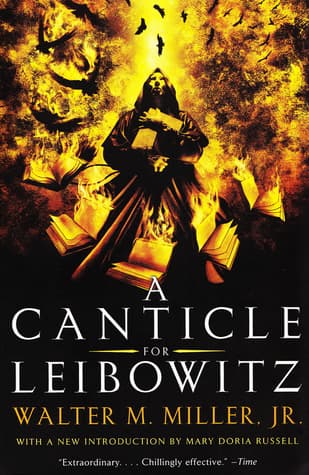
- A Canticle for Leibowitz
Walter M. Miller Jr.
4.0 (93k) average on GoodreadsFantasyA classic post-apocalyptic novel that examines the rebuilding of civilization and the role of knowledge and art after a devastating event.
- The Old Man and the Sea
Ernest Hemingway
3.8 (831k) average on GoodreadsLiterary FictionA Cuban fisherman's long struggle with a giant marlin becomes a story of endurance and dignity, now retold for young adults with illustrations, phonetic guides, and writing prompts in Traditional Chinese.
- One Hundred Years of Solitude
Gabriel García Márquez
4.1 (753k) average on GoodreadsLiterary FictionThrough the multi-generational story of the Buendía family, a mythical town deals with the repeating patterns of time, love, and solitude, as the extraordinary mixes with the ordinary.
- The Goldfinch
Donna Tartt
3.9 (720k) average on GoodreadsLiterary FictionHaunted by a tragic explosion and clutching a stolen Dutch masterpiece, a young orphan navigates the opulent drawing rooms of New York and the gritty underbelly of the art world, desperately seeking connection and redemption amidst a life spiraling into crime and obsession.
- Little Fires Everywhere
Celeste Ng
4.1 (713k) average on GoodreadsLiterary FictionIn Shaker Heights, an artist and her daughter move in, and their free-spirited lives clash with a rule-bound matriarch, revealing hidden conflicts beneath a perfect surface.





Enjoyed the summary?
A summary gives you the shape of the book. The book itself has the detail, the examples and the voice.
Find Station Eleven on AmazonAs an Amazon Associate, BookBrief earns from qualifying purchases. How we're funded