
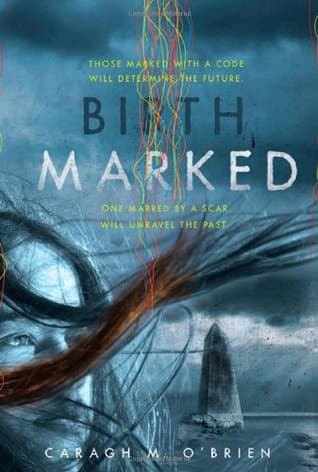
Synopsis
Covers the whole plot, including the ending.
- Difficulty
- Medium
- Pacing
- Moderate
- Mood
- Dystopian, Suspenseful, Romantic, Hopeful
- Read it if
- You enjoy dystopian YA novels with a strong female protagonist, a blend of sci-fi and romance, and themes of societal control and rebellion.
- Skip it if
- You prefer fantasy over science fiction, or if you're looking for a lighthearted read without dystopian themes.
Birthmarked Plot Summary
Covers the whole plot, including the ending.
The Quota and the Arrest
Sixteen-year-old Gaia Stone lives in the Outside, a wasteland around the advanced Enclave. As a midwife, she delivers babies and gives one healthy infant per month to the Enclave for 'Advancement.' Gaia believes this is a necessary sacrifice. One night, after delivering a baby she names Agnes, Agnes's mother begs her not to take the child. Gaia reluctantly does her duty. Returning home, she finds Enclave guards arresting her parents, Yarrow and Jon Stone. Her father, a historian, is accused of having forbidden knowledge. Gaia is left alone, shocked by the sudden loss of her family.
A Life in the Outside
After her parents' arrest, Gaia must survive alone in the harsh Outside. She relies on her midwifery skills and help from neighbors, especially the older midwife, Lena. Lena reveals that Gaia’s mother, Yarrow, was once a respected midwife inside the Enclave before choosing to live Outside. This information makes Gaia doubt the Enclave and her parents' loyalty. Gaia also finds her father's hidden books and artifacts, the reason for his arrest. These forbidden texts show her a world beyond the Enclave's controlled story, making her want to know the truth even more.
The First Glimpse of the Enclave
Enclave guards eventually capture Gaia and bring her inside the wall for questioning. The Matron, who runs the Enclave's birth program, interrogates her politely but firmly. While in the Enclave, Gaia tours some facilities. She is struck by the contrast between the Outside's desolation and the Enclave's clean, controlled environment. She also meets Leon, a young, smart Enclave citizen assigned to watch her. Despite the situation, they feel a connection. Leon seems curious about her life and the Outside, hinting he is unhappy with his own society. He gives her vague advice, suggesting the Enclave is not what it seems.
The Choice: Advancement or Resistance
The Matron offers Gaia a chance to become an 'Advanced' citizen, recognizing her skills. This would mean leaving her past and joining the Enclave's privileged society. However, Gaia's main goal is to find her parents and understand why they were taken. She refuses the Matron's offer, making it clear her loyalty is with her family, not the Enclave. This defiance is a turning point for Gaia, strengthening her resolve to challenge the system she once served. Her refusal surprises the Matron, who sees it as foolish, but it also earns her some respect from Leon, who sees her determination.
The Underground Network
Back in the Outside, Gaia seeks out Lena. Lena reveals that Gaia's mother, Yarrow, was not just a midwife but a key person in an underground resistance movement. This group aims to expose the Enclave's lies and challenge its control. Lena explains that Yarrow had been secretly gathering information and planning for a long time. This revelation shatters Gaia's previous understanding of her mother and her parents' apparent acceptance. It also gives her a new purpose: to continue her mother's work and find out what happened to her. Gaia begins to understand that her parents' arrest was part of a larger, more dangerous game.
Entering the Enclave
Driven to rescue her parents and armed with knowledge of the resistance, Gaia plans to re-enter the Enclave. With Lena's help and Leon's subtle guidance, she bypasses security and infiltrates the guarded city. Her mission is dangerous; she is an outsider in a society that values conformity and control. She must navigate the Enclave's social structures and surveillance, knowing one wrong move could lead to capture. Her first goal is to find her parents, but she soon realizes uncovering the truth behind their imprisonment is just as important.
Discovering the Truth about Advancement
Once inside the Enclave, Gaia uses her midwifery skills and understanding of the system to access restricted areas. She eventually uncovers the truth behind the 'Advancement' program: the babies taken from the Outside are not simply integrated into Enclave families. Instead, they are used for genetic experiments and organ harvesting to sustain the aging Enclave population, especially its elite. This discovery sickens Gaia and confirms her worst fears about the Enclave's disregard for human life. The benevolent facade of 'Advancement' crumbles, revealing a dark, exploitative reality that justifies her mother's rebellion.
Reunion and Revelation
Gaia eventually finds her mother, Yarrow, imprisoned in the Enclave. Their reunion is emotional but short. Yarrow, weak but still defiant, reveals more about the Enclave's long-term plan: to create a genetically 'perfect' population free from the perceived flaws of the Outside. She explains that the Enclave is slowly dying, unable to reproduce effectively, and relies on the Outside for its survival. Yarrow also tells Gaia about a hidden communication network within the Enclave, which she helped establish to share information with the resistance. She urges Gaia to find her father and continue their fight, as she has become a symbol of hope for the resistance.
Leon's Betrayal and Alliance
Leon, who has been subtly helping Gaia and giving information, reveals he is also part of the resistance. Yarrow recruited him years ago. His position within the Enclave allows him to gather important intelligence. He explains his initial observation of Gaia was a test, and he has been working to help her from the start. Together, they plan to expose the Enclave's secrets and free Gaia's father. Leon's alliance is a turning point, giving Gaia a valuable resource and a trusted companion within the enemy's stronghold. Their growing bond adds a personal risk to their dangerous mission.
The Escape and the Broadcast
With Leon's help, Gaia finds her father, Jon Stone, who is held in a special prison because of his knowledge. They plan a daring escape. They intend to broadcast the truth about the Enclave's genetic experiments and organ harvesting to both the Inside and Outside populations. The escape is dangerous, with narrow escapes and close calls with Enclave guards. They access the Enclave's communication system. Jon, with his historical knowledge, prepares to deliver a powerful message exposing the Enclave's lies and calling for unified resistance. The mission's success depends on this broadcast.
The Aftermath and New Beginnings
The broadcast succeeds, sending shockwaves through both the Enclave and the Outside. Many Enclave citizens are horrified by the revelations, while the Outside population finds their suspicions confirmed. Gaia, Leon, and Jon escape the Enclave, but not without losses and close calls. While they have exposed the truth, the Enclave's power structure is not immediately dismantled. The book ends with Gaia, now a leader, working with the energized resistance to plan the next steps. The fight for equality and freedom is not over, but a victory has been won, and Gaia is ready to lead.
Birthmarked Characters
Gaia Stone
Protagonist
A sixteen-year-old midwife from the Outside forced to question her world.
Gaia is a strong-willed and compassionate young woman, deeply rooted in her role as a midwife in the desolate Outside. Initially, she is a loyal servant of the Enclave's quota system, believing it to be a necessary duty. Her world is shattered by her parents' arrest, forcing her to confront uncomfortable truths and challenge the authority she once trusted. She is resourceful, intelligent, and possesses a strong moral compass that guides her actions, even in the face of immense danger. Her love for her family and her growing understanding of injustice drive her quest for truth and freedom.
Relationships: Yarrow Stone (Mother, mentor, fellow resistance fighter); Jon Stone (Father, historian, intellectual inspiration); Leon (Love interest, ally, fellow resistance member); Lena (Elder midwife, mentor, resistance contact)
Leon
Supporting
An intelligent Enclave citizen with hidden loyalties to the resistance.
Leon is a thoughtful and perceptive young man, outwardly appearing to be a loyal Enclave citizen. However, he harbors deep-seated doubts about his society and secretly works for the resistance. He is intelligent, strategic, and capable of navigating the complex social dynamics of the Enclave. His initial role is to observe Gaia, but he quickly develops genuine feelings for her and becomes a crucial ally. He is willing to risk his privileged life to fight for justice and expose the Enclave's corruption, demonstrating his strong moral conviction.
Relationships: Gaia Stone (Love interest, ally, fellow resistance member); Yarrow Stone (Recruited him into the resistance)
Yarrow Stone
Supporting
Gaia's mother, a former Enclave midwife and a key figure in the resistance.
Yarrow is a formidable and principled woman, Gaia's mother and a highly skilled midwife. She once served the Enclave but chose to live Outside, secretly becoming a leader in the resistance movement against the Enclave's oppressive regime. She is intelligent, brave, and deeply committed to protecting the innocent and exposing the truth. Even when imprisoned, she remains defiant and continues to guide Gaia, inspiring her daughter to take up the mantle of resistance. Her love for her family and her unwavering moral compass drive her actions.
Relationships: Gaia Stone (Daughter, successor in the resistance); Jon Stone (Husband, intellectual partner); Lena (Fellow midwife, resistance contact); Leon (Recruited him into the resistance)
Jon Stone
Supporting
Gaia's father, a historian whose forbidden knowledge led to his arrest.
Jon Stone is Gaia's intelligent and scholarly father, a historian who secretly hoards forbidden books and historical artifacts. He represents the intellectual and moral opposition to the Enclave's control over information. His arrest for possessing contraband knowledge is a catalyst for Gaia's journey. He is a man of principle, valuing truth and historical understanding above all else. Even in prison, his knowledge and conviction remain strong, making him a valuable asset to the resistance once freed. He instills in Gaia a sense of curiosity and a desire to understand the past.
Relationships: Gaia Stone (Daughter, intellectual heir); Yarrow Stone (Wife, partner in resistance)
Matron
Antagonist
The cold and calculating head of the Enclave's birth program.
The Matron is the primary antagonist, a high-ranking official within the Enclave responsible for overseeing the 'Advancement' program. She is cold, calculating, and utterly devoted to the Enclave's agenda of genetic purity and survival, regardless of the human cost. She embodies the Enclave's detached and utilitarian view of life, seeing the Outside babies as mere resources. Her politeness masks a ruthless efficiency and a complete lack of empathy. She attempts to manipulate Gaia and maintain control, but Gaia's defiance ultimately frustrates her plans.
Relationships: Gaia Stone (Opponent, subject of manipulation); Enclave Council (Serves their agenda)
Lena
Supporting
An elderly midwife from the Outside and a contact for the resistance.
Lena is an experienced and wise elderly midwife who lives in the Outside. She is a trusted friend of Gaia's family and a crucial contact for the resistance. Lena provides Gaia with emotional support, practical advice, and vital information about her mother's past involvement in the underground movement. She represents the resilience and quiet defiance of the Outside community, offering a sense of continuity and hope. Her knowledge of the past and her connections prove invaluable to Gaia's mission.
Relationships: Gaia Stone (Mentee, friend); Yarrow Stone (Fellow midwife, resistance associate)
Agnes
Mentioned
A baby delivered by Gaia and taken by the Enclave.
Agnes is one of the babies Gaia delivers and is forced to hand over to the Enclave. She represents the innocent victims of the 'Advancement' program and serves as a powerful symbol of the injustice Gaia is fighting against. Although she is only briefly present, her fate is a constant reminder of the stakes involved and fuels Gaia's determination to expose the truth about the Enclave's practices.
Relationships: Gaia Stone (Midwife, protector (failed))
Birthmarked Themes
Truth vs. Deception
The novel explores the danger of controlled stories and the need to uncover hidden truths. The Enclave keeps its power through lies, like the 'Advancement' program, which hides a horrible reality. Gaia's journey is about revealing these deceptions, from finding her father's forbidden books to uncovering the true purpose of the babies taken from the Outside. The broadcast at the end shows the breaking of these lies and the chance for a new, honest understanding.
“They told us it was a privilege, a chance for a better life. They lied.”
Social Class and Inequality
The clear division between the poor Outside and the rich Enclave highlights extreme social inequality. The Enclave uses the Outside population, taking their children as a resource for its own survival. This shows a system built on injustice. Gaia, born in the Outside, experiences this inequality directly, at first accepting it. Her growing awareness of the Enclave's exploitation fuels her rebellion. She fights for a world where no one is less valuable based on their birthplace.
“We were the wild, the untamed, the raw material for their perfect world.”
Family and Loyalty
Family ties and loyalty drive Gaia. Her initial acceptance of the Enclave's system comes from her parents' apparent compliance, but their arrest shatters this and ignites her fierce loyalty to them. Her quest to rescue her parents drives much of the plot, even when she discovers their secret lives as resistance fighters. This theme extends to loyalty to one's community, as Gaia ultimately fights not just for her family, but for the oppressed people of the Outside.
“I wouldn't abandon them. Not for any privilege, not for any promise.”
Rebellion and Resistance
The novel champions rebellion against oppressive systems. Gaia's change from a compliant midwife to a resistance leader shows the power of individual defiance. The existence of an organized underground movement, led by figures like Yarrow, shows that even seemingly impossible systems can be challenged. Broadcasting the truth becomes a powerful form of resistance, aiming to awaken both the oppressed and those who went along with the system. It highlights that even small acts of defiance can lead to larger movements.
“Sometimes, the only way to save a life is to risk your own.”
Plot Devices & Literary Techniques
The Enclave Wall
A physical and symbolic barrier separating two worlds.
The massive wall surrounding the Enclave serves as both a literal and metaphorical barrier. Physically, it divides the technologically advanced, privileged society of the Enclave from the desolate, impoverished Outside. Symbolically, it represents the social, economic, and informational divide between the two worlds. The wall reinforces the Enclave's control, keeping the Outside population in ignorance and preventing dissent from spreading. Breaching the wall is a significant plot point, symbolizing Gaia's defiance and her journey to uncover the truth.
The Quota System
The Enclave's demand for babies from the Outside.
The quota system is the central mechanism of the Enclave's exploitation. It forces Outside midwives like Gaia to deliver a healthy infant to the Enclave each month, under the guise of 'Advancement.' This device establishes the initial conflict and Gaia's moral dilemma. It also serves as a slow-burn revelation, as the true, horrifying purpose behind the quota (organ harvesting and genetic manipulation) is gradually uncovered, driving Gaia's rebellion and exposing the Enclave's profound inhumanity.
Forbidden Knowledge (Books)
Hidden historical texts that challenge the Enclave's narrative.
Gaia's father, Jon Stone, secretly hoards books and historical artifacts, which are forbidden by the Enclave. This 'forbidden knowledge' serves as a catalyst for Gaia's questioning of the Enclave's official history and its control over information. These texts provide glimpses into a past that contradicts the Enclave's carefully constructed narrative, empowering Gaia with understanding and fueling her desire for truth. The act of reading and preserving these books is an act of intellectual resistance against censorship and manipulation.
The Broadcast
A public transmission exposing the Enclave's secrets.
The climax of the novel centers around the resistance's plan to broadcast the truth about the Enclave's practices to both the Inside and Outside populations. This device is crucial for disseminating the shocking revelations and galvanizing widespread opposition. It represents the power of communication and information in challenging oppressive regimes. The broadcast is a symbolic act of tearing down the informational wall, allowing the truth to penetrate the carefully constructed facade of the Enclave and ignite a revolution.
Birthmarked Quotes
“When you have nothing, you have nothing to lose.”
“The world is not always what it seems, and people are not always who they appear to be.”
“Sometimes the greatest love is the one you have to fight for.”
“Ignorance is not bliss when it keeps you from the truth.”
“Hope is a dangerous thing, but it's also the only thing that keeps us going.”
“You can't save everyone, but you can save someone.”
“Fear is a cage, and courage is the key.”
“The future is not written, it's made.”
“Even in the darkest places, there can be light.”
“Sometimes the rules are meant to be broken.”
“True strength isn't about how much you can lift, but how much you can endure.”
“The greatest prison is a mind that refuses to see beyond its bars.”
“A mother's love knows no bounds, even when faced with impossible choices.”
“To truly live, you must be willing to risk everything.”
Quiz
10 questions on the plot and the characters. Each answer comes with a short explanation.
Question 1
What is Gaia Stone's profession at the beginning of the story, following in her mother's footsteps?
- Healer
- Midwife
- Farmer
- Guard
Show answer
B. Midwife Gaia Stone is a midwife, responsible for delivering babies outside the Enclave, a role she inherited from her mother.
Question 2
What is the primary reason Gaia's parents are arrested by the Enclave authorities?
- For hoarding resources
- For attempting to escape the territory
- For failing to meet their quota of babies for the Enclave
- For publicly denouncing the Enclave's rules
Show answer
C. For failing to meet their quota of babies for the Enclave Gaia's parents are arrested because they fail to deliver their required quota of babies to the Enclave, specifically by hiding one of the babies.
Question 3
What is the 'Enclave' in the context of the book?
- A barren wasteland outside the city walls
- The privileged, walled society where some are 'advanced'
- A secret resistance group fighting the government
- A training facility for future midwives
Show answer
B. The privileged, walled society where some are 'advanced' The Enclave is the walled, privileged society that contrasts with the harsh outside world, and where babies are 'advanced' to.
Question 4
What is the ultimate goal Gaia sets for herself after her parents' arrest?
- To lead a rebellion against the Enclave
- To expose the Enclave's secrets to the outside world
- To rescue her parents from within the Enclave
- To escape to a different territory entirely
Show answer
C. To rescue her parents from within the Enclave Gaia's primary motivation and goal is to enter the Enclave and rescue her arrested parents.
Question 5
How do the babies delivered by outside midwives get 'advanced' into the Enclave?
- They are adopted by Enclave families through a lottery system.
- They are taken by Enclave guards as a quota, without the parents' choice.
- They must pass a series of physical and mental tests at birth.
- Their parents must volunteer them for Enclave citizenship.
Show answer
B. They are taken by Enclave guards as a quota, without the parents' choice. Midwives like Gaia are compelled to hand over a quota of babies to the Enclave, which are then 'advanced' into their society, often against the will of the biological parents.
Question 6
What is the general environmental condition of the world outside the Enclave?
- Lush and verdant with abundant water.
- Frozen and covered in snow.
- Baked dry by a harsh sun.
- Polluted and filled with toxic waste.
Show answer
C. Baked dry by a harsh sun. The story explicitly states that the world outside the Enclave is 'baked dry by the harsh sun,' indicating a post-apocalyptic or climate-changed setting.
Question 7
What internal conflict does Gaia face regarding her duty as a midwife prior to her parents' arrest?
- She struggles with the physical demands of her job.
- She doubts her ability to deliver babies safely.
- She questions the morality of handing over babies to the Enclave.
- She believes it is her duty, despite the emotional cost, until her parents' arrest forces her to question everything.
Show answer
D. She believes it is her duty, despite the emotional cost, until her parents' arrest forces her to question everything. The synopsis states Gaia 'has always believed this is her duty, until the night her mother and father are arrested,' indicating that her prior belief in her duty was strong, but then shattered.
Question 8
How does the author use the contrast between the Enclave and the outside world to develop a central theme?
- To highlight the importance of environmental conservation.
- To explore themes of social inequality, privilege, and forced conformity versus freedom.
- To emphasize the dangers of advanced technology.
- To illustrate the benefits of communal living over individualistic societies.
Show answer
B. To explore themes of social inequality, privilege, and forced conformity versus freedom. The stark contrast between the privileged Enclave and the struggling outside world directly addresses themes of social hierarchy, the nature of freedom, and the control exerted by powerful institutions.
Question 9
What is the initial choice Gaia is presented with after her parents' arrest?
- Join the Enclave willingly or live in exile.
- Enter the Enclave to rescue her parents, or die trying.
- Seek help from a neighboring community or surrender.
- Become a midwife for the Enclave or be imprisoned.
Show answer
B. Enter the Enclave to rescue her parents, or die trying. The synopsis explicitly states: 'her choice is simple: enter the world of the Enclave to rescue her parents, or die trying.'
Question 10
The title 'Birthmarked' likely refers to which key element of the story?
- A literal birthmark that identifies special individuals.
- The act of being marked or defined by one's birth circumstances and the role assigned from birth.
- The unique genetic code of babies born outside the Enclave.
- A prophecy related to a child born under a specific celestial event.
Show answer
B. The act of being marked or defined by one's birth circumstances and the role assigned from birth. Given the focus on midwives, delivering babies, and the predetermined roles (like 'advancing' babies to the Enclave), 'Birthmarked' strongly suggests being defined or destined by one's birth and origin within this societal structure.
Birthmarked FAQ
What is the fundamental societal structure presented in 'Birthmarked'?
The novel establishes a stark division between the privileged residents of the Enclave, a walled city with advanced technology and resources, and the 'Outside' community, which struggles with limited resources in a harsh, sun-baked world. This structure is maintained through the Enclave's control over birth rates and the selective advancement of infants from the Outside.
What is Gaia Stone's role in the Outside community at the beginning of the story?
Gaia is a sixteen-year-old midwife, following in her mother's footsteps. Her primary duty is to deliver babies born in the Outside community and then hand over a specific quota of these infants to the Enclave for 'advancement,' a process she initially believes is for their betterment.
What event triggers Gaia's journey into the Enclave?
Gaia's world is shattered when her parents, who have always been loyal to the Enclave's system, are suddenly arrested by Enclave authorities. This unexpected betrayal forces her to question everything she believed and compels her to infiltrate the Enclave to rescue them.
Who is Leon and what is his significance to Gaia?
Leon is an Enclave resident whom Gaia encounters during her mission. He becomes a crucial ally and romantic interest for Gaia, helping her navigate the complexities and dangers within the Enclave while also challenging her perceptions of its inhabitants and their motivations.
What is the true purpose behind the Enclave's 'advancement' program for babies?
The 'advancement' program is revealed to be a eugenics project. The Enclave selectively takes infants from the Outside to maintain a genetically 'pure' and controlled population within its walls, ensuring their long-term survival and preventing genetic defects or overpopulation among their own.
What is the significance of the 'birthmark' in the title?
The 'birthmark' refers to a specific genetic marker or characteristic that the Enclave looks for in the infants they select for advancement. It signifies their criteria for genetic suitability and hints at the underlying scientific manipulation driving their population control efforts.
How does Gaia's mother, Maya, contribute to the hidden aspects of the plot?
Maya, Gaia's mother, is revealed to have been secretly working against the Enclave from within her role as a midwife. Her arrest is not just a punishment but a consequence of her resistance, and she has left subtle clues or connections that Gaia later uncovers to understand the true nature of the Enclave's operations.
What is the source of the 'birthmarked' trait, and how does it connect to the Enclave's history?
The birthmarked trait is a genetic marker engineered or selected by the Enclave's founders. It's tied to the Enclave's origins and their scientific efforts to survive the environmental catastrophe that created the divided world, ensuring a population resistant to certain conditions or possessing desired traits.
How does Gaia's initial belief system impact her psychological journey?
Gaia's deep-seated belief in her duty to the Enclave, instilled by her parents and society, initially creates immense cognitive dissonance when her parents are arrested. This betrayal forces her to dismantle her entire worldview, leading to a profound psychological transformation from obedient follower to determined rebel.
What internal conflicts does Gaia face regarding her identity as a midwife?
As Gaia uncovers the truth about the 'advancement' program, she grapples with the ethical implications of her role as a midwife, realizing she unknowingly participated in a system that exploited the Outside community. This challenges her identity, forcing her to redefine what it means to protect life and serve her community.
How does the isolation of the Enclave affect the psychology of its residents, particularly Leon?
The Enclave's controlled environment fosters a sense of complacency and ignorance among its residents, who are largely unaware of the harsh realities of the Outside or the unethical practices sustaining their comfort. Leon, however, shows signs of questioning this isolation and the narrative he's been fed, demonstrating a nascent desire for truth and connection.
What psychological impact does the constant threat of the harsh environment have on the Outside community?
The relentless heat and scarcity of resources in the Outside community breed a psychology of survival and sacrifice. They often accept the Enclave's demands out of desperation, leading to a complex mix of resentment and reluctant compliance, shaped by generations of hardship and perceived powerlessness.
Is the Enclave's system purely malicious, or can their actions be interpreted as a desperate measure for survival?
While the Enclave's methods are undeniably unethical and cruel to the Outside community, their actions can be interpreted as a desperate, albeit misguided, attempt to ensure the long-term survival of humanity in a post-apocalyptic world. Their eugenics program aims to maintain a viable population, suggesting a utilitarian perspective driven by fear of extinction.
How does the novel explore the theme of 'nature vs. nurture' through its two societies?
The novel contrasts the 'natural' and resilient, if struggling, existence of the Outside with the 'nurtured' and controlled environment of the Enclave. It questions whether genetic manipulation and controlled upbringing (nurture) truly create a superior society, or if adaptability and genuine connection (nature) are more vital for human flourishing.
What philosophical questions does 'Birthmarked' raise about the value of individual life versus collective survival?
The story forces readers to confront the ethical dilemma of sacrificing individual lives and freedoms for the perceived greater good of a collective. The Enclave prioritizes the survival of its 'pure' population, while Gaia's journey champions the inherent worth of every life, regardless of genetic makeup or societal status.
Does the ending offer a clear resolution, or does it leave room for debate about the future of the two societies?
The ending provides a degree of resolution for Gaia's immediate quest but deliberately leaves the long-term future of the two societies open for debate. It suggests the beginning of change and hope for a more equitable future, but the complete dismantling of the established order and the healing of deep societal wounds are implied to be ongoing challenges.
How does the romance between Gaia and Leon contribute to the novel's overarching themes?
The romance between Gaia, from the Outside, and Leon, from the Enclave, serves as a powerful symbol of bridging the societal divide. Their relationship challenges preconceived notions and prejudices, demonstrating that connection and empathy can transcend artificial boundaries and are essential for fostering understanding and change between the two worlds.
About the author
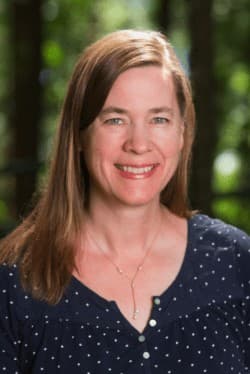
Caragh M. O'Brien is a speculative fiction author known for her young adult novel "Birthmarked." The novel explores themes of societal control and individual freedom, establishing her as a voice in dystopian literature. O'Brien's work often delves into complex ethical questions within imaginative settings.
Similar books
- The Giver
Lois Lowry
4.1 (1.8M) average on GoodreadsFantasyExplores a seemingly utopian society with dark underlying truths and a protagonist who questions the system.
- Divergent
Veronica Roth
4.2 (2.9M) average on GoodreadsFantasyFeatures a dystopian society with a rigid class structure, a strong female lead, and a rebellion against the established order.
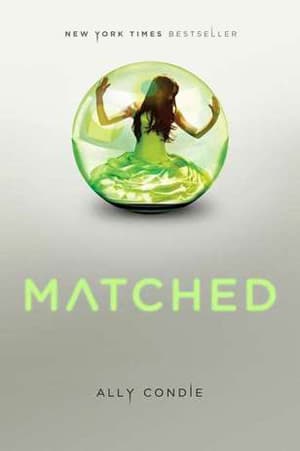
- Matched
Ally Condie
3.7 (653k) average on GoodreadsFantasyFocuses on a controlled society where individual choices are restricted, and a protagonist who begins to defy the rules for love and freedom.
- The Hunger Games
Suzanne Collins
4.3 (6.4M) average on GoodreadsFantasyBoth books feature a young female protagonist rebelling against an oppressive regime. However, 'The Hunger Games' focuses on a more action-oriented, violent, and overtly political rebellion driven by economic disparity and forced entertainment. 'Birthmarked' centers on a more intimate, ethically driven rebellion against reproductive control and genetic engineering, with less emphasis on large-scale combat and more on clandestine operations and the power of information. Collins' world is grittier and more brutal, while O'Brien's dystopia, though harsh, maintains a slightly more hopeful undertone through Gaia's life-affirming profession.
- Harry Potter and the Sorcerer's Stone
J.K. Rowling
4.5 (7M) average on GoodreadsFantasyRescued from a miserable life under the stairs, an orphaned boy discovers he's a wizard destined for a magical school, where he uncovers a dangerous secret tied to the dark wizard who murdered his parents.
- 1984
George Orwell
4.2 (3.1M) average on GoodreadsPoliticsIn a future where surveillance and thought control are absolute, a man's search for truth clashes with the Party, showing that hope can be a form of rebellion.





Enjoyed the summary?
A summary gives you the shape of the book. The book itself has the detail, the examples and the voice.
Find Birthmarked on AmazonAs an Amazon Associate, BookBrief earns from qualifying purchases. How we're funded