
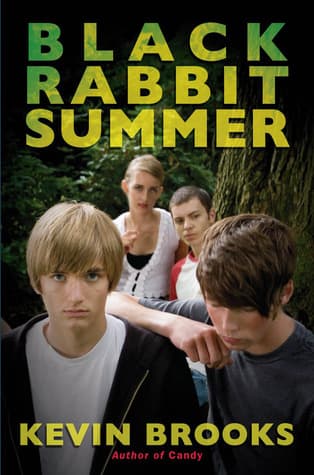
Synopsis
Covers the whole plot, including the ending.
- Difficulty
- Medium
- Pacing
- Moderate
- Mood
- Suspenseful, dark, melancholic, unsettling, introspective
Black Rabbit Summer Plot Summary
Covers the whole plot, including the ending.
The Reunion
Pete, the narrator, describes a reunion of his childhood friends: Pauly, the aggressive leader; the twins, Eric and Nicole; and Raymond. They have not been close for years. Pauly planned the reunion as a last get-together. The mood is strained, with forced nostalgia and underlying tensions. They meet at a secluded spot, trying to revive their old friendship, but the past, especially events from their last summer together, is a heavy presence. Pete notices changes in their personalities and uncomfortable silences, hinting at unresolved conflicts that threaten their fragile reunion.
Escalation at the Carnival
The group goes to a local carnival, a place with both good and bad memories for them. What begins as an attempt at fun quickly turns to chaos. Fueled by alcohol and drugs from Raymond, their inhibitions vanish, and old jealousies resurface. Pauly's aggressive side becomes more apparent, challenging Eric and creating a hostile atmosphere. Nicole, withdrawn, seems to be struggling. Pete tries to help, but the group's dynamic is broken. The carnival's loud atmosphere reflects the friends' inner turmoil, ending in an argument that splits the group, sending each person into the chaotic night.
The Disappearance
Days after the carnival, news breaks: a local girl, Sarah, is missing. The community is afraid. Pete, still shaken from the reunion, is shocked when police focus on one of his friends. Raymond, known for his eccentric behavior and being at the carnival, is soon the prime suspect. This revelation forces Pete to consider that someone he grew up with could be capable of such an act. The police investigation grows, casting a dark cloud over the town and involving Pete further in the mystery.
Pete's Investigation
Disturbed by Raymond's implication and needing to know what happened, Pete starts his own investigation. He revisits the carnival grounds, looking for clues, and tries to remember the events of that night. He talks to Pauly, Eric, and Nicole, trying to get their views on Raymond's behavior and their own locations. His friends are evasive and defensive, seeming to hide something. Their responses only increase Pete's suspicion and confusion, making him question their memories and the truth of their relationships. He begins to realize that the past, especially the 'Black Rabbit Summer' they shared years ago, holds important answers.
Unraveling the Past
As Pete continues his investigation, he sees that understanding the present depends on the past, specifically the 'Black Rabbit Summer'—a time of intense friendship and unspoken trauma years ago. He remembers the group's youthful adventures, their unspoken loyalties, and changes in their dynamics. He recalls Raymond's erratic behavior, Pauly's dominance, and Eric and Nicole's quiet struggles. Through flashbacks and conversations, Pete starts to uncover the buried secrets and resentments that have grown within the group for years. He suspects that an event from that summer, perhaps a betrayal, shaped their adult lives and may connect to Sarah's disappearance.
Confronting Pauly
Pete confronts Pauly, sensing that his old friend knows more than he admits. The confrontation is tense, showing Pauly's manipulative nature and long-standing control over the group. Pauly, aggressive at first, eventually admits to influencing the others, especially Raymond. He reveals his resentment toward Pete and his wish to stay the group's leader. Pete realizes that Pauly's actions have had lasting effects, contributing to their fractured friendships and perhaps Raymond's instability. The conversation leaves Pete with a clearer, but more unsettling, view of the toxic dynamics that always defined their group.
Nicole's Secret
Pete approaches Nicole, who has become withdrawn and fragile. After much convincing, Nicole, overcome by guilt and fear, reveals an important secret. She confesses to a difficult relationship with Raymond and Eric's role in it. Her revelation explains Raymond's erratic behavior and the tension between the twins. It becomes clear that Raymond's obsession with Nicole, and a specific incident involving the three of them during the 'Black Rabbit Summer,' affected them all deeply. This confession provides a significant piece of the puzzle, linking Raymond's past state to his current situation and offering a possible reason for his actions.
The Truth About Raymond
Through Nicole's confession and his own efforts, Pete uncovers the full, tragic truth about Raymond. He learns that Raymond, always an outsider, was vulnerable and easily manipulated, especially by Pauly. The 'Black Rabbit Summer' was a period when Raymond's emotional fragility was exploited, leading to a significant breakdown. Pete realizes that Raymond's strange behavior and issues come from his own struggles and the group's unintentional, and sometimes intentional, cruelty. Raymond was not just eccentric; he was a deeply damaged person, and past events left him scarred, making him an easy target for suspicion in Sarah's disappearance.
The Real Culprit
As the puzzle pieces connect, Pete links the past and present. He realizes that while Raymond was troubled, he did not cause Sarah's disappearance. The real culprit is someone in their immediate circle, whose actions came from jealousy, resentment, and a desire to hide past wrongs. The revelation is shocking and painful for Pete, forcing him to face the dark side of someone he once considered a friend. The perpetrator's motive is connected to the 'Black Rabbit Summer' secrets and the toxic group dynamics, making the crime a result of years of unresolved tension.
Confrontation and Resolution
With the truth, Pete confronts the real perpetrator. The confrontation is emotional and dangerous, as the culprit tries to deny everything. Pete, using his observations and his friends' confessions, reveals the truth, exposing the lies surrounding Sarah's disappearance and the 'Black Rabbit Summer' events. The confrontation forces the culprit to face their actions, leading to a dramatic resolution. While the truth brings some closure, it also shatters Pete's remaining ideas about his childhood friendships, leaving him to deal with the loss and betrayal he has found. The novel ends with the immediate aftermath of the revelation and Pete's thoughts on the lasting impact of the summer that changed everything.
Principal Figures
Pete
Protagonist
The thoughtful narrator who investigates Sarah's disappearance.
Pete is the introspective and observant narrator of the story. He is the moral compass of the group, often attempting to mediate conflicts and understand the underlying dynamics. Though initially naive about the true nature of his friends' relationships and the darkness beneath the surface, he possesses a strong sense of justice and a persistent desire for truth. He struggles with his own memories and biases but ultimately embarks on a determined quest to uncover what truly happened to Sarah and the real story behind the 'Black Rabbit Summer.'
Relationships: Pauly (Childhood friend, rival); Raymond (Childhood friend, object of concern); Nicole (Childhood friend, confidante); Eric (Childhood friend)
Pauly
Supporting
The aggressive and manipulative leader of the group.
Pauly is the dominant and often intimidating figure among the friends. He exudes a tough exterior and has a history of manipulating others to maintain his control and influence. He harbors deep-seated resentments and jealousies, particularly towards Pete, and is skilled at deflecting suspicion. His actions during the 'Black Rabbit Summer' and at the carnival are central to understanding the group's fractured dynamic and the eventual tragedy. He represents the darker, more destructive aspects of their shared history.
Relationships: Pete (Childhood friend, rival); Raymond (Childhood friend, manipulator); Nicole (Childhood friend); Eric (Childhood friend)
Raymond
Supporting
The strange, vulnerable friend who becomes the prime suspect.
Raymond is the enigmatic and somewhat ostracized member of the group, known for his eccentric behavior and quiet intensity. He is deeply troubled, carrying the weight of past traumas and vulnerabilities that make him susceptible to manipulation. Initially portrayed as the prime suspect in Sarah's disappearance, his character arc reveals him to be more victim than villain, his strangeness a symptom of deeper psychological scars. His history with Nicole and his experiences during the 'Black Rabbit Summer' are crucial to understanding his state of mind.
Relationships: Pete (Childhood friend); Pauly (Childhood friend, manipulated by); Nicole (Childhood friend, object of affection/obsession); Eric (Childhood friend, rival)
Nicole
Supporting
The quiet twin, holding a dark secret from the past.
Nicole is Eric's twin sister, initially appearing withdrawn and fragile. She is deeply affected by the events of the 'Black Rabbit Summer' and struggles to cope with her past. She carries a significant secret regarding her relationship with Raymond and Eric, which contributes to her emotional instability. Her eventual confession is a pivotal moment in the narrative, unraveling key aspects of the mystery and exposing the depth of the group's dysfunction. She represents the silent suffering caused by unspoken truths.
Relationships: Pete (Childhood friend, confidante); Eric (Twin brother, complex relationship); Raymond (Childhood friend, complicated past)
Eric
Supporting
Nicole's twin brother, guarding his own secrets and resentments.
Eric is Nicole's twin and a childhood friend of Pete. He is often overshadowed by Pauly's dominance but harbors his own resentments and insecurities. He is protective of Nicole, but also complicit in some of the group's past actions and secrets. His relationship with Nicole is complex, marked by both sibling loyalty and unspoken tensions related to Raymond. Eric's evasiveness and reluctance to fully confront the past make him a challenging figure for Pete to interrogate, adding layers of complexity to the investigation.
Relationships: Pete (Childhood friend); Nicole (Twin sister, complex relationship); Raymond (Childhood friend, rival)
Sarah
Minor
The local girl whose disappearance sets the plot in motion.
Sarah is the local girl whose unexplained disappearance after the carnival ignites the central mystery of the novel. Though not a member of Pete's immediate friend group, her vanishing acts as the catalyst that forces Pete to confront his past and investigate the dark secrets surrounding his friends. Her fate is the driving force behind Pete's quest for truth, and her story ultimately reveals the tragic consequences of the underlying tensions and unresolved issues within the group.
Themes & Insights
The Corrupting Power of the Past
The novel shows how unresolved childhood traumas and secrets can ruin present relationships and events. The 'Black Rabbit Summer' is a period where innocence was lost and unspoken resentments began, directly affecting the characters' adult lives and leading to Sarah's disappearance. The characters are haunted by their past actions, showing how history can repeat itself or control future outcomes if not dealt with. The inability to escape or reconcile with the past drives much of the narrative's tension and the characters' struggles.
“The past isn't dead. It isn't even past.”
The Fragility of Friendship and Loyalty
The novel explores the complex and often harmful nature of childhood friendships, especially when tested by jealousy, manipulation, and unspoken secrets. What seemed like an unbreakable bond between the friends slowly breaks down, revealing how superficial and conditional their loyalty is. Pete deals with betrayed trust and the realization that his friends can be deceptive and cruel. The story examines how group dynamics can become destructive, showing that shared history does not always mean true connection or unwavering support, particularly when serious accusations arise.
“We were a gang, once. Now we were just strangers with a shared history, and a lot of unspoken resentments.”
The Loss of Innocence
A main theme is the loss of innocence that comes with growing up and facing adult realities. The 'Black Rabbit Summer' marks the point where carefree childhood ends and darker experiences begin. Pete, in particular, loses his innocence as he uncovers disturbing truths about his friends and the capacity for harm in those he once trusted. The carnival, a symbol of childhood joy, becomes a setting for adult depravity, further highlighting this shift from innocence to a more cynical view of human nature.
“That summer, the black rabbit summer, was where it all began to fall apart. Where we stopped being kids and started being something else.”
Truth vs. Perception
The story constantly challenges the reader and Pete to tell the difference between perceived truths and actual events. Characters hide secrets, manipulate information, and present distorted versions of reality, making it hard to know what truly happened. Pete's investigation tries to peel back these layers of deception and personal biases to find the truth. The novel highlights how perception can be influenced by personal history, fear, and guilt, and how hard it is to get an unbiased understanding when everyone has something to hide or protect.
“Everyone had their version of the story, but none of them quite fit, not really. The truth was a black rabbit, always just out of reach.”
Plot Devices & Literary Techniques
Non-linear Narrative
The story jumps between the present investigation and past events.
The novel employs a non-linear narrative structure, alternating between Pete's present-day investigation into Sarah's disappearance and flashbacks to the 'Black Rabbit Summer' and other significant moments in the friends' past. This device gradually reveals critical information, building suspense and allowing the reader to piece together the complex history that underpins the current mystery. It emphasizes how the past directly impacts the present, ensuring that every flashback sheds light on the characters' motivations and the unfolding crime, keeping the reader engaged in the puzzle.
First-Person Narration
The story is told entirely from Pete's perspective.
The novel is narrated entirely in the first person by Pete, allowing the reader direct access to his thoughts, observations, and emotional struggles. This device creates a strong sense of intimacy and immediacy, as the reader experiences the mystery and Pete's growing disillusionment alongside him. However, it also introduces an element of subjectivity, as Pete's perceptions and biases shape the information presented, making the reader question the reliability of his interpretations and the full truth of events until the very end.
Symbolism of the Carnival
The carnival represents both childhood innocence and adult chaos.
The carnival serves as a powerful symbol throughout the novel. Initially, it represents a nostalgic return to childhood fun and freedom for the friends. However, as the night progresses, its chaotic, disorienting, and sometimes seedy atmosphere mirrors the internal turmoil, drug-fueled recklessness, and fractured relationships of the group. It becomes a place where innocence is lost, secrets resurface, and the line between playful abandon and dangerous behavior blurs, ultimately becoming the backdrop for the pivotal events leading to Sarah's disappearance.
'Black Rabbit Summer' as a MacGuffin/Symbolic Event
A past summer that holds the key to the present mystery.
The 'Black Rabbit Summer' functions as both a symbolic event and a kind of MacGuffin. It's a specific period in the friends' shared past that is constantly referenced as the source of their current problems and the key to understanding Sarah's disappearance, even though the exact events of that summer are initially vague. This device creates sustained intrigue, compelling Pete (and the reader) to delve deeper into the past to uncover the specific traumas, betrayals, and secrets that occurred, driving the narrative forward towards its ultimate revelation.
Quiz
10 questions on the plot and the characters. Each answer comes with a short explanation.
Question 1
What is the primary genre of the book 'Black Rabbit Summer'?
- Science Fiction
- Fantasy
- Thriller/Mystery
- Historical Fiction
Show answer
C. Thriller/Mystery The book is described as a Thriller and Mystery.
Question 2
Who is the protagonist of the story who doubts the guilt of his friends?
- Pauly
- Pete
- Eric
- Raymond
Show answer
B. Pete Pete is explicitly stated to be the one who doesn't know what to believe about his friends.
Question 3
What event triggers the reunion of the old friends?
- A wedding
- A funeral
- A birthday party
- An agreement to get together one last time
Show answer
D. An agreement to get together one last time The text states, 'They agree to get together one last time.'
Question 4
What setting is mentioned where the group splinters off after the party?
- A quiet countryside inn
- The bustling city center
- The noise and heat and chaos of the carnival
- A secluded beach resort
Show answer
C. The noise and heat and chaos of the carnival The book describes them splintering off 'Into the noise and heat and chaos of the carnival.'
Question 5
What factors are mentioned as fueling old jealousies among the friends?
- Financial disagreements
- Past romantic rivalries only
- Personal histories and pharmaceuticals
- Arguments over property
Show answer
C. Personal histories and pharmaceuticals The text states they are 'twisted by personal histories and fueled by pharmaceuticals.'
Question 6
Who is the prime suspect in the girl's disappearance?
- An unknown outsider
- One of the old gang
- The carnival owner
- Pete himself
Show answer
B. One of the old gang The text explicitly says, 'The prime suspect in her disappearance? One of their own, one of the old gang.'
Question 7
What is the relationship between Eric and Nicole?
- Best friends
- Siblings
- Twins
- Romantic partners
Show answer
C. Twins The characters are listed as 'twins Eric and Nicole.'
Question 8
The phrase 'twisted by personal histories' suggests that the characters' past experiences have significantly influenced their present actions and perceptions.
- True
- False
- Cannot be determined from the text
- Only applies to Pete
Show answer
A. True The phrase directly implies that their pasts have negatively shaped their current state, leading to resurfacing jealousies.
Question 9
The description of the setting 'noise and heat and chaos of the carnival' serves primarily to:
- Provide a cheerful backdrop for the reunion
- Symbolize the mental and emotional state of the characters after the party
- Introduce a new set of characters involved in the mystery
- Indicate the location where the girl was last seen
Show answer
B. Symbolize the mental and emotional state of the characters after the party The chaotic and intense atmosphere of the carnival mirrors the internal turmoil and escalating drama among the friends.
Question 10
Considering Pete's internal conflict ('Pete doesn't know what to believe: Could one of his childhood friends really be a cold-blooded killer?'), what does this reveal about the central theme of the novel?
- The unreliability of memory
- The destructive nature of secrets within friendships
- The ease with which people can be manipulated
- The inevitability of betrayal in close relationships
Show answer
B. The destructive nature of secrets within friendships Pete's struggle highlights how deeply held trust in friends can be challenged by suspicion and the potential for dark secrets to emerge, which is a core aspect of the mystery and thriller elements.
Black Rabbit Summer FAQ
What is the plot of Black Rabbit Summer?
Black Rabbit Summer follows a group of childhood friends who reunite for one last gathering. However, simmering tensions, fueled by past events and substances, lead to a tragic turn of events, culminating in a girl's disappearance and one of the friends becoming the prime suspect.
Who are the main characters in Black Rabbit Summer?
The main characters are Pete, Pauly, the twins Eric and Nicole, and Raymond. They were close friends as children but have grown apart as adults.
What genre is Black Rabbit Summer?
Black Rabbit Summer is a thriller, mystery, and young adult novel with elements of romance.
What are the key themes explored in Black Rabbit Summer?
The novel explores themes of friendship, betrayal, the impact of the past on the present, jealousy, and the darker side of human nature, particularly under pressure and in the context of secrets.
Is there romance in Black Rabbit Summer?
Yes, there are romantic elements within the story, adding another layer of complexity to the relationships between the main characters.
What is the role of the carnival in the story?
The carnival serves as a chaotic and atmospheric setting where the group splinters off after their initial reunion. It becomes a backdrop for further events and tensions that unfold.
Who is the prime suspect in the girl's disappearance?
The prime suspect in the girl's disappearance is revealed to be one of the members of the old group of friends, leading Pete to question who among them could be capable of such a crime.
What makes Pete question his friends in Black Rabbit Summer?
Pete questions his friends because one of them becomes the prime suspect in a girl's disappearance, forcing him to confront the possibility that someone he knew intimately could be a killer.
Is Black Rabbit Summer a standalone novel?
Yes, Black Rabbit Summer is a standalone novel and does not require reading any other books to understand the plot or characters.
What age group is Black Rabbit Summer recommended for?
Black Rabbit Summer is categorized as young adult fiction, making it suitable for teenagers and older readers who enjoy thrilling mysteries with complex characters.
About the author

Kevin Brooks is a British author known for his young adult fiction. His notable works include "Lucas," "The Bunker Diary," "Candy," "iBoy," "The Road of the Dead," and "Black Rabbit Summer." His writing often explores themes of identity, survival, and the complexities of adolescence.
Similar books
- We Were Liars
E. Lockhart
3.8 (465k) average on GoodreadsThriller"Black Rabbit Summer" shares with "We Were Liars" a focus on a privileged, seemingly idyllic summer setting that hides dark, disturbing secrets and psychological manipulation. Both novels feature a young protagonist grappling with unreliable memories and the unsettling truth about their closest relationships. However, Brooks' novel leans more into an external, tangible threat and the slow burn of a traditional mystery, whereas Lockhart's relies heavily on the protagonist's internal amnesia and a more sudden, shocking reveal. Brooks' prose is grittier and more grounded, while Lockhart's is more poetic and ethereal, almost dreamlike.
- The Girl on the Train
Paula Hawkins
3.9 (2.1M) average on GoodreadsThrillerWhile "The Girl on the Train" is an adult thriller, it offers a compelling comparison through its exploration of unreliable narration, obsession, and the insidious nature of secrets within relationships, themes central to "Black Rabbit Summer." Both books feature protagonists who become entangled in a mystery surrounding a seemingly perfect stranger or couple, leading to dangerous consequences. However, Hawkins' novel is more focused on a direct murder investigation and the psychological breakdown of its adult protagonist, Rachel, whereas Brooks explores the coming-of-age aspect of Pete's journey and his gradual corruption in a more isolated, rural setting. Brooks prioritizes atmosphere and psychological dread over Hawkins' more intricate plot twists and red herrings.
- Angels & Demons
Dan Brown
3.9 (2.7M) average on GoodreadsThrillerA Harvard symbologist races through Rome's ancient sites, deciphering cryptic clues to unmask the Illuminati and stop a vengeful plot to destroy the Vatican with a stolen antimatter weapon.
- Gone Girl
Gillian Flynn
4.1 (2.3M) average on GoodreadsThrillerA wife's sudden disappearance on her fifth anniversary reveals a web of lies and psychological warfare, exposing the secrets within a seemingly perfect marriage.
- The Da Vinci Code
Dan Brown
3.9 (1.9M) average on GoodreadsThrillerA symbologist and a cryptologist race through European landmarks, deciphering ancient codes and uncovering a conspiracy that could rewrite the foundations of Christianity.
- The Guest List
Lucy Foley
3.8 (1.3M) average on GoodreadsThrillerOn a remote Irish island, a glamorous wedding descends into a deadly whodunnit when a guest is found murdered, trapping everyone with their secrets as a storm rages.





Enjoyed the summary?
A summary gives you the shape of the book. The book itself has the detail, the examples and the voice.
Find Black Rabbit Summer on AmazonAs an Amazon Associate, BookBrief earns from qualifying purchases. How we're funded