
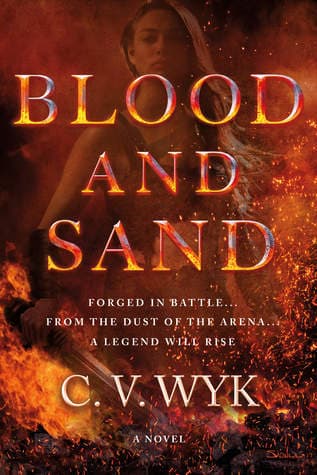
Synopsis
Covers the whole plot, including the ending.
- Difficulty
- Medium
- Pacing
- Fast
- Mood
- Action-packed, Romantic, Rebellious, Empowering
- Read it if
- You love action-packed historical fantasy with a strong female lead, gladiatorial combat, and a powerful romance, especially if you're a fan of Spartacus's legend.
- Skip it if
- You prefer historically accurate accounts over fictionalized retellings, or if you dislike violence and depictions of slavery.
Blood and Sand Plot Summary
Covers the whole plot, including the ending.
Attia's Enslavement and Arrival in Rome
Seventeen-year-old Attia, a skilled swordmaiden and princess of Thrace, is captured by Roman forces after a brutal battle that destroys her kingdom. She witnesses the slaughter of her people and the desecration of her culture. Attia is forcibly taken to Rome. Stripped of her identity and freedom, she is presented as a 'gift' to Xanthus, the celebrated Champion of Rome and a gladiator owned by Senator Varro. Attia resists her new reality fiercely. Her spirit is unbroken despite her physical bonds. She is determined to find a way to avenge her people and reclaim her heritage, even in the heart of the enemy's empire.
Meeting Xanthus and Life in the Ludus
Upon her arrival, Attia is thrust into the gladiator training school owned by Senator Varro. She quickly learns the harsh realities of slavery and the rigid hierarchy within the school. Xanthus, a strong gladiator of Greek origin, initially views Attia with suspicion and pity, having long ago accepted his own fate. Despite their initial clashes, Xanthus recognizes Attia's warrior spirit and her refusal to be broken. He begins to teach her the subtle rules of survival in the school, offering her protection and guidance. This makes other gladiators, especially the ambitious and cruel Cassius, jealous.
Attia's Training and Growing Skill
Attia, despite being a female slave, refuses to abandon her warrior skills. She secretly practices with makeshift weapons and observes the gladiators' training, absorbing their techniques. Xanthus, impressed by her dedication and talent, begins to train her more formally. He recognizes her potential. She proves to be a quick study, adapting her Thracian fighting style to the Roman arena's demands. Her growing skills earn her respect from some of the other gladiators and even some of the trainers, though she remains an outsider due to her gender and independence. This training becomes a part of her plan for rebellion.
The Seeds of Rebellion and Shared Dreams
As Attia and Xanthus spend more time together, their initial animosity changes into a deep understanding and affection. They share their pasts — Attia's lost kingdom, Xanthus's childhood enslavement — and their dreams of freedom. Attia ignites a spark of rebellion within Xanthus, reminding him of his own identity beyond that of a slave and gladiator. They begin to discuss the possibility of escape, not just for themselves, but for all the enslaved gladiators. Their bond strengthens as they realize they are both instruments of Roman conquest, but also have the will to fight against it.
The Arena and Public Spectacle
Attia is forced to attend the gladiatorial games, seeing firsthand the brutal shows that entertain the Roman populace. She watches in horror as men fight to the death for the crowd's amusement. This is a stark contrast to the honorable warfare of her Thracian heritage. She sees Xanthus fight, a skilled and powerful warrior, but also a man forced into violence. The savagery of the arena and the casual disregard for human life fuel Attia's hatred for Rome. It strengthens her resolve to lead a rebellion. She knows that escape will not be enough; they must fight for a better world.
Confrontation with Cassius and Varro's Cruelty
Cassius, a jealous and ambitious gladiator who resents Xanthus's favor and Attia's presence, becomes a threat. He often challenges Attia and tries to undermine Xanthus, increasing tensions within the school. Meanwhile, Senator Varro, their master, is a cruel and calculating figure who views his gladiators as property. He delights in their suffering and uses them to gain political influence. Attia and Xanthus are constantly reminded of their precarious position, living under the threat of Varro's whims and the violence of the arena.
The Escape Plan Takes Shape
Driven by their shared desire for freedom, Attia and Xanthus begin to plan their escape. They gather allies among the other gladiators, choosing those they can trust and who share their longing for a life beyond slavery. They observe the guards' routines, identify weaknesses in the school's defenses, and secretly acquire weapons and supplies. Attia's strategic mind, combined with Xanthus's knowledge of the school and his fighting prowess, makes them a strong team. The stakes are high; failure means certain death or a fate worse than slavery.
The Uprising Begins
The chosen day arrives, and Attia and Xanthus put their plan into action. A diversion allows them to overpower their guards, seizing weapons and opening the gates. A fierce battle erupts within the school as the gladiators fight for their lives against the Roman guards. Attia fights with the ferocity of a Thracian swordmaiden, inspiring others with her courage. Xanthus leads the charge. His strength and tactical mind are important in their initial success. They suffer losses, but the taste of freedom fuels their desperate struggle.
Flight and the Gathering of Forces
After breaking out of the school, Attia, Xanthus, and their surviving allies flee Rome. They head for the countryside, seeking refuge and a place to regroup. Word of their escape spreads, and soon, other slaves and discontented peasants begin to join them. They are drawn by the promise of freedom and a chance to strike back against Roman oppression. Attia and Xanthus become the natural leaders of this growing rebellion. Their strengths complement each other as they form a diverse group of individuals into a fighting force.
The Legend of Spartacus Rises
As their numbers grow, Xanthus adopts the name 'Spartacus,' a symbol of hope and defiance against Rome. Attia, his equal and co-leader, helps him strategize and train their increasingly large army. Together, they lead their followers in initial skirmishes against Roman forces, achieving victories that further cement Spartacus's legend. The rebellion, born from the arena, now poses a threat to the Roman Republic. Attia and Spartacus are at its heart, fighting not just for their own freedom, but for a world where no one is enslaved.
Principal Figures
Attia
Protagonist
A Thracian warrior princess enslaved by Rome, who becomes a leader of the rebellion.
Attia is a fierce and proud seventeen-year-old Thracian princess, skilled in combat and deeply devoted to her people and heritage. After her kingdom is destroyed and she is enslaved, she refuses to let her spirit be broken. She is intelligent, strategic, and possesses an unwavering will to fight for freedom and justice. Her journey in Rome is marked by resilience, as she adapts to her new circumstances while secretly honing her fighting skills and planning her revenge. She inspires Xanthus and other slaves with her courage and conviction.
Relationships: Xanthus (Love interest, co-leader, fellow rebel); Senator Varro (Master, antagonist); Cassius (Rival, antagonist gladiator)
Xanthus (Spartacus)
Protagonist
A Greek gladiator, the Champion of Rome, who rises to lead a slave revolt.
Xanthus is a powerful and respected gladiator of Greek origin, enslaved as a child. He is initially resigned to his fate, having learned to survive within the brutal system of the ludus. Despite his hardened exterior, he possesses a strong moral compass and a deep sense of justice. Attia's arrival reawakens his desire for freedom and sparks his leadership potential. He is an exceptional fighter, tactician, and becomes the symbolic leader, 'Spartacus,' of the slave rebellion, driven by a desire to protect those he cares about and to break the chains of oppression.
Relationships: Attia (Love interest, co-leader, fellow rebel); Senator Varro (Master, antagonist); Cassius (Rival gladiator)
Senator Varro
Antagonist
A cruel and ambitious Roman Senator, owner of Attia and Xanthus.
Senator Varro is the primary human antagonist, a powerful and influential Roman politician who embodies the cruelty and arrogance of the Republic. He owns the ludus where Attia and Xanthus are enslaved, viewing his gladiators and slaves as mere property to be used for his entertainment and political gain. He is ruthless, calculating, and takes pleasure in asserting his dominance. His actions and attitudes are a constant reminder of the oppressive system Attia and Xanthus are fighting against, making him a central figure in their motivation for rebellion.
Relationships: Attia (Master-slave relationship); Xanthus (Master-slave relationship); Cassius (Gladiator owned by him)
Cassius
Supporting/Antagonist
A jealous and ambitious gladiator in Varro's ludus.
Cassius is a gladiator within Senator Varro's ludus who serves as a secondary antagonist. He is characterized by his jealousy of Xanthus's status as Champion and his resentment towards Attia, particularly after Xanthus shows her favor. Cassius is cruel, ambitious, and often tries to undermine Xanthus, creating internal tension and conflict within the gladiator ranks. He represents the internal struggles and dangers within the slave community, even before the external fight against Rome begins, and highlights the harsh realities of their existence.
Relationships: Xanthus (Rival gladiator); Attia (Antagonistic towards her); Senator Varro (His owner)
Lucius
Supporting
A loyal gladiator who becomes an early ally in the rebellion.
Lucius is one of the gladiators in Varro's ludus who quickly becomes an ally and trusted friend to Attia and Xanthus. He is a pragmatic and brave individual who shares their desire for freedom. He aids them in their escape planning and is one of the first to join the rebellion, proving to be a reliable and steadfast supporter. Lucius represents the collective yearning for freedom among the enslaved and provides a sense of camaraderie and solidarity for the main protagonists.
Relationships: Attia (Ally, friend); Xanthus (Ally, friend)
The Doctore
Supporting
The gladiator trainer, a complex figure in the ludus.
The Doctore is the head trainer of the gladiators in Varro's ludus. He is a hardened veteran, often appearing stern and unforgiving, but he also possesses a deep understanding of combat and the gladiators' lives. While he enforces Varro's rules, he sometimes shows a grudging respect for skilled fighters like Xanthus and even Attia. His character adds complexity to the world of the ludus, showing that not all Romans or overseers are entirely villainous, and he occasionally provides subtle guidance or challenges that help Attia and Xanthus grow.
Relationships: Attia (Trainer-trainee relationship); Xanthus (Trainer-trainee relationship); Senator Varro (Employee)
Crixus
Supporting
A Gaul gladiator and powerful fighter who joins the rebellion.
Crixus is a fierce Gaulish gladiator, known for his strength and bravery in the arena. He is initially portrayed as somewhat gruff and independent, but he is fiercely loyal to his fellow gladiators. He is drawn to Attia and Xanthus's vision of freedom and becomes a key figure in the rebellion. Crixus represents the diverse backgrounds of the enslaved people who join Spartacus's cause, and his fighting prowess makes him a valuable asset to their growing army.
Relationships: Attia (Ally); Xanthus (Ally)
Mira
Mentioned
A Thracian woman, Attia's childhood friend.
Mira is Attia's childhood friend and fellow Thracian, whose capture and enslavement mirror Attia's own fate. Though she doesn't appear extensively in the narrative, Mira's memory and the shared trauma of their people's destruction serve as a powerful motivation for Attia. Her fate underscores the widespread suffering inflicted by Roman conquest and reinforces Attia's personal connection to the broader cause of liberating all slaves.
Relationships: Attia (Childhood friend)
Themes & Insights
Freedom vs. Enslavement
This is the central theme, explored through Attia and Xanthus's personal journeys and the larger slave rebellion. The book contrasts the reality of Roman enslavement—loss of identity, forced violence, and dehumanization—with the human desire for freedom and self-determination. Attia's refusal to be broken and Xanthus's reawakened hope show this struggle. The rebellion itself is the ultimate example of this theme, as the enslaved fight to reclaim their lives and dignity from their Roman oppressors.
“'Freedom is not given, it is taken.”
Identity and Heritage
Identity is important, especially for Attia, who is stripped of her Thracian princess identity and forced to become a slave. She struggles to maintain her heritage and warrior spirit in a foreign land. Xanthus also grapples with his identity as a Greek warrior reduced to a Roman gladiator. Their journey involves reclaiming who they are beyond the labels imposed by Rome. This culminates in Xanthus adopting the name Spartacus, a new identity forged in rebellion and hope, while Attia remains a proud Thracian swordmaiden fighting for all.
“They can take our bodies, but they can never take our spirit, our memories, or who we truly are.”
Love and Loyalty Amidst Adversity
Amidst the brutality of the gladiator school and the threat of Rome, Attia and Xanthus form a deep bond of love and loyalty. Their relationship is built on mutual respect, understanding, and shared purpose. It becomes a source of strength and hope. This theme extends to the loyalty among the gladiators themselves, who, despite their individual struggles, form alliances and friendships. They ultimately choose to fight together for a common cause. Their collective loyalty to each other and their dream of freedom fuels the entire rebellion.
“We are gladiators, yes. But we are also men and women who dream of more than blood and sand.”
Rebellion and Resistance
The story is built around the theme of rebellion and resistance against an oppressive empire. It explores the reasons for revolt—the dehumanization, cruelty, and injustice inflicted by Rome—and the courage required to challenge a seemingly unbeatable power. Attia and Xanthus embody this theme, moving from personal desire for escape to leading a widespread uprising. The book shows the strategic planning, the gathering of allies, and the audacity required for the enslaved to rise up and fight for their freedom, sparking a legend that would echo through history.
“One spark can ignite a forest fire. We will be that spark.”
The Nature of Power and Oppression
The novel examines the nature of power, particularly the unchecked power of the Roman Republic and its oppressive systems. Senator Varro shows this power, using his wealth and influence to enslave, exploit, and entertain himself with the lives of others. The gladiatorial games are a symbol of this oppression, where human lives are sacrificed for public amusement. The theme explores how power corrupts and dehumanizes both the oppressor and, to some extent, the oppressed, until the latter choose to resist and reclaim their humanity.
“They see us as animals, to be bought and sold, to fight and die for their amusement. But we are more than that.”
Plot Devices & Literary Techniques
Dual Perspective (Implied)
Alternating focus on Attia and Xanthus's experiences.
While not strictly alternating chapters, the narrative frequently shifts its focus and emotional weight between Attia and Xanthus, allowing readers to deeply understand both protagonists' internal struggles, motivations, and evolving relationship. This device highlights their individual journeys while also showcasing how their paths intertwine and how they complement each other as leaders. It provides a comprehensive view of the gladiator world and the nascent rebellion from two crucial vantage points, emphasizing their equal importance to the story's development.
Historical Reimagining
Fictionalizing the origins of the Spartacus rebellion with a strong female lead.
The book takes a well-known historical event—the Spartacus rebellion—and reimagines its origins, particularly by introducing Attia as a central, proactive female warrior and co-leader. This device allows for creative freedom within a historical framework, offering a fresh perspective on the legend. It uses known historical elements (gladiators, Roman Republic, the name Spartacus) but weaves a compelling fictional narrative around them, giving voice to traditionally overlooked figures and exploring themes of gender and agency within a historical context.
The Ludus as a Microcosm
The gladiator school as a representation of Roman society's brutality.
The ludus, the gladiator training school, serves as a powerful microcosm of the larger Roman Republic's oppressive society. Within its walls, the rigid hierarchy, the casual cruelty, the forced violence, and the dehumanization of slaves are all on display. It's a contained environment where the protagonists experience firsthand the injustice they are fighting against, and where the seeds of their rebellion are sown. The rules and conditions of the ludus reflect the broader societal structures that the rebellion aims to dismantle.
Symbolism of the Arena
The gladiatorial arena as a symbol of Roman power, entertainment, and disregard for life.
The arena is a potent symbol throughout the book. It represents the pinnacle of Roman power and its capacity for brutal entertainment, where human lives are sacrificed for the amusement of the masses. For Attia and Xanthus, it is a place of forced violence and a constant reminder of their enslavement. It symbolizes the dehumanization inherent in the Roman system, where individuals are reduced to spectacles. Their eventual rebellion is a direct defiance of the very system the arena represents, transforming the 'blood and sand' into a stage for their fight for freedom.
Blood and Sand Quotes
“I am not a slave. I am a weapon.”
“In the arena, there is no mercy. Only blood and sand.”
“Sometimes the strongest chains are the ones we forge ourselves.”
“Love is a battlefield, but so is everything else.”
“They call us barbarians, but they are the ones who watch us bleed.”
“A name is just a word until you give it meaning.”
“Fear is a choice. I choose to fight.”
“The gods may watch, but they do not intervene.”
“Every scar tells a story. Mine are just more visible.”
“In Rome, power is the only truth.”
“You can break my body, but you cannot break my spirit.”
“The sand remembers every drop of blood spilled upon it.”
“Sometimes the greatest rebellion is simply to survive.”
“Hearts are not made of stone, even in the arena.”
Quiz
10 questions on the plot and the characters. Each answer comes with a short explanation.
Question 1
What is Attia's original status before being enslaved by Rome?
- A Roman noblewoman
- The queen and swordmaiden of Thrace
- A gladiator's daughter
- A Spartan warrior
Show answer
B. The queen and swordmaiden of Thrace Attia was destined to rule as the queen and swordmaiden of Thrace, a warrior kingdom, before being conquered and enslaved by Rome, as described in the book's summary.
Question 2
What is Xanthus's role in Roman society?
- A Roman senator
- A slave trader
- The Champion of Rome and preeminent gladiator
- A Thracian rebel leader
Show answer
C. The Champion of Rome and preeminent gladiator Xanthus is enslaved as a child and becomes the Champion of Rome, the top gladiator of his generation, as noted in the book's description.
Question 3
How does Attia come to be associated with Xanthus?
- She is sold to him as a slave by his master
- She challenges him to a duel in the arena
- She rescues him from captivity
- They meet as fellow rebels planning an escape
Show answer
A. She is sold to him as a slave by his master Attia is given to Xanthus as a slave, a sign of favor from his master, which initiates their connection in the story.
Question 4
What major event do Attia and Xanthus's actions lead to?
- The fall of the Roman Empire
- A rebellion that gives rise to the legend of Spartacus
- The founding of a new kingdom in Thrace
- A peace treaty between Rome and Thrace
Show answer
B. A rebellion that gives rise to the legend of Spartacus Their bond sparks a rebellion that threatens the Roman Republic and becomes the basis for the legend of Spartacus, as highlighted in the book's summary.
Question 5
What is the primary setting that drives the conflict in the book?
- The battlefields of Gaul
- The royal courts of Thrace
- The Roman Republic and its slave system
- The trading ports of the Mediterranean
Show answer
C. The Roman Republic and its slave system The story is set against the backdrop of the Roman Republic, which builds its empire through conquest and slavery, creating the central conflict for characters like Attia and Xanthus.
Question 6
Which theme is most directly explored through Attia and Xanthus's relationship?
- The inevitability of fate
- The power of love to overcome social barriers
- The formation of bonds under oppression leading to rebellion
- The importance of family heritage
Show answer
C. The formation of bonds under oppression leading to rebellion Their tentative bond, formed despite their enslaved status, becomes the catalyst for a rebellion against Rome, emphasizing themes of resistance and unity under oppression.
Question 7
What historical figure's legend is this book said to give rise to?
- Julius Caesar
- Hannibal
- Spartacus
- Cleopatra
Show answer
C. Spartacus The book's summary explicitly states that the rebellion sparked by Attia and Xanthus gives rise to the legend of Spartacus, a historical slave rebel leader.
Question 8
How is Thrace described in comparison to other warrior societies?
- As weaker than Sparta
- As the greatest warrior kingdom since Sparta
- As an ally of Rome
- As a peaceful trading nation
Show answer
B. As the greatest warrior kingdom since Sparta The book describes Thrace as the greatest warrior kingdom the world had seen since Sparta, highlighting its martial prowess before Roman conquest.
Question 9
What does the phrase 'Roma Victrix' imply about Rome's role in the story?
- Rome is portrayed as a victim of rebellion
- Rome is shown as a conquering and victorious republic
- Rome is depicted in decline
- Rome is a neutral party in the conflicts
Show answer
B. Rome is shown as a conquering and victorious republic 'Roma Victrix' means 'Rome the Victorious' in Latin, reflecting the Republic's aggressive expansion and conquest that enslaves characters like Attia, setting up the central conflict.
Question 10
In what way does the book blend historical and fictional elements?
- By accurately recounting the life of Spartacus without alteration
- By inventing entirely new characters unrelated to history
- By using fictional characters like Attia and Xanthus to explore the origins of the Spartacus legend
- By setting the story in a completely imaginary world
Show answer
C. By using fictional characters like Attia and Xanthus to explore the origins of the Spartacus legend The book is a work of historical fiction that creates original characters such as Attia and Xanthus to imagine how the legend of Spartacus might have begun, blending fact with creative storytelling.
Blood and Sand FAQ
What is 'Blood and Sand' about?
'Blood and Sand' follows Attia, a 17-year-old warrior princess of Thrace who is enslaved by Rome and given to Xanthus, Rome's champion gladiator. Their unlikely bond sparks a rebellion that grows into a full-scale uprising against the Roman Republic, ultimately giving rise to the legend of Spartacus.
Why should I read 'Blood and Sand'?
This book offers a fresh, action-packed YA retelling of the Spartacus legend with strong romantic elements. It combines historical fiction with fantasy undertones, featuring a fierce female protagonist and exploring themes of freedom, resistance, and the human cost of empire.
What is the background/setting of 'Blood and Sand'?
The story is set during the expansion of the Roman Republic, which is aggressively conquering territories and enslaving populations. Most of the action takes place in and around Roman gladiatorial arenas and slave quarters, with flashbacks to Attia's warrior upbringing in Thrace.
What are the most memorable quotes?
Key quotes include Attia's declaration 'I am not a prize to be won' when given to Xanthus, and Xanthus's reflection that 'In the arena, we fight for our masters' glory. In rebellion, we fight for our own.' The phrase 'Roma Victrix' (Rome victorious) is repeatedly used to underscore Roman arrogance.
What writing style does the author use?
C.V. Wyk employs fast-paced, visceral prose with vivid descriptions of combat and emotional intensity. The narrative alternates between Attia and Xanthus's perspectives, blending historical detail with YA-accessible language and romantic tension.
What minor details add significant meaning?
Attia's Thracian arm tattoos, which mark her royal lineage, become symbols of resistance when other slaves begin mimicking them. The specific way Xanthus cleans his weapons after each fight reflects his disciplined mindset, contrasting with Attia's more impulsive warrior nature.
What are some subtle foreshadowing moments?
Early scenes where Attia observes the discontent among household slaves foreshadow the broader rebellion. Xanthus's private moments of questioning his role as 'Champion of Rome' hint at his eventual turn against the Republic. The crumbling mortar in the gladiator barracks subtly symbolizes Rome's vulnerability.
What unexpected character connections exist?
A minor Roman guard is revealed to have been captured from the same Thracian campaign as Attia, creating tension about divided loyalties. Xanthus discovers his former mentor in the arena now oversees slave transports, creating a personal conflict when planning escape routes.
What are unspoken character motivations?
Attia's drive stems not just from wanting freedom, but from proving Thracian warrior values superior to Roman 'civilization.' Xanthus fights to maintain a fragile sense of identity and control within his enslavement, fearing that without his champion status he'd be nothing.
What psychological complexities do characters exhibit?
Attia struggles with reconciling her royal pride with her enslaved reality, often making reckless decisions to assert agency. Xanthus exhibits symptoms of what we'd now call PTSD from years in the arena, yet maintains calculated calmness that sometimes masks deep rage.
What are the major emotional turning points?
The first major turning point occurs when Xanthus refuses to kill a defeated opponent at his master's command. The second is when Attia witnesses the brutal punishment of an escaping slave and decides organized rebellion is the only option. Their first genuine conversation about their pasts marks a key romantic development.
How do relationship dynamics evolve?
Attia and Xanthus progress from master/slave to uneasy allies, then to trusted partners in planning rebellion, and finally to romantic partners. Their relationship is complicated by power imbalances—Attia resents being 'given' to Xanthus, while Xanthus struggles with guilt over benefiting from the system that enslaves her.
Which parts remain ambiguous or open-ended?
The ultimate fate of several secondary rebel characters is left uncertain. The book doesn't specify whether Attia's royal lineage will ever be formally restored, or if she even wants it to be. The long-term viability of the rebellion beyond the book's events is deliberately left for readers to ponder.
What are controversial scenes or decisions?
Some readers debate whether Attia's initial violent resistance is justified or counterproductive. Xanthus's continued participation in gladiatorial combat after meeting Attia raises questions about complicity. The romantic relationship developing within a master/slave dynamic is intentionally problematic and sparks discussion.
'Blood and Sand' ending explained: how it ends & what it means
The book ends with Attia and Xanthus leading a growing rebel army away from Rome, having won several key battles. While not depicting the historical Spartacus's ultimate defeat, it establishes their legend as freedom fighters. The ending suggests that even if they fail militarily, their rebellion has already succeeded in challenging Rome's moral authority.
How does the book handle historical accuracy versus creative license?
While incorporating real historical elements like gladiatorial combat and Roman expansion, the book takes significant liberties—most notably making Spartacus's rebellion originate with a Thracian princess and her relationship with a champion gladiator, which diverges from historical accounts for dramatic and thematic purposes.
About the author

C.V. Wyk is a fiction author known for their work in the "Blood and Sand" series. Their writing often explores themes of [mention specific themes if known, otherwise omit or generalize]. Wyk's contributions to the genre have garnered attention for their [mention specific stylistic elements if known, otherwise omit or generalize].
Similar books
- An Ember in the Ashes
Sabaa Tahir
4.3 (182k) average on GoodreadsFantasyExplores themes of slavery, rebellion, and forbidden romance in a brutal empire with a strong warrior female lead.
- Circe
Madeline Miller
4.3 (343k) average on GoodreadsFantasyMiller's "Circe" (and The Song of Achilles) also re-imagines ancient narratives with strong romantic and emotional elements. However, Miller delves deeper into psychological complexity, philosophical themes, and literary prose, offering a more introspective and less plot-driven experience. "Blood and Sand" is more direct in its romantic and adventurous plot, aiming for a broader YA audience with its clear genre conventions.
- Harry Potter and the Sorcerer's Stone
J.K. Rowling
4.5 (7M) average on GoodreadsFantasyRescued from a miserable life under the stairs, an orphaned boy discovers he's a wizard destined for a magical school, where he uncovers a dangerous secret tied to the dark wizard who murdered his parents.
- The Hunger Games
Suzanne Collins
4.3 (6.4M) average on GoodreadsFantasyIn a future where children fight to the death on live television, Katniss Everdeen volunteers for the arena, turning a death sentence into a fight for survival and a spark of rebellion.
- 1984
George Orwell
4.2 (3.1M) average on GoodreadsPoliticsIn a future where surveillance and thought control are absolute, a man's search for truth clashes with the Party, showing that hope can be a form of rebellion.
- Divergent
Veronica Roth
4.2 (2.9M) average on GoodreadsFantasyIn a society divided by virtues, a sixteen-year-old's difference from the norm starts a rebellion that threatens her world.




Enjoyed the summary?
A summary gives you the shape of the book. The book itself has the detail, the examples and the voice.
Find Blood and Sand on AmazonAs an Amazon Associate, BookBrief earns from qualifying purchases. How we're funded