
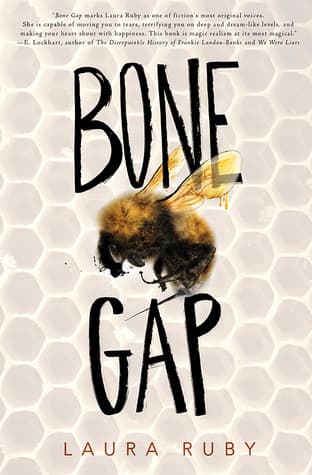
Synopsis
Covers the whole plot, including the ending.
- Difficulty
- Medium
- Pacing
- Variable
- Mood
- Atmospheric, Melancholy, Mysterious, Romantic, Magical
- Read it if
- You enjoy magical realism, small-town mysteries, and stories about perception, memory, and the true meaning of beauty.
- Skip it if
- You prefer straightforward plots without ambiguity, or if you dislike stories with a strong 'fable-like' quality.
Bone Gap Plot Summary
Covers the whole plot, including the ending.
The Disappearance of Roza
The story begins with Roza, a beautiful young woman, disappearing from Bone Gap, Illinois. Finn O'Sullivan, a dreamy and often distracted teenager, is the only witness. He claims a man took Roza, but he cannot recall the man's face, only a vague sense of darkness. Because of Finn's reputation for being 'gap-mouthed' and not always grounded, the townspeople, including his older brother Sean, dismiss his story. Sean, who loves Roza, struggles with Finn's lack of details. This creates a rift between the brothers as the search for Roza yields no results.
Finn's Struggle for Belief
Finn is troubled by his failure to remember the kidnapper's face, which he calls a 'gap' in his memory. He knows Roza was taken, but his inability to describe the man makes him seem unreliable. This struggle comes from his unique way of seeing the world, where people's inner selves are often more vivid to him than their physical appearance. He tries to explain his vision to Sean and the sheriff, but they are frustrated by his vagueness. Finn's connection to nature and his almost magical perception of Bone Gap's hidden qualities further isolate him.
Roza's Captivity
The story shifts to Roza's perspective. She is held captive in a remote, luxurious house by a man named Jethro. Jethro, a powerful and manipulative person, is obsessed with Roza's beauty and demands her love. He keeps her isolated, giving her material comforts but denying her freedom and real connection. Roza, initially defiant, slowly understands the magical nature of her confinement. Jethro's power prevents her from leaving or truly seeing him as he is, distorting her perception to make him appear perfect.
Sean's Grief and Desperation
Sean O'Sullivan, a hardworking young man, is devastated by Roza's disappearance. He loved her deeply and had plans for their future. He struggles to balance his love for Finn with his anger over Finn's inability to prevent Roza's abduction or provide useful information. Sean immerses himself in work and becomes withdrawn, feeling the town's unspoken judgment and his own guilt. He often visits the cornfield where Roza vanished, hoping for a sign, and her memory consumes him.
Exploring Bone Gap's Magic
Finn begins to explore Bone Gap's magical undercurrents, sensing its 'gaps' and how things can slip through them. He learns about the legend of the 'Pooka,' a shapeshifting creature, and other local folklore from elderly residents. He also forms a bond with Petey, a kind and intelligent girl often judged for her perceived plainness. Petey listens to Finn without judgment. Together, they start uncovering clues about Roza's disappearance and Jethro's methods, realizing Bone Gap's magic is more real than anyone admits.
Roza's Resistance and Escape Attempts
Roza, though initially despairing, refuses to give in to Jethro's demands for love. She subtly tests the limits of her captivity, realizing Jethro's magic makes her unable to see his flaws or her true surroundings. She finds a hidden room and a book of strange symbols, hinting at Jethro's true identity and power. Jethro's control over her perception thwarts her escape attempts, but she remains determined, clinging to the memory of Finn's gentle gaze and the genuine love she shared with Sean.
The Truth About Jethro
Finn and Petey explore Bone Gap's history and the stories of other missing women. They learn Jethro is an ancient being who preys on beautiful women, trapping them with illusions and forcing them to love him. He uses the 'gaps' in the world to transport victims and hide his true, monstrous form. Finn realizes his inability to see Jethro's face was not a failing but a protection, a sign of Jethro's magic. Petey's intelligence helps Finn connect his perceptions to concrete actions.
Confrontation and Sacrifice
With their knowledge, Finn and Petey plan to rescue Roza. Finn, guided by his unique perception and love for Roza, confronts Jethro. He enters Jethro's magical domain, a beautiful but illusory house in a pocket dimension. Finn's belief in Roza's true self and his ability to see beyond appearances begins to weaken Jethro's power. The confrontation is dangerous, as Jethro tries to ensnare Finn with illusions, but Finn focuses on Roza's freedom.
Roza's Choice and Freedom
During the confrontation, Roza, empowered by Finn's presence and her own strength, finally sees Jethro's true, monstrous form. She rejects his false love and breaks his spell, choosing freedom over the gilded cage. Jethro, weakened by Roza's rejection and Finn's gaze, is defeated. Roza is freed, but the experience has changed her. She returns to Bone Gap, marked by her captivity, but stronger and more aware of her value beyond her beauty.
Reunion and Resolution
Roza's return to Bone Gap is met with joy and relief, though the town struggles to understand what happened. Sean is overjoyed but also heartbroken by the changes in Roza. The brothers begin to mend their strained relationship, with Sean finally understanding Finn's perceptions. Roza, now free, chooses to forge her own path, no longer defined by others' expectations of her beauty. Finn and Petey's bond deepens, and Finn finds acceptance for his unique way of seeing the world, no longer feeling the need to apologize for his 'gaps'.
Bone Gap Characters
Finn O'Sullivan
Protagonist
A dreamy, perceptive teenager who sees the world differently.
Finn is the younger O'Sullivan brother, known for his absentmindedness and his unique way of perceiving people and places. He sees beyond physical appearances, often struggling to recall faces but deeply understanding the inner essence of individuals. This makes him seem unreliable to others, but it is also his greatest strength. He is deeply connected to the magical undercurrents of Bone Gap and possesses an unwavering, pure heart. His love for Roza is not romantic but protective and selfless.
Relationships: Roza (Protective, platonic love; he sees her true self.); Sean O'Sullivan (Brotherly love, strained by misunderstandings and grief.); Petey (Developing romantic interest, intellectual and emotional confidante.)
Roza
Central Figure/Victim
A beautiful, enigmatic young woman abducted by a magical entity.
Roza is a young Ukrainian immigrant whose striking beauty captivates everyone in Bone Gap, especially Sean. She is kind, resilient, and possesses an inner strength that belies her ethereal appearance. Her abduction and subsequent captivity force her to confront the true nature of beauty, control, and freedom. She longs for genuine connection and autonomy, refusing to be merely an object of desire. Her journey is about reclaiming her identity and agency.
Relationships: Finn O'Sullivan (Deep, unspoken connection; he sees her true self.); Sean O'Sullivan (Romantic love, deep affection, and plans for a future.); Jethro (Captor-victim dynamic, forced admiration, and manipulation.)
Sean O'Sullivan
Supporting Character/Protagonist's Brother
Finn's grounded, hardworking older brother, deeply in love with Roza.
Sean is the responsible, practical older brother to Finn. He works hard, maintains their family home, and is respected in the community. He falls deeply in love with Roza and envisions a future with her. Her disappearance leaves him heartbroken, angry, and distrustful of Finn's vague accounts. He struggles with his grief and the guilt of not being able to protect Roza, initially unable to grasp the magical reality of her abduction.
Relationships: Finn O'Sullivan (Brotherly love, strained by misunderstanding and frustration.); Roza (Deep romantic love, shattered by her disappearance and changed by her return.)
Petey (Prudence)
Supporting Character/Love Interest
A smart, kind girl who sees beyond Finn's perceived flaws.
Petey is a sharp-witted and pragmatic young woman often overlooked because she doesn't fit conventional standards of beauty. She is intelligent, observant, and possesses a strong sense of self. Unlike most people, she patiently listens to Finn and accepts his unique perceptions, becoming his confidante and partner in solving Roza's disappearance. She represents groundedness and genuine connection, valuing inner qualities over superficial appearances.
Relationships: Finn O'Sullivan (Developing romantic interest, intellectual and emotional confidante.)
Jethro
Antagonist
A powerful, ancient being who abducts women and forces them to love him.
Jethro is the primary antagonist, a magical entity who preys on beautiful women, trapping them in an illusory world where he appears perfect. He is manipulative, arrogant, and believes he is entitled to the love and admiration of beautiful women. His power lies in distorting perception, making it impossible for his victims to see his true, monstrous form or to escape his enchanted domain. He embodies the superficial desire for beauty and control.
Relationships: Roza (Captor-victim, forced admiration, and manipulation.)
Mrs. Jablonski
Supporting/Mentor
An elderly Bone Gap resident who provides Finn with folkloric knowledge.
Mrs. Jablonski is an older woman in Bone Gap who possesses a deep knowledge of local folklore, superstitions, and the town's hidden magical properties. She serves as a reluctant mentor figure to Finn, offering cryptic but helpful clues about the 'gaps' and the creatures that inhabit them. Her wisdom helps Finn understand the true nature of Roza's disappearance and Jethro's power, guiding him towards the truth.
Relationships: Finn O'Sullivan (Informal mentor, source of knowledge.)
Sheriff
Mentioned/Supporting
The local law enforcement officer who dismisses Finn's story.
The Sheriff represents the mundane, rational world that struggles to comprehend Finn's magical reality. He conducts a conventional search for Roza but quickly dismisses Finn's vague and fantastical claims, reinforcing the town's perception of Finn as unreliable. He is well-meaning but limited by his inability to see beyond the tangible.
Relationships: Finn O'Sullivan (Skeptical authority figure.)
Elmer
Supporting
A local farmer who offers Finn kindness and practical advice.
Elmer is a kind, elderly farmer who lives near the O'Sullivan brothers. He is a steady, grounded presence in the community, offering Finn occasional rides and quiet, common-sense observations. While he doesn't fully understand Finn's unique perceptions, he offers a degree of acceptance and gentle support, standing in contrast to the more judgmental townspeople.
Relationships: Finn O'Sullivan (Kind neighbor, occasional confidante.)
Bone Gap Themes
Perception vs. Reality
The novel explores how individuals see the world and how those views shape their reality. Finn's inability to remember faces, yet his awareness of people's inner selves, is central. Roza's captivity by Jethro, who manipulates her perception to seem perfect, shows how easily reality can be distorted. The townspeople's dismissal of Finn's story because it doesn't fit their understanding further highlights this theme. The story argues for the importance of inner perception over outward appearance.
“What if the world was a place of gaps? What if there were places you could slip into, or be pushed into, and never be seen again?”
The Nature of Beauty
Beauty is a complex theme, examined through Roza's outward perfection and Petey's perceived plainness. Roza's beauty becomes both a gift and a burden, making her a target for Jethro's possessiveness. Jethro's magic relies on forcing others to see him as beautiful, showing the superficial and manipulative aspects of external allure. In contrast, Finn's love for Petey, who is not conventionally beautiful, and his ability to see beyond Roza's physical appearance to her inner strength, champions a deeper, more authentic understanding of beauty rooted in character and spirit.
“Beauty is a thing that can be bought and sold, but a true thing, a beautiful thing, is something that must be earned.”
Love and Ownership
The novel contrasts different forms of love. Sean's love for Roza is deep and romantic, but also includes a desire for ownership and a traditional future. Jethro's 'love' is purely possessive and coercive, a demand for admiration rather than genuine affection. Finn's love for Roza is selfless and protective, focused on her freedom and well-being, without any desire to possess her. The story ultimately champions a love that respects autonomy and sees the beloved for who they truly are, rather than what they represent.
“He didn't want to own her. He wanted to set her free.”
Acceptance and Belonging
Finn's journey is about finding acceptance for his unique way of seeing the world. He is often ostracized and misunderstood by the townspeople and his brother, making him feel like an outsider. Petey's unconditional acceptance of him, and his eventual heroic act, allows him to find a sense of belonging. The theme also extends to Roza, who, after her ordeal, must find a way to belong in Bone Gap again, not as an object of beauty but as a whole person. The town itself, with its 'gaps,' symbolizes places where people can feel disconnected or lost.
“Bone Gap was a place that held you close, or let you go. And sometimes, you just slipped through the cracks.”
Memory and Truth
Memory plays a role, especially Finn's inability to recall the kidnapper's face, which is initially seen as a flaw but later as a protection. The subjective nature of memory, and how it can be manipulated or incomplete, is explored through Finn's struggle and Roza's experience under Jethro's spell. The search for truth is about what happened to Roza, understanding the deeper, magical reality beneath Bone Gap, and reconciling different versions of events to uncover the ultimate truth.
“The truth was, sometimes it was easier to see things when you didn't look too hard.”
Plot Devices & Literary Techniques
The 'Gaps' of Bone Gap
Metaphorical and literal portals for disappearance and unique perception.
The 'gaps' are a central plot device, representing both literal spaces where people can vanish and metaphorical disconnects in understanding or memory. They are the magical fabric of Bone Gap, allowing Jethro to abduct Roza and hide his true form. For Finn, his 'gap-mouthed' nature and inability to recall faces is a personal gap, which paradoxically allows him to see deeper truths. The gaps blur the lines between reality and magic, providing a constant source of mystery and danger, while also hinting at hidden potential.
Magical Realism
The integration of fantastical elements into a realistic setting.
The entire narrative is steeped in magical realism, where supernatural elements like Jethro's illusions, the Pooka, and Finn's unique perception are presented as everyday occurrences within the world of Bone Gap. This device allows the story to explore complex themes of perception, beauty, and love in a heightened, symbolic way. It normalizes the extraordinary, making Finn's struggles and Roza's captivity feel both fantastical and deeply human, challenging the reader's own understanding of what is possible.
Dual Perspectives
Alternating viewpoints between Finn's present and Roza's captivity.
The story alternates between Finn's present-day search for Roza in Bone Gap and Roza's experience of captivity in Jethro's magical house. This dual perspective builds suspense, gradually revealing pieces of the puzzle from both sides. It allows the reader to understand the emotional impact of Roza's disappearance on Finn and the town, while simultaneously experiencing the terror and resilience of Roza. This structure keeps the mystery alive and deepens the emotional connection to both main characters.
The Unreliable Narrator (Finn's Perception)
Finn's unique, non-literal way of seeing the world makes him a seemingly unreliable witness.
Finn's inability to accurately describe faces or events in a conventional manner makes him an unreliable narrator in the eyes of the townspeople and even his brother. He sees 'gaps' and 'inner truths' rather than concrete details. This device initially creates doubt and frustration, but as the story progresses, his 'unreliability' is revealed to be a form of heightened perception, making him the only one who can truly understand and combat Jethro's magic. It challenges the reader to question conventional notions of truth and reliability.
Bone Gap Quotes
“Finn was a boy made of gaps. He had a gap in his memory, a gap in his heart, and a gap in his ability to understand how the world worked.”
“You can't save someone who doesn't want to be saved. You can't even save someone who does want to be saved, not if they don't help you do it.”
“Stories are like people. They can be beautiful and terrible, and they can be true or they can be lies.”
“Bone Gap was a place where things went missing and sometimes came back, but never quite the same.”
“He knew that the world was full of terrible things, but he also knew that it was full of magic, and sometimes the two were the same.”
“Beauty isn't a thing that you possess. It's a thing that possesses you.”
“Love was a complicated thing, full of sharp edges and soft places, and it could cut you or cradle you, depending on how you held it.”
“The truth was a slippery thing, always changing shape, always hiding in plain sight.”
“Sometimes you have to break a few rules to save the people you love.”
“There were two kinds of magic in Bone Gap: the kind that happened and the kind that you made happen.”
“He understood then that some people were like stars, bright and beautiful and always just out of reach.”
“You can't cage a wild thing. It'll just break itself trying to get free.”
“Grief was a thing with teeth, and it could bite you when you least expected it.”
“What if the monster wasn't a monster at all, but just a man who had forgotten how to be kind?”
Quiz
10 questions on the plot and the characters. Each answer comes with a short explanation.
Question 1
What is the primary reason the people of Bone Gap are not surprised by Roza's disappearance?
- Roza frequently left town without telling anyone.
- The town is known for mysterious disappearances, like that of Finn and Sean's mother.
- Roza had many enemies who often threatened her.
- She had told people she planned to run away.
Show answer
B. The town is known for mysterious disappearances, like that of Finn and Sean's mother. The people of Bone Gap are accustomed to disappearances, referring to the town's 'gaps' and the previous departure of Finn and Sean's mother.
Question 2
What unique characteristic does Finn possess that makes his account of Roza's kidnapping unreliable to others?
- He often tells fantastical stories that aren't true.
- He has prosopagnosia, meaning he cannot remember faces clearly.
- He was drunk at the time of the kidnapping.
- He suffers from amnesia and can't remember anything about the event.
Show answer
B. He has prosopagnosia, meaning he cannot remember faces clearly. Finn's inability to remember the kidnapper's face, due to his unique condition, makes his story difficult for others to believe.
Question 3
Who is Sean O'Sullivan and what is his relationship to Roza?
- Finn's best friend and Roza's casual acquaintance.
- Finn's brother and Roza's romantic partner.
- Roza's brother and Finn's rival.
- Roza's kidnapper and Finn's secret accomplice.
Show answer
B. Finn's brother and Roza's romantic partner. Sean is Finn's older brother and was in a romantic relationship with Roza before her disappearance.
Question 4
What is the central theme that the excerpt suggests the novel will explore regarding identity?
- The importance of physical beauty in defining a person.
- How one's past dictates their entire future.
- That the external appearance of a person does not fully represent who they are inside.
- The conflict between individual desires and societal expectations.
Show answer
C. That the external appearance of a person does not fully represent who they are inside. The last sentence of the excerpt explicitly states the story is 'about how the face the world sees is never the sum of who we are,' highlighting the theme of inner versus outer self.
Question 5
What magical or fantastical element is implied by the description of Bone Gap's 'gaps'?
- Physical chasms that are dangerous to cross.
- Metaphorical voids in personal relationships.
- Supernatural portals or places where people can literally disappear.
- Areas of the town that are geographically isolated.
Show answer
C. Supernatural portals or places where people can literally disappear. The phrase 'gaps to slide through so you can disappear forever' strongly suggests a fantastical or supernatural element beyond mere physical spaces, hinting at portals or magical disappearances.
Question 6
Why does Sean have 'more reason to find Roza than anyone' and 'every reason to blame Finn'?
- Sean was indebted to Roza, and Finn was supposed to protect her.
- Sean was in love with Roza, and Finn was the last person seen with her.
- Roza was Sean's sister, and Finn was her legal guardian.
- Sean and Roza were planning to leave Bone Gap together, and Finn interfered.
Show answer
B. Sean was in love with Roza, and Finn was the last person seen with her. Sean and Roza were romantically involved, giving him a personal stake in her return, and he blames Finn because Finn was present when she was taken.
Question 7
What does the excerpt imply about the nature of truth and perception in Bone Gap?
- Truth is easily discernible and rarely questioned.
- Official investigations always uncover the full truth.
- Personal experience and belief often override factual evidence or others' accounts.
- The community relies solely on scientific explanations for unusual events.
Show answer
C. Personal experience and belief often override factual evidence or others' accounts. Despite Finn knowing Roza was kidnapped, 'no one believes him anymore' and 'the searches turned up nothing,' indicating that the community's perception and lack of tangible evidence supersede Finn's personal truth.
Question 8
How does the narrative structure, specifically mentioning 'melancholy pasts, their terrifying presents, their uncertain futures,' contribute to the overall tone of the story?
- It suggests a lighthearted and humorous adventure.
- It establishes a tone of ongoing struggle, mystery, and emotional depth.
- It indicates a straightforward mystery with a clear resolution.
- It primarily focuses on action and suspense without much character development.
Show answer
B. It establishes a tone of ongoing struggle, mystery, and emotional depth. The description of their pasts, presents, and futures as 'melancholy,' 'terrifying,' and 'uncertain' clearly sets a tone of emotional complexity, struggle, and unresolved tension.
Question 9
What specific detail about Finn's memory makes him an unreliable narrator in the eyes of others regarding the kidnapping?
- He claims the kidnapper was an animal, not a human.
- He cannot recall the face of the dangerous man who took Roza.
- He changes his story every time he tells it.
- He remembers too many precise details, making his story seem fabricated.
Show answer
B. He cannot recall the face of the dangerous man who took Roza. The text explicitly states, 'a dangerous man whose face he cannot remember,' which is the key reason others doubt his account of the kidnapping.
Question 10
How does the concept of 'gaps' in Bone Gap function beyond just physical disappearances?
- They represent literal holes in the road that cause accidents.
- They symbolize the emotional and communicative disconnects between people, and the unknown aspects of life.
- They are historical landmarks that attract tourists to the town.
- They are agricultural terms for spaces between corn stalks.
Show answer
B. They symbolize the emotional and communicative disconnects between people, and the unknown aspects of life. While literal disappearances occur, the 'gaps' also metaphorically represent the misunderstandings, secrets, and unspoken truths between characters, as well as the inexplicable aspects of the town and life itself, contributing to the mystery and themes of perception.
Bone Gap FAQ
What is the central mystery driving the plot of 'Bone Gap'?
The central mystery revolves around the disappearance of the beautiful immigrant girl, Roza, from the small town of Bone Gap. Finn O'Sullivan is the only witness, claiming she was kidnapped by a man whose face he cannot recall, leading to widespread disbelief and suspicion against him.
Who are the main protagonists of the story, and what is their relationship?
The main protagonists are Finn and Sean O'Sullivan, brothers living in Bone Gap. Finn is the younger, dreamy brother who witnessed Roza's abduction, while Sean is the older, more grounded brother who was in love with Roza and struggles with Finn's inability to identify her kidnapper.
What unique magical element is present in Bone Gap, and how does it affect Finn?
Bone Gap is a place where people can slip through 'gaps' and disappear, and it also possesses a unique magical realism where Finn experiences prosopagnosia, or face blindness, specifically relating to the man who took Roza. This condition is connected to a magical pact and affects his ability to be believed.
What is Roza's background, and what was her life like before she disappeared?
Roza is a young, beautiful immigrant from Poland who arrived in Bone Gap after a difficult past. She worked at the local diner and lived with the O'Sullivan brothers, forming a deep connection with both of them, particularly Sean, before her sudden disappearance.
How does the town of Bone Gap react to Roza's disappearance and Finn's account?
The townspeople are largely dismissive of Finn's story, attributing Roza's disappearance to her simply 'slipping away' like others have from Bone Gap. They view Finn as unreliable due to his dreamy nature and inability to provide concrete details, leading to isolation for him.
What is the true identity of the man who kidnapped Roza, and what is his motivation?
The kidnapper is revealed to be a magical, ancient figure named Bone. He abducts beautiful women, trapping them in a beautiful, illusionary prison because he believes beauty is a burden and seeks to 'preserve' it, essentially stealing their agency and freedom.
How is the mythology of Ceres and Persephone subtly woven into the narrative?
The story mirrors the myth through Roza's abduction (Persephone) by Bone (Hades) and Finn's desperate search for her (echoing Ceres' grief and quest). Roza's period of captivity and eventual return also align with the seasonal aspects of the myth.
What is the significance of the bees and honey in Roza's captivity?
The bees and honey symbolize the deceptive beauty and entrapment of Roza's prison. While the honey provides sustenance, it also represents the sweet, intoxicating illusion Bone creates to keep her compliant, masking the reality of her captivity and his control.
What is the 'pact' or 'deal' Finn unknowingly made that causes his face blindness regarding Bone?
Finn's difficulty remembering Bone's face is a magical consequence of a deal made by his ancestors, possibly to protect the town or to gain something in return. This pact ensures that those who witness Bone's actions cannot clearly recall his appearance, making it hard to identify him.
How does Finn's prosopagnosia (face blindness) contribute to his character development?
Finn's inability to recognize faces, particularly Bone's, forces him to look beyond superficial appearances and connect with people on a deeper, more internal level. This struggle makes him more empathetic and determined to understand the essence of individuals, rather than just their outward presentation.
Discuss the psychological impact of Roza's captivity on her and how she copes.
Roza experiences profound psychological distress due to her isolation and the deceptive nature of her captor, Bone. She copes by holding onto her memories of Bone Gap, particularly Finn and Sean, and by maintaining her sense of self and agency despite the illusions surrounding her.
How does Sean's grief and blame towards Finn affect his own psychological state?
Sean's grief over Roza's disappearance and his blame towards Finn manifest as anger, resentment, and a deep sense of loss. This emotional turmoil isolates him from his brother and prevents him from processing his feelings healthily, leading to a period of despair and self-reproach.
What role does the theme of 'seeing' versus 'knowing' play in the novel?
The theme of 'seeing' versus 'knowing' is central, especially through Finn's face blindness. The book argues that true understanding comes from knowing a person's inner self and actions, rather than merely their outward appearance, challenging superficial judgments and societal expectations.
How does the novel explore the concept of beauty and its potential burdens or dangers?
The novel explores beauty as both a gift and a burden. Roza's beauty attracts Bone's dangerous attention, leading to her captivity. It suggests that outward beauty can obscure a person's true self and intentions, and that obsession with it can be destructive.
Is Bone truly evil, or is his motivation more complex and misguided?
Bone is presented as a complex antagonist. While his actions are undeniably harmful and cruel, his motivation stems from a misguided desire to 'protect' beauty, believing he is saving women from the burdens of their appearance. This suggests a distorted sense of love and control rather than pure malice.
What is the significance of the 'gaps' in Bone Gap, beyond just physical disappearances?
The 'gaps' symbolize not only literal disappearances but also the emotional and relational gaps between people, the unspoken truths, and the overlooked details. They represent moments of transition, loss, and the spaces where understanding can falter or magic can seep into reality.
How does the ending resolve the central conflicts for Finn, Roza, and Sean?
The ending sees Roza escape her captivity, returning to Bone Gap. Finn finally overcomes his magical limitation to truly see Bone, breaking the spell. While Roza and Sean's relationship is complicated by her ordeal, there's a sense of healing and forgiveness, allowing the brothers to reconcile and the community to confront its past blindness.
What does the author imply about memory and truth through Finn's experience?
Through Finn, the author implies that memory can be fallible, influenced by magic and trauma, and that subjective truth can be difficult to prove. Finn's struggle highlights how personal experience, even when magical, can be dismissed by a world that demands conventional evidence.
Similar books
- The Ocean at the End of the Lane
Neil Gaiman
4.0 (481k) average on GoodreadsFantasyBoth feature a blend of everyday reality with dark, underlying magic and a protagonist who struggles with memory and unseen threats.
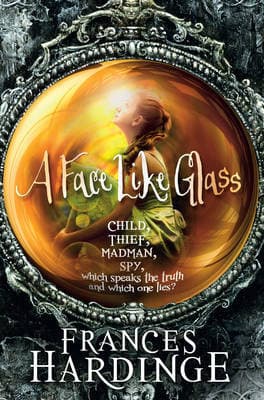
- A Face Like Glass
Frances Hardinge
4.2 (6k) average on GoodreadsFantasyExplores themes of identity, perception, and the power of faces/appearances within a unique, fantastical setting.
- Harry Potter and the Sorcerer's Stone
J.K. Rowling
4.5 (7M) average on GoodreadsFantasyRescued from a miserable life under the stairs, an orphaned boy discovers he's a wizard destined for a magical school, where he uncovers a dangerous secret tied to the dark wizard who murdered his parents.
- The Hunger Games
Suzanne Collins
4.3 (6.4M) average on GoodreadsFantasyIn a future where children fight to the death on live television, Katniss Everdeen volunteers for the arena, turning a death sentence into a fight for survival and a spark of rebellion.
- 1984
George Orwell
4.2 (3.1M) average on GoodreadsPoliticsIn a future where surveillance and thought control are absolute, a man's search for truth clashes with the Party, showing that hope can be a form of rebellion.
- Divergent
Veronica Roth
4.2 (2.9M) average on GoodreadsFantasyIn a society divided by virtues, a sixteen-year-old's difference from the norm starts a rebellion that threatens her world.





Enjoyed the summary?
A summary gives you the shape of the book. The book itself has the detail, the examples and the voice.
Find Bone Gap on AmazonAs an Amazon Associate, BookBrief earns from qualifying purchases. How we're funded