
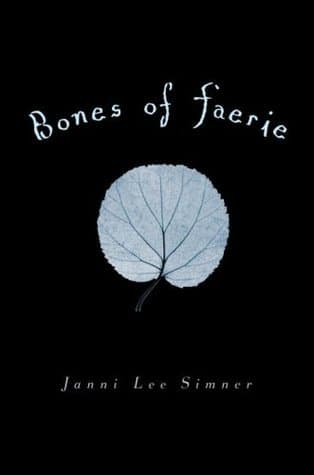
Synopsis
Covers the whole plot, including the ending.
- Difficulty
- Easy
- Pacing
- Moderate
- Mood
- Mysterious, Hopeful, Adventurous, Eerie
- Read it if
- You enjoy post-apocalyptic fantasy where magic has left tangible scars, and a young protagonist discovers latent powers that force her into a quest to heal a broken world.
- Skip it if
- You prefer high-fantasy with intricate world-building over a more focused, character-driven journey through a magically scarred landscape.
Bones of Faerie Plot Summary
Covers the whole plot, including the ending.
The First Vision and the Threat
Fifteen-year-old Liza lives in a post-war world where Faerie magic damaged the land. Her town, built on stilts above a dangerous, magic-filled forest, has strict rules against anything magical, including the 'Sight' – the ability to see the past or future. Liza's mother, a stern woman, constantly reminds Liza of Faerie's dangers. One day, while helping her father gather wood, Liza has her first vision, seeing a tree's past and future. The vision is overwhelming, and she accidentally reveals her ability to her mother. Horrified, her mother threatens to turn her over to the town elders for 'cleansing' – a process that often results in death. Liza's only choice is to escape into the dangerous forest.
Into the Scarred Forest
Fleeing her home, Liza enters the forbidden forest, a place twisted and dangerous from the Faerie War. The trees are sentient and hostile, and the ground is covered with 'bones of faerie' – crystallized magic. She meets Matthew, another exile who has a different Faerie ability: the power to influence plants. Matthew, at first cautious, offers Liza guidance and companionship. He explains that the forest is a living entity, scarred and resentful, and that many with Faerie abilities must live in its depths, hiding from human towns. Liza begins to understand the war's devastation and the fear it still causes in humanity.
The Hidden Village and the Elder
Matthew leads Liza to a hidden village deep within the forest, a safe place for people with Faerie abilities. Here, Liza meets others who have different magical talents, such as healing or talking with animals. She meets the village Elder, a wise old woman who explains that the war was not a simple victory for humanity, but a conflict that left both worlds broken. The Elder reveals that Liza's ability, the Sight, is rare and powerful, and it might be the way to understand what truly happened to Faerie. Liza starts to feel she belongs among these outcasts, a contrast to the fear and rejection she faced at home.
The Call of Faerie
As Liza spends time in the hidden village, her visions become more frequent and clear. She sees fragments of Faerie, not as the desolate wasteland humanity believes it to be, but as a place of damaged magic. These visions often show a specific gateway, a shimmering portal to the Faerie realm. The Elder and Matthew see the importance of these visions, understanding that Faerie is not gone, but hidden. A sense of purpose grows in Liza; she feels a strong pull towards Faerie, an instinct that tells her she must find this gateway and discover the truth behind its disappearance and the war's real cost.
Journey to the Gateway
Guided by Liza's clearer visions, she, Matthew, and a few other villagers set out to find the gateway to Faerie. Their journey is dangerous as they go deeper into the volatile forest, facing aggressive magical creatures and the war's lingering, hostile magic. Liza's Sight is vital, allowing her to anticipate dangers and find hidden paths. Matthew's plant manipulation skills are useful for clearing obstacles and making temporary shelters. Along the way, they find more evidence of the war's devastation, including old battlegrounds where human and Faerie magic clashed. Their determination is tested, but the shared hope of finding Faerie keeps them moving.
Crossing the Threshold
After a difficult journey, Liza's visions lead them to the gateway – a shimmering, almost invisible portal hidden in a grove of old, twisted trees. With a shared breath, Liza steps through, followed by Matthew and the others. They find themselves in Faerie, but it is not the magical land of legends. Instead, it is a desolate, silent realm, its magic dormant, its landscapes scarred and broken. The air feels heavy with sadness and loss. The Faerie creatures they encounter are few, weakened and confused. Liza realizes that Faerie suffered just as much, if not more, than the human world, and the war was a disaster for both sides.
The Heart of Faerie
Deep within Faerie, Liza's Sight guides them to a central location – a collapsed, crystalline structure that was once the heart of Faerie's magic. Here, she has a powerful vision, showing the true events of the war's end. She sees the Faerie Queen, in a desperate act to save her realm from total destruction, sacrificing herself to seal Faerie away from humanity, causing its magic to retreat and its essence to slumber. The Queen's sacrifice was not a defeat, but a desperate measure to save what little remained. Liza understands that the 'bones of faerie' in the human world are not just magic remnants, but echoes of Faerie's sleeping heart, trying to reconnect.
The Awakening's Promise
With this new understanding, Liza realizes that her Sight is not just a tool for seeing, but a connection. The visions she experienced, the pull she felt, were Faerie itself trying to communicate, trying to awaken. She understands that the energy she feels from the 'bones of faerie' is a reciprocal force, a connection that can be strengthened. Liza believes that by using her Sight, she can help bridge the gap between the two worlds, allowing Faerie's magic to slowly reawaken and flow once more. This awakening is not just for Faerie, but also for the human world, which has suffered from the absence of magic and the war's lingering scars.
The Return and the Message
Liza, Matthew, and their companions return through the gateway, carrying the truth of Faerie's state and the war's real impact. They bring back not just knowledge, but a renewed sense of purpose. Liza's visions now show her glimpses of a future where humanity and Faerie can coexist, where past scars can begin to heal. She knows that convincing the fearful human world will be a challenge, but she is determined to share what she has learned. Matthew also feels a stronger connection to his own abilities and a renewed hope for a future where those with Faerie gifts are not persecuted.
A New Beginning
Returning to the hidden village, Liza shares her discoveries with the Elder and the other exiles. The Elder, though saddened by Faerie's state, is also hopeful for its possible restoration. Liza begins to use her Sight, not just to see, but to project her understanding, subtly influencing the human world's magic and the 'bones of faerie.' She understands that healing will be a long process, requiring patience and courage. The ending suggests a new beginning, where Liza, Matthew, and others like them, can act as bridges between the two worlds, working towards a future of understanding and mutual healing, rather than fear and conflict.
Principal Figures
Liza
Protagonist
A young woman with the rare Faerie ability to see the past and future, destined to bridge two worlds.
Liza is a fifteen-year-old girl living in a human settlement scarred by the Faerie War. She is initially timid and afraid of her burgeoning Faerie abilities, having been raised in a strict, magic-fearing environment by her stern mother. Despite her fear, she possesses an innate curiosity and a strong moral compass. Her experiences in the forest and Faerie transform her into a courageous and determined leader, driven by a desire to understand and heal. She is an empathetic character who learns to embrace her unique gifts.
Relationships: Liza's Mother (Strained, fearful, and repressive due to her anti-Faerie beliefs.); Liza's Father (Distant but somewhat more understanding than her mother.); Matthew (Close companion and fellow Faerie-gifted exile, a developing friendship.); The Elder (Mentor and guide in the hidden village.)
Matthew
Supporting
A resourceful and compassionate boy with the Faerie ability to manipulate plants, Liza's first ally in the forest.
Matthew is a slightly older boy who has been living in the magic-scarred forest for some time, having been exiled for his own Faerie abilities. He is initially wary but quickly becomes a loyal and protective companion to Liza. Matthew is resourceful, knowledgeable about the forest's dangers, and possesses a quiet strength. His ability to manipulate plants is subtle but incredibly useful for survival and navigation. He shares Liza's desire for a world where those with Faerie gifts are not persecuted.
Relationships: Liza (Close companion and friend, sharing a common purpose.); The Elder (Respectful relationship as a member of the hidden village.)
Liza's Mother
Supporting
A stern and fearful woman, a symbol of humanity's repression of magic after the Faerie War.
Liza's mother is a rigid and unforgiving woman who embodies the human world's deep-seated fear and hatred of Faerie magic. She is fiercely protective of her family, but her fear manifests as harshness and a willingness to sacrifice anything, even her own daughter, to adhere to anti-magic laws. Her character highlights the generational trauma and prejudice resulting from the Faerie War, showing the profound impact fear can have on human behavior and relationships. She is a stark contrast to Liza's growing acceptance of magic.
Relationships: Liza (Strained and fearful; a relationship defined by the mother's rejection of Liza's abilities.); Liza's Father (Implied marital relationship, with her dominance in their family decisions.)
The Elder
Supporting
The wise leader of the hidden village, providing guidance and historical context for Liza's journey.
The Elder is a respected and knowledgeable woman who leads the hidden community of Faerie-gifted exiles in the forest. She possesses a deep understanding of the Faerie War, its aftermath, and the true nature of magic. She serves as a mentor figure to Liza, offering wisdom, historical context, and encouragement. Her calm demeanor and acceptance of those with abilities provide a stark contrast to the fear and rejection Liza experienced in her home town. She represents hope and the preservation of knowledge.
Relationships: Liza (Mentor and guide, providing crucial information and support.); Matthew (Respected leader within the hidden community.)
Faerie Queen
Mentioned
The sovereign of Faerie who sacrificed herself to save her realm during the war.
The Faerie Queen is a figure from the past, seen only through Liza's visions. She was the powerful ruler of Faerie who, in a desperate act to prevent the complete annihilation of her realm during the war with humanity, sacrificed her essence to seal Faerie away. Her sacrifice caused Faerie's magic to retreat and its world to slumber, leaving behind only echoes and 'bones' in the human world. Her actions were not a defeat, but a profound act of preservation, revealing a more complex truth about the war's conclusion.
Liza's Father
Supporting
A quieter figure who shows more subtle concern for Liza than her mother.
Liza's father is less vocal and dominant than her mother, often appearing to be under her influence. While he participates in the town's anti-magic norms, he displays a quieter, more conflicted demeanor. He initially accompanies Liza when she experiences her first vision, and his reaction, though fearful, seems to carry a touch more sorrow than outright condemnation. He represents the more passive side of humanity's fear, perhaps even a latent potential for understanding, but ultimately does not actively intervene to protect Liza.
Relationships: Liza (Distant but subtly more empathetic than her mother.); Liza's Mother (Marital relationship, with his wife being the dominant force.)
The Forest
Supporting
A living, dangerous entity scarred by magic, both a threat and a sanctuary.
The forest surrounding Liza's town is more than just a setting; it is a character in itself, a living entity twisted and imbued with hostile magic from the Faerie War. Its trees move, its paths are treacherous, and it is littered with the 'bones of faerie.' For humans, it is a place of terror and death, but for those with Faerie abilities like Liza and Matthew, it becomes a sanctuary, albeit a dangerous one. It embodies the lingering trauma of the war and the raw, untamed power of magic.
Relationships: Liza (Initially a threat, later a path to self-discovery and sanctuary.); Matthew (A home and a source of his abilities.)
Themes & Insights
The Scars of War and Fear
The novel shows the lasting damage of the Faerie War, not just on the land but on people. Liza's town is built on stilts, physically separating itself from the dangerous forest, showing their desire to escape and repress the magic that destroyed their world. The fear of magic is so deep that it leads to persecution, as seen when Liza's mother is willing to turn her own daughter over to the elders. This theme explores how trauma can lead to strict social rules and prejudice, hindering progress and understanding. The 'bones of faerie' scattered throughout the human world are constant reminders of the conflict's destructive power.
“The magic of Faerie was a poison, a madness that destroyed everything it touched. It ruined the land, twisted the trees, and made monsters of men. We learned our lesson.”
Acceptance vs. Repression of Self
Liza's journey is about accepting who she is and her magical abilities. Raised in a society that demonizes magic, she first fears her Sight. Her flight from home is an escape from repression. In the hidden village, she finds a community where her abilities are accepted and valued, allowing her to embrace her identity. This theme highlights the importance of self-acceptance and finding belonging, especially when one's true nature is seen as 'other' or dangerous by society. Liza's growth is tied to her willingness to explore and use her unique gifts.
“You are not broken, child. You are merely… different. And in this world, different can be a strength.”
Truth and Perspective
The story challenges humanity's one-sided view of the Faerie War. Initially, humans see Faerie as an evil force that attacked their world, leading to their victory. Liza's visions and her journey into Faerie show a more complex and tragic truth: Faerie was not defeated but sacrificed itself to survive, and both worlds suffered great losses. This theme shows that history is often written by the victors, and true understanding requires looking at multiple perspectives. Liza's Sight helps uncover this buried truth, showing that empathy and a willingness to look beyond surface appearances are important for reconciliation.
“The war was not a triumph, child. It was a wound. For both worlds.”
Interconnectedness of Worlds
Despite the physical and magical separation of Faerie and the human world, the story shows their deep and lasting connection. The 'bones of faerie' are not just inert remnants but active echoes of Faerie's sleeping heart, subtly trying to reconnect. Liza's Sight is not just an individual ability but a way to bridge the gap between the realms. This theme suggests that despite conflict and separation, fundamental connections remain, and the well-being of one world often depends on the health of the other. The potential for healing is in recognizing and nurturing these inherent bonds.
“The magic never truly left us, Liza. It only retreated. And it waits for a path back.”
Plot Devices & Literary Techniques
The Sight
Liza's unique Faerie ability to perceive the past and future of objects and places.
The Sight is Liza's primary Faerie ability, allowing her to see fragmented memories and potential futures embedded within the physical world. It functions as a crucial narrative tool, providing exposition about the Faerie War, guiding Liza's journey to the gateway, and revealing the true nature of Faerie's disappearance. Beyond mere perception, the Sight also acts as a conduit, connecting Liza to Faerie's latent magic and eventually becoming a key to its potential reawakening. It is both a burden and a gift, initially causing her exile but ultimately empowering her quest for truth.
Bones of Faerie
Crystallized remnants of magic scattered across the human world, physical evidence of the war.
The 'bones of faerie' are crystalline formations found throughout the magic-scarred human world. They serve as a constant, tangible reminder of the Faerie War's destructive power and the lingering presence of magic. Initially presented as inert, dangerous curiosities, their true nature is later revealed: they are echoes of Faerie's sleeping heart, subtly trying to reconnect with its realm. This device provides a physical link between the two worlds, foreshadowing Faerie's dormant state and Liza's role in its awakening, acting as a reciprocal force to her Sight.
The Scarred Forest
A living, dangerous, and magic-blighted forest that separates human settlements from the hidden magical world.
The forest acts as a literal and metaphorical barrier. Physically, it is a perilous environment teeming with hostile, magic-infused plants and creatures, making travel dangerous. Metaphorically, it represents the raw, untamed, and feared aspects of magic that humanity has tried to suppress since the war. For Liza, it is initially a place of exile and danger, but it transforms into a sanctuary and a path to self-discovery, where she encounters others like her. The forest is a dynamic setting that reflects the lingering trauma of the war and the potential for a wild, untamed magic.
The Gateway to Faerie
A hidden, shimmering portal that provides physical access between the human world and Faerie.
The gateway is the crucial physical link between the two realms. Its discovery and passage are central to Liza's quest, allowing her to gain direct knowledge of Faerie's true state. It serves as a symbol of the possibility of reconciliation and understanding between the worlds, but also highlights the difficulty of achieving such a connection, as it is hidden and difficult to access. Its existence proves that the separation of worlds is not absolute and offers a tangible means for interaction and healing.
Bones of Faerie Quotes
“The world was not a safe place, and magic was not a safe thing.”
“Sometimes you have to do what's right, even if it's hard. Even if it hurts.”
“Faerie was a beautiful lie, and the truth was far more terrible.”
“A promise made to a faerie is a binding thing, even if you don't remember making it.”
“The old ways were gone, but the magic wasn't. It just changed.”
“Fear was a cold knot in her stomach, but defiance was a spark.”
“She wasn't just a girl anymore. She was a weapon, and a shield.”
“The forest remembered. It always remembered.”
“There were some scars that never truly healed, only faded into the background.”
“Sometimes the greatest strength was knowing when to ask for help.”
“The magic whispered to her, a language older than words.”
“Hope was a dangerous thing, but living without it was even worse.”
“Every choice had a ripple, and some ripples turned into waves.”
Quiz
10 questions on the plot and the characters. Each answer comes with a short explanation.
Question 1
What unique ability does Liza discover she possesses, which forces her to flee her town?
- The ability to control the sentient trees
- The ability to see into the past and future
- The ability to heal the scars left by magic
- The ability to communicate with Faerie creatures
Show answer
B. The ability to see into the past and future Liza discovers she has the Faerie ability to see into the past and future, a power that is forbidden and causes her to be exiled.
Question 2
What is the primary danger associated with the forest surrounding Liza's town?
- It is home to dangerous magical beasts.
- It contains traps laid by humans to keep Faerie out.
- Its trees move with sinister intention and threaten to harm those who enter.
- It is constantly growing and encroaching on the town.
Show answer
C. Its trees move with sinister intention and threaten to harm those who enter. The forest is described as having trees that move with sinister intention, posing a direct threat to anyone who wanders into it.
Question 3
What is the general perception of Faerie in Liza's human world at the beginning of the book?
- Faerie is a place of wonder and beauty, long forgotten.
- Faerie is a dangerous, devastating force from which nothing has been seen or heard since the war.
- Faerie is a myth, believed by very few to have ever existed.
- Faerie is a potential ally, though contact has been lost.
Show answer
B. Faerie is a dangerous, devastating force from which nothing has been seen or heard since the war. Liza's world believes the war with Faerie devastated both sides, and nothing has been seen or heard from Faerie since, implying it's a dangerous, absent force.
Question 4
What is Liza's primary motivation for embarking on her quest after discovering her powers?
- To find a way to destroy Faerie once and for all.
- To escape persecution and understand her abilities by going into Faerie.
- To seek revenge on the Faerie for the war's destruction.
- To warn Faerie of an impending human attack.
Show answer
B. To escape persecution and understand her abilities by going into Faerie. Liza has no choice but to flee her town after discovering her Faerie ability, which directly leads her quest into Faerie.
Question 5
The war between humanity and Faerie is described as having what kind of impact on both sides?
- It led to a fragile peace treaty.
- It resulted in humanity's complete victory.
- It devastated both sides.
- It was a minor skirmish with little lasting effect.
Show answer
C. It devastated both sides. The book explicitly states that the war between humanity and Faerie 'devastated both sides,' leaving lasting scars.
Question 6
What is the ultimate goal or potential outcome of Liza's quest mentioned in the synopsis?
- To discover a lost Faerie treasure.
- To find the key to healing both the human and Faerie worlds.
- To become the new queen of Faerie.
- To permanently seal off Faerie from the human world.
Show answer
B. To find the key to healing both the human and Faerie worlds. The synopsis states that 'what she finds along the way may be the key to healing both worlds,' indicating this as the ultimate goal.
Question 7
How does Liza's age (15 years old) contribute to the Young Adult genre elements of the story?
- It emphasizes her role as a child needing protection from adults.
- It positions her at a pivotal age for self-discovery, emerging powers, and navigating a dangerous world independently.
- It suggests her immaturity is a major hindrance to her quest.
- It highlights her inexperience with magic compared to older Faerie characters.
Show answer
B. It positions her at a pivotal age for self-discovery, emerging powers, and navigating a dangerous world independently. Being 15 years old places Liza at an age common for YA protagonists who are discovering their identity, emerging powers, and facing significant challenges on their own.
Question 8
Given the description, what is a likely central theme explored in 'Bones of Faerie' regarding the aftermath of war?
- The inevitability of conflict between different species.
- The long-term consequences of conflict and the potential for reconciliation and healing.
- The superiority of one culture over another in times of peace.
- The importance of forgetting past grievances to move forward.
Show answer
B. The long-term consequences of conflict and the potential for reconciliation and healing. The narrative focuses on the world bearing 'scars of its encounter with magic' and Liza's quest potentially being the 'key to healing both worlds,' strongly suggesting themes of post-war consequences, reconciliation, and healing.
Question 9
How does the concept of 'scars of its encounter with magic' manifest in Liza's immediate environment?
- Through constant magical attacks from Faerie.
- Through the town's isolation and the sinister, moving trees in the surrounding forest.
- Through widespread illness caused by magical residue.
- Through a lack of any natural resources in the area.
Show answer
B. Through the town's isolation and the sinister, moving trees in the surrounding forest. The description specifically mentions that 'Liza's world bears the scars of its encounter with magic' and then immediately details how 'Trees move with sinister intention, and the town Liza calls home is surrounded by a forest that threatens to harm all those who wander into it.'
Question 10
What is the significance of Liza's Faerie ability to 'see into the past, into the future' in the broader context of healing two devastated worlds?
- It allows her to foresee future conflicts and avoid them entirely.
- It provides her with critical insights into the origins of the conflict and potential pathways for reconciliation.
- It helps her identify and destroy the remaining magical threats.
- It is primarily a defensive power to protect herself from harm.
Show answer
B. It provides her with critical insights into the origins of the conflict and potential pathways for reconciliation. An ability to see past and future would be crucial for understanding the historical causes of the war and envisioning a path towards future healing and reconciliation between the two worlds.
Bones of Faerie FAQ
What is the central conflict driving Liza's initial journey?
Liza's world is a post-Faerie War landscape where magic is feared and suppressed. Her discovery of her own Faerie ability to see into the past and future makes her a danger to her community, forcing her to flee her home to avoid being ostracized or worse, hunted.
How does the 'moving forest' around Liza's town symbolize the lingering effects of the Faerie War?
The moving forest, with trees that possess sinister intentions and actively threaten those who enter, is a direct manifestation of the corrupted magic left over from the Faerie War. It serves as a constant, physical reminder of Faerie's destructive power and humanity's vulnerability, even years after the conflict supposedly ended.
What unique Faerie ability does Liza possess, and how does it manifest?
Liza possesses the Faerie ability to see into the past and the future. This gift manifests as visions or 'flashes' that can be overwhelming and disorienting, often showing her events she wasn't present for or potential outcomes that haven't occurred yet, making her an unwilling seer.
What is Liza's ultimate goal or quest in the story?
Liza's ultimate quest is to understand her own burgeoning Faerie powers, uncover the true history and current state of Faerie, and find a way to heal the fractured relationship and damaged worlds of both humanity and Faerie. This involves venturing into Faerie itself and confronting the prejudices and truths on both sides.
How does the novel portray the aftermath of the Faerie War on both human and Faerie societies?
The novel portrays humanity as scarred and fearful, living in isolated, magic-averse communities with lingering physical and psychological wounds. Faerie, conversely, is depicted as having seemingly vanished or gone silent, its magic either dormant, corrupted, or hidden, suggesting a deep, perhaps self-inflicted, wound to their own realm.
What is the significance of the 'bones of Faerie' in the title?
The 'bones of Faerie' likely refers to the remnants, the lingering magic, and the deep, often painful truths left behind from the Faerie War. It suggests that Faerie itself, or at least its former glory, is dead or broken, and Liza's journey involves unearthing these fundamental, foundational pieces.
Are there specific historical or mythical allusions within the Faerie lore presented in the book?
While the book creates its own unique Faerie lore, it draws on traditional elements like the Fae's connection to nature, their ancient power, and their often-ambiguous morality. The concept of a devastating war between humans and Fae is a common trope in folklore, though Simner gives it a distinct post-apocalyptic spin.
How does Liza's understanding of her own heritage evolve throughout her journey?
Initially, Liza sees her Faerie heritage as a curse, something that isolates her and makes her dangerous. As she ventures into Faerie and learns more about its history and her own family's connection, she begins to accept and even embrace her powers, realizing they are essential to her identity and her mission.
What role do the 'scars' on Liza's world play beyond just physical damage?
The 'scars' represent not just the physical destruction from the war, but also the deep-seated fear, prejudice, and ignorance that prevent humanity from understanding or coexisting with magic. They are psychological scars that dictate societal norms and fuel the conflict Liza must overcome.
How does Liza's isolation at the beginning of the story impact her psychological development?
Liza's initial isolation, due to her hidden abilities and the oppressive atmosphere of her town, fosters a sense of otherness and fear of her own nature. This forced independence, however, also strengthens her resolve and self-reliance, preparing her for the solitary and dangerous journey ahead.
What psychological challenges does Liza face in dealing with her precognitive and retrocognitive abilities?
Liza struggles with the overwhelming nature of her visions, which can be disorienting and blur the lines of time. She faces the burden of knowing potential futures or past tragedies, which can lead to anxiety, a sense of helplessness, and difficulty distinguishing between reality and vision.
How does the theme of 'fear of the unknown' manifest in the human characters' reactions to magic and Faerie?
The human characters' fear of the unknown manifests as rigid adherence to rules, suspicion of anything magical, and a desperate need for control. This fear stems from the devastating Faerie War, leading them to suppress and demonize any hint of magic, even if it could be beneficial.
What internal conflicts does Liza experience regarding her identity as both human and Faerie?
Liza grapples with feeling like an outsider in both worlds. She is ostracized by humans for her Faerie blood and initially feels alien in Faerie due to her human upbringing. This creates an internal struggle to reconcile these two parts of herself and find where she truly belongs.
Is the 'healing' of both worlds a literal or metaphorical healing, or both?
The 'healing' is likely both literal and metaphorical. It involves mending the physical damage and restoring balance to the land, but also healing the deep-seated prejudices, misunderstandings, and psychological wounds that led to the war and continue to divide humanity and Faerie.
How does the narrative challenge traditional good-versus-evil tropes in its portrayal of Faerie and humanity?
The narrative avoids a simplistic good-versus-evil dynamic by showing the flaws and virtues in both Faerie and human societies. Humans are not entirely innocent victims, and Faerie are not purely malevolent, suggesting that the war was a complex tragedy born from misunderstanding and extremism on both sides.
What message about environmentalism or nature's sentience can be inferred from the 'moving forest'?
The 'moving forest' can be interpreted as a symbol of nature's retaliatory power and its sentience. It suggests that abusing or warring against nature (or a magical race deeply connected to it) has severe, lasting consequences, and the environment itself remembers and reacts to harm.
Does the book suggest that magic itself is inherently dangerous, or is it the *misuse* of magic that causes destruction?
The book leans towards the idea that it is the misuse and misunderstanding of magic, rather than magic itself, that causes destruction. The Faerie War's devastation stems from a lack of balance and respect for power, implying that magic, when understood and wielded responsibly, could be a force for healing and creation.
What is the ultimate significance of Liza's journey for the future relationship between humans and Faerie?
Liza's journey is crucial as it represents the first step towards reconciliation and understanding between humans and Faerie in generations. By bridging the gap, understanding both sides, and using her unique abilities, she lays the groundwork for a potential future where coexistence, rather than conflict, is possible.
About the author

Janni Lee Simner is an author known for her work in fiction, particularly in the realm of young adult literature. Her notable book, "Bones of Faerie," explores themes of magic and survival in a post-apocalyptic world. Simner's writing often blends fantasy elements with deep emotional narratives.
Similar books
- Uprooted
Naomi Novik
4.1 (167k) average on GoodreadsFantasyExplores a menacing, sentient forest and a young woman discovering powerful magic with a destiny to protect her world.
- The Cruel Prince
Holly Black
4.1 (216k) average on GoodreadsFantasyWhile both books feature fae, Simner's "Bones of Faerie" presents them as ancient, ambiguous, and intrinsically linked to a broken world, embodying forces of nature. Black's fae, in contrast, are often more human-like in their political machinations, rivalries, and romantic entanglements, operating within a more traditional courtly fantasy setting. Simner's fae are less about individual personalities and more about the raw power of a forgotten magic.
- The Knife of Never Letting Go
Patrick Ness
4.0 (152k) average on GoodreadsThrillerBoth novels are set in post-apocalyptic worlds, but Simner's focuses more on the spiritual and psychological journey of reconnecting with a lost magical past, using the 'First Vision' as a metaphor for historical consciousness. Ness's work, while also featuring a protagonist with unique abilities, is more grounded in immediate, visceral survival, exploring themes of toxic masculinity, war, and the burden of internal thought, with its post-apocalyptic elements serving a different kind of allegorical purpose.
- Harry Potter and the Sorcerer's Stone
J.K. Rowling
4.5 (7M) average on GoodreadsFantasyRescued from a miserable life under the stairs, an orphaned boy discovers he's a wizard destined for a magical school, where he uncovers a dangerous secret tied to the dark wizard who murdered his parents.
- The Hunger Games
Suzanne Collins
4.3 (6.4M) average on GoodreadsFantasyIn a future where children fight to the death on live television, Katniss Everdeen volunteers for the arena, turning a death sentence into a fight for survival and a spark of rebellion.
- 1984
George Orwell
4.2 (3.1M) average on GoodreadsPoliticsIn a future where surveillance and thought control are absolute, a man's search for truth clashes with the Party, showing that hope can be a form of rebellion.



Enjoyed the summary?
A summary gives you the shape of the book. The book itself has the detail, the examples and the voice.
Find Bones of Faerie on AmazonAs an Amazon Associate, BookBrief earns from qualifying purchases. How we're funded