
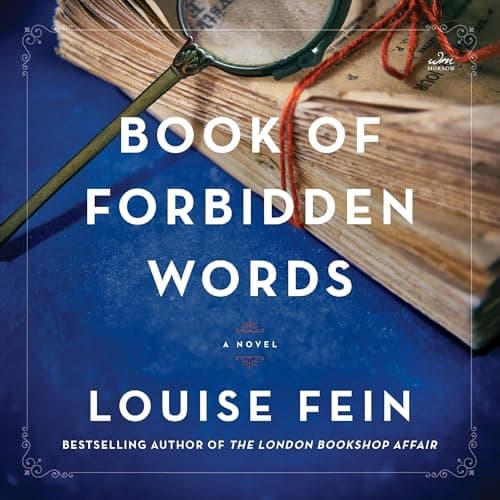
Synopsis
Covers the whole plot, including the ending.
- Difficulty
- Medium
- Pacing
- Moderate
- Mood
- Historical, somber, thought-provoking, suspenseful
- Read it if
- you enjoy historical fiction set during WWII, stories exploring moral dilemmas, and narratives about ordinary people confronting extraordinary evil.
- Skip it if
- you prefer lighthearted reads, or are sensitive to detailed depictions of Nazi Germany and antisemitism.
Book of Forbidden Words Plot Summary
Covers the whole plot, including the ending.
The Arrival in Berlin
In 1937, ten-year-old Clara Falkenberg is sent from London to Berlin to live with her German father, Erich Falkenberg, a well-known professor of philology. Her English mother, Elizabeth, thinks Clara will be safer in Germany, away from the coming war with Japan. Clara finds this decision confusing. When she arrives, her father's home is very different from her lively life in London. Erich is distant and busy, and Clara struggles to learn the new language and adapt to the unsettling mood of Nazi Germany. She quickly learns about the strict rules and the fear that controls daily life, seeing the first signs of the regime's control.
Forbidden Words and Hidden Meanings
Clara watches her father's secret work in his study. He is carefully listing and studying words the Nazi regime calls 'forbidden' or 'dangerous.' These words are linked to Jewish culture, liberal ideas, or anything that goes against Nazi beliefs. Erich tells Clara that language is powerful, able to create and destroy, and that understanding how words are twisted helps one understand how people are manipulated. This makes Clara interested in language, and she starts helping her father with his secret project. At first, it's out of curiosity and a wish to connect with him, but soon she sees how important the words are.
Friendship and First Encounters with Prejudice
Clara becomes friends with Hannah, a Jewish girl her age who lives in the same apartment building. Their friendship grows, giving Clara a much-needed sense of normal life and connection as tensions rise. However, their bond is soon tested by the growing antisemitism in Berlin. Clara sees the discrimination and hostility Hannah and her family face, as Jewish businesses are boycotted and public places are separated. She struggles to make sense of the hateful talk she hears and the kindness of Hannah's family. This makes her face the harsh reality of the regime's ideas and what they do to innocent people.
The Book of Forbidden Words Takes Shape
Erich's work with the forbidden words becomes more urgent and risky. He is not just listing them but creating a 'Book of Forbidden Words,' a secret dictionary meant to keep the true meanings of words that the Nazis are changing for propaganda. Clara increasingly sees how important and risky this project is. She helps her father collect examples, write down definitions, and hide the growing manuscript. She becomes a part of his quiet resistance. Their shared secret makes their bond stronger but also puts them in danger as the regime watches more closely.
Kristallnacht and the Escalation of Terror
The night of Kristallnacht, the 'Night of Broken Glass,' arrives violently. Clara and Hannah see the terrible destruction of Jewish homes, businesses, and synagogues. Hannah's family is directly targeted, and their lives are shattered. This event changes Clara. It removes any remaining belief in the regime's 'order' or 'legality.' She feels fear and helplessness but also a strong will to protect Hannah and continue her father's work. The violence shows how important their 'Book of Forbidden Words' is as a record of truth against lies and brutality.
The Search for Escape and the Betrayal
After Kristallnacht, Erich and Clara try to help Hannah and her family escape Germany. They look into many options, facing paperwork problems and the constant risk of being caught. During this stressful time, Clara learns about a betrayal within their group, someone reporting 'suspicious' activities to the authorities. This news adds another layer of danger to their already difficult situation, making them even more careful and distrustful. The betrayer's identity creates tension, raising the stakes of their efforts to save Hannah.
The Power of Language as a Weapon
Clara often encounters the widespread and harmful nature of Nazi propaganda, realizing how well the regime uses language to control people. Slogans, speeches, and censored media all create fear and hatred, twisting public perception and dehumanizing those called 'enemies of the state.' She sees how friends and neighbors are swayed by the talk, turning against their Jewish acquaintances. This experience confirms her father's lessons about understanding the true meanings of words and resisting their corruption, strengthening her commitment to their secret book.
Erich's Arrest and Clara's Resolve
Erich's secret work is eventually discovered. The Gestapo arrests him, a terrible blow that leaves Clara alone and scared. Before his capture, Erich gives Clara the complete 'Book of Forbidden Words,' asking her to protect it at all costs, as it represents hope and truth. Clara, though heartbroken and scared, understands the great responsibility placed on her. She decides to continue her father's legacy and ensure the book's survival, seeing its potential to show the atrocities and be a guide against the regime's lies.
Hiding the Book and Evading Capture
After her father's arrest, Clara must navigate the increasingly dangerous streets of Berlin alone, always fearing for her safety and the discovery of the 'Book of Forbidden Words.' She finds help from unexpected sources, learning to be resourceful and strong. The book becomes her most valuable possession, a link to her father and a symbol of resistance. Clara finds clever hiding places for the manuscript, moving it often to avoid detection, all while trying to act normal and avoid drawing suspicion from her neighbors and the authorities.
The Enduring Power of Words
As the war continues and the danger grows, Clara often thinks about the purpose of the 'Book of Forbidden Words' and her father's sacrifice. She understands that the book is more than just definitions; it is a historical record, a record of truth, and an act of defiance against a regime that tried to control thought through language. The words in its pages represent the memory of those silenced and the hope for a future where truth can win. Clara's decision to protect the book solidifies, driven by her love for her father and her belief in the lasting power of language.
Survival and the Promise of the Future
Clara endures the final, brutal years of the war, seeing Berlin destroyed. She survives, holding onto the 'Book of Forbidden Words' as a symbol of hope and a connection to her past. Though the fate of many she knew, including Hannah and her father, remains uncertain or tragic, Clara emerges with a deep understanding of the power of words and the importance of speaking truth to power. She carries the book's legacy, determined that its message will one day be shared, ensuring that the forbidden words and the stories they represent will never truly be forgotten.
Principal Figures
Clara Falkenberg
Protagonist
A young English girl sent to live in Nazi Germany.
Clara is a curious and sensitive ten-year-old girl who is abruptly uprooted from her comfortable life in London and thrust into the oppressive atmosphere of Nazi Berlin. Initially bewildered and homesick, she gradually develops a keen awareness of the political climate and the dangers around her. Her intelligence and innate sense of justice lead her to understand and participate in her father's dangerous work. She is resilient, resourceful, and deeply empathetic, especially towards her friend Hannah, and her experiences force her to mature quickly, becoming a quiet but determined agent of resistance.
Relationships: Erich Falkenberg (daughter); Hannah (best friend); Elizabeth (daughter)
Erich Falkenberg
Supporting
Clara's estranged father, a professor of philology.
Erich is a brilliant but somewhat detached professor of philology, deeply committed to the integrity of language. He is a man of principle who recognizes the Nazi regime's insidious manipulation of words as a fundamental threat to truth and humanity. His quiet, scholarly resistance through the creation of the 'Book of Forbidden Words' is his way of fighting back. He is initially distant from Clara but grows to trust and rely on her, recognizing her intelligence and courage. His sacrifice for his beliefs and for the book is a pivotal moment in Clara's journey.
Relationships: Clara Falkenberg (father); Elizabeth (ex-husband)
Hannah
Supporting
Clara's Jewish best friend in Berlin.
Hannah is a lively and kind Jewish girl who quickly befriends Clara. She represents the innocent victims of Nazi persecution, her family suffering directly from the escalating antisemitism. Despite the increasing hardships and dangers, Hannah maintains a spirited outlook for as long as possible, providing Clara with companionship and a window into the lives of Jewish families under the regime. Her experiences, particularly during Kristallnacht, profoundly impact Clara and fuel her determination to help and to preserve her father's work. Her fate remains a poignant reminder of the human cost of hatred.
Relationships: Clara Falkenberg (best friend)
Elizabeth
Supporting
Clara's English mother.
Elizabeth is Clara's well-meaning but somewhat naive English mother. She sends Clara to Berlin believing it will be safer than London, a decision rooted in a misunderstanding of the true nature of the Nazi threat. Her absence and her initial misjudgment highlight the disconnect between the perception of the regime outside Germany and the brutal reality within. She represents the external world's slow awakening to the horrors unfolding in Germany, and her decision ultimately sets Clara on her extraordinary and dangerous path.
Relationships: Clara Falkenberg (mother); Erich Falkenberg (ex-wife)
Herr Schmidt
Antagonist
A Nazi Party official and neighbor.
Herr Schmidt is a fervent Nazi Party member and a neighbor in Clara and Erich's apartment building. He embodies the 'ordinary' face of Nazism – seemingly polite but utterly dedicated to the regime's ideology and willing to enforce its rules. He represents the pervasive surveillance and the chilling readiness of citizens to report on one another. His presence creates a constant sense of unease and danger for Clara and Erich, as he observes their activities and embodies the threat of betrayal and discovery, ultimately playing a role in Erich's downfall.
Themes & Insights
The Power and Manipulation of Language
This theme explores how language can be used for truth and deception. The Nazi regime systematically corrupted words to control public thought, demonize minorities, and justify atrocities. Erich's 'Book of Forbidden Words' directly opposes this, an act of resistance that aims to preserve the true meanings of words, and with them, human dignity and historical truth. Clara learns to see the harmful nature of propaganda, understanding that controlling language is necessary for controlling a population.
“They twist words, Clara. They empty them of their true meaning and fill them with lies. If you control the words, you control the thoughts.”
Resistance and Moral Courage
The novel shows different forms of resistance against a repressive regime. Erich's scholarly work, documenting forbidden words, is a quiet but deeply brave act of intellectual defiance. Clara's role in helping him and then protecting the book after his arrest shows her developing moral courage. Even small acts of kindness or defiance, like Clara's friendship with Hannah, become important in a society where conformity and cruelty are enforced. The theme emphasizes that resistance does not always mean grand gestures; it can be found in a firm commitment to truth and humanity.
“Sometimes, Clara, the most powerful weapon against lies is simply to remember the truth.”
Innocence Lost and Coming of Age in Wartime
Clara's journey is a touching look at a child losing innocence amid the horrors of war and totalitarianism. Sent to Berlin as a naive ten-year-old, she quickly sees antisemitism, violence, and the constant threat of the Gestapo. Her friendship with Hannah, and its sad end, forces her to face the brutal facts of the regime. Clara is forced to grow up fast, taking on great responsibilities and making hard choices, changing from a child into a strong young woman who understands how much her actions matter.
“The world she had known, a world of children's games and bedtime stories, had shattered into a thousand jagged pieces, replaced by a reality far darker than any nightmare.”
Memory and History
The 'Book of Forbidden Words' is a strong symbol of the importance of memory and preserving history, especially when a regime tries to erase or rewrite it. Erich's project is an effort to ensure that the truth about the words, and the people and ideas they represent, will not be forgotten. Clara's dedication to protecting the book means she understands that remembering the past, particularly its difficult truths, is important for preventing future atrocities. The novel shows that those who control the story control history, so preserving true stories is a deeply important historical act.
“This book, Clara, is a memory. A memory of what they want us to forget. And forgetting, my dear, is the greatest danger of all.”
Plot Devices & Literary Techniques
The Book of Forbidden Words
A secret lexicon of words twisted by the Nazis.
This physical book is the central plot device, serving as both a tangible object and a powerful symbol. It is Erich's clandestine project, a meticulously compiled lexicon of words whose true meanings have been corrupted by Nazi propaganda. The book represents resistance, truth, memory, and hope. Its creation drives much of the plot, its protection becomes Clara's primary mission, and its very existence defies the regime's attempts to control thought through language. It is a testament to the enduring power of words and a legacy that Clara must safeguard.
The Motif of Language and Silence
The pervasive use of language for control and the forced silence of dissent.
Throughout the novel, language is highlighted as a weapon and a shield. The Nazis use propaganda, slogans, and euphemisms to manipulate, dehumanize, and justify violence. Conversely, the 'forbidden words' represent ideas and truths that the regime seeks to silence. The device explores the tension between the loud, aggressive voice of the state and the quiet, dangerous acts of preserving true meanings. It emphasizes the importance of speaking out against injustice, even when it means risking one's life, and the profound danger of allowing dissent to be silenced.
Child's Perspective
The story is told through the eyes of a young girl.
Telling the story through Clara's ten-year-old perspective allows the reader to experience the horrors of Nazi Germany with a unique sense of immediacy and innocence lost. Her initial confusion and gradual understanding of the atrocities make the regime's cruelty even more stark and impactful. This perspective also highlights the psychological impact of living under totalitarianism on children, showing how they are forced to adapt, mature, and make sense of an increasingly senseless world. It allows for a fresh, unjaded view of the unfolding tragedy.
Book of Forbidden Words Quotes
“There are no forbidden words, only forbidden thoughts.”
“The past is never dead, it's not even past.”
“Words have power, the power to build and the power to destroy.”
“Sometimes the bravest thing you can do is to speak.”
“She learned that silence could be a cage, but also a shield.”
“The weight of unspoken truths is a heavy burden to bear.”
“History is written by the victors, but the stories of the vanquished are etched in the silence.”
“Fear is the architect of many walls.”
“To forget is to betray oneself.”
“The ink bled onto the page, a testament to a life lived and a story waiting to be told.”
“They tried to erase her, but her spirit was a flame that could not be extinguished.”
“In the quiet spaces between the words, the real meaning often lies.”
“The greatest rebellion is to live authentically.”
“She found her voice not in shouting, but in the quiet persistence of her actions.”
Quiz
10 questions on the plot and the characters. Each answer comes with a short explanation.
Question 1
What is the primary setting of 'Book of Forbidden Words'?
- A bustling metropolis in the present day
- A quiet village during World War II
- A futuristic space colony
- An ancient historical kingdom
Show answer
B. A quiet village during World War II The novel is set in Germany during the tumultuous years of World War II.
Question 2
Who is the protagonist of 'Book of Forbidden Words'?
- A resistance fighter
- A young girl named Else
- A disillusioned soldier
- A Jewish scholar
Show answer
B. A young girl named Else The central character is Else, a young girl navigating the dangers of wartime.
Question 3
What significant historical event forms the backdrop of the novel?
- The Cold War
- The rise of the Soviet Union
- The Nazi regime and World War II
- The fall of the Berlin Wall
Show answer
C. The Nazi regime and World War II The novel is deeply intertwined with the historical context of Nazi Germany and World War II.
Question 4
What theme is central to Else's personal journey in the book?
- The pursuit of wealth and power
- Finding her voice and identity amidst oppression
- Escaping to a new country
- Mastering a new language
Show answer
B. Finding her voice and identity amidst oppression Else's struggle to express herself and understand her place in a dangerous world is a key theme.
Question 5
The title 'Book of Forbidden Words' likely refers to:
- A magical grimoire with spells
- A collection of secret codes used by spies
- Words and ideas that were suppressed or dangerous under the Nazi regime
- A diary filled with personal secrets
Show answer
C. Words and ideas that were suppressed or dangerous under the Nazi regime The 'forbidden words' represent ideas, truths, and expressions that were dangerous to utter or possess during the Nazi era.
Question 6
Which of the following is NOT a likely element explored in the novel, given its setting and themes?
- The impact of propaganda on ordinary citizens
- The moral compromises people made to survive
- The resilience of the human spirit in the face of adversity
- The joyous celebration of a victorious army
Show answer
D. The joyous celebration of a victorious army While the novel explores hardship, it is unlikely to focus on the joyous celebration of a victorious army, given its wartime setting and focus on oppression.
Question 7
What is the primary conflict Else faces?
- A personal rivalry with a classmate
- The external threat of the Nazi regime and its internal impact on her family and community
- A quest to find a hidden treasure
- An internal struggle with a supernatural entity
Show answer
B. The external threat of the Nazi regime and its internal impact on her family and community Else's main conflict stems from the oppressive Nazi regime and how it affects her life and those around her.
Question 8
The novel 'Book of Forbidden Words' can be categorized as:
- A science fiction epic
- A historical fiction novel
- A contemporary romance
- A fantasy adventure
Show answer
B. A historical fiction novel The book is classified as historical fiction due to its setting in a specific historical period and its engagement with historical events.
Question 9
What does Else's journey likely symbolize in the context of the novel?
- The inevitable triumph of good over evil
- The loss of innocence and the harsh realities of war
- The power of technology to solve societal problems
- The importance of strict adherence to rules
Show answer
B. The loss of innocence and the harsh realities of war Else's experiences often represent the loss of childhood innocence and the brutal realities faced by those living through wartime.
Question 10
Considering the author Louise Fein's background and the novel's subject matter, what might be a driving force behind her writing?
- A desire to explore the complexities of human behavior under extreme political pressure
- An interest in ancient mythology and folklore
- A passion for writing light-hearted comedies
- A fascination with futuristic technological advancements
Show answer
A. A desire to explore the complexities of human behavior under extreme political pressure Fein often explores themes related to historical events and the human condition, suggesting a drive to understand how people act in challenging circumstances.
Book of Forbidden Words FAQ
What is "Book of Forbidden Words" about?
"Book of Forbidden Words" is a historical novel set in 1930s Germany. It follows the story of a young Jewish girl who discovers a hidden diary, which uncovers dark family secrets and the escalating threat of Nazism.
Who is the author of "Book of Forbidden Words"?
The author of "Book of Forbidden Words" is Louise Fein.
What historical period does "Book of Forbidden Words" cover?
The novel is set in the 1930s, specifically leading up to and during the rise of the Nazi regime in Germany.
What are the main themes in "Book of Forbidden Words"?
The book explores themes of family secrets, forbidden love, the power of words, courage in the face of adversity, and the devastating impact of prejudice and war.
Is "Book of Forbidden Words" a true story?
While inspired by historical events and the atmosphere of the time, "Book of Forbidden Words" is a work of historical fiction. The characters and specific plot points are fictional creations.
What age group is "Book of Forbidden Words" suitable for?
The novel deals with mature themes related to historical persecution and loss, making it most suitable for young adult and adult readers.
What kind of secrets are revealed in the diary in "Book of Forbidden Words"?
The diary reveals complex and often painful family secrets related to past relationships, hidden identities, and the consequences of choices made during a tumultuous political climate.
How does "Book of Forbidden Words" portray the rise of Nazism?
The novel depicts the gradual encroachment of Nazi ideology and its impact on everyday life, showing how fear and suspicion began to permeate society and affect individuals and families.
Where can I buy "Book of Forbidden Words"?
"Book of Forbidden Words" is available through major online booksellers, at most brick-and-mortar bookstores, and often through library services.
What are other books similar to "Book of Forbidden Words"?
Readers who enjoyed "Book of Forbidden Words" might also like historical fiction novels focusing on World War II or the Holocaust, such as "The Book Thief" by Markus Zusak or "The Nightingale" by Kristin Hannah.
Similar books
- The Nightingale
Kristin Hannah
4.6 (698k) average on GoodreadsHistorical FictionExplores the courage of women in WWII-era Europe and the moral choices made under occupation.
- All the Light We Cannot See
Anthony Doerr
4.3 (1M) average on GoodreadsHistorical FictionFeatures intertwined lives during WWII, highlighting the human spirit amidst conflict and the power of hidden stories.
- The Book Thief
Markus Zusak
4.4 (1.8M) average on GoodreadsHistorical FictionSet in Nazi Germany, it focuses on a young protagonist's experience with words, morality, and the impact of war on ordinary lives.
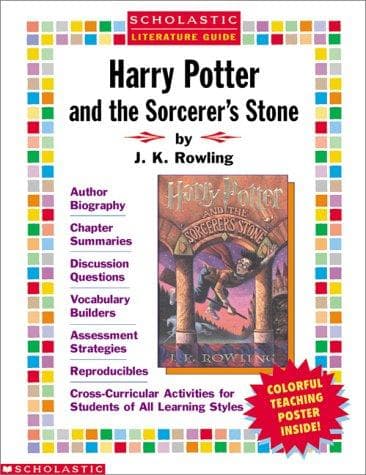
- Harry Potter and the Sorcerer's Stone
J.K. Rowling
4.5 (7M) average on GoodreadsFantasyRescued from a miserable life under the stairs, an orphaned boy discovers he's a wizard destined for a magical school, where he uncovers a dangerous secret tied to the dark wizard who murdered his parents.
- The Hunger Games
Suzanne Collins
4.3 (6.4M) average on GoodreadsFantasyIn a future where children fight to the death on live television, Katniss Everdeen volunteers for the arena, turning a death sentence into a fight for survival and a spark of rebellion.
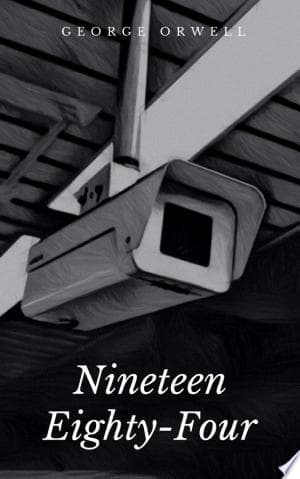
- Nineteen Eighty-Four
George Orwell
4.2 (5.5M) average on GoodreadsFictionWinston Smith dreams of truth and rebellion in a world where Big Brother watches all, but he confronts the terrifying power of a regime that controls not just actions, but thoughts.
Enjoyed the summary?
A summary gives you the shape of the book. The book itself has the detail, the examples and the voice.
Find Book of Forbidden Words on AmazonAs an Amazon Associate, BookBrief earns from qualifying purchases. How we're funded