
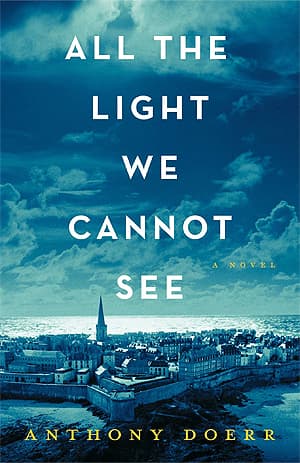
Synopsis
Covers the whole plot, including the ending.
- Difficulty
- Medium
- Pacing
- Moderate
- Mood
- Atmospheric, Poignant, Hopeful, Melancholy
- Read it if
- You enjoy beautifully written historical fiction with a focus on character and the human spirit amidst war.
- Skip it if
- You prefer fast-paced, action-driven war stories or dislike stories with multiple, interwoven perspectives.
All the Light We Cannot See Plot Summary
Covers the whole plot, including the ending.
Paris, 1934: Marie-Laure's Childhood
Marie-Laure LeBlanc lives in Paris with her father, Daniel LeBlanc, a locksmith for the Museum National d'Histoire Naturelle. At age six, she loses her sight. To help her move around their neighborhood and the museum, Daniel carefully builds a wooden model of their area, teaching her to learn the layout by touch. Marie-Laure develops a remarkable ability to understand the world through her other senses, especially touch and sound. She spends her days exploring the museum and listening to her father's stories, preparing for a life where her blindness will not limit her curiosity.
Zollverein, Germany, 1934: Werner's Discovery
In the mining town of Zollverein, Germany, Werner Pfennig and his younger sister, Jutta, grow up in an orphanage. Their lives involve poverty and the constant presence of the mines. One day, Werner finds a broken shortwave radio. With a natural skill for mechanics, he fixes it, and the siblings begin listening to broadcasts from faraway places, including science talks and music. A specific French broadcast, with a kind voice explaining difficult subjects, fascinates Werner, sparking his talent for radio technology and a desire for knowledge beyond his difficult life.
The Diamond and the War's Approach
As the Nazi invasion of France approaches in 1940, Daniel LeBlanc gets an important job from the museum. He must protect one of its most valuable items, the Sea of Flames diamond. This diamond is said to give immortality to its owner but bring bad luck to them and their loved ones. Unknown to him, three identical fake diamonds have also been made to confuse thieves. Daniel, with Marie-Laure, leaves Paris for Saint-Malo, where his great-uncle Etienne LeBlanc and his housekeeper Madame Manec live. Marie-Laure carries a small, heavy stone, not knowing what it is.
Werner at Schulpforta
The German military notices Werner's skill with radios. Despite being young, he is recruited into Schulpforta, a strict Nazi academy for promising boys. There, he excels in radio technology and math, but he is disturbed by the Nazi teachings and the cruelty shown to weaker students, especially his friend Frederick. Werner's sense of right and wrong is tested as he is forced to be part of the harsh system, seeing beatings and the loss of humanity in his classmates, all while dealing with his own involvement and wish to survive.
Life in Saint-Malo
Marie-Laure and Daniel arrive in Saint-Malo, finding safety with Etienne LeBlanc. Etienne is a veteran of World War I, shell-shocked and has lived as a recluse for decades, troubled by his brother's death and unable to leave his house. Madame Manec, Etienne's brave housekeeper, becomes an important connection to the outside world. Daniel continues to build a small model of Saint-Malo for Marie-Laure, letting her explore the city with her fingers. He also hides the real Sea of Flames diamond inside this model, a secret he keeps even from Marie-Laure, believing it to be safe there.
The Resistance and the Radio
After the Germans arrest Daniel, Marie-Laure is left with Etienne and Madame Manec. Madame Manec, strongly against the Nazis, convinces Etienne to use his old radio equipment to broadcast coded messages for the French Resistance. Marie-Laure helps by remembering and writing down number codes as musical notes. After Madame Manec dies, Marie-Laure takes over her role in the resistance, leaving loaves of bread with hidden messages in a grotto. Etienne, overcoming his fear of open spaces, eventually begins broadcasting his deceased brother's science lectures, mixed with coded information, which many hear, including Werner.
Werner's Assignment
The Wehrmacht uses Werner's skills. He is assigned to a special unit that finds illegal resistance radio broadcasts, often used to plan partisan activities. He and his team travel across Europe, using their advanced equipment to pinpoint the locations of hidden transmitters. Werner becomes better at his job, but his work makes him face the moral consequences of his actions, as he knows finding these radios leads to the capture, torture, and death of those using them. He struggles with his conscience, remembering his sister Jutta's warnings.
The Siege of Saint-Malo
As the Allies move into France, Saint-Malo becomes a main target because of its important port. The city is bombed heavily, turning it into ruins. Marie-Laure is trapped in Etienne's house, using her model of the city to find her way through the destruction. Meanwhile, Werner's unit is sent to Saint-Malo to find the resistance broadcasters. Their bunker is destroyed during an Allied attack, trapping Werner and his team under the rubble. Werner, hurt and without food or water, manages to fix a small radio, picking up the familiar French broadcast from his childhood.
The Encounter
Sergeant Major Reinhold von Rumpel, a gemologist obsessed with finding the Sea of Flames diamond, tracks Marie-Laure to Etienne's house in Saint-Malo. He believes she has the real diamond and corners her, threatening her life. Werner, having escaped his collapsed bunker and found the source of the French broadcast at Etienne's house, arrives. Overcoming his fear, Werner shoots and kills von Rumpel, saving Marie-Laure. He then helps her escape the ruined house, finally meeting the girl whose voice he had heard on the radio.
The Diamond's Fate and Werner's End
Marie-Laure and Werner share a brief moment of connection. She shows him the hidden Sea of Flames diamond, and he understands its meaning. Before they part, Marie-Laure, following an instruction from her father, leaves the diamond in the grotto, a place she thinks is safe. American soldiers capture Werner and take him to a POW camp. Suffering from typhus and confused, he walks into a minefield and dies. The diamond stays hidden in the grotto for decades, a reminder of the lives it touched and the war it survived.
Aftermath: Jutta and Marie-Laure
Years after the war, Jutta Pfennig, still affected by her brother's death, struggles with her past. She eventually dedicates her life to helping others and understanding the truth of the war. Marie-Laure, returning to Paris after the war, becomes a marine biologist, continuing her grandfather's work on shells. Decades later, Werner's old comrade, Volkheimer, finds Jutta and gives her Werner's belongings, including the miniature house from Saint-Malo that contains the diamond. Jutta finds Marie-Laure, and they connect over their shared memories of Werner.
The Diamond's Return
In 2014, Marie-Laure, now an old woman, returns to Saint-Malo with her grandson, Michel. They visit the grotto where she left the Sea of Flames diamond. Michel finds the small, miniature house, and inside it, the diamond. Marie-Laure decides to return the Sea of Flames to the Museum National d'Histoire Naturelle in Paris, where it belongs. The diamond, having moved through many hands and seen much history, finally goes back to its original home, a symbol of survival, memory, and the lasting power of human connection.
All the Light We Cannot See Characters
Marie-Laure LeBlanc
Protagonist
A blind French girl who navigates the world through touch and sound.
Marie-Laure is a resilient and intelligent young girl who loses her sight at age six. Despite her blindness, she possesses an extraordinary curiosity and a deep love for books and the natural world. Taught by her father to navigate with intricate wooden models, she develops a profound connection to her surroundings. Her gentle demeanor belies an inner strength and courage that allows her to survive the war, participate in the resistance, and eventually become a marine biologist. She represents innocence, resilience, and the power of human connection.
Relationships: Daniel LeBlanc (Devoted father and teacher); Etienne LeBlanc (Reclusive great-uncle, fellow resistance member); Madame Manec (Caretaker, mentor, resistance leader); Werner Pfennig (Brief, poignant rescuer and kindred spirit)
Werner Pfennig
Protagonist
An orphaned German boy with a prodigious talent for radio technology.
Werner is a gifted and sensitive German orphan with a natural genius for electronics. Enchanted by a shortwave radio, he yearns for knowledge and a life beyond the coal mines. His talent leads him to a Nazi academy and then to a unit tracking resistance broadcasts, forcing him to confront the moral complexities of his actions during the war. He struggles with his conscience, torn between survival and his innate sense of right and wrong, ultimately making a choice that defines his brief life.
Relationships: Jutta Pfennig (Beloved younger sister, his moral compass); Frederick (Friend and fellow student at Schulpforta, victim of Nazi cruelty); Marie-Laure LeBlanc (Girl whose voice he hears on the radio, whom he eventually saves)
Daniel LeBlanc
Supporting
Marie-Laure's devoted father, a locksmith for the Museum of Natural History.
Daniel is a loving and resourceful father who dedicates himself to helping Marie-Laure navigate her blindness. He meticulously crafts miniature models of Paris and Saint-Malo, teaching her independence and fostering her curiosity. As a locksmith for a prestigious museum, he is entrusted with the Sea of Flames diamond, a burden that ultimately leads to his capture. He represents paternal love, ingenuity, and the quiet heroism of ordinary people trying to protect what they cherish.
Relationships: Marie-Laure LeBlanc (Daughter, his primary concern and motivation); Etienne LeBlanc (Brother-in-law, his sister's husband)
Jutta Pfennig
Supporting
Werner's younger sister, his moral compass and enduring connection.
Jutta is Werner's perceptive and morally sensitive younger sister. She is deeply concerned by the rise of Nazism and often questions the propaganda and the choices Werner is forced to make. Her warnings and innate sense of justice serve as Werner's conscience throughout his journey. She represents the innocent suffering caused by war and the enduring power of family bonds. After the war, she grapples with her past and seeks to understand her brother's fate.
Relationships: Werner Pfennig (Older brother, her closest confidant and moral anchor)
Etienne LeBlanc
Supporting
Marie-Laure's reclusive great-uncle, a traumatized World War I veteran.
Etienne is a wealthy, reclusive old man, deeply traumatized by his experiences in World War I and the death of his brother, Henri. He suffers from agoraphobia and post-traumatic stress, rarely leaving his house. He secretly maintains a powerful radio transmitter, initially used by his brother for scientific broadcasts. With the encouragement of Madame Manec and the arrival of Marie-Laure, he slowly begins to re-engage with the world, eventually using his radio for the French Resistance. He represents the hidden scars of war and the possibility of healing and renewed purpose.
Relationships: Marie-Laure LeBlanc (Great-niece, he cares for her and broadcasts with her); Madame Manec (Housekeeper, his confidante and catalyst for action); Henri LeBlanc (Deceased brother, whose scientific broadcasts he continues)
Madame Manec
Supporting
Etienne's courageous housekeeper and a key figure in the French Resistance.
Madame Manec is a strong-willed, pragmatic, and fiercely patriotic housekeeper for Etienne LeBlanc. She is a pillar of strength and common sense, openly defying the German occupation. She is instrumental in convincing Etienne to join the French Resistance, using his radio to transmit coded messages. Her unwavering courage and compassion provide stability and inspiration for Marie-Laure and Etienne. She represents the everyday heroism of ordinary citizens resisting oppression.
Relationships: Etienne LeBlanc (Employer, whom she gently prods into action); Marie-Laure LeBlanc (Young charge, whom she protects and guides)
Reinhold von Rumpel
Antagonist
A German sergeant major and gemologist obsessed with finding the Sea of Flames diamond.
Von Rumpel is a ruthless and increasingly ill German sergeant major and gemologist, driven by an insatiable greed and superstition. He believes the Sea of Flames diamond will cure his cancer and grant him immortality. He relentlessly pursues the diamond, using his power and cunning to track down anyone who might possess it. He embodies the destructive forces of greed and obsession, representing the corrupting influence of power and the moral decay brought by war.
Relationships: Marie-Laure LeBlanc (His target, whom he believes possesses the diamond)
Frederick
Supporting
Werner's sensitive and bird-loving friend at Schulpforta.
Frederick is a gentle and intellectual boy at Schulpforta, Werner's only true friend at the academy. He loves birds and is deeply troubled by the brutality of the Nazi regime, refusing to conform to its violent ideology. His vulnerability makes him a target for the other cadets, and he is severely beaten, suffering permanent brain damage. Frederick represents the innocent victims of Nazi cruelty and the tragic loss of humanity under oppressive regimes. His fate deeply affects Werner.
Relationships: Werner Pfennig (Friend and fellow student, whom Werner tries to protect)
All the Light We Cannot See Themes
The Power of Light and Sight (Literal and Metaphorical)
The novel explores different forms of 'light' and 'sight,' both literally and symbolically. Marie-Laure, though blind, has a deep inner sight, seeing the world through touch, sound, and imagination, often 'seeing' more deeply than those with physical vision. Werner's ability to hear distant radio waves brings him 'light' in the form of knowledge and connection, helping him 'see' beyond his difficult reality. The title, 'All the Light We Cannot See,' refers to the electromagnetic spectrum of radio waves, but also to the unseen acts of kindness, courage, and human connection that continue even in the darkest times of war. This theme shows in Marie-Laure's ability to navigate Saint-Malo using her father's models, and Werner's interest in the French broadcasts.
“Open your eyes and see what you can with them before they close forever.”
Humanity and Dehumanization in War
The novel shows how war affects individuals and society, highlighting both the capacity for great cruelty and the lasting human spirit. Characters like Werner are forced to take part in cruel acts, tracking and eliminating perceived enemies, while trying to keep their own moral sense. The harsh training at Schulpforta removes individuality and empathy from the boys. In contrast, the acts of courage, kindness, and resistance by characters like Madame Manec, Etienne, and even Werner's final act of defiance, show the strength of the human spirit when faced with great difficulty. The kindness between Marie-Laure and Werner in their short meeting is an example of this theme.
“Is it right,” Jutta says, “to do something only because everyone else is doing it?”
Connection and Communication
Communication, especially through radio, is a main way to connect people across distances and differences. Werner and Jutta first connect to the outside world through illegal radio broadcasts. Later, Etienne and Marie-Laure use their radio to send resistance messages, creating a network of defiance. This technology, which can be used for both propaganda and freedom, physically brings Werner and Marie-Laure together. The shared experience of listening to the same French broadcast forms an unseen bond between them long before they meet, showing that even in isolation, people can be linked by shared experiences and common humanity.
“The air itself is a library, a radar, a map of what happened, what exists. Every sound, every whisper, every scream, it's all still in the air.”
Fate vs. Free Will
The novel deals with fate and free will. The Sea of Flames diamond, with its legend of giving immortality but bringing bad luck, represents a strong outside force affecting lives. Characters often feel carried along by the war, their choices limited by circumstances. However, moments of individual action, such as Werner's choice to save Marie-Laure, or Marie-Laure's choice to return the diamond to the grotto, show that even in the worst situations, individuals can make choices that go against their expected paths. The paths of Marie-Laure and Werner, though seemingly meant to cross, are shaped by their personal decisions.
“All your life you wait for the right moment to do something, and then you realize you’ve been doing it all along.”
Memory and History
The novel stresses the importance of memory, both personal and shared, in understanding history and forming identity. Characters like Etienne are haunted by memories of past wars, while Marie-Laure uses her father's models to keep the memory of places. The story itself has alternating timelines, constantly moving between the war's immediate events and the distant past and future. This highlights how history is lived, remembered, and passed down. Objects, like the diamond and the miniature house, become vessels for memory, carrying the echoes of lives lived and choices made. Jutta and Marie-Laure's post-war thoughts show the lasting impact of historical events.
“Every day, the world is created. Every day, the world is destroyed. This is the rhythm of things.”
Plot Devices & Literary Techniques
Alternating Perspectives and Timelines
The story shifts between Marie-Laure and Werner's POVs and different years.
The novel is structured with short, alternating chapters that switch between Marie-Laure's and Werner's perspectives, and also jump between the besieged Saint-Malo in 1944 and earlier periods of their lives (1934, 1940, etc.). This device builds suspense by gradually revealing how their lives converge, while also providing rich backstory and context for their choices. It allows the reader to experience the war from both sides, fostering empathy for characters caught in the conflict and highlighting the parallel experiences of innocence lost.
The Sea of Flames Diamond
A legendary, cursed diamond that drives much of the plot's external conflict.
The Sea of Flames is a large, fabled diamond believed to grant immortality to its owner but bring misfortune to anyone else connected to it. It serves as a powerful MacGuffin, driving the actions of characters like Daniel LeBlanc (who must protect it) and Reinhold von Rumpel (who obsessively hunts for it). Symbolically, it represents the corrupting influence of greed and superstition, but also the preciousness of life and the burdens of fate. Its hiding place within Marie-Laure's miniature house links it directly to her personal journey.
Miniature Models
Daniel's wooden models of cities, used by Marie-Laure for navigation and hiding.
Daniel LeBlanc meticulously crafts detailed wooden models of Paris and Saint-Malo for his blind daughter, Marie-Laure. These models serve as crucial tools for her to 'see' and navigate her environment, empowering her independence. More profoundly, they become a symbol of her father's love and ingenuity. The Saint-Malo model also serves as a hiding place for the Sea of Flames diamond and, later, for the key to the grotto, making it a pivotal plot device that connects the personal with the historical and the tangible with the metaphorical.
Radio Broadcasts
Shortwave radio transmissions that connect characters and serve as plot catalysts.
Radio broadcasts are a central plot device, initially connecting Werner and Jutta to a wider world beyond their orphanage through scientific lectures and music. Later, Etienne uses his powerful transmitter for French Resistance broadcasts, which Werner's unit is tasked with finding. The familiar voice of the French professor, heard by both Werner and Marie-Laure, creates an invisible bond between them. Radio acts as a lifeline, a weapon, and a symbol of communication, hope, and the light of knowledge in the darkness of war, ultimately leading Werner to Marie-Laure.
All the Light We Cannot See Quotes
“Every night she falls asleep to the sound of it, and every morning she wakes to it. It is the most beautiful sound she has ever heard.”
“Open your eyes and see what you can with them before they close forever.”
“The sea is a living thing. And what a thing it is. It holds you. It embraces you. It drowns you.”
“To shut your eyes is to guess nothing of the darkness. You must open your eyes and see what you can with them.”
“Is it right to hold on to something that's only going to bring you pain?”
“The brain is a forest, and the soul is a forest. We lose ourselves in them.”
“Don't you want to be alive before you die?”
“The world is full of things that can kill you.”
“All your life you wait for the right moment to do something great. But the right moment never comes.”
“What the war did to dreamers. It made them realists.”
“Sometimes the best way to survive is to be useful.”
“Light. It is the most beautiful sound she has ever heard.”
“The smallest things, they are the ones that save us.”
“Our lives are but a blink in the great history of the world.”
Quiz
10 questions on the plot and the characters. Each answer comes with a short explanation.
Question 1
Where do Marie-Laure and her father flee to after the Nazis occupy Paris?
- Marseille
- Bordeaux
- Saint-Malo
- Lyon
Show answer
C. Saint-Malo Marie-Laure and her father flee to the walled citadel of Saint-Malo to stay with her great-uncle.
Question 2
What skill does Werner Pfennig develop that leads to his enlistment in the German army?
- Code-breaking
- Building and fixing radios
- Strategic mapping
- Operating heavy machinery
Show answer
B. Building and fixing radios Werner becomes an expert at building and fixing radios, a talent the German army exploits to track down resistance signals.
Question 3
What valuable and dangerous item do Marie-Laure and her father carry with them from the Museum of Natural History?
- An ancient manuscript
- A rare painting
- The Sea of Flames diamond
- A collection of gold coins
Show answer
C. The Sea of Flames diamond They carry what is implied to be the museum's most valuable and dangerous jewel, the Sea of Flames diamond.
Question 4
What is the primary theme explored through the intertwining narratives of Marie-Laure and Werner?
- The futility of war
- The enduring power of hope and human connection amidst devastation
- The importance of scientific discovery
- The corruption of power
Show answer
B. The enduring power of hope and human connection amidst devastation The novel illuminates 'the ways, against all odds, people try to be good to one another' and find connection despite the war.
Question 5
How does Marie-Laure's blindness influence her perception and navigation of the world during wartime?
- It makes her entirely dependent on others for survival.
- It forces her to develop a heightened sense of hearing and touch, allowing her to 'see' in unique ways.
- It prevents her from understanding the dangers of the war.
- It makes her immune to the emotional impact of the conflict.
Show answer
B. It forces her to develop a heightened sense of hearing and touch, allowing her to 'see' in unique ways. Her blindness forces her to rely on other senses, creating a rich internal world and unique way of experiencing her surroundings, which is crucial for her survival and understanding.
Question 6
What is the name of Werner's younger sister, who shares his fascination with the radio?
- Hannah
- Jutta
- Elsa
- Greta
Show answer
B. Jutta Werner grows up with his younger sister, Jutta, and they are both enchanted by the radio they find.
Question 7
What is the significance of the radio broadcasts Werner and Jutta listen to in their youth?
- They provide practical instructions for survival during the war.
- They introduce them to a world beyond their mining town, sparking Werner's interest in radio technology and broader knowledge.
- They are propaganda messages from the German government.
- They are coded messages from the French Resistance.
Show answer
B. They introduce them to a world beyond their mining town, sparking Werner's interest in radio technology and broader knowledge. The crude radio brings them 'news and stories from places they have never seen or imagined,' which fuels Werner's fascination and opens his mind.
Question 8
How does the setting of Saint-Malo, particularly its being a 'walled citadel,' contribute to the narrative's atmosphere?
- It offers a sense of absolute security and peace.
- It symbolizes isolation and the entrapment of its inhabitants, especially as the war intensifies around it.
- It represents a hub of vibrant cultural exchange.
- It highlights the resilience of ancient architecture.
Show answer
B. It symbolizes isolation and the entrapment of its inhabitants, especially as the war intensifies around it. The walled nature of Saint-Malo initially offers refuge but later becomes a trap as the city is besieged, emphasizing the characters' increasing isolation and peril.
Question 9
What specific type of resistance activity is Werner enlisted to track down using his radio skills?
- Sabotage networks
- Underground printing presses
- Illegal radio transmissions
- Smuggling routes
Show answer
C. Illegal radio transmissions Werner is 'enlisted to use his talent to track down the resistance,' specifically by locating their illegal radio broadcasts.
Question 10
In what way does the 'light' in the title 'All the Light We Cannot See' function metaphorically throughout the novel?
- It refers exclusively to the literal light from the sun, missed by Marie-Laure.
- It symbolizes knowledge, hope, human connection, and the unseen forces that guide and connect individuals even in darkness.
- It represents the hidden treasures sought by the characters.
- It is a direct reference to the flashes of gunfire during the war.
Show answer
B. It symbolizes knowledge, hope, human connection, and the unseen forces that guide and connect individuals even in darkness. The 'light' is a rich metaphor for various intangible elements: the knowledge transmitted by radio, the goodness in people, the beauty of the world unseen by Marie-Laure, and the hope that persists amidst the devastation of war.
All the Light We Cannot See FAQ
What is the central premise of 'All the Light We Cannot See'?
The novel interweaves the stories of Marie-Laure LeBlanc, a blind French girl fleeing the Nazi occupation of Paris, and Werner Pfennig, a German orphan conscripted into the Wehrmacht for his radio expertise, as their lives slowly converge amidst the devastation of World War II, particularly in Saint-Malo.
Who is Marie-Laure LeBlanc and what is her significance to the plot?
Marie-Laure is a blind French girl who, after the Nazi occupation of Paris, flees with her father to Saint-Malo, carrying a legendary diamond called the Sea of Flames. Her journey emphasizes themes of resilience, sensory experience beyond sight, and the hidden human spirit during wartime.
Who is Werner Pfennig and what role does he play in the war?
Werner is an orphaned German boy with an extraordinary talent for radios, which leads him to a Nazi military academy and then into a special unit tasked with tracking down resistance broadcasts. He embodies the moral compromises and internal conflicts faced by young Germans during the war.
What is the 'Sea of Flames' diamond, and why is it important?
The Sea of Flames is a legendary, cursed diamond from the Museum of Natural History, believed to grant immortality to its keeper while bringing misfortune to those around them. Marie-Laure's father is entrusted with one of its replicas (or perhaps the real one), and its pursuit by Von Rumpel drives a significant part of the plot.
How do Marie-Laure and Werner's paths ultimately intersect?
Their paths collide in Saint-Malo during the Allied bombing in August 1944. Werner, tasked with locating resistance broadcasts, tracks Marie-Laure's radio transmissions, leading him to her great-uncle Etienne's house, where he eventually saves her from the clutches of Sergeant Major Reinhold von Rumpel.
What is the significance of the miniature model of Saint-Malo that Marie-Laure's father builds?
The miniature model allows Marie-Laure to navigate the real Saint-Malo independently by memorizing its layout through touch. It symbolizes her father's love, her ability to perceive the world beyond sight, and later serves as a hiding place for the Sea of Flames.
How does the radio, particularly the broadcasts from Professor Lablanc, connect the characters?
The radio is a powerful symbol of connection and knowledge. Young Werner is captivated by the Professor's science broadcasts, which inspire his love for radio. Later, Marie-Laure and Etienne use a similar radio to transmit resistance messages, which Werner is tasked with locating, bringing their lives into direct conflict and eventual interaction.
What is the meaning behind the title, 'All the Light We Cannot See'?
The title refers to various forms of 'light' beyond physical sight: the electromagnetic spectrum that radios utilize, the inherent goodness or humanity in people despite darkness, and Marie-Laure's unique perception of the world. It also alludes to the hidden truths and connections between individuals.
What is the role of Daniel LeBlanc, Marie-Laure's father, in her development?
Daniel LeBlanc is Marie-Laure's primary caregiver and protector. He fosters her independence by building the Saint-Malo model and teaching her to navigate the world. His deep love and the sacrifices he makes for her, including his eventual capture, profoundly shape her resilience and understanding of love.
How does Werner's upbringing as an orphan in Zollverein influence his choices and moral compass?
Werner's orphanage upbringing instills a strong desire for survival and belonging. His talent with radios offers an escape from the mines, but also draws him into the Nazi regime. This background creates an internal conflict, as he struggles to reconcile his innate goodness and curiosity with the atrocities he witnesses and participates in.
Analyze the psychological impact of war on Marie-Laure and Werner.
Marie-Laure experiences profound loss and displacement, yet finds strength in her senses and connections to others, developing deep resilience. Werner, however, is haunted by the violence he's forced to commit and witness, leading to immense guilt and a gradual erosion of his moral certainty, culminating in his psychological breakdown and death.
What motivates Sergeant Major Reinhold von Rumpel's relentless pursuit of the Sea of Flames?
Von Rumpel is driven by a combination of greed, superstition, and a desperate desire for immortality as he battles terminal cancer. His pursuit of the diamond is a manifestation of his fear of death and his belief that the gem holds the key to his survival, making him utterly ruthless.
Is the ending of the novel, particularly Werner's death, justified or too tragic?
Werner's death is a point of debate. Some argue it's a fitting, albeit tragic, consequence of his wartime involvement and his internal struggle, symbolizing the destruction of innocence. Others find it unnecessarily cruel, wishing for him to have found peace or redemption after his act of heroism in saving Marie-Laure.
What is the significance of the final scene with Marie-Laure and her grandson in 2014?
The final scene provides a sense of hope and continuity, showing Marie-Laure as an old woman living a full life, surrounded by family. It emphasizes that life continues after immense tragedy and that the echoes of the past, like Werner's story, are preserved and remembered through storytelling.
Does the novel offer a clear message about good versus evil, or something more nuanced?
The novel presents a nuanced view, demonstrating that 'goodness' can exist in unexpected places and under extreme duress, as seen in Werner's actions. It avoids simplistic binaries, instead exploring the complexities of human nature, moral compromise, and the small acts of kindness that persist even amidst widespread evil.
How does the author use sensory details to enhance the reader's experience, especially given Marie-Laure's blindness?
Doerr masterfully employs vivid descriptions of sound, smell, touch, and taste, allowing readers to experience the world through Marie-Laure's heightened senses. This technique not only immerses the reader but also emphasizes the richness of perception beyond sight and the details often overlooked by sighted individuals.
What is the thematic significance of the snail, which Marie-Laure finds and later leaves for Werner?
The snail symbolizes resilience, slowness in contrast to the war's speed, and a small, delicate piece of life that endures. Marie-Laure's act of leaving it for Werner is a subtle gesture of connection and shared humanity, a tiny offering of beauty and hope amidst the destruction.
How does the character of Jutta Pfennig, Werner's sister, serve as his moral conscience?
Jutta often questions Werner's involvement with the Nazis and expresses discomfort with the regime's ideology. Her letters and memories serve as a constant reminder of the innocence and moral clarity he left behind, frequently prompting his internal guilt and highlighting the moral compromises he makes.
About the author

Anthony Doerr is a Pulitzer Prize-winning author celebrated for his evocative prose and compelling storytelling. His novel "All the Light We Cannot See" earned him widespread acclaim, including the Pulitzer Prize for Fiction. Doerr's other notable works include "The Shell Collector" and "Memory Wall," showcasing his mastery of historical fiction and intricate character development.
Similar books
- The Nightingale
Kristin Hannah
4.6 (698k) average on GoodreadsHistorical FictionFeatures strong female protagonists in WWII France and explores themes of resistance and survival.
- Atonement
Ian McEwan
4.4 (70) average on GoodreadsInterweaving narratives, historical setting (WWII), and a focus on fate and human connection.
- The Book Thief
Markus Zusak
4.4 (1.8M) average on GoodreadsHistorical FictionSet in WWII, features young protagonists facing immense hardship, and has a lyrical, evocative writing style.
- To Kill a Mockingbird
Harper Lee
4.3 (4.5M) average on GoodreadsHistorical FictionIn the 1930s Jim Crow South, Harper Lee writes about racial injustice, moral growth, and the quiet courage of a lawyer father, Atticus Finch, as seen through his young daughter's eyes.
- The Great Gatsby
F. Scott Fitzgerald
3.9 (3.8M) average on GoodreadsHistorical FictionIn the opulent Roaring Twenties, a mysterious millionaire's lavish parties hide his desperate, tragic pursuit of a lost love, exposing the emptiness within the American Dream.
- Pride and Prejudice
Jane Austen
4.3 (3M) average on GoodreadsHistorical FictionIn a society focused on status and money, Elizabeth Bennet navigates love and pride, challenging Mr. Darcy and social expectations to find true affection.




Enjoyed the summary?
A summary gives you the shape of the book. The book itself has the detail, the examples and the voice.
Find All the Light We Cannot See on AmazonAs an Amazon Associate, BookBrief earns from qualifying purchases. How we're funded