
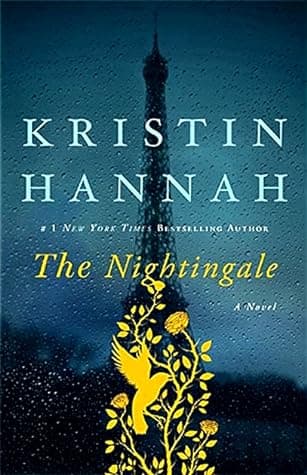
Synopsis
Covers the whole plot, including the ending.
- Difficulty
- Medium
- Pacing
- Moderate
- Mood
- Heartbreaking, Resilient, Hopeful, Historical
- Read it if
- You enjoy historical fiction centered on strong female characters, emotional depth, and stories of resilience during wartime. Perfect for those who appreciate a blend of historical detail and a compelling personal narrative.
- Skip it if
- You prefer lighthearted stories or find war narratives, particularly those with significant loss and hardship, too emotionally challenging.
The Nightingale Plot Summary
Covers the whole plot, including the ending.
The Sisters' Diverging Paths at War's Outbreak
In Carriveau, France, 1939, Vianne Mauriac's husband, Antoine, leaves for the war, leaving her and their daughter, Sophie. Vianne, practical and careful, struggles with the Nazi invasion. Meanwhile, her younger sister, Isabelle Rossignol, an eighteen-year-old rebel, is expelled from her fourth boarding school. Their estranged father, Julien, sends Isabelle to live with Vianne, which adds to their tense relationship. Isabelle feels trapped in Carriveau and wants to help the war effort, while Vianne prioritizes her family's safety, often clashing with Isabelle's impulsiveness.
Occupation and Forced Coexistence
As the Germans invade Carriveau, Captain Wolfgang Beck takes over Vianne's home for himself and his soldiers. Vianne and Sophie must live in a small part of their own house, always watched by the enemy. This situation humiliates and frightens Vianne, who navigates it to protect Sophie and survive. She puts up with Beck's presence, trying to seem compliant while secretly hating his intrusion and her lost privacy. Isabelle, unable to stand the occupation, tries to flee to Paris.
Isabelle's Entry into the Resistance
Isabelle reaches Paris and experiences its fall, meeting Gaëtan, a partisan, and falling in love. She tries to join his Resistance group, but he dismisses her. After a bombing and Gaëtan's betrayal, leaving her behind, Isabelle is heartbroken but more determined to fight. She returns to Carriveau briefly, then goes to her father's apartment in Paris. There, a British agent recruits her and gives her the codename 'The Nightingale.' Her tasks are to distribute anti-German propaganda and later, guide downed Allied airmen to safety across the Pyrenees.
Vianne's Sacrifices and Secret Acts of Kindness
As the war continues, Vianne faces increasing hardship. Food is scarce, and the German presence is oppressive. When her best friend, Rachel de Champlaine, and Rachel's son, Ari, are rounded up as Jews, Vianne is horrified. After Rachel is deported, Vianne, despite her fear, begins to shelter Jewish children sent to her by the local orphanage, changing their names and creating new identities to protect them. She risks everything, including Sophie's safety and her own life, to save these children, forming bonds with them while appearing to be a compliant Frenchwoman to Captain Beck.
The Nightingale's Dangerous Missions
Isabelle, as 'The Nightingale,' goes on dangerous missions guiding downed Allied airmen through the Pyrenees mountains to Spain. Each journey is full of danger, from harsh weather and starvation to German patrols. She works with other Resistance members, including a contact named Captain Dubois. Isabelle endures physical and emotional pain, seeing the suffering of the airmen and the realities of war. Her courage and commitment to freedom become known among the Allied forces, though her identity remains secret to most.
Tragedy and Loss in Carriveau
Life in Carriveau becomes harder. Rachel, Vianne's friend, dies in a concentration camp, a blow to Vianne. The children she shelters, including Ari, become her family. Food shortages worsen, and the German occupation increases, leading to random violence and more fear among the villagers. Vianne continues to make difficult choices, even resorting to prostitution with Captain Beck to get food and safety for the children and Sophie. This decision shames her but comes from desperate love and protection.
Isabelle's Capture and Imprisonment
During one mission, Isabelle is betrayed and captured by the Gestapo. She undergoes interrogation and torture but refuses to give information about the Resistance network. She is then sent to Ravensbrück concentration camp, a women's camp, where she endures horrific conditions, starvation, and forced labor. Despite the suffering, Isabelle's defiance remains. She meets other courageous women in the camp and continues to resist in small ways, finding strength in her resolve and the memory of her missions.
Vianne's Post-War Life and Antoine's Return
After the war, Antoine returns home, changed by his time as a prisoner of war. Vianne is overjoyed but also carries the secrets of her wartime actions, especially her relationship with Captain Beck and the birth of their son, Guillaume. She worries about how Antoine will react to Guillaume, who looks German. Despite the initial awkwardness and unspoken traumas, Vianne and Antoine slowly rebuild their lives, with Antoine accepting Guillaume as his son, recognizing Vianne's sacrifices.
Isabelle's Return and Final Days
Isabelle is liberated from Ravensbrück, but her body is damaged by the camp's brutality. She reunites with Gaëtan, who finds her very weak and ill. They share a brief reunion, confirming their love. Isabelle, however, is too weak to recover. She dies shortly after her return, a silent hero whose contributions to the Resistance remain largely unknown. Her death is a great loss for Vianne, who grieves her sister's sacrifice and the heavy price of war.
The Revelation of the Nightingale's Identity
Decades later, in Oregon, an elderly Vianne Mauriac (now Isabelle Rossignol) receives an invitation to a ceremony honoring the women of the Resistance. This makes her think about her past and the true identity of 'The Nightingale.' The story reveals that Vianne took on Isabelle's identity after her sister's death to protect her memory. At the ceremony, she plans to tell the truth about Isabelle's heroism and her own role in saving Jewish children, facing the painful memories she has kept hidden.
A Mother's Confession and Legacy
At the ceremony, Vianne tells her son, Julien (the adult Guillaume), the full story of his biological father, Captain Beck, and her wartime sacrifices, including sheltering Jewish children. Julien, who has always known he was different, is moved by his mother's courage. Vianne attends the ceremony, where she is recognized not only for her sister's bravery but also for her own quiet acts of resistance. The story ends with Vianne finding peace in sharing her truths and ensuring that both her and Isabelle's legacies of courage and love continue.
The Nightingale Characters
Vianne Mauriac
Protagonist
Eldest sister, a cautious mother who protects her family at all costs.
Vianne is initially portrayed as a practical, somewhat fearful woman, deeply rooted in her home and family in Carriveau. Her primary motivation throughout the war is the survival and safety of her daughter, Sophie. She is forced to make unimaginable sacrifices, including sheltering Jewish children and enduring the presence of Captain Beck in her home, even resorting to prostitution to secure provisions. Her journey transforms her from a timid woman into a fiercely protective mother who performs quiet, courageous acts of resistance, often at great personal cost and emotional trauma. She later raises her son, Guillaume, fathered by Beck, with Antoine.
Relationships: Isabelle Rossignol (Sister; initially strained and distant, but deep love and respect grow through shared trauma.); Antoine Mauriac (Husband; devoted, though their relationship is tested by war and Vianne's secrets.); Sophie Mauriac (Daughter; Vianne's primary motivation for survival and protection.); Captain Wolfgang Beck (German officer occupying her home; a complex relationship of fear, forced intimacy, and ultimately, the father of her second child.); Rachel de Champlaine (Best friend; a source of support and a tragic victim of the Holocaust.)
Isabelle Rossignol
Protagonist
Younger sister, a rebellious and courageous Resistance fighter known as 'The Nightingale'.
Isabelle is passionate, impulsive, and fiercely independent. Driven by a burning desire to fight the Nazi occupation, she cannot tolerate inaction or injustice. After a failed attempt to join a partisan group and a personal betrayal, she becomes 'The Nightingale,' a legendary Resistance operative who guides downed Allied airmen across the Pyrenees. She embodies defiant courage and a refusal to surrender, even in the face of torture and imprisonment at Ravensbrück. Her idealism and unwavering spirit define her, though her actions often put her at odds with Vianne's caution.
Relationships: Vianne Mauriac (Sister; initially contentious, but a deep, underlying love and mutual respect develop.); Gaëtan Freignan (Lover and fellow Resistance member; a passionate, tumultuous relationship marked by love and betrayal.); Julien Rossignol (Father; a distant and often critical relationship, but with a hidden layer of love and protection.); Captain Dubois (Resistance contact; a crucial ally in her missions.)
Antoine Mauriac
Supporting
Vianne's devoted husband, a prisoner of war.
Antoine is Vianne's loving and gentle husband, who is called to the front at the beginning of the war. He spends years as a prisoner of war, enduring immense hardship. His return home is a moment of bittersweet joy, as he is a changed man, bearing the invisible scars of his captivity. He demonstrates immense compassion and understanding by accepting Guillaume, Vianne's son fathered by Captain Beck, as his own, choosing love and family over bitterness. His steadfast nature provides a grounding presence for Vianne post-war.
Relationships: Vianne Mauriac (Wife; their marriage is a cornerstone of Vianne's life, though tested by separation and secrets.); Sophie Mauriac (Daughter; a loving father.); Guillaume (Adopted son; he accepts Guillaume as his own, showing his compassionate nature.)
Captain Wolfgang Beck
Supporting
German officer who requisitions Vianne's home, a complex antagonist.
Captain Beck is the German officer who occupies Vianne's home. He is a complex character, not a stereotypical villain. While representing the occupying force and causing Vianne immense fear and humiliation, he also shows moments of unexpected kindness and respect. He is cultured, speaks French, and is clearly conflicted by his role in the war, though he ultimately follows orders. His relationship with Vianne is one of forced intimacy and power imbalance, leading to the birth of their son, Guillaume. He symbolizes the nuanced humanity that can exist even within the enemy.
Relationships: Vianne Mauriac (Occupier of her home; a relationship of fear, dependence, and forced intimacy that results in a child.); Guillaume (Biological son; he acknowledges the child to Vianne before his departure.)
Sophie Mauriac
Supporting
Vianne's young daughter, innocent witness to the war's impact.
Sophie is Vianne's cherished daughter, a young child who experiences the war through her mother's fear and protection. Her innocence highlights the brutality of the occupation and the sacrifices Vianne makes. She forms bonds with the Jewish children Vianne shelters, demonstrating a child's inherent lack of prejudice. Sophie is a constant reminder of Vianne's resolve and the future they are fighting to preserve.
Relationships: Vianne Mauriac (Mother; the central figure in Vianne's life and her motivation.); Antoine Mauriac (Father; she loves and misses him during his absence.)
Rachel de Champlaine
Supporting
Vianne's best friend, a Jewish woman who becomes a victim of the Holocaust.
Rachel is Vianne's closest friend and neighbor, a Jewish woman whose initial optimism about the war quickly turns to terror. Her story illustrates the horrific fate of Jewish people in occupied France. Her deportation and eventual death in a concentration camp are a profound loss for Vianne and a stark representation of the Holocaust's devastation. Her son, Ari, becomes one of the Jewish children Vianne shelters, deepening Vianne's commitment to resistance.
Relationships: Vianne Mauriac (Best friend; their friendship is a source of comfort and a catalyst for Vianne's acts of resistance.); Ari de Champlaine (Son; his survival becomes a shared goal for Vianne and Rachel.)
Gaëtan Freignan
Supporting
A partisan fighter and Isabelle's first love.
Gaëtan is a French partisan whom Isabelle meets in Paris. He introduces her to the world of the Resistance and becomes her first love. Their relationship is passionate and intense, but he initially dismisses her desire to join the fight, and later betrays her by leaving her behind during an escape. Despite this, he deeply loves Isabelle and eventually finds her after her liberation from Ravensbrück, providing a brief, poignant reunion before her death. He represents the harsh realities and emotional complexities of wartime relationships.
Relationships: Isabelle Rossignol (Lover and fellow Resistance sympathizer; their love is passionate but tragically cut short.)
Julien Rossignol
Supporting
Vianne and Isabelle's estranged father, a WWI veteran.
Julien is a distant and often harsh father to Vianne and Isabelle, emotionally scarred by his experiences in World War I. He initially seems cold and unsupportive, particularly towards Isabelle's rebellious nature. However, he secretly aids the Resistance by providing a safe house and supplies, showcasing a hidden depth of courage and patriotism. His actions reveal that his gruff exterior masks a deep, if often unexpressed, love for his daughters and his country.
Relationships: Vianne Mauriac (Daughter; a strained but deeply rooted familial bond.); Isabelle Rossignol (Daughter; their relationship is particularly contentious, but he secretly watches over her.)
Ari de Champlaine
Supporting
Rachel's son, one of the Jewish children Vianne shelters.
Ari is Rachel's young son, who, after his mother's deportation, is brought to Vianne for protection. He is one of the many Jewish children Vianne shelters, and his presence deepens her commitment to her acts of resistance. He represents the innocent victims of the Holocaust and the profound impact of Vianne's courage. His survival is a testament to Vianne's sacrifices and the enduring hope for a better future.
Relationships: Vianne Mauriac (Protector/surrogate mother; Vianne risks her life to save him.); Rachel de Champlaine (Mother; separated from his mother due to the war.)
Guillaume
Mentioned/Supporting
Vianne's son, fathered by Captain Beck.
Guillaume is Vianne's son, born after Captain Beck's departure, a living secret that Vianne carries for decades. His existence is a constant reminder of the difficult choices Vianne made to survive and protect her family. He is raised by Antoine as his own son. As an adult, he prompts Vianne to finally reveal the truth of her past and the identity of 'The Nightingale.' He represents the hidden legacies and lasting impact of war on subsequent generations.
Relationships: Vianne Mauriac (Mother; his existence is a secret burden for Vianne until her confession.); Antoine Mauriac (Adoptive father; raised by Antoine as his son.); Captain Wolfgang Beck (Biological father; a connection revealed decades later.)
The Nightingale Themes
The Nature of Courage and Resistance
The novel explores different kinds of courage: Isabelle's open acts of resistance as 'The Nightingale' versus Vianne's quiet, internal struggles for survival and protection. Isabelle guides downed airmen, while Vianne risks her life to shelter Jewish children and endure the German occupation. The book suggests that courage is not always grand gestures but often found in the daily choices made to preserve humanity, such as Vianne's decision to prostitute herself for food. Both sisters show bravery against evil.
“In love we find out who we want to be. In war we find out who we are.”
Sisterhood and Family Bonds
The difficult relationship between Vianne and Isabelle forms the emotional center of the novel. Initially, their different personalities and approaches to life cause friction. Vianne sees Isabelle as reckless; Isabelle sees Vianne as timid. However, the war gradually creates a strong bond of love, respect, and understanding. They both make sacrifices for their family, and Vianne carries Isabelle's legacy, showing the strength of sisterly love, even after death.
“Sisters are more than a relationship; they are a destiny.”
The Hidden War of Women
Kristin Hannah shows the 'women's war'—the struggles, sacrifices, and resistance by women on the home front. Vianne's story shows women protecting children, getting food, enduring occupation, and doing vital, secret acts of defiance. Isabelle's role in the Resistance further shows women's active participation. The novel reveals that war happens not just on battlefields but also in homes and through the daily acts of resilience by women.
“They were women, and women were supposed to be able to do anything.”
Loss, Trauma, and Memory
The novel explores the psychological and emotional cost of war. Both Vianne and Isabelle experience loss, trauma, and moral compromises that affect them long after the fighting ends. Vianne hides her memories of Captain Beck and her sacrifices, while Isabelle is physically and emotionally damaged by her time in Ravensbrück. The story, told by an elderly Vianne looking back, emphasizes the lasting impact of these experiences and the importance of confronting and sharing these memories for healing and understanding history.
“How do you go on, when in every passing face you see a ghost?”
Moral Ambiguity and Impossible Choices
The characters, especially Vianne, face impossible ethical problems in their fight for survival. Vianne's decision to shelter Jewish children goes against German law and puts her own daughter at risk. Her choice to have a sexual relationship with Captain Beck to keep her family safe is a profound act of self-sacrifice that blurs moral lines. The novel shows war as a place where clear right and wrong often disappear, forcing people to make choices that are both heroic and deeply compromising.
“Sometimes, in war, the only way to survive is to be a monster.”
Plot Devices & Literary Techniques
Dual Perspective/Parallel Narratives
Alternating chapters between Vianne and Isabelle's experiences.
The novel skillfully employs a dual narrative structure, alternating between the perspectives of the two sisters, Vianne and Isabelle. This allows readers to experience the war from two distinct vantage points: Vianne's 'home front' struggle with occupation and survival, and Isabelle's active, dangerous role in the Resistance. This device highlights the diverse ways women experienced and resisted the war, creating a comprehensive and emotionally resonant portrait of WWII France. It also underscores their contrasting personalities and the eventual convergence of their love and sacrifice.
Framing Device (Elderly Vianne's Reflection)
An older Vianne recounts the past, adding suspense and introspection.
The story is framed by an elderly Vianne (living under Isabelle's name) in Oregon, decades after the war. This framing device immediately establishes a sense of historical significance and personal reflection. It creates suspense by hinting at a hidden past and a secret identity, drawing the reader into the mystery of 'The Nightingale.' This perspective allows for introspection on the lasting impact of war, the nature of memory, and the eventual need for truth and recognition, providing a poignant conclusion to the sisters' intertwined fates.
The Nightingale Codename
A symbolic moniker representing hope, courage, and hidden identity.
Isabelle's codename, 'The Nightingale,' serves as a powerful symbol throughout the novel. The nightingale is known for its beautiful song, often sung in the dark, symbolizing hope and beauty amidst despair. For Isabelle, it represents her hidden identity as a Resistance fighter, her ability to operate unseen in the shadows, and the hope she brings to the downed airmen she saves. The eventual revelation of who 'The Nightingale' truly was (Isabelle, but remembered through Vianne's adopted identity) adds layers to the theme of legacy and unspoken heroism.
Symbolism of the Home
Vianne's home as a microcosm of occupied France and a sanctuary.
Vianne's home in Carriveau serves as a potent symbol. Initially, it represents her safe, ordered world, which is brutally invaded and occupied by Captain Beck. It becomes a microcosm of occupied France, where the enemy lives within. Paradoxically, it also transforms into a sanctuary for Jewish children, a place of secret resistance and fierce protection. The home represents Vianne's personal battleground, where she fights to preserve her family, her dignity, and the lives of the innocent within its walls, highlighting the intimate and personal nature of the 'women's war'.
The Nightingale Quotes
“If I have learned anything in this long life of mine, it is this: in love we find out who we want to be; in war we find out who we are.”
“Men tell stories. Women get on with it. For us it was a shadow war. There were no parades for us when it was over, no medals or mentions in history books.”
“Love. It was the beginning and end of everything, the foundation and the ceiling and the air in between.”
“Some stories don't have happy endings. Even love stories. Maybe especially love stories.”
“Wounds heal. Love lasts. We remain.”
“I always thought it was what I wanted: to be loved and admired. Now I think perhaps I'd like to be known.”
“In the end, the only thing you truly own is your story.”
“Hope is a moth, soft-winged and fragile, but it is the only thing that stands between us and the dark.”
“War is not a game. It is a disease. It infects everyone it touches.”
“Sometimes you have to be brave in the smallest of ways, in the ways that only you will ever see.”
“The heart is a resilient little muscle. It beats and beats and beats, long after it should have stopped.”
“We are all fragile, Isabelle. It's the cracks that let the light in.”
“There are two kinds of people in this world: those who take and those who give. And in the end, it's the givers who win.”
“Memory is a tricky thing. It is at once the prison and the key.”
Quiz
10 questions on the plot and the characters. Each answer comes with a short explanation.
Question 1
What is the name of the village where Vianne Mauriac lives at the beginning of the novel?
- Paris
- Carriveau
- Lyon
- Marseille
Show answer
B. Carriveau The novel opens in 1939 in the quiet village of Carriveau, France, where Vianne says goodbye to her husband Antoine as he heads to the Front.
Question 2
What event forces Vianne to allow a German captain to requisition her home?
- Her husband's death in battle
- The Nazi invasion and occupation of France
- A bombing that destroys her neighbor's house
- Her sister Isabelle moving in with her
Show answer
B. The Nazi invasion and occupation of France When the Nazis invade France in droves, a German captain requisitions Vianne's home, forcing her and her daughter to live with the enemy or lose everything.
Question 3
How does Isabelle initially become involved in resistance activities?
- Through her father who is a Resistance leader
- Through her sister Vianne's connections
- Through Gaëtan, a partisan she meets in Paris
- Through a school friend who recruits her
Show answer
C. Through Gaëtan, a partisan she meets in Paris Isabelle meets Gaëtan, a partisan who believes the French can fight the Nazis from within France. Though he initially betrays her, this encounter leads her to join the Resistance.
Question 4
What is the primary motivation for Vianne's difficult choices throughout the occupation?
- To prove her bravery to her sister
- To keep her family alive
- To gain favor with the German officers
- To accumulate wealth and resources
Show answer
B. To keep her family alive Vianne is forced to make one impossible choice after another primarily to ensure the survival of her daughter and herself during the dangerous occupation.
Question 5
What nickname does Isabelle earn through her Resistance work?
- The Sparrow
- The Nightingale
- The Dove
- The Raven
Show answer
B. The Nightingale Isabelle becomes known as 'The Nightingale' for her dangerous work guiding downed Allied airmen across the Pyrenees to safety—a reference to both the book's title and her courageous actions.
Question 6
What significant act does Vianne undertake that puts her at great risk?
- She forges documents for Jewish children
- She hides Jewish children in her home
- She assassinates a German officer
- She leads a protest in the village square
Show answer
B. She hides Jewish children in her home Despite the danger, Vianne begins hiding Jewish children in her home, saving them from deportation—a quiet but incredibly risky form of resistance.
Question 7
How do the sisters' approaches to resistance differ most significantly?
- Vianne focuses on armed combat while Isabelle uses diplomacy
- Isabelle engages in active, organized resistance while Vianne practices quiet, domestic resistance
- Vianne works with the British while Isabelle works with the Americans
- Isabelle refuses to help anyone while Vianne helps everyone
Show answer
B. Isabelle engages in active, organized resistance while Vianne practices quiet, domestic resistance Isabelle joins the organized Resistance, taking on dangerous missions like guiding airmen to safety, while Vianne resists through quieter means like hiding children and surviving under occupation—both forms of courage highlighted in the novel.
Question 8
What happens to Vianne's husband Antoine during the war?
- He is killed in battle early in the war
- He becomes a prisoner of war
- He deserts and joins the Resistance
- He returns home unharmed after France's surrender
Show answer
B. He becomes a prisoner of war Antoine becomes a prisoner of war after being captured, which leaves Vianne alone to protect their home and daughter during the occupation.
Question 9
What ultimately happens to Isabelle as a result of her Resistance activities?
- She escapes to England and lives out the war safely
- She is captured, tortured, and sent to a concentration camp
- She marries Gaëtan and settles down after the war
- She becomes a famous war hero celebrated throughout France
Show answer
B. She is captured, tortured, and sent to a concentration camp Isabelle is eventually captured by the Nazis, tortured, and sent to the Ravensbrück concentration camp—a devastating consequence of her courageous work.
Question 10
Which theme is most central to the novel's exploration of both sisters' experiences?
- The corruption of absolute power
- The different forms courage can take during wartime
- The importance of political ideology in resistance
- The inevitability of betrayal in love
Show answer
B. The different forms courage can take during wartime The novel contrasts Vianne's quiet, survival-focused courage with Isabelle's active, risk-taking courage, showing how both represent valid and necessary forms of resistance during wartime.
The Nightingale FAQ
What is 'The Nightingale' about?
'The Nightingale' follows two French sisters, Vianne Mauriac and Isabelle Rossignol, during the Nazi occupation of France in World War II. Vianne struggles to protect her daughter while forced to house a German officer, while rebellious Isabelle joins the Resistance under the codename 'The Nightingale,' smuggling downed Allied pilots to safety across the Pyrenees.
Why should I read 'The Nightingale'?
This novel offers a powerful, intimate perspective on World War II through women's experiences, highlighting themes of resilience, sacrifice, and moral complexity. Kristin Hannah's emotional storytelling makes the historical setting deeply personal, showing how ordinary people perform extraordinary acts of courage during wartime.
What is the background/setting of 'The Nightingale'?
The story is set in German-occupied France from 1939-1945, primarily in the village of Carriveau and Paris. It depicts the gradual erosion of normal life under Nazi rule, including food shortages, curfews, and the constant threat of violence against civilians and Resistance fighters.
What are the most memorable quotes?
Key quotes include: 'In love we find out who we want to be. In war we find out who we are' (the novel's thematic core), and Isabelle's defiant 'Men tell stories. Women get on with it.' Another powerful line is Vianne's realization: 'If I have learned anything in this long life of mine, it is this: in love we find out who we want to be; in war we find out who we are.'
What writing style does the author use?
Kristin Hannah employs an emotional, character-driven narrative with alternating perspectives between the two sisters. The prose is accessible yet vivid, blending historical detail with intimate psychological insight, and uses a framing device of an elderly woman reflecting on her wartime past.
What minor details add significant meaning?
The recurring motif of birds—particularly nightingales—symbolizes freedom and resistance. Vianne's hidden yellow star, which she keeps after being forced to sew it onto her Jewish friend Rachel's coat, becomes a tangible reminder of complicity and guilt. The simple act of baking bread evolves into both survival mechanism and subtle rebellion.
What are some subtle foreshadowing moments?
Early descriptions of Isabelle's reckless nature foreshadow her Resistance work. Vianne's initial denial about the Nazi threat ('They won't come here') contrasts with her later forced cooperation. The novel's opening with an elderly woman sorting through wartime mementos hints at the revelation of which sister survived as 'The Nightingale.'
What unexpected character connections exist?
Captain Beck, the German officer billeted with Vianne, reveals unexpected humanity by protecting her family at times. Vianne's childhood friend Rachel, who is Jewish, becomes separated from her daughter Sarah, whom Vianne later hides and raises as her own—a connection unknown to Sarah until adulthood.
What are unspoken character motivations?
Vianne's primary motivation is maternal protection, driving her to make morally compromising choices like cooperating with Nazis. Isabelle's rebellion stems from deep-seated feelings of abandonment after their mother's death and father's emotional distance. Gaëtan's initial betrayal of Isabelle may be motivated by his desire to protect her from the dangers he knows too well.
What psychological complexities do characters exhibit?
Vianne grapples with survivor's guilt and moral ambiguity as she navigates collaboration versus resistance. Isabelle transforms from impulsive teenager to calculated Resistance operative, yet remains emotionally vulnerable. Their father Julien's apparent cowardice masks secret Resistance activities, showing how war forces people into contradictory roles.
What are the major emotional turning points?
Key turning points include: Vianne's decision to hide Jewish children after her friend Rachel is taken, Isabelle's first successful pilot rescue that solidifies her Resistance identity, the sisters' tense reunion where they finally understand each other's sacrifices, and Vianne killing the Nazi officer Von Richter to save Isabelle.
How do relationship dynamics evolve?
The sisters' relationship evolves from estrangement and judgment to mutual respect and understanding as they recognize each other's forms of bravery. Vianne's relationship with Captain Beck moves from hostility to uneasy coexistence with moments of compassion. Isabelle's romance with Gaëtan transforms from youthful passion to complicated partnership forged in war.
Which parts remain ambiguous or open-ended?
The novel deliberately keeps the identity of the elderly narrator ambiguous until the end—whether it's Vianne or Isabelle reflecting on her past. Some moral choices, like Vianne's initial cooperation with Nazis, are presented without clear judgment, allowing readers to wrestle with the ethics of survival versus resistance.
What are controversial scenes or decisions?
Vianne's decision to continue housing Captain Beck and later having a brief emotional connection with him sparks debate about collaboration. Isabelle's reckless actions that endanger others in her early Resistance work raise questions about whether her bravery is heroic or irresponsible. The sisters' father Julien letting his daughters believe he was a coward rather than reveal his Resistance work is morally complex.
'The Nightingale' ending explained: how it ends & what it means
The novel reveals that the elderly narrator is Vianne, who survived the war and raised both her daughter Sophie and Rachel's daughter Sarah. Isabelle died after being captured and tortured by the Nazis, but her legacy as 'The Nightingale' lives on. The ending emphasizes that both sisters' forms of resistance—Vianne's quiet survival and Isabelle's active rebellion—were equally vital and heroic.
What historical context is essential to understand?
The novel accurately portrays the Nazi occupation's mechanisms: rationing, curfews, the compulsory housing of German soldiers, and the increasing persecution of Jews. The Resistance networks, particularly the Comet Line that helped Allied pilots escape through Spain, are historically accurate, as are the brutal reprisals against civilians for Resistance actions.
How does the title 'The Nightingale' function symbolically?
The nightingale symbolizes both Isabelle's Resistance codename and the broader theme of finding voice and freedom in oppression. Like the bird that sings at night, the sisters find ways to resist even in darkness. The title also references the myth of Philomela, who was transformed into a nightingale after trauma—paralleling the sisters' transformations through war.
What role does motherhood play in the novel?
Motherhood drives Vianne's every decision, from protecting her daughter to hiding Jewish children. Isabelle's relationship with her absent mother influences her search for purpose. The novel contrasts biological motherhood (Vianne) with chosen motherhood (Vianne raising Sarah) and symbolic motherhood (Isabelle's protective role toward rescued pilots).
How does the novel handle moral ambiguity?
The novel refuses simple hero/villain dichotomies. Vianne's collaboration is shown as necessary for survival, while Isabelle's heroism sometimes causes collateral damage. Even German characters like Captain Beck display humanity. This complexity asks readers to consider what they would do in impossible situations where every choice has tragic consequences.
About the author

Kristin Hannah is an American author known for her fiction that often explores themes of love, loss, and resilience. Her notable works include The Nightingale, which tells the story of two sisters in World War II France, and The Great Alone, set in the Alaskan wilderness. Other significant titles in her catalog include Firefly Lane, Winter Garden, Night Road, and Home Front.
Similar books
- All the Light We Cannot See
Anthony Doerr
4.3 (1M) average on GoodreadsHistorical FictionExplores the lives of ordinary people caught in the extraordinary circumstances of WWII, with a focus on survival and human connection.
- The Alice Network
Kate Quinn
4.3 (245k) average on GoodreadsHistorical FictionFeatures strong female protagonists involved in espionage and resistance during wartime, highlighting their bravery and sacrifices.
- Sarah's Key
Tatiana de Rosnay
4.2 (420k) average on GoodreadsHistorical FictionConnects a modern-day journalist with a tragic story from WWII, revealing the enduring impact of historical events on individuals and families.
- The Tattooist of Auschwitz
Heather Morris
4.3 (464k) average on GoodreadsHistorical FictionWhile both depict WWII suffering, Morris's book is based on a true story of concentration camp survival, but has faced criticism for historical inaccuracies and romanticization. The Nightingale takes more fictional liberties but generally avoids direct misrepresentation of specific historical atrocities in the same way, focusing on broader French occupation experiences.
- To Kill a Mockingbird
Harper Lee
4.3 (4.5M) average on GoodreadsHistorical FictionIn the 1930s Jim Crow South, Harper Lee writes about racial injustice, moral growth, and the quiet courage of a lawyer father, Atticus Finch, as seen through his young daughter's eyes.
- The Great Gatsby
F. Scott Fitzgerald
3.9 (3.8M) average on GoodreadsHistorical FictionIn the opulent Roaring Twenties, a mysterious millionaire's lavish parties hide his desperate, tragic pursuit of a lost love, exposing the emptiness within the American Dream.




Enjoyed the summary?
A summary gives you the shape of the book. The book itself has the detail, the examples and the voice.
Find The Nightingale on AmazonAs an Amazon Associate, BookBrief earns from qualifying purchases. How we're funded