
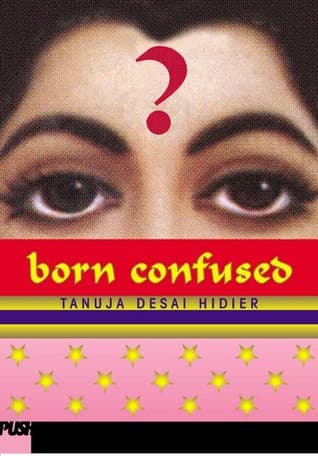
Synopsis
Covers the whole plot, including the ending.
- Difficulty
- Medium
- Pacing
- Moderate
- Mood
- Heartwarming, Conflicted, Romantic, Thought-provoking
- Read it if
- You enjoy coming-of-age stories about cultural identity, first love, and finding your artistic voice.
- Skip it if
- You dislike love triangles or stories with angsty teenage protagonists.
Born Confused Plot Summary
Covers the whole plot, including the ending.
The Arranged Introduction
Dimple Lala, a high school student in suburban America, feels caught between her parents' traditional Indian expectations and her desire to fit into American youth culture. Her parents, frustrated by her disinterest in Indian traditions, arrange for her to meet Karsh, the son of family friends. Dimple, dreading the encounter, finds him awkward and unappealing during their initial, forced conversation at a family gathering. She dismisses him as a 'boring FOB' (Fresh Off the Boat) and wants to avoid further interaction, reinforcing her belief that arranged meetings are outdated and embarrassing. This meeting highlights her internal conflict regarding her cultural identity and her resistance to her parents' attempts to connect her with her heritage.
The Club Encounter
Despite her initial dismissal of Karsh, Dimple, along with her best friend Gwyn, decides to go to a trendy club. To her shock, she finds Karsh on stage, transformed into a confident and mesmerizing DJ, spinning a mix of traditional Indian music with contemporary beats. He is charismatic and commands the crowd, a stark contrast to the shy boy she met earlier. This unexpected revelation deeply shakes Dimple's preconceptions about him and her own understanding of what it means to be 'Indian.' She is both intrigued and bewildered by this dual identity, starting a shift in her perspective.
The World of DJ Karsh
Intrigued by DJ Karsh, Dimple begins to frequent the clubs where he performs. She is captivated by his music, which blends traditional Indian sounds with modern electronica, and the diverse crowd he attracts. Through Karsh, she starts to see her Indian heritage not as something to be hidden or resisted, but as a source of creativity and connection. He introduces her to a different facet of Indian-American identity, one that embraces fusion and self-expression. This exposure challenges her previous notions and sparks a new curiosity about her roots, slowly breaking down her ingrained resistance.
Emerging Feelings and Confusion
As Dimple spends more time with Karsh, their connection deepens, and she finds herself falling for him. Their conversations often revolve around music, identity, and the complexities of being Indian in America. However, Karsh remains somewhat enigmatic, often disappearing or being vague about his personal life. This mystery, while alluring, also causes Dimple confusion and insecurity. She struggles to reconcile the 'suitable boy' her parents introduced with the captivating DJ, and her growing feelings are tinged with uncertainty about his true intentions and the nature of their relationship. Gwyn, her best friend, notices Dimple's obsession and expresses concern.
The Parental Pushback
Dimple's parents, noticing her late nights and increasing independence, become concerned. They are aware of her connection to Karsh, but their understanding of him is limited to the 'suitable boy' they approved. They don't know about his DJ persona or the club scene she's immersed herself in. Their traditional expectations clash with Dimple's newfound freedom and attraction to a world they don't understand. This leads to growing tension and arguments at home, as Dimple struggles to balance her desire for autonomy with her family's cultural values and protective instincts, feeling increasingly misunderstood.
The Photo Shoot and Raj
Dimple, encouraged by Gwyn, takes up a modeling opportunity, a world that further distances her from her parents' expectations. During a photoshoot, she meets Raj, a charismatic and cynical photographer who sees through her carefully constructed facade. Raj challenges Dimple's perceptions, particularly her romanticized view of Karsh and her own identity struggles. He pushes her to be authentic and confront her insecurities, offering a different perspective on art, culture, and self-expression. Their interactions, though sometimes confrontational, force Dimple to introspect and question her motivations and desires.
Karsh's Betrayal and the Breakup
The truth about Karsh's double life and his various secrets eventually comes to light. Dimple discovers he has been manipulative, possibly using her, and has other romantic entanglements. This betrayal shatters her trust and leaves her heartbroken and confused. The idealized image she had built of him crumbles, forcing her to confront the reality of his character and her own naivete. The confrontation is painful and leads to a dramatic breakup, leaving Dimple feeling lost and questioning her judgment and understanding of love and relationships.
Reconnecting with Family and Heritage
Devastated by the breakup with Karsh, Dimple retreats and begins a period of introspection. The pain forces her to re-evaluate her life choices and her relationship with her Indian heritage. Instead of resisting, she starts to genuinely explore her culture, engaging with her parents' stories, traditions, and music on her own terms. She finds solace and a sense of belonging in these connections, discovering a richness she had previously dismissed. This period marks a significant turning point in her journey toward self-acceptance and cultural understanding, realizing the value of her roots independently of any romantic interest.
Raj's Support and Artistic Growth
During her emotional recovery, Dimple finds an unexpected confidant and mentor in Raj. He helps her process her heartbreak and encourages her artistic inclinations, particularly photography. Through her lens, Dimple begins to capture the complexities of her world, her family, and her evolving identity. Raj's honest, albeit sometimes harsh, feedback pushes her to develop her artistic voice and to see beauty and truth in her own experiences. Their relationship becomes one of mutual respect and artistic collaboration, helping Dimple channel her emotions into creative expression.
The Senior Project and Self-Discovery
For her senior project, Dimple decides to create a photography series that explores her bicultural identity, capturing the nuances of being Indian-American. This project becomes a powerful medium for her self-expression and understanding. She photographs her family, her friends, and scenes that represent the blending of cultures in her life. The process is cathartic, allowing her to reconcile the different facets of her identity and embrace her unique position. The project is a culmination of her journey, showing her growth and newfound confidence in who she is.
A New Chapter
As the novel concludes, Dimple has gained an understanding of herself and her place in the world. She has navigated heartbreak, embraced her cultural heritage, and found her artistic voice. While the future remains open, she is no longer 'born confused' but approaches it with clarity and self-acceptance. Her relationships with her parents have improved, and she has formed a strong, supportive bond with Raj. She looks forward to college, ready to explore new opportunities with a confident and integrated sense of her bicultural identity, having truly found her heart, culture, and place in America.
Born Confused Characters
Dimple Lala
Protagonist
A high school student torn between Indian tradition and American youth culture.
Dimple Lala is a vibrant, often sarcastic, Indian-American teenager living in the suburbs. She initially resents her parents' traditional expectations and is desperate to fit in with her American friends, often viewing her heritage as an embarrassment. She's intelligent and artistic, with a keen observational eye, but struggles with self-doubt and identity confusion. Her journey is marked by her search for authenticity, love, and a place where she can reconcile her dual cultural identity. She is driven by a desire for independence and self-expression.
Relationships: Gwyn (Best friend, confidante, and source of American cultural trends.); Karsh (Initial arranged match turned romantic interest, then source of heartbreak and disillusionment.); Raj (Photographer, mentor, and later a supportive friend who challenges her.); Dimple's Parents (Traditional Indian parents whose expectations Dimple initially rebels against, but later understands and reconnects with.)
Karsh
Love Interest/Antagonist
The 'suitable boy' who moonlights as a charismatic DJ, embodying cultural fusion and deception.
Karsh is introduced as the 'suitable boy' chosen by Dimple's parents, initially appearing awkward and traditional. However, he reveals a charismatic alter ego as a DJ, blending Indian classical music with modern beats. He represents the allure and complexity of cultural fusion, but also embodies deception and manipulation. His mysterious nature and artistic talent initially captivate Dimple, but his dishonest actions ultimately lead to her heartbreak. He is driven by a desire for artistic expression and perhaps a need to navigate his own dual identity, though his methods are flawed.
Relationships: Dimple Lala (Romantic interest, whose trust he ultimately betrays.); Dimple's Parents (Seen as a 'suitable boy' for their daughter, unaware of his club life.)
Gwyn
Supporting
Dimple's best friend, a free-spirited and supportive American girl.
Gwyn is Dimple's loyal and outgoing best friend. She represents Dimple's connection to mainstream American youth culture, often encouraging Dimple to embrace trends and social events. Gwyn is supportive of Dimple's romantic pursuits and artistic endeavors, though she sometimes expresses concern over Dimple's intensity. She is a grounding presence for Dimple, offering advice and a listening ear, and helps Dimple navigate the complexities of high school life and friendships. Her friendship is a constant source of comfort and encouragement.
Relationships: Dimple Lala (Best friend and confidante.)
Raj
Supporting/Mentor
A cynical yet insightful photographer who challenges Dimple's perceptions.
Raj is a talented photographer who Dimple meets through her brief foray into modeling. He is initially cynical and direct, unafraid to challenge Dimple's romanticized views and self-deception. Raj is an artist who values authenticity and pushes Dimple to confront her insecurities and embrace her true self. He becomes a mentor figure, helping Dimple develop her artistic vision and find her voice through photography. His honesty and support prove invaluable to Dimple's personal and artistic growth after her heartbreak.
Relationships: Dimple Lala (Mentor, friend, and artistic collaborator.)
Dimple's Mother (Uma Lala)
Supporting
A traditional Indian mother who strives to instill cultural values in her daughter.
Dimple's mother is a loving but traditional Indian woman who deeply values her cultural heritage. She struggles to understand Dimple's resistance to Indian customs and her desire to assimilate fully into American culture. Her attempts to arrange a match for Dimple and her concerns about Dimple's choices stem from a place of love and a desire to preserve her family's traditions and ensure her daughter's happiness and cultural connection. She represents the 'old world' values that Dimple initially rebels against.
Relationships: Dimple Lala (Mother-daughter relationship marked by initial cultural clashes and later understanding.); Dimple's Father (Husband, sharing traditional values.)
Dimple's Father (Prakash Lala)
Supporting
A supportive but traditional Indian father who wants the best for his daughter.
Dimple's father is a somewhat more relaxed, but still traditional, Indian parent. He shares his wife's desire for Dimple to embrace her heritage and often acts as a mediator between Dimple and her mother. He is a loving father who wants to see Dimple succeed and be happy, but also feels the weight of cultural expectations. He represents the generational gap and the challenges of raising bicultural children in America, striving to balance tradition with his daughter's evolving independence.
Relationships: Dimple Lala (Father-daughter relationship with underlying love despite cultural differences.); Dimple's Mother (Wife, sharing traditional values.)
Born Confused Themes
Identity and Biculturalism
The central theme is Dimple's struggle to reconcile her Indian heritage with her American upbringing. She initially rejects her Indian roots, viewing them as outdated and embarrassing, in favor of fitting into mainstream American culture. However, through her relationship with Karsh and later her artistic endeavors with Raj, she learns to embrace the richness of her bicultural identity. This journey is about finding a unique space where both cultures coexist and contribute to her sense of self, as seen in her final photography project that celebrates this fusion.
“Born Confused? Maybe. But now I'm born… something else. Something new.”
Love and Deception
The theme of love is explored through Dimple's intense and ultimately painful relationship with Karsh. She is initially drawn to his mysterious allure and the way he blends cultures, mistaking infatuation for true connection. However, Karsh's dishonesty and manipulative behavior highlight the dangers of idealized love and the importance of authenticity. This heartbreak forces Dimple to confront her own naivete and learn lessons about trust, self-worth, and the complexities of human relationships, ultimately leading her to a more mature understanding of love.
“He was like a song I wanted to dance to, but I couldn't hear the lyrics anymore.”
Art as Self-Expression
Art, particularly music and photography, is a powerful medium for self-expression and discovery throughout the novel. Karsh's DJing allows him to fuse cultures and express his identity, which initially draws Dimple in. Later, Dimple finds her own voice through photography, guided by Raj. Her camera becomes a tool for understanding her family, her culture, and her place in the world. Her senior project, a photographic exploration of her bicultural identity, shows how art helps her process confusion, heal from heartbreak, and ultimately embrace who she is.
“My camera became my third eye, showing me what I couldn't see with the other two.”
Generational and Cultural Gaps
The novel portrays the generational and cultural gaps between Dimple and her immigrant parents. Her parents cling to traditional Indian values and customs, desiring an arranged marriage for Dimple and struggling to understand her Americanized desires. Dimple, in turn, initially views their traditions as embarrassing and restrictive. This conflict drives much of the early plot. As Dimple matures, she begins to bridge this gap, not by abandoning her American self, but by finding a personal connection to her heritage, allowing for greater understanding and respect between her and her parents.
“They wanted me to be Indian. I just wanted to be... me.”
Plot Devices & Literary Techniques
The Double Life
Karsh's contrasting personas as a 'suitable boy' and a charismatic DJ.
Karsh's double life is a pivotal plot device. Initially presented as the awkward 'suitable boy' for an arranged meeting, he is later revealed to be a captivating DJ in the club scene. This duality initially fascinates Dimple, drawing her into his world and challenging her preconceptions about Indian identity. However, it also becomes a source of deception and heartbreak when his two lives, and the secrets within them, inevitably clash. This device highlights the complexities of identity, especially for bicultural individuals, and the allure and dangers of hidden aspects of a person.
Music as a Bridge
The fusion of Indian and Western music as a metaphor for bicultural identity.
Music serves as a powerful symbolic and narrative device. Karsh's DJing, which blends traditional Indian sounds with contemporary Western beats, acts as a metaphor for the fusion of cultures. It initially draws Dimple into a new understanding of her heritage, showing her that 'Indian' can be cool and modern. For Dimple, music becomes a way to explore and express her bicultural identity, moving beyond simple assimilation or rejection. It represents the possibility of creating something new and authentic from diverse influences, reflecting her own journey of self-discovery.
Photography as a Mirror
Dimple's use of photography to explore and define her identity.
Photography functions as a crucial plot device for Dimple's character development. Initially a hobby, it evolves into a serious artistic pursuit and a tool for introspection. Under Raj's guidance, Dimple uses her camera to capture the world around her, particularly the nuances of her bicultural family life. The act of framing and capturing images forces her to observe, analyze, and ultimately define her own identity. Her senior project, a photographic series on biculturalism, symbolizes her journey from confusion to clarity, allowing her to visually articulate her unique place in the world.
Born Confused Quotes
“Are you going to be a good Indian girl, Dimple, or are you going to be a good American girl?”
“Sometimes you just have to choose which part of yourself you're going to be today.”
“The thing about being born confused is that you never really get un-confused. You just learn to live with it.”
“It's not about finding yourself, it's about creating yourself.”
“Love, like a good curry, needs time to simmer.”
“You can't just pick and choose the parts of your culture you like. It's all or nothing, isn't it?”
“Maybe being in love isn't about being perfect, but about being perfectly imperfect together.”
“The city hummed with a thousand stories, each one a potential path not taken.”
“Sometimes the biggest rebellion is just living your own life, exactly as you want it.”
“He saw me, really saw me, not just the Indian girl or the American girl, but just... me.”
“My mother's expectations were a heavy sari, beautiful but sometimes suffocating.”
“The future isn't a straight line; it's a dance, full of unexpected turns and partners.”
“Being an adult meant making your own mistakes, not just inheriting your parents'.”
“Silence can be a language too, full of unsaid things and unspoken desires.”
Quiz
10 questions on the plot and the characters. Each answer comes with a short explanation.
Question 1
What is Dimple Lala's initial reaction to her parents' Indian traditions at the beginning of the book?
- She embraces them fully, finding them trendy.
- She actively resists and resents them.
- She is indifferent to them, neither embracing nor resisting.
- She tries to blend them with American customs.
Show answer
B. She actively resists and resents them. Dimple spends her whole life resisting her parents' traditions, only to find Indian culture suddenly trendy in high school.
Question 2
What significant event happens that makes Dimple reconsider her perception of the 'suitable boy' her parents arrange for her to meet?
- He impresses her parents with his academic achievements.
- She sees him performing as a DJ at a club.
- He sends her a romantic letter expressing his feelings.
- They have a deep, meaningful conversation over dinner.
Show answer
B. She sees him performing as a DJ at a club. Dimple finds the suitable boy 'spinning a magical web' as a DJ at a club, which changes her initial negative impression of him.
Question 3
Which of the following best describes the central theme of 'Born Confused'?
- The challenges of an immigrant family adapting to a new country.
- The conflict between personal desires and family expectations in a cross-cultural context.
- The pursuit of a career in the music industry.
- The importance of academic success in Indian-American families.
Show answer
B. The conflict between personal desires and family expectations in a cross-cultural context. The story centers on Dimple finding her heart, culture, and place in America, often through the lens of balancing her own desires with her parents' traditions and expectations.
Question 4
What is the name of the 'suitable boy' Dimple's parents arrange for her to meet?
- Rahul
- Karim
- Gaurav
- Sameer
Show answer
C. Gaurav Gaurav is the 'suitable boy' arranged by Dimple's parents, who she later discovers is a DJ.
Question 5
How does Dimple initially feel about Indian culture becoming 'trendy' in her high school?
- She is excited and finally feels accepted.
- She finds it ironic and somewhat frustrating after years of resisting it.
- She uses it as an opportunity to educate her peers.
- She immediately adopts all the trendy aspects.
Show answer
B. She finds it ironic and somewhat frustrating after years of resisting it. To make matters worse, everything Indian suddenly becomes trendy, which adds to Dimple's confusion and frustration after resisting it for so long.
Question 6
What is Dimple's main internal conflict regarding her identity throughout the story?
- Whether to pursue a career in art or science.
- Struggling to reconcile her Indian heritage with her American upbringing.
- Deciding between two different boyfriends.
- Overcoming shyness to make new friends.
Show answer
B. Struggling to reconcile her Indian heritage with her American upbringing. The book explores Dimple's journey in 'finding her culture, and finding her place in America,' highlighting the internal struggle between her two cultural identities.
Question 7
What specific art form does Dimple pursue or have an interest in that reflects her desire for self-expression?
- Classical Indian dance
- Photography
- Creative writing
- Painting traditional Indian motifs
Show answer
B. Photography Dimple's interest in photography is a key detail that allows her to express herself and see the world through her own lens, contrasting with her parents' more traditional views.
Question 8
The phrase 'Suddenly the suitable boy is suitable because of his sheer unsuitability' implies what about Dimple's changing perspective?
- She realizes he was always perfect for her, despite his flaws.
- She is attracted to his rebellious, non-traditional side, which contrasts with her parents' expectations.
- She decides to defy her parents by choosing someone completely unsuitable.
- She learns to appreciate his traditional qualities after all.
Show answer
B. She is attracted to his rebellious, non-traditional side, which contrasts with her parents' expectations. This phrase highlights Dimple's attraction to Gaurav's 'unsuitable' identity as a DJ, which represents a break from the conventional expectations her parents have for a 'suitable boy,' making him ironically appealing to her.
Question 9
How do Dimple's parents generally view her integration into American culture versus her connection to Indian traditions?
- They encourage her to fully assimilate and forget Indian traditions.
- They expect her to maintain Indian traditions while navigating American life, often creating tension.
- They are indifferent, allowing her complete freedom in her choices.
- They actively discourage her from any American cultural influences.
Show answer
B. They expect her to maintain Indian traditions while navigating American life, often creating tension. Dimple's parents are from India, and her life has been spent resisting their traditions, implying they expect her to uphold them even as she lives in America, leading to her 'confused' state.
Question 10
The 'complications' mentioned in the synopsis primarily arise from what aspect of the story?
- Academic pressure and school rivalries.
- Dimple's conflicting feelings about Gaurav and the clash between her desires and her parents' expectations.
- Financial difficulties faced by Dimple's family.
- A love triangle involving Dimple, Gaurav, and another boy.
Show answer
B. Dimple's conflicting feelings about Gaurav and the clash between her desires and her parents' expectations. The 'complications' stem from Dimple's internal struggle and the external conflict arising from her attraction to Gaurav's 'unsuitable' side, which goes against her parents' vision for a 'suitable boy,' leading to a complex romantic and cultural journey.
Born Confused FAQ
What is the central conflict Dimple Lala faces at the beginning of 'Born Confused'?
Dimple Lala struggles with her dual identity, feeling pressure to resist her Indian heritage due to her parents' traditional expectations, while simultaneously observing a sudden trendiness of Indian culture among her high school peers. This creates an internal conflict about where she truly belongs and how she should define herself.
Who is the 'suitable boy' Dimple's parents arrange for her to meet, and what is her initial reaction to him?
The 'suitable boy' is Karsh. Dimple's initial reaction is one of strong disapproval and annoyance; she finds the idea of an arranged meeting archaic and Karsh himself seems unappealingly conventional to her, reinforcing her resistance to her parents' traditions.
How does Dimple's perception of Karsh change after she encounters him at a club?
Dimple's perception of Karsh drastically shifts when she discovers him as a DJ at a club, spinning 'magical' music. This revelation reveals a hidden, rebellious, and artistic side to him that directly contradicts the 'suitable boy' image, making him suddenly appealing due to his unexpected unsuitability.
What role does music, particularly Karsh's DJing, play in Dimple's journey?
Music, especially Karsh's fusion of traditional Indian sounds with modern beats, acts as a powerful catalyst for Dimple's self-discovery and cultural reconciliation. It becomes a bridge between her Indian heritage and her American life, helping her appreciate the beauty and relevance of her roots in a contemporary context.
What kind of 'complications' arise in Dimple and Karsh's relationship?
Complications in Dimple and Karsh's relationship stem from their initial 'arranged' meeting clashing with their evolving, more rebellious connection, as well as the expectations of their families. Dimple also grapples with whether she is genuinely attracted to Karsh for who he is, or if her attraction is tied to his 'unsuitability' and her desire to defy her parents.
Are there any subtle indications early on that Karsh might be more than the 'suitable boy' his parents present?
While not explicitly stated, Karsh's initial quietness or perhaps a slight air of detachment during their first formal meeting could be interpreted as him also being uncomfortable with the arranged setup, hinting at a hidden personality. His choice of attire or a specific glance might also subtly foreshadow his dual life.
How does Dimple's friend group react to her sudden interest in Indian culture and Karsh?
Dimple's friend group, who were previously aligned with her in resisting traditional Indian aspects, might express surprise or even a hint of skepticism at her sudden shift. They might question her authenticity or wonder if she's just following the trend, leading to moments of misunderstanding or subtle judgment.
Are there any symbolic objects or recurring motifs that represent Dimple's cultural struggle?
Yes, Dimple's traditional Indian clothing that she initially rejects, or specific spices and foods her mother prepares, can act as symbolic objects. When she later embraces or finds new meaning in these, they represent her journey towards cultural acceptance and integration rather than outright rejection.
How do Dimple's parents' perceptions of her change throughout the story?
Initially, Dimple's parents likely perceive her as a rebellious daughter who is too Americanized. As Dimple begins to reconcile with her heritage and make her own choices, they might come to see her as a young woman capable of navigating both worlds, perhaps even appreciating her independence while still holding onto her roots.
What psychological need does Dimple's initial resistance to her heritage fulfill for her?
Dimple's initial resistance to her Indian heritage fulfills a psychological need for autonomy and individuality. By rejecting her parents' traditions, she attempts to assert her identity separate from their expectations, believing it is the only way to be 'American' and truly herself in a high school environment.
How does the sudden 'trendiness' of Indian culture impact Dimple's self-perception?
The sudden trendiness of Indian culture creates a complex psychological dilemma for Dimple. It challenges her long-held belief that her heritage is something to be resisted or hidden, forcing her to re-evaluate her identity and question whether her resistance was truly authentic or merely a reaction to perceived social pressures.
In what ways does Karsh's dual identity (suitable boy vs. DJ) reflect a common psychological experience for second-generation immigrants?
Karsh's dual identity perfectly mirrors the psychological experience of many second-generation immigrants who navigate two distinct cultural spheres. He presents a 'suitable' facade for his family and traditions while expressing his true, modern self in another context, highlighting the internal division and code-switching often required to belong in both worlds.
How does Dimple's journey contribute to her developing a more integrated sense of self?
Dimple's journey helps her develop a more integrated sense of self by moving beyond a binary choice between Indian and American identities. By embracing elements of both cultures and finding personal meaning in them, she constructs a unique identity that is authentically her own, rather than feeling torn between two extremes.
What is the significance of Dimple finding Karsh 'suitable because of his sheer unsuitability'?
This phrase signifies Dimple's awakening to authentic connection over superficial expectations. She is drawn to Karsh's genuine, unconventional self rather than the persona her parents (and society) deemed 'suitable,' highlighting her desire for true compatibility and rebellion against pre-determined roles.
Does the book suggest that Dimple fully abandons her parents' traditions, or finds a way to integrate them?
The book strongly suggests that Dimple finds a way to integrate her parents' traditions rather than fully abandoning them. Her journey is about re-evaluating and finding personal meaning in her heritage, often through modern interpretations like Karsh's music, allowing her to embrace her culture on her own terms.
How does the 'romance' aspect of the story contribute to Dimple's self-discovery, beyond just finding a partner?
The romance with Karsh acts as a catalyst for Dimple's self-discovery by providing a mirror and a challenge. Through Karsh, she confronts her prejudices against her own culture, learns to appreciate complexity, and realizes that true connection comes from embracing one's whole identity, not just parts of it.
What message does 'Born Confused' convey about cultural identity in a multicultural society?
'Born Confused' conveys that cultural identity in a multicultural society is fluid, personal, and not a binary choice. It emphasizes that individuals can forge a unique identity by blending different cultural influences, finding personal meaning in their heritage, and defining belonging on their own terms, rather than conforming to external expectations.
Could Dimple's initial resistance to Indian culture be seen as a form of internalized racism, and how does she overcome it?
Dimple's initial resistance could be interpreted as a form of internalized cultural bias, where she subconsciously devalues her own heritage due to societal pressures to conform to a dominant culture. She overcomes it by actively engaging with her culture through Karsh's music and by realizing its inherent value and beauty, rather than viewing it solely through an external lens.
About the author

Tanuja Desai Hidier is an author known for her work in fiction, particularly her novel "Born Confused." The book explores themes of identity and cultural conflict through the experiences of a young Indian-American girl. Hidier's writing often reflects her own background and experiences, contributing to discussions on multiculturalism and adolescence.
Similar books
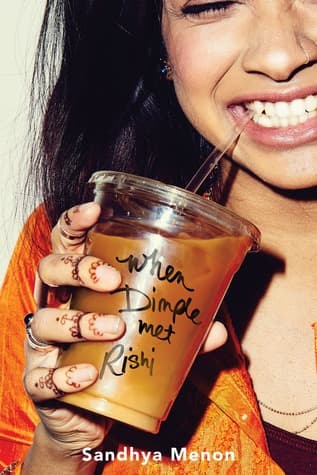
- When Dimple Met Rishi
Sandhya Menon
3.7 (44k) average on GoodreadsYoung AdultExplores Indian-American identity and arranged marriage themes in a YA romance.
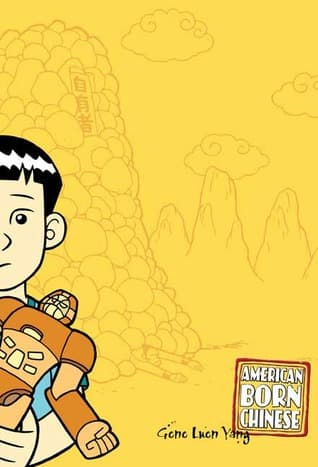
- American Born Chinese
Gene Luen Yang
3.9 (73k) average on GoodreadsFantasyDeals with the struggle of cultural identity and fitting in as an Asian American.
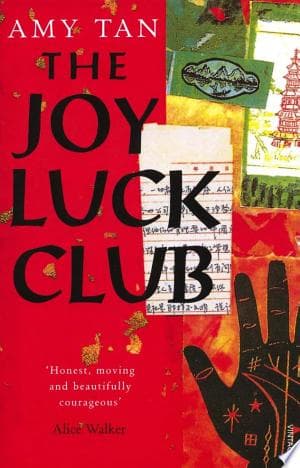
- The Joy Luck Club
Amy Tan
3.9 (598k) average on GoodreadsHistorical FictionWhile both explore cultural heritage and mother-daughter dynamics, The Joy Luck Club has a more serious, multi-generational scope and lacks the contemporary YA romance and club culture elements found in Born Confused. Tan's novel delves into the complexities of immigration and trauma across generations, whereas Hidier focuses on the immediate adolescent experience of navigating two cultures.
- Harry Potter and the Sorcerer's Stone
J.K. Rowling
4.5 (7M) average on GoodreadsFantasyRescued from a miserable life under the stairs, an orphaned boy discovers he's a wizard destined for a magical school, where he uncovers a dangerous secret tied to the dark wizard who murdered his parents.
- The Hunger Games
Suzanne Collins
4.3 (6.4M) average on GoodreadsFantasyIn a future where children fight to the death on live television, Katniss Everdeen volunteers for the arena, turning a death sentence into a fight for survival and a spark of rebellion.
- To Kill a Mockingbird
Harper Lee
4.3 (4.5M) average on GoodreadsHistorical FictionIn the 1930s Jim Crow South, Harper Lee writes about racial injustice, moral growth, and the quiet courage of a lawyer father, Atticus Finch, as seen through his young daughter's eyes.



Enjoyed the summary?
A summary gives you the shape of the book. The book itself has the detail, the examples and the voice.
Find Born Confused on AmazonAs an Amazon Associate, BookBrief earns from qualifying purchases. How we're funded