
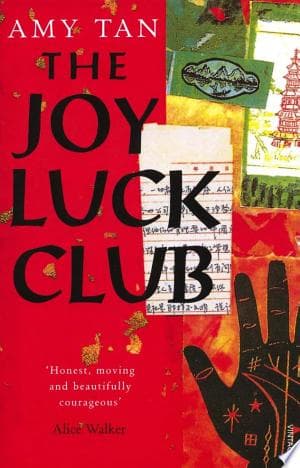
Synopsis
Covers the whole plot, including the ending.
- Difficulty
- Medium
- Pacing
- Moderate
- Mood
- Poignant, Reflective, Cultural, Melancholy, Resilient
- Read it if
- You enjoy rich, multi-generational sagas exploring cultural identity, mother-daughter relationships, and the immigrant experience with a blend of heartbreak and hope.
- Skip it if
- You prefer linear narratives with a single protagonist or shy away from stories that delve into significant historical trauma and family dysfunction.
The Joy Luck Club Plot Summary
Covers the whole plot, including the ending.
The Mahjong Table and an Empty Chair
The novel begins with Jing-mei 'June' Woo, whose mother, Suyuan Woo, recently died. June's father reluctantly asks her to take her mother's place at the weekly mahjong gathering of the Joy Luck Club, a social group started by Suyuan and three other Chinese immigrant women: Lindo Jong, An-mei Hsu, and Ying-ying St. Clair. The women, called 'Aunties,' surprise June by saying that Suyuan had twin daughters in China before escaping the war, and they want June to travel to China to reunite with them. This news bothers June, who feels she never truly understood her mother and now has this unexpected responsibility.
An-mei Hsu's Scar and Her Mother's Sacrifice
An-mei Hsu's story tells about her difficult childhood in China. Her mother, shamed after being forced into concubinage by the wealthy Wu Tsing, was disowned by her family. An-mei was raised by her grandmother, Popo, who taught her the importance of family and the dangers of a 'flesh heart' that can easily break. An-mei remembers the day her mother returned, after Popo's death, to take her away. She tells of her mother's desperate attempts to escape Wu Tsing's control and the sacrifice her mother made by taking her own life on the Lunar New Year, believing it would free An-mei and her brother from their fate.
Lindo Jong's Clever Escape
Lindo Jong tells of her childhood in China, specifically her arranged marriage at a young age to Tyan-yu, the son of the wealthy Huang family. Feeling trapped and mistreated by her mother-in-law, who constantly criticized her and thought she was barren, Lindo made a plan to escape the marriage without shaming her family. She convinced her mother-in-law and Tyan-yu that a ghost had visited her, saying the marriage was cursed and that Tyan-yu was meant to marry a servant girl. Her clever actions allowed her to get her freedom and move to America, where she later married Tin Jong.
Ying-ying St. Clair's Lost Spirit
Ying-ying St. Clair, often quiet, thinks about her early life in China, particularly a difficult event during the Moon Festival. As a young girl, she fell off a boat and was lost in the crowds, feeling her spirit separate from her body. This feeling of being lost and unseen stayed with her throughout her life. She tells of her first marriage to a man who left her, and her abortion. She later moved to America and married an American man, Clifford St. Clair, but feels she has lost her true self, her 'tiger spirit,' and has become a passive observer in her own life, a trait she sees in her daughter, Lena.
Waverly Jong's Chess Prodigy and Rebellion
Waverly Jong, Lindo's daughter, remembers her childhood as a chess prodigy. Her mother, Lindo, proudly encouraged Waverly's talent, often taking credit for her wins and giving her advice that Waverly found limiting. This constant public display of Lindo's pride and control eventually led to a big argument when Waverly, feeling stifled, publicly shamed her mother. This fight caused Waverly to temporarily quit chess and created lasting tension in their relationship. Now an adult, Waverly has trouble introducing her white fiancé, Rich Schields, to her mother, fearing Lindo's judgment.
Lena St. Clair's Unbalanced Marriage
Lena St. Clair, Ying-ying's daughter, describes her marriage to Harold Livotny, an architect. Their relationship has a careful division of expenses and little emotional closeness, showing Lena's inherited passivity and her mother's warning that she would 'slip through the cracks.' Lena tells of a past event where she did not warn her mother about a loose step, leading to her mother's injury, a memory that causes her guilt and fear of speaking up. She worries about the financial and emotional imbalance in her marriage and her inability to assert herself, reflecting her mother's 'lost' spirit.
Rose Hsu Jordan's Indecision and Loss
Rose Hsu Jordan, An-mei's daughter, struggles with indecisiveness, which contributed to the end of her marriage to Ted Jordan. Her inability to stand up for herself or make choices began after a difficult childhood event: while watching her younger brother, Bing, at the beach, she looked away for a moment, and he drowned. This incident, combined with her mother's later religious devotion and belief in fate, made Rose afraid of making wrong decisions. Ted's decision to divorce her forces Rose to finally confront her passivity and find her voice, encouraged by her mother's subtle guidance.
June Woo's Struggle for Identity
June Woo thinks about her difficult relationship with her mother, Suyuan. She felt constant pressure to do well, whether at playing the piano or pursuing a career, but always felt she did not meet her mother's high expectations. June tells of the 'Prodigy' incident, where her mother made her take piano lessons, leading to a public performance disaster and a bitter argument where June said she wished she was not her mother's daughter. This unresolved conflict and June's feelings of not being good enough make her hesitant to fulfill her mother's last wish of reuniting with her long-lost twin sisters.
Confronting Mothers and Finding Voice
The daughters make progress in their relationships with their mothers. Rose, inspired by her mother An-mei's quiet strength, finally stands up to Ted about their divorce and demands respect. Waverly, after a bad dinner where Rich accidentally offends Lindo, finally talks to her mother about their strained relationship and the pressure she felt. Lena, seeing her mother Ying-ying's quiet sadness and recognizing her own similar passivity, starts to question her unequal marriage with Harold, realizing she needs her own voice.
June's Journey to China and Revelation
June, with her father, finally travels to China to meet her twin half-sisters, Chwun Yu and Chwun Hwa. During the trip, her father tells more details about Suyuan's past: her desperate escape from Kweilin during the war, her heartbreaking decision to leave her twin babies by the roadside with valuables and a note, hoping they would be found and cared for, and her lifelong grief and search for them. When she meets her sisters, June finally understands her mother's love and loss, feeling her mother's spirit connect them. She realizes she carries her mother's story within her.
Principal Figures
Jing-mei 'June' Woo
Protagonist
Daughter of Suyuan, struggling with her identity and legacy.
June is the narrator for a significant portion of the book and the only 'daughter' character who directly narrates. She feels inadequate and misunderstood by her mother, Suyuan, often feeling she falls short of her mother's expectations. Her struggle for identity is central, as she tries to reconcile her American upbringing with her Chinese heritage and the expectations placed upon her. She initially resents the burden of her mother's past but ultimately embraces it, finding a deeper understanding of herself and her heritage through her mother's story.
Relationships: Suyuan Woo (Mother, with a complex, often strained relationship); Lindo Jong (Auntie, member of the Joy Luck Club); An-mei Hsu (Auntie, member of the Joy Luck Club); Ying-ying St. Clair (Auntie, member of the Joy Luck Club)
Suyuan Woo
Central Figure (posthumous)
Founder of the Joy Luck Club, whose past unravels through her daughter's journey.
Suyuan is June's deceased mother, whose story is pieced together through June's memories and the revelations of the other Joy Luck Club members. She was a strong-willed, optimistic, and resourceful woman who founded the Joy Luck Club in Kweilin and later in San Francisco. Her past in China, particularly her abandonment of her twin daughters during the war, is a central mystery and source of profound grief. She represents the resilience and hope of the immigrant generation, always pushing her daughter June towards success and a better life.
Relationships: Jing-mei 'June' Woo (Daughter, with a loving but often misunderstood relationship); Lindo Jong (Friend, co-founder of the Joy Luck Club); An-mei Hsu (Friend, co-founder of the Joy Luck Club); Ying-ying St. Clair (Friend, co-founder of the Joy Luck Club)
Lindo Jong
Supporting (Mother)
Strong-willed and proud mother, master of 'invisible strength'.
Lindo is a formidable and proud woman, known for her 'invisible strength' and her ability to navigate difficult situations with cleverness and resilience. She recounts her arranged marriage and her ingenious escape from it in China. In America, she is a successful businesswoman and a demanding mother to Waverly, often clashing with her daughter due to her pride and expectations. She embodies the Chinese cultural value of outward composure and inner strength, even when it creates a rift with her American-born daughter.
Relationships: Waverly Jong (Daughter, with a competitive and strained relationship); Suyuan Woo (Friend, member of the Joy Luck Club); An-mei Hsu (Friend, member of the Joy Luck Club); Ying-ying St. Clair (Friend, member of the Joy Luck Club)
Waverly Jong
Supporting (Daughter)
Chess prodigy, struggling with her mother's expectations and her own identity.
Waverly is Lindo's daughter, a former chess prodigy who achieved national recognition. Her childhood was marked by intense pressure from her mother, Lindo, who took great pride in Waverly's accomplishments but also subtly controlled her. Waverly is fiercely independent and competitive, but her relationship with her mother is fraught with tension and unspoken resentments. She struggles with her Chinese heritage and her American identity, particularly in her romantic relationships, and seeks her mother's approval while simultaneously rebelling against her influence.
Relationships: Lindo Jong (Mother, with a competitive and strained relationship); Rich Schields (Fiancé, later husband)
An-mei Hsu
Supporting (Mother)
Quiet but resilient mother, shaped by childhood trauma and sacrifice.
An-mei is a quiet and observant woman, whose past is marked by profound trauma and sacrifice. Her childhood in China involved her mother being a concubine and ultimately committing suicide to secure An-mei's future. This experience taught her about the importance of family, the dangers of blind obedience, and the power of one's own voice. She is a loving but often indirect mother to Rose, subtly guiding her daughter towards self-assertion, drawing on her own hard-won wisdom about standing up for oneself.
Relationships: Rose Hsu Jordan (Daughter, with a supportive but often indirect relationship); Suyuan Woo (Friend, member of the Joy Luck Club); Lindo Jong (Friend, member of the Joy Luck Club); Ying-ying St. Clair (Friend, member of the Joy Luck Club)
Rose Hsu Jordan
Supporting (Daughter)
Indecisive daughter, overcoming a childhood tragedy and finding her voice.
Rose is An-mei's daughter, characterized by her extreme indecisiveness, which she attributes to a traumatic childhood incident where her younger brother drowned under her care. This event and her mother's subsequent religious fatalism left her hesitant to make choices or assert herself, leading to problems in her marriage to Ted Jordan. Through her mother's quiet encouragement and her own marital crisis, Rose slowly learns to overcome her passivity and find her own voice, embodying the theme of self-assertion.
Relationships: An-mei Hsu (Mother, with a supportive but often indirect relationship); Ted Jordan (Husband, later ex-husband)
Ying-ying St. Clair
Supporting (Mother)
Haunted mother, whose spirit was lost and now seeks to awaken her daughter's.
Ying-ying is a quiet, melancholic woman, whose life in China was marked by a traumatic childhood event that made her feel her spirit was 'lost.' She describes her first marriage to a philandering man and her subsequent abortion. She immigrated to America and married Clifford St. Clair, but feels she has remained a 'ghost' of her former self, passive and unable to assert her true nature. She worries that her daughter, Lena, has inherited this same passivity and seeks to pass on her 'tiger spirit' to her before it's too late.
Relationships: Lena St. Clair (Daughter, with a quiet but deeply empathetic bond); Suyuan Woo (Friend, member of the Joy Luck Club); Lindo Jong (Friend, member of the Joy Luck Club); An-mei Hsu (Friend, member of the Joy Luck Club)
Lena St. Clair
Supporting (Daughter)
Passive daughter, trapped in an unequal marriage and burdened by her mother's fears.
Lena is Ying-ying's daughter, an interior designer who, like her mother, struggles with passivity and an inability to assert herself. Her marriage to Harold Livotny is characterized by an almost clinical division of expenses and a lack of emotional intimacy, reflecting her fear of imbalance and her mother's warnings. Lena is haunted by a childhood memory of her mother's injury due to her own inaction. She slowly begins to recognize her own patterns of silence and concession, and the need to find her voice to avoid repeating her mother's fate.
Relationships: Ying-ying St. Clair (Mother, with a quiet but deeply empathetic bond); Harold Livotny (Husband)
Ted Jordan
Mentioned
Rose's husband, whose desire for divorce forces Rose to confront her passivity.
Ted Jordan is Rose Hsu Jordan's American husband who decides to divorce her. His dissatisfaction with Rose's chronic indecisiveness and inability to make choices is the catalyst for her personal growth. While initially portrayed as unsympathetic in his demands, his actions ultimately push Rose to find her voice and assert herself, which she had previously been unable to do.
Relationships: Rose Hsu Jordan (Husband, later ex-husband)
Rich Schields
Mentioned
Waverly's American fiancé, whose cultural missteps highlight the mother-daughter divide.
Rich Schields is Waverly Jong's white American fiancé. His introduction to Lindo Jong highlights the cultural clash between Waverly's American life and her mother's Chinese expectations. His unintentional blunders during a dinner with Lindo, such as adding soy sauce to a dish Lindo cooked, serve to underscore the communication barriers and cultural misunderstandings between Waverly and her mother, ultimately prompting Waverly to confront Lindo.
Relationships: Waverly Jong (Fiancé, later husband)
Themes & Insights
Mother-Daughter Relationships
This is the main theme, looking at the complex, often difficult, and deeply loving bonds between Chinese immigrant mothers and their American-born daughters. The mothers try to pass on wisdom and strength, often in indirect or culturally specific ways, which their daughters frequently misunderstand or resist. The daughters struggle with their mothers' expectations, their own American identities, and the weight of their mothers' pasts. The novel shows how these relationships change from conflict and misunderstanding to eventual empathy and acceptance, especially as the daughters begin to understand their mothers' sacrifices and histories. For example, June's journey to China helps her connect with her deceased mother, Suyuan.
“And I think, My mother was right. I am an a-ma. All my life, I have been a daughter, an a-ma to my mother. But I am not my mother's daughter. I am not my mother's daughter.”
Identity and Self-Discovery
The characters, especially the daughters, deal with their dual identities as Chinese Americans. They navigate the tension between traditional Chinese values, often shown by their mothers, and modern American culture. Each daughter's journey involves understanding how her mother's past and culture have shaped her own sense of self, leading to a more complete identity. Lena St. Clair, for instance, must confront her inherited passivity to find her true voice, while June Woo's trip to China confirms her understanding of who she is in relation to her mother's legacy.
“I was a tiger lady. I had a tiger inside me. But I lost it. I lost my innocence, but I also lost my spirit.”
The Weight of the Past and Generational Trauma
The mothers' difficult experiences in China—war, famine, arranged marriages, loss of family—deeply shape their lives and, in turn, their daughters' lives. These past events are not just historical facts but active forces that influence the present, appearing in the mothers' fears, expectations, and the daughters' anxieties and struggles. Suyuan Woo's abandonment of her twin daughters, for example, is a central, hidden secret that affects June's understanding of her mother and her own identity. The novel shows how the past, even when unspoken, continues to affect later generations.
“My mother and I are two halves of the same melon.”
Communication and Misunderstanding
A key theme is the lack of communication between mothers and daughters, often due to cultural and generational differences. The mothers' attempts to share wisdom or love are often misunderstood by their Americanized daughters, who see their advice as criticism or old-fashioned. Similarly, the daughters often have trouble telling their mothers how they feel. This theme is clear in Waverly and Lindo's arguments, where Lindo's pride is seen as judgment, and in June's inability to understand her mother's expectations. The novel shows the painful silences and unspoken truths in these families.
“My mother and I never talked about the past, her past, in China.”
Resilience and 'Invisible Strength'
The mothers, having faced great hardship and loss in China, show remarkable resilience and a unique form of 'invisible strength.' This strength is not always obvious but appears as adaptability, cleverness, and an enduring spirit. Lindo Jong's escape from her arranged marriage and Suyuan Woo's survival during wartime are clear examples. This theme looks at how these women not only survived but also found ways to succeed and keep hope, a legacy they try to pass on to their daughters, often through subtle lessons rather than direct teaching.
“I was strong. I was like the wind. I could be seen, but I could not be caught.”
Plot Devices & Literary Techniques
Multiple First-Person Narrators
Provides diverse perspectives and insights into each character's inner world.
The novel uses a rotating first-person narrative, with each of the four mothers and four daughters taking turns to tell their stories. This device allows the reader to gain deep insight into the individual experiences, perspectives, and emotional landscapes of eight distinct characters. It highlights the subjective nature of truth and the different ways each woman perceives her own life and her relationships with others, particularly the mother-daughter dynamic. This structure also creates a fragmented yet comprehensive tapestry of their shared histories and cultural heritage.
Non-Linear Narrative / Flashbacks
Interweaves past and present, revealing the profound impact of history on current lives.
The story is not told chronologically but jumps back and forth in time, particularly through extensive flashbacks to the mothers' lives in China. These flashbacks are crucial for understanding the motivations, fears, and wisdom of the mothers, and how their past experiences continue to shape their present relationships with their daughters. This non-linear structure emphasizes the idea that the past is never truly gone but constantly influences the present, providing context for the generational conflicts and misunderstandings.
Symbolism (e.g., Mahjong, Food, Scar)
Objects and events carry deeper cultural and emotional meanings.
Tan employs rich symbolism throughout the novel. The mahjong game, for instance, symbolizes the mothers' bond, their shared history, and the intricate strategies of life. Food often represents love, tradition, and cultural identity, but also conflict when daughters reject traditional dishes. An-mei's scar on her neck symbolizes her mother's sacrifice and the indelible marks of trauma. Ying-ying's 'tiger spirit' represents lost inner strength. These symbols enrich the narrative, providing layers of meaning beyond the literal events.
Framing Device (The Joy Luck Club)
The club serves as a central gathering point and narrative catalyst.
The Joy Luck Club itself acts as a framing device. It is the initial setting where June learns about her mother's past and the catalyst for her journey to China. The club gatherings, where the women share stories and play mahjong, provide a recurring backdrop for the narrative. It symbolizes the mothers' enduring friendship, their shared heritage, and their collective hope for their daughters. It also represents the cultural bridge between their Chinese past and their American present, a space where traditions are maintained and stories are passed down.
The Joy Luck Club Quotes
“My mother loved me. She just didn't know how to show it.”
“I wanted my children to have the best combination: American circumstances and Chinese character. How could I know these things do not mix?”
“We are like the two halves of a Chinese coin. Pushed together, they can be seen, but apart, they are nothing.”
“I am like the wind. I will blow and then I will be gone.”
“I was strong. I was pure. I had a good heart. I was not a victim.”
“My mother and I are two halves of the same story, but we don't know the other half.”
“Only you can change your fate. You have the power.”
“To Chinese people, a good daughter is a person who listens to her mother.”
“And now I see that everything was a test. And I must have failed.”
“A mother is one who can take the place of all others but whose place no one else can take.”
“I wanted to be a prodigy. My mother wanted me to be a prodigy. Nobody else did.”
“For a long time, I wanted to be an American girl. I didn't want to be Chinese.”
“I knew what I wanted to do. I wanted to tell her everything, about my life, my dreams, my fears.”
“She sees my face, my Chinese face, and she thinks she knows everything about me.”
“The world is not a place where you can hide your face.”
Quiz
10 questions on the plot and the characters. Each answer comes with a short explanation.
Question 1
Which of the following is NOT one of the original four mothers in the Joy Luck Club?
- Lindo Jong
- An-mei Hsu
- Waverly Jong
- Ying-ying St. Clair
Show answer
C. Waverly Jong Waverly Jong is Lindo Jong's daughter, not one of the original four immigrant mothers who founded the Joy Luck Club. The four mothers are Suyuan Woo, An-mei Hsu, Lindo Jong, and Ying-ying St. Clair.
Question 2
What is the primary reason the mothers formed the Joy Luck Club?
- To teach their daughters traditional Chinese customs.
- To find husbands for their American-born daughters.
- To preserve their hope and tell stories of their past while adapting to a new country.
- To pool resources to start a joint business venture in San Francisco.
Show answer
C. To preserve their hope and tell stories of their past while adapting to a new country. The excerpt states that the mothers met weekly to play mahjong and tell stories of what they left behind in China, united in loss and new hope for their daughters' futures. This highlights their desire to preserve hope and connection to their heritage.
Question 3
What event prompts Jing-mei Woo to take her mother's place in the Joy Luck Club?
- Her mother wins the lottery and decides to retire from the club.
- Her mother passes away.
- Jing-mei decides she finally wants to learn mahjong.
- Her mother moves back to China.
Show answer
B. Her mother passes away. The novel opens with Jing-mei Woo taking her deceased mother Suyuan Woo's place at the mahjong table, which sets the stage for her journey to understand her mother's past.
Question 4
Which daughter struggles with her mother's constant criticism regarding her chess playing and later her career and relationships?
- Rose Hsu Jordan
- Lena St. Clair
- Waverly Jong
- Jing-mei Woo
Show answer
C. Waverly Jong Waverly Jong is a chess prodigy whose relationship with her mother, Lindo Jong, is defined by competition and Lindo's often backhanded 'advice' that Waverly interprets as criticism.
Question 5
What significant secret does An-mei Hsu's mother hide from her for many years?
- She was secretly wealthy in China.
- She was forced into concubinage after her first husband's death.
- She had another child who died in infancy.
- She never truly loved An-mei's father.
Show answer
B. She was forced into concubinage after her first husband's death. An-mei's mother became the fourth concubine to a wealthy man, Wu Tsing, after her first husband died. This shameful past was largely concealed from An-mei for much of her life.
Question 6
The theme of 'invisible strength' is most prominently associated with which mother-daughter pair?
- An-mei Hsu and Rose Hsu Jordan
- Ying-ying St. Clair and Lena St. Clair
- Suyuan Woo and Jing-mei Woo
- Lindo Jong and Waverly Jong
Show answer
D. Lindo Jong and Waverly Jong Lindo Jong teaches Waverly about 'invisible strength' in the context of playing chess, encouraging her to hide her true intentions and strengths, a lesson Waverly applies to her life beyond the game.
Question 7
Which daughter's marriage crumbles due to her inability to assert herself and make decisions, reflecting her mother's past passivity?
- Jing-mei Woo
- Rose Hsu Jordan
- Lena St. Clair
- Waverly Jong
Show answer
B. Rose Hsu Jordan Rose Hsu Jordan struggles significantly with her husband Ted, often allowing him to make all decisions, which leads to the breakdown of their marriage. Her mother, An-mei, eventually encourages her to 'stand up' for herself.
Question 8
What is the significance of the 'feather' that Jing-mei's mother wanted to give her?
- It was a valuable family heirloom from China.
- It symbolizes the lightheartedness and joy her mother found in America.
- It represents the hope and good intentions her mother brought to America, which became a 'feather of good intentions' but also a burden.
- It was a symbol of her mother's skill in embroidery.
Show answer
C. It represents the hope and good intentions her mother brought to America, which became a 'feather of good intentions' but also a burden. In the prologue, Suyuan Woo describes wanting to give Jing-mei a 'feather from a thousand li away' but finding it had become 'only a feather, not a swan.' It symbolizes the hope and cultural richness she wanted to pass on, but which Jing-mei initially didn't fully appreciate, seeing only its diminished form.
Question 9
Ying-ying St. Clair's story reveals a past trauma involving a tiger and a sense of 'slipping away.' How does this manifest in her daughter Lena's life?
- Lena develops a fear of large animals.
- Lena's marriage is characterized by emotional distance and an imbalance of shared finances, reflecting a similar lack of agency and a sense of things 'slipping away' from her.
- Lena becomes obsessed with Chinese astrology and fortune-telling.
- Lena inherits a physical illness that causes her to lose consciousness.
Show answer
B. Lena's marriage is characterized by emotional distance and an imbalance of shared finances, reflecting a similar lack of agency and a sense of things 'slipping away' from her. Ying-ying's past trauma and feeling of being a 'ghost' or 'slipping away' from her true self is mirrored in Lena's passive approach to her marriage with Harold, where they meticulously split costs and maintain emotional distance, leading to a hollow relationship that eventually 'slips away' from her control.
Question 10
Why does Jing-mei Woo travel to China at the end of the novel?
- To find a new business opportunity for herself.
- To scatter her mother's ashes in her ancestral village.
- To meet her long-lost twin half-sisters, her mother's children from her first marriage.
- To escape a failing relationship in America.
Show answer
C. To meet her long-lost twin half-sisters, her mother's children from her first marriage. Jing-mei travels to China to meet her two half-sisters, Chwun Yu and Chwun Hwa, whom her mother, Suyuan, was forced to abandon during her escape from Kweilin. This journey allows Jing-mei to fully connect with her mother's past and heritage.
The Joy Luck Club FAQ
What is The Joy Luck Club about?
The Joy Luck Club tells the interconnected stories of four Chinese immigrant mothers and their American-born daughters. Through a series of vignettes, it explores themes of cultural identity, generational divides, and the search for understanding between mothers who endured immense hardship in China and their daughters navigating modern American life.
Why should I read The Joy Luck Club?
You should read The Joy Luck Club for its profound exploration of mother-daughter relationships, the immigrant experience, and the complexities of cultural identity. Amy Tan's poignant storytelling offers deep insights into communication barriers, unspoken love, and the enduring impact of ancestral history on individual lives.
What is the background/setting of The Joy Luck Club?
The book is primarily set in San Francisco, California, from the late 1940s through the 1980s, where the mothers immigrate and raise their families. Flashbacks frequently transport the reader to pre-revolutionary and wartime China, detailing the mothers' traumatic pasts and the traditions they carried with them.
What are the most memorable quotes?
Memorable quotes include Lindo Jong's 'I wanted my children to have the best combination: American circumstances and Chinese character.' and Suyuan Woo's 'Only you can change your luck.' These quotes encapsulate the mothers' hopes for their daughters and their enduring belief in resilience.
What writing style does the author use?
Amy Tan employs a rich, lyrical, and episodic writing style, using multiple first-person perspectives to weave together the mothers' and daughters' narratives. Her prose is often symbolic, incorporating Chinese folklore and cultural metaphors to deepen the emotional and thematic impact of the stories.
What minor details add significant meaning?
The significance of food, like the specific dishes prepared by the mothers, often represents their love, their cultural heritage, and their attempts to connect with their Americanized daughters. Similarly, the mahjong game itself is not just a pastime but a metaphor for strategy, fate, and the unspoken communication between the women.
What are some subtle foreshadowing moments?
Early mentions of Suyuan Woo's 'long-cherished wish' to find her twin daughters in China subtly foreshadow the book's concluding journey for Jing-mei. Also, Lena St. Clair's childhood fear of her neighbor's collapsing house mirrors the eventual collapse of her own marriage due to imbalance and unspoken resentments.
What unexpected character connections exist?
The most significant unexpected connection is the existence of Suyuan Woo's twin daughters, whom she was forced to abandon in China. This revelation, unknown to Jing-mei for most of her life, forms the emotional core of the novel's resolution and connects her deeply to a past she never knew.
What are unspoken character motivations?
Many mothers, like Lindo Jong, are motivated by a deep-seated fear of their daughters losing their Chinese identity, which manifests as criticism or strict expectations. Daughters like Waverly Jong are often driven by a subconscious need to prove their worth to their mothers, even as they resent their perceived interference.
What psychological complexities do characters exhibit?
Ying-ying St. Clair exhibits profound psychological trauma from her past, leading to a sense of invisibility and passivity that she struggles to overcome, eventually trying to empower her daughter Lena. Rose Hsu Jordan grapples with indecisiveness, stemming from childhood trauma and her mother's passive parenting, impacting her marriage.
What are the major emotional turning points?
A major turning point is Jing-mei's disastrous piano recital, which shatters her mother's hopes and creates a lasting rift. Another is Rose Hsu Jordan's decision to finally stand up to her husband, Ted, after her mother An-mei's subtle guidance, marking a shift from passivity to agency.
How do relationship dynamics evolve?
Relationship dynamics evolve from initial conflict and misunderstanding, often due to cultural and generational gaps, towards a gradual, albeit sometimes painful, path of empathy and acceptance. Jing-mei's journey to China to meet her half-sisters culminates in a profound understanding and acceptance of her mother's life and legacy.
Which parts remain ambiguous or open-ended?
While Jing-mei finds her sisters, the ultimate resolution for each mother-daughter pair isn't always neatly tied. The full extent of understanding or healing between some pairs, like Waverly and Lindo, remains a continuous process, suggesting that these complex relationships are never truly 'finished' but always evolving.
What are controversial scenes or decisions?
One controversial aspect is the portrayal of the mothers' sometimes harsh or critical parenting styles, which can be interpreted differently by readers. For instance, Lindo Jong's constant critiques of Waverly's choices, while rooted in love, are seen by Waverly as emotionally damaging, sparking debate on cultural expectations versus individual well-being.
The Joy Luck Club ending explained: how it ends & what it means
The book ends with Jing-mei Woo traveling to China to meet her twin half-sisters, Chwun Yu and Chwun Hwa, whom her mother Suyuan was forced to abandon during the war. This reunion, facilitated by the other Joy Luck Club mothers, brings closure to Suyuan's story and symbolizes Jing-mei's acceptance of her Chinese heritage and her mother's enduring spirit, finally understanding the unspoken love and sacrifice.
About the author
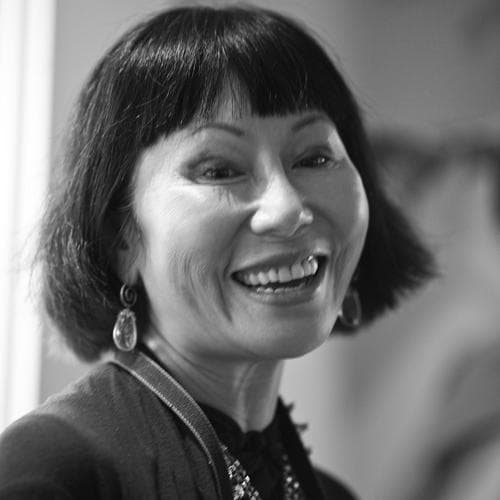
Amy Ruth Tan is an American author of Chinese heritage, best known for the novel The Joy Luck Club (1989), which was adapted into a 1993 film. She is also known for other novels, short story collections, children's books, and a memoir.
Similar books
- Pachinko
Min Jin Lee
4.3 (208k) average on GoodreadsLiterary FictionExplores multi-generational immigrant family sagas and cultural identity with a focus on female resilience.
- A Thousand Splendid Suns
Khaled Hosseini
4.4 (1.2M) average on GoodreadsHistorical FictionFeatures strong female characters navigating difficult circumstances and profound intergenerational relationships.
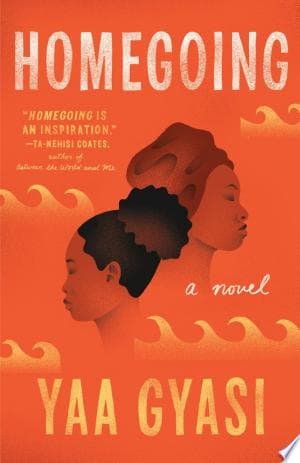
- Homegoing
Yaa Gyasi
4.4 (175k) average on GoodreadsLiterary FictionUses a series of interconnected stories to trace the lineage and impact of history on a family across generations.
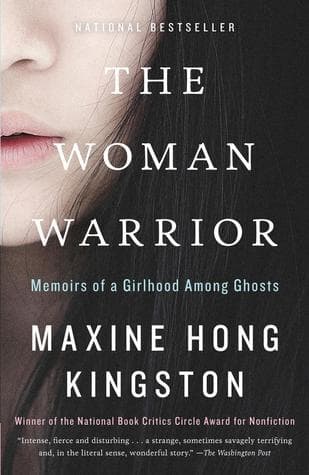
- The Woman Warrior
Maxine Hong Kingston
3.7 (25k) average on GoodreadsBiographyWhile both explore Chinese American identity, Kingston's work is more experimental and memoiristic, blending autobiography with folklore and focusing on the power of storytelling and silence. Tan's novel delves more into the psychological intricacies of direct intergenerational communication and misunderstanding within the mother-daughter bond.
- To Kill a Mockingbird
Harper Lee
4.3 (4.5M) average on GoodreadsHistorical FictionIn the 1930s Jim Crow South, Harper Lee writes about racial injustice, moral growth, and the quiet courage of a lawyer father, Atticus Finch, as seen through his young daughter's eyes.
- The Great Gatsby
F. Scott Fitzgerald
3.9 (3.8M) average on GoodreadsHistorical FictionIn the opulent Roaring Twenties, a mysterious millionaire's lavish parties hide his desperate, tragic pursuit of a lost love, exposing the emptiness within the American Dream.




Enjoyed the summary?
A summary gives you the shape of the book. The book itself has the detail, the examples and the voice.
Find The Joy Luck Club on AmazonAs an Amazon Associate, BookBrief earns from qualifying purchases. How we're funded