

Synopsis
Covers the whole plot, including the ending.
- Difficulty
- Medium
- Pacing
- Moderate
- Mood
- Dark, Bleak, Suspenseful, Philosophical, Violent
- Read it if
- You enjoy dark, psychological thrillers with a focus on moral decay and religious guilt, set in a gritty, atmospheric post-war British underworld.
- Skip it if
- You prefer optimistic stories, clear-cut heroes, or straightforward crime novels without deep philosophical undertones.
Brighton Rock Plot Summary
Covers the whole plot, including the ending.
The Murder of Kite and Hale
The novel opens in Brighton, England. Fred Hale, an informant, fears for his life. Pinkie Brown, a seventeen-year-old leader of a razor gang, hunts him. Pinkie has a deep hatred for life and a twisted sense of Catholic morality. Hale, disguised as 'Kolley Kibber' for a promotional stunt, is cornered by Pinkie and his gang—Dallow, Spicer, and Cubitt. Pinkie, with chilling detachment, forces Hale to drink a fatal dose of poison, making it look like a heart attack. The gang then disposes of Hale's body, believing they have covered their tracks. However, Hale had earlier met Ida Arnold, a jovial, life-affirming woman, who briefly spoke with him before his death and became suspicious of his hurried departure and the news of his death.
Ida Arnold's Investigation Begins
Ida Arnold, a cheerful woman who believes in natural justice, refuses to accept the police's verdict of natural causes for Fred Hale's death. She recalls Hale's fear and his mention of 'Kolley Kibber' and decides to investigate. Ida wants to see justice served for the man she briefly met. She starts by interviewing people who saw Hale on the day of his death, putting together his movements and looking for inconsistencies in the official story. Her persistence and understanding of human nature immediately put her on a collision course with Pinkie and his gang, though they do not know the extent of her suspicions.
Rose Becomes a Witness
Pinkie discovers that Rose, a naive and devoutly Catholic young waitress at Snow's restaurant, saw Spicer, one of his gang members, with Fred Hale shortly before Hale's death. She is a potential witness who could incriminate his gang, so Pinkie decides to marry her. He does not intend to marry for love, but to prevent her from testifying against his gang, as a wife cannot be compelled to testify against her husband. Rose, drawn to Pinkie's dark charisma and sharing his Catholic background, though with a more innocent faith, falls in love with him, misinterpreting his attention as genuine affection. Pinkie, meanwhile, sees the marriage as a practical solution to a dangerous problem.
Spicer's Downfall and Pinkie's Control
Spicer, nervous and prone to mistakes, becomes a liability to Pinkie. He tries to flee Brighton, but Pinkie, fearing he might confess, orchestrates his death. Spicer is pushed down a flight of stairs and then run over by a tram, made to look like an accident. This act shows Pinkie's cold efficiency and his willingness to sacrifice anyone who threatens his position or safety. His control over the remaining gang members, Dallow and Cubitt, tightens, as they now know the lethal consequences of disobedience. This calculated murder marks Pinkie's descent into deeper depravity.
The Marriage and Rose's Devotion
Pinkie and Rose go through with their marriage, a civil ceremony followed by a visit to the Catholic church, where Pinkie makes Rose promise to keep silent about their activities, framing it as a sacred vow. Rose, in love and believing in their union, pledges her loyalty, convinced that her love can redeem Pinkie. She interprets his grimness and secrecy as signs of a tortured soul needing salvation, rather than inherent evil. For Pinkie, the marriage is a strategic move to secure his alibi and silence a witness, but it also brings him a strange sense of power over another person, particularly one who shares his religious background.
Ida Closes In
Ida Arnold, through her questioning and observations, connects Fred Hale's death and Pinkie Brown's gang. She learns about Pinkie's forced marriage to Rose and Spicer's suspicious death. Ida's belief in justice is strong, and she becomes determined to expose Pinkie, seeing him as evil that must be stopped. She gathers evidence and speaks to anyone who might know something, including members of the underworld, slowly building a case against Pinkie, much to the growing unease of the gang and Pinkie, who begins to see her as a real threat.
Pinkie's Plan to Eliminate Rose
As Ida's investigation intensifies and the police take more notice, Pinkie becomes increasingly paranoid about Rose. He fears she might break under pressure or be swayed by Ida, leading to his downfall. Pinkie plans to convince Rose to enter a suicide pact with him. He believes that if they both die, their souls will be eternally bound, and she will be unable to betray him. His twisted religious beliefs lead him to think this act, while a mortal sin, is a necessary evil to protect himself and his version of 'salvation.' He manipulates Rose's love and her Catholic guilt to make her agree.
The Cliff Edge and Rose's Choice
Pinkie takes Rose to the cliffs at Peacehaven, intending to carry out their suicide pact. He gives her a loaded revolver, intending for her to shoot herself first, an act he justifies through his warped theology. Just as Rose is about to succumb to his manipulation, Ida Arnold, alerted by a concerned Dallow and her own instincts, arrives with the police. A tense standoff occurs on the cliff edge. Pinkie, cornered and desperate, makes a final act of self-destruction. He throws acid in his own face, then stumbles over the cliff edge, plummeting to his death, an act of despair and hatred.
The Aftermath and Rose's Revelation
Afterward, Rose is left grieving and confused, still in love with the memory of Pinkie. She holds onto a record he made for her at a pier booth, believing it contains a message of love. Ida, though successful in bringing Pinkie to justice, feels pity for Rose. She tries to help Rose come to terms with Pinkie's true nature, but Rose clings to her idealized image of him. The novel ends with Rose playing the record, only to hear Pinkie's voice filled with hatred and contempt, saying, 'What you want me to say? I hate you. You little bitch. Why don't you go back to where you came from?'. This brutal revelation shatters Rose's illusions, leaving her with the devastating truth of his depravity and the finality of her tragic love.
Principal Figures
Pinkie Brown
Protagonist/Antagonist
Seventeen-year-old leader of a razor gang, driven by nihilism and a twisted Catholic faith.
Pinkie is a teenage sociopath, a product of Brighton's slums, who leads a small gang of criminals. He is characterized by his intense hatred for humanity, particularly women, and a severe, almost puritanical, interpretation of Catholicism focused on sin and damnation. Pinkie is cold, calculating, and utterly ruthless, capable of extreme violence without remorse. His youth belies a profound capacity for evil. He views sex with disgust and is constantly grappling with his own fear of hell, which paradoxically fuels his violent acts. His primary motivation is self-preservation and maintaining his power, which he achieves through intimidation and murder.
Relationships: Rose (forced marriage, manipulation, object of contempt); Ida Arnold (antagonistic, nemesis); Dallow (gang member, subordinate, fearful follower); Spicer (gang member, liability, victim); Cubitt (gang member, subordinate)
Ida Arnold
Supporting
A jovial, life-affirming woman who seeks justice for Fred Hale.
Ida is the moral compass of the novel, a cheerful and earthy woman who believes in natural justice, common sense, and the goodness of life. She is a stark contrast to Pinkie's nihilism and religious fanaticism. Driven by a simple, unwavering sense of right and wrong, she takes it upon herself to investigate Fred Hale's death when the police dismiss it. Ida is persistent, intuitive, and unafraid to confront danger, representing the secular, humanistic view of morality against Pinkie's dark, theological one. She believes in 'doing right' and seeing evil punished, not for divine retribution, but for the sake of human decency.
Relationships: Pinkie Brown (antagonistic, nemesis); Fred Hale (victim for whom she seeks justice)
Rose
Supporting
A naive and devoutly Catholic waitress who falls in love with Pinkie.
Rose is a timid, innocent, and deeply religious young woman who works as a waitress. She is vulnerable and desperately seeking love and belonging. Her strong Catholic faith, though less intellectual than Pinkie's, makes her susceptible to his dark charisma and his manipulation, as she believes she can save his soul. She misinterprets Pinkie's attention as genuine affection and his grimness as a sign of a tortured soul. Rose represents an innocent, almost childlike faith, contrasted with Pinkie's corrupted version. Her love for Pinkie blinds her to his true depravity, leading her to a tragic fate.
Relationships: Pinkie Brown (forced marriage, victim of manipulation, tragic love); Ida Arnold (well-meaning but ultimately unsuccessful intervener)
Dallow
Supporting
Pinkie's second-in-command, fearful and subservient.
Dallow is Pinkie's right-hand man, a nervous and weak-willed member of the gang. He is deeply afraid of Pinkie but also dependent on him. Dallow is more aware of the consequences of their actions than Pinkie, often expressing unease and a desire to escape the violence. He eventually helps Ida, driven by a desperate hope for self-preservation and a flicker of conscience, but remains largely controlled by fear. He represents the ordinary criminal, caught in a cycle of violence, lacking Pinkie's extreme nihilism.
Relationships: Pinkie Brown (subordinate, fearful follower); Spicer (fellow gang member); Ida Arnold (reluctant informant)
Spicer
Supporting
A nervous gang member, a liability to Pinkie.
Spicer is another member of Pinkie's gang, characterized by his nervousness and increasing unreliability. He is present during Hale's murder and is later identified by Rose, making him a dangerous liability. Spicer is less hardened than Pinkie, prone to panic, and wishes to escape the criminal life. His desperation and mistakes lead to his eventual elimination by Pinkie, highlighting Pinkie's ruthless pragmatism and the dangers of being a weak link in his organization.
Relationships: Pinkie Brown (subordinate, victim); Dallow (fellow gang member); Rose (witness to his involvement in Hale's murder)
Fred Hale
Mentioned
The initial victim whose death sets the plot in motion.
Fred Hale is an informant whose murder by Pinkie Brown's gang initiates the entire plot. He is a minor character, only appearing briefly before his death, but his presence is crucial. He is portrayed as a somewhat pathetic, fearful man, desperately trying to evade his pursuers. His encounter with Ida Arnold just before his demise is the catalyst for her investigation, making him the central figure around whom the initial mystery revolves. His death is the first step in Pinkie's descent into deeper violence.
Relationships: Pinkie Brown (murderer); Ida Arnold (brief acquaintance, object of her quest for justice)
Cubitt
Supporting
A minor gang member, more loyal and less intelligent than Dallow.
Cubitt is the least developed of Pinkie's gang members, generally depicted as less intelligent and more blindly loyal to Pinkie than Dallow. He follows orders without much questioning and serves to fill out the ranks of the gang. He embodies the more common, less complex criminal type, driven by group dynamics and a lack of moral fortitude, rather than Pinkie's profound nihilism.
Relationships: Pinkie Brown (subordinate); Dallow (fellow gang member)
Prewitt
Supporting
A corrupt lawyer associated with the gang.
Prewitt is the gang's lawyer, a cynical and morally compromised figure who assists Pinkie in his schemes, particularly with the legal aspects of his marriage to Rose. He represents the corrupt underbelly of society that enables criminals. Prewitt is pragmatic and amoral, concerned only with legal loopholes and financial gain, rather than justice or ethics. He provides Pinkie with advice on how to manipulate the law to his advantage, further highlighting the pervasive corruption within Brighton.
Relationships: Pinkie Brown (client, professional associate)
Themes & Insights
Good vs. Evil / Damnation vs. Salvation
The novel is concerned with the theological concepts of good, evil, damnation, and salvation. It shows this through the contrast between Pinkie's corrupted Catholicism and Ida Arnold's secular humanism. Pinkie, despite his violent acts, is intensely concerned with his soul and the concept of hell, believing he is already damned but clinging to a twisted hope of eternal union with Rose through a suicide pact. Ida, conversely, believes in 'right and wrong' in a worldly sense, seeing justice as a human endeavor. The conflict explores whether evil can exist within a framework of faith, and whether salvation is possible for those who commit heinous acts, particularly through Rose's unwavering, though naive, belief in Pinkie's potential for redemption.
“''Credo in unum Deum,' Pinkie repeated, 'I believe in one God.' He believed in a God of vengeance, a God who would punish, a God who would damn. He didn't believe in the God of mercy, the God who forgave.”
Innocence and Corruption
The theme explores the loss of innocence and how environment and ideology corrupt. Pinkie's youth is paired with his deep depravity, suggesting a childhood scarred by poverty and violence. Rose, initially innocent, is drawn into Pinkie's dark world. Her innocence is exploited and shattered by his hatred. The novel questions if innocence can survive in a world with such pervasive evil, and how easily manipulation and a desperate yearning for love or belonging can corrupt it. Rose's journey is a tragic example of innocence's vulnerability.
“He took her hand. She thought: 'He's going to save me.' She was so young, he was so young, they had a whole life to save each other.”
Love and Hate
The novel presents a distorted view of love and hate. Rose's profound, almost blind love for Pinkie contrasts with Pinkie's deep-seated hatred for life, for women, and for himself. His 'love' for Rose is a manipulative facade, a means to an end, culminating in his final, recorded message of pure contempt. The story explores how love can be twisted, exploited, and destroyed by hatred, and how the absence of genuine love can lead to spiritual emptiness and violence. Pinkie's inability to feel love is a key aspect of his sociopathy.
“He watched her face, the way she loved him. He hated her for it.”
Justice and Morality
The novel examines different ideas of justice and morality through its central characters. Ida Arnold represents a secular, humanistic idea of justice, driven by a desire for 'fair play' and punishment of evil in the earthly realm. Pinkie, conversely, operates under a warped, self-serving religious morality, believing his actions are justified within a framework of sin and damnation, viewing earthly laws as irrelevant. The conflict between Ida and Pinkie highlights the tension between societal justice and a religiously-informed, yet perverted, sense of moral accountability, questioning what true justice is and who has the right to dispense it.
“She believed in good and evil, and that good was good and evil was evil, and that there was no need to ask questions. She knew where she stood.”
The Corrupting Nature of Power
Pinkie's rise to power within the gang, though limited, shows how even a small amount of authority can corrupt and amplify inherent evil. His control over Dallow, Spicer, and Cubitt allows him to commit increasingly brazen acts of violence without immediate consequence, fueling his sense of invincibility and depravity. The power he wields over Rose, through her love and vulnerability, is another aspect of this theme, showing how he uses emotional manipulation to achieve his ends. The novel suggests that power, when held by the morally bankrupt, leads to greater destruction and self-destruction.
“He held the razor in his hand. It was his power, his authority, his only friend.”
Plot Devices & Literary Techniques
First-Person Omniscient Narration (Limited)
Shifting perspective to reveal character interiority and thematic depth.
While the narration is generally third-person omniscient, it frequently delves deeply into the consciousness of individual characters, particularly Pinkie, Rose, and Ida. This allows the reader to understand their motivations, fears, and internal conflicts, highlighting the stark contrast between their worldviews. For Pinkie, it exposes his twisted religious justifications and his profound hatred. For Rose, it reveals her naive love and faith. For Ida, it underscores her unwavering belief in justice. This technique is crucial for exploring the novel's complex theological and moral questions, as it presents events through the lens of characters with vastly different interpretations of reality.
The Brighton Setting
A symbolic backdrop reflecting moral decay and superficiality.
Brighton, with its piers, amusement arcades, and holiday crowds, serves as a significant backdrop. It represents a superficial facade of gaiety and pleasure that conceals a dark, violent underworld. The contrast between the bright, bustling tourist town and the grim, desperate lives of Pinkie and his gang emphasizes the moral corruption lurking beneath the surface. The seaside location also provides symbolic elements, such as the vast, indifferent sea and the precarious cliffs, which mirror Pinkie's spiritual emptiness and his eventual demise. The setting is not merely a location but an active participant in shaping the characters and their fates.
Religious Symbolism
Catholic doctrine and imagery used to explore themes of sin, damnation, and salvation.
Catholicism permeates the novel, from Pinkie's distorted understanding of sin and hell to Rose's innocent faith. Symbols like the confessional, mortal sin, damnation, and salvation are central to the characters' internal lives and motivations. Pinkie's fear of hell, ironically, drives his most heinous acts, as he believes he is already damned. Rose's belief in redemption fuels her love for Pinkie. This device allows Greene to explore profound theological questions about grace, forgiveness, and the nature of evil, using religious dogma as a lens through which to examine human morality and depravity. The 'record' at the end, containing Pinkie's hateful message, functions as a perverse 'confession' or a final, damning judgment.
The Razor
A potent symbol of Pinkie's power, violence, and masculinity.
The razor is Pinkie's signature weapon and a powerful symbol throughout the novel. It represents his cold, sharp cruelty, his capacity for violence, and his assertion of power. For Pinkie, the razor is an extension of himself, a tool that compensates for his youth and lack of physical stature, allowing him to command fear and respect. It also carries connotations of a twisted form of masculinity and a desperate attempt to assert control in a world where he feels powerless. The razor's presence constantly reminds the reader of Pinkie's dangerous nature and the ever-present threat of sudden, brutal violence.
Brighton Rock Quotes
“You cannot conceive, my child, nor can I or anyone the... appalling... strangeness of the mercy of God.”
“Hale knew, before he had been in Brighton three hours, that they meant to murder him.”
“It's like those sticks of rock: bite it all the way down, you'll still read Brighton.”
“I'm not afraid of death. It's the chance of being saved that scares me.”
“She had a sudden sense that they were all of them damned together.”
“You can't conceive, my child, nor can I, the appalling strangeness of the mercy of God.”
“He carried his corruption like a secret wound.”
“There was something about her that was as hard as nails.”
“The world was all before them, but they were damned.”
“He had a kind of savage innocence.”
“It's a mortal sin. You can't get away from it.”
“She was like a small animal caught in a trap.”
“The end was certain, but the means were obscure.”
“He felt the world was too small for both of them.”
Quiz
10 questions on the plot and the characters. Each answer comes with a short explanation.
Question 1
What is Pinkie Brown's primary motivation for marrying Rose in 'Brighton Rock'?
- To inherit her family's wealth
- To gain legal protection from prosecution
- To escape his criminal life through love
- To spite Ida Arnold, who opposes their relationship
Show answer
B. To gain legal protection from prosecution Pinkie marries Rose primarily because she is a key witness to his crimes, and as his wife, she cannot testify against him in court, serving as his alibi and legal shield. This reflects his manipulative and self-serving nature, driven by his need to cover up the murder of the informant.
Question 2
Who is the informant murdered at the beginning of 'Brighton Rock', sparking the main conflict?
- Fred Hale
- Ida Arnold
- Colleoni
- Cubitt
Show answer
A. Fred Hale Fred Hale is the informant whose murder by Pinkie's gang sets the plot in motion. His death leads Pinkie to cover his tracks, involving Rose and attracting Ida Arnold's attention as she seeks justice for Hale.
Question 3
What role does Ida Arnold play in the novel?
- A rival gang leader competing with Pinkie
- A police detective investigating the murder
- An avenging angel seeking justice for the victim
- A religious figure trying to save Pinkie's soul
Show answer
C. An avenging angel seeking justice for the victim Ida Arnold is described as an 'avenging angel' who becomes determined to uncover the truth behind Fred Hale's murder and bring Pinkie to justice, driven by a sense of moral righteousness rather than official authority.
Question 4
How does Pinkie's Catholic upbringing influence his actions in the novel?
- It makes him devout and repentant for his crimes
- It leads him to reject religion entirely as hypocritical
- It shapes a twisted moral doctrine where he believes God will judge him, allowing him to commit evil
- It inspires him to become a priest to atone for his past
Show answer
C. It shapes a twisted moral doctrine where he believes God will judge him, allowing him to commit evil Pinkie's Catholic background contributes to his sociopathic worldview; he believes that since ultimate judgment is in God's hands, he can commit crimes without earthly moral constraints, reflecting the novel's themes of sin and redemption.
Question 5
What is the significance of the setting in prewar Brighton slums to the story?
- It provides a glamorous backdrop for the gang's rise to power
- It symbolizes hope and renewal amid the characters' struggles
- It creates an atmosphere of casual violence and corruption that shapes Pinkie's character
- It serves as a neutral location with little impact on the plot
Show answer
C. It creates an atmosphere of casual violence and corruption that shapes Pinkie's character The dire prewar Brighton slums, with their pervasive violence and corruption, are crucial in molding Pinkie into a teenage sociopath, highlighting how environment fuels his criminal ascent and moral decay.
Question 6
Why does Rose remain loyal to Pinkie despite his abusive behavior?
- She is afraid he will kill her if she leaves
- She believes in his potential for redemption through her love
- She is financially dependent on his gang's earnings
- She shares his criminal ambitions and enjoys the power
Show answer
B. She believes in his potential for redemption through her love Rose's timid and lovestruck nature leads her to cling to a misguided hope that her love can save Pinkie, reflecting themes of innocence corrupted and the destructive power of blind devotion.
Question 7
What literary device is prominently used in the novel to contrast Pinkie and Ida Arnold?
- Irony, highlighting their similar goals
- Foreshadowing, predicting their eventual alliance
- Symbolism, with objects representing their moral states
- Juxtaposition, emphasizing their opposing moral codes
Show answer
D. Juxtaposition, emphasizing their opposing moral codes The novel juxtaposes Pinkie's nihilistic, Catholic-tinged evil with Ida's secular, justice-driven morality, creating a stark contrast that drives the conflict and explores themes of good versus evil.
Question 8
In the context of the novel, what does the 'brighton rock' of the title symbolize?
- A literal candy sold in Brighton, representing childhood innocence
- The enduring nature of Pinkie's criminal empire
- The idea that evil runs through the core of Brighton's society, like the letter in the rock candy
- A metaphor for Rose's purity amidst corruption
Show answer
C. The idea that evil runs through the core of Brighton's society, like the letter in the rock candy The title references a type of candy with a letter running through it, symbolizing how evil and corruption are embedded at the heart of Brighton's society, mirroring Pinkie's inherent malevolence and the town's dark underbelly.
Question 9
How does Pinkie's relationship with his gang members, such as Cubitt, reflect his leadership style?
- He is a democratic leader who values their input
- He uses fear, manipulation, and violence to maintain control
- He inspires loyalty through shared religious beliefs
- He delegates authority to them, trusting their competence
Show answer
B. He uses fear, manipulation, and violence to maintain control Pinkie's sociopathic nature is evident in his tyrannical leadership; he rules through intimidation and brutality, keeping his gang in line to cover his crimes, which ultimately leads to tension and betrayal.
Question 10
What is the ultimate fate of Pinkie Brown at the end of 'Brighton Rock'?
- He escapes justice and starts a new life abroad
- He is arrested and imprisoned for his crimes
- He commits suicide to avoid capture, reflecting his despair and moral bankruptcy
- He reconciles with Rose and seeks redemption
Show answer
C. He commits suicide to avoid capture, reflecting his despair and moral bankruptcy Pinkie's story ends in suicide, a culmination of his twisted path and the novel's bleak exploration of sin; his death underscores the futility of his actions and the inescapability of his moral downfall, despite his beliefs about divine judgment.
Brighton Rock FAQ
What is 'Brighton Rock' about?
The novel follows 17-year-old Pinkie Brown, a sociopathic gang leader in pre-World War II Brighton, who murders an informant and marries a naive waitress named Rose to secure an alibi. His criminal cover-up is challenged by Ida Arnold, a determined woman seeking justice for the victim, leading to a tense cat-and-mouse game in the seedy underworld.
Why should I read 'Brighton Rock'?
It's a gripping thriller that explores profound themes of morality, religion, and evil through its complex characters, particularly Pinkie's chilling sociopathy and Rose's tragic innocence. Greene's atmospheric portrayal of 1930s Brighton's criminal slums adds depth to this dark, psychologically intense narrative.
What is the background/setting of 'Brighton Rock'?
Set in the dire prewar slums of Brighton, England, in the 1930s, the novel depicts a gritty underworld of casual violence, corruption, and poverty. The seaside town's contrast between its cheerful tourist facade and its dark criminal underbelly heightens the story's tension and moral ambiguity.
What are the most memorable quotes?
Key quotes include Pinkie's nihilistic 'Between the stirrup and the ground, he mercy sought and mercy found' and his chilling declaration 'You can't conceive, nor can I, the appalling strangeness of the mercy of God.' These lines underscore the novel's themes of sin, redemption, and divine judgment.
What writing style does Graham Greene use?
Greene employs a taut, economical prose style with vivid imagery and sharp dialogue, creating a suspenseful, noir-like atmosphere. His use of Catholic symbolism and moral introspection adds layers to the thriller plot, blending genre elements with philosophical depth.
What minor details add significant meaning?
The recurring motif of the 'Brighton rock' candy—a stick with the town's name running through it—symbolizes how evil and corruption are ingrained in the setting. Similarly, Pinkie's distaste for physical intimacy, like his revulsion at Rose's touch, highlights his emotional detachment and sociopathy.
What are some subtle foreshadowing moments?
Early scenes where Pinkie avoids the sea, fearing its vastness, foreshadow his eventual death by drowning. His cold, calculated actions toward Rose, such as recording a hateful message for her, hint at his plan to drive her to suicide, which ultimately backfires.
What unexpected character connections exist?
Rose and Pinkie are both raised in Catholic backgrounds, yet their responses to faith diverge drastically—Rose clings to hope and love, while Pinkie twists it into a justification for evil. This shared upbringing makes their marriage a tragic collision of innocence and corruption.
What are unspoken character motivations?
Pinkie is driven by a deep-seated fear of poverty and powerlessness, stemming from his bleak upbringing, which fuels his ruthless ambition. Rose's devotion to Pinkie stems from her loneliness and desire for purpose, blinding her to his malevolence despite clear warnings.
What psychological complexities do characters exhibit?
Pinkie exhibits sociopathic traits, lacking empathy but obsessed with Catholic damnation, creating a twisted moral code. Rose displays a mix of naivety and stubborn faith, making her both a victim and an accomplice. Ida Arnold's pursuit of justice is motivated by a secular, almost superstitious sense of right and wrong.
What are the major emotional turning points?
Key moments include Pinkie's marriage to Rose, which traps him further, and Ida's confrontation with him, escalating the chase. The climax where Pinkie accidentally kills himself with vitriol, intended for Rose, delivers a shocking twist that underscores the novel's themes of unintended consequences.
How do relationship dynamics evolve?
Pinkie and Rose's relationship shifts from manipulation to a grim codependency, with Rose's love becoming a liability for Pinkie. Ida's role evolves from a casual observer to a relentless avenger, contrasting with the gang's internal betrayals, such as Spicer's incompetence leading to his murder.
Which parts remain ambiguous or open-ended?
The novel's ending leaves Rose's fate ambiguous—she listens to Pinkie's recorded message of hatred but may choose to believe it's a declaration of love, highlighting the tension between truth and delusion. The ultimate judgment of Pinkie's soul by God is also left unresolved, inviting theological debate.
What are controversial scenes or decisions?
Pinkie's manipulation and planned murder of Rose, his own wife, spark controversy for its cold brutality. Ida's vigilante justice, operating outside the law, raises questions about morality versus legality. The portrayal of Catholicism as both a source of grace and a tool for evil has also provoked discussion.
'Brighton Rock' ending explained: how it ends & what it means
Pinkie dies accidentally by spilling vitriol on himself during a struggle, a ironic twist given his plans to kill Rose. Rose is left with a phonograph record where Pinkie confesses his hatred, but she may interpret it as love, symbolizing the novel's exploration of sin, mercy, and the ambiguity of truth.
About the author

Henry Graham Greene was an English writer and journalist regarded by many as one of the leading English novelists of the 20th century.
Similar books
- The Stranger
Albert Camus
4.1 (3k) average on GoodreadsFantasyExplores existential themes and a protagonist's detachment from societal norms and morality.
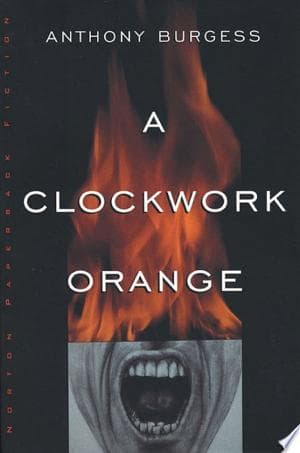
- A Clockwork Orange
Anthony Burgess
4.0 (601k) average on GoodreadsThrillerFeatures a young, violent protagonist with a unique moral code and a bleak societal backdrop.
- The Power and the Glory
Graham Greene
4.0 (33k) average on GoodreadsLiterary FictionAnother Greene novel that delves into complex moral and religious themes with a flawed protagonist.
- The Maltese Falcon
Dashiell Hammett
3.9 (89k) average on GoodreadsThrillerBrighton Rock and The Maltese Falcon both define the thriller/mystery genre, but they operate on fundamentally different planes. Hammett's novel is the epitome of hard-boiled detective fiction, with a focus on external action, cynical pragmatism, and a clear, albeit morally grey, detective figure in Sam Spade. The mysteries are primarily external – who did what, and why for material gain. In contrast, Brighton Rock's mystery is deeply internal and spiritual; the 'what' is often known, but the 'why' delves into the theological and psychological abyss of Pinkie's soul. Greene's characters are often driven by spiritual torment, while Hammett's are driven by greed, loyalty, or survival. While both create atmospheric worlds, Hammett's is gritty urban realism, Greene's is a moral landscape.
- Angels & Demons
Dan Brown
3.9 (2.7M) average on GoodreadsThrillerA Harvard symbologist races through Rome's ancient sites, deciphering cryptic clues to unmask the Illuminati and stop a vengeful plot to destroy the Vatican with a stolen antimatter weapon.
- Gone Girl
Gillian Flynn
4.1 (2.3M) average on GoodreadsThrillerA wife's sudden disappearance on her fifth anniversary reveals a web of lies and psychological warfare, exposing the secrets within a seemingly perfect marriage.





Enjoyed the summary?
A summary gives you the shape of the book. The book itself has the detail, the examples and the voice.
Find Brighton Rock on AmazonAs an Amazon Associate, BookBrief earns from qualifying purchases. How we're funded