
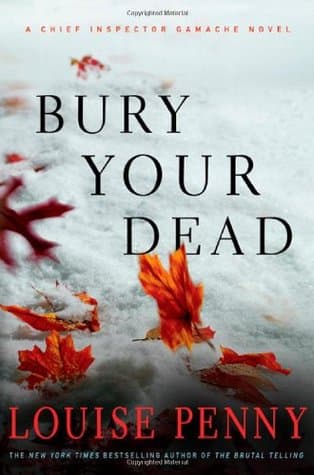
Synopsis
Covers the whole plot, including the ending.
- Difficulty
- Medium
- Pacing
- Moderate
- Mood
- Atmospheric, Reflective, Suspenseful, Melancholy
- Read it if
- You enjoy intricate mysteries with historical depth, psychological complexity, and a strong sense of place, featuring a contemplative detective.
- Skip it if
- You prefer fast-paced thrillers or don't enjoy stories that delve into historical and cultural tensions.
Bury Your Dead Plot Summary
Covers the whole plot, including the ending.
Gamache's Retreat to Quebec City
Chief Inspector Armand Gamache arrives in Quebec City during Winter Carnival. He hopes to recover from a recent, bad operation in Montreal that left him and his team hurt and traumatized. He stays at the Literary and Historical Society, a quiet, old place, hoping the change and the archives will help him heal. But his peace ends quickly when he gets involved in a new murder case. This new case, plus the lasting trauma from Montreal, makes Gamache face his own problems and the chance that his career, and maybe his life, might never be the same. He thinks about his injured colleagues and his past decisions.
The Murder at the Literary and Historical Society
While recovering at the Literary and Historical Society, Gamache finds the body of Augustin Renaud, an obsessive, disliked historian. Someone beat Renaud to death in the society's archives, in the basement, surrounded by his research on Samuel de Champlain, Quebec's founder. Renaud believed he was close to finding Champlain's lost grave and had angered many with his single-minded search and rude personality. Gamache, though officially on leave, cannot ignore the crime. The murder scene suggests a fight and that the killer knew the society's layout well, pointing to someone among the researchers and staff.
Unraveling Renaud's Obsession
Gamache starts to investigate Renaud's life and his controversial research into Samuel de Champlain. Renaud thought Champlain's remains were not where history said they were, but hidden in Quebec City, possibly even in the Literary and Historical Society. His ideas caused much academic and political anger, especially among those who saw Champlain as a key figure whose legacy should not be disturbed. Gamache interviews various society members, including the director, librarian, and other researchers. All had reasons, both work-related and personal, to dislike Renaud. The investigation quickly shows deep tensions about Quebecois history and identity.
Letters from Three Pines
At the same time as the Quebec City investigation, Gamache gets daily, more urgent letters from Gabriel Dubeau, Olivier Brulé's partner, back in Three Pines. Olivier, the bistro owner, was convicted of murder in the last book. Gabriel firmly says Olivier is innocent and asks Gamache to look at the evidence again. These letters are a constant worry, pulling Gamache's attention between the current murder and a past conviction he thought was settled. The details in Gabriel's letters, at first dismissed, start to make Gamache less sure, forcing him to rethink the Three Pines case in his mind, even as he deals with the new murder.
Connecting the Past and Present
As Gamache looks deeper into Renaud's research, he finds hints of a hidden secret about Champlain that could greatly affect Quebec's identity. This historical mystery, along with Gabriel's pleas, makes Gamache realize that both the current murder in Quebec City and the past conviction in Three Pines depend on re-evaluating accepted stories and looking into overlooked details. He sees similarities between Renaud's search for truth and his own need to revisit the Olivier case. The idea that history, both personal and shared, can be misunderstood or hidden starts to grow, connecting the two seemingly separate investigations.
The Three Pines Re-investigation
Troubled by Gabriel's letters and his own growing doubts, Gamache begins to mentally re-investigate Olivier Brulé's conviction. He remembers the events leading to the murder of the hermit, Crie, and the evidence against Olivier. He questions the statements, timelines, and reasons, considering other ways the crime might have happened. He focuses on small differences and seemingly unimportant details he might have missed or ignored before. This internal re-evaluation is hard, as it makes him face the chance that he made a mistake and the terrible effects of a wrong conviction for Olivier and Gabriel.
The Secret of Champlain
Gamache's investigation into Renaud's research eventually uncovers a long-hidden secret about Samuel de Champlain. Renaud had found evidence that Champlain was not buried alone, or perhaps not where everyone thought, and that this secret involved a significant historical figure who had been deliberately removed or downplayed from official records. This discovery touches on sensitive issues of French-English relations and Quebec's founding stories. The secret, if revealed, could rewrite parts of Quebec's history and challenge current power structures, giving a strong reason for someone to permanently silence Renaud.
The Quebec City Killer Revealed
By careful thinking and looking at historical documents and personal reasons, Gamache identifies Augustin Renaud's murderer. The killer is a member of the Literary and Historical Society, motivated by a wish to protect the historical secret about Champlain. If revealed, this secret would have destroyed their personal and professional world or greatly changed how Quebec's history was seen. The murder was not just about silencing Renaud, but about keeping a carefully built story. The killer had a deep personal link to the historical secret Renaud was about to reveal, feeling it was their duty to protect it.
The Truth About Olivier
At the same time, Gamache's mental re-investigation of the Three Pines case confirms his belief that Olivier Brulé is innocent. He puts together the missed clues and inconsistencies, finally realizing that the real murderer of Crie was not Olivier, but another Three Pines resident, who had misled the first investigation. This realization is a big shock and a personal failure for Gamache, making him face the fact that he had sent an innocent man to prison. The real killer had a hidden reason and had cleverly set things up to frame Olivier, using existing tensions and biases in the village.
Burying the Dead and Moving Forward
With both cases solved, Gamache faces the hard task of fixing Olivier's wrong conviction and dealing with the Quebec City murder's aftermath. More importantly, he starts to confront the trauma of the Montreal operation, the 'dead' he has been trying to move past. He accepts that while he cannot change the past, he can learn from it and ensure justice happens. The book ends with Gamache arranging Olivier's release and preparing to return to Three Pines, changed by his experiences. He realizes that true healing means acknowledging the past, understanding it, and using its lessons to move forward with honesty and new purpose.
Bury Your Dead Characters
Chief Inspector Armand Gamache
Protagonist
Head of the Sûreté du Québec homicide department, recovering from trauma
Armand Gamache is a deeply empathetic and insightful police chief, known for his integrity and quiet wisdom. In 'Bury Your Dead', he is physically and emotionally wounded from a catastrophic operation in Montreal, struggling with PTSD and self-doubt. He seeks solace in Quebec City but is drawn into a new murder investigation while simultaneously re-examining a past case from Three Pines. His journey is one of profound internal conflict, battling his own demons and the weight of his past decisions, particularly the conviction of Olivier Brulé. He is driven by a profound sense of justice and a desire to protect the innocent, even when it means confronting his own failures.
Relationships: Reine-Marie Gamache (Wife, supportive and understanding); Jean-Guy Beauvoir (Second-in-command, loyal but often frustrated by Gamache's methods); Gabriel Dubeau (Olivier Brulé's partner, writes letters to Gamache)
Augustin Renaud
Victim
Obsessive historian murdered at the Literary and Historical Society
Augustin Renaud is the murder victim in Quebec City, an abrasive and unpopular historian. He was consumed by his research into the exact burial place of Samuel de Champlain, the founder of Quebec. His single-minded pursuit of historical truth, coupled with his condescending manner, alienated many of his colleagues at the Literary and Historical Society. Renaud believed he was on the verge of uncovering a significant historical secret that would rewrite parts of Quebec's foundational narrative, a quest that ultimately cost him his life. His character serves as the catalyst for the Quebec City investigation.
Relationships: Various members of the Literary and Historical Society (Colleagues, most of whom disliked him)
Gabriel Dubeau
Supporting
Olivier Brulé's partner, tirelessly advocating for Olivier's innocence
Gabriel Dubeau is Olivier Brulé's devoted partner and co-owner of the Three Pines bistro. After Olivier's conviction for murder, Gabriel is consumed by grief and a steadfast belief in Olivier's innocence. He writes daily, increasingly desperate letters to Chief Inspector Gamache, detailing inconsistencies and begging for a re-examination of the case. His unwavering faith in Olivier and his persistence are crucial in prompting Gamache to mentally re-investigate the Three Pines murder, ultimately leading to the discovery of the truth. Gabriel represents loyalty, love, and the fight for justice against overwhelming odds.
Relationships: Olivier Brulé (Romantic partner, deeply devoted); Chief Inspector Armand Gamache (Correspondent, seeking help)
Olivier Brulé
Supporting
Co-owner of the Three Pines bistro, wrongfully convicted of murder
Olivier Brulé is the co-owner of the popular bistro in Three Pines, known for his artistic flair and sometimes dramatic personality. At the beginning of 'Bury Your Dead', he has been convicted of the murder of the hermit, Crie, in the previous novel. Though absent, his wrongful imprisonment casts a long shadow over the narrative, particularly through Gabriel's letters. Olivier's situation forces Gamache to confront the fallibility of the justice system and his own investigative process, making his story a central emotional and moral pivot for Gamache's character arc. His eventual exoneration is a key part of the book's resolution.
Relationships: Gabriel Dubeau (Romantic partner, deeply loved); Chief Inspector Armand Gamache (His initial investigator, later his exonerator)
Jean-Guy Beauvoir
Supporting
Gamache's second-in-command, recovering from severe injuries
Jean-Guy Beauvoir is Chief Inspector Gamache's loyal second-in-command. In 'Bury Your Dead', he is recovering from severe physical and psychological injuries sustained during the disastrous Montreal operation. His trauma mirrors Gamache's, and he struggles with anger, resentment, and the weight of the past. Though not actively involved in the Quebec City investigation, his presence and recovery are a constant reminder of the 'dead' Gamache is trying to bury. His loyalty to Gamache is unwavering, but his own pain sometimes makes him question Gamache's decisions and methods.
Relationships: Chief Inspector Armand Gamache (Superior officer and mentor, deeply loyal to him); Annie Gamache (Gamache's daughter, his love interest)
Reine-Marie Gamache
Supporting
Gamache's wife, a source of strength and wisdom
Reine-Marie Gamache is Chief Inspector Gamache's loving and insightful wife. She provides a vital emotional anchor for Armand, offering quiet support and profound understanding as he grapples with his trauma and the complexities of his investigations. She is intuitive and perceptive, often seeing things that Gamache, caught in the details, might miss. Her wisdom and unwavering faith in her husband help him navigate his darkest moments and eventually find a path to healing. She is a grounding force, representing home and emotional stability amidst chaos.
Relationships: Chief Inspector Armand Gamache (Wife, devoted and understanding)
Samuel de Champlain
Mentioned
Founder of Quebec, whose historical legacy is central to the mystery
Samuel de Champlain is the historical figure whose legacy and final resting place are at the heart of the Quebec City murder. As the founder of Quebec, his story is foundational to the province's identity. Augustin Renaud's obsessive search for his grave and the secrets he believed were buried with him drive the entire Quebec City plot. While not a living character, Champlain's historical significance and the potentially disruptive truths about his life and death serve as a powerful motive for murder and a catalyst for exploring themes of identity, history, and truth.
The Literary and Historical Society Staff/Members
Supporting
Various academics and staff tied to the Champlain mystery
This group encompasses various characters working or associated with the Literary and Historical Society in Quebec City. They include the director, librarians, and other historians. Each has their own personality, professional rivalries, and opinions about Augustin Renaud and his controversial research. They provide Gamache with conflicting information, motives, and red herrings, complicating the investigation. Their interactions reflect the microcosm of academic life, with its passions, jealousies, and fierce protectiveness of historical narratives. One of them is ultimately revealed as Renaud's killer, driven by the desire to protect a historical secret.
Relationships: Augustin Renaud (Colleagues, most of whom had professional or personal conflicts with him)
Bury Your Dead Themes
Truth vs. Narrative
This theme looks at the difference between actual truth and the stories societies or people choose to believe. In Quebec City, Augustin Renaud's murder happens because he finds a historical truth about Samuel de Champlain that threatens a favored story of Quebec's founding. Similarly, Gamache's re-investigation of Olivier's case shows how a convincing, but false, story can lead to a wrong conviction. The book asks what happens when comfortable, old beliefs are challenged by uncomfortable facts, and how far people will go to protect their preferred versions of reality, historical or personal.
“What had been buried, both literally and figuratively, had a way of fighting its way to the surface, demanding to be seen, to be acknowledged, to be mourned.”
Trauma and Recovery
The novel deeply explores the psychological and emotional effects of trauma, especially through Chief Inspector Gamache and Jean-Guy Beauvoir. Both are recovering from a terrible operation in Montreal, experiencing PTSD, self-doubt, and physical pain. Gamache's trip to Quebec City is an attempt to recover, but he finds he must face his past, not hide it. The 'dead' in the title means not only the murder victims but also the psychological wounds and the loss of certainty Gamache carries. The journey shows that real healing means acknowledging pain, facing one's failures, and allowing oneself to move forward, rather than suppressing the past.
“He knew it wasn't the dead he had to bury, but the living.”
Justice and Fallibility
The theme of justice is key, especially with Gamache's re-examination of Olivier Brulé's wrong conviction. The book shows that the justice system, and even an experienced investigator like Gamache, can make mistakes. It makes him face the terrible effects of human error and the chance that an innocent person can be found guilty. This internal struggle for Gamache highlights the great responsibility in seeking justice and the moral need to correct past wrongs, no matter how hard. It shows Gamache's character that he is willing to admit his mistakes and fight for the truth.
“It was not enough to find the killer. Justice was so much more than that. It was finding the truth, no matter how ugly, no matter who it hurt.”
Identity and Belonging
The novel touches on identity, both for individuals and groups. In Quebec City, Quebec's historical identity, linked to figures like Samuel de Champlain, is central. Renaud's research threatens this group identity, providing reasons for murder. Personally, Gamache's identity as a respected Chief Inspector is challenged by his trauma and the chance of a wrong conviction under his command. The desire for belonging is also seen in the close-knit community of Three Pines and the Literary and Historical Society, where people's actions often come from their place in these groups and their wish to protect their community's story.
“History wasn't just dates and facts. It was emotions, beliefs, and what people chose to hold dear.”
Love and Loyalty
The strong love and loyalty between Gabriel Dubeau and Olivier Brulé are an emotional core of the novel. Gabriel's daily letters to Gamache, saying he firmly believes Olivier is innocent, show how strong their bond is. This theme shows how love can keep hope alive and drive action even when things are bad and unfair. It also extends to the loyalty within Gamache's team, especially between Gamache and Beauvoir, even when strained by trauma. These relationships provide emotional anchors and reasons amid the darkness of murder and personal suffering.
“Love was not a feeling. It was an act. And Gabriel acted every single day.”
Plot Devices & Literary Techniques
Dual Investigation Narrative
Gamache simultaneously investigates a new murder and re-evaluates a past one
The novel masterfully employs a dual investigation structure. Chief Inspector Gamache is actively investigating Augustin Renaud's murder in Quebec City while, in his mind, he is also re-examining the conviction of Olivier Brulé in Three Pines, prompted by Gabriel's letters. This parallel narrative allows for a richer exploration of themes like truth, justice, and fallibility, as Gamache's insights from one case often inform his understanding of the other. It creates tension and demonstrates the interconnectedness of seemingly disparate events and the long reach of past decisions.
Epistolary Elements (Letters from Three Pines)
Gabriel's letters to Gamache drive the re-evaluation of Olivier's case
The daily letters from Gabriel Dubeau to Chief Inspector Gamache serve as a crucial epistolary element. These letters are not just plot devices; they are emotional anchors, providing a continuous, insistent voice from Three Pines that challenges Gamache's certainty about Olivier's guilt. They bring the Three Pines case into the foreground of Gamache's consciousness, forcing him to mentally re-engage with the evidence and his own past actions. The letters create a sense of urgency and personal stakes for Gamache, making the 'past' investigation as immediate and compelling as the present one.
Historical Mystery
The secrets surrounding Samuel de Champlain's burial drive the Quebec City plot
The murder in Quebec City is deeply rooted in a historical mystery surrounding Samuel de Champlain. Augustin Renaud's obsessive search for Champlain's true burial site and the secrets he uncovers provide the central motive for his murder. This device allows the author to weave in rich historical details about Quebec, its founding, and the complex relationship between French and English cultures. The past directly impacts the present, as ancient secrets are deemed worth killing for, highlighting how history is not just academic but can have profound, violent consequences.
Trauma as a Catalyst
Gamache's PTSD from a previous case drives his internal and external conflicts
Gamache's severe PTSD and physical injuries from the disastrous Montreal operation are not just background details; they are a major plot device and character motivator. His trauma affects his judgment, his focus, and his ability to trust himself, making him more receptive to Gabriel's doubts about Olivier's conviction. It forces him into a period of introspection and vulnerability, which ultimately leads to greater insight and a more profound understanding of justice. His internal battle with his 'dead' past is as important as solving the external murders.
Bury Your Dead Quotes
“The past is never dead. It's not even past.”
“We are all fools in love.”
“The truth is rarely pure and never simple.”
“Grief is the price we pay for love.”
“In the end, we are all just stories.”
“Fear is a prison, but courage is the key.”
“Sometimes the dead are easier to love than the living.”
“Justice is not always found in a courtroom.”
“Silence can be the loudest sound of all.”
“We bury our dead, but we cannot bury our past.”
“In every mystery, there is a human heart.”
“Hope is the thing with feathers that perches in the soul.”
“The darkest secrets are often hidden in plain sight.”
“Forgiveness is not about forgetting, but about letting go.”
Quiz
10 questions on the plot and the characters. Each answer comes with a short explanation.
Question 1
What event in Quebec City brings Chief Inspector Armand Gamache there at the start of the novel?
- A police conference
- Winter Carnival
- A literary festival
- A family vacation
Show answer
B. Winter Carnival Gamache travels to Quebec City during the Winter Carnival, which is described as 'bitterly cold and surpassingly beautiful.' He is there to recover from a traumatic investigation, not to participate in the festivities.
Question 2
Where does the murder that Gamache investigates in Quebec City take place?
- At a Winter Carnival ice hotel
- In the Literary and Historical Society
- At a local police station
- In a historic church
Show answer
B. In the Literary and Historical Society The murder occurs at the Literary and Historical Society, where an obsessive historian is killed while searching for Samuel de Champlain's remains. This location becomes central to the mystery.
Question 3
Who is the historical figure whose remains are being sought by the murder victim in Quebec City?
- Jacques Cartier
- Samuel de Champlain
- Louis de Buade de Frontenac
- Wolfe or Montcalm
Show answer
B. Samuel de Champlain The victim is an obsessive historian searching for the remains of Samuel de Champlain, the founder of Quebec. This quest ties into long-standing tensions between English and French communities.
Question 4
Why is Gamache in Quebec City instead of actively working on a case?
- He is on vacation with his family
- He is recovering from an investigation gone wrong
- He is attending a training seminar
- He has been suspended from duty
Show answer
B. He is recovering from an investigation gone wrong Gamache is on leave to recover from a hauntingly wrong investigation, which is a key element of his character arc and the novel's exploration of trauma.
Question 5
What recurring issue from the village of Three Pines distracts Gamache during his investigation in Quebec City?
- A missing person case involving a child
- Disquieting letters about Olivier's murder conviction
- A dispute over land development
- Threats against the local bistro
Show answer
B. Disquieting letters about Olivier's murder conviction Gamache receives daily letters from Three Pines, where Olivier's partner insists Olivier is innocent of murder, creating a parallel storyline that challenges Gamache's past decisions.
Question 6
What broader societal tension does the murder investigation in Quebec City risk igniting?
- Economic disparities between rich and poor
- Long-smoldering tensions between English and French
- Conflict between indigenous and settler communities
- Political rivalries in local government
Show answer
B. Long-smoldering tensions between English and French The murder involves historical secrets related to Champlain, which could exacerbate the deep-seated English-French tensions in Quebec, adding a layer of social commentary to the mystery.
Question 7
How does the novel structure Gamache's personal journey alongside the murder investigation?
- Through flashbacks to his childhood
- By having him mentor a young detective
- By forcing him to relive a terrible event from his past
- Through a romantic subplot in Quebec City
Show answer
C. By forcing him to relive a terrible event from his past The novel intertwines the present murder case with Gamache's need to confront and 'bury' a traumatic past event, deepening his character development and the theme of recovery.
Question 8
What role does the Literary and Historical Society play in the context of Quebec's history as depicted in the novel?
- It is a modern art gallery with no historical significance
- It serves as a neutral ground for English-French reconciliation
- It is a repository of English heritage in a French-dominated city
- It is a secret society plotting political upheaval
Show answer
C. It is a repository of English heritage in a French-dominated city The Literary and Historical Society represents English heritage in Quebec City, making it a symbolic location where historical secrets and tensions between English and French communities converge.
Question 9
In what way does the mystery of Champlain's remains connect to the novel's title, 'Bury Your Dead'?
- It refers to literally burying Champlain's found bones
- It symbolizes the need to conceal historical truths to maintain peace
- It ties to both burying historical secrets and Gamache's personal trauma
- It is a metaphor for ending the Winter Carnival festivities
Show answer
C. It ties to both burying historical secrets and Gamache's personal trauma The title 'Bury Your Dead' operates on multiple levels: it relates to the 400-year-old secret about Champlain that someone kills to protect, and to Gamache's journey to confront and lay to rest his own traumatic past.
Question 10
How does the subplot involving Olivier from Three Pines influence Gamache's actions in Quebec City?
- It causes him to abandon the Quebec case entirely
- It has no impact, as it is a separate storyline
- It leads him to question his own judgment and past investigations
- It provides comic relief from the grim main plot
Show answer
C. It leads him to question his own judgment and past investigations The letters about Olivier's conviction force Gamache to re-evaluate a previous case, mirroring his need to confront past mistakes in both his professional and personal life, thus deepening the novel's exploration of guilt and redemption.
Bury Your Dead FAQ
What is 'Bury Your Dead' about?
Chief Inspector Armand Gamache travels to Quebec City during Winter Carnival to recover from a traumatic investigation, but gets drawn into a murder at the Literary and Historical Society where a historian searching for Samuel de Champlain's remains is killed. Simultaneously, Gamache receives troubling letters from Three Pines questioning Olivier's murder conviction, forcing him to confront his own past trauma.
Why should I read 'Bury Your Dead'?
This novel masterfully weaves together three compelling mysteries - the Champlain murder investigation, Olivier's questionable conviction in Three Pines, and Gamache's own haunting past - while exploring themes of historical trauma, cultural tensions, and personal redemption. Penny's atmospheric Quebec City setting during Winter Carnival creates a stunning backdrop for Gamache's most psychologically complex case yet.
What is the background/setting of 'Bury Your Dead'?
The story unfolds primarily in Quebec City during the bitterly cold Winter Carnival, with scenes at the Literary and Historical Society where English-French tensions simmer. Parallel narratives occur in the village of Three Pines and through flashbacks to Gamache's traumatic investigation that left him psychologically wounded. The historical backdrop involves Samuel de Champlain's 400-year-old legacy and Quebec's colonial history.
What are the most memorable quotes?
"The past is never dead. It's not even past" reflects the novel's central theme of historical trauma. Gamache's realization that "We bury our dead, but they don't stay buried" captures his struggle with personal and collective history. The recurring line "It doesn't make sense. He didn't do it, you know" from Olivier's partner becomes a haunting refrain questioning truth and justice.
What writing style does Louise Penny use?
Penny employs a multi-layered narrative structure with three interwoven timelines - present Quebec City investigation, Three Pines subplot, and Gamache's traumatic flashbacks. Her prose is atmospheric and psychological, focusing on character interiority while maintaining taut mystery pacing. She masterfully uses Quebec's winter setting as both physical environment and emotional metaphor.
What minor details add significant meaning?
The repeated descriptions of Quebec's cold - "bitterly cold and surpassingly beautiful" - mirror Gamache's emotional state. The Literary and Historical Society's very name highlights the tension between documented history and hidden truths. Champlain's missing remains symbolize Quebec's unresolved historical trauma that continues to affect present relationships between English and French communities.
What are some subtle foreshadowing moments?
Early mentions of Gamache's physical and psychological wounds foreshadow the traumatic event revealed later. The historian's obsessive search for Champlain's remains hints at dangerous secrets. Letters from Three Pines questioning Olivier's conviction subtly prepare readers for the revelation that Gamache may have made a catastrophic error in that case.
What unexpected character connections exist?
The murder victim's historical research unexpectedly connects to present-day tensions between English and French characters at the Literary Society. Gamache's recovery in Quebec City becomes intertwined with the Olivier case from Three Pines. Most surprisingly, the resolution reveals how Gamache's traumatic past investigation directly impacted his judgment in Olivier's conviction.
What are unspoken character motivations?
Gamache's determination to solve the Quebec City murder stems from his need to prove he can still function after his trauma, not just professional duty. The murderer's actions are driven by protecting a historical secret that threatens their cultural identity. Olivier's partner's daily letters reveal deep-seated belief in justice beyond legal verdicts.
What psychological complexities do characters exhibit?
Gamache suffers from PTSD-like symptoms from his previous investigation, experiencing flashbacks and self-doubt while maintaining his analytical brilliance. The murderer displays cognitive dissonance, believing murder is justified to protect historical truth. Olivier's partner shows the psychology of unwavering faith in someone despite overwhelming evidence.
What are the major emotional turning points?
Gamache's realization that his trauma affected his judgment in Olivier's case creates a crisis of professional identity. The discovery of what really happened during his traumatic investigation forces him to confront survivor's guilt. The resolution of the Champlain murder reveals how historical wounds continue to inflict present pain, changing Gamache's understanding of justice.
How do relationship dynamics evolve?
Gamache's relationship with his team becomes strained as they witness his vulnerability. His bond with Three Pines residents deepens through shared trauma. The English-French tensions at the Literary Society evolve from academic debate to personal confrontation. Most significantly, Gamache's relationship with himself transforms as he learns to accept his limitations.
Which parts remain ambiguous or open-ended?
The exact nature of Champlain's secret is never fully revealed, leaving readers to ponder what could be so terrible. Whether Olivier is truly innocent remains somewhat ambiguous despite the narrative suggesting Gamache's error. The full psychological impact of Gamache's trauma on his future work is left open, as is whether historical wounds between English and French can ever fully heal.
What are controversial scenes or decisions?
Gamache's possible miscarriage of justice in convicting Olivier raises questions about police fallibility. The murderer's justification of killing to protect historical truth presents an ethical dilemma about ends justifying means. The novel's exploration of Quebec's colonial history and ongoing English-French tensions touches on real political sensitivities.
'Bury Your Dead' ending explained: how it ends & what it means
The novel ends with Gamache solving the Champlain murder while confronting his own trauma, realizing his judgment was compromised in Olivier's case. He begins the process of reopening that investigation. The title's meaning becomes clear: characters must acknowledge and properly mourn their personal and historical 'dead' (traumas, secrets, losses) before moving forward. True healing requires facing painful truths rather than burying them.
What is the significance of the title 'Bury Your Dead'?
The title operates on multiple levels: literally referencing Champlain's buried remains, metaphorically for Quebec's buried historical trauma, and psychologically for Gamache's need to process his traumatic past. The novel argues that properly 'burying' requires acknowledgment and mourning, not concealment - we must confront our dead (history, trauma, mistakes) to find peace.
How does the Quebec setting enhance the themes?
Quebec City's Winter Carnival represents surface beauty masking underlying coldness, mirroring how historical pageantry hides painful truths. The city's division between Upper Town (English) and Lower Town (French) physically manifests the cultural tensions central to the mystery. The bitter cold becomes a metaphor for emotional numbness and historical preservation.
What role does the Literary and Historical Society play?
The Society serves as microcosm of Quebec's English-French tensions, where academic historical research becomes personally dangerous. Its dual focus on literature (storytelling) and history (facts) highlights the novel's exploration of how narratives shape truth. As the murder scene, it symbolizes how institutions preserving history can become sites where history violently repeats.
About the author

Louise Penny is a Canadian author known for her mystery novels set in the fictional village of Three Pines. Her notable works include A Fatal Grace, The Cruelest Month, and Bury Your Dead, among others. Penny's writing has received significant recognition, including multiple awards for her contributions to the genre.
Similar books
- The Brutal Telling
Louise Penny
4.2 (47k) average on GoodreadsMysteryAnother Chief Inspector Gamache mystery with a deep dive into character and community secrets.
- A Great Deliverance
Elizabeth George
4.0 (40k) average on GoodreadsThrillerFeatures a thoughtful British detective solving a complex murder with psychological undertones.
- The Name of the Rose
Umberto Eco
4.1 (301k) average on GoodreadsHistorical FictionHistorical mystery set in a confined intellectual environment, driven by ancient secrets and meticulous investigation.
- The Likeness
Tana French
4.0 (126k) average on GoodreadsThrillerWhile both Bury Your Dead and The Likeness feature detectives grappling with complex psychological states and intricate mysteries, Penny's novel offers a more introspective and less morally ambiguous psychological journey for its protagonist. French's work often explores darker, more visceral themes of identity and betrayal, whereas Penny, while addressing trauma, maintains a clearer moral framework for Gamache.
- Death at La Fenice
Donna Leon
3.9 (24k) average on GoodreadsThrillerCompared to Donna Leon's Commissario Guido Brunetti series, Penny's Bury Your Dead provides a more sustained and central character arc for Armand Gamache, where personal growth and recovery from trauma are integral to the series' narrative. While both authors excel at using setting, Penny's Quebec acts more as a character itself, deeply influencing the plot and themes, whereas Leon's Venice often serves as a picturesque backdrop for Brunetti's observations on human nature and societal corruption.
- Angels & Demons
Dan Brown
3.9 (2.7M) average on GoodreadsThrillerA Harvard symbologist races through Rome's ancient sites, deciphering cryptic clues to unmask the Illuminati and stop a vengeful plot to destroy the Vatican with a stolen antimatter weapon.




Enjoyed the summary?
A summary gives you the shape of the book. The book itself has the detail, the examples and the voice.
Find Bury Your Dead on AmazonAs an Amazon Associate, BookBrief earns from qualifying purchases. How we're funded